
Estimated reading time: 6 minutes
Table of contents

Introduction
Virginia Cannabis Legalization remains in a state of limbo. While adults 21 and older can legally grow, possess, and consume cannabis, they have no legal avenue to purchase it within the state. This predicament stems from a 2021 legalization bill signed by former Democratic Gov. Ralph Northam, which required reenactment to establish a regulated market. However, Republican Gov. Glenn Youngkin’s opposition to cannabis reform has stalled further progress.
Legislative Roadblocks and Veto Power
When Democrats lost their legislative trifecta in 2022, Youngkin gained the ability to block cannabis reform efforts. In 2024, Virginia’s Democratic-controlled General Assembly passed legislation to create a licensed and regulated adult-use market. However, Youngkin vetoed the bill, citing concerns over public health and safety.
Despite the setback, Democratic lawmakers have continued to push for legalization. This session, the Virginia Senate passed an adult-use sales bill along party lines, 21-19, on Jan. 31, while the Virginia House passed companion legislation on a 53-46 vote on Feb. 4.
Del. Paul Krizek, D-Fairfax, who sponsored the House bill, acknowledged that another veto is likely but emphasized that he does not intend to give Youngkin a “free pass” on this “important” public policy issue.
Public Safety Concerns and the Black Market
Sen. Aaron Rouse, D-Virginia Beach, the Senate bill’s sponsor, highlighted the public safety risks associated with an unregulated market. “The safety and security of all Virginians is a top priority of this legislation,” he stated during a floor debate. Rouse pointed to the rise of unlicensed cannabis shops selling untested and untaxed products, often to minors, as evidence of the need for regulation.
Political Maneuvering and Future Prospects
In 2023, Democratic lawmakers reportedly attempted to negotiate with Youngkin by offering to support his funding proposal for a sports arena deal in exchange for his signature on an adult-use cannabis bill. Although that deal did not materialize, it indicates that further negotiations could be possible.
Virginia remains a key state to watch for cannabis legalization in 2025. While Youngkin’s opposition presents a formidable challenge, continued legislative efforts and potential political bargaining could determine whether a regulated market finally becomes a reality.
Virginia Cannabis Legalization 2025 FAQs
Possession in their residence of cannabis for personal use by adults 21+ is not subject to penalty. Possession with intent to distribute in any amount in any location is illegal.
Up to one ounce of cannabis may be possessed in public by adults 21+. Until the Cannabis Control Authority promulgates equivalent possession amounts for edibles and concentrates, all cannabis products are defined as marijuana. This does not, however, apply to medical cannabis products dispensed by Virginia medical dispensaries, as such products are defined as botanical cannabis, cannabis oil, or cannabis product.
Until the Virginia Cannabis Control Authority is able to enact such regulations, there will be no equivalent possession limits specified. Virginia Code defines the limit for legal possession on their person or in public by adults 21+ as one ounce of marijuana until such regulations can be enacted. Public possession of over 4 ounces and up to one pound is a misdemeanor. Personal possession at home by adults 21+ is not subject to penalty. Possession with intent to distribute in any amount is illegal.
No. It is not legal to import or transport cannabis across state lines.
No. “Public place” means any place, building, or conveyance to which the public has, or is permitted to have, access, including restaurants, soda fountains, hotel dining areas, lobbies and corridors of hotels, and any park, place of public resort or amusement, highway, street, lane, or sidewalk adjoining any highway, street, or lane.
No. It is illegal for anyone of any age, to smoke or consume marijuana in public.
As of 3/2025, the following is allowed:
Possession for personal use by adults 21+ at their residence
Public possession by adults 21+ of up to one ounce
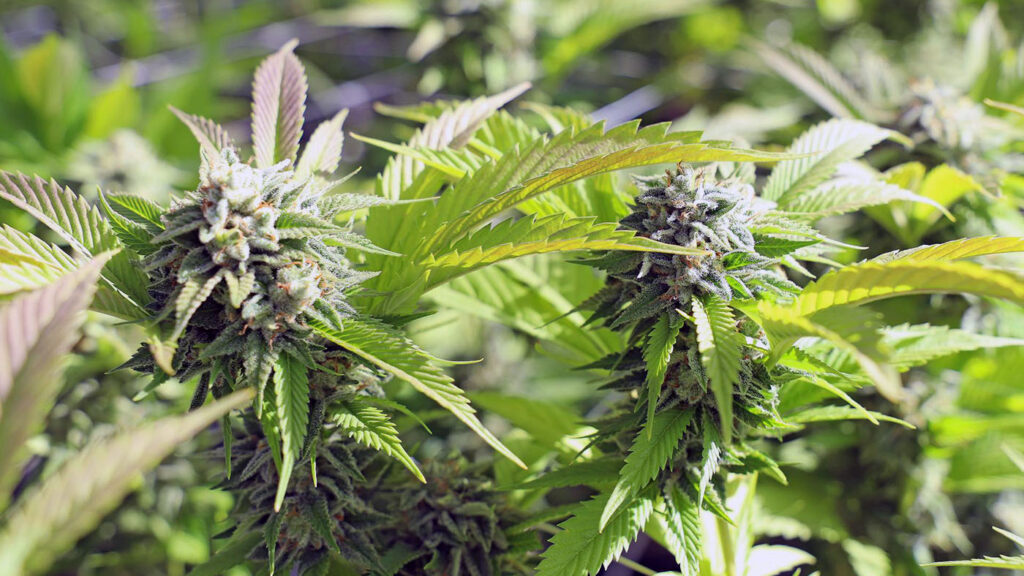
Personal cultivation of up to 4 plants per household by adults 21+ at their primary residence
Adult-sharing of up to one ounce in private without remuneration
Purchases by medical cannabis patients at Virginia medical dispensaries
As of 3/2025, the following is not allowed:
Possession with intent to distribute
Public consumption
Public possession over 1 ounce
Possession or consumption by anyone under 21
Possession on school grounds or school bus
Consumption in a motor vehicle while being driven (passenger or driver)
Open container in a vehicle
Sharing or offering in public
Selling or purchasing cannabis outside of the medical program
Selling or purchasing cannabis seeds or cannabis products
Gifting schemes (gift with purchase, public giveaway events, paid entry consumption events)
As of 3/2025, the following is permitted:
Four plants per household
Cultivation is only permitted at the individual’s primary residence
Tag each plant with owner’s name, driver’s license/state ID number, and for personal use
Plants must not be visible from a public way without the use of aircraft, binoculars, or other optical aids
Prevent access by those under 21
Cultivation is permitted indoors or outdoors, but may be restricted in rental housing
Additional Resources
Free eBooks For Cannabis Business Success




Latest Articles
- Missouri Cannabis Licensing & Business Opportunities 2026
 Missouri has established itself as the premier success story for cannabis in the Midwest, evolving from a standard medical regime to a high-volume adult-use market that exceeded $1.52 billion in annual sales in 2025. As the market enters the 2026–2027 biennium, the landscape is shifting from rapid expansion toward operational maturation and specialized entry.
 - North Carolina Cannabis Licensing & Business Opportunities 2026
 North Carolina remains one of the final significant jurisdictions in the United States without a comprehensive medical or adult-use cannabis program. However, the 2026–2027 biennium is projected to be the most consequential period in the state’s cannabis history. Driven by the formation of the North Carolina Advisory Council on Cannabis and an impending federal “hemp cliff,” the state is moving from a period of passive prohibition toward a structured, albeit highly restrictive, regulatory framework.
 - Nebraska Cannabis Licensing & Business Opportunities 2026
 Nebraska is entering the 2026–2027 biennium at a historic crossroads. Following the 71% voter approval of Initiatives 437 and 438 in late 2024—the largest margin for a medical cannabis initiative in U.S. history—the state is currently standing up its first regulated medical infrastructure.
 - Florida Cannabis Licensing & Business Opportunities 2026
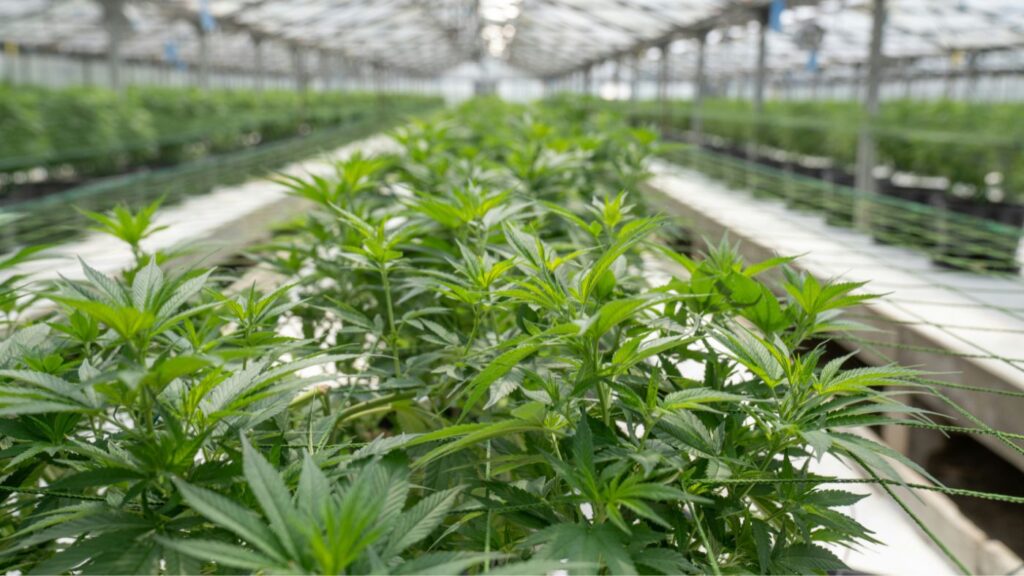 Florida represents the most capital-intensive and professionally structured cannabis market in the nation. As of 2026, the state is at a crossroads: it is both expanding its mature medical program and preparing for a potential constitutional shift toward universal adult-use access. On November 3, 2026, Florida voters will decide on the Marijuana Legalization Initiative (Amendment 3). Passing this requires a 60% supermajority—a high threshold, but one that polls suggest is within reach.
 - Virginia Cannabis Licensing & Business Opportunities 2026
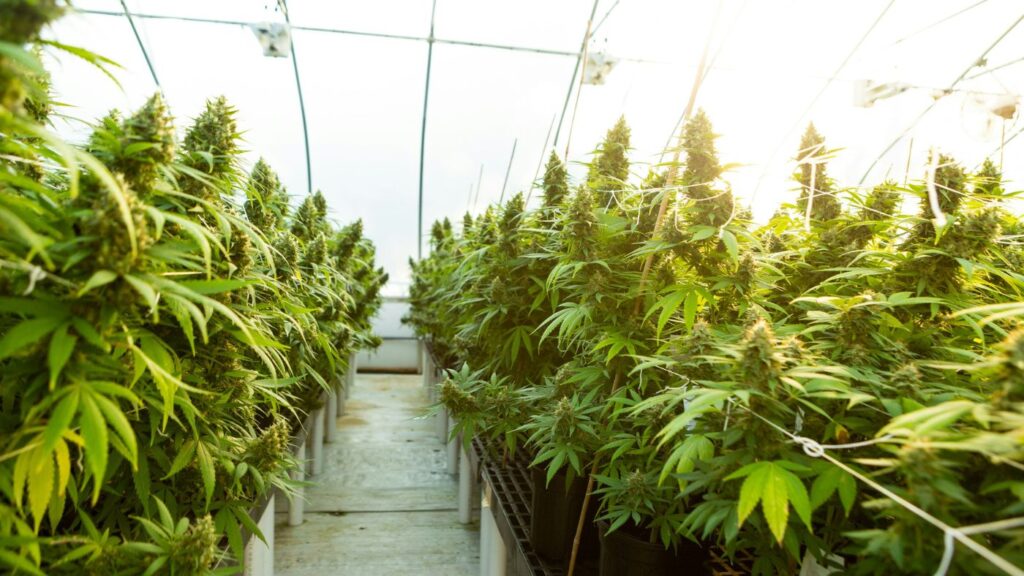 As Virginia transitions from its current “possession-only” model toward a fully regulated retail market, the 2026–2027 biennium represents a once-in-a-generation window for market entry. Unlike the vertically integrated “medical-only” regimes of the past, Virginia’s upcoming framework focuses on decentralization, specifically architected to favor small Virginia-based operators over large multi-state corporations.
 - Minnesota Cannabis Licensing & Business Opportunities 2026
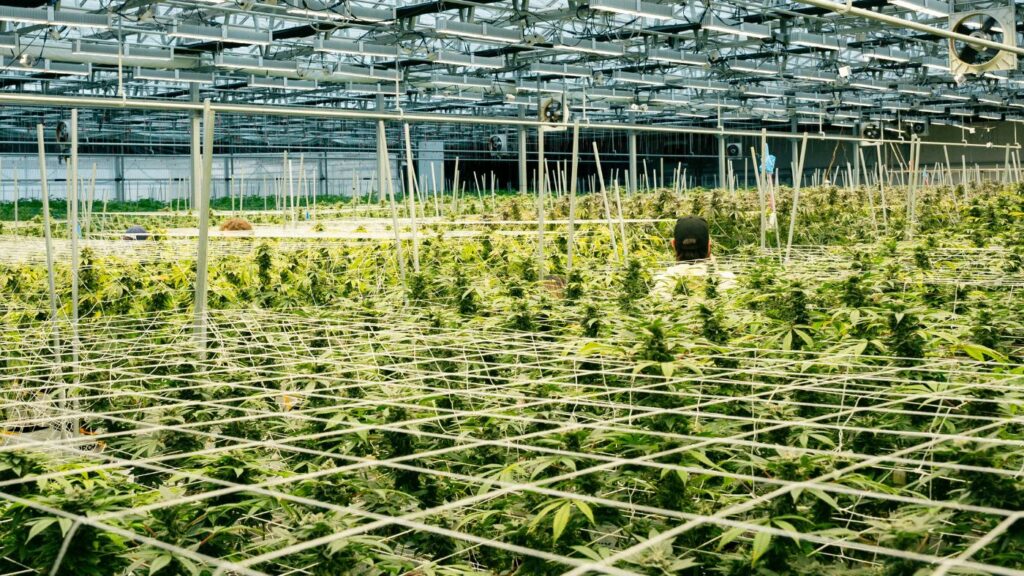 Minnesota is currently undergoing a transformative shift in its cannabis landscape, moving from a semi-regulated hemp-derived market toward a fully comprehensive adult-use framework. Overseen by the Office of Cannabis Management (OCM), the 2026–2027 biennium represents the critical “enforcement phase” where temporary registrations sunset and permanent, merit-based licenses define the market’s long-term leaders.