

Estimated reading time: 17 minutes
Table of contents
- The State of the New York Cannabis Market: April 2026
- The 2026 Licensing Landscape: By the Numbers
- Critical Updates for 2026 Applicants and Operators
- The Execution Gap: Why the Window is Closing
- The Role of Social and Economic Equity (SEE) in 2026
- Operational Resilience: Treatment of Launch as a Science
- Next Steps: Contact Catalyst BC to Start Working On Your NY Cannabis Market Entry Strategy
- Success Stories: See How Catalyst BC Has Helped Cannabis Businesses Enter and Lead the Market
- New York Cannabis Licensees and Applicants Also Ask:
- Additional Resources
- Free eBooks For Cannabis Business Success
- Latest Articles

Editors Notes: Originally published April 30, 2025 last fully updated April 2026.
The State of the New York Cannabis Market: April 2026
The trajectory of the New York cannabis industry has transitioned from a period of experimental regulation to one of massive commercial consolidation and operational intensity. As of April 15, 2026, the state has officially matured into its role as the second-largest cannabis market in the United States, trailing only California in total economic activity and consumer demand. The primary indicator of this success is the milestone reached in early 2026, where total reported retail sales since the inception of the legal program surpassed $2.97 billion. This figure represents more than just financial volume; it signals the successful displacement of a significant portion of the illicit market and the establishment of a robust, taxable supply chain that provides high-quality, tested products to a diverse consumer base.
The “provisional era” that characterized the market between 2022 and 2025 has concluded. The Office of Cannabis Management (OCM) and the Cannabis Control Board (CCB) have moved aggressively to clear the backlog of applications, resulting in the issuance of over 2,160 adult-use licenses statewide by the end of the first quarter of 2026. For contemporary entrepreneurs and investors, the 2026 landscape is no longer defined by the question of “if” a market will exist, but rather “how” an operator can survive the fierce competition of a fully live ecosystem. The supply chain has finally achieved the scale necessary to support hundreds of operational dispensaries, and the infrastructure for professional, compliant operations has become the minimum standard for entry.
| Market Milestone | Statistics as of April 2026 |
| Cumulative Retail Sales | $2.97 Billion+ |
| Total Adult-Use Licenses Issued | 2,110 – 2,160 |
| Operational Retail Dispensaries | 630+ |
| Average Annual Sales (Established Stores) | $3.95 Million |
| Social and Economic Equity (SEE) Licenses | 56% – 57% of Total |
| Full-Time Cannabis Industry Jobs | 16,000+ (Projected) |
The narrative of 2026 is centered on the “Execution Gap.” While the state celebrated the opening of its 500th licensed dispensary in late 2025 , the focus in April 2026 has shifted toward the sustainability of these businesses. Data presented at recent CCB meetings indicates that while “steady-state” retailers – those in operation for over a year – are averaging nearly $4 million in annual sales , a significant portion of the market is still struggling with profitability due to the high cost of compliance, the complexity of the new tax code, and the rigors of the Metrc seed-to-sale integration. The market is now rewarding operators who treat their launch not as a singular milestone, but as a disciplined, science-based scale-up process.
The 2026 Licensing Landscape: By the Numbers
New York’s regulatory framework was built on the principle of a “non-vertical” market structure, a policy choice intended to prevent the monopolistic tendencies seen in other legal states. By decoupling cultivation from retail for most license types, the state has successfully fostered a specialized and diverse ecosystem. As of the March 2026 Cannabis Control Board meeting, the licensing distribution highlights the depth of the supply chain across multiple sectors.
Retail and Microbusiness Saturation
The retail sector has seen the most rapid expansion, with 506 licenses officially issued and over 630 storefronts actively open for business. This discrepancy between issued licenses and open stores is accounted for by the successful transition of many CAURD (Conditional Adult-Use Retail Dispensary) licensees into permanent adult-use status. However, the microbusiness category remains a point of intense scrutiny. While 321 licenses have been issued, survey data from early 2026 suggests that only 20% of vertically integrated microbusinesses are currently profitable. This has led to a significant legislative shift allowing these operators to pivot their business models to focus on the areas where they are most successful.
Processing and Cultivation Stability
The processing and cultivation tiers have reached a state of equilibrium. There are currently 532 licensed processors and 245 cultivators. The processing sector, in particular, has become highly competitive, with a focus on branding and specialized product categories like low-potency beverages and high-end concentrates. Distributors, numbering 232, act as the essential middle layer of the industry, managing the logistics and tax collection that keep the state’s 9% wholesale excise tax system functioning efficiently.
| License Type | Active Count (Q1 2026) | Strategic Market Role |
| Retail Dispensaries | 506+ | Direct consumer interface and primary revenue driver. |
| Microbusinesses | 321+ | Craft cultivation and local vertical integration. |
| Processors | 532+ | Product innovation, branding, and extraction. |
| Cultivators | 245+ | Biomass production and genetic development. |
| Distributors | 232+ | Logistics, wholesale tax collection, and compliance. |
The Social and Economic Equity (SEE) Engine
New York’s commitment to social equity is the defining characteristic of its market. Unlike other states where equity was an afterthought, the MRTA mandated that 50% of all licenses be awarded to SEE applicants. By April 2026, the state has not only met but exceeded this goal, with 56% to 57% of all adult-use licenses held by individuals from disproportionately impacted communities, minority-owned businesses, women-owned businesses, and distressed farmers. This commitment has ensured that the $3 billion in market value is distributed across a broad demographic, fulfilling the restorative justice goals of the original legislation.
Critical Updates for 2026 Applicants and Operators
The regulatory environment in 2026 has been reshaped by several landmark legislative and judicial corrections. These updates are essential for any operator seeking to maintain compliance or for new applicants attempting to navigate the current siting and tax requirements.
The 2024 Tax Reform: Repeal of the Potency Tax
One of the most significant victories for the industry was the June 2024 Tax Pivot, which finally took full effect in the 2025-2026 fiscal cycle. The original “potency-based” tax, which charged based on the milligrams of THC in a product, was deemed a failure due to its complexity and the burden it placed on labs and distributors. This has been replaced with a streamlined 9% wholesale distributor excise tax.
When combined with the 9% state retail tax and the 4% local tax, the total effective tax rate has become more predictable. This shift has allowed legal retailers to lower prices, with the average retail price of flower falling to approximately $14.20 per gram by 2026. This price competitiveness has been the primary driver in the shrinking of the illicit market, as consumers gravitate toward the safety and reliability of the regulated supply chain.
Zoning Flexibility: The February 2026 “Door-to-Door” Fix
Zoning gridlock nearly paralyzed the retail market in 2025 due to a dispute over how to measure distances from schools and houses of worship. The OCM had attempted to enforce a “property line to property line” measurement standard, which threatened to invalidate the locations of over 150 operational dispensaries.
In February 2026, Governor Hochul signed critical legislation (A10140/S9155) that codified a strict “door-to-door” measurement policy. This law specifies that distances are to be measured in a straight line from the center of the nearest entrance of the dispensary to the center of the nearest entrance of the school or house of worship. This legislative intervention provided “grandfathered” protections to existing retailers and gave new applicants the clarity needed to secure long-term leases without the fear of retroactive zoning violations.
| Proximity Buffer Type | Distance Requirement | Measurement Standard (2026 Law) |
| Schools | 500 Feet | Center-of-entrance to Center-of-entrance |
| Houses of Worship | 200 Feet | Center-of-entrance to Center-of-entrance |
| Other Dispensaries | 1,000 / 2,000 Feet | Radius (Proximity Protection) |
Microbusiness Evolution: Assembly Bill 8711
The struggles of the microbusiness sector led to the introduction and passage of Assembly Bill 8711 in early 2026. This legislation provides a “ladder” for small-scale operators who found that managing the entire vertical supply chain was financially unsustainable. The new law allows microbusiness licensees to change their license type to a full Adult-Use Cultivation license upon OCM approval. This allows growers to focus on their primary strength – producing high-quality flower – and distribute it through the broader retail network rather than being forced to maintain their own storefront. Additionally, the OCM is now required to promulgate regulations that allow microbusinesses to operate without a retail storefront, significantly lowering the barrier to entry for craft producers.
The Rise of New York Cannabis Consumption Lounges

As of 2026, the OCM has officially moved into the second wave of processing for On-Site Consumption Lounge permits. With over 65% of New York municipalities having opted in to the retail market, consumption sites are emerging as the new frontier for the state’s tourism and hospitality sectors. These lounges are expected to generate between $6.5 billion and $7.5 billion in annual consumer spending by 2030, offering a social setting similar to a cigar lounge or hookah bar but with a strictly regulated framework for cannabis use.
The Execution Gap: Why the Window is Closing
The primary challenge in 2026 is no longer obtaining a license—it is the successful launch and scaling of the business. The “Execution Gap” refers to the period between the issuance of a license and the achievement of operational profitability. In New York, this gap is particularly perilous due to the strict enforcement of proximity protections and the complexity of the Metrc integration.
Proximity Scrutiny and Green Zones
New York’s “Proximity Protections” are now in full effect. This means that once a dispensary is licensed or has an approved site, it creates a “Green Zone” around its location where no other applicant can operate. In municipalities with more than 20,000 residents, this radius is 1,000 feet; in smaller municipalities, it is 2,000 feet. By April 2026, many of the most desirable territories in New York City, the Hudson Valley, and the Finger Lakes have been “locked out” by existing operators. If an applicant does not secure a location and submit a site-specific application immediately, they risk being excluded from high-traffic markets for the foreseeable future.
The Site-Selection Trap
Site selection in 2026 has become a high-stakes science. Municipal overlays and proximity to sensitive uses (schools and houses of worship) are being strictly enforced by the OCM’s Trade Practices Bureau. A single mapping error can lead to a project being killed after hundreds of thousands of dollars in capital have already been deployed for leases and build-outs. Successful operators are those who utilize validated zoning analysis and GIS mapping to ensure their site is actually viable before signing a lease.
Metrc Integration and Seed-to-Sale Compliance
The transition from BioTrack to Metrc as the state’s official seed-to-sale software was completed in December 2025. In 2026, inventory discrepancies are no longer viewed as “learning curves” – they are treated as major liabilities that can lead to fines, license suspension, or permanent revocation. The OCM has moved into a proactive audit phase, where every gram of cannabis must be accounted for from production batch to retail sale. This requires a level of operational discipline and technological integration that many first-time operators are unprepared for.
The Role of Social and Economic Equity (SEE) in 2026
New York’s SEE program is not merely a box to be checked; it is the structural foundation of the entire industry. As of early 2026, the OCM has issued nearly 2,400 licenses across the supply chain, with 55% to 57% of these being awarded to SEE applicants.
Demographic Composition and Economic Impact
The demographic breakdown of True Parties of Interest (TPI) in 2026 shows a significant shift toward diversity. While 46% of TPIs identify as White, 17% identify as Black/African American and 12% as Hispanic/Latino. This diversity is reflected in the workforce as well, with the state’s Workforce Composition Survey helping to inform data-driven policy decisions that support equitable employment across the industry.
Regulatory Support for Equity
To protect these equity businesses, the OCM’s Trade Practices Bureau has been granted enhanced investigatory powers. This is designed to safeguard the SEE framework by ensuring that contractual arrangements and management agreements do not undermine the equity ownership rights of the licensees. This protects small, equity-owned businesses from “predatory” inversion schemes or management agreements that effectively strip the licensee of control.
| SEE Category | Licensing Percentage (2025-2026) |
| Overall SEE Licenses | 56% – 57% |
| Retail Dispensary SEE | 64% |
| SEE Processor Approvals (Feb 2026 Cohort) | 53% |
| Minority-Owned Business (TPI) | 17% Black / 12% Hispanic |
Operational Resilience: Treatment of Launch as a Science

For the 2026 operator, the goal has shifted from “opening the doors” to “building a legacy.” The fiercely competitive nature of the $3 billion market means that only those with “Exit-Ready” operational SOPs will thrive. This involves treating every aspect of the business – from facility commissioning to inventory management – as a precise science.
Facility Commissioning and the First 180 Days
The first 180 days of operation are the most critical for a new cannabis business. During this period, the operator must finalize their build-out, pass local inspections, and successfully onboard into the Metrc system. Errors during this phase, such as incorrect item-level identification or failure to submit required PowerScore energy benchmark reports, can lead to immediate regulatory scrutiny.
Supply Chain Logistics and Distributor Partnerships
With the 9% wholesale tax being a permanent fixture of the market, the relationship between retailers and distributors has become more strategic. Distributors are no longer just delivery services; they are essential partners in tax compliance and inventory management. Successful retailers are optimizing their supply chains to minimize waste and ensure that they are carrying the high-turnover products that consumers demand, such as premium indoor-grown flower and specialized beverage categories.
Next Steps: Contact Catalyst BC to Start Working On Your NY Cannabis Market Entry Strategy
The New York cannabis market is the most lucrative – and most scrutinized – cannabis market in the world. In 2026, “getting a license” is only the first step. To survive the fierce competition and navigate the “Execution Gap,” you need a partner who understands the deep nuances of the 2024 Tax Reform, the 2026 “Door-to-Door” Zoning Fix, and the intricate OCM audit process.
At Catalyst BC, our New York Cannabis Consultants specialize in turning New York’s complex regulations into scalable, profitable business models. We guide you beyond the paperwork and into a disciplined launch strategy that treats your business as a science, not a milestone. Our team provides comprehensive support across the entire project lifecycle:
- Site Evaluation: We provide validated zoning analysis, proximity compliance checks, and municipal risk scoring to ensure your site is a viable “Green Zone” that is protected from competition.
- Design & Engineering: We deliver permit-ready layouts that are fully aligned with OCM regulations and local building codes, ensuring a smooth transition from construction to operation.
- Launch Support & SOPs: We develop “Exit-Ready” operational SOPs and provide facility commissioning support for the critical first 180 days, ensuring you are fully compliant with Metrc and state tracking requirements.
- Strategic Scaling: Whether you are a microbusiness looking to transition to a full cultivation license under AB 8711 or an equity applicant looking to protect your ownership rights, we provide the guidance needed to scale safely and profitably.
New York rewards operators who are prepared. The window for prime territory is closing, and the regulatory environment is more intense than ever. Don’t get left behind in the $3B New York market.
Contact us today for a Professional Consultation. Schedule a confidential strategy call with our team to ensure your site and operational plan are built to survive year one and beyond.
Success Stories: See How Catalyst BC Has Helped Cannabis Businesses Enter and Lead the Market
From initial startup and facility build-outs to high-value exit strategies, our cannabis consultants provide the expertise needed to navigate the complexities of the legal cannabis industry.


New York Cannabis Licensees and Applicants Also Ask:
Following the legislative fix signed in February 2026, the distance is measured using a “door-to-door” standard. This is a straight line drawn from the center of the main entrance of the dispensary to the center of the main entrance of the school.
Yes. Under Assembly Bill 8711, microbusiness licensees can transition to an adult-use cultivation license upon OCM approval. This allows growers to expand production capacity and focus on wholesale rather than retail.
The potency tax was replaced with a 9% wholesale excise tax. At retail, there is a 9% state tax and a 4% local tax, making the total consumer tax 13%.
They prevent clustering by creating a 1,000-foot buffer (in cities of 20,000+) or a 2,000-foot buffer (in smaller towns) around licensed or site-protected dispensaries.
Yes. As of December 17, 2025, all licensees must use Metrc for seed-to-sale tracking. Inaccurate reporting is now a major liability during OCM audits.
While there is no “hard cap” on licenses, municipal saturation is a reality. Many high-traffic “green zones” are already locked out by competitors due to proximity protections.
New York has exceeded its mandate, with 56% to 57% of all adult-use licenses currently held by Social and Economic Equity (SEE) applicants.
Dispensaries in operation for over a year average $3.95 million in annual sales. Across all stores, the average is closer to $2.75 million.
Yes. The OCM is currently processing the second wave of lounge permits. These sites are strictly regulated and restricted to municipalities that have opted in.
It is the phase between winning a license and achieving operational success. Many operators fail here due to zoning errors, compliance failures, or the high costs of building out a compliant facility.
Additional Resources
Free eBooks For Cannabis Business Success




Latest Articles
- How Much Does It Cost to Open a Dispensary in 2026?
 The allure of jumping into the legalized cannabis industry often paints a picture of quick riches and burgeoning demand, yet the reality of establishing a licensed cannabis dispensary is far more nuanced, capital-intensive, and fraught with unique financial challenges. For aspiring entrepreneurs and seasoned investors alike, understanding the true dispensary startup costs is the absolute bedrock of success.
 - Virginia Cannabis Facility Design & Build-Out for the 2027 Market
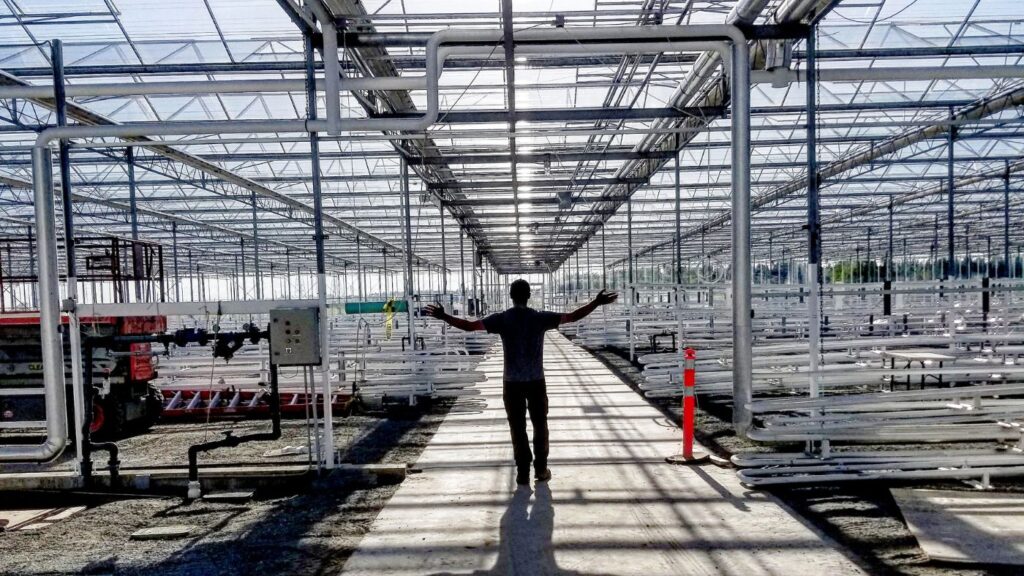 This guide covers the major considerations involved in planning and building a Virginia cannabis facility, with a focus on retail and cultivation operations and additional considerations relevant to processors and microbusinesses. It is written from the build side of the business, because that is where many otherwise-strong applicants stumble: they underestimate utility needs, local approvals, security infrastructure, commissioning, and the time required to convert a site into an inspection-ready operation.
 - Virginia Dual-Use Cannabis Conversion (2027): The $10M Medical-to-Adult-Use Pathway
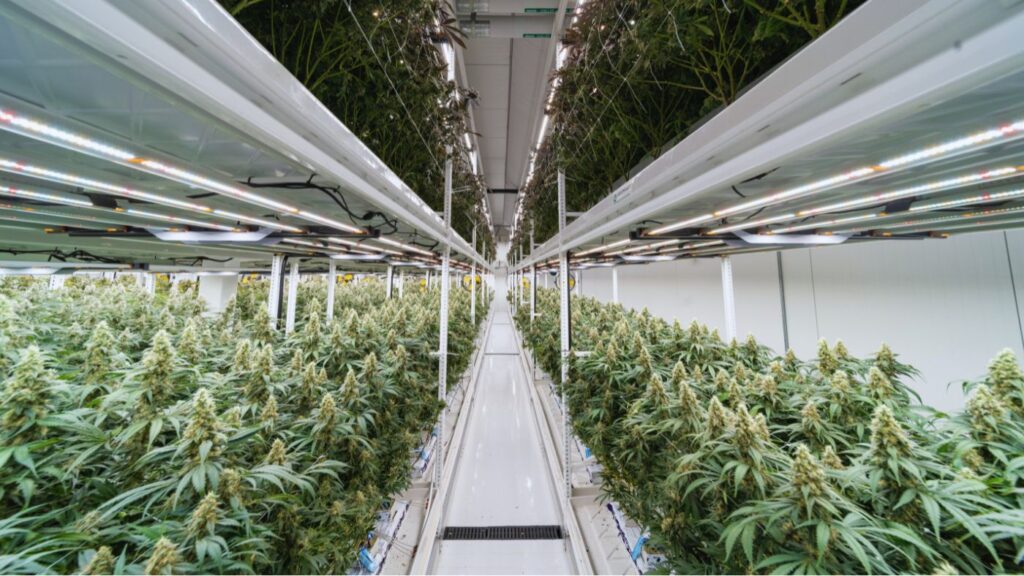 For Virginia’s existing medical cannabis operators, the 2026 retail framework created a distinct and high-stakes transition: pharmaceutical processors may apply for verification to exercise dual-use privileges and serve both registered medical patients and adult-use customers. The pathway covers the processor and its permitted cannabis dispensing facilities, and it carries a one-time $10 million fee, a required medical cannabis program preservation plan, an impact-licensee business accelerator commitment, and a firm May 1, 2027 payment or installment-plan deadline.
 - Virginia Impact Cannabis License (2027): Social Equity & the Equity Business Loan Fund
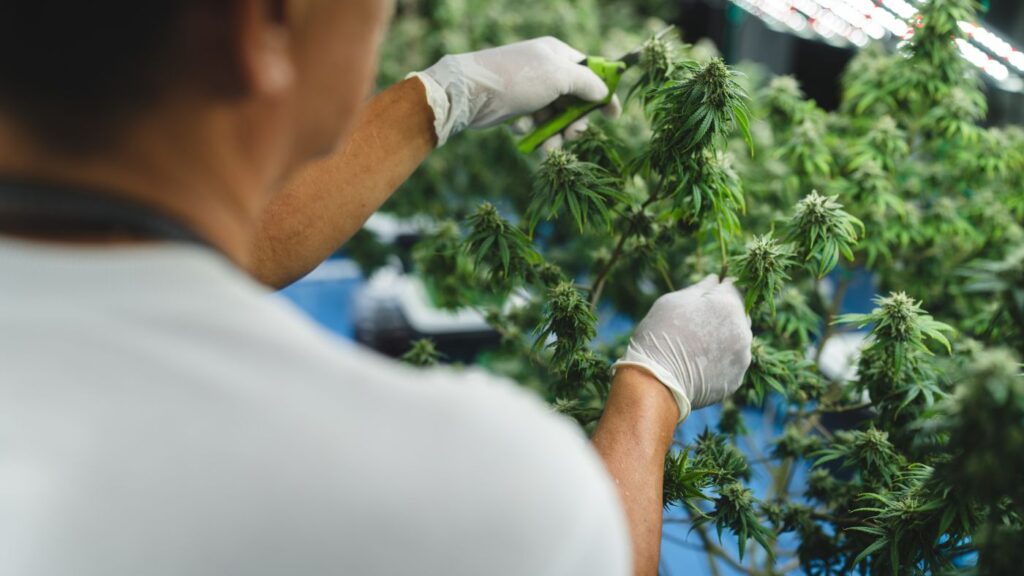 Virginia’s adult-use cannabis framework creates a meaningful pathway for applicants from communities and backgrounds affected by cannabis prohibition and enforcement. The law does not create a separate, stand-alone impact license. Instead, it creates an impact-licensee designation that qualifying applicants may pursue alongside an underlying marijuana establishment license, such as retail, cultivation, processing, microbusiness, transportation, delivery, or testing.
 - Virginia Cannabis Microbusiness License (2027): Eligibility & the Two-Location Model
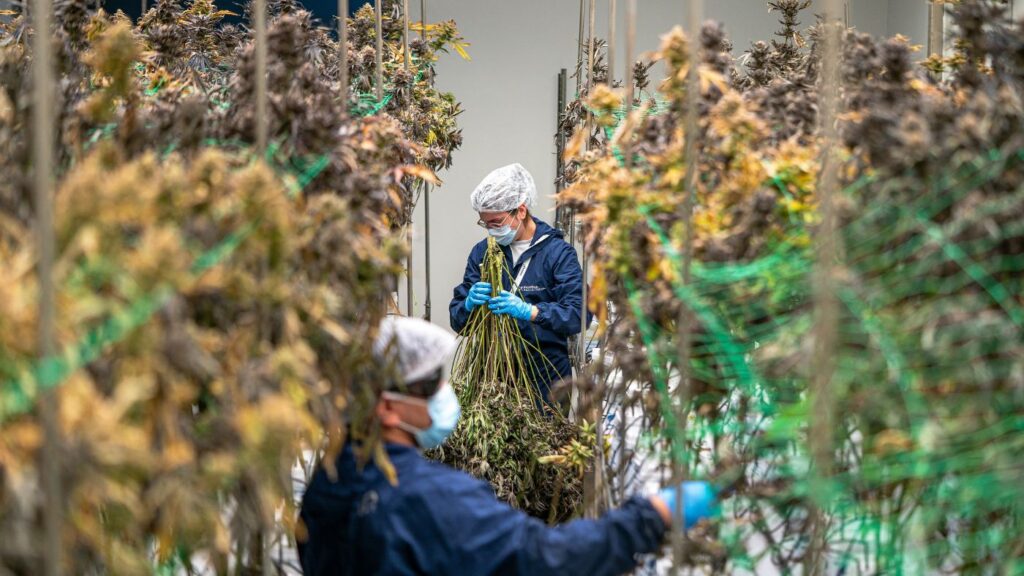 This guide explains the initial eligibility pathways for the licenses the CCA may issue by May 1, 2027, the difference between a microbusiness license and an impact designation, the indoor and outdoor cultivation limits, the precise rules governing two locations, and the financial, security, and operational readiness standards applicants should prepare to demonstrate. Several implementation details – including fees and the specific combination of privileges the CCA will authorize – still depend on forthcoming regulations.
 - Virginia Cannabis Cultivation License (2027): The Tiered System Explained
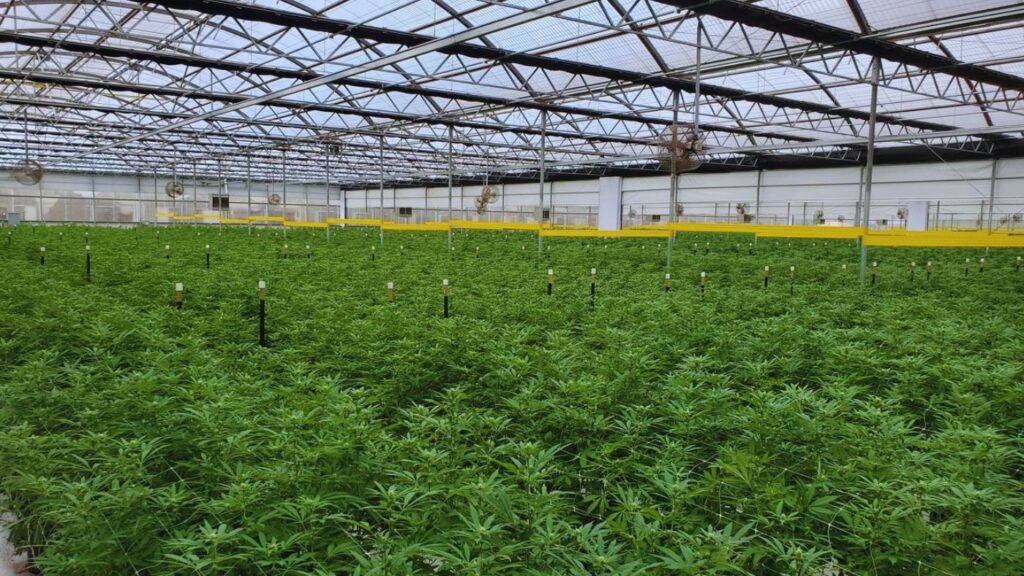 For operators whose strength is growing cannabis, Virginia’s emerging adult-use market presents a significant opportunity – and a cultivation license is the gateway to it. The June 2026 framework authorizes the Virginia Cannabis Control Authority (CCA) to begin accepting license applications on or after February 1, 2027 and issuing licenses on or after May 1, 2027. It also establishes five cultivation tiers with maximum canopies ranging from 5,000 to 35,000 square feet.