
Estimated reading time: 12 minutes
Table of contents
- Florida’s Medical Marijuana Market in 2026
- Can You Apply for a Florida MMTC License Now?
- The 22 New Licenses: From 2023 Window to 2026 Final Order
- Adult-Use Legalization: Off the 2026 Ballot
- What a Florida MMTC License Costs
- Who Can Own a Florida MMTC
- Operating Rules That Shape a Florida MMTC
- Next Steps: Contact Catalyst BC For Support On Your Florida Cannabis Licensing and Market Entry Strategy
- Success Stories: See How Catalyst BC Has Helped Cannabis Businesses Enter and Lead the Market
- Florida MMTC License FAQs
- Additional Resources
- Free eBooks For Cannabis Business Success
- Latest Articles
Cliff Notes: Florida MMTC License Status and Costs (October 2026)
Florida issues one license to grow, process and sell marijuana, the medical marijuana treatment center (MMTC) license, and every MMTC must grow, process and sell its own product. What matters in October 2026:
- No application window is open. The Office of Medical Marijuana Use (OMMU) takes applications only in batching cycles it sets by rule, and none is scheduled.
- 22 new licenses. On September 11, 2026 the Department of Health licensed the 22 applicants it chose from its April 2023 cycle. OMMU’s list now shows 49 MMTCs, 25 of them authorized to dispense.
- The costs. A $146,000 nonrefundable application fee, $5 million in financial assurance within 10 business days of approval and a biennial renewal fee of $1,340,383.11 for renewals due in 2025 and 2026.
- No 2026 adult-use vote. The Florida Supreme Court dismissed review of the adult-use initiative on February 4, 2026, and the Division of Elections lists its election year as 2028.
- Federal change. Since April 28, 2026, marijuana sold under a state medical license, including every Florida MMTC’s, has been in federal Schedule III.
- Where entry happens now. New capital comes in through stakes in licensed MMTCs; our Florida cannabis consultants page sets out each route.
Editors Note: Originally published January 20, 2026. Updated October 5, 2026: rewritten from OMMU records, Florida Statutes section 381.986, Florida Administrative Code chapter 64-4, the Division of Elections and the Federal Register. Earlier versions said Florida would vote on adult use in November 2026 and gave a renewal fee and advertising rules that are no longer current.
Florida’s Medical Marijuana Market in 2026
Florida runs a medical-only cannabis program under Article X, section 29 of its constitution and Florida Statutes §381.986. OMMU, part of the Department of Health, counted 941,963 active qualified patients and 782 dispensing locations in its October 2, 2026 weekly update. Every one of those locations belongs to a licensed MMTC, so a Florida MMTC license, or a stake in a company that holds one, is the only way to sell marijuana in Florida.
Can You Apply for a Florida MMTC License Now?
No. The department takes MMTC applications only in batching cycles set by separate rule, each with a five-day window and a $146,000 nonrefundable fee (Emergency Rule 64ER22-9). No cycle is open. On September 11, 2026 OMMU proposed Rule 64-4.214 to replace the emergency rule with the same fee and window, but proposing a rule does not open a window.
The statute ties new licenses to patient growth: the department must license four more MMTCs within six months after each additional 100,000 active qualified patients. OMMU has not published how many licenses its next cycle would offer or when it would run.
An applicant must have been registered to do business in Florida for five consecutive years and must hold a state nursery registration certificate (Florida Statutes §581.131) when it applies. Neither can be waived by variance, and the five-year clock cannot be shortened, so a future applicant has to start it years before a window opens.
The 22 New Licenses: From 2023 Window to 2026 Final Order
The last window ran April 24 to 28, 2023, for 22 licenses (Emergency Rule 64ER23-1). OMMU lists 74 application numbers and sent letters of intent to approve 22 applicants on November 26, 2024 (OMMU April 2023 MMTC Batching Cycle).
Denied applicants challenged the scoring. In a May 11, 2026 recommended order, a Division of Administrative Hearings judge proposed rescoring eight of them and awarding the licenses to the 22 highest revised scores (DOAH Recommended Order, Case No. 25-1076). The department’s September 11, 2026 final orders instead licensed the same 22 it had chosen in 2024, as OMMU’s MMTC list shows. A party adversely affected by a final agency order may appeal within 30 days, and an appeal does not by itself stay the order (Florida Statutes §120.68).
Each new licensee now runs on fixed deadlines. Its financial assurance was due September 25, 2026, and it must request cultivation, processing and dispensing authorization within 180, 270 and 365 days of licensure: March 10, June 8 and September 11, 2027 (Rule 64-4.216). The department may not renew a license that is not cultivating, processing and dispensing when renewal is due.
Separately, a 2023 law gave applicants from the 2022 Pigford/Black Farmers cycle an opportunity to cure their applications (Chapter 2023-292, Laws of Florida), and OMMU’s MMTC list shows five licenses issued to those applicants from 2023 to 2025.
Adult-Use Legalization: Off the 2026 Ballot
The adult-use initiative, Adult Personal Use of Marijuana (initiative 25-01), will not appear on the November 2026 ballot. The Florida Supreme Court dismissed its review on February 4, 2026, and the Division of Elections lists its election year as 2028. Its summary would let MMTCs sell to adults and provides for licenses for non-medical marijuana businesses, so licensed MMTCs would be first to sell but might not be the only sellers.
What a Florida MMTC License Costs
| Item | Amount | Source |
|---|---|---|
| Application fee | $146,000, nonrefundable | Emergency Rule 64ER22-9 |
| Financial assurance | $5 million (bond, letter of credit or cash) within 10 business days of approval | Rule 64-4.217 |
| Reduced financial assurance | $2 million once serving at least 1,000 qualified patients, with OMMU approval | Rule 64-4.217 |
| Biennial renewal fee | $1,340,383.11 for renewal applications due January 1, 2025 to December 31, 2026 | MMTC Renewal Fee Schedule |
| Certified testing laboratory application | $78,000 per testing facility | Rule 64-4.301 |
The renewal fee is recalculated for each two-year period: the department’s spending on the program over two fiscal years, less initial application fees received, divided by the number of licensed MMTCs. Rule 64-4.215, which takes effect October 6, 2026 and replaces Emergency Rule 64ER25-1, sets that formula and requires renewal applications 120 to 150 days before the license period ends (90 to 120 days under the emergency rule until then). The fee for renewals due after 2026 has not been published. Beyond state fees, an applicant must show certified financial statements and the ability to operate for the first two-year license period. Our guide to what it costs to open a cannabis dispensary in 2026 covers build-out budgets.
Who Can Own a Florida MMTC
- Owners are screened. Anyone with 5% or more of the beneficial or voting interests is an owner, and every owner, manager and employee must pass a level 2 background screening.
- No cross-ownership. Anyone with 5% or more of one MMTC’s voting shares may not acquire any ownership of another, and an individual or entity may be awarded only one license.
- Transfers need approval. A change of ownership needs 60 days’ notice and the department’s approval of the buyer’s own application.
- No landlord profit-sharing. An MMTC may not share profits with the owner or lessor of any facility where marijuana is grown, processed, stored or dispensed.
- Your own staff do the work. An MMTC may not contract for services directly related to cultivation, processing and dispensing.
OMMU’s license letters to the 22 new licensees add that any change from the initial application, “including changes to the organizational structure and capitalization table,” needs a variance (OMMU license letter, MMTC 2026-0029). An investment in a new licensee may therefore need OMMU’s approval before it closes.
Operating Rules That Shape a Florida MMTC
Site Selection. No MMTC facility may sit within 500 feet of a public or private elementary, middle or secondary school, though a county or city may approve a dispensing site closer in a public proceeding. A county or city may ban dispensing facilities; one that allows them may not cap their number or apply rules stricter than those for pharmacies.
Testing. After a failed contaminant test an MMTC has 14 days to choose to retest, remediate or destroy the batch, and a retested batch must pass two new tests (Rule 64-4.212). Edibles cannot be remediated, and a remediated batch cannot be remediated a second time (Rule 64-4.213).
Supply. An MMTC may buy product from another MMTC only after OMMU certifies a harvest failure and approves the transfer (Emergency Rule 64ER25-4). Because an MMTC usually cannot buy replacement product after losing a crop, climate control that prevents mold in Florida’s humid air, through dehumidification and HVAC design, protects supply as well as the building.
Advertising. The 2026 budget implementing law repealed Emergency Rule 64ER25-6 on MMTC advertising and marketing (Chapter 2026-233, Laws of Florida), and OMMU proposed a replacement, Rule 64-4.227, on August 24, 2026. Until Rule 64-4.227 is adopted, the statute’s limits apply: internet advertising needs department approval, and a dispensary’s exterior sign shows only its business name, approved trade name or approved logo.
Tracking. Every MMTC must use or integrate with the department’s seed-to-sale tracking system.
Tax. Medical marijuana and delivery devices are exempt from Florida sales tax (Florida Statutes §212.08(2)(l)).
Federal status. Since April 28, 2026, marijuana subject to a state medical marijuana license has been in federal Schedule III, and the Justice Department’s order says such licensees are no longer subject to Section 280E, the tax rule that bars deductions for trafficking in Schedule I or II drugs (Federal Register, 91 FR 22714). The order also opens DEA registration to state medical licensees and tells them to confirm the tax position with tax counsel. Adult-use marijuana remains in Schedule I.
Next Steps: Contact Catalyst BC For Support On Your Florida Cannabis Licensing and Market Entry Strategy
With no window open, the practical questions are which licensed MMTC to back, how a stake fits the 5% owner and cross-ownership rules, and whether a new licensee can meet its 2027 authorization deadlines. Our Florida cannabis consulting team reviews MMTC ownership and transfers for investors and cultivation, testing and authorization plans for licensed operators. Contact Catalyst BC to talk through a Florida file.
Success Stories: See How Catalyst BC Has Helped Cannabis Businesses Enter and Lead the Market
From initial startup and facility build-outs to high-value exit strategies, our cannabis consultants provide the expertise needed to navigate the complexities of the legal cannabis industry.


Florida MMTC License FAQs
Not in October 2026. A Florida MMTC license can be applied for only during a batching cycle that OMMU sets by rule, and none is scheduled. The most recent window, April 24 to 28, 2023, produced the 22 licenses issued on September 11, 2026.
Applying costs $146,000, which is not refunded. A licensee then posts $5 million in financial assurance and pays a biennial renewal fee that OMMU recalculates for each two-year period; it was $1,340,383.11 for renewals due in 2025 and 2026.
No. Florida has no retail-only or cultivation-only license. Only an MMTC may dispense, and every MMTC must cultivate, process and dispense its own marijuana.
OMMU’s list, read October 5, 2026, shows 49 MMTCs, 25 of them authorized to dispense. The 22 licensed on September 11, 2026 must request dispensing authorization within 365 days.
Yes, with approval. A licensed MMTC may transfer ownership to a buyer that meets the statute’s requirements after giving the department at least 60 days’ notice, and the buyer files its own application at least 60 days before the change. The department approves or denies within 30 days of a complete application. For the 22 new licensees, OMMU’s letters add that changes to the organizational structure or capitalization table need a variance.
Additional Resources
Free eBooks For Cannabis Business Success




Latest Articles
- How Much Does It Cost to Open a Cannabis Dispensary in 2026
 The allure of jumping into the legalized cannabis industry often paints a picture of quick riches and burgeoning demand, yet the reality of establishing a licensed cannabis dispensary is far more nuanced, capital-intensive, and fraught with unique financial challenges. For aspiring entrepreneurs and seasoned investors alike, understanding the true dispensary startup costs is the absolute bedrock of success.
 - Virginia Cannabis Facility Design & Build-Out for the 2027 Market
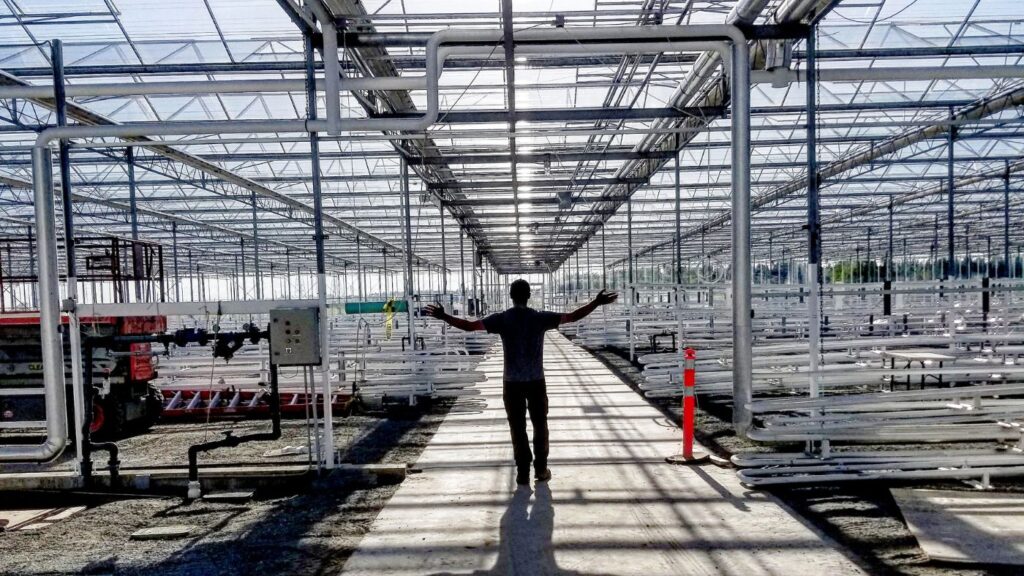 This guide covers the major considerations involved in planning and building a Virginia cannabis facility, with a focus on retail and cultivation operations and additional considerations relevant to processors and microbusinesses. It is written from the build side of the business, because that is where many otherwise-strong applicants stumble: they underestimate utility needs, local approvals, security infrastructure, commissioning, and the time required to convert a site into an inspection-ready operation.
 - Virginia Dual-Use Cannabis Conversion (2027): The $10M Medical-to-Adult-Use Pathway
 For Virginia’s existing medical cannabis operators, the 2026 retail framework created a distinct and high-stakes transition: pharmaceutical processors may apply for verification to exercise dual-use privileges and serve both registered medical patients and adult-use customers. The pathway covers the processor and its permitted cannabis dispensing facilities, and it carries a one-time $10 million fee, a required medical cannabis program preservation plan, an impact-licensee business accelerator commitment, and a firm May 1, 2027 payment or installment-plan deadline.
 - Virginia Impact Cannabis License (2027): Social Equity & the Equity Business Loan Fund
 Virginia’s adult-use cannabis framework creates a meaningful pathway for applicants from communities and backgrounds affected by cannabis prohibition and enforcement. The law does not create a separate, stand-alone impact license. Instead, it creates an impact-licensee designation that qualifying applicants may pursue alongside an underlying marijuana establishment license, such as retail, cultivation, processing, microbusiness, transportation, delivery, or testing.
 - Virginia Cannabis Microbusiness License (2027): Eligibility & the Two-Location Model
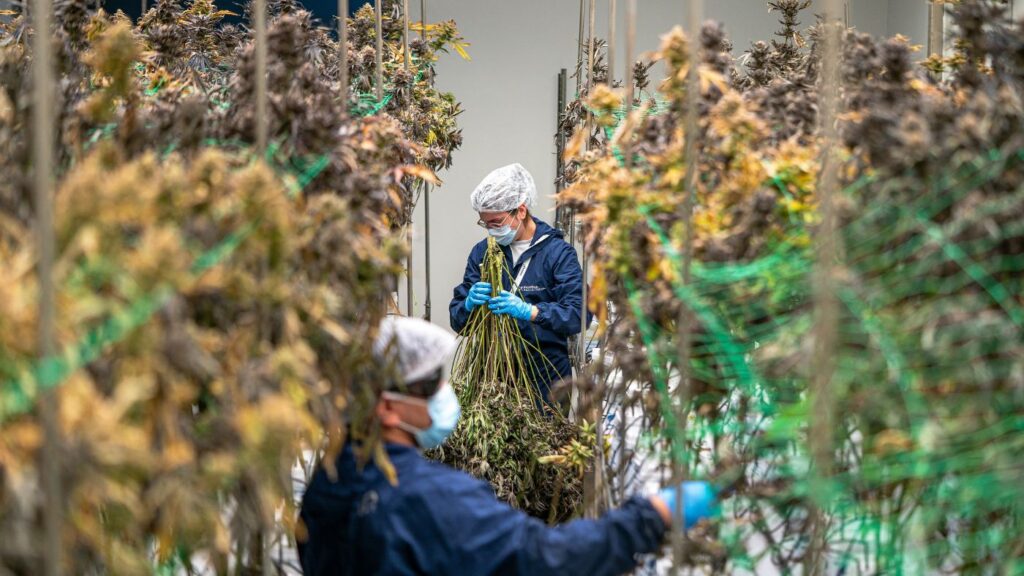 This guide explains the initial eligibility pathways for the licenses the CCA may issue by May 1, 2027, the difference between a microbusiness license and an impact designation, the indoor and outdoor cultivation limits, the precise rules governing two locations, and the financial, security, and operational readiness standards applicants should prepare to demonstrate. Several implementation details – including fees and the specific combination of privileges the CCA will authorize – still depend on forthcoming regulations.
 - Virginia Cannabis Cultivation License (2027): The Tiered System Explained
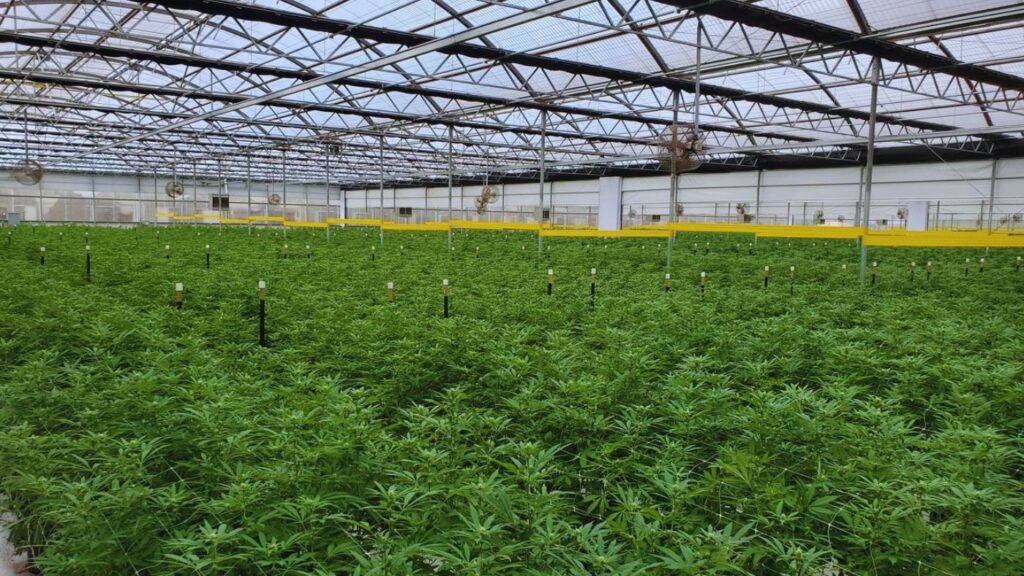 For operators whose strength is growing cannabis, Virginia’s emerging adult-use market presents a significant opportunity – and a cultivation license is the gateway to it. The June 2026 framework authorizes the Virginia Cannabis Control Authority (CCA) to begin accepting license applications on or after February 1, 2027 and issuing licenses on or after May 1, 2027. It also establishes five cultivation tiers with maximum canopies ranging from 5,000 to 35,000 square feet.