West Virginia Cannabis Consultants for OMC Buy-Ins and Yield

West Virginia cannabis consulting starts with a hard fact: OMC stopped taking grower, processor and dispensary applications in 2020, so most investors enter through an approved ownership change. We structure those buy-ins and help licensed operators protect margins. Our records show 58+ licenses secured elsewhere.

A Decade of Harvesting Success - Trusted by Cannabis Operators Worldwide

Next OMC Renewal and Hemp Dates

Nov 12, 2026Processor permits expire; federal hemp change begins
Dec 11, 2026Rest of federal hemp definition, incl. 0.4 mg cap
Jan 28, 2027Dispensary permits expire; renewal window closed

Updated: 10/10/2026. West Virginia runs a medical-only program under the Medical Cannabis Act of 2017. The Office of Medical Cannabis (OMC), part of the Department of Health’s Bureau for Public Health, permits growers, processors and dispensaries and approves testing laboratories. Its stat sheet with data as of August 31, 2026 counts 70 operational dispensaries, 9 growers and 9 processors, and 36,157 approved patients on August 1 (OMC stat sheet). In October 2025 the most common qualifying conditions were severe chronic or intractable pain and post-traumatic stress disorder.

Three dates matter next. Processor permits expire every November 12 and dispensary permits every January 28, and a renewal must be filed between six and four months before expiry, so the filing window for January 2027 renewals closed September 28, 2026 (OMC Technical Advisory #25010001). On November 12, 2026 a new federal hemp definition takes effect for products containing cannabinoids the plant cannot make; from December 11 the definition’s total-THC test and the 0.4-milligram per-container cap for final products also apply.

Meet Catalyst BC's Founders

  • Leif Olsen - Chief Executive Officer

    Leif Olsen

    Chief Executive Officer

  • Michael Williamson - Chief Operating Officer

    Michael Williamson

    Chief Operating Officer

  • Ian Miller - Executive Chair

    Ian Miller

    Executive Chair

Our partners bring multi-faceted expertise across business strategy, licensing, facility development, finance, and commercial operations. That breadth is complemented by subject matter experts across the wider Catalyst BC team, allowing us to bring the right combination of experience to each client and project. The result is bespoke, collaborative support shaped around your business, priorities, and goals - with the right expertise brought to the table when it matters most.

Learn more about our team

Where a West Virginia Cannabis Consultant Fits Beside the OMC

OMC permits, inspects and enforces, and it says it will not advise any applicant or permittee on federal law (OMC Industry page). A West Virginia cannabis consultant works on the owner’s side: the ownership-change filing, diligence on the permittee you are buying into, the build that must pass an OMC inspection, and the procedures that keep a permit renewed.

Investing in West Virginia Medical Cannabis: Buying Into a Capped Market

For an investor, the way in today is a stake in an existing permittee. A permit cannot be transferred, so the business holding it changes owners instead, and OMC must approve that change in writing first. In a privately held company the Act counts ownership of any security as a controlling interest, and a change in control includes stakes acquired over any 12 consecutive months (W. Va. Code § 16A-2-1).

In our reading, even a small investment makes you a principal who is named, fingerprinted and judged for good moral character and financial fitness. Lenders count too: the Act defines a financial backer as an investor, mortgagee, bondholder, note holder or other source of capital other than a financial institution, so a private loan to a permittee puts the lender through the same review.

A federal rule effective April 28, 2026 placed marijuana subject to a state medical marijuana license in Schedule III; the U.S. Department of Justice says state licensees are no longer subject to Section 280E, the tax-code ban on business deductions for Schedule I and II trafficking, but that the rule is not a tax determination (91 FR 22714). The same rule offers state medical licensees an expedited DEA registration. In our view, the end of Section 280E for state licensees moves an investor’s after-tax return more than any permit fee.

Our work for West Virginia investors: market and target selection through cannabis business strategy; a West Virginia cannabis business plan with fees, the 10% dispensary tax and price trends through cannabis financial planning; the OMC change-in-ownership packet through cannabis license application support; and build-out to the operational inspection through cannabis startup support.

Already Licensed in West Virginia: Falling Flower Prices and Approval-First Expansion

OMC’s 2025 biennial report shows dispensary flower falling from $8.43 a gram in October 2023 to $7.13 in October 2025, while the average patient spent $336.96 a month in October 2025 (OMC Biennial Report 2025). Patient growth has slowed, so in our view West Virginia growers now compete on cost per gram, and a failed lab test adds cost.

Growth also needs approval first. A permittee must file a facility alteration application, with a $250 fee, before changing total square footage, changing an entry that alters a limited-access area or, to enhance permitted activity, adding fixtures or lighting, lowering a ceiling or doing electrical work that needs a government inspection (64 CSR 109-14). A grower permit may cover up to two locations, and the rules provide an application for adding one.

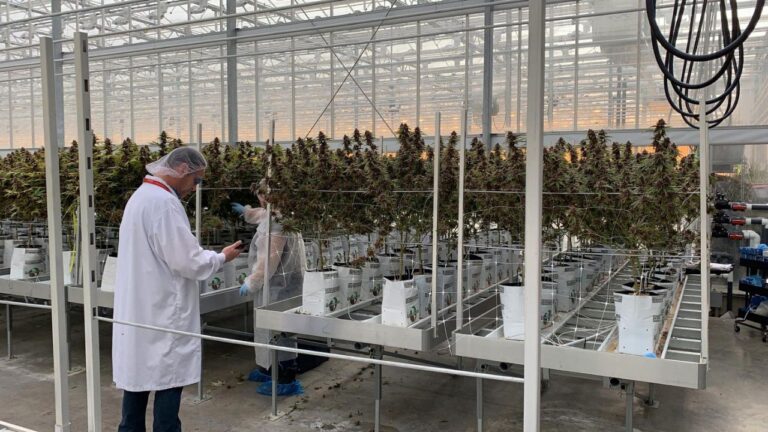
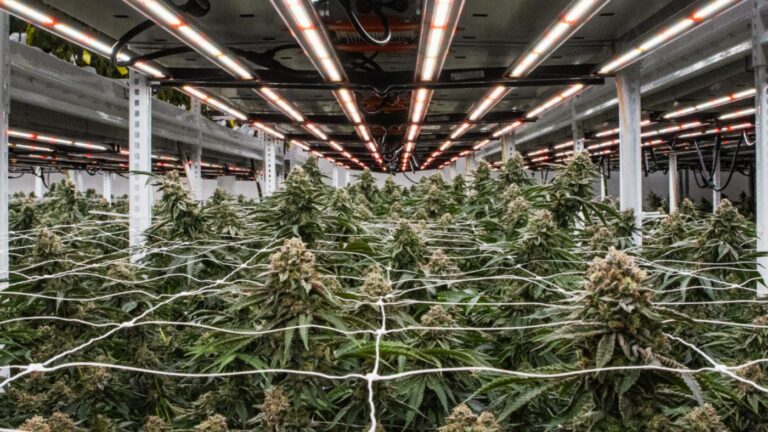
For licensed operators we offer West Virginia cannabis facility design with HVACD (heating, ventilation, air conditioning and dehumidification), controlled environment agriculture targets set against the climate controls the rules require, cannabis vertical farming planned around the alteration filing, operational optimization of harvest scheduling and labor and, when margins slip, a cannabis turnaround diagnostic. Our Chief Operating Officer and co-founder Michael Williamson has 25,000+ hours (company-reported) in cultivation and dispensary operations and co-founded Greenhaus Industries, which patented stackable trays for growing on multiple tiers (company-reported).

Our West Virginia record and team: Catalyst BC has no West Virginia client, and we will not imply one. Leif Olsen, our Chief Executive Officer and a co-founder, is our licensing specialist, and Ian Miller, our Executive Chair and a co-founder, holds a master’s degree in building construction. We have no West Virginia office; we deliver work on-site and remotely, and the same team runs Catalyst BC’s national cannabis consulting practice.

A word against our own interest: nobody can sell you a winning West Virginia application today, and a permittee with clean records can file OMC’s change-in-ownership form without a consultant. To talk through a West Virginia deal or facility, contact us or call (USA) 303-305-3787.


Investing in West Virginia cannabis

Already licensed in West Virginia

0 +
Years Regulated Cannabis Operations Experience
0 +

Compliant Harvests

0 M+

Square Feet of Cultivation, Production, and Retail Facilities Designed

0 +

Licenses Secured

Can You Still Get a West Virginia Cannabis Permit in 2026?

Not a new grower, processor or dispensary permit. OMC stopped accepting those applications on February 18, 2020, at 3:00 p.m. and says no additional grower, processor or dispensary applications are being accepted; only laboratory applications continue. There is no West Virginia cannabis license application to file for a grow, processing site or dispensary today, and the Act caps the state at 10 growers, 10 processors and 100 dispensaries (W. Va. Code § 16A-6-13).

A permit is nontransferable and a revocable privilege (W. Va. Code § 16A-6-3), so the live route for capital is an OMC-approved change in ownership of an existing permittee. If OMC reopens initial applications, its rules require it to publish the application window in the State Register and on its website first; we watch both.

Route Status Rule
New grower, processor or dispensary permit Closed since February 18, 2020 OMC Industry page
Stake in an existing permittee Open with OMC’s prior written approval; $250 fee 64 CSR 109-12
Testing laboratory approval Applications accepted; approval valid two years 64 CSR 111-3 and 111-4
Additional location for a permittee Listed in the rules; confirm with OMC first, as new permit applications are closed 64 CSR 109-4.1.6; 64 CSR 112-20
Hemp grower or product permit Department of Agriculture, separate from OMC W. Va. Code § 19-12E-4 and -12
Swipe to see the full table →

OMC Industry page; 64 CSR 109, 111 and 112; W. Va. Code ch. 19, art. 12E. Every source is listed at the bottom of this page.

Law or action When What it did
SB 386, Medical Cannabis Act Signed April 19, 2017 Created the medical program run by the Bureau for Public Health
64 CSR 109 to 112 Effective May 8, 2025 Current general, grower/processor, laboratory and dispensary rules
HB 5260 (edible form) Passed the House March 4, 2026 Last action: referred to Senate Health and Human Resources March 5, 2026; edibles remain unlawful
Federal Schedule III rule Effective April 28, 2026 State-licensed medical marijuana moved to Schedule III
Proposed 64 CSR 109, 110 and 112 amendments Filed with the Legislative Rule-Making Review Committee August 12, 2026 Not yet in force; see Testing & Hemp
Swipe to see the full table →

OMC Acts/Rules and Industry pages; Secretary of State rule records; Legislature bill history; 91 FR 22714.

Item What to provide
Timing and fee Filed 60 days before the expected change, with a $250 fee
Control question Whether the change is a change in control of the permit
Each new person Legal name, contact details, photo ID, date of birth, last four of SSN, addresses, expected ownership percentage
Each new person, background A CV, an Affidavit of Suitability and a background-check rights acknowledgment
Entity records Secretary of State registration, updated organizational chart, updated tax clearance certificates
Site and operations Any changed title, lease or option; updated plan of operation and label if they change
Swipe to see the full table →

OMC Application for a Change in Ownership within a Medical Cannabis Organization.

The approval rules for a change in ownership are under ownership changes.

West Virginia OMC Permit Categories, Caps and Who Holds Them

OMC issues three kinds of permits to medical cannabis organizations: grower, processor and dispensary. It may issue no more than one grower permit and one processor permit to a person and no more than 10 dispensary permits to one person, and one person may hold a grower, processor and dispensary permit at the same time. A dispensary may buy only from a permitted grower or processor, and a grower or processor may sell only to a permitted dispensary.

Demand comes from certified patients. A registered physician certifies a patient with a qualifying serious medical condition, the patient pays OMC a $50 application fee unless a hardship waiver is granted, and a patient may buy up to 6 ounces of flower or 60 grams of concentrate, or an equivalent combination, per rolling 30 days unless a physician specifies otherwise.

Permit Statutory cap What it allows
Grower 10 permits; up to two locations each Grow medical cannabis indoors in a secure in-state facility and sell to dispensaries
Processor 10 permits Process medical cannabis into approved forms and sell to dispensaries
Dispensary 100 permits; no more than 10 to one person Dispense to patients and caregivers with valid cards, inside the facility
Laboratory approval No statutory cap Test grower and processor samples under contract; valid two years
Swipe to see the full table →

W. Va. Code §§ 16A-6-13, 16A-7-2 and 16A-8-2; 64 CSR 111-3.

Measure Count Date
Operational dispensaries 70 Data as of August 31, 2026
Operational growers 9 Data as of August 31, 2026
Operational processors 9 Data as of August 31, 2026
Approved patients 36,157 August 2026 count
Registered physicians 125 Data as of August 31, 2026
Active patients 35,394 October 31, 2025
Swipe to see the full table →

OMC stat sheet (data as of August 31, 2026); OMC Biennial Report 2025.

Permits run for a year, and OMC’s renewal advisory sets grower expiry at September 30. Renewals are filed in Complia, OMC’s filing system; a renewal not filed before expiry gets no extension, and missing the four-month mark could bring a total product hold in Metrc. A permittee must notify OMC that it is operational within six months of the permit’s issuance, and OMC then inspects.

OMC must renew a permit unless it finds the permittee unlikely to maintain effective control against diversion or unlikely to comply with state law, and the rules add falsified applications as grounds for denial.

OMC Permit Fees, Capital Proof and the 10% Dispensary Tax

West Virginia sets permit fees in statute (W. Va. Code § 16A-6-6). The table below lists each fee. Renewal fees cover all locations, and fees are paid by certified check or money order. Dispensaries also pay a 10% privilege tax on gross receipts from sales to patients and caregivers, filed quarterly (W. Va. Code § 16A-9-1).

PermitApplication feeFirst-year permit feeRenewal fee
Grower$5,000, nonrefundable$50,000, returned if not granted$5,000, all locations
Processor$5,000, nonrefundable$50,000, returned if not granted$5,000, all locations
Dispensary$2,500, nonrefundable$10,000 per location, returned if not granted$2,500, all locations
Additional dispensary location$2,500, nonrefundable$10,000 per locationCovered by the permit renewal
Swipe to see the full table →

W. Va. Code § 16A-6-6; 64 CSR 109-5; 64 CSR 112-20.3.

ItemAmount
Change in ownership application$250
Change of location application$250
Facility alteration application$250
Grower or processor applicant capitalAt least $2,000,000, with $500,000 on deposit
Dispensary applicant capitalAt least $150,000 on deposit
Civil penaltyUp to $10,000 per violation, plus up to $1,000 a day while it continues
Swipe to see the full table →

64 CSR 109-5.3, 109-20.1.2 and 109-25.

TaxRate and rule
Dispensary privilege tax10% of gross receipts from sales to patients and caregivers; not shown as a separate line
FilingQuarterly, due January, April, July and October 20
Sales tax on medical cannabisExempt from local sales and special district excise taxes, and from state sales and use tax once the 10% tax is paid
Hemp products with the cannabinoids the tax lists11% of the retail sales price, on top of other taxes
Swipe to see the full table →

W. Va. Code § 16A-9-1; WV Tax Division Excise Tax and HKT pages.

Budget accordingly (our arithmetic): if OMC ever reopens, a grower or processor would file $55,000 with its application, the $5,000 application fee plus the $50,000 permit fee, and a dispensary $12,500 for one location. A buy-in instead costs the permittee a $250 filing fee, so the money question becomes price and diligence.

Correction to published guidance (October 10, 2026): a consulting firm’s West Virginia page, last updated May 15, 2026, lists a $10,000 application fee for every permit type and a $50,000 annual license fee for growers and processors. Under § 16A-6-6 the application fee is $5,000 for a grower or processor and $2,500 for a dispensary, and after the first-year permit fee a grower or processor renews for $5,000.

How a West Virginia Dispensary Opens Today, and How Ownership Changes

How to open a dispensary in West Virginia today, in five steps

With applications closed, these steps assume you buy into an existing dispensary permittee, under 64 CSR 109 and 112.

  1. Find a dispensary permittee open to new owners and check that the deal keeps every owner within the cap of 10 dispensary permits per person.
  2. Run diligence on renewals, inspections, violations, tax standing and Metrc (seed-to-sale) records, then decide whether the deal is a change in control.
  3. Have the permittee file OMC’s change-in-ownership application: $250 fee, a CV, suitability affidavit and background check for each new person, and updated tax clearance certificates.
  4. Wait for OMC’s written approval before closing; for a new site, also file a change of location and confirm zoning and the 1,000-foot rule.
  5. Keep the store compliant: two-hour training for staff who handle cannabis, advertising approved by OMC before use, and renewal filed four to six months before January 28.

Ownership changes need approval first. A change in ownership is the addition or removal of a principal, operator or financial backer, or a change in control, and OMC’s form asks for the filing 60 days before the expected change (OMC change-in-ownership form). A change made without OMC’s prior written approval violates the Act and the rules, and a change in control with no application means surrendering the permit.

In our view, buy-ins slow down on diligence and background files more often than on the form itself, so our cannabis licensing and application team assembles those first.

Who May Own Part of a West Virginia Permittee, and the Residency Question

A financial backer, principal or employee convicted of a felony related to the sale or possession of illegal drugs may not be affiliated with a medical cannabis organization, though someone joining a dispensary may seek a waiver from OMC (W. Va. Code § 16A-6-12). A public official or an immediate family member may not hold a financial interest in or work for a permittee while in office and for one year after (W. Va. Code § 16A-15-2).

Every applicant and principal must also be current on state taxes, shown by tax clearance certificates. Residency is not a bar: OMC says it will not apply the residency requirement it ties to § 16A-6-3 to permit applicants, citing a U.S. Supreme Court decision. Patients, by contrast, must be West Virginia residents.

Testing labs are walled off. A principal, owner, financial backer or employee of a medical cannabis organization may not hold a management or a direct or indirect ownership interest in an approved laboratory, so an investor in a permittee cannot also hold a stake in a testing lab.

Diligence checks every owner’s other permits against the per-person caps. OMC’s 2025 report counted 817 inspections, 11 notices of violation and $3,900 in fines over two years. Unpaid dispensary tax is a lien on the property of the dispensary and of its owners, so we check tax standing first.

Where West Virginia Cannabis Sites May Go: Zoning, Counties and Distance

A dispensary may not sit within 1,000 feet of the property line of a public, private or parochial school or a day-care center, may not share a site with a growing and processing facility, and may dispense only in an indoor, enclosed, secure facility (W. Va. Code § 16A-8-2). OMC may amend the 1,000-foot rule only on clear and convincing evidence that patients need the access, and the rules also bar a dispensary from a practitioner’s office space.

A grower or processor meets the same zoning as other manufacturing, processing and production facilities in its district, and a dispensary the same as other commercial facilities. A municipality may prohibit or limit the number and type of medical cannabis organizations (W. Va. Code § 16A-15-7), and a county may prohibit them by a vote of its residents (W. Va. Code § 16A-7-6).

Before OMC issues a permit it must obtain written approval from the county board of health and a statement from the county commission that the county has not voted to disapprove. For dispensaries OMC also weighs factors including geographic location, regional population, patient numbers, public transportation, local health department approval and county decisions, and publishes a location boundaries policy.

Growing and processing must happen in an indoor, enclosed, secure in-state facility with electronic locks and surveillance (W. Va. Code § 16A-7-2). Before you sign a lease or a purchase agreement, confirm the zoning, the county and municipal status and the distances; our cannabis facility design work starts with that screen.

OMC Testing, Product Forms, Proposed Rule Changes and West Virginia Hemp

A grower or processor must contract with an independent laboratory that tests at harvest and at final processing (W. Va. Code § 16A-7-4). Samples are tested at least for pesticides, solvents, water activity and moisture, THC and CBD, and microbiological contaminants, against levels OMC sets (64 CSR 111-10 and 111-12). If a sample fails, the same lab may re-test it on request, and a passing re-test needs a second confirmatory re-test from the same batch or lot.

Growers may use only the pesticide active ingredients on the rule’s approved list and must log every application for four years (64 CSR 110-9 and 110-24). Their facilities need systems to monitor, record and regulate temperature, humidity, ventilation, lighting and water, and auxiliary power for at least 48 hours for the growing and processing areas named in their plan of operation.

OMC’s rule lets growers and processors make pills, oils, topicals, forms for vaporization or nebulization, liquids, dermal patches and dry leaf, and the Act’s list of dispensable forms adds tinctures (W. Va. Code § 16A-3-2); smoking and edible products remain unlawful (W. Va. Code § 16A-3-3). A 2026 bill to allow edibles passed the House, and its last recorded action was a referral to a Senate committee (HB 5260 history). Since March 1, 2026, OMC places on administrative hold products whose names appeal to children, mimic trademarked foods or drinks, refer to the illicit market or imply intoxicating effects (OMC Technical Advisory #25010002).

Dispensaries may not deliver to patients, give cannabis away or run coupons, and every advertisement needs OMC’s approval before use. A West Virginia cannabis compliance consulting review checks advertising approvals, the certificate-of-analysis trail and the Metrc data before an inspector does; OMC inspects every organization at least once a quarter.

Proposed amendments to 64 CSR 109, 110 and 112, approved by the agency on July 29, 2026 and filed with the Legislative Rule-Making Review Committee on August 12, 2026, are not yet in force (proposed 64 CSR 109; proposed 64 CSR 110; proposed 64 CSR 112). They would add a $2 fee on each electronic payment, require auxiliary power with an automatic transfer switch or failover system covering, as applicable, security, fire, gas and temperature systems, define tinctures with a 30-milliliter cap, cap liquids at 60 milliliters, exclude gummies and baked goods from “pill”, and require dispensaries to check a government photo ID with every card.

West Virginia Hemp: Department of Agriculture Licenses and the 2026 Federal Change

Hemp sits outside OMC. A person may not cultivate, handle or process industrial hemp without a license from the Department of Agriculture, valid until December 31 of the year issued, though the commissioner may instead recognize USDA grower licenses (W. Va. Code § 19-12E-4; § 19-12E-5), and hemp-derived cannabinoid products are for adults 21 and older (§ 19-12E-12). Under the emergency rule effective August 11, 2026, hemp product registration runs $200 per product a year, with annual caps for products made and sold in West Virginia and lower fees for West Virginia-grown ones, and a retailer registers for $100 a year (61 CSR 30); retail sales of hemp products with the cannabinoids the tax lists carry an 11% tax (WV Tax Division HKT FAQ).

Under Public Law 119-37, hemp is redefined federally on November 12, 2026 to exclude products containing cannabinoids the plant cannot naturally produce, and Public Law 119-103 delays the rest, including the total-THC test and the 0.4-milligram per-container line for final products, to December 11, 2026 (P.L. 119-37, Section 781; P.L. 119-103, Section 2019).

Two West Virginia Engagements: Buy-In Diligence and an Approval-Ready Expansion Plan

Investors get buy-in diligence before they sign: the permittee’s renewal, inspection and violation history, every owner checked against the per-person caps and the felony bar, a change-in-control answer, and a West Virginia cannabis business plan with fees, the 10% tax, flower-price trends and Schedule III tax questions for your adviser. Licensees get an approval-ready expansion plan: canopy, racking and lighting designed with the facility alteration filing in mind, HVACD and backup power sized for the current and proposed rules, and a check of your testing results and Metrc records. Send us your details, and we will tell you plainly if another firm suits you better.

What Investors and OMC Permittees Ask About West Virginia

Not for growers, processors or dispensaries. OMC stopped accepting those applications on February 18, 2020, and says no additional grower, processor or dispensary applications are being accepted. Laboratory applications are still accepted.

Through a change in ownership of an existing permittee, because permits are nontransferable. OMC must approve the change in writing before it happens; its form asks for the filing 60 days ahead with a $250 fee and background information on each new person.

No. OMC says it will not apply the residency requirement it ties to § 16A-6-3 to permit applicants, citing a U.S. Supreme Court decision. Owners still face background checks, the felony drug-conviction bar and the tax-clearance requirement.

A grower or processor pays a $5,000 application fee and a $50,000 first-year permit fee, then $5,000 to renew. A dispensary pays $2,500 and $10,000 per location, then $2,500 to renew.

Usually not for lighting. A facility alteration application and a $250 fee are required before changing total square footage, changing an entry that alters a limited-access area or, to enhance permitted activity, adding fixtures or lighting, lowering a ceiling or doing electrical work that needs an inspection. In our reading, racks need the filing when they bring those changes or materially alter the facility.

The lab that ran the test may re-test it at the grower or processor’s request, and a passing re-test must be confirmed by a second re-test from the same batch or lot. If OMC does not accept the results, the lab disposes of the sample.

No. The Act makes it unlawful to smoke medical cannabis or to sell it in edible form, though a patient or caregiver may mix it into food. A 2026 bill to allow edibles passed the House; its last recorded action was a Senate committee referral. Dry leaf is an approved form, but smoking it is not.

The Department of Agriculture, not OMC. It licenses hemp growers and processors and registers hemp products, and hemp-derived cannabinoid products are limited to adults 21 and older; those with the cannabinoids the tax lists carry an 11% retail tax.

Facility and Cultivation Work Behind Our West Virginia Advice

These projects show the cultivation, extraction and facility work we offer West Virginia permittees; each tile opens its full write-up, and all of them are on our projects page.

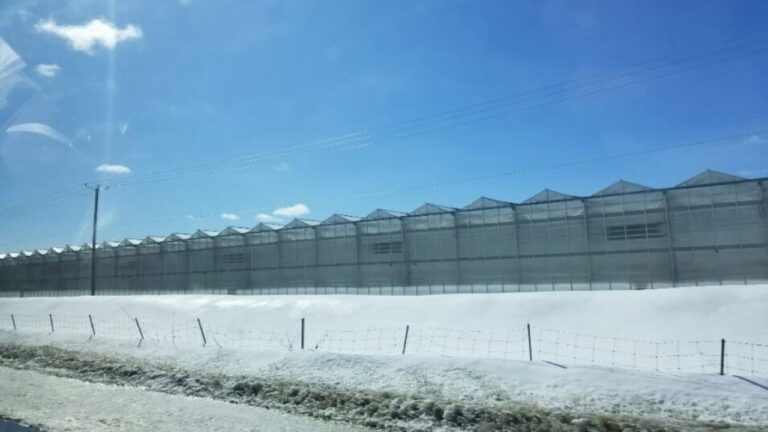
Exterior view of the Hexo Venlo glasshouse row spanning over 1 million square feet.

Hexo Corp.

Gatineau, Quebec, Canada

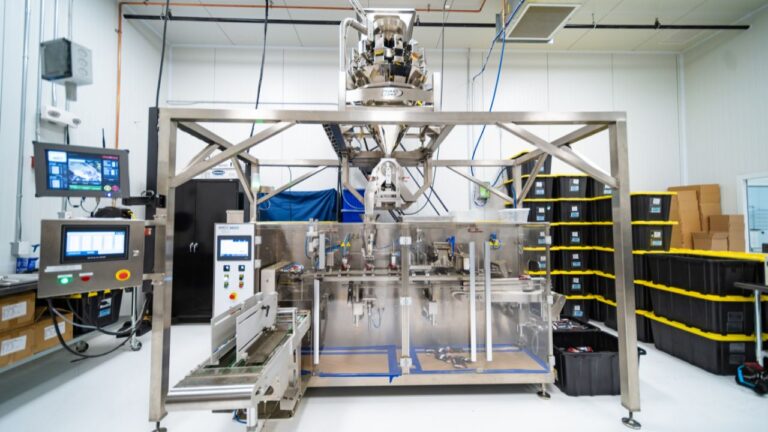
Modern stainless steel automated cannabis pre-roll processing machine in a dedicated production room.

Bostica

Lynn, MA, United States

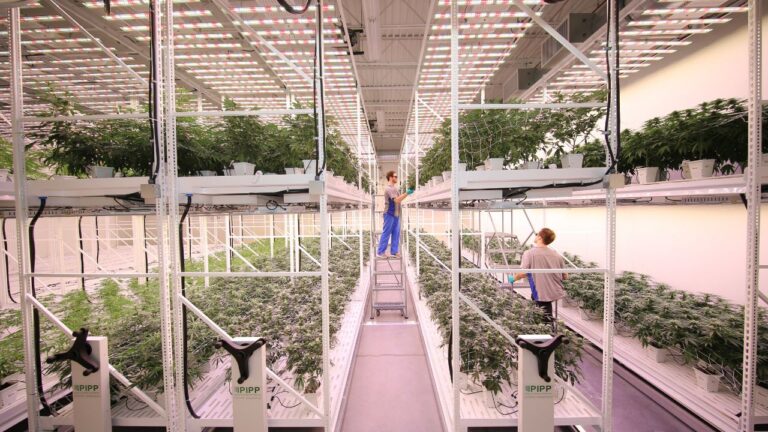
Catalyst BC consultants and LeafLine Cultivation Director inspecting vibrant plants in an organized vertical grow room.

Leafline Labs

Cottage Grove, MN, United States

Catalyst BC consultant recording air, environmental, and plant data measurements within a cultivation facility.

View All Projects

View all Catalyst BC Projects

Reading for West Virginia Investors and OMC Permittees

Provenance. Figures checked against the statute, rule and agency text by Catalyst BC on October 10, 2026. W. Va. Code chapter 16A and chapter 19, article 12E were read section by section on the Legislature’s code site; the OMC rules 64 CSR 109 to 112 were read in the versions effective May 8, 2025 filed with the Secretary of State, and the proposed amendments in the files the Secretary of State lists as in progress. Patient, organization, price and inspection figures come from OMC’s stat sheet (data as of August 31, 2026) and its 2025 biennial report; budget figures are our own arithmetic. Company figures come from Catalyst BC’s own records. Where this page and the official text differ, the official text governs.

West Virginia statutes and legislative records

OMC rules, records and guidance

Hemp, tax and federal law

Contact Us

Enough about us. We want to hear more about you, your project, and your vision! Get in touch with a real live person today. Don’t worry, we don’t have a long, confusing phone menu, and your email isn’t going to the abyss, we promise. At Catalyst, we provide the service and support we’d want to experience ourselves!

Scroll to Top