

Estimated reading time: 10 minutes
Table of contents
- Why Latent Heat Load Is Your Highest-Leverage Design Input
- The Psychrometrics of Yield: Beyond Temperature and Humidity
- Solving the Latent Heat Crisis: The 95% Rule
- Energy Management and Decarbonization
- Scalability: Designing for the “Evergreen” Facility
- Next Steps: Contact Catalyst BC for Expert Cannabis HVAC Design and Retrofitting Support
- Success Stories: See How Catalyst BC Has Helped Cannabis Businesses Enter and Lead the Market
- Grow Room Latent Heat Load FAQs
- Additional Resources
- Free eBooks For Cannabis Business Success
- Latest Articles
Cliff Notes: 2026 Cannabis HVAC Design Standards
Objective: In 2026, Cannabis HVAC design has evolved from basic temperature control to Precision Psychrometrics. Proper systems are the primary driver of Operational Resilience, allowing facilities to survive wholesale price compression by slashing energy Opex, eliminating crop loss from Botrytis, and meeting new state-mandated carbon-neutrality targets.
Key Components for 2026 Success:
- VPD-First Engineering: Moving beyond Relative Humidity to manage Vapor Pressure Deficit (VPD), specifically closing the “LED Climate Gap” where cooler leaf temperatures require higher ambient room heat.
- Operational Uniformity: Advanced airflow design that eliminates microclimates across multi-tier vertical racks, ensuring batch-to-batch consistency.
- Decarbonization & Efficiency: Integration of heat-recovery chillers and AI-driven demand-response systems to meet the strict 2026 Energy Caps in maturing markets.
- Biosecurity & IAQ: Utilizing Photocatalytic Oxidation (PCO) and multi-stage HEPA filtration to safeguard plants from pathogens and workers from high CO₂ and BVOC exposure.
- Modular Scalability: Building “Future-Ready” infrastructure that allows for seamless expansion or re-tooling for Schedule III medical-grade standards without facility shutdowns.
- Compliance-Embedded Design: Automated odor mitigation and energy reporting systems that ensure your facility remains audit-ready.
Don’t let outdated engineering put your margins at risk. Catalyst BC’s HVAC consultants specialize in high-performance cultivation environments that balance plant physiology with bottom-line profitability. Contact Catalyst BC today to optimize your facility for the 2026 market.
Why Latent Heat Load Is Your Highest-Leverage Design Input
In 2026, the global cannabis market has moved into a “Pharma-Grade” era. The leading cultivators are no longer just managing “temperature and humidity.” They are managing Vapor Pressure Deficit (VPD) and Biogenic Volatile Organic Compounds (BVOCs) to maximize secondary metabolite production (terpenes and cannabinoids) while slashing carbon footprints.
According to 2026 data from the Resource Innovation Institute, HVAC systems still account for nearly 40% of total energy use in indoor facilities. However, high-efficiency designs implemented this year are proving that a 25-30% reduction in Opex is achievable through integrated decarbonization strategies and AI-driven predictive maintenance.
The Psychrometrics of Yield: Beyond Temperature and Humidity
In 2026, the industry standard has shifted from Relative Humidity (RH) to VPD management. Plants don’t “feel” humidity; they respond to the pressure differential between the leaf interior and the surrounding air.
Mastering Vapor Pressure Deficit (VPD)
To achieve top-tier search results and EEAT status, your design must prioritize the VPD formula. The relationship between the saturation vapor pressure at the leaf surface (Psat) and the actual vapor pressure of the room air (Pair) dictates transpiration rates:
- Vegetative Stage: Target 0.8–1.1 kPa to support rapid biomass expansion.
- Flower Stage: Target 1.2–1.6 kPa to drive nutrient uptake and prevent microbial bloom.
- The 2026 “Dark Period” Shift: Modern systems now utilize “Ramp-Down” logic. As lights turn off, the system must anticipate the drop in sensible heat and the spike in latent heat to prevent “Dew Point Crossing,” which is the primary cause of Botrytis (Bud Rot).
Solving the Latent Heat Crisis: The 95% Rule
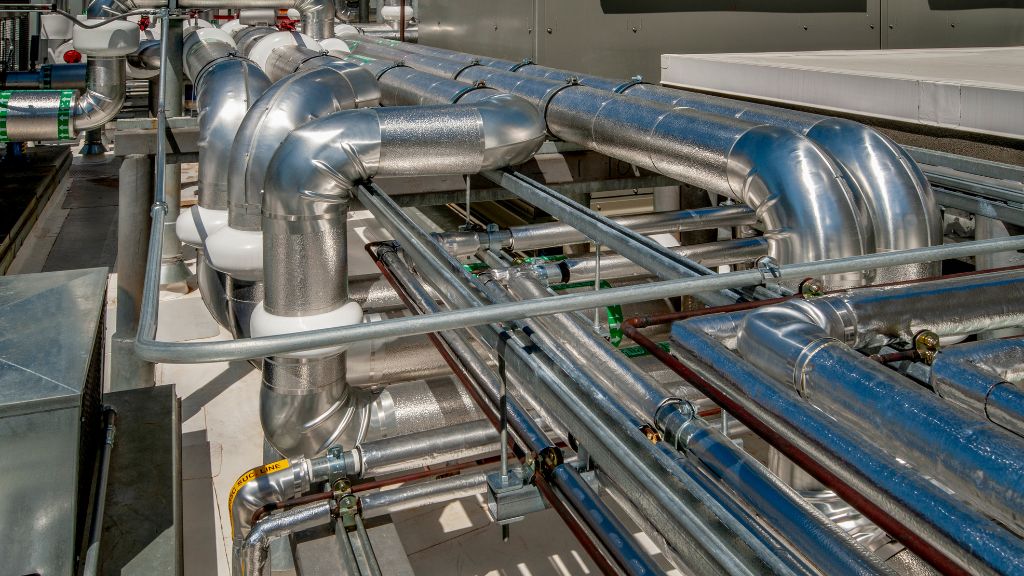
One of the most common failures in 2025-era designs was underestimating the Latent Heat Load. In a typical 2026 high-intensity grow, 95% of all irrigation water is transpired into the air as water vapor.
If your facility irrigates 1,000 gallons per day, your HVAC system must be engineered to remove roughly 8,340 lbs of water from the air daily.
A 2026 expert-level design ensures that the Sensible Heat Ratio (SHR) of the equipment is perfectly matched to the latent-heavy load of a flowering canopy, preventing the overcooling and “reheat cycles” that plague inefficient facilities.
2026 Engineering Standards: BVOCs and Indoor Air Quality
As of April 2026, multiple cannabis state agencies and local EPA boards are increasingly scrutinizing Biogenic Volatile Organic Compounds (BVOCs). Terpenes are highly reactive and can contribute to ground-level ozone when exhausted into the atmosphere.
The 2026 “Clean Air” Stack includes:
- Positive/Negative Pressure Zoning: Ensuring that the “Odor Envelope” is never breached, maintaining critical community and regulatory goodwill.
- Regenerative Carbon Filtration: Using AI sensors to monitor carbon saturation levels in real-time.
- Photocatalytic Oxidation (PCO): Breaking down ethylene and mold spores at the molecular level.
Energy Management and Decarbonization
With many states (including MA, NY, and IL) now enforcing strict Lighting Power Density (LPD) and HVAC efficiency mandates, “Energy-Saving” is now a legal requirement.
| Technology | 2026 Impact |
|---|---|
| Chilled Water Loops | Offers superior part-load efficiency compared to DX systems in large-scale facilities. |
| Heat Recovery Chillers | Reclaims the “waste heat” from cooling to provide “free” reheat for dehumidification. |
| Phase Change Materials (PCM) | Thermal storage systems that “charge” at night (off-peak) to reduce daytime peak demand. |
| Variable Frequency Drives (VFDs) | Automatically adjusts fan speeds based on real-time CO2 and humidity levels. |
Scalability: Designing for the “Evergreen” Facility
The most profitable operators in 2026 are those who built Modular Scalability into their original blueprint.
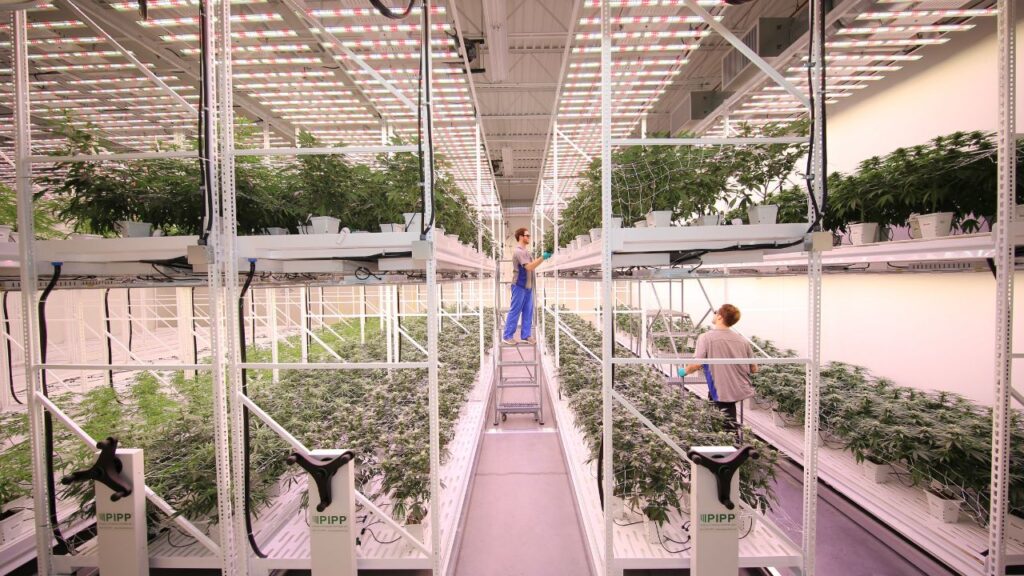
- Digital Twin Integration: Using 3D modeling to simulate airflow patterns before a single duct is hung, ensuring no “Micro-climates” or hot spots exist at full canopy density.
- Micro-Zoning: Designing systems that allow for different cultivars (with different environmental needs) to be grown in adjacent rooms using a centralized plant.
Next Steps: Contact Catalyst BC for Expert Cannabis HVAC Design and Retrofitting Support
In a market where the margin for error has vanished, your cannabis HVAC design cannot be left to a “standard” mechanical contractor. Catalyst BC brings over 60 years of combined experience and has successfully secured and optimized 57+ licenses across North America.
We specialize in “Compliance-First” Engineering”. We don’t just design for today’s temperature; we design for tomorrow’s regulatory audits and energy caps. Whether you are retrofitting an existing warehouse or building a 100,000 sq. ft. flagship, Catalyst BC ensures your facility is a high-yield, low-cost powerhouse.
Don’t let poor engineering kill your margins. Contact Catalyst BC today for a Professional HVAC Design Consultation.
Success Stories: See How Catalyst BC Has Helped Cannabis Businesses Enter and Lead the Market
From initial startup and facility build-outs to high-value exit strategies, we provide the expertise needed to navigate the complexities of the legal cannabis industry.
Grow Room Latent Heat Load FAQs
Underestimating the latent heat load. Most standard commercial AC units are designed for human comfort (high sensible cooling). Cannabis facilities are “moisture factories,” requiring industrial-grade dehumidification capacity that can operate independently of temperature cooling.
States like California and New York now mandate specific Energy Efficiency Ratios (EER). You may be required to use Water-Side Economizers or Heat Recovery systems to secure your permanent operational license.
For 2026 high-intensity LED grows, the target is typically 1.4–1.6 kPa. This higher pressure differential helps keep the dense flower “dry” from the inside out, preventing Botrytis while driving maximum terpene production.
While possible for very small grows, standard RTUs lack the precision for “reheat.” Without a dedicated outdoor air system (DOAS) or custom-integrated reheat coils, you will likely face humidity spikes and massive crop loss.
Biogenic Volatile Organic Compounds (terpenes) are emitted by cannabis. In 2026, regulations often require “Terpene Mitigation” to prevent these compounds from reacting with outdoor pollutants. This requires advanced carbon scrubbing and localized exhaust filtration.
This is a moving target, but 2026 best practices suggest 6–8 CFM per square foot of canopy to ensure uniform CO2 distribution and to prevent the boundary layer of moisture from forming on the leaves.
For facilities over 20,000 sq. ft., chilled water is almost always more efficient in 2026. It allows for infinitely variable control and easier integration of heat recovery for the dehumidification reheat cycle.
The “Negative Pressure” strategy is key. Your HVAC must be designed to keep the grow rooms at a lower pressure than the hallways, and the hallways at a lower pressure than the outdoors, ensuring all air is “pulled” through a carbon stack before exiting.
AI predictive maintenance now monitors motor vibration, refrigerant pressures, and filter saturation. It alerts operators before a fan fails, preventing the 2-hour humidity spike that could ruin a million-dollar harvest.
Standard engineers design for “People.” Cannabis engineers design for “Plants.” A standard engineer will almost always undersize your dehumidification and overlook the extreme sensible-to-latent shift that happens when the lights go out.
Additional Resources
Free eBooks For Cannabis Business Success




Latest Articles
- How Much Does It Cost to Open a Dispensary in 2026?
 The allure of jumping into the legalized cannabis industry often paints a picture of quick riches and burgeoning demand, yet the reality of establishing a licensed cannabis dispensary is far more nuanced, capital-intensive, and fraught with unique financial challenges. For aspiring entrepreneurs and seasoned investors alike, understanding the true dispensary startup costs is the absolute bedrock of success.
 - Virginia Cannabis Facility Design & Build-Out for the 2027 Market
 This guide covers the major considerations involved in planning and building a Virginia cannabis facility, with a focus on retail and cultivation operations and additional considerations relevant to processors and microbusinesses. It is written from the build side of the business, because that is where many otherwise-strong applicants stumble: they underestimate utility needs, local approvals, security infrastructure, commissioning, and the time required to convert a site into an inspection-ready operation.
 - Virginia Dual-Use Cannabis Conversion (2027): The $10M Medical-to-Adult-Use Pathway
 For Virginia’s existing medical cannabis operators, the 2026 retail framework created a distinct and high-stakes transition: pharmaceutical processors may apply for verification to exercise dual-use privileges and serve both registered medical patients and adult-use customers. The pathway covers the processor and its permitted cannabis dispensing facilities, and it carries a one-time $10 million fee, a required medical cannabis program preservation plan, an impact-licensee business accelerator commitment, and a firm May 1, 2027 payment or installment-plan deadline.
 - Virginia Impact Cannabis License (2027): Social Equity & the Equity Business Loan Fund
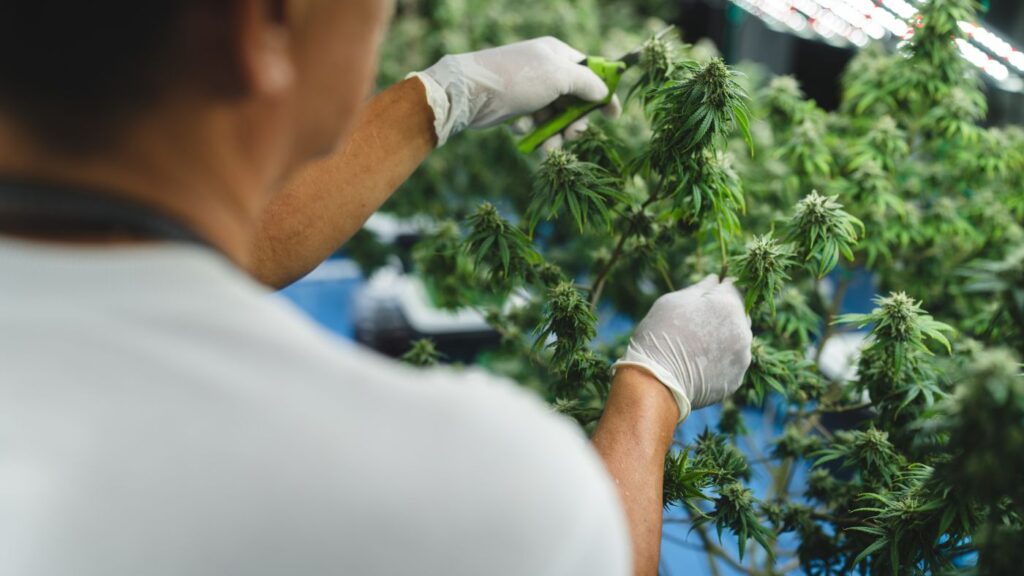 Virginia’s adult-use cannabis framework creates a meaningful pathway for applicants from communities and backgrounds affected by cannabis prohibition and enforcement. The law does not create a separate, stand-alone impact license. Instead, it creates an impact-licensee designation that qualifying applicants may pursue alongside an underlying marijuana establishment license, such as retail, cultivation, processing, microbusiness, transportation, delivery, or testing.
 - Virginia Cannabis Microbusiness License (2027): Eligibility & the Two-Location Model
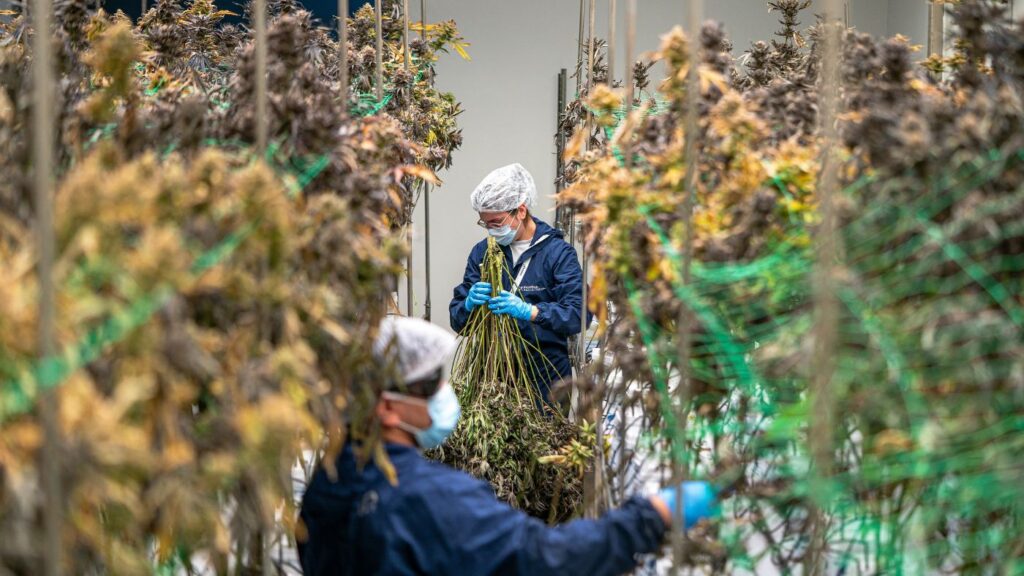 This guide explains the initial eligibility pathways for the licenses the CCA may issue by May 1, 2027, the difference between a microbusiness license and an impact designation, the indoor and outdoor cultivation limits, the precise rules governing two locations, and the financial, security, and operational readiness standards applicants should prepare to demonstrate. Several implementation details – including fees and the specific combination of privileges the CCA will authorize – still depend on forthcoming regulations.
 - Virginia Cannabis Cultivation License (2027): The Tiered System Explained
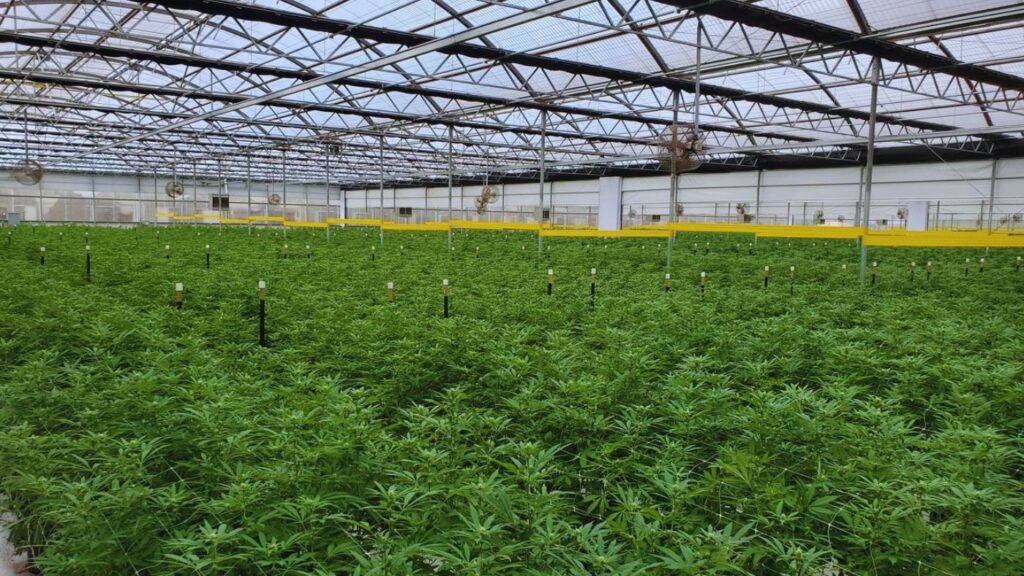 For operators whose strength is growing cannabis, Virginia’s emerging adult-use market presents a significant opportunity – and a cultivation license is the gateway to it. The June 2026 framework authorizes the Virginia Cannabis Control Authority (CCA) to begin accepting license applications on or after February 1, 2027 and issuing licenses on or after May 1, 2027. It also establishes five cultivation tiers with maximum canopies ranging from 5,000 to 35,000 square feet.