Illinois Cannabis Consultants: Buying In and Growing Under IDFPR and IDOA

Illinois cannabis consulting starts from a closed market: no dispensary, cultivation center or craft grower window is open, and the next round, a lottery for 45 or more infuser licenses, awaits state rules. We serve investors buying existing licenses and licensed operators chasing yield. We have successfully secured 58+ licenses.

A Decade of Harvesting Success - Trusted by Cannabis Operators Worldwide

IDOA and IDFPR Dates Ahead

Nov 12, 2026Illinois Hemp Act takes effect
Jan 1, 2027Target date for at least 45 infuser licenses
Mar 31, 2028Every Illinois dispensary license expires

Updated: 10/1/2026. Illinois has allowed adult-use cannabis for people 21 and older since January 1, 2020, alongside its medical program (IDFPR Adult Use Cannabis Program). Two agencies license the market: the Illinois Department of Financial and Professional Regulation (IDFPR) licenses dispensaries, and the Illinois Department of Agriculture (IDOA) licenses cultivation centers, craft growers, infusers and transporters (Illinois Cannabis Regulation Oversight Officer). On September 24, 2026, 289 adult-use dispensary licenses were active (IDFPR Combined License List, September 24, 2026), and Illinois dispensaries sold $1,963,306,532 of cannabis in fiscal year 2025 (FY2025 Annual Cannabis Report).

With no new round open, SB 3222, signed June 12, 2026, matters more this year than any application window. It rewrote the ownership, consulting and canopy rules, and most of it took effect the day it was signed (IDFPR SB 3222 Fact Sheet). For an investor, the usual way in is a stake in an existing license. For a dispensary owner, the date to plan around is March 31, 2028, when every dispensary license expires; IDOA growers and infusers renew every year.

Meet Catalyst BC's Founders

  • Leif Olsen - Chief Executive Officer

    Leif Olsen

    Chief Executive Officer

  • Michael Williamson - Chief Operating Officer

    Michael Williamson

    Chief Operating Officer

  • Ian Miller - Executive Chair

    Ian Miller

    Executive Chair

Our partners bring multi-faceted expertise across business strategy, licensing, facility development, finance, and commercial operations. That breadth is complemented by subject matter experts across the wider Catalyst BC team, allowing us to bring the right combination of experience to each client and project. The result is bespoke, collaborative support shaped around your business, priorities, and goals - with the right expertise brought to the table when it matters most.

Learn more about our team

Two Regulators, One Team: Our Illinois Cannabis Consultant Work

Neither Illinois regulator will structure your deal for you. IDFPR calls its SB 3222 guidance “informational only” and points dispensaries to their own “legal counsel” (IDFPR SB 3222 Fact Sheet), and IDOA reminds licensees that they “are subject to IDOA inspections” (IDOA How To Apply guide).

Coming From Outside Cannabis With Capital: How Illinois Lets You In

You cannot apply for a new Illinois dispensary, cultivation center or craft grower license today, so the way in is a stake in, or the purchase of, a license that already exists. Licenses do change hands: in fiscal year 2025, IDFPR recorded 36 dispensary license transfers and IDOA recorded 25, including 16 craft growers. Every transfer needs the agency’s prior approval, and a dispensary sale also needs a $5,000 change of ownership fee and the buyer’s commitment to the same or a similar community engagement plan as the seller’s (410 ILCS 705, §15-60).

The main transfer lock is social equity status. In the agencies’ fiscal 2025 reporting, all 87 craft grower licenses and 54 of 55 infuser licenses had been issued to social equity applicants, and 151 dispensary licenses were majority owned by them. If a social equity license is sold within 5 years of issue to a buyer who does not qualify as a social equity applicant, the buyer must repay any waived fees, any outstanding state loan and any state grant (§7-25).

Many licenses are not yet built: the September 30, 2025 annual report, still the latest, counted 21 of 87 craft growers and 16 of 55 infusers operating, and IDOA’s licensee page lists 8 craft growers and 3 infusers opening in calendar 2025. An unbuilt license is a diligence item: IDOA has warned craft growers that missed their operational deadline and do not file for an extension that it “may issue hearing notices for license revocations” (IDOA Alerts and News).

What you can own is set by the principal officer rule. A principal officer is an insider the agency must approve first. Since SB 3222, anyone holding more than 5% of a private licensee is a principal officer, up from 1% before June 12, 2026, and a profit-sharing or revenue-sharing arrangement can make you one at any ownership level (§1-10). No one may hold an interest in more than 10 dispensaries, counting management and consulting contracts, and no one may hold more than 3 craft grower licenses (§15-36, §30-5).

Pay is regulated too. An arrangement that could pay you more than 10% of a dispensary’s monthly gross revenue, 50% of its yearly net profit or $250,000 in a calendar year makes you a principal officer unless IDFPR grants a limited waiver (§15-36(c-2)).

State loans go only to qualifying social equity licensees; the third round, announced April 20, 2026, lent $31.8 million in forgivable loans to 95 businesses at 4% after an 18-month grace period (Governor’s release on DCEO Round III loans, April 20, 2026).

Our work for investors: diligence and the market case through cannabis business strategy; ownership and payment terms checked against these rules; lottery and change of ownership files through cannabis licensing and application support; a pro forma (projected financials) with the Illinois tax stack through cannabis financial planning; and opening through cannabis startup support.

For Illinois License Holders: 14,000 Square Feet, Failed Batches and Falling Prices

For an operating licensee the pressure is margin. The state’s sales dashboard puts the average retail price of adult-use flower at $5.47 a gram in August 2026, down 16% from $6.51 in August 2025, and wholesale totals are paused while the state reviews the wholesale data reported in Metrc, its seed-to-sale tracking system (CROO Sales Figures). With prices falling that fast, your cost per gram is the number to manage. IDOA’s inspections bureau has also made “product inversion” (legal cannabis leaking into the illicit market) a fiscal 2026 priority.

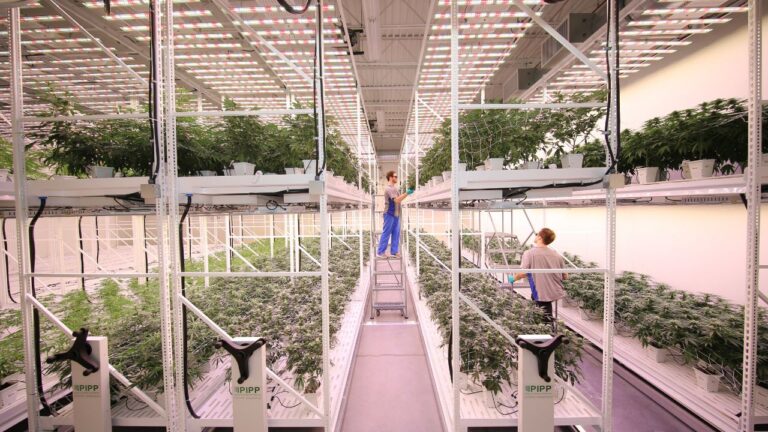
Canopy, the area where flowering plants grow, is capped. SB 3222 gives every craft grower 14,000 square feet from the start, replacing IDOA’s 3,000-square-foot expansion steps, though expanding an existing facility still needs an Application for Modification (IDOA Informational Bulletin on SB 3222). IDOA counts each level of a stacked grow as canopy (8 Ill. Adm. Code 1300.10), so racks fit your canopy into a smaller room but never past 14,000 square feet, or 210,000 for a cultivation center. SB 3222 also dropped the rule that grows with 6,000 square feet of canopy or more use variable refrigerant flow (VRF) HVAC, so HVAC and dehumidification are now an engineering and energy choice.

Yield only counts if the batch passes. A batch that fails the pesticide test is recalled and destroyed; one that fails any other test may become a CO2 or solvent extract that must still pass every test, and cured flower batches are capped at 20 pounds (8 Ill. Adm. Code 1300.700). Since September 2026, IDOA expects labs to post every failed result in Metrc no later than when they send it to you (IDOA Compliance Alert on lab results in Metrc).

Outdoor growing is not allowed yet. IDOA’s August 14, 2026 proposal would allow it inside a fenced, screened area, with every outdoor plant tagged and the whole harvest extracted into concentrate (Illinois Register, August 14, 2026); it is not adopted (IDOA Laws and Regulations).

We work on cannabis facility design and HVACD engineering (heating, ventilation, air conditioning and dehumidification), controlled environment agriculture climate targets that keep mold out of the batch, cannabis vertical farming layouts sized to the canopy you are licensed for, and operational optimization. Where cost per gram outruns revenue, we run a cannabis turnaround diagnostic, and we prepare modification files and mock inspections. Michael Williamson, our Chief Operating Officer, has run licensed cultivation and dispensary operations and has designed and consulted on more than 7 million square feet of indoor, greenhouse and outdoor cultivation facilities.

Who does the Illinois work. Leif Olsen, our Chief Executive Officer, has advised on more than 11 million square feet of cultivation, manufacturing and retail operations. Our records list one Illinois client, a craft grower, from 2021. We have no Illinois office; we work with Illinois clients on-site and remotely, and the same team runs Catalyst BC’s national cannabis consulting practice.

Before you hire anyone, including us: IDOA publishes its fees, testing limits and alerts free. And under §15-36(c-2), a consultant paid a share of a dispensary’s revenue or profit can become a principal officer, so agree a flat or scoped fee. To talk through an Illinois file, contact us or call (USA) 303-305-3787.


Investing in Illinois cannabis

Already licensed in Illinois

0 +
Years Regulated Cannabis Operations Experience
0 +

Compliant Harvests

0 M+

Square Feet of Cultivation, Production, and Retail Facilities Designed

0 +

Licenses Secured

Is Any Illinois License Window Open? Dispensary, Craft Grow, Infuser and Transporter Status

No general window is open. The FY2025 annual report says no new craft grower, infuser or transporter application periods opened that year, and IDFPR’s adult-use pages list no open dispensary application. SB 3222 requires a “Social Equity Experience Lottery” for at least 45 infuser licenses; an infuser makes cannabis-infused products such as edibles. The statute says IDOA must create a process “to issue at least 45 infuser licenses by January 1, 2027,” while IDOA’s bulletin reads that as opening “an application window” by then. No lottery rule had even been proposed in the Illinois Register through its September 25, 2026 issue, so treat the date as a legal target, not a schedule. Transporter applications are barred until January 1, 2028; from 2028 IDOA must take them each year from January 7 to March 15 (§35-18, §40-5).

Route Status (October 1, 2026) Who can use it
New dispensary license No application open; no date published Capped at 500 adult-use licenses
New cultivation center or craft grower license No application open; no date published Capped at 30 cultivation centers and 150 craft growers
Infuser, Social Equity Experience Lottery Rules not yet proposed; target of at least 45 licenses by January 1, 2027 Applicants 51% owned by individuals who meet the lottery’s social equity criteria; $2,500 application fee
Transporter license Closed by statute until January 1, 2028 From 2028, applications each January 7 to March 15
Medical dispensing license opt-in Open on a rolling basis since September 10, 2026 Any adult-use dispensary with an active license in good standing; $5,000 one-time fee
Transfer, change of ownership, change of location, modification Open, by agency form Existing licensees, with prior IDFPR or IDOA approval
Swipe to see the full table →

Statuses from IDFPR, IDOA and 410 ILCS 705 as read September 29 to October 1, 2026.

Date What happens
November 12, 2026 The Illinois Hemp Act takes effect: a hemp product sold to consumers may hold no more than 0.4 milligrams of total THC per container, so stronger intoxicating products, such as delta-8, no longer qualify as hemp and fall under cannabis law (Public Act 104-463, Section 999).
January 1, 2027 Target for IDOA to issue at least 45 infuser licenses through the Social Equity Experience Lottery; rules not yet proposed
January 1, 2028 Transporter application bar and fee waiver end (applications then run each January 7 to March 15); IDOA may issue up to 100 more infuser licenses
March 31, 2028 Every dispensary license expires; dispensary licenses expire March 31 of even-numbered years
Swipe to see the full table →
Clock Rule
Dispensary license term Expires March 31 of the next even-numbered year; license and renewal fees are prorated to that date (§15-36, §15-45)
Conditional dispensary license (§§15-25, 15-35, 15-35.10) 180 days to find a site, plus up to 540 more if you show concrete attempts and a hardship. You must either open within 720 days of the award, or find a site within 720 days and open within 180 days after that; otherwise IDFPR may rescind. A conditional license reserves a dispensary license but allows no sales.
Craft grower and infuser renewal Annual; IDOA sends notice at least 90 days before expiration and decides within 45 days of a complete renewal
Swipe to see the full table →

For existing dispensaries, a medical license added under §15-37 can never be separated or sold apart from the adult-use license.

Illinois License Classes, Canopy Limits and CRTA Caps

Two agencies issue the license classes below under the Cannabis Regulation and Tax Act (CRTA). A cultivation center is a large grower and processor; a craft grower is a smaller one; a transporter moves cannabis between licensees. The caps below come from 410 ILCS 705, and the counts from the FY2025 annual report and IDFPR’s September 24, 2026 list.

License Regulator Canopy or cap Licenses issued
Cultivation center IDOA 210,000 sq ft of flowering canopy; no more than 30 licenses statewide 21
Craft grower IDOA 14,000 sq ft of flowering canopy; no more than 150 licenses; no one may hold more than 3 87
Infuser IDOA At least 45 more targeted by January 1, 2027; up to 100 more from January 1, 2028 55
Transporter IDOA Up to five storage sites for independent transporters 164
Dispensing organization IDFPR No more than 500 adult-use licenses; no interest in more than 10 289 active
Testing laboratory IDOA Moving from registration to licensing under SB 3222; IDOA rules pending 6 registered
Swipe to see the full table →

Counts: FY2025 Annual Cannabis Report (September 30, 2025); dispensaries: IDFPR Combined License List, September 24, 2026.

On the September 30, 2025 counts, the caps leave room for 9 more cultivation centers and 63 more craft growers, and IDOA has published no plan to issue more. On the dispensary side, 289 licenses are active against the 500-license cap, and conditional licenses still working toward opening are listed separately (IDFPR Conditional Adult Use Dispensary Licenses).

Two agency documents lag the statute. IDOA’s fees chart still shows the transporter application bar and fee waiver ending January 1, 2027, and IDOA’s rule text still describes a 5,000-square-foot craft canopy with 3,000-square-foot steps and the VRF requirement. The amended statute, which IDOA’s bulletin follows, says January 1, 2028 and 14,000 square feet; so does this page.

What Illinois Charges: CRTA License Fees, IDOA Renewals and Fee Waivers

All IDOA license fees are nonrefundable. Qualifying social equity applicants get 50% off application and license fees and any surety bond, if the applicant and everyone owning 10% or more together had less than $750,000 of gross income in the previous calendar year and hold no more than 2 other Illinois cannabis licenses (§7-20). Craft growers and infusers pay no renewal fee for the two renewal periods that begin after May 1, 2026 (8 Ill. Adm. Code 1300.320), and transporters pay no license or renewal fee until January 1, 2028. Once those fees return, hardship waivers cover all of a craft grower, infuser or transporter fee at $50,000 or less of gross income and half up to $750,000, for licensees with no more than 2 other Illinois licenses; IDFPR offers the same on dispensary renewals (§7-20(d), §15-45(d-5)).

License Application License award Renewal
Adult-use cultivation center $100,000 $100,000 $100,000 a year
Craft grower $5,000 $40,000, prorated $40,000 a year; none for the two renewal periods after May 1, 2026
Infuser $5,000 $5,000 $20,000 a year; none for the two renewal periods after May 1, 2026
Infuser, Social Equity Experience Lottery $2,500 $5,000 standard infuser fee unless lottery rules differ $20,000 a year unless lottery rules differ
Transporter $5,000 $10,000, prorated $10,000 a year; license and renewal fees waived until January 1, 2028
Swipe to see the full table →

IDOA Fees Chart (cultivation center application); 410 ILCS 705 §§20-20, 20-45, 30-10, 30-15, 30-45, 35-10, 35-15, 35-18, 35-40, 40-5, 40-10, 40-15, 40-40; 8 Ill. Adm. Code 1300.320 and 1300.420.

Filing Cultivation center Craft grower Infuser
Application for Modification $4,000 $2,000 $1,000
Application for alteration $500 $250 $125
Change of location application $4,000 $2,000 $1,000
Change of stock ownership, officers or board members $1,000 $1,000 $1,000
Agent identification card, issue or annual renewal $100 $100 $100
Swipe to see the full table →

8 Ill. Adm. Code 1300.115, 1300.130, 1300.165, 1300.315, 1300.330, 1300.365, 1300.415, 1300.430; change of location fees from the IDOA Fees Chart.

ItemAmount
Adult-use dispensing organization license$60,000, prorated to March 31 of the next even-numbered year
Renewal$60,000, plus $10,000 if the dispensary also holds a medical license; both prorated
Medical dispensing license opt-in$5,000, one time
Change of ownership (sale of the dispensary)$5,000
Dispensary agent identification card$100
Financial responsibility$50,000 surety bond or escrow account, kept for as long as you hold the license
Swipe to see the full table →

410 ILCS 705 §§15-36, 15-37, 15-45, 15-55, 15-60.

Beyond the dispensary’s $50,000 bond, the only capital floor in the rules is small: a craft grower or infuser applicant must document at least $20,000 in liquid assets (8 Ill. Adm. Code 1300.300). No agency publishes a start-up budget, so any total you hear is someone’s model, including ours. Our guide to starting a legal cannabis business walks through that budget from formation to opening.

How Illinois Awards New Licenses, and How to Open a Dispensary Without One

For the 45-license infuser round, every applicant must be 51% owned by individuals who meet two tests. One is where they lived or what aid they received, such as 5 of the last 10 years in a tract with 20% poverty; the other is a justice or harm test, such as a cannabis possession arrest or a firearm injury. If more than 45 applications arrive, IDOA draws the lottery first and checks eligibility after the draw. Hemp businesses registered or licensed in Illinois on or before May 1, 2026 get a bonus draw, and a principal officer may appear on only one application (§35-18).

How to open a dispensary in Illinois while no dispensary window is open

  1. Find a license. Partner with or buy into an operating dispensary or a conditional license holder, and confirm its status and deadlines on IDFPR’s lists.
  2. Get the ownership approved. Anyone above 5%, and anyone paid above the 10%, 50% or $250,000 lines, needs IDFPR approval as a principal officer; if the seller holds a social equity license less than 5 years old, you as buyer must repay its waived fees, state loans and grants.
  3. Clear the site. Check local zoning, conditional use permits and the 1,500-foot rule before you sign a lease.
  4. Pass IDFPR’s inspection and pay in. IDFPR inspects the site, and you pay the $60,000 license fee and post the $50,000 bond before the license issues.
  5. Set up to sell. Register with the Illinois Department of Revenue, credential your agents and connect to Metrc before your first sale.

Principal Officers, the 10-Dispensary Cap and Social Equity Paybacks

An Illinois social equity applicant is an Illinois resident applicant that meets one of three tests. At least 51% ownership and control can rest with people who have lived 5 of the last 10 years in a Disproportionately Impacted Area, a census tract with economic hardship and high cannabis arrest rates. It can rest with people who have an expungement-eligible cannabis record or an impacted family member. Or a business with 10 or more full-time employees can qualify through 51% of its employees (§1-10).

Illinois looks past titles to control. The Act treats controlling decisions on staffing, pricing, purchasing, marketing, store design or hiring as “participating in the operation or management” of a dispensary, and it counts management and consulting contracts toward the 10-dispensary cap. The governor’s office said SB 3222 targets “consulting agreements” that are “actually ownership and control” (Governor’s release on SB 3222, June 12, 2026); IDFPR approved 21 management service agreements and 29 more with conditional license holders in fiscal year 2025. So if a consultant, landlord or lender is paid on revenue or makes store decisions, disclose them.

Where an Illinois Cannabis Business Can Locate: Local Opt-Outs and 1,500-Foot Buffers

Local control comes first. A city, village or county may zone cannabis businesses, allow on-site consumption, or “prohibit or significantly limit” where they locate (§55-25). A dispensary may not sit within 1,500 feet of an existing dispensary, with an exception for some social equity applicants, and must have at least 2 people working whenever it is open. A craft grower may not sit within 1,500 feet of another craft grower or a cultivation center, or on land zoned for residential use (§15-70, §30-30).

SB 3222 widened a dispensary’s options. It may add curbside pickup or a drive-through window, which IDFPR must review and approve first. Under the statute it may open from 6 a.m. to 2 a.m., subject to local zoning; IDFPR’s fact sheet describes the later hours as needing local municipal approval. It must still keep security guards on site at all hours it operates (§15-70(m)), but it may now hire its own instead of contracting a security company; guards it employs register as dispensary agents, and armed guards need a separate security license (IDFPR Security Guard Fact Sheet). For on-site consumption, our guide to Illinois cannabis lounge licensing covers the local route.

Running an Illinois License: Metrc, Inspections and the Cannabis Tax Stack

Illinois cannabis compliance is tested in person: in fiscal year 2025, IDFPR ran 625 dispensary inspections and IDOA ran 1,956 across its licensees. IDOA-licensed growers and infusers must keep 90 days of security camera recordings; dispensaries now need at least 60.

The tax stack is long. Growers pay a 7% cultivation privilege tax on their first sale (§60-10). Adult-use buyers pay a purchaser excise tax of 10% on cannabis at or below 35% adjusted THC (total THC, counting its raw acid form), 25% above 35%, and 20% on infused products (§65-10). The 6.25% state retailers’ occupation tax and any local sales tax also apply (Illinois Department of Revenue Bulletin FY 2026-21). Local cannabis taxes can stack on top: a county tax of up to 3.75% in unincorporated areas or up to 3% inside a municipality (55 ILCS 5/5-1006.8), plus a municipal tax of up to 3% (65 ILCS 5/8-11-23). Since September 10, 2026, registered patients buying their medical supply from a dispensary with a medical license pay no purchaser excise tax.

Buying Into Illinois Cannabis, or Squeezing More From a Licensed Craft Grow?

Investors: send us the term sheet and cap table, meaning who owns what, for an Illinois license you are weighing. We screen it against the principal officer, payment and payback rules and list the approvals it triggers. Licensed operators: send your last failed certificate of analysis (the lab report) and your canopy plan. We map why the batch failed and what a 14,000-square-foot layout, racks or a climate fix would do to your cost per gram.

Illinois Cannabis Licensing Questions Under SB 3222

Not for new dispensaries, cultivation centers, craft growers or transporters; existing adult-use dispensaries can add a medical license on a rolling basis. The only round due before 2028 is IDOA’s Social Equity Experience Lottery for at least 45 infuser licenses, targeted for January 1, 2027, and no lottery rule had been proposed as of October 1, 2026.

SB 3222, signed June 12, 2026, raised the principal officer threshold from 1% to 5%, set payment thresholds for consulting and management deals, gave craft growers 14,000 square feet of canopy, allowed drive-throughs and medical licenses at dispensaries, and enacted the Illinois Hemp Act, which takes effect November 12, 2026.

A craft grower pays a $5,000 application fee and $40,000 on award, and an infuser pays $5,000 and $5,000. A dispensary pays a $60,000 license fee, prorated to March 31 of the next even-numbered year, and posts a $50,000 bond. Qualifying social equity applicants pay 50%.

Up to 5% of a private licensee does not by itself require approval, but a profit-sharing or revenue-sharing deal can. Above 5%, you need IDFPR or IDOA approval as a principal officer, and at a dispensary so does being able to receive more than 10% of monthly gross revenue, 50% of yearly net profit or $250,000 a year. No one may hold interests in more than 10 dispensaries.

No. IDOA measures each level of a stacked, vertical grow as canopy, so racks help you fit the 14,000 square feet into a smaller room, not exceed it. Expanding canopy at an existing facility still needs an IDOA Application for Modification.

A batch that fails the pesticide test is recalled and destroyed. A batch that fails a microbial, mycotoxin, heavy metal or solvent test may be used to make a CO2 or solvent extract, which must then pass every test.

Growers pay a 7% cultivation privilege tax. Buyers pay a 10%, 25% or 20% purchaser excise tax by THC level and product type, plus the 6.25% state retailers’ occupation tax and local sales and cannabis taxes. Registered patients buying their medical supply from a dispensary with a medical license are exempt from the excise tax.

Yes. Adult-use sales began January 1, 2020, alongside the older medical program. Residents 21 and older may possess 60 grams of flower, 10 grams of concentrate and 1,000 milligrams of THC in infused products; visitors may possess half those amounts.

Selected Catalyst BC Projects

Our Illinois work draws on project experience in craft and large-scale cultivation, facility design and commissioning, operational optimization and turnaround support. A selection of those projects is below.

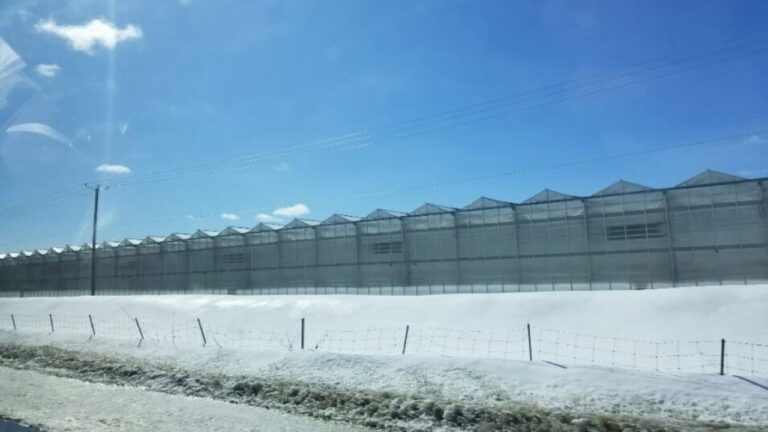
Exterior view of the Hexo Venlo glasshouse row spanning over 1 million square feet.

Hexo Corp.

Gatineau, Quebec, Canada

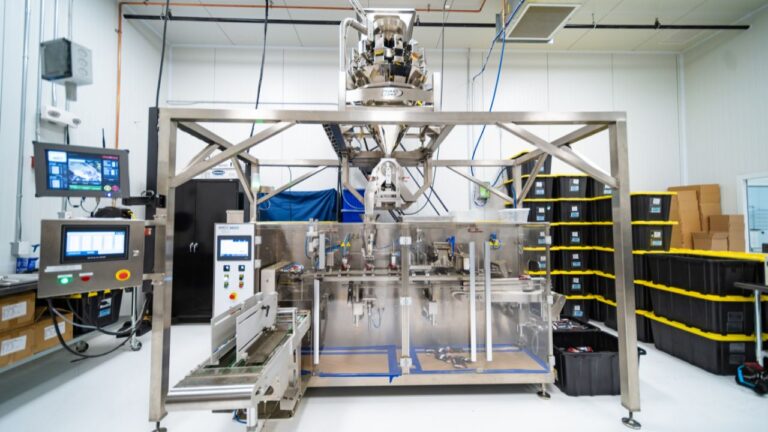
Modern stainless steel automated cannabis pre-roll processing machine in a dedicated production room.

Bostica

Lynn, MA, United States

Catalyst BC consultants and LeafLine Cultivation Director inspecting vibrant plants in an organized vertical grow room.

Leafline Labs

Cottage Grove, MN, United States

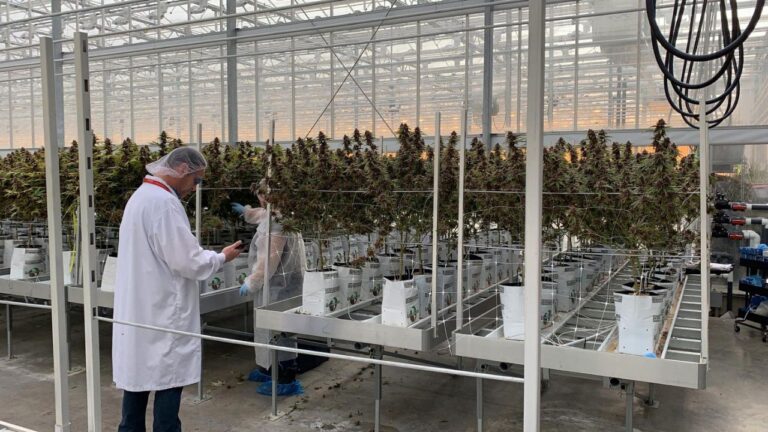
Catalyst BC consultant recording air, environmental, and plant data measurements within a cultivation facility.

View All Projects

View all Catalyst BC Projects

Catalyst BC Reading on Illinois Licensing and Local Approvals

Provenance. Every regulatory figure on this page is drawn from IDFPR, IDOA, the Cannabis Regulation Oversight Officer, the FY2025 Annual Cannabis Report, the Cannabis Regulation and Tax Act (410 ILCS 705) as amended by Public Act 104-463, 8 Ill. Adm. Code 1300, the Illinois Department of Revenue, the Office of the Governor and the Illinois Register. Each statute section cited was checked on October 1, 2026 against every Public Act from 104-464 to 104-854; the only later acts amending the Act are 104-468 (a tax-administration section), 104-532 (repealed the community college pilot article on July 1, 2026) and 104-799 (state loan programs), and none changes what this page says. The IDOA rules show no amendment after May 1, 2026, and the August 14, 2026 outdoor cultivation proposal is proposed, not in force. Fees, caps, distances, license terms and tax rates are in force. The infuser lottery rules have not been proposed. License counts for IDOA licensees are from the FY2025 report; dispensary counts are as of September 24, 2026. Company figures come from Catalyst BC’s own records. Sources were read September 29 to October 1, 2026. Where this page and the agencies, the statute or the rules differ, the official text governs.

Illinois Department of Financial and Professional Regulation (IDFPR)

Illinois Department of Agriculture (IDOA)

Cannabis Regulation Oversight Officer (CROO) and annual report

Statutes, Public Acts and the Illinois Register

8 Ill. Adm. Code 1300 (IDOA rules)

Illinois Department of Revenue and Office of the Governor

Contact Us

Enough about us. We want to hear more about you, your project, and your vision! Get in touch with a real live person today. Don’t worry, we don’t have a long, confusing phone menu, and your email isn’t going to the abyss, we promise. At Catalyst, we provide the service and support we’d want to experience ourselves!

Scroll to Top