New York Cannabis Consulting for Investors and OCM Licensees
New York cannabis consulting for investors looking for a lawful way in and licensed operators raising yield and margin. Only Processor Type 3 licenses are open to new applicants today, and OCM has set no date for the next window. Catalyst BC worked with Lift Off NY in 2022.
A Decade of Harvesting Success - Trusted by Cannabis Operators Worldwide
NY OCM: Board Votes, Taxes, Provisional Cutoff
Updated: 10/1/2026. New York is both an adult-use and a medical cannabis state. The Marihuana Regulation and Taxation Act legalized cannabis for adults 21 and older on March 31, 2021 (OCM MRTA and public comment page), and the medical program dates to 2016 (OCM Medical Cannabis). The Office of Cannabis Management regulates both under the Cannabis Law and Title 9 of the state’s codified rules, and its Cannabis Control Board votes on licenses in public. By September 3, 2026 the Board had issued 2,342 adult-use licenses and 717 dispensaries were open (CCB release, September 3, 2026), and combined adult-use and medical retail sales reached about $895.4 million in the first half of 2026 (CCB release, July 3, 2026).
The practical consequence is that new capital mostly enters through an existing licensee, and licensees compete on cost rather than scarcity: licensed canopy grew 32% between March and August 2026. The date that decides the most businesses this year is December 31, 2026, the last day for a provisional licensee to file a complete location application, and OCM told licensees to expect that extension to be the last (Provisional License Policy Guidance).
Meet Catalyst BC's Founders
-
Leif Olsen
Chief Executive Officer
-
Michael Williamson
Chief Operating Officer
-
Ian Miller
Executive Chair
Our partners bring multi-faceted expertise across business strategy, licensing, facility development, finance, and commercial operations. That breadth is complemented by subject matter experts across the wider Catalyst BC team, allowing us to bring the right combination of experience to each client and project. The result is bespoke, collaborative support shaped around your business, priorities, and goals - with the right expertise brought to the table when it matters most.
Working With a New York Cannabis Consultant Alongside OCM
OCM’s Compliance Unit inspects and interprets the rules; its Licensing Unit reviews applications, amendments, renewals and ownership questions. Neither will design your grow, structure your ownership or build your pro forma. OCM’s rules expect licensees to buy that work from outside providers and regulate how those providers are paid (Goods and Services Agreements FAQ).
Bringing Outside Capital Into New York Cannabis for the First Time
How to get in today. If you are coming from another industry with capital behind you, start with what is possible. You cannot apply today for a cultivation, processing, distribution, dispensary or microbusiness license. A brand can apply for a Processor Type 3 Branding license, which needs no New York premises and involves no plant-touching activity; otherwise the way in is a stake in a business that already holds a license.
When control can change hands. The rules treat any change in majority ownership or control as a transfer that needs the Board’s prior written approval (§120.9), and OCM’s interim guidance says those changes are “not permitted at this time”: licensees must keep their existing majority ownership and control until OCM’s systems can process them, and a license cannot be sold to another entity (OCM Interim TPI Change Guidance). Adding minority owners below 50% is allowed, at the licensee’s own risk until OCM’s amendment system opens; the Board has already set the fees for when it does, $100 for an ownership change of 49% or less and $500 for a majority change (Amendment Request Survey Guidance).
What you can own. The true party of interest (TPI) rules decide it. A passive investor with no control may hold up to 20% of a private licensee, 10% of a private microbusiness or ROD, and 5% of a public company; above that, you are a controlling-interest TPI and need OCM approval. No one may hold a controlling interest in more than one license that includes cultivation or in more than three retail dispensaries (OCM TPI Overview), and a social and economic equity (SEE) licensee must keep at least 51% SEE ownership.
How you get paid, and what it costs. An equity investor is paid through distributions on its stake; a lender or financier may not take ownership, control or a profit share, and may not receive more than the greatest of 10% of gross revenue, 50% of net profit or $250,000 in a calendar year (9 NYCRR Parts 118–125 and 131, as adopted). A loan of more than 10% of a licensee’s capital must be reported to OCM within 10 business days. Budget well beyond the state fee: a $7,000 dispensary license is the small line next to a compliant site and the months before revenue.
Our cannabis business strategy, cannabis financial planning, cannabis licensing and application support and cannabis startup support work carries that decision from diligence on a minority stake or Type 3 brand through to opening day.
For Licensed Growers, Processors and Dispensaries Fighting for Margin
For operating licensees the pressure is margin. Only 313 cultivators were operating in August 2026, against 449 previously estimated, so more licensed canopy has yet to come online: OCM approved 67 cultivation tier increases between March and August 2026, projected to add about 127,000 pounds of annual capacity, and the Board has directed OCM to process enough expansion requests to meet an anticipated supply gap of 356 thousand pounds. More supply puts the premium on yield per square foot and cost per gram. Canopy is capped by tier: a cultivator holds one license with one cultivation type and one tier, any change needs prior written approval, the whole area under trellis netting counts, and planting more flowering canopy than the tier allows is not permitted (Determining Plant Canopy Guidance). The guidance does not address stacked, multi-level racks, so get OCM’s position in writing before counting a vertical layout. Expansion into Tier 5 outdoor or Tier 3 indoor, mixed-light and combination (Tier 4 mixed-light only for a Tier 3 grower at 25,000 square feet using no more than 20 lights) is open only to cultivators licensed for at least 12 months, cultivating in the last 12 months and already at the highest tier available to them, with a $250 amendment fee plus the license-fee difference. A processor lot that fails contaminant testing can be remediated once, after notice to OCM, and is destroyed if it fails again.
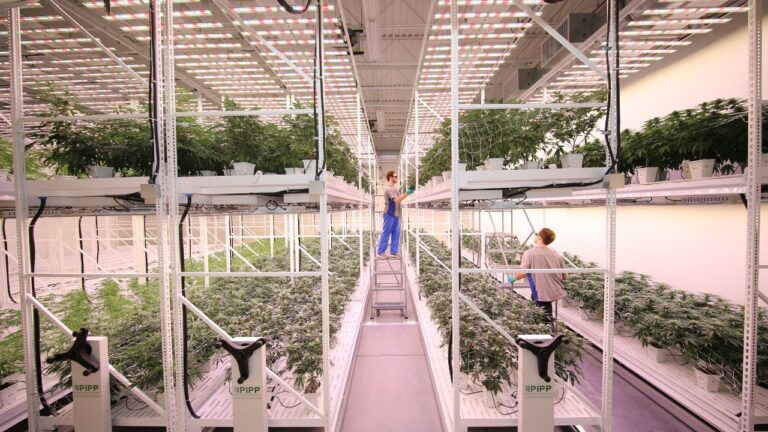
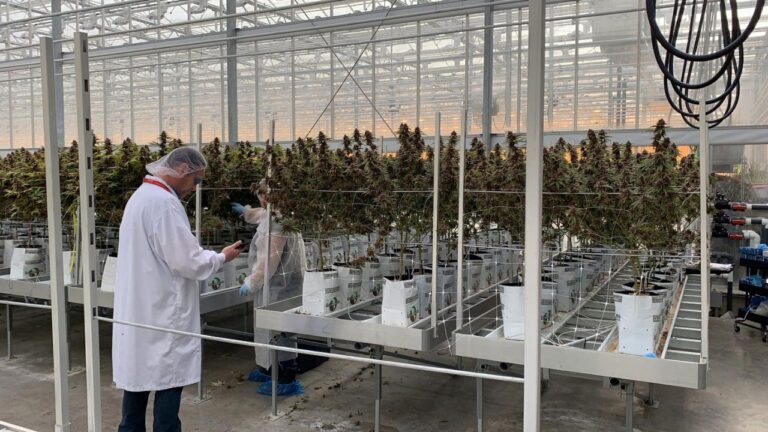
We work on cannabis facility design and HVACD engineering, controlled environment agriculture, cannabis vertical farming, operational optimization and cannabis turnaround for New York growers and work with New York licensees and investors on site and remotely, as each project needs. The same team runs our national cannabis consulting practice.
OCM’s LOCAL map produces a proximity report for any address. You may want one before you sign a lease. To talk through a New York file, contact us or call (USA) 303-305-3787.

Investing in New York cannabis
- Cannabis Business Strategy ConsultingMinority-stake and Type 3 brand diligence
- Cannabis Financial Planning & ModelingPro formas, OCM fees and the 13% retail tax
- Cannabis Licensing & Application SupportType 3 filings, TPI disclosures, next-window prep
- Cannabis Startup SupportSite control, municipal notice, opening checklist
Already licensed in New York
- Cannabis Facility Design & HVAC / HVACD EngineeringBuilt to OCM refrigerant, lighting and metering rules
- Cannabis Controlled Environment Agriculture (CEA)Setpoints without fossil fuel as primary power
- Cannabis Vertical Farming ConsultingMulti-level layouts, cleared with OCM in writing
- Cannabis Operational OptimizationGrams per square foot and cost per gram
- Cannabis Business Turnaround & Operational RecoveryMargin recovery as licensed canopy grows
Compliant Harvests
Square Feet of Cultivation, Production, and Retail Facilities Designed
Licenses Secured
Which New York License Applications OCM Accepts Today, and What Comes Next
Two, for new entrants. OCM’s licensing page says the only application available is for the Processor Type 3 Branding and Type 3 Flower licenses, accepted year-round (OCM Licensing). Both are filed through New York Business Express (NYBE Type 3 Branding; NYBE Type 3 Flower). Existing licensees can also file renewals, amendments and showcase event permits. OCM calls the October 4 to December 18, 2023 round “only the first application window” and says windows for nursery, delivery, cooperative or collective, and on-site consumption licenses are anticipated, with no date. Its application FAQ says the Board may use competitive or scored elements next time (OCM Application FAQ); plan for a scored round.

New York application routes, open and closed, as of September 29, 2026
| Application | Status | Who can file |
|---|---|---|
| Processor Type 3 Branding | Open, year-round | A cannabis brand, from New York or elsewhere; applicant 21+ and a U.S. citizen or permanent resident |
| Processor Type 3 Flower | Open, year-round | Licensed adult-use cultivators, or conditional cultivators transitioning |
| Processor or distributor license added to an existing license | Available | A cultivator adding processing for its own products; a processor adding distribution for its own products |
| Cannabis Showcase Event permit | Open | Licensed dispensaries and retail microbusinesses |
| Renewal | Open, online | Licensees, 60 to 120 days before expiration |
| Cultivator, processor, distributor, retail dispensary, microbusiness | Closed since December 18, 2023 | No new applicants; earlier applicants are in review queues |
| Nursery, delivery, cooperative or collective, on-site consumption | Never opened; “anticipated” | No date published |
OCM Licensing; NYBE Type 3 pages; OCM Application Queues FAQ (November 20, 2025).
OCM dates to watch through 2028
| Date | What happens | Direction |
|---|---|---|
| November 5, 2026 | Cannabis Control Board meeting, Albany | Meeting |
| December 3, 2026 | Cannabis Control Board meeting, New York City | Meeting |
| December 20, 2026 | Quarterly adult-use cannabis tax return and payment for September–November sales | Deadline |
| December 31, 2026 | Last day for provisional retail and CAURD licensees to submit a complete location application | Deadline; OCM expects no further extension |
| March 20, 2027 | Quarterly cannabis tax return for December–February sales | Deadline |
| 2028 renewal cycle | OCM recommended treating Community Impact Plans filed before this cycle as informational | Recommendation, not yet a rule |
CCB Meetings page; NYS Tax Department; Provisional License Policy Guidance; CCB release, August 7, 2026.
Clocks that start from your own New York license dates
| Clock | Rule |
|---|---|
| License term | Two years from issuance |
| Renewal filing | No fewer than 60 and no more than 120 days before expiration; a timely, complete renewal may keep operating during review |
| Notice to municipality | 30 to 270 days before filing a retail, retail microbusiness or on-site consumption application |
| Provisional license | 12 months to secure a viable retail location (extended for existing provisionals to December 31, 2026) |
| Ownership notices | New passive investor over 10%, or a loan over 10% of capital: notify OCM within 10 business days |
9 NYCRR §120.10; OCM Licensing; Interim TPI Change Guidance.
The 2023 window drew 6,790 submissions. By November 2025, 722 applications in OCM’s November queue had been licensed, 241 had provisional licenses, 382 had been closed and 258 were still in review. OCM had not begun reviewing the December retail dispensary and microbusiness queue, because litigation (Organic Blooms, LLC, et al. v. New York State Cannabis Control Board, Index No. 904497-24) is blocking review of retail applications filed without site control (Application Queues FAQ). If someone promises you a retail license in the next round, ask which round.
OCM License Categories, Canopy Tiers and What Each One Permits
New York splits adult-use licenses into a supply tier and a retail tier, and the category you hold decides what else you may own. Our New York cannabis license guide covers each type in depth.
What each New York adult-use license allows
| License | What it allows |
|---|---|
| Cultivator | Grow, harvest, dry, cure and trim, and sell to processors; may add a processor license and, with it, one distributor license |
| Processor | Extract, infuse, blend, package, label and brand, depending on authorizations; may hold one distributor license |
| Processor Type 3 Branding | White label a brand with a licensed New York processor; no plant-touching activity and no New York premises |
| Processor Type 3 Flower | A cultivator packages, labels and sells its own whole flower, non-infused pre-rolls and kief pucks; no extraction or infusion |
| Distributor | Buy from the supply tier and sell or transport to dispensaries; no sales to consumers |
| Retail dispensary | Sell to adults 21 and older from a storefront, with delivery by the dispensary |
| Microbusiness | Grow plus at least one of processing, distribution or retail, for its own products |
| Conditional adult-use retail dispensary (CAURD) | Retail licenses reserved for justice-involved owners |
| ROD / ROND | Medical Registered Organizations licensed for adult-use, with dispensing (ROD) or without (ROND) |
| Nursery, delivery, cooperative, on-site consumption | Defined and priced in the regulations; applications not yet opened |
OCM Licensing; OCM license overviews; 9 NYCRR Parts 118–125 as adopted.
Cultivation tiers run from Tier 1, up to 5,000 square feet of flowering canopy, to Tier 5, over 50,000 up to 100,000 square feet, for outdoor, mixed-light and indoor grows. A microbusiness is smaller by design: up to 3,500 square feet indoors, 5,000 in mixed light, 10,000 outdoors or 5,000 outdoor plus 2,500 mixed light. In a city of more than 1,000,000 people its store must be in the same county as its grow, and within 25 miles elsewhere (Microbusiness License Overview). See our guides to the New York microbusiness license and the Processor Type 3 Branding license.
What OCM Charges Under 9 NYCRR §120.4 and the 2026 Amendment Schedule
Application fees are non-refundable and due at filing: $1,000 for most licenses and $10,000 for a ROD or ROND. The license fee is paid after Board approval and before the license issues, and renewal fees equal the initial fees. SEE applicants pay 50% less on application and license fees (SEE Applicant Overview). Post-licensure changes carry Board-set amendment fees.
Cultivator license fees by tier (base fee + charge per 500 sq ft)
| Tier (flowering canopy) | Outdoor | Mixed light | Indoor |
|---|---|---|---|
| Tier 1 (up to 5,000 sq ft) | $1,000 + $150 | $1,500 + $290 | $1,750 + $450 |
| Tier 2 (5,000 to 12,500) | $2,500 + $250 | $4,380 + $440 | $6,250 + $625 |
| Tier 3 (12,500 to 25,000) | $6,250 + $350 | $10,940 + $615 | $15,630 + $880 |
| Tier 4 (25,000 to 50,000) | $15,000 + $500 | $26,250 + $875 | $37,500 + $1,250 |
| Tier 5 (50,000 to 100,000) | $40,000 + $800 | $70,000 + $1,400 | $100,000 + $2,000 |
9 NYCRR §120.4(b), effective November 5, 2025. SEE licensees pay 50%. Combination cultivation runs from $1,250 + $150 at Tier 1 to $56,000 + $860 at Tier 5.
Processor, distributor, retail and other license fees
| License | License fee |
|---|---|
| Processor with extraction | $7,000 per premises |
| Processor: infusing and blending, packaging, labeling, branding | $2,000 per premises |
| Processor: packaging, labeling, branding, including white labeling | $2,000 per premises ($500 for a Tier 1 or 2 cultivator) |
| Processor Type 3 Branding | $1,000 application + $2,000 license |
| Processor Type 3 Flower | $2,000 per premises |
| Distributor | $7,000 per premises ($2,500 for a processor licensee) |
| Retail dispensary | $7,000 ($10,000 with a limited retail consumption facility) |
| Microbusiness | $4,500 |
| Delivery (not yet open) | $4,500 |
| Nursery (not yet open): outdoor / mixed light / indoor | $750 / $1,000 / $2,000 |
| ROD | $175,000 + Tier 5 cultivation fee + $20 million special fee |
9 NYCRR §120.4; NYBE Type 3 pages.
Amendment fees after licensure (Board Resolution No. 2026-08)
| Change | Fee |
|---|---|
| DBA or individual name change | $25 |
| Ownership change of 49% or less | $100 |
| Majority ownership change (not being accepted yet) | $500 |
| Authorized activity change | $250 |
| Cultivation tier change | $250, plus any license-fee difference |
| Relocation or additional location | $500 each |
| Removal of a location | $50 |
OCM Amendment Request Survey Guidance, amended March 20, 2026. Amendment fees are non-refundable.
Worked example: an indoor Tier 2 grow at 10,000 square feet pays $6,250 for the first 5,000 square feet plus $625 for each of ten further 500-square-foot blocks, or $12,500 ($6,250 for an SEE licensee). OCM’s Distributor License Overview warns that distributor licenses “can be capital intensive,” and the site, build-out and months before revenue cost far more; our breakdown of cannabis startup costs covers the rest.
Building a New York Application: NYBE Filings, TPI Disclosures and SEE Priority
Every adult-use application is filed through New York Business Express in two to four parts: the primary application, an optional SEE certification, TPI disclosures and a location and operations section (Adult-Use Application Overview). OCM will not start review until every TPI disclosure is in, and individual TPIs must prove they are at least 21. SEE applicants, from impacted communities, minority- and women-owned businesses, distressed farmers and service-disabled veterans, get fee reductions, review priority and incubator support. To qualify, the SEE owner needs sole control: at least 51% real, substantial and continuing equity plus control of material contracts, day-to-day and strategic decisions, and the majority of votes and board seats. OCM’s goal is 50% of licenses for SEE applicants; by September 2026 they held 57%, including 74% of dispensaries and 46% of cultivators.
How to open a dispensary in New York in 2026
- Confirm your route. There is no open retail window. A provisional licensee files its location by December 31, 2026; anyone else is preparing for a future window or taking a minority stake in an existing dispensary.
- Test the site before the lease. Run OCM’s LOCAL proximity report and check the school, house of worship and dispensary distances below; taking a lease before OCM approves a location is at your own risk.
- Notify the municipality. Send the notice 30 to 270 days before you file, and confirm the town has not opted out of dispensaries.
- File the location application. Submit it through NYBE with a lease or deed and a certificate of occupancy; OCM does not review emailed location submissions.
- Open compliant. Pay the $7,000 license fee after Board approval, obtain the Tax Department’s $600 Certificate of Registration, get Metrc credentials and complete Responsible Workforce Training before your first sale.
Our step-by-step dispensary guide and provisional-to-operational guide go further. We map every owner, spouse, lender and revenue-sharing agreement before anything is filed, because that is where applications stall.
Two Tiers, True Parties of Interest and How New York Treats Your Consultant
New York keeps supply and retail apart. A person with any interest in a cultivator, processor, distributor, microbusiness, ROD or ROND cannot hold an interest in a dispensary, delivery or on-site consumption license, and anyone with a supply-side interest in another state cannot be a TPI of a New York dispensary. Anyone who receives, or has the right to receive, more than the greatest of 10% of a licensee’s gross revenue, 50% of its net profit or $250,000 in a calendar year becomes a TPI with a financial and controlling interest; the rule reaches landlords, lenders and service providers, and stacked agreements with the same licensee are added together. Controlling-interest TPIs need a background check and tax clearance from the Department of Taxation and Finance, and once transfers reopen, §120.9(g) lets the Board refuse one where the licensee has two or more Category 1 or 2 violations in the past two years.
How OCM classifies the consultant you hire
OCM’s goods and services FAQ treats license application preparation, architecture, construction and HVAC work as exempt services. Consulting on a licensee’s cultivation, processing, distribution or sale of cannabis is non-exempt, and a non-exempt provider may work on both sides of the two tiers only for a flat fee not tied to sales, profit or revenue. Licensed activities must also be performed by the licensee’s own employees, not contractors. A revenue-share success fee could make any consultant, including us, a TPI in your business and limit who else they can serve, so a flat fee is usually the cleaner structure. Ask every consultant you interview how they will be paid.
Where a New York Dispensary Can Open: Distances, PCA Limits and Local Opt-Outs
A dispensary cannot sit within 500 feet of a school on the same street, or within 200 feet of a building used exclusively as a house of worship. Between dispensaries, the rules require 1,000 feet in municipalities of more than 20,000 people and 2,000 feet in smaller ones (Retail Dispensary License Overview). The Board can approve a closer store on a finding of public convenience and advantage (PCA), but since November 5, 2025 a PCA request cannot be considered within 500 feet of another dispensary (1,000 feet in smaller municipalities), if the conflicting store has operated for less than nine months, or if two same-type licensees are already inside the radius. The municipality or community board gets 45 days to respond, there is a 30-day cure period, and a denied PCA means the applicant cannot submit a new retail location (PCA Regulations Guidance).
Towns, cities and villages cannot license or regulate cannabis operations, but they can opt out of dispensaries and on-site consumption and set zoning and hours that do not make operation unreasonably impracticable (OCM Localities). Under the regulations, dispensaries may not sell between 2:00 and 8:00 a.m. unless the municipality allows it, and hours cannot be restricted to fewer than 70 a week. Our New York proximity rules guide walks through a site test.
Operating Under OCM: Inspections, Metrc, Renewal and the Cannabis Excise
Routine inspections are generally unannounced and can come before a final license issues; deficiencies produce a Statement of Findings that needs a written Corrective Action Plan (OCM Compliance). Every licensee tracks inventory in Metrc, and delinquent payment reporting moved into Metrc on September 15, 2026 (OCM Seed-to-Sale). Everyone doing licensed work completes Responsible Workforce Training: OCM’s one-hour course, the Department of Labor’s 40-minute course, two hours of employer activity training and implicit bias training. A labor peace agreement is a continuing condition of the license, edibles are capped at 10 mg of THC per serving, and dispensaries sell products grown, processed and lab tested in New York.
Renewal needs a Community Impact Plan, proof of the labor peace agreement and employee wage, benefit and demographic data (Community Impact Plan Guidance); OCM recommended in August that plans filed before the 2028 cycle be treated as informational (CCB release, August 7, 2026). Growers carry energy rules as well: metering, lighting efficiency, refrigerant limits in HVAC and dehumidification, and no fossil fuel as a primary energy source (OCM Energy and Environmental Sustainability). Growers who missed the August 31, 2026 resource report can attest they will file within 30 days of OCM’s next reporting platform.
How New York taxes adult-use cannabis
A distributor pays a 9% tax on sales to dispensaries; a microbusiness or ROD selling directly to consumers pays 9% on 75% of the retail price. Dispensaries pay retail taxes totaling 13%, cannabis is exempt from sales tax, and every distributor and retailer needs a $600 Certificate of Registration, renewed at the same fee, and files quarterly returns by the 20th of the month after each quarter, even with no sales (NYS Tax Department, Adult-use cannabis products tax). The 13% is a 9% state excise plus a 4% local excise that goes to local governments where the dispensary sits (OCM Adult-Use Information). A microbusiness should model that tax on 75% of shelf price.
Your Next Move in New York: A Structured Stake or a Tighter Grow
If you are bringing capital to New York, the first conversation is about what you can lawfully own today and how you will be paid, before any money moves. If you already hold a license, it is about grams per square foot, cost per gram and the tier you can reach under Resolution 2026-19. Bring your numbers; we will tell you plainly whether we can help.
Questions to Settle Before You Invest In or Expand a New York Cannabis Business
Is cannabis recreational or medical in New York?
Both. The Marihuana Regulation and Taxation Act, signed March 31, 2021, legalized adult-use cannabis for adults 21 and older, and the medical program dates to 2016. The Office of Cannabis Management regulates both.
Can I apply for a cannabis license in New York right now?
Only for a Processor Type 3 Branding or Type 3 Flower license, which OCM accepts year-round. The general window for cultivators, processors, distributors, dispensaries and microbusinesses closed December 18, 2023.
When will OCM open the next New York application window?
OCM has not announced a date. Its licensing page says future windows for nursery, delivery, cooperative or collective, and on-site consumption licenses are anticipated, and its application FAQ says the Board may use competitive or scored elements in future windows.
Can an investor buy a controlling stake in a New York cannabis license today?
Not yet. OCM’s interim guidance says changes that need Board approval, including a transfer of majority ownership or control, are not permitted at this time, and a license cannot be sold to another entity. An investor can take a minority stake below 50% at the licensee’s own risk until OCM’s amendment system opens. A passive investor with no control can hold up to 20% of a private licensee.
What does OCM charge for a New York cannabis license?
Under 9 NYCRR 120.4, most applications carry a $1,000 non-refundable fee. License fees are paid after Board approval: $7,000 for a retail dispensary, $4,500 for a microbusiness and a canopy-based cultivator fee from $1,000 plus $150 per 500 square feet up to $100,000 plus $2,000. SEE licensees pay 50% less.
Can a New York cultivator expand its canopy tier in 2026?
Yes, if it qualifies. Under Board Resolution No. 2026-19, expansion to Tier 5 outdoor or Tier 3 indoor, mixed-light and combination is open to cultivators licensed for at least 12 months, cultivating in the last 12 months and already at the highest tier available to them; Tier 4 mixed-light is open only to a Tier 3 grower at 25,000 square feet using no more than 20 lights. The amendment fee is $250 plus the license-fee difference.
What happens to a New York provisional license after December 31, 2026?
December 31, 2026 is the deadline for CAURD and general adult-use retail dispensary provisional licensees to submit a complete post-selection location application. If one misses it, the provisional license expires and OCM will not accept a late one. OCM told licensees to expect this extension to be the last, while keeping case-by-case discretion.
How is adult-use cannabis taxed in New York?
A distributor pays a 9% tax on sales to dispensaries, and a microbusiness or ROD selling to consumers pays 9% on 75% of the retail price. Dispensaries pay retail taxes totaling 13%: a 9% state excise and a 4% local excise. Distributors and retailers file quarterly returns.
Selected Catalyst BC Projects
The New York work described above draws on project experience across many licensed markets. The projects below show the facility design, licensing and operations work behind it; see our Cultivate Holdings case study for one cultivation engagement in detail.

Hexo Corp.
Gatineau, Quebec, Canada

Bostica
Lynn, MA, United States

Leafline Labs
Cottage Grove, MN, United States

View All Projects
View all Catalyst BC Projects
Catalyst BC Guides for New York Investors and Operators

New York Cannabis Provisional License (2026): From Provisional to Operational
Receiving provisional approval is a major milestone, but it is not authority to sell cannabis or begin other licensed operations. For the Conditional Adult-Use Retail

New York Cannabis Proximity Rules (2026): Site Selection After the Correction
In New York cannabis retail, location is not a late-stage detail – it is a threshold licensing issue. A proposed dispensary can satisfy ownership and

New York Cannabis Cultivation License & Canopy Expansion (2026)
For cultivators, New York in 2026 presents an unusual and genuinely interesting situation. The general application window is closed, but in March 2026 the Cannabis
OCM, 9 NYCRR and Tax Department Sources for This Page
Provenance. Every regulatory figure on this page is drawn from the New York State Office of Cannabis Management, the Cannabis Control Board, 9 NYCRR as adopted effective November 5, 2025, New York Business Express and the Department of Taxation and Finance. Fees, distances, ownership limits and tax rates are adopted and in force. Market and license counts are from the Board’s July 3, August 7 and September 3, 2026 releases. Company figures and founder statements are Catalyst BC’s own records and quotes from catalyst-bc.com/about-us/. Sources read September 28–29, 2026. Where this page and OCM, the Board or the regulations differ, the official text governs.
Office of Cannabis Management
- OCM, Licensing (application status, renewals, TPI rules, future windows)
- OCM, Marihuana Regulation and Taxation Act (MRTA) & the Public Comment Process
- OCM, Medical Cannabis
- OCM, Cannabis Showcase Event (CSE) Permits
- OCM, Localities (opt-outs, time, place and manner, hours)
- OCM, Compliance (inspections, Statement of Findings, Corrective Action Plan)
- OCM, Seed-to-Sale (Metrc) and Delinquent Payment Reporting
- OCM, Adult-Use Cannabis Responsible Workforce Training
- OCM, Cannabis Industry Energy & Environmental Sustainability
- OCM, Adult-Use Information (what’s legal, taxes, revenue distribution)
Cannabis Control Board releases and reports
- OCM press release, “New York Cannabis Control Board Approves 19 Adult-Use Licenses, Bringing Statewide Total to 2,342,” September 3, 2026 (PDF)
- OCM press release, “New York Cannabis Control Board Updates Medical Regulations and Approves 24 New Licenses,” July 3, 2026 (PDF)
- OCM, Cannabis Control Board Meetings (upcoming meeting, Board authority)
- OCM press release, “New York Cannabis Control Board Approves 25 New Licenses, Advances Community Impact Plan Framework,” August 7, 2026 (PDF)
OCM guidance, FAQs and license overviews
- OCM, Provisional License Policy Guidance, issued September 9, 2025 (PDF)
- OCM, Goods and Services Agreements FAQ, September 29, 2023 (PDF)
- OCM, Submission of True Party of Interest (TPI) Changes for Licensees, Interim Guidance, issued August 27, 2024, as posted in the June 24, 2026 file (PDF)
- OCM, Adult-Use Licensee Amendment Request Survey Guidance, issued August 27, 2024, amended March 20, 2026 (PDF)
- OCM, New York State True-Party Interest (TPI) Overview (PDF)
- OCM, Determining Plant Canopy Guidance Document, updated May 15, 2024 (PDF)
- OCM, General Licensing Application Frequently Asked Questions, updated July 29, 2025 (PDF)
- OCM, Adult-Use Application Review FAQs (application queues), last updated November 20, 2025 (PDF)
- OCM, Adult-Use Cultivator License Overview (PDF)
- OCM, Adult-Use Application and Licensing Fee Schedules, March 19, 2024 (PDF)
- OCM, Adult-Use Microbusiness License Overview, January 2026 (PDF)
- OCM, Adult-Use Social & Economic Equity Applicant Overview (PDF)
- OCM, Adult-Use Distributor License Overview (PDF)
- OCM, New York State Adult-Use Application Overview (PDF)
- OCM, Adult-Use Retail Dispensary License Overview, February 2026 (PDF)
- OCM, Public Convenience and Advantage (PCA) Regulations Guidance, last updated April 27, 2026 (PDF)
- OCM, Adult-Use Renewal Community Impact Plan Guidance, March 2026 (PDF)
Regulation (9 NYCRR)
New York Business Express and the Tax Department
Contact Us
Enough about us. We want to hear more about you, your project, and your vision! Get in touch with a real live person today. Don’t worry, we don’t have a long, confusing phone menu, and your email isn’t going to the abyss, we promise. At Catalyst, we provide the service and support we’d want to experience ourselves!