
Estimated reading time: 13 minutes
Table of contents
- Overview
- Understanding New York’s Provisional Retail License
- The Roadmap From Provisional to Operational
- Stage 1: Audit the File and Respond to OCM
- Stage 2: Secure and Clear a Compliant Location
- Stages 3–4: Complete Post-Selection, Then Design and Build
- Stages 5–6: Final Licensure, Systems, and Inspection
- Stage 7: Written Authorization and Opening
- Capital and Grants
- Work With Catalyst BC to Go From Provisional to Operational
- Success Stories: See How Catalyst BC Has Helped Cannabis Businesses Enter and Lead the Market
- New York Provisional Cannabis License FAQs
- Additional Resources
- Free eBooks For Cannabis Business Success
- Latest Articles
Editor’s Notes: This article is part of our New York 2026-2027 Licensing Hub. Other topics covered in this series are:
- How to Open a Dispensary in New York
- New York Cannabis Microbusiness License Guide
- New York Processor Type 3 Branding License Guide
- New York Cannabis Cultivation License Guide
- New York Cannabis Proximity Rules Guide
- New York Provisional-To-Operational Roadmap
Overview
Receiving provisional approval is a major milestone, but it is not authority to sell cannabis or begin other licensed operations. For the Conditional Adult-Use Retail Dispensary (CAURD) and general adult-use retail dispensary provisional licensees covered by New York’s 2025 extension, the immediate legal objective is to submit a complete post-selection application and satisfy all outstanding application requirements by December 31, 2026. That is not a universal store-opening deadline. A timely, complete submission may remain under OCM review after that date; an incomplete or late submission can cause the provisional license to expire and the associated application to close. Having guided operators from award to opening across multiple markets, I see this phase as two connected projects: protect the license by completing the file, then turn the approved site into a compliant, operational dispensary. This guide explains both.
This article focuses on the extended CAURD and adult-use retail dispensary provisional licenses. Other license types and individual files may follow different conditions, so the license document, OCM notices, and current guidance should control your plan.
Understanding New York’s Provisional Retail License
New York’s general adult-use program allows retail dispensary and microbusiness applicants with retail authorization to receive provisional approval without controlling a premises at the initial application stage. A provisional license does not authorize licensed operations; it gives the applicant time to provide premises information, true-party-of-interest updates, and other outstanding materials needed for final review. For the CAURD and adult-use retail provisional licensees covered by the extension, OCM’s updated guidance requires a completed post-selection application by December 31, 2026. If a complete package is submitted on time but OCM has not made a final determination, OCM may continue processing the application after the deadline.
Provisional approval is therefore best understood as a conditional bridge, not a construction permit, final license, or guarantee of licensure. It can help an applicant secure property and financing, but the applicant still must clear the location, complete the application, receive final licensing approval, and obtain written authorization before retail sales begin.
The Roadmap From Provisional to Operational
The sequence below separates the December 31 application deadline from the later work required to open. Some design and financing tasks can run in parallel, but location clearance and a complete post-selection package remain the critical path.
| Stage | What it involves |
| 1. Audit and respond to OCM | Review every deficiency notice and submit complete, consistent responses |
| 2. Secure and clear a location | Control a viable premises, notify the municipality, and obtain OCM’s location determination |
| 3. Complete post-selection | Submit all outstanding application requirements by December 31, 2026 |
| 4. Design, permit, and build | Advance a compliant retail facility while managing approval and construction risk |
| 5. Obtain the final license | Complete OCM and Board review and receive the final license certificate |
| 6. Prepare for inspection | Set up Metrc, point-of-sale, security, staff, records, and the completed premises |
| 7. Receive written authorization | Complete the pre-operational inspection and obtain approval before sales begin |
Stage 1: Audit the File and Respond to OCM
Start with an application audit: collect the provisional approval, every deficiency notice, every response, and a current list of unresolved items. Answer OCM requests promptly, completely, and consistently; a partial response can consume the time needed to cure the next issue. At its July 2, 2026 meeting, the Cannabis Control Board emphasized that provisional licensees should review deficiency notices, submit requested information including a suitable location and avoid waiting until the deadline. The extension does not erase a deficiency or make an incomplete file complete.
Stage 2: Secure and Clear a Compliant Location
A viable retail site must be in a municipality that allows dispensaries, satisfy local zoning and time-place-manner rules, and clear New York’s proximity standards. Under the correction effective February 11, 2026, the school and house-of-worship tests are entrance-based and apply on the same street: generally at least 500 feet from a school entrance and at least 200 feet from the entrance of a building exclusively used as a house of worship. Retail-to-retail separation rules also apply. Use OCM’s LOCAL map as an initial screen, then verify the measurements, municipal status, zoning, and site facts independently. After identifying a site, the applicant generally must show control through a deed or executed lease, provide the required municipal or community-board notice, and receive OCM’s location determination. OCM’s general application FAQ states that notice must be sent at least 30 days before OCM considers the post-selection filing.

Expert Insight – Control the property risk, not just the property. The best address can still fail because of proximity, zoning, municipal timing, landlord terms, or infrastructure. Before committing irreversible capital, use lease contingencies and approval milestones where commercially possible, coordinate the 30-day municipal notice window, and confirm that the premises can support the security, accessibility, occupancy, and operational plan. The December 31 deadline makes speed important, but undocumented speed is expensive.
Leif Olsen – Catalyst BC Chief Executive Officer
Stages 3–4: Complete Post-Selection, Then Design and Build
Once a site is identified, the licensing and facility tracks must move together. The post-selection package should address every outstanding item identified by OCM and typically includes proof of premises control, municipal-notice documentation, premises and floor-plan information, true-party-of-interest updates, and any additional materials requested for final review. Submitting a placeholder or one missing component is not the same as submitting a complete application. In parallel, advance code review, design, permitting, budgeting, long-lead procurement, and construction planning for secure storage, surveillance, accessibility, customer flow, and other applicable requirements. Because provisional approval is not final licensure, sequence major spending around OCM and local approvals and the risk allocation in the lease and construction contracts.

Expert Insight – Manage two deadlines, not one. The regulatory deadline protects your ability to remain in the licensing process; the project schedule determines when you can actually open. Build a critical-path schedule that works backward from a realistic first-sale date, but place December 31, 2026 on a separate application-completion track. That distinction prevents teams from overbuilding before approvals or, at the other extreme, waiting so long that design, permits, equipment, and commissioning become the next bottleneck.
Michael Williamson – Catalyst BC Chief Operating Officer
Stages 5–6: Final Licensure, Systems, and Inspection
Once OCM and the Cannabis Control Board complete final review and issue the final license, a retailer still needs written approval from OCM’s compliance team before beginning sales. Prepare the completed premises, accurate facility floor plan, local approvals such as the certificate of occupancy where applicable, security and surveillance, point-of-sale, inventory procedures, required signage, employee training, and records for OCM’s pre-operational review. New York’s current state seed-to-sale platform is Metrc—not BioTrack. Confirm credentials, training, and any third-party software integration early enough to test workflows before inventory arrives. OCM’s current retailer materials describe a virtual pre-operational inspection; follow the most recent welcome packet and compliance instructions issued for the specific license.
Stage 7: Written Authorization and Opening
The final license certificate and approval to begin sales are distinct milestones. OCM’s post-application guidance states that adult-use retail dispensary and retail-authorized microbusiness licensees need written approval from the compliance team after the pre-operational inspection before cannabis sales begin. Do not order inventory, announce an opening date, or conduct sales based on provisional approval alone. Use the period before authorization to validate receiving and inventory procedures, cash controls, staffing, vendor readiness, and opening-day compliance.
Capital and Grants
This phase is capital-intensive: property deposits, professional fees, design, construction, systems, insurance, and staffing all arrive before revenue. New York’s 2025 CAURD Grant Program offered reimbursement awards of up to $30,000 per eligible awardee, with one award per EIN, not $30,000 per owner, and funding was limited. In 2026, OCM began developing the broader Equity Business Development Grant Program, but a program in development or procurement is not available cash. Treat grants as potential reimbursement only after confirming current eligibility, application status, funding availability, and eligible expenses; the base capital plan should still carry the project through licensing and opening.
For New York-specific support, see our New York cannabis consulting page.
Work With Catalyst BC to Go From Provisional to Operational
Moving from provisional approval to an operating New York dispensary requires two coordinated workstreams: a complete, defensible post-selection package by the applicable deadline and a facility project that can pass pre-operational review. Catalyst BC supports site selection and proximity analysis, licensing strategy, facility design and build-out, Metrc and operational readiness, inspection preparation, and Owner’s Representative services that keep the schedule, budget, and compliance requirements aligned. If you hold a provisional retail license, start with a file audit and a site-specific critical path. Contact Catalyst BC to build a practical path from provisional approval to authorized sales.
About the authors: This guide was prepared by the Catalyst BC cannabis consulting team. Catalyst BC advises cannabis operators on state licensing strategy, site evaluation, facility design, build-out, commissioning, systems integration, and Owner’s Representative services across U.S. and international markets. This article reflects publicly available information reviewed through August 12, 2026 and is provided for informational purposes only; it does not constitute legal advice. Licensees should confirm their individual deadlines, deficiency items, and current requirements with the New York Office of Cannabis Management and qualified professionals.
Success Stories: See How Catalyst BC Has Helped Cannabis Businesses Enter and Lead the Market
From initial startup and facility build-outs to high-value exit strategies, our cannabis consultants provide the expertise needed to navigate the complexities of the legal cannabis industry.


New York Provisional Cannabis License FAQs
In the general adult-use program, provisional approval allows a retail dispensary or retail-authorized microbusiness applicant without a premises at initial application to complete outstanding items for final review. It does not authorize licensed operations and does not guarantee a final license. This guide focuses on the extended CAURD and adult-use retail dispensary provisional licenses.
For the covered CAURD and adult-use retail provisional licensees, it is the deadline to submit a completed post-selection application and satisfy all outstanding application requirements. OCM does not describe it as a universal deadline to open the store.
Follow the licensee’s OCM notices and portal checklist. Common items include proof of control over a suitable premises, municipal-notice documentation, premises and floor-plan information, true-party-of-interest updates, and any other materials requested to complete final review.
OCM’s extension guidance says it will continue processing a timely, completed post-selection application until a final determination is made. Submitting early still matters because it gives OCM time to identify and the applicant time to cure a deficiency.
The site must satisfy state proximity standards, municipal opt-out status, local zoning and time-place-manner rules, and OCM’s location review. The applicant generally must document premises control and municipal notice; use LOCAL as a screening tool, not as a substitute for measurement and due diligence.
A provisional license is not operating authority or a guarantee of final approval. Applicants can advance design, permitting, and project planning, but should align irreversible spending with OCM and local approvals, lease contingencies, and professional advice about the specific site.
New York’s current state seed-to-sale platform is Metrc. Retailers should follow OCM’s current onboarding, credentialing, training, and reporting instructions and confirm that any point-of-sale integration is compatible.
Current OCM guidance places the retailer’s pre-operational inspection after final licensure and before sales begin. The compliance team must provide written approval to begin sales; current retailer materials describe a virtual inspection process, subject to the licensee’s latest OCM instructions.
The 2025 CAURD pilot offered reimbursement awards of up to $30,000 per eligible awardee, with one award per EIN and limited funding. OCM has been developing a broader 2026 equity grant program, but operators should verify that a program is open, funded, and applicable before including grant proceeds in the capital stack.
OCM’s extension guidance says a covered provisional license expires and the applicant cannot proceed to a final license if a completed post-selection application is not submitted on time; OCM will not accept that filing after the deadline. Anyone uncertain about completeness should contact OCM and qualified counsel before December 31, 2026.
Additional Resources
Free eBooks For Cannabis Business Success




Latest Articles
- How Much Does It Cost to Open a Dispensary in 2026?
 The allure of jumping into the legalized cannabis industry often paints a picture of quick riches and burgeoning demand, yet the reality of establishing a licensed cannabis dispensary is far more nuanced, capital-intensive, and fraught with unique financial challenges. For aspiring entrepreneurs and seasoned investors alike, understanding the true dispensary startup costs is the absolute bedrock of success.
 - Virginia Cannabis Facility Design & Build-Out for the 2027 Market
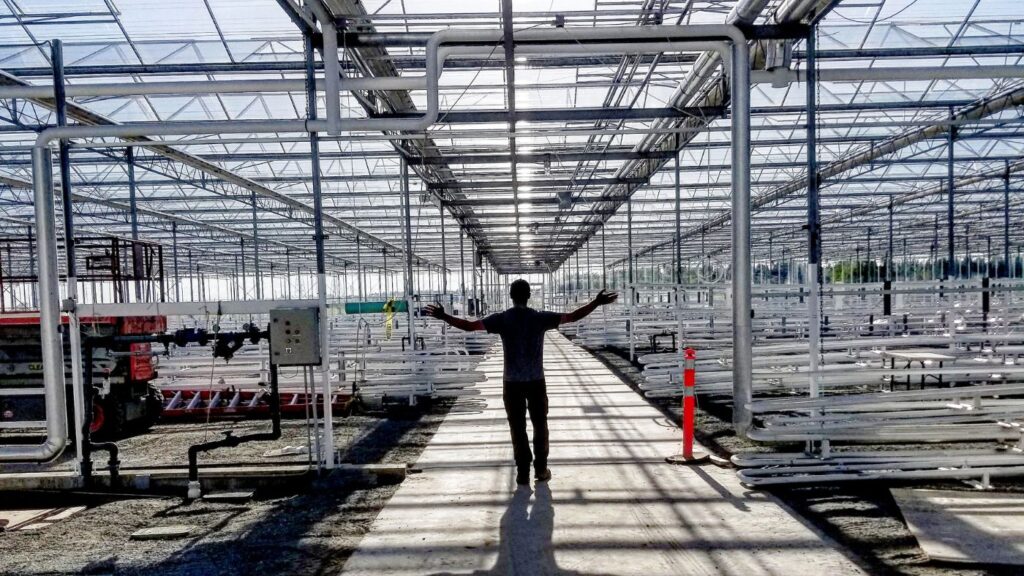 This guide covers the major considerations involved in planning and building a Virginia cannabis facility, with a focus on retail and cultivation operations and additional considerations relevant to processors and microbusinesses. It is written from the build side of the business, because that is where many otherwise-strong applicants stumble: they underestimate utility needs, local approvals, security infrastructure, commissioning, and the time required to convert a site into an inspection-ready operation.
 - Virginia Dual-Use Cannabis Conversion (2027): The $10M Medical-to-Adult-Use Pathway
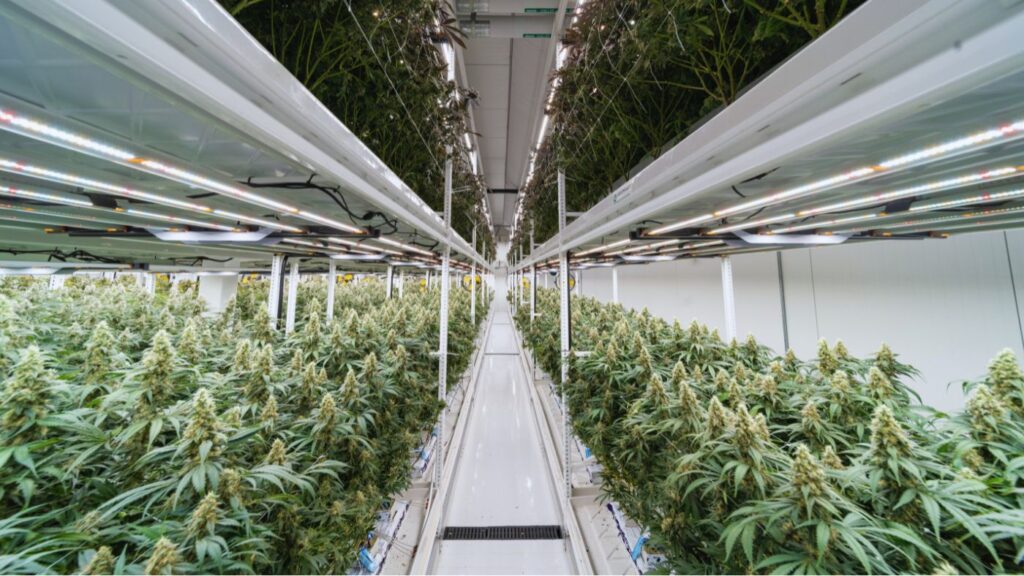 For Virginia’s existing medical cannabis operators, the 2026 retail framework created a distinct and high-stakes transition: pharmaceutical processors may apply for verification to exercise dual-use privileges and serve both registered medical patients and adult-use customers. The pathway covers the processor and its permitted cannabis dispensing facilities, and it carries a one-time $10 million fee, a required medical cannabis program preservation plan, an impact-licensee business accelerator commitment, and a firm May 1, 2027 payment or installment-plan deadline.
 - Virginia Impact Cannabis License (2027): Social Equity & the Equity Business Loan Fund
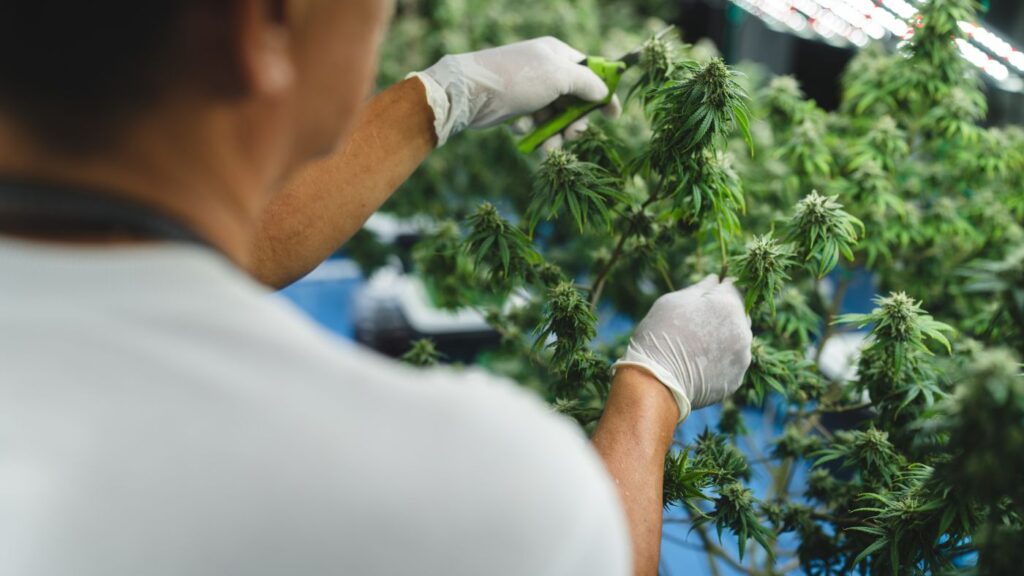 Virginia’s adult-use cannabis framework creates a meaningful pathway for applicants from communities and backgrounds affected by cannabis prohibition and enforcement. The law does not create a separate, stand-alone impact license. Instead, it creates an impact-licensee designation that qualifying applicants may pursue alongside an underlying marijuana establishment license, such as retail, cultivation, processing, microbusiness, transportation, delivery, or testing.
 - Virginia Cannabis Microbusiness License (2027): Eligibility & the Two-Location Model
 This guide explains the initial eligibility pathways for the licenses the CCA may issue by May 1, 2027, the difference between a microbusiness license and an impact designation, the indoor and outdoor cultivation limits, the precise rules governing two locations, and the financial, security, and operational readiness standards applicants should prepare to demonstrate. Several implementation details – including fees and the specific combination of privileges the CCA will authorize – still depend on forthcoming regulations.
 - Virginia Cannabis Cultivation License (2027): The Tiered System Explained
 For operators whose strength is growing cannabis, Virginia’s emerging adult-use market presents a significant opportunity – and a cultivation license is the gateway to it. The June 2026 framework authorizes the Virginia Cannabis Control Authority (CCA) to begin accepting license applications on or after February 1, 2027 and issuing licenses on or after May 1, 2027. It also establishes five cultivation tiers with maximum canopies ranging from 5,000 to 35,000 square feet.