
Estimated reading time: 15 minutes
Table of contents
- Overview
- What the Impact Licensee Designation Is
- Who Qualifies for Impact Status
- How Impact Status Changes the Licensing Process
- The Equity Funding and Support Structure
- The Five-Year Ownership and Transfer Protections
- What HB 30 Confirmed vs. What’s Pending
- How to Prepare Now
- Work With Catalyst BC on Your Virginia Impact Strategy
- Success Stories: See How Catalyst BC Has Helped Cannabis Businesses Enter and Lead the Market
- Virginia Impact Cannabis License FAQs
- Additional Resources
- Free eBooks For Cannabis Business Success
- Latest Articles

Editor’s Notes: This article is part of our Virginia 2027 Licensing Hub. Last Updated: 8/27/2026. Other topics covered in this series are:
- Virginia Cannabis License 2027 Application Guide
- How to Open a Dispensary in Virginia
- Virginia Cannabis Microbusiness License Guide
- Virginia Cannabis Cultivation License Guide
- Virginia Impact Cannabis License Guide
- Virginia Cannabis Facility Design and Build-Out
- Virginia Dual-Use Cannabis Conversion Guide
Overview
HB 30 creates a meaningful pathway for applicants from communities and backgrounds affected by cannabis prohibition and enforcement. HB 30 does not create a separate, standalone impact license. Instead, it creates an impact licensee designation that qualifying applicants may pursue alongside an underlying marijuana establishment license, such as retail, cultivation, processing, microbusiness, transportation, delivery, or testing. Impact status can provide priority licensing opportunities, access to dedicated business funding and technical assistance, and ownership protections intended to preserve eligible control.
The core eligibility structure is established in HB 30. The applicant must be at least 51% owned and directly controlled by qualifying individuals who meet both a geographic connection requirement and at least one of six additional criteria. The Cannabis Control Authority still must identify the qualifying geographic areas, publish documentation standards and application forms, establish licensing periods, and implement the funding and ownership review processes. This guide separates what is already confirmed from the details still being developed.
What the Impact Licensee Designation Is
Impact status is a designation applied to a qualifying applicant or licensee; it is not a separate license type with its own operating privileges. An impact applicant must still choose and qualify for an underlying license appropriate to the proposed business model. The designation affects how the applicant may participate in a capped licensing process, which support programs may be available, and which ownership and transfer restrictions apply after licensure.
Who Qualifies for Impact Status
To qualify, an applicant must be at least 51% owned and directly controlled by one or more individuals who satisfy a two-part test. First, the qualifying owners must have either resided between 1999 and 2025 in a jurisdiction the CCA determines was disproportionately policed for marijuana crimes or resided for at least three of the past five years in a historically economically disadvantaged community. Second, those owners must meet at least one of the following six criteria:
- Have been convicted of or adjudicated delinquent for a qualifying marijuana offense, or a substantially similar offense in another jurisdiction.
- Be the parent, child, sibling, or spouse of a person convicted of or adjudicated delinquent for a qualifying marijuana offense.
- Have attended a public elementary or secondary school in a historically economically disadvantaged community for at least five years.
- Have received a Federal Pell Grant or attended for at least two years a college or university where at least 30% of students, on average, were eligible for Pell Grants.
- Be a veteran of the Armed Forces of the United States.
- Have qualified for U.S. Department of Agriculture financial assistance or relief as a distressed farmer within the past five years.

Expert Insight – The geographic requirement is a gate, not an alternative. An applicant does not qualify merely because an owner is a veteran, received a Pell Grant, or meets another listed criterion. The qualifying owners must also satisfy one of the law’s geographic residency conditions and must collectively hold at least 51% ownership and direct control. Build the eligibility file around both parts of the test.
Leif Olsen – Catalyst BC Chief Executive Officer
How Impact Status Changes the Licensing Process
Impact status does not guarantee a license, but it can materially change how an applicant competes when a license type is capped. If impact applicants outnumber the licenses reserved for impact applicants, the CCA must first conduct a lottery limited to that group. An impact applicant not selected in the impact-only lottery is then included in the general qualified applicant pool for the same license type.
- Reserved opportunities. When the CCA caps a license type not otherwise fixed by statute, the number made available to impact applicants must be equal to or greater than the number made available to all other applicants.
- A second opportunity in the general pool. An unsuccessful impact applicant remains eligible for the general lottery for that license type, rather than being eliminated after the impact-only drawing.

Expert Insight – Choose the underlying license before chasing the designation. Impact operating plan and market strategy. Priority is valuable only if the business behind the application is viable. Status can improve access to a capped licensing process, but it does not repair a weak business model. Applicants still need to choose a license type that fits their experience, capital, operating plan, and market strategy. Priority is valuable only if the business behind the application is viable.
Andy Schnack – Catalyst BC Operations Advisor
The Equity Funding and Support Structure
Virginia’s framework pairs the impact designation with dedicated capital and technical support. These programs are meaningful, but applicants should distinguish between resources available to impact licensees and broader community reinvestment funding that is not direct startup capital.
| Mechanism | What it does |
| Virginia Cannabis Equity Business Loan Fund | Receives 75% of marijuana establishment annual license fees collected from May 1, 2027 through May 1, 2028. The program may provide grants, low interest loans, zero interest loans, conditional loans, and other support and services to impact licensees. |
| Cannabis Impact Business Support Team | Analyzes barriers to entry; provides business planning and technical assistance; publicizes opportunities; and conducts outreach in communities affected by cannabis prohibition and enforcement. |
| Cannabis Equity Reinvestment Fund | Supports broader community priorities such as scholarships, workforce development, mentoring, job training, reentry services, indigent defense, and contributions to the business loan fund. It is not the same as direct applicant financing. |
The Virginia Cannabis Equity Business Loan Fund is especially significant because it can provide more than conventional debt financing: HB 30 authorizes grants, low-interest loans, zero-interest loans, conditional loans, and other forms of support. However, the fund is directed to impact licensees, and the CCA still must establish program timing, underwriting, award amounts, monitoring, and application procedures. Applicants should not assume that the fund will be available before licensure or that it will cover the full cost of application, real estate, construction, inventory, or working capital.

Expert Insight – Treat equity funding as supplemental capital, not the entire capital plan. Build a financing strategy with contingencies and enough runway to withstand delays, limited awards, or program conditions. The strongest applicants will understand how these funds may fit into the capital stack while preserving sufficient independent funding to achieve licensure and operations.
Michael Williamson – Catalyst BC Chief Operating Officer
The Five-Year Ownership and Transfer Protections
HB 30 directly addresses the risk that a qualifying owner could be used to obtain impact status and then lose control to a better capitalized party. The protections are significant, but they are more precise than a blanket prohibition on investment or every ownership change:
- Five-year controlling-interest restriction. For five years after issuance, an impact licensee and its beneficial owners may not sell, assign, or transfer a controlling interest of more than 49% to another person or entity.
- Prior approval for ownership changes. No marijuana establishment license may be assigned, sold, transferred, or undergo a change in ownership or control without the CCA Board’s prior written approval.
- Possible estate-planning exception. The Board may create a limited exception for transfers to family members or trusts established for the licensee’s immediate family.
- Review of financial relationships. The CCA must establish a process to evaluate ownership, financing, management, and brand licensing agreements for undue influence and commercial reasonableness.
- Enforcement for predatory arrangements. Fraudulent financial transactions, predatory operating agreements, or prohibited transfers can trigger revocation proceedings and repayment of waived fees.
HB 30 does not prohibit every outside investment or services agreement. Regulations must presume that passive investments below 10% and management or brand licensing agreements without actual or contractual control are permissible unless the arrangement produces undue influence. The practical question is who truly controls pricing, management, staffing, operations, financing, and the economic value of the business.
Expert Insight – Capital can support an impact business without controlling it. Investors, lenders, managers, and brand partners may have legitimate roles, but the qualifying owners must retain at least 51% ownership and direct control. Review the complete package of operating, financing, management, licensing, and transfer agreements together with qualified Virginia counsel; a compliant-looking document can still create undue influence when combined with the rest of the deal.
Leif Olsen – Catalyst BC Chief Executive Officer
What HB 30 Confirmed vs. What’s Pending
To prepare effectively, you need to know what to build on now versus what to watch for:
Confirmed in HB 30: the impact licensee designation; the 51% ownership and direct control standard; the two part eligibility test; priority impact lotteries; continued access to the general applicant pool; reserved licensing opportunities when certain license types are capped; the Equity Business Loan Fund and Business Support Team; the five year restriction on transfers of more than 49% controlling interest; and the CCA’s authority to audit ownership and financial relationships.
Pending and to be finalized: the census tracts and communities that satisfy the geographic requirements; the documents applicants must submit; the dates, license types, and quantities included in each licensing period; application and annual license fees; the funding program’s application, underwriting, and award procedures; and detailed regulations governing ownership, financing, management, and brand licensing agreements.
The practical implication is to prepare parts of the file that are already knowable while avoiding premature commitments based on unfinished rules. Applicants can map ownership and control, identify the likely eligibility basis, collect historical residency and qualifying records, evaluate the underlying license type, and build a conservative capital plan now. Binding real estate commitments can generally wait as applicants selected for preliminary approval will have up to 18 months to provide a final site, subject to the CCA’s rules and any extension.
How to Prepare Now
- Choose the underlying license type. Impact status is a designation, not a substitute for a retail, cultivation, processing, microbusiness, transportation, delivery, testing, or other license.
- Map ownership and direct control. Confirm that qualifying individuals will hold at least 51% ownership and retain genuine authority over management and operations.
- Build both halves of the eligibility file. Document the required geographic connection and at least one of the six additional qualifying criteria for each person supporting the 51% threshold.
- Review investment and operating agreements together. Evaluate financing, management, brand, voting, and transfer provisions for undue influence alongside qualified Virginia counsel.
- Build a conservative capital plan. Treat the loan fund and state support as potential supplements rather than guaranteed pre-license financing.
- Monitor the CCA closely. Watch for qualifying area maps, licensing period announcements, documentation standards, fee schedules, and funding program rules.
Work With Catalyst BC on Your Virginia Impact Strategy
Virginia’s impact designation can provide meaningful advantages: priority access within capped licensing processes, potential access to grants and flexible financing, technical assistance, and a framework designed to preserve qualifying ownership. Capturing those advantages requires more than checking an eligibility box. Applicants must select the appropriate underlying license, document both parts of the eligibility test, preserve 51% ownership and direct control, structure outside capital without undue influence, and build a business capable of achieving final licensure and operational readiness. Catalyst BC helps applicants evaluate license strategy, ownership and operational roles, capital needs, facility and market planning, and application readiness while coordinating with qualified Virginia counsel on governing agreements. With the CCA authorized to begin accepting applications on or after February 1, 2027, the work should begin now. Contact our team to build an impact strategy designed to qualify, compete, and operate for the long term.
About the authors: This guide was prepared by the Catalyst BC cannabis consulting team. Catalyst BC advises cannabis operators on state licensing strategy, impact applicant preparation, ownership and operational planning, regulatory compliance, capital and facility planning, and cannabis facility design and commissioning across U.S. and international markets. This article is provided for informational purposes only and does not constitute legal or financial advice; applicants should confirm current requirements with the Virginia Cannabis Control Authority and consult qualified Virginia counsel and financial advisors regarding their specific circumstances.
Success Stories: See How Catalyst BC Has Helped Cannabis Businesses Enter and Lead the Market
From initial startup and facility build-outs to high-value exit strategies, our cannabis consultants provide the expertise needed to navigate the complexities of the legal cannabis industry.




Virginia Impact Cannabis License FAQs
Virginia does not create a separate, standalone impact license. Impact status is a designation available to qualifying applicants for an underlying marijuana establishment license. It can affect lottery priority, access to support programs, and ownership restrictions.
The applicant must be at least 51% owned and directly controlled by qualifying individuals who satisfy one of two geographic residency conditions and at least one of six additional criteria: a marijuana conviction, a family relationship, school attendance, Pell Grant history, veteran status, or distressed farmer assistance.
When a capped license type is oversubscribed, the CCA first conducts a lottery for impact applicants competing for impact-designated opportunities. Impact applicants not selected in that drawing are then included in the general qualified applicant pool for the same license type.
The Virginia Cannabis Equity Business Loan Program may provide grants, low-interest loans, zero-interest loans, conditional loans, technical assistance, and other support. Program timing, underwriting, award amounts, and application procedures still must be implemented by the CCA.
For five years after issuance, an impact licensee and its beneficial owners may not transfer a controlling interest of more than 49%. All license assignments, transfers, and changes of ownership or control also require prior written CCA approval. A limited estate planning exception may be created by regulation.
From May 1, 2027, through May 1, 2028, the CCA must deposit 75% of Marijuana establishment annual license fees into the fund. The total will depend on the number and types of licenses issued and the annual fees collected.
Yes, but the qualifying owners must retain at least 51% ownership and direct control, and the arrangement cannot create undue influence. Passive investments below 10% and noncontrolling management or brand agreements are presumed permissible under HB 30 unless the facts show otherwise.
The CCA may begin accepting applications for marijuana establishments on or after February 1, 2027. Still, it must announce each licensing period, the license types and quantities available, and the opening and closing dates. February 1 is authorization to begin, not necessarily the opening date for every license type.
HB 30 allows applicants selected for preliminary approval up to 18 months to provide the final address, legal property description, locality, and related site information, subject to CCA regulations and a possible one-time extension.
The eligibility structure, priority lottery process, funding authority, support team, and five-year transfer restriction are established in law. The CCA still must publish qualifying geographic areas, documentation requirements, licensing periods, fees, fund procedures, and detailed ownership and financing regulations.
Additional Resources
Free eBooks For Cannabis Business Success




Latest Articles
- How Much Does It Cost to Open a Cannabis Dispensary in 2026
 The allure of jumping into the legalized cannabis industry often paints a picture of quick riches and burgeoning demand, yet the reality of establishing a licensed cannabis dispensary is far more nuanced, capital-intensive, and fraught with unique financial challenges. For aspiring entrepreneurs and seasoned investors alike, understanding the true dispensary startup costs is the absolute bedrock of success.
 - Virginia Cannabis Facility Design & Build-Out for the 2027 Market
 This guide covers the major considerations involved in planning and building a Virginia cannabis facility, with a focus on retail and cultivation operations and additional considerations relevant to processors and microbusinesses. It is written from the build side of the business, because that is where many otherwise-strong applicants stumble: they underestimate utility needs, local approvals, security infrastructure, commissioning, and the time required to convert a site into an inspection-ready operation.
 - Virginia Dual-Use Cannabis Conversion (2027): The $10M Medical-to-Adult-Use Pathway
 For Virginia’s existing medical cannabis operators, the 2026 retail framework created a distinct and high-stakes transition: pharmaceutical processors may apply for verification to exercise dual-use privileges and serve both registered medical patients and adult-use customers. The pathway covers the processor and its permitted cannabis dispensing facilities, and it carries a one-time $10 million fee, a required medical cannabis program preservation plan, an impact-licensee business accelerator commitment, and a firm May 1, 2027 payment or installment-plan deadline.
 - Virginia Impact Cannabis License (2027): Social Equity & the Equity Business Loan Fund
 Virginia’s adult-use cannabis framework creates a meaningful pathway for applicants from communities and backgrounds affected by cannabis prohibition and enforcement. The law does not create a separate, stand-alone impact license. Instead, it creates an impact-licensee designation that qualifying applicants may pursue alongside an underlying marijuana establishment license, such as retail, cultivation, processing, microbusiness, transportation, delivery, or testing.
 - Virginia Cannabis Microbusiness License (2027): Eligibility & the Two-Location Model
 This guide explains the initial eligibility pathways for the licenses the CCA may issue by May 1, 2027, the difference between a microbusiness license and an impact designation, the indoor and outdoor cultivation limits, the precise rules governing two locations, and the financial, security, and operational readiness standards applicants should prepare to demonstrate. Several implementation details – including fees and the specific combination of privileges the CCA will authorize – still depend on forthcoming regulations.
 - Virginia Cannabis Cultivation License (2027): The Tiered System Explained
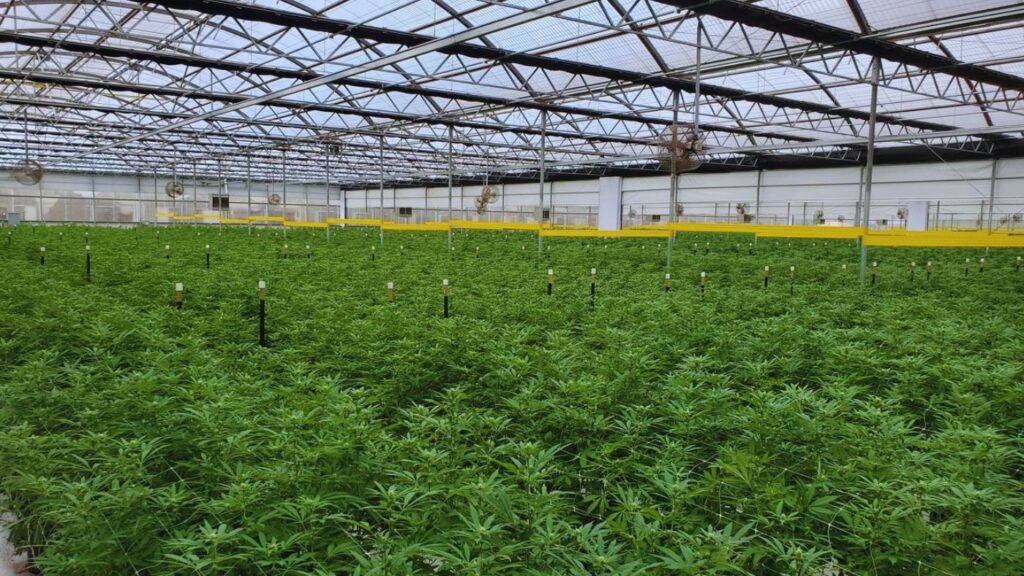 For operators whose strength is growing cannabis, Virginia’s emerging adult-use market presents a significant opportunity – and a cultivation license is the gateway to it. The June 2026 framework authorizes the Virginia Cannabis Control Authority (CCA) to begin accepting license applications on or after February 1, 2027 and issuing licenses on or after May 1, 2027. It also establishes five cultivation tiers with maximum canopies ranging from 5,000 to 35,000 square feet.