

Estimated reading time: 9 minutes
Table of contents
- Market Snapshot: April 15, 2026
- What Does the NY Type 3 Branding License Authorize in 2026?
- Key 2026 Regulatory Shifts: TPI and Tax Reform
- The Application Blueprint for 2026
- Next Steps: Contact Catalyst BC For Support On Your New York Processor Type 3 Branding License
- Success Stories: See How Catalyst BC Has Helped Cannabis Businesses Enter and Lead the Market
- New York Adult-Use Processor Type 3 Licensees Also Ask:
- Additional Information
- Free eBooks For Cannabis Business Success
- Latest Articles

Editors Notes: Originally published February 2025 last fully updated April 16, 2026.
Market Snapshot: April 15, 2026
In 2021, New York legalized. In 2025, it launched. In April 2026, the market is maturing at an unprecedented rate. The “green rush” of speculative applications has been replaced by a sophisticated “Branding Phase.” As of this month, the Office of Cannabis Management (OCM) has authorized over 532 processors, many of whom are actively seeking high-quality brand partners to fill their white-label capacity.
The Adult-Use Processor Type 3 Branding License remains the most efficient entry point for intellectual property owners, celebrity brands, and out-of-state operators. It allows you to market your brand in the Empire State without “touching the plant” – or the massive capital expenditure of a New York facility.
What Does the NY Type 3 Branding License Authorize in 2026?
The 2026 regulatory framework (specifically 9 NYCRR § 123.5) remains strict regarding who can partner with whom. A licensed processor is generally prohibited from entering into branding or white-labeling agreements with entities that are not True Parties of Interest (TPI) or authorized licensees.
The Branding License solves this bottleneck. It authorizes you to:
- Execute White-Label Agreements: Partner with duly licensed New York processors (Type 1 or Type 2) who handle the actual manufacturing, extraction, and infusion.
- Maintain Intellectual Property Control: You provide the logos, product quality protocols, and non-cannabis ingredients (flavoring, packaging, hardware).
- Bypass Physical Infrastructure: No New York premises are required. Your brand exists as a legal, licensed entity that can officially contract with the state’s supply chain.
- Regulatory Compliance: It serves as the OCM’s mechanism to capture TPI and ownership data, ensuring your brand adheres to New York’s strict “undue influence” and “two-tier” architecture rules.
Key 2026 Regulatory Shifts: TPI and Tax Reform
Since the initial launch, two major changes have redefined the value of a Branding License:
- The 2024 Tax Pivot: The repeal of the “Potency Tax” in favor of a flat 9% wholesale excise tax has simplified white-label pricing models. Brand owners can now negotiate more transparent “per-unit” costs with their processing partners without accounting for fluctuating THC-milligram tax burdens.
- Metrc Integration (2026): All inventory is now strictly tracked via Metrc. While the processor handles the plant-touching entries, the Brand Licensee must ensure their packaging and SKU data are fully compliant with the OCM’s latest digital labeling standards to avoid distribution delays.
The Application Blueprint for 2026
Applying via New York Business Express (NYBE) is a rigorous process that now requires “Shelf-Ready” documentation. The OCM is no longer grading on a curve; they expect professional-grade submissions.
- TPI Disclosures: You must disclose all True Parties of Interest, including any entity receiving more than 10% of gross revenue or $250,000 annually.
- Branding and Quality Plans: You must submit detailed master manufacturing protocols that your processing partner will follow to ensure brand consistency.
- SEE Certification (Optional): Social and Economic Equity (SEE) applicants continue to receive a 50% reduction in fees, making this license an accessible pathway for equity-owned brands.
The 2026 Fee Structure:
- Application Fee: $1,000 (Non-refundable)
- License Fee: $2,000 (Two-year term)
- SEE Discount: 50% reduction for qualified applicants.
Next Steps: Contact Catalyst BC For Support On Your New York Processor Type 3 Branding License
Navigating the New York market in 2026 is a game of precision. A minor error in your white-label contract or a failure to disclose a “silent partner” can lead to immediate denial or revocation.
At Catalyst BC, we bring over 60 years of combined experience and a track record of securing 57+ licenses in the nation’s most competitive markets. We don’t just “fill out forms” – we architect Compliance-First Business Models.
- Strategic Partnership Matching: We help you identify and vet the most reliable New York processors for your specific product type.
- Contractual Safeguards: We ensure your branding agreements protect your IP while satisfying the OCM’s TPI and “undue influence” scrutiny.
- Full Application Lifecycle: From initial SEE verification to final NYBE submission and Metrc-readiness, we provide the expert oversight required for success in a $3B market.
The window for early-mover branding advantage is closing. Contact us today for a professional 2026 Licensing Consultation and secure your brand’s future in New York.
Success Stories: See How Catalyst BC Has Helped Cannabis Businesses Enter and Lead the Market
From initial startup and facility build-outs to high-value exit strategies, our cannabis consultants provide the expertise needed to navigate the complexities of the legal cannabis industry.
New York Adult-Use Processor Type 3 Licensees Also Ask:
No. This is a non-plant-touching license. All manufacturing, infusion, packaging, and labeling must be performed by a New York-licensed processor (Type 1, Type 2, or Microbusiness) within their licensed facility.
Yes. One of the primary advantages of the Branding License is that it allows out-of-state companies or IP owners to legally enter the New York market without establishing a physical facility in the state, provided they partner with a licensed NY processor.
No. Unlike cultivation or retail licenses, the Branding License does not require a licensed premise in New York State. This significantly reduces the overhead and “holding costs” associated with other license types.
Generally, no. New York maintains a “Two-Tier” architecture. The Branding License is considered a supply-side license. Holding a retail license (Tier 2) and a branding license (Tier 1) would typically constitute a “Two-Tier violation” regarding undue influence and control.
For Social and Economic Equity (SEE) applicants, the OCM requires that the equity-verified individuals maintain at least 65% ownership and day-to-day operational control. This is strictly audited in 2026 to prevent “predatory” management agreements.
Yes. You can provide flavoring agents, terpenes (non-cannabis derived), specialized packaging, and hardware (like vaporizer cartridges) to your processing partner as part of your master manufacturing protocol.
By moving to a flat 9% wholesale excise tax, the state eliminated the complex THC-per-milligram accounting. This makes it much easier for brand owners to calculate their margins and set competitive MSRPs with their retail and processing partners.
While you can enter into agreements with multiple processors, each agreement must be disclosed to the OCM, and your Branding License must be active. You must also ensure these agreements do not inadvertently grant you “control” over the processor, which could violate TPI limits.
No. You are the brand owner, but the physical product must be sold and transported to the dispensary by a licensed Distributor. Your processing partner may hold a distribution license, or you may contract with a third-party distributor.
The OCM’s 2026 audit standards are extremely high. “Simple” mistakes in ownership charts or failure to align your branding agreement with NYCRR Part 123 can result in months of delays (RFMIs) or denial. Catalyst BC ensures your application is “review-ready” the first time.
Additional Information
Free eBooks For Cannabis Business Success




Latest Articles
- How Much Does It Cost to Open a Cannabis Dispensary in 2026
 The allure of jumping into the legalized cannabis industry often paints a picture of quick riches and burgeoning demand, yet the reality of establishing a licensed cannabis dispensary is far more nuanced, capital-intensive, and fraught with unique financial challenges. For aspiring entrepreneurs and seasoned investors alike, understanding the true dispensary startup costs is the absolute bedrock of success.
 - Virginia Cannabis Facility Design & Build-Out for the 2027 Market
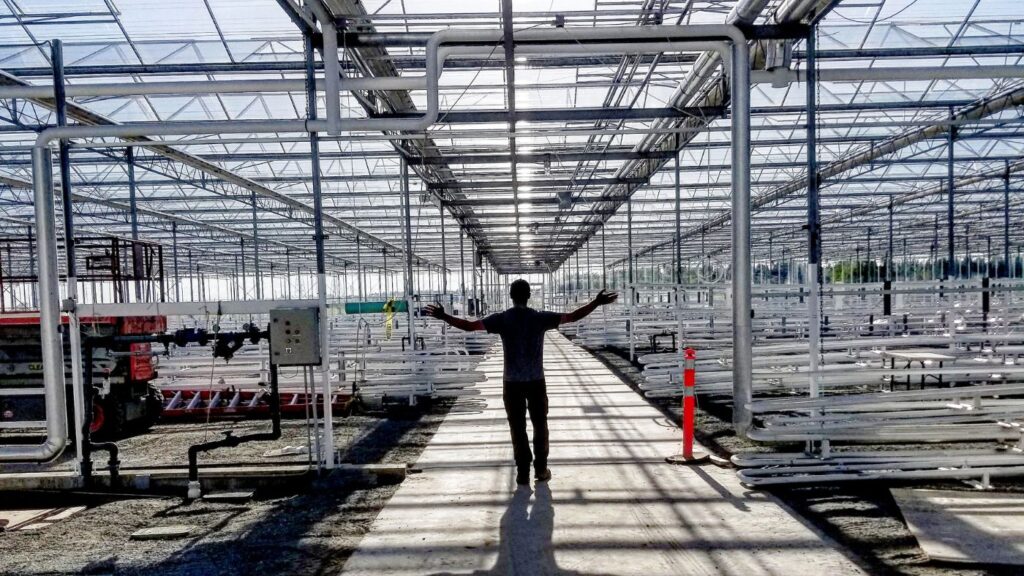 This guide covers the major considerations involved in planning and building a Virginia cannabis facility, with a focus on retail and cultivation operations and additional considerations relevant to processors and microbusinesses. It is written from the build side of the business, because that is where many otherwise-strong applicants stumble: they underestimate utility needs, local approvals, security infrastructure, commissioning, and the time required to convert a site into an inspection-ready operation.
 - Virginia Dual-Use Cannabis Conversion (2027): The $10M Medical-to-Adult-Use Pathway
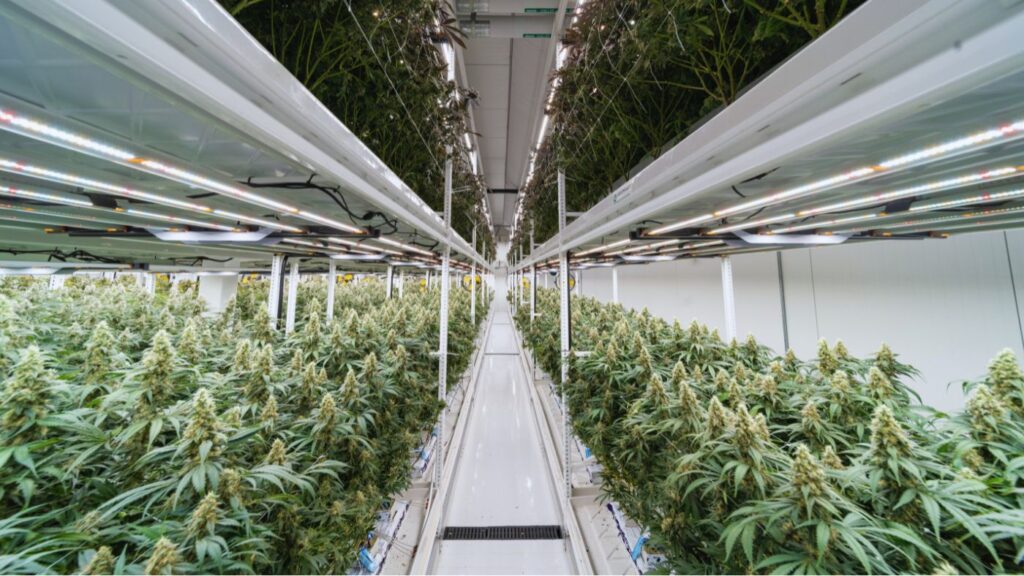 For Virginia’s existing medical cannabis operators, the 2026 retail framework created a distinct and high-stakes transition: pharmaceutical processors may apply for verification to exercise dual-use privileges and serve both registered medical patients and adult-use customers. The pathway covers the processor and its permitted cannabis dispensing facilities, and it carries a one-time $10 million fee, a required medical cannabis program preservation plan, an impact-licensee business accelerator commitment, and a firm May 1, 2027 payment or installment-plan deadline.
 - Virginia Impact Cannabis License (2027): Social Equity & the Equity Business Loan Fund
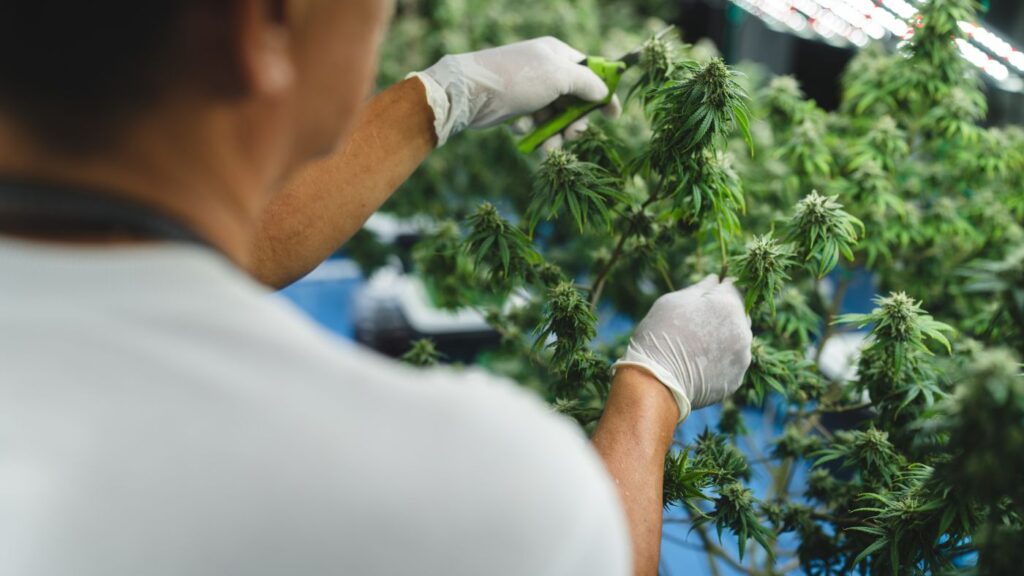 Virginia’s adult-use cannabis framework creates a meaningful pathway for applicants from communities and backgrounds affected by cannabis prohibition and enforcement. The law does not create a separate, stand-alone impact license. Instead, it creates an impact-licensee designation that qualifying applicants may pursue alongside an underlying marijuana establishment license, such as retail, cultivation, processing, microbusiness, transportation, delivery, or testing.
 - Virginia Cannabis Microbusiness License (2027): Eligibility & the Two-Location Model
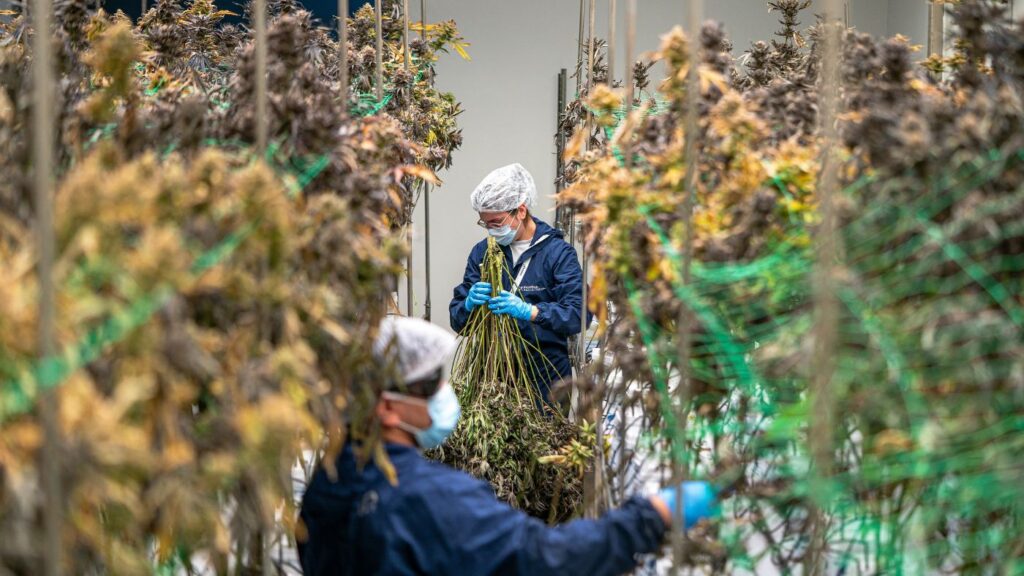 This guide explains the initial eligibility pathways for the licenses the CCA may issue by May 1, 2027, the difference between a microbusiness license and an impact designation, the indoor and outdoor cultivation limits, the precise rules governing two locations, and the financial, security, and operational readiness standards applicants should prepare to demonstrate. Several implementation details – including fees and the specific combination of privileges the CCA will authorize – still depend on forthcoming regulations.
 - Virginia Cannabis Cultivation License (2027): The Tiered System Explained
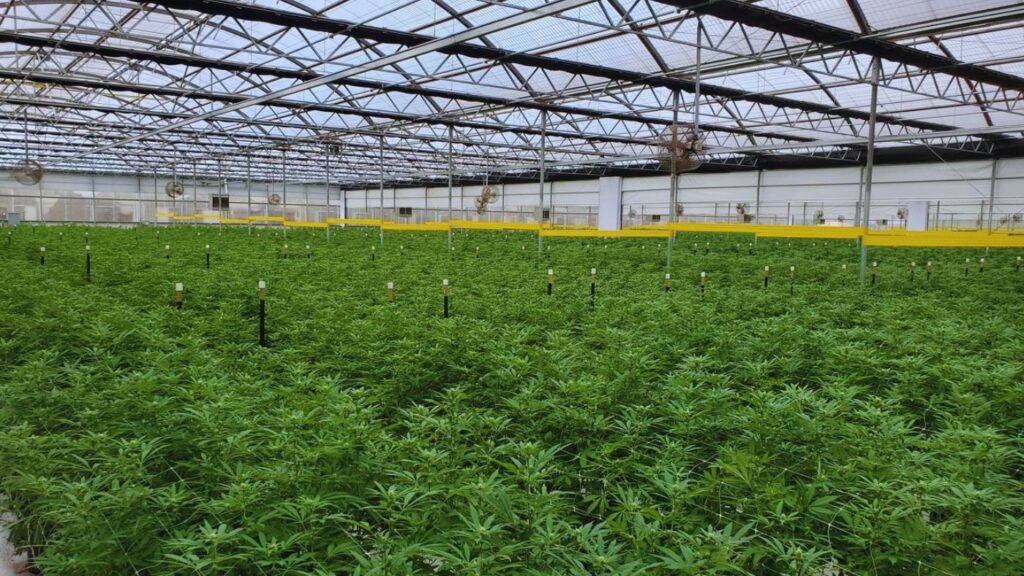 For operators whose strength is growing cannabis, Virginia’s emerging adult-use market presents a significant opportunity – and a cultivation license is the gateway to it. The June 2026 framework authorizes the Virginia Cannabis Control Authority (CCA) to begin accepting license applications on or after February 1, 2027 and issuing licenses on or after May 1, 2027. It also establishes five cultivation tiers with maximum canopies ranging from 5,000 to 35,000 square feet.