
Estimated reading time: 5 minutes
Table of contents
Introduction
North Carolina remains one of the few states without a medical cannabis program, despite strong support among voters. In recent years, the North Carolina Senate has passed medical cannabis legalization bills in both 2022 and 2023—most notably, a 36-10 supermajority in support of allowing qualified patients access to cannabis. However, these efforts have stalled in the House, leaving the state’s medical cannabis future uncertain as we look toward 2025.
Legislative Setbacks in the House
Both Senate bills failed to advance in the lower chamber. Former House Speaker Tim Moore explained that under his leadership, a bill could not proceed unless it had sufficient backing from his caucus. Even proposals with 100% Democratic support, but only 49% Republican backing, did not meet the threshold. Although the House recently elected a new speaker for the first time in 10 years, early signals are not optimistic for reform. Rep. Destin Hall, R-Caldwell—who has long opposed medical cannabis legalization—now holds the keys to the floor, potentially stalling future efforts.
Senate Support and Public Opinion
In contrast to the House, the upper chamber remains more receptive to reform. Senate President Pro Tempore Phil Berger, R-Guilford, has indicated openness to legalization—as long as any legislation addresses concerns regarding unregulated THC products derived from hemp. “It seems to me that there’s an opportunity there to address the medical marijuana issue at some point during the session,” Berger told Queen City News on January 29.
Senate Minority Leader Sydney Batch, D-Wake, has highlighted that medical cannabis, along with casinos, are nonpartisan issues the General Assembly could tackle. This sentiment is echoed by North Carolina voters: a September 2024 WRAL News poll found that 70% support medical cannabis legalization, and a February 2024 Meredith College survey reported 71% support.
Related reading: North Carolina Cannabis Licensing & Business Opportunities 2026.
Conclusion
With no cannabis legalization reform bills filed as of mid-February and the legislative session set to run through July 31, North Carolina remains one of eight states without a medical cannabis program—even when compared to states with very restrictive models like Texas. Meanwhile, the state’s 21-and-older population already has limited access to adult-use cannabis on the Eastern Band of Cherokee Indians’ reservation in the Qualla Boundary. As North Carolina heads into 2025, the future of Cannabis Legalization North Carolina hangs in the balance, with a divided House posing a significant obstacle despite robust Senate backing and widespread public support.
Cannabis Legalization North Carolina 2025 FAQs
No, recreational marijuana is not legal in North Carolina. It is only legal for limited medical use.
In the state of North Carolina, you cannot purchase cannabis from dispensaries without a medical card. The state’s medical cannabis program requires individuals to have a qualifying condition and possess a medical cannabis card to buy cannabis products legally.
Anyone over 21 with a valid ID can purchase THC products in Western North Carolina. Sales began Sept. 7, 2024 at 10 a.m. at the old bingo hall on the western end of the Qualla Boundary.
While North Carolina has yet to legalize recreational marijuana, there are strict prohibitions in place against the sale and distribution of cannabis, including the following: Sale 10 pounds or less: A Class I felony punishable by three to eight months imprisonment and a discretionary fine for a first offense.
No, you cannot buy marijuana in North Carolina for recreational use, except for limited medical use. Possession of 0.5 ounces or less is decriminalized for people with three or fewer misdemeanor convictions.
In the state of North Carolina the following medical conditions can qualify patients for a medical marijuana card are the following, positive status for human immunodeficiency virus (HIV), acquired immune deficiency syndrome (AIDS), cancer, epilepsy, amyotrophic lateral sclerosis (ALS), Crohn’s disease, and more.
Additional Resources
Free eBooks For Cannabis Business Success




Latest Articles
- How Much Does It Cost to Open a Dispensary in 2026?
 The allure of jumping into the legalized cannabis industry often paints a picture of quick riches and burgeoning demand, yet the reality of establishing a licensed cannabis dispensary is far more nuanced, capital-intensive, and fraught with unique financial challenges. For aspiring entrepreneurs and seasoned investors alike, understanding the true dispensary startup costs is the absolute bedrock of success.
 - Virginia Cannabis Facility Design & Build-Out for the 2027 Market
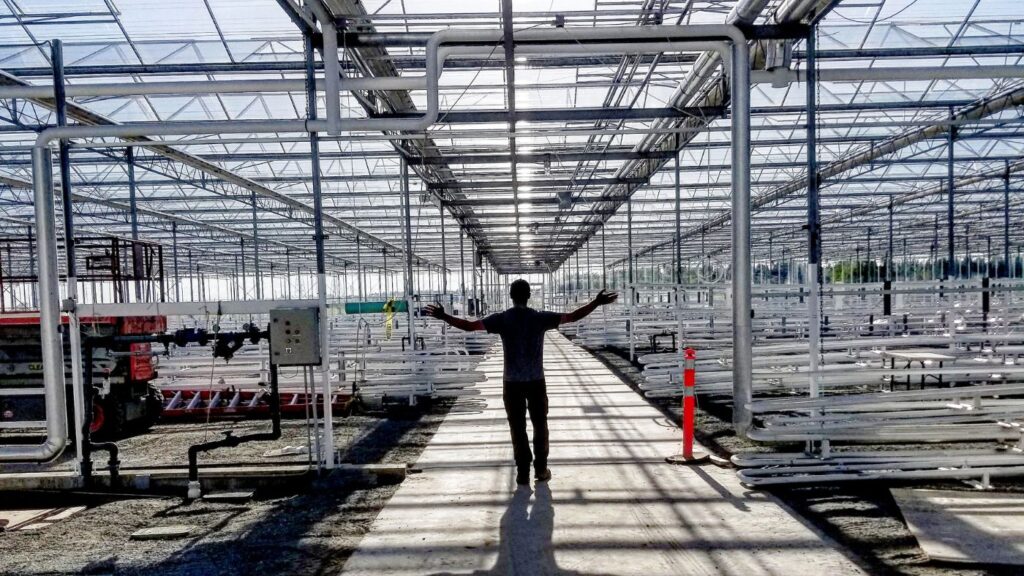 This guide covers the major considerations involved in planning and building a Virginia cannabis facility, with a focus on retail and cultivation operations and additional considerations relevant to processors and microbusinesses. It is written from the build side of the business, because that is where many otherwise-strong applicants stumble: they underestimate utility needs, local approvals, security infrastructure, commissioning, and the time required to convert a site into an inspection-ready operation.
 - Virginia Dual-Use Cannabis Conversion (2027): The $10M Medical-to-Adult-Use Pathway
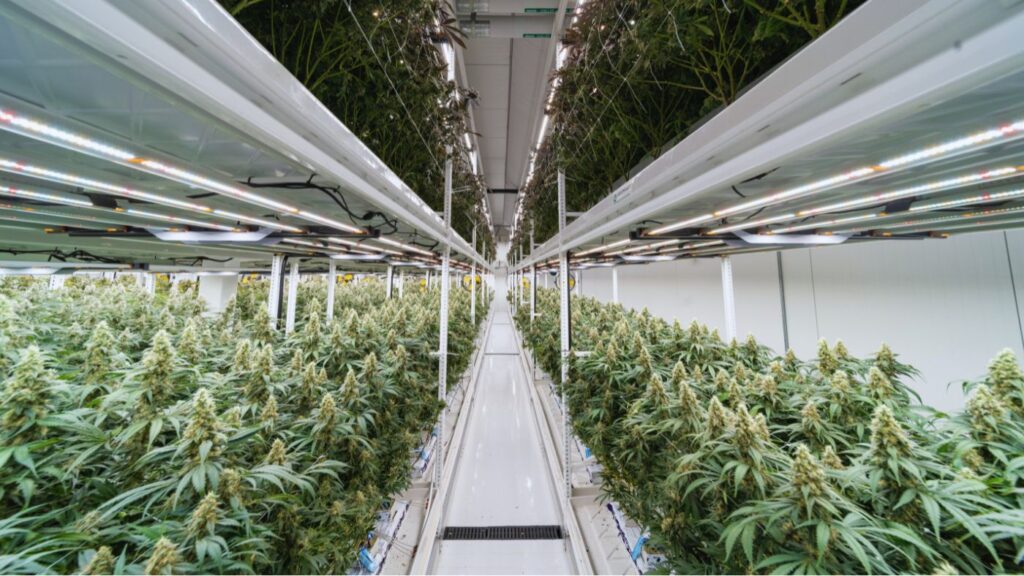 For Virginia’s existing medical cannabis operators, the 2026 retail framework created a distinct and high-stakes transition: pharmaceutical processors may apply for verification to exercise dual-use privileges and serve both registered medical patients and adult-use customers. The pathway covers the processor and its permitted cannabis dispensing facilities, and it carries a one-time $10 million fee, a required medical cannabis program preservation plan, an impact-licensee business accelerator commitment, and a firm May 1, 2027 payment or installment-plan deadline.
 - Virginia Impact Cannabis License (2027): Social Equity & the Equity Business Loan Fund
 Virginia’s adult-use cannabis framework creates a meaningful pathway for applicants from communities and backgrounds affected by cannabis prohibition and enforcement. The law does not create a separate, stand-alone impact license. Instead, it creates an impact-licensee designation that qualifying applicants may pursue alongside an underlying marijuana establishment license, such as retail, cultivation, processing, microbusiness, transportation, delivery, or testing.
 - Virginia Cannabis Microbusiness License (2027): Eligibility & the Two-Location Model
 This guide explains the initial eligibility pathways for the licenses the CCA may issue by May 1, 2027, the difference between a microbusiness license and an impact designation, the indoor and outdoor cultivation limits, the precise rules governing two locations, and the financial, security, and operational readiness standards applicants should prepare to demonstrate. Several implementation details – including fees and the specific combination of privileges the CCA will authorize – still depend on forthcoming regulations.
 - Virginia Cannabis Cultivation License (2027): The Tiered System Explained
 For operators whose strength is growing cannabis, Virginia’s emerging adult-use market presents a significant opportunity – and a cultivation license is the gateway to it. The June 2026 framework authorizes the Virginia Cannabis Control Authority (CCA) to begin accepting license applications on or after February 1, 2027 and issuing licenses on or after May 1, 2027. It also establishes five cultivation tiers with maximum canopies ranging from 5,000 to 35,000 square feet.