
Estimated reading time: 6 minutes
Table of contents
Introduction
Cannabis Legalization in Kansas remains a contentious issue as lawmakers revisit the possibility of legalizing medical cannabis. Since 2021, Kansas legislators have explored reform initiatives, yet repeated efforts have stalled due to procedural roadblocks and partisan debates. With strong public support for medical cannabis, the 2025 legislative session could prove pivotal in breaking this impasse.
Legislative History and Challenges
In 2021, Kansas lawmakers made an early push for reform when House members voted 79-42 to advance a medical cannabis initiative. However, the momentum quickly faltered when Republican Senate President Ty Masterson opted not to call the bill for a vote in his chamber. Subsequent legislative attempts over the past three years have similarly stalled. During the last biennial session, the Kansas Senate Federal and State Affairs Committee tabled the debate, with Masterson dismissing the proposal as a “nonstarter.” He emphasized that any approach to medical cannabis must “protect our children,” expressing a willingness to consider only a highly controlled pilot program.
Interim Committee and Recent Developments
Following the adjournment of the previous session, lawmakers formed an interim committee on medical cannabis. Over two days in October, state officials, law enforcement, business leaders, and medical professionals provided their insights on the issue. Despite these efforts, the committee ultimately rejected a motion from Sen. Cindy Holscher, D-Overland Park, to endorse legalization heading into the 2025 session. “I just feel like we keep circling here by doing interim committees and never really moving forward on the issue,” Holscher commented. More recently, on February 19, Holscher attempted to attach an amendment—to include “medical cannabis” among the treatments allowed—to a bill focused on expanding terminally ill patient access to experimental drugs. However, this amendment did not succeed.
Public Opinion and Future Prospects
Despite the legislative hurdles, public sentiment in Kansas is in favor of medical cannabis reform. An Emerson College Polling survey released in October 2024 found that 73% of Kansas voters support allowing qualifying patients to access medical cannabis. As one of 24 states lacking citizen-initiated ballot measures, Kansas faces unique challenges in enacting reform. Nonetheless, the strong voter support makes Kansas a state “to watch” in 2025 as advocates continue to push for change.
Related reading: Iowa Cannabis Legalization 2025, Cannabis Legalization Wisconsin, Cannabis Legalization Pennsylvania
Conclusion
The journey toward Cannabis Legalization in Kansas is marked by repeated setbacks and cautious legislative maneuvers. Yet, with growing public backing and persistent advocacy from reform-minded lawmakers, there is renewed hope for progress in the 2025 session. Kansas stands at a critical crossroads, and the coming months will be decisive in determining whether the state can finally overcome its longstanding obstacles and provide much-needed access to medical cannabis for its residents.
Cannabis Legalization Kansas 2025 FAQs
Recreational marijuana is still illegal in Kansas, so there are no recreational cannabis dispensaries in the state.
Medical marijuana is illegal in Kansas. The state is one of a few jurisdictions in the whole nation that has yet to legalize cannabis in one form or the other.
All Kansas residents can legally buy our broad spectrum of CBD gummies that don’t contain THC, CBD edibles like CBN gummies, CBD gummies for sleep, and melatonin gummies.
Kansas residents can legally purchase CBD products from physical stores or online. They can buy THC-free CBD products from CBD dispensaries, pharmacies, vape shops, grocery stores, and health food stores. Residents can also buy CBD products online from third-party markets or directly from a product brand.
In 2021, Kansas Attorney General Derek Schmidt clarified that Delta-8 THC is considered a controlled substance unless it’s made from industrial hemp and contains no more than 0.3% total THC. This has caused some retailers to pull Delta-8 products off their shelves to avoid legal trouble.
Delta-9 THC: Under the 2018 “Farm Bill,” hemp-derived products with no more than 0.3% Delta-9 THC are federally legal. Kansas follows this rule, meaning products like edibles and tinctures that meet this legal threshold are permitted in the state.
Delta 10 THC is federally legal in the United States and is legal in Kansas! According to state law, which is in line with federal law, Kansas has specifically legalized all Hemp products which contain an acceptable level of Delta 9-THC.
Aside from one minor exception, the purchase, growth, use, and possession of marijuana is illegal in Kansas. Getting caught with any amount carries the potential for jail time and fines, no matter how small. Kansas has no medical marijuana program in place, nor does it allow adult-use recreational marijuana.
Kansas legislators have debated medical cannabis during the session or in a special committee in 2021, 2022, 2023 and 2024. Yet cannabis is still illegal in Kansas as of 3/2025.
Additional Resources
Free eBooks For Cannabis Business Success




Latest Articles
- How Much Does It Cost to Open a Dispensary in 2026?
 The allure of jumping into the legalized cannabis industry often paints a picture of quick riches and burgeoning demand, yet the reality of establishing a licensed cannabis dispensary is far more nuanced, capital-intensive, and fraught with unique financial challenges. For aspiring entrepreneurs and seasoned investors alike, understanding the true dispensary startup costs is the absolute bedrock of success.
 - Virginia Cannabis Facility Design & Build-Out for the 2027 Market
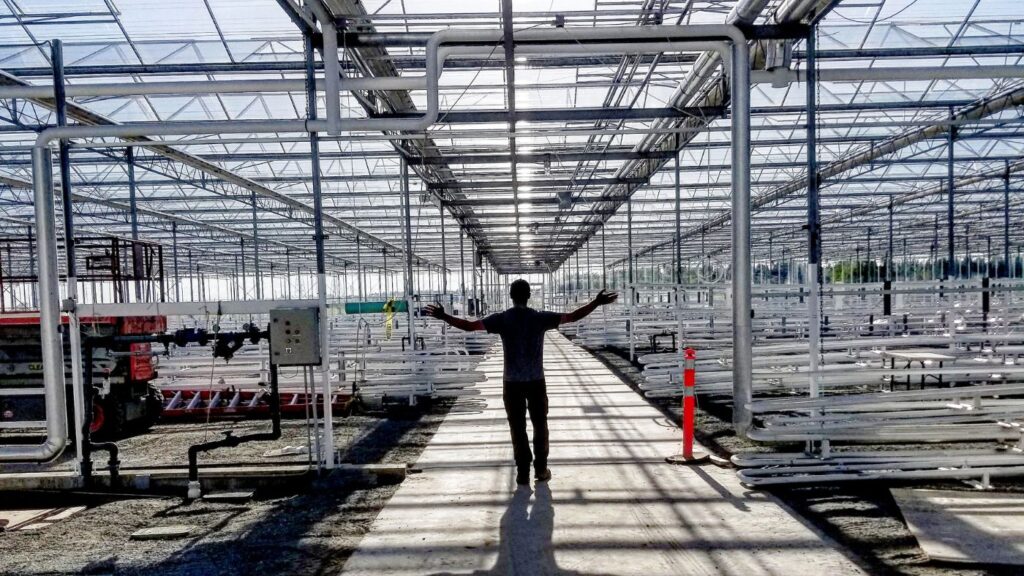 This guide covers the major considerations involved in planning and building a Virginia cannabis facility, with a focus on retail and cultivation operations and additional considerations relevant to processors and microbusinesses. It is written from the build side of the business, because that is where many otherwise-strong applicants stumble: they underestimate utility needs, local approvals, security infrastructure, commissioning, and the time required to convert a site into an inspection-ready operation.
 - Virginia Dual-Use Cannabis Conversion (2027): The $10M Medical-to-Adult-Use Pathway
 For Virginia’s existing medical cannabis operators, the 2026 retail framework created a distinct and high-stakes transition: pharmaceutical processors may apply for verification to exercise dual-use privileges and serve both registered medical patients and adult-use customers. The pathway covers the processor and its permitted cannabis dispensing facilities, and it carries a one-time $10 million fee, a required medical cannabis program preservation plan, an impact-licensee business accelerator commitment, and a firm May 1, 2027 payment or installment-plan deadline.
 - Virginia Impact Cannabis License (2027): Social Equity & the Equity Business Loan Fund
 Virginia’s adult-use cannabis framework creates a meaningful pathway for applicants from communities and backgrounds affected by cannabis prohibition and enforcement. The law does not create a separate, stand-alone impact license. Instead, it creates an impact-licensee designation that qualifying applicants may pursue alongside an underlying marijuana establishment license, such as retail, cultivation, processing, microbusiness, transportation, delivery, or testing.
 - Virginia Cannabis Microbusiness License (2027): Eligibility & the Two-Location Model
 This guide explains the initial eligibility pathways for the licenses the CCA may issue by May 1, 2027, the difference between a microbusiness license and an impact designation, the indoor and outdoor cultivation limits, the precise rules governing two locations, and the financial, security, and operational readiness standards applicants should prepare to demonstrate. Several implementation details – including fees and the specific combination of privileges the CCA will authorize – still depend on forthcoming regulations.
 - Virginia Cannabis Cultivation License (2027): The Tiered System Explained
 For operators whose strength is growing cannabis, Virginia’s emerging adult-use market presents a significant opportunity – and a cultivation license is the gateway to it. The June 2026 framework authorizes the Virginia Cannabis Control Authority (CCA) to begin accepting license applications on or after February 1, 2027 and issuing licenses on or after May 1, 2027. It also establishes five cultivation tiers with maximum canopies ranging from 5,000 to 35,000 square feet.