
Estimated reading time: 8 minutes
Table of contents
Cliff Notes: Navigating Virginia’s Adult-Use Market
Objective: The 2026–2027 biennium offers a unique window for market entry as Virginia transitions to a fully regulated retail model designed to favor small, local operators. By leveraging a “decoupled” supply chain, entrepreneurs can find significant Virginia cannabis licensing and business opportunities while navigating a highly competitive and technically demanding application process.
Key Components:
- Key Launch Dates: The CCA application portal is targeted to open on July 1, 2026, with official adult-use retail sales commencing on November 1, 2026.
- Decoupled Licensing: Virginia prioritizes decentralization, offering specialized licenses for retailers, cultivators, processors, and unique “Nursery” categories for small growers.
- Social Equity Priority: Applicants meeting the “4-of-7” Impact Status criteria receive priority licensing and access to low-interest loans from the Cannabis Equity Business Loan Fund.
- Strict Retail Caps: To prevent over-saturation, standard retail licenses are strictly capped at 350 statewide, necessitating high-quality, merit-based applications.
- Operational Mandates: All licensees must enter into a Labor Peace Agreement, and dispensaries must have a licensed pharmacist on-site at all times during operating hours once products are present.
- Zoning & Capital: Operators must navigate a one-mile buffer between retail locations and anticipate startup costs ranging from $750,000 to $2,000,000 for a compliant build-out.
Securing one of only 350 licenses requires more than luck; it requires professional precision. Contact Catalyst BC today for comprehensive support in navigating Virginia’s “4-of-7” equity thresholds and securing a compliant, high-performing facility for the 2026 launch.
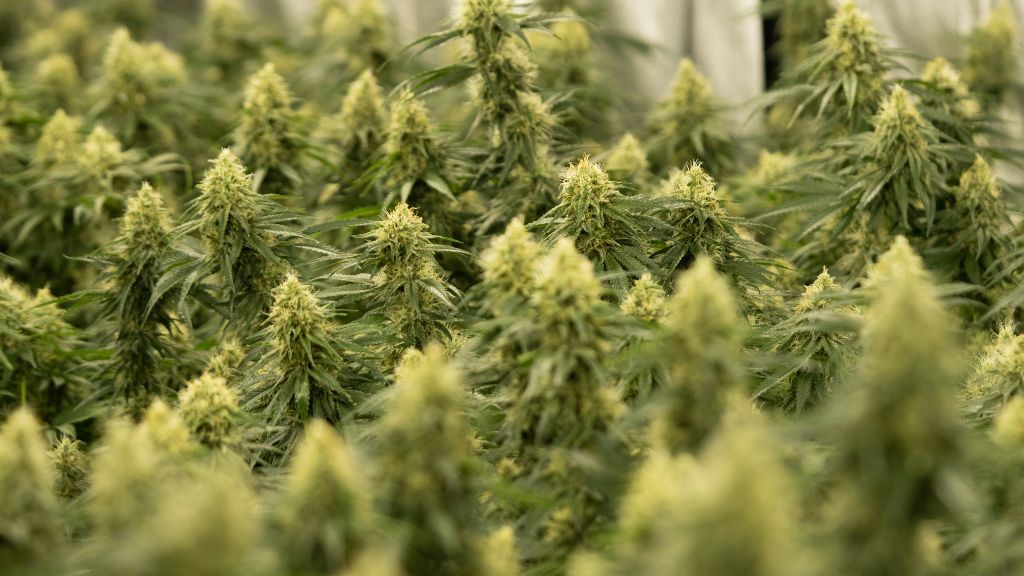
Introduction
As Virginia transitions from its current “possession-only” model toward a fully regulated retail market, the 2026–2027 biennium represents a once-in-a-generation window for market entry. Unlike the vertically integrated “medical-only” regimes of the past, Virginia’s upcoming framework focuses on decentralization, specifically architected to favor small Virginia-based operators over large multi-state corporations.
The 2026–2027 Regulatory Roadmap
The Virginia Cannabis Control Authority (CCA) is targeting July 1, 2026, as the official opening of the application window. The rollout is strategically phased to ensure a locally grown supply chain is ready before the retail market officially launches on November 1, 2026.
| Key Milestone | Expected Date | Operational Impact |
| CCA Application Portal Opens | July 1, 2026 | Submission of detailed business, security, and social equity plans. |
| DTC Microbusiness Launch | September 1, 2026 | Up to 100 temporary licenses issued for early cultivation and processing. |
| Official Retail Sales Launch | November 1, 2026 | Commencement of adult-use sales (21+) across the Commonwealth. |
| Market Stabilization Review | Late 2027 | First comprehensive CCA audit of ownership and market health. |
License Types and Opportunities
Virginia’s framework offers a diverse “decoupled” licensing taxonomy, allowing entrepreneurs to specialize in specific parts of the supply chain:
- Impact Licensees (Microbusinesses): A priority category allowing the holder to cultivate (up to 3,500 sq. ft. indoors), process, and sell their own products directly to consumers.
- Standard Retail Store: Capped at 350 licenses statewide. No single entity may hold more than five total licenses (including cultivation and processing) to prevent market dominance.
- Nursery Licenses: A unique entry point for small growers focused exclusively on seeds, clones, and immature plants.
- Ancillary Opportunities: Separate licenses will be available for third-party transporters, testing laboratories, and delivery-only operators.
The “4-of-7” Impact Status
To qualify for priority licensing and access to low-interest loans from the Cannabis Equity Business Loan Fund, applicants must meet a threshold of four out of seven social equity criteria. These include:
- Prior Marijuana Conviction: Personal or family misdemeanor convictions.
- Geographic Residency: Living for 3 of the last 5 years in a “disproportionately policed” census tract (based on 2015–2025 data).
- Economic Disadvantage: Residency in an economically distressed community.
- Educational Milestones: Graduation from a Virginia HBCU or attendance at a school with 30%+ Pell Grant eligibility.
- Agricultural Hardship: Qualification as a USDA-distressed farmer.
Operational Requirements and Estimated Costs
Operating a Virginia dispensary requires treating the facility as a high-stakes healthcare-style business. Pharmacists must be on-site during all operating hours once products are present. Furthermore, Labor Peace Agreements are mandatory for all licensees to protect workforce rights.
- State Fees: A standard retail application requires a $5,000 fee, followed by an $80,000 initial permit fee and a $64,000 annual renewal.
- Real Estate & Build-out: Location is the greatest challenge, as Virginia mandates a one-mile buffer between retail stores. Total startup capital, including a moderate 2,000–3,000 sq. ft. build-out, security infrastructure ($20,000–$75,000), and initial inventory, typically ranges from $750,000 to $2,000,000 .
The complexity of Virginia’s application process—from the rigorous “4-of-7” equity threshold to the strict ownership transparency rules (where even a 0.01% stake must be disclosed)—requires professional oversight. Successfully securing a license in this competitive 350-cap market demands a “compliance-first” strategy and robust financial modeling.
Don’t leave your application to chance in this high-stakes market. Contact Catalyst BC today for expert guidance on Virginia’s social equity criteria, site selection, and the comprehensive application process to ensure your business is positioned for success in 2026.
Virginia Cannabis Licensing & Business Opportunities 2026 FAQs
Under the current regulatory roadmap, adult-use retail sales are targeted to commence on November 1, 2026. This follows a phased rollout where license applications open on July 1, 2026, and temporary cultivation and processing for microbusinesses begin in September 2026.
An Impact Licensee is a priority status for individuals disproportionately affected by prior cannabis laws or economic distress. To qualify, an applicant must meet at least four of seven criteria, including prior marijuana convictions (personal or family), residency in “disproportionately policed” census tracts between 2015 and 2025, or status as a USDA-distressed farmer .
Yes. Standard retail licenses are capped at 350 statewide to prevent market over-saturation . Additionally, the largest cultivation tier (Tier V) is limited to only 10 licenses statewide, with a maximum canopy size of 35,000 square feet .
No. Virginia has adopted a “decoupled” supply chain model. Most license holders are limited to a maximum of five total authorizations across retail, cultivation, or processing combined to prevent monopolies . Only “Microbusiness” licensees are permitted to cultivate, process, and sell their own products simultaneously.
The 2026 framework proposes a one-mile buffer between retail locations . Furthermore, stores are prohibited within 1,000 feet of schools, daycares, places of worship, hospitals, playgrounds, and government buildings .
Yes. A licensed pharmacist must be present at a cannabis dispensing facility at all times during operating hours once cannabis products are present on-site. This requirement is a carryover from the state’s medical pharmaceutical processor model .
Yes, but only under specific license types. The state is introducing a “Direct-to-Consumer” (DTC) license specifically for microbusinesses, allowing them to deliver self-produced products to age-verified adult-use customers or medical patients.
New retail applicants face a $5,000 application fee. Once conditional approval is granted and the facility passes inspection, an initial permit fee of $80,000 is required, followed by a $64,000 annual renewal fee .
A Labor Peace Agreement is a contract between a cannabis business and a labor organization where the business agrees to remain neutral during union organizing. This is a mandatory condition for all license applicants in Virginia to ensure workforce stability.
With a strict 350-license cap and complex “4-of-7” equity thresholds, the application process is highly technical and competitive. Contact Catalyst BC for expert assistance; their team brings over 60 years of experience and a 96% win rate in merit-based applications to help you secure compliant real estate, develop robust SOPs, and navigate the Virginia Cannabis Control Authority’s (CCA) rigorous standards.
Additional Resources
Free eBooks For Cannabis Business Success




Latest Articles
- Missouri Cannabis Licensing & Business Opportunities 2026
 Missouri has established itself as the premier success story for cannabis in the Midwest, evolving from a standard medical regime to a high-volume adult-use market that exceeded $1.52 billion in annual sales in 2025. As the market enters the 2026–2027 biennium, the landscape is shifting from rapid expansion toward operational maturation and specialized entry.
 - North Carolina Cannabis Licensing & Business Opportunities 2026
 North Carolina remains one of the final significant jurisdictions in the United States without a comprehensive medical or adult-use cannabis program. However, the 2026–2027 biennium is projected to be the most consequential period in the state’s cannabis history. Driven by the formation of the North Carolina Advisory Council on Cannabis and an impending federal “hemp cliff,” the state is moving from a period of passive prohibition toward a structured, albeit highly restrictive, regulatory framework.
 - Nebraska Cannabis Licensing & Business Opportunities 2026
 Nebraska is entering the 2026–2027 biennium at a historic crossroads. Following the 71% voter approval of Initiatives 437 and 438 in late 2024—the largest margin for a medical cannabis initiative in U.S. history—the state is currently standing up its first regulated medical infrastructure.
 - Florida Cannabis Licensing & Business Opportunities 2026
 Florida represents the most capital-intensive and professionally structured cannabis market in the nation. As of 2026, the state is at a crossroads: it is both expanding its mature medical program and preparing for a potential constitutional shift toward universal adult-use access. On November 3, 2026, Florida voters will decide on the Marijuana Legalization Initiative (Amendment 3). Passing this requires a 60% supermajority—a high threshold, but one that polls suggest is within reach.
 - Virginia Cannabis Licensing & Business Opportunities 2026
 As Virginia transitions from its current “possession-only” model toward a fully regulated retail market, the 2026–2027 biennium represents a once-in-a-generation window for market entry. Unlike the vertically integrated “medical-only” regimes of the past, Virginia’s upcoming framework focuses on decentralization, specifically architected to favor small Virginia-based operators over large multi-state corporations.
 - Minnesota Cannabis Licensing & Business Opportunities 2026
 Minnesota is currently undergoing a transformative shift in its cannabis landscape, moving from a semi-regulated hemp-derived market toward a fully comprehensive adult-use framework. Overseen by the Office of Cannabis Management (OCM), the 2026–2027 biennium represents the critical “enforcement phase” where temporary registrations sunset and permanent, merit-based licenses define the market’s long-term leaders.