
Estimated reading time: 15 minutes
Table of contents
- Overview
- First, the Honest Status: The Window Is Closed
- Understanding New York’s Two Retail Paths
- The Rules That Shape Every New York Dispensary
- New York Corrected the School-Proximity Rules – Here’s What It Means Now
- What It Costs
- The Realistic Paths Into New York Retail Today
- Work With Catalyst BC to Open Your New York Dispensary
- Success Stories: See How Catalyst BC Has Helped Cannabis Businesses Enter and Lead the Market
- How to Open a Dispensary in New York FAQs
- Additional Resources
- Free eBooks For Cannabis Business Success
- Latest Articles
Editor’s Notes: This article is part of our New York 2026-2027 Licensing Hub. Other topics covered in this series are:
- How to Open a Dispensary in New York
- New York Cannabis Microbusiness License Guide
- New York Processor Type 3 Branding License Guide
- New York Cannabis Cultivation License Guide
- New York Cannabis Proximity Rules Guide
- New York Provisional-To-Operational Roadmap
Overview
If you are searching how to open a dispensary in New York in 2026, you deserve a straight answer that most guides bury: there is no general retail application window open right now. New York’s last adult-use application window closed in December 2023, and the Office of Cannabis Management (OCM) is still working through the roughly 7,000 applications it received then. That does not mean the door is shut – but it does mean the honest path into New York retail today looks very different from “fill out an application and wait.” Having guided operators into competitive cannabis markets across the country, I would rather tell you the real landscape than sell you a fantasy about a window that isn’t open. This guide lays out exactly where things stand, the genuine routes into a New York dispensary right now, and how to position yourself for the next window when it comes.
New York is a large and fast-growing market with more than 500 operating adult-use dispensaries as of late 2025, a two-tier market structure that generally separates retail from cultivation and processing, and one of the most equity-focused frameworks in the country. It is a genuine opportunity – but it rewards operators who understand its specific rules and its current moment. Let’s get into it.
First, the Honest Status: The Window Is Closed
The Marijuana Regulation and Taxation Act (MRTA) legalized adult-use cannabis in March 2021, and the first legal sales began in December 2022. New York opened its major adult-use application window in October 2023. The window closed on November 17, 2023, for certain retail and microbusiness applicants with site control, and the remaining applications closed on December 18, 2023. Since then, OCM has been reviewing and issuing licenses from that pool. As of this writing, no new general application window is open, and OCM has not announced a firm date for the next one.
What this means for you depends entirely on which situation you’re in:
| Your situation | Your real path right now |
| You applied in the 2023 window | You’re in the queue – focus on getting review-ready and, once approved, operational |
| You hold a provisional license | Secure a compliant location and build out; provisional licenses were extended through December 31, 2026 |
| You missed the 2023 window | Prepare for the next window, or evaluate an OCM-approved investment in or acquisition of an existing licensee |
| You want to enter cannabis another way | Consider a currently open non-retail license type that fits your eligibility and business model |
I’ll be blunt: if you are starting from zero and waiting for a new retail window, the single most valuable thing you can do is prepare so thoroughly that you can submit a complete, compliant application as soon as the next window opens. The applicants best positioned to move forward are not the ones who start when the window opens – they’re the ones who were already ready.
Understanding New York’s Two Retail Paths
New York built its retail market on two tracks, and understanding the distinction matters even now:
- CAURD (Conditional Adult-Use Retail Dispensary): The first retail licenses issued, reserved for justice-involved individuals and certain nonprofits. This was New York’s equity-first approach – putting the first dispensaries in the hands of people harmed by cannabis prohibition.
- Standard Adult-Use Retail Dispensary (AURD): The general retail license, open to a broader pool of applicants, issued from the 2023 application queue.
Both authorize adult-use retail sales, but CAURD remains a conditional license category with its own eligibility history and transition provisions. The distinction also matters because New York’s adult-use framework is oriented around Social and Economic Equity (SEE): the MRTA established a goal of awarding 50% of adult-use licenses to SEE applicants and directs the state to prioritize and support qualifying applicants. The specific fee, assistance, and review benefits available may depend on the rules and terms of the applicable application window. If you may qualify, documenting SEE eligibility before the next window is a valuable preparatory step.

Expert Insight – Establish SEE eligibility before you need it. Social and Economic Equity status isn’t a box you check at the last minute; it’s a qualification you document. If you or your ownership group may qualify – through residence in a disproportionately impacted community, income criteria, or status as a minority- or women-owned business, distressed farmer, or service-disabled veteran – start assembling that proof now. When the next window opens, SEE applicants with clean documentation will move faster and pay less than everyone scrambling to establish eligibility after the fact.
Leif Olsen – Catalyst BC Chief Executive Officer
The Rules That Shape Every New York Dispensary
Even before a window opens, three structural rules should shape your entire plan, because they determine what’s even possible.
No vertical integration
This is the big one. In New York, you generally cannot own retail and also own cultivation, processing, or distribution. You choose a lane – supply side or retail side – not both. (Limited exceptions exist for microbusinesses and certain medical operators.) An operator may hold a maximum of three retail licenses. If your business plan assumes you’ll grow your own product and sell it in your own store, New York’s structure will not allow it on the standard retail track.
Location and proximity
New York’s buffer rules are strict and have been a major obstacle for retail applicants. Under the proximity requirements effective February 11, 2026, a retail dispensary generally must be at least 500 feet from the entrance of a school located on the same street and 200 feet from the entrance of a building located on the same street and used exclusively as a house of worship. Separate regulations generally require 1,000 feet between retail dispensaries in municipalities with populations of 20,000 or more and 2,000 feet in smaller municipalities, unless the Cannabis Control Board approves a Public Convenience and Advantage exception. OCM’s Legal Online Cannabis Activities Locator (LOCAL) map can help screen an address for proximity issues and municipal opt-out status before you commit to a site.
Municipal opt-out and local rules
Many New York municipalities opted out of allowing retail dispensaries, although municipalities may later reverse an opt-out. Local governments may also regulate the time, place, and manner of retail operations, but their rules may not make operation of a licensed cannabis business unreasonably impracticable. You must confirm that your target municipality permits retail and evaluate its zoning and operating rules before committing to a location.
New York Corrected the School-Proximity Rules – Here’s What It Means Now
In 2025, OCM identified an error in how it had evaluated the 500-foot school-proximity requirement, creating uncertainty for affected licensees and applicants. New York subsequently enacted corrective legislation. Licensees who received a license before February 11, 2026, are protected and may continue operating and renewing at their current location. Applicants who previously received written confirmation from OCM that a location complied may also continue through the process at that location. A location change sought after February 11, 2026, is reviewed under the updated proximity standards.
For a prospective operator, the practical takeaway is simple: the grandfathering protects existing licensees, but any new location you select today must comply with the current, corrected proximity measurement. Use the LOCAL map, and don’t rely on older guidance or assume an address is clear because a nearby dispensary opened under the old rules.

Expert Insight – Site selection is where New York dispensaries live or die. In a market this dense and this heavily buffered, real estate is not a step in the process – it is the process. I’ve watched applicants fall in love with a storefront only to discover it fails a buffer or sits in an opt-out municipality. Before you get attached to any location, run it through the LOCAL map, confirm the municipality permits retail, and verify the proximity math under the current standard. The right location, secured early, is the single biggest predictor of whether a New York dispensary actually opens.
Michael Williamson – Catalyst BC Chief Operating Officer
What It Costs
New York dispensaries are capital-intensive, and underfunding is a common cause of failure. Startup costs can vary widely based on location, size, lease terms, security, professional services, inventory, and build-out, in addition to OCM’s application and licensing fees. New York previously offered eligible CAURD businesses reimbursement grants of up to $30,000 for qualifying expenses, but that grant round is closed and its funding has been exhausted. Prospective operators should not assume grant funding will be available. Whatever your path, you’ll need to document your capital and its sources and maintain enough runway to carry the business from site control and build-out through opening and early operations.
The Realistic Paths Into New York Retail Today
Pulling it together, here are the genuine routes right now:
- If you’re in the queue: Get review-ready. Respond immediately to any OCM deficiency letter, lock a compliant location, and prepare to move to build-out the moment you’re approved.
- If you hold a provisional license: Use the runway (extended through December 31, 2026) to secure a compliant site and build out – this is where Catalyst BC does much of its work.
- If you missed the window: Prepare a window-ready application package – including your entity structure, ownership disclosures, SEE documentation, capital plan, and site-selection strategy – so you can move quickly if another window is announced. Monitor cannabis.ny.gov for official updates.
- If you want in sooner: Consider a potential investment in or acquisition of an existing licensed business, recognizing that ownership and control changes require OCM review and approval and remain subject to True Party of Interest, ownership, and vertical-integration restrictions. A currently open license type outside retail may also be an option if it fits your business model and eligibility.
For help applying this in New York, visit our New York cannabis consulting page.
Work With Catalyst BC to Open Your New York Dispensary
New York is a real opportunity wrapped in a genuinely complicated moment – a closed window, a rolling queue, strict proximity and no-vertical-integration rules, and an equity framework that rewards preparation. Whether you’re in the queue, holding a provisional license, or preparing for the next window, the operators who succeed are the ones who get the fundamentals right early: SEE documentation, a compliant location that survives the buffer rules, a funded capital plan, and a build-out that’s ready to execute the moment you’re approved. That’s exactly what Catalyst BC does – licensing strategy, site and proximity analysis, capital planning, and the dispensary design and build-out that turn a license into an open, compliant, profitable store. We’ve helped operators open retail cannabis businesses across multiple markets, and we know how to navigate New York’s specific rules and its current moment. Contact our team today to build your path into New York retail the right way.
About the authors: This guide was prepared by the Catalyst BC cannabis consulting team. Catalyst BC advises cannabis operators on state licensing strategy, site selection and zoning, regulatory compliance, and dispensary design, build-out, and commissioning across U.S. and international markets. Our consultants provide Owner’s Representative services for new market entrants. This article is provided for informational purposes only and does not constitute legal advice; applicants should confirm current requirements with the New York Office of Cannabis Management and consult qualified counsel regarding their specific circumstances.
Success Stories: See How Catalyst BC Has Helped Cannabis Businesses Enter and Lead the Market
From initial startup and facility build-outs to high-value exit strategies, our cannabis consultants provide the expertise needed to navigate the complexities of the legal cannabis industry.


How to Open a Dispensary in New York FAQs
Not through a general retail window – the last one closed in December 2023, and no new one is currently open. OCM is issuing licenses from the existing queue on a rolling basis. If you missed the window, the best move is to prepare a window-ready application and monitor cannabis.ny.gov for the next opening.
More than 500 adult-use dispensaries were operating statewide as of November 30, 2025. OCM reported approximately $1.48 billion in adult-use sales through November 2025 and 2,008 active adult-use licenses across license types as of that date. Because these figures change frequently, current totals should be confirmed through OCM’s reports and licensing data.
CAURD (Conditional Adult-Use Retail Dispensary) licenses were the first issued, reserved for justice-involved individuals and certain nonprofits. Standard Adult-Use Retail Dispensary licenses are for the broader applicant pool. Both operate under the same rules once licensed.
Generally no. New York prohibits vertical integration on the standard retail track – you can’t hold retail and also cultivation, processing, or distribution licenses. Microbusinesses and certain medical operators are the limited exceptions. You choose either the supply side or the retail side.
Under the standards effective February 11, 2026, dispensaries generally must be at least 500 feet from the entrance of a school on the same street and 200 feet from the entrance of a building on the same street that is used exclusively as a house of worship. Separate retail-to-retail distance rules generally require 1,000 feet in municipalities with populations of 20,000 or more and 2,000 feet in smaller municipalities, subject to the Public Convenience and Advantage process. Use OCM’s LOCAL map to screen an address and confirm the municipality permits retail.
Corrective legislation now protects certain affected licensees and applicants. Licensees who received a license before February 11, 2026, may continue operating and renewing at their current locations, and applicants with prior written OCM confirmation may continue at the confirmed location. New locations and location changes sought after that date must comply with the updated standards.
Startup costs vary widely based on site, lease terms, size, security, professional services, inventory, and build-out, plus applicable OCM fees. New York previously offered qualifying CAURD businesses reimbursement grants of up to $30,000, but that grant round is closed and fully exhausted. Do not build a capital plan around grant funding unless a new program is formally announced.
New York does not impose a universal statewide-residency requirement on every applicant. Individual licensees must satisfy the applicable age, immigration-status, ownership, and disclosure requirements, while business entities must meet New York organization or principal-corporate-location requirements under the regulations. Applicants should verify the requirements that apply to their proposed ownership structure when the next application window is announced.
Social and Economic Equity status is New York’s equity designation, tied to the MRTA’s goal of awarding 50% of adult-use licenses to SEE applicants. Qualifying applicants may receive priority and support under the law and the terms of a particular application round. Because the exact fee and procedural benefits can vary, applicants should rely on the rules and guidance issued for the next window. If you may qualify, begin documenting eligibility early.
There is no dependable standard timeline. Queue position, OCM review, deficiency responses, site approval, local permitting, construction, inspections, and financing can make the process take well over a year. Current provisional CAURD and adult-use retail licensees generally have through December 31, 2026, to submit the required post-selection materials for final licensure, subject to OCM’s applicable guidance.
Additional Resources
Free eBooks For Cannabis Business Success




Latest Articles
- How Much Does It Cost to Open a Dispensary in 2026?
 The allure of jumping into the legalized cannabis industry often paints a picture of quick riches and burgeoning demand, yet the reality of establishing a licensed cannabis dispensary is far more nuanced, capital-intensive, and fraught with unique financial challenges. For aspiring entrepreneurs and seasoned investors alike, understanding the true dispensary startup costs is the absolute bedrock of success.
 - Virginia Cannabis Facility Design & Build-Out for the 2027 Market
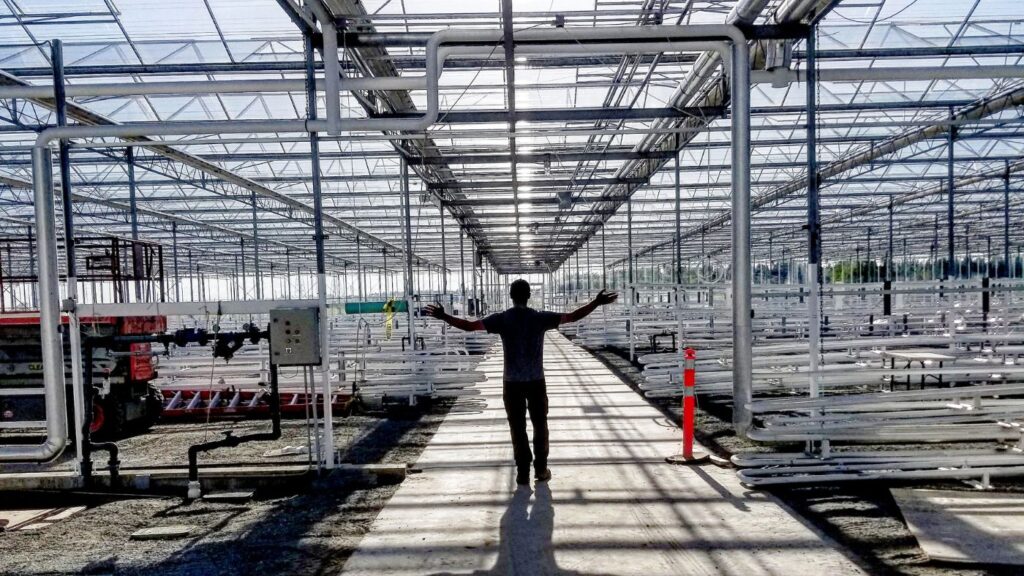 This guide covers the major considerations involved in planning and building a Virginia cannabis facility, with a focus on retail and cultivation operations and additional considerations relevant to processors and microbusinesses. It is written from the build side of the business, because that is where many otherwise-strong applicants stumble: they underestimate utility needs, local approvals, security infrastructure, commissioning, and the time required to convert a site into an inspection-ready operation.
 - Virginia Dual-Use Cannabis Conversion (2027): The $10M Medical-to-Adult-Use Pathway
 For Virginia’s existing medical cannabis operators, the 2026 retail framework created a distinct and high-stakes transition: pharmaceutical processors may apply for verification to exercise dual-use privileges and serve both registered medical patients and adult-use customers. The pathway covers the processor and its permitted cannabis dispensing facilities, and it carries a one-time $10 million fee, a required medical cannabis program preservation plan, an impact-licensee business accelerator commitment, and a firm May 1, 2027 payment or installment-plan deadline.
 - Virginia Impact Cannabis License (2027): Social Equity & the Equity Business Loan Fund
 Virginia’s adult-use cannabis framework creates a meaningful pathway for applicants from communities and backgrounds affected by cannabis prohibition and enforcement. The law does not create a separate, stand-alone impact license. Instead, it creates an impact-licensee designation that qualifying applicants may pursue alongside an underlying marijuana establishment license, such as retail, cultivation, processing, microbusiness, transportation, delivery, or testing.
 - Virginia Cannabis Microbusiness License (2027): Eligibility & the Two-Location Model
 This guide explains the initial eligibility pathways for the licenses the CCA may issue by May 1, 2027, the difference between a microbusiness license and an impact designation, the indoor and outdoor cultivation limits, the precise rules governing two locations, and the financial, security, and operational readiness standards applicants should prepare to demonstrate. Several implementation details – including fees and the specific combination of privileges the CCA will authorize – still depend on forthcoming regulations.
 - Virginia Cannabis Cultivation License (2027): The Tiered System Explained
 For operators whose strength is growing cannabis, Virginia’s emerging adult-use market presents a significant opportunity – and a cultivation license is the gateway to it. The June 2026 framework authorizes the Virginia Cannabis Control Authority (CCA) to begin accepting license applications on or after February 1, 2027 and issuing licenses on or after May 1, 2027. It also establishes five cultivation tiers with maximum canopies ranging from 5,000 to 35,000 square feet.