

Estimated reading time: 14 minutes
Table of contents
- Introduction
- General Psilocybin Laboratory License Requirements
- Steps to Become a Licensed Psilocybin Laboratory
- How People Access Psilocybin Services in Oregon
- How Do Psilocybin Products Get to a Service Center?
- Safety and Compliance
- Closing Thoughts
- Oregon Psilocybin Laboratory License FAQs
- Additional Resources
- Free eBooks For Cannabis Business Success
- Latest Articles
Cliff Notes: Oregon Psilocybin Laboratory License Application Guide
Objective: Understand the regulatory process and successfully apply for an Oregon Psilocybin Laboratory License
Key Components:
- ORS 475A and OAR 333-333 set the regulatory framework for licensed psilocybin laboratories in Oregon, requiring strict compliance with state testing, safety, and facility standards.
- Labs must be accredited by the Oregon Environmental Laboratory Accreditation Program (ORELAP) and demonstrate compliance with the 2016 TNI Standards.
- Applicants must provide a scaled premises floor plan, pass a criminal background check, and undergo a site inspection prior to approval.
- Laboratories are required to test psilocybin for potency, psilocybe cubensis identification, and any residual solvents, ensuring public safety and compliance.
- A $500 application fee and a $10,000 annual license fee are part of the licensing costs, in addition to planning and accreditation expenses.
- Applicants must submit a Social Equity Plan as part of Oregon’s commitment to inclusive access within the psilocybin services industry.
Working with a knowledgeable Psilocybin Consultant from Catalyst BC can significantly reduce errors, delays, and non-compliance risks during the licensing process.
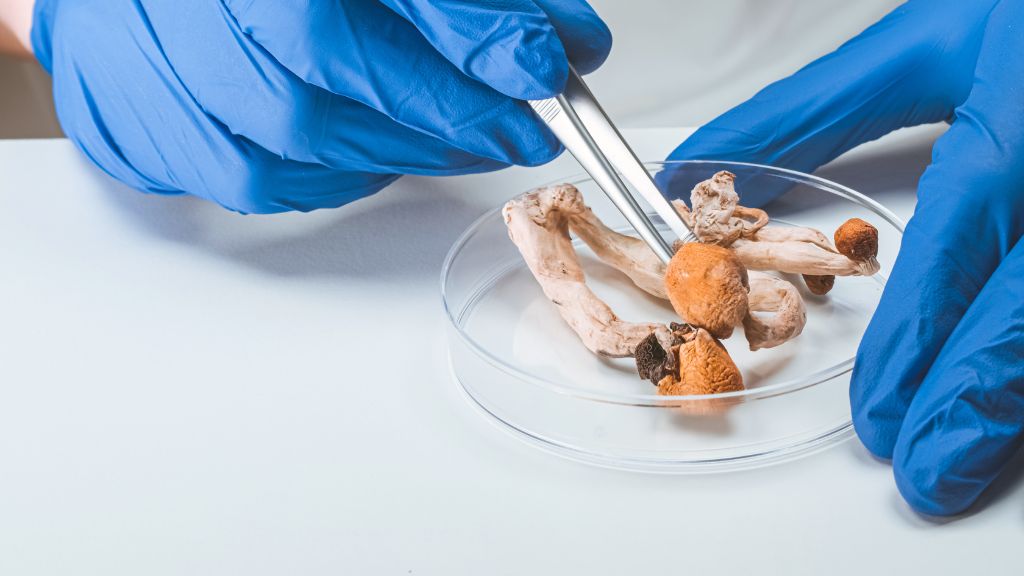
Introduction
In November 2020, Oregonians passed The Oregon Psilocybin Services Act (M109), which is now codified into Oregon law in ORS 475A. This statute establishes a licensing and regulatory framework for psilocybin services in Oregon. Before taking steps to become licensed, please go to the: “Training Video on ORS 475A: What is the Oregon Psilocybin Services Act?” and “What are Psilocybin Services?” to learn more. For tailored application assistance, many industry professionals recommend speaking with a knowledgeable Psilocybin Consultant.
Under ORS 475A, a licensed laboratory must test psilocybin products produced by a licensed manufacturer. Licensed laboratories must be accredited by the Oregon Environmental Laboratory Accreditation Program (ORELAP). Under OAR 333-333, psilocybin products are required to be tested to confirm the presence of psilocybe cubensis, as well as tested for potency and, if applicable, solvents. Licensed laboratories are prohibited from testing psilocybin products from unlicensed sources.
General Psilocybin Laboratory License Requirements
1) Must be 21 years of age or older.
3) Must be accredited by the Oregon Environmental Laboratory Accreditation Program (ORELAP).
4) Must pass a criminal background check.
5) Must pass a site inspection as part of the license application process.
Steps to Become a Licensed Psilocybin Laboratory
Review and Understand Statutory and Administrative Rule Requirements
Study statutory (ORS 475A) and administrative rule (OAR, Chapter 333-333) requirements related to an OPS laboratory license. For personalized advice, consider consulting with a Psilocybin Consultant who specializes in navigating these regulations.
Become Accredited
Become accredited through the Oregon Environmental Laboratory Accreditation Program (ORELAP). The process begins by registering for a username in the ORELAP Data Input and Edit (ODIE) system. Once registered, the user can create an initial application for accreditation. The laboratory’s application will be reviewed and invoiced. Once the invoice has been paid, ORELAP will arrange for an onsite assessment. The assessment will determine the laboratory’s compliance to the
accreditation rules and the 2016 (TNI) Standards.
Complete a Scaled Floor Plan and Premises Plan
As part of the license application process, you will need to submit a scaled floor plan of the proposed licensed
premises. Please see the OPS General Premises Plan Checklist and also the OPS Laboratory Premises Plan Checklist.
Prepare Materials for the Application Process
You will need to submit a Social Equity Plan. Please refer to the OPS Social Equity Plan Resources for resources that can support applicants in meeting this requirement. Gather all necessary documentation, including a Social Equity Plan. Consult with a Psilocybin Consulting expert if you require additional guidance.
Begin Your License Application Process with OPS
To begin an online application, account registration is required. Go to the OPS Training Program, Licensing, and Compliance (TLC) platform to access TLC and create an account. If you experience any difficulties, a Psilocybin Consultant can offer troubleshooting tips or alternative approaches.
Complete the Criminal Background Check Process
Once you have submitted a license application to OPS, you will be sent more information about how to complete the required background check. To prepare, please see this handout on the OPS Background Check Process.
Pay a $500 Application Fee
OPS will review your application as quickly as possible after the payment has cleared. You will want to monitor your email inbox for messages about next steps. OPS staff will need to visit your proposed location and perform a site inspection to ensure your premises is compliant with statute and rule requirements. Please refer to the Inspection Orientation for Laboratory Applicants to ensure that you are prepared for the site inspection. Preparing with the assistance of a Psilocybin Consultant may help you meet inspection expectations.
Pay the Annual License Fee of $10,000
If you are approved for a license, you will be required to pay an annual license fee of $10,000. More information can be found in administrative rules.
How People Access Psilocybin Services in Oregon
Individuals are able to access psilocybin services for any reason. A prescription or referral from a medical or clinical provider is not required. Clients must be 21 years of age or older and participate in at least one preparation session with a licensed facilitator before they consume psilocybin during an administration session at a licensed service center.
1) Schedule a Session:
A person interested in accessing psilocybin services will contact licensed service centers for information about psilocybin services. Once they find a service center that fits their needs, the potential client will schedule a preparation session with a licensed facilitator associated with the licensed service center they choose to work with. The OPS Licensee Directory includes contact information for service centers that have consented to being listed. Potential clients may also verify if a service center has a valid license by using the Search for License or Permit Status tool. For additional clarity on available options, you might also speak with a Psilocybin Consultant.
2) Preparation Session:
The client meets with a licensed facilitator for a preparation session and completes required forms (including: client information, bill of rights, informed consent, safety and support plan, transportation plan, and accessibility). A licensed facilitator determines whether they can provide services to the client, and the client determines whether they want to move forward with an administration session.
3) Administration Session:
The administration session takes place at a licensed service center. The client buys psilocybin products from a licensed service center and consumes psilocybin at the beginning of their administration session. The client remains at the service center with the licensed facilitator until they are ready to be released from the session. For group administration sessions, a minimal client-facilitator ratio is required. Within 72 hours after the session, the licensed facilitator contacts the client to check on them. An optional integration session is offered.
4) Integration Session:
If the client chooses to take part in an optional integration session, they may review their safety and support plan or request referrals for community resources, peer support networks, and other resources at that time. A Psilocybin Consultant can provide further insights on how to maximize the benefits of these sessions.
How Do Psilocybin Products Get to a Service Center?
- Psilocybin products are cultivated, produced, and/or processed by a licensed manufacturer and tracked in a product tracking system.
- Psilocybin products are tested by a licensed laboratory that is accredited by the Oregon Environmental Laboratory Accreditation Program (ORELAP). Test results are entered into the product tracking system.
- Psilocybin products are sold or transferred from a licensed manufacturer to a licensed service center and tracked in the product tracking system.
Safety and Compliance
OPS will investigate complaints, incidents, or concerns related to safety issues or statute and rule violations that occur on licensed premises and during the provision of psilocybin services. Once we receive a complaint, OPS will determine if there are potential violations of ORS 475A or OAR 333-333 and whether the Oregon Health Authority is the agency with jurisdiction to take further action. Oregon Psilocybin Services will only investigate violations of ORS 475A or ORS 333-333. Complaints related to criminal activity are a matter for law enforcement. Complaints are subject to public disclosure under Oregon’s Public Records Law. If a complainant is concerned about their privacy or safety, OPS will make effort to keep their identity confidential to the extent permitted by law.
During an investigation, Oregon Psilocybin Services (OPS) will conduct interviews with the complainant, witnesses, and licensees involved. If needed, we will also interview clients. OPS will request all relevant records and any security camera footage, if available. If statute or rule violations are discovered and there is enough evidence to prove the violation, the licensee will be issued a notice of a proposed administrative action that proposes some disciplinary licensing action and/or civil penalty.
Administrative sanctions depend on the severity of violation and may include restriction of a license, civil penalties, or suspension or revocation of a license. A licensee will have between 20-30 days to request a hearing, depending on what the proposed sanction is. If requested, the hearing would be conducted by an Administrative Law Judge (ALJ). After the hearing, the ALJ would issue their proposed order and then OHA would issue a final order. For more information on categories of OPS’s administrative violations, please reference OAR 333-333-6200.
Closing Thoughts
The path to psilocybin laboratory licensure in Oregon is highly regulated and requires rigorous planning, facility readiness, and compliance with both ORELAP and Oregon Health Authority standards. Whether you’re just starting or finalizing your plans, Catalyst BC is here to help you every step of the way. From interpreting complex statutes to designing compliant facilities and preparing for inspections, we offer turnkey support tailored to your success.
Don’t leave your license—and your investment—to chance.
Schedule your complimentary consultation with Catalyst BC’s Oregon Psilocybin Consulting team today and let’s build your future in psychedelic science together.
Oregon Psilocybin Laboratory License FAQs
Psilocybin is a naturally occurring psychedelic compound. It is found in over 200 species of mushrooms. For centuries, Indigenous and tribal communities around the world have used psilocybin for spiritual, ceremonial, and other purposes. Regulated psilocybin services are now a legal option in Oregon. However, psilocybin is still a Schedule I substance under the Federal Controlled Substances Act.
Research suggests psilocybin may help address depression, anxiety, trauma, and addiction. Studies have also found it can increase spiritual well-being. To learn more about the research on psilocybin benefits and risks, see the Scientific Literature Review and Cultural and Anthropological Information. These publications are available in English and Spanish. A Psilocybin Consultant can also provide clarity on current research findings.
In Oregon, “psilocybin services” refers to preparation, administration, and integration sessions provided by a licensed facilitator. The psilocybin products consumed must be cultivated or produced by a licensed psilocybin manufacturer, tested by a licensed laboratory, and may only be provided to a client by a licensed psilocybin service center during an administration session. Clients must remain at a licensed service center for the duration of the administration session. Clients must be age 21 or older. Clients do not need a prescription or medical referral and they do not need to be Oregon residents. For additional guidance on specific services, consider speaking with a Psilocybin Consultant.
The Oregon Psilocybin Services (OPS) – Training program, Licensing, and Compliance (TLC) system is an online platform where applicants can apply for training program curriculum approval, psilocybin licenses, and worker permits, as well as enter product tracking requirements under ORS 475A and OAR 333-333. The TLC system is also a communications platform for messaging the OPS Licensing and Compliance teams. Only applicants and licensees can access the TLC system. Please refer to the OPS TLC Login Guidance to guide you through creating a TLC account, logging into the system and troubleshooting TLC issues. If you need additional assistance, a Psilocybin Consulting professional can provide expert support.
If you are unable to complete the application online using the TLC platform and would like OPS to mail a paper application to you, please contact the OPS Licensing Program at 971-673-0304 or email licensing.psilocybin@oha.oregon.gov.
Learn more about social equity plans:
OPS Social Equity Plan Resources
Learn more about the required annual social equity evaluation reports:
OPS Social Equity Evaluation Report Guidance for Licensees
Our Oregon licensing team offers specialized consulting and coaching for the psilocybin application and licensing processes. In addition, our facility design experts can guide you through local regulations, building compliance, new construction, or retrofitting an existing space to meet the requirements for a licensed Oregon Psilocybin Laboratory. For professional assistance, contact our Psilocybin Consulting team today.
All psilocybin license types have a one-year term, beginning on the date the license was first issued.
To ensure license continuity, you must submit a complete renewal application at least 60 days before your license expires. See OAR 333-333-4250.
Renewal applications that are complete, submitted according to requirements, and submitted at least 60 days before the license expires will be considered timely under OPS rules. Licensees who submit timely applications may continue to operate on an expired license if OPS is unable to process the renewal application prior to the license expiration date. Incomplete renewal applications will not be considered timely unless they are made complete at least 60 days before the license expires.
Renewal applications that are submitted less than 60 days before the license expires will be considered untimely under OPS rules. Licensees who submit untimely applications are prohibited from continuing to operate on an expired license if OPS is unable to process the renewal application prior to the license expiration date. Licensees are prohibited from exercising license privileges on the date their license expires if OPS is unable to process their renewal application before the expiration date and the renewal application is untimely.
We encourage licensees to begin the renewal process as soon as the renewal window in TLC opens. The renewal window in TLC opens 120 days prior to your license expiration date. Timely renewal is critical; if you encounter difficulties, consulting with a Psilocybin Consultant can help ensure your renewal process goes smoothly.
Licensees are required to use the forms below for change requests. These forms must be submitted to the OPS Licensing team through the Training program, Licensing and Compliance (TLC) system. Please attach the necessary form and any other required documents to a TLC message and send to the OPS Licensing team. For questions, please email: Licensing.Psilocybin@oha.oregon.gov.
Change of Name
To request a change of name, including a change to a laboratory’s operational name, legal entity name, or to update a legal name change of an individual licensee, laboratories must submit a completed Change of Name Form.
Change of Licensee
Laboratories may use this form to remove individual and legal entity licensees from their approved business structure or add applicants to the licensed business. To request a change of licensee, laboratories must submit a completed Change of Licensee Form and all required documents.
Change of Location
To request a change of location of a licensed premises, laboratories must submit a completed Change of Location Request and all required documents.
Modification of Licensed Premises
To request a modification of a licensed premises, laboratories must submit a completed Modification of Licensed Premises request and all required documents.
For any change requests not covered by these forms, please message the licensing team in TLC messenger with your request.
Additional Resources
Free eBooks For Cannabis Business Success




Latest Articles
- How Much Does It Cost to Open a Cannabis Dispensary in 2026
 The allure of jumping into the legalized cannabis industry often paints a picture of quick riches and burgeoning demand, yet the reality of establishing a licensed cannabis dispensary is far more nuanced, capital-intensive, and fraught with unique financial challenges. For aspiring entrepreneurs and seasoned investors alike, understanding the true dispensary startup costs is the absolute bedrock of success.
 - Virginia Cannabis Facility Design & Build-Out for the 2027 Market
 This guide covers the major considerations involved in planning and building a Virginia cannabis facility, with a focus on retail and cultivation operations and additional considerations relevant to processors and microbusinesses. It is written from the build side of the business, because that is where many otherwise-strong applicants stumble: they underestimate utility needs, local approvals, security infrastructure, commissioning, and the time required to convert a site into an inspection-ready operation.
 - Virginia Dual-Use Cannabis Conversion (2027): The $10M Medical-to-Adult-Use Pathway
 For Virginia’s existing medical cannabis operators, the 2026 retail framework created a distinct and high-stakes transition: pharmaceutical processors may apply for verification to exercise dual-use privileges and serve both registered medical patients and adult-use customers. The pathway covers the processor and its permitted cannabis dispensing facilities, and it carries a one-time $10 million fee, a required medical cannabis program preservation plan, an impact-licensee business accelerator commitment, and a firm May 1, 2027 payment or installment-plan deadline.
 - Virginia Impact Cannabis License (2027): Social Equity & the Equity Business Loan Fund
 Virginia’s adult-use cannabis framework creates a meaningful pathway for applicants from communities and backgrounds affected by cannabis prohibition and enforcement. The law does not create a separate, stand-alone impact license. Instead, it creates an impact-licensee designation that qualifying applicants may pursue alongside an underlying marijuana establishment license, such as retail, cultivation, processing, microbusiness, transportation, delivery, or testing.
 - Virginia Cannabis Microbusiness License (2027): Eligibility & the Two-Location Model
 This guide explains the initial eligibility pathways for the licenses the CCA may issue by May 1, 2027, the difference between a microbusiness license and an impact designation, the indoor and outdoor cultivation limits, the precise rules governing two locations, and the financial, security, and operational readiness standards applicants should prepare to demonstrate. Several implementation details – including fees and the specific combination of privileges the CCA will authorize – still depend on forthcoming regulations.
 - Virginia Cannabis Cultivation License (2027): The Tiered System Explained
 For operators whose strength is growing cannabis, Virginia’s emerging adult-use market presents a significant opportunity – and a cultivation license is the gateway to it. The June 2026 framework authorizes the Virginia Cannabis Control Authority (CCA) to begin accepting license applications on or after February 1, 2027 and issuing licenses on or after May 1, 2027. It also establishes five cultivation tiers with maximum canopies ranging from 5,000 to 35,000 square feet.