

Estimated reading time: 10 minutes
Table of contents
- Editor’s Note
- Understanding Cannabis Facility Safety
- Fire Protection Systems in Cannabis Facilities
- Carbon Dioxide (CO₂) Safety in Cannabis Facilities
- Additional Life Safety Considerations
- Safety in Cannabis Processing & Extraction Operations
- Conclusion
- Cannabis Facility Safety FAQs
- Additional Resources
- Free eBooks For Cannabis Business Success
- Latest Articles
Cliff Notes: Cannabis Facility Design Safety
Objective: Understanding the essential safety considerations in cannabis facility design, focusing on fire protection, CO₂ management, and hazardous material handling to help operators create compliant, efficient, and scalable cultivation and processing environments.
Key Considerations:
- Occupant Safety & Collaboration: Cannabis facility safety requires proactive planning and coordination among owners, designers, and regulatory stakeholders to meet evolving compliance standards.
- Fire Protection Systems: Facilities must follow IBC and NFPA guidelines, with considerations for F-1 classification, fire flow needs, and complex sprinkler designs tailored to large-scale grow environments.
- Grow Room Utility Conflicts: Fire system designs must accommodate dense infrastructure like HVAC, irrigation, and multi-tiered grow setups that may interfere with standard sprinkler layouts.
- CO₂ Enrichment Safety: Grow rooms using CO₂ enrichment must comply with IFC and NFPA standards, including gas detection, emergency shutoffs, and low-mounted ventilation triggers.
- Supplemental Safety Systems: Additional safeguards include backflow prevention, wet-rated electrical equipment, green LED exit signs, and task lighting to maintain plant health and operational visibility.
- Extraction & Processing Hazards: Solvent-based operations must meet strict codes requiring fire-rated rooms, explosion-proof gear, and safe chemical storage and ventilation systems.
- Scalable, Compliant Design: Effective facility planning supports growth while ensuring fire safety, air quality, and regulatory adherence through collaboration with expert design and engineering teams.
Partner with Catalyst BC to design a cannabis facility that meets the highest safety standards. Our team brings deep expertise in compliance, engineering, and operational planning to ensure your facility is built for success from day one.
Editor’s Note
This article is part four of the Cannabis Facility Design Essentials series. Find the additional parts below:
1. Cannabis Grow Facility Design: Essential Considerations for Success
2. Demystifying HVACD Systems for Cannabis Grow Facilities
3. Optimizing Water Use in Cannabis Grow Facility Design
4. Cannabis Facility Design Safety: Creating Compliant Environments
Understanding Cannabis Facility Safety
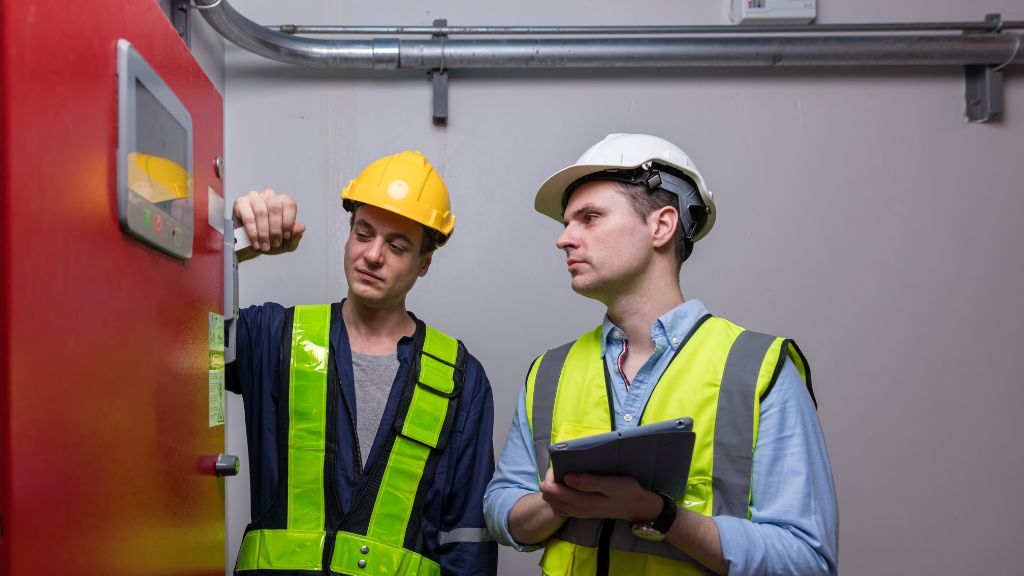
Ensuring occupant safety is a top priority for any industrial facility, and cannabis cultivation sites are no exception. With legalization expanding and regulatory scrutiny increasing, facility owners, design professionals, and project stakeholders must collaborate to create safe, efficient, and compliant environments. Even seemingly minor operational details can influence crucial design and construction decisions. Many organizations seek guidance from Cannabis Consulting experts to ensure that every safety measure is meticulously planned.
This article, written from a designer’s perspective, primarily focuses on key safety aspects of cannabis facility design. It does not cover occupancy classification, egress requirements, fire detection, accessibility, OSHA regulations, or hazardous material storage—these should be addressed by an architect in consultation with stakeholders and local authorities. For further expert advice, working with a Cannabis Consultant can add invaluable insights into facility safety planning.
Fire Protection Systems in Cannabis Facilities
Determining whether an automatic sprinkler system is required in an indoor cannabis cultivation facility follows the same process as for other industrial buildings. The need for a fire suppression system depends on building occupancy classification, allowable area, and construction type as outlined in the International Building Code (IBC) or NFPA 101 (Life Safety Code).
Occupancy Classification and Sprinkler Requirements
Most indoor cannabis cultivation facilities are categorized as Factory Industrial Group F-1 under the IBC. If sprinklers are required, cannabis operations present unique challenges:
- Fire protection systems must meet the higher demand of either fire sprinkler requirements (NFPA 13) or total fire flow (IFC/NFPA 1).
- Large-scale cultivation facilities (100,000+ square feet) may require fire flow calculations that significantly impact fire protection system design.
- A future expansion plan should be factored into the fire protection design to avoid costly retrofitting.
Working with a Cannabis Consultant can help tailor fire protection systems to the unique demands of cannabis facilities.
Water Supply & System Capacity
A water flow test from the local utility is essential to determine available pressure and flow. If these are insufficient, additional infrastructure such as:
- On-site water storage tanks
- Fire pumps (normal and emergency power supply)
…may be required, adding complexity, space requirements, and costs to the project. Engaging with Cannabis Consulting professionals can ensure that water supply systems are designed for optimal efficiency and compliance.
Challenges in Grow Room Sprinkler Design
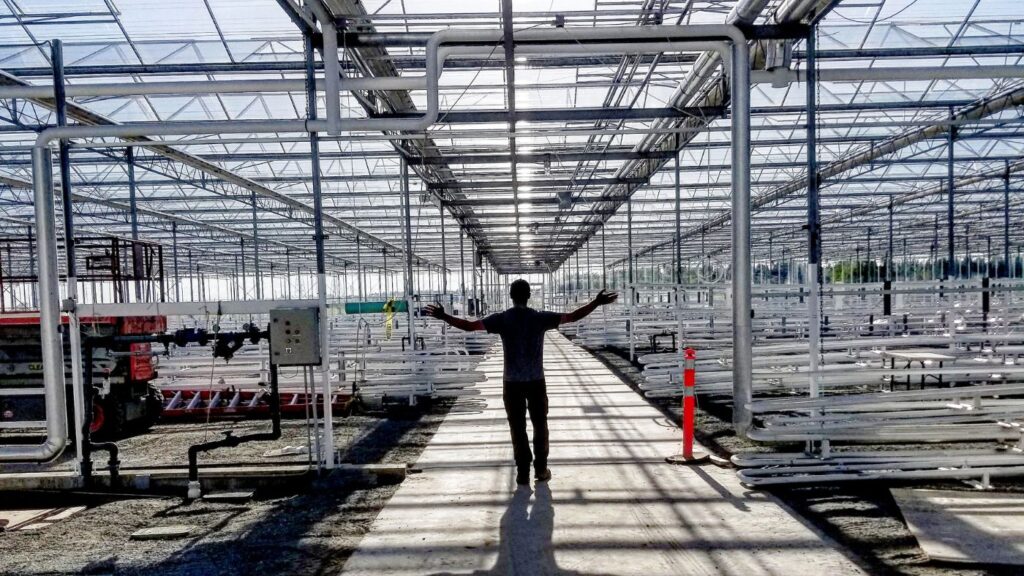
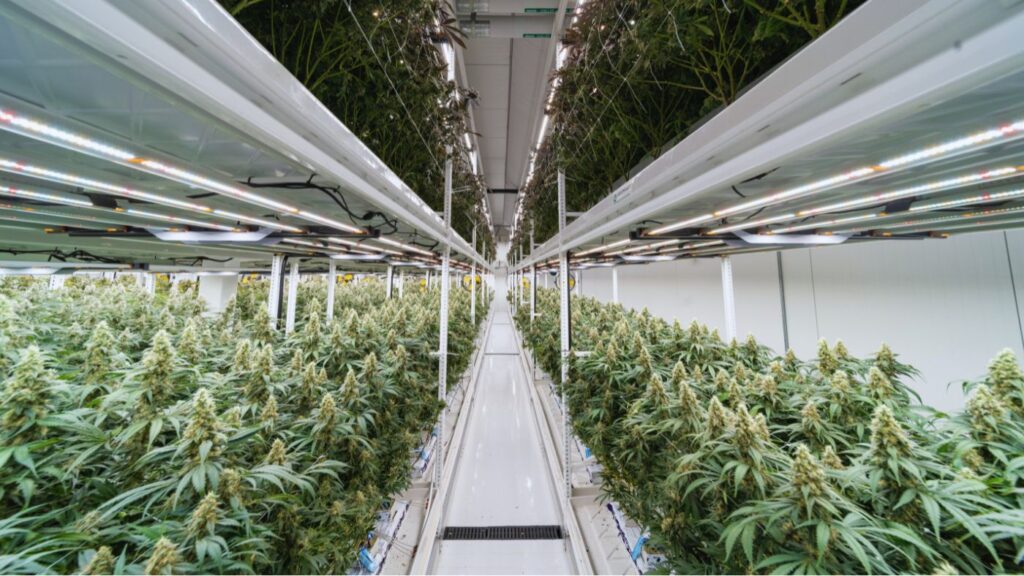
Grow rooms are dense, highly utilized spaces with numerous competing utilities, including:
- Grow lights & HVAC ductwork
- CO₂ piping and irrigation systems
- Security cameras & electrical conduit
- Rolling or multi-tiered plant benches
These elements create obstacles for sprinkler system design. Fire protection considerations include:
- Sprinklers must be installed inside the grow rooms and within the interstitial space above.
- If fabric ductwork is used, additional sprinkler branches may be required.
- Movable racks wider than 48 inches require sprinkler coverage beneath them.
- Some growers may use heat treatments (140°F) to kill pests, requiring sprinkler heads with higher temperature ratings.
Proper planning and coordination with the grower, architects, and contractors ensure these systems function effectively without disrupting operations. In this process, many operators benefit from insights provided by a Cannabis Consultant who specializes in facility safety.
Carbon Dioxide (CO₂) Safety in Cannabis Facilities
CO₂ enrichment is standard in indoor cannabis grow rooms, where plants thrive at 1,000–1,500 ppm during their “day” cycle. Since the OSHA Permissible Exposure Limit (PEL) for CO₂ is 5,000 ppm, safety measures are essential. A Cannabis Consulting firm often advises on best practices for CO₂ safety to maintain both plant health and worker safety.
CO₂ Sources & Distribution
Common CO₂ sources include:
- Compressed cylinders or Dewars
- Bulk storage tanks
- CO₂ generators (propane or natural gas combustion – typically in greenhouses)
CO₂ is distributed through:
- Open pipe injection into grow rooms
- Integration with HVAC ductwork for even distribution
Safety Compliance for Enriched Environments
Facilities using bulk CO₂ must comply with IFC (Chapter 53) and NFPA 1 (Chapter 38), which mandate:
- Gas detection systems with alarms to stop CO₂ flow
- Exhaust ventilation systems activated upon high CO₂ detection
- Signage and hazard communication
- Emergency/standby power backup for gas detection systems
CO₂ sensors and exhaust intakes must be installed within 12 inches of the floor, as CO₂ is heavier than air. Designers must also ensure proper air replacement if ventilation systems are triggered. Many industry players consult a Cannabis Consultant for detailed safety planning in CO₂-enriched environments.
Additional Life Safety Considerations
Beyond fire protection and CO₂ management, cannabis facilities must address several other safety concerns:
- Backflow prevention: Protecting domestic water from contamination by irrigation/fertigation systems.
- Electrical safety: Grow room electrical components may require wet-environment ratings based on cleaning protocols.
- Emergency lighting and signage: Green LED exit signs are preferred to avoid disrupting plant cycles, as red or white lights can interfere with growth. Even small LED indicators on security cameras and alarms must be considered.
- Green task lighting: For nighttime operations, green-spectrum lighting allows staff to work without disturbing plant cycles.
A Cannabis Consulting expert can help ensure that all these safety aspects are integrated seamlessly into your facility’s design.
Safety in Cannabis Processing & Extraction Operations
Many cultivation sites also include post-harvest processing and extraction operations. Extraction methods—often using high-pressure CO₂, propane, or ethanol solvents—pose additional fire and explosion risks. A Cannabis Consultant can provide specialized advice for designing safe processing areas.
Regulatory Compliance for Extraction Facilities
- IFC (Chapter 39) and NFPA 1 (Chapter 38) establish specific safety requirements for cannabis extraction.
- Facilities must implement fire-rated rooms, explosion-proof electrical equipment, and adequate ventilation systems.
- Hazardous material storage protocols must be strictly followed to prevent chemical leaks or combustion risks.
Consulting with a Cannabis Consulting firm is often recommended to ensure that extraction facilities meet all safety and compliance requirements.
Conclusion
Fire protection, CO₂ safety, and other life safety systems are critical components of cannabis facility design. The unique challenges of indoor cannabis cultivation demand careful planning, collaboration, and compliance with evolving regulations. By working closely with architects, engineers, and local authorities—and seeking guidance from a Cannabis Consultant—facility owners can create safe, efficient, and scalable operations that meet industry standards while supporting long-term business growth.
Partner with Catalyst BC to design a cannabis facility that meets the highest safety standards. Our team brings deep expertise in compliance, engineering, and operational planning to ensure your facility is built for success from day one. Contact us for a Complimentary Consultation.
Cannabis Facility Safety FAQs
Fire hazards in cannabis cultivation stem from high-powered lighting, electrical loads, and combustible materials. Implementing fire suppression systems ensures compliance with NFPA and IFC regulations, reducing the risk of fire-related damage.
Sprinkler requirements depend on local building codes and occupancy classification. Most facilities categorized under Factory Industrial (F-1) require fire suppression per NFPA 13 standards. A Cannabis Consulting firm can assist in determining specific requirements.
Dense layouts with HVAC, CO₂ systems, and electrical wiring create fire risks. Proper placement of sprinklers, heat-resistant wiring, and fire-rated materials help prevent ignition and ensure compliance.
Extraction facilities using ethanol or hydrocarbon solvents require explosion-proof electrical systems and Class I, Division 1 fire suppression methods to prevent combustion hazards.
CO₂ enrichment enhances plant growth but poses asphyxiation risks. Proper ventilation, monitoring sensors, and emergency shutoff systems help maintain safe CO₂ levels below OSHA limits. Many operators consult a Cannabis Consultant for best practices in CO₂ management.
CO₂ storage and distribution must comply with IFC Chapter 53 and NFPA 1 Chapter 38, requiring gas detection alarms, emergency ventilation, and proper hazard signage.
Sensors must be placed within 12 inches of the floor, as CO₂ is heavier than air. This placement ensures accurate monitoring and prevents hazardous exposure for workers. Consulting with a Cannabis Consultant is recommended for optimal sensor placement.
Exhaust ventilation must activate automatically if CO₂ levels exceed safe thresholds, replacing contaminated air with fresh airflow to prevent worker exposure.
Grow rooms require GFCI-protected outlets, waterproof electrical enclosures, and non-corrosive wiring to withstand high humidity and frequent cleaning.
Yes, improperly installed lighting can overheat and become a fire hazard. LED lighting is recommended for its energy efficiency and reduced heat output. Cannabis Consulting professionals often advise on safe lighting solutions.
Green LED exit signs and task lighting prevent plant cycle disruption while ensuring clear visibility during emergencies.
Backflow preventers ensure irrigation or fertigation systems do not contaminate potable water supplies, maintaining health and safety compliance.
Restricted access, video surveillance, and biometric authentication prevent unauthorized entry and ensure compliance with state cannabis regulations.
Designing modular HVAC, fire suppression, and CO₂ distribution systems allows for scalable growth without compromising safety and compliance.
Hazardous material storage, explosion-proof ventilation, and fire-rated lab enclosures protect against flammable solvent risks in extraction processes.
Additional Resources
Free eBooks For Cannabis Business Success




Latest Articles
- How Much Does It Cost to Open a Dispensary in 2026?
 The allure of jumping into the legalized cannabis industry often paints a picture of quick riches and burgeoning demand, yet the reality of establishing a licensed cannabis dispensary is far more nuanced, capital-intensive, and fraught with unique financial challenges. For aspiring entrepreneurs and seasoned investors alike, understanding the true dispensary startup costs is the absolute bedrock of success.
 - Virginia Cannabis Facility Design & Build-Out for the 2027 Market
 This guide covers the major considerations involved in planning and building a Virginia cannabis facility, with a focus on retail and cultivation operations and additional considerations relevant to processors and microbusinesses. It is written from the build side of the business, because that is where many otherwise-strong applicants stumble: they underestimate utility needs, local approvals, security infrastructure, commissioning, and the time required to convert a site into an inspection-ready operation.
 - Virginia Dual-Use Cannabis Conversion (2027): The $10M Medical-to-Adult-Use Pathway
 For Virginia’s existing medical cannabis operators, the 2026 retail framework created a distinct and high-stakes transition: pharmaceutical processors may apply for verification to exercise dual-use privileges and serve both registered medical patients and adult-use customers. The pathway covers the processor and its permitted cannabis dispensing facilities, and it carries a one-time $10 million fee, a required medical cannabis program preservation plan, an impact-licensee business accelerator commitment, and a firm May 1, 2027 payment or installment-plan deadline.
 - Virginia Impact Cannabis License (2027): Social Equity & the Equity Business Loan Fund
 Virginia’s adult-use cannabis framework creates a meaningful pathway for applicants from communities and backgrounds affected by cannabis prohibition and enforcement. The law does not create a separate, stand-alone impact license. Instead, it creates an impact-licensee designation that qualifying applicants may pursue alongside an underlying marijuana establishment license, such as retail, cultivation, processing, microbusiness, transportation, delivery, or testing.
 - Virginia Cannabis Microbusiness License (2027): Eligibility & the Two-Location Model
 This guide explains the initial eligibility pathways for the licenses the CCA may issue by May 1, 2027, the difference between a microbusiness license and an impact designation, the indoor and outdoor cultivation limits, the precise rules governing two locations, and the financial, security, and operational readiness standards applicants should prepare to demonstrate. Several implementation details – including fees and the specific combination of privileges the CCA will authorize – still depend on forthcoming regulations.
 - Virginia Cannabis Cultivation License (2027): The Tiered System Explained
 For operators whose strength is growing cannabis, Virginia’s emerging adult-use market presents a significant opportunity – and a cultivation license is the gateway to it. The June 2026 framework authorizes the Virginia Cannabis Control Authority (CCA) to begin accepting license applications on or after February 1, 2027 and issuing licenses on or after May 1, 2027. It also establishes five cultivation tiers with maximum canopies ranging from 5,000 to 35,000 square feet.