
Estimated reading time: 9 minutes
Table of contents
- Introduction
- Optimizing and Automating Mechanical Systems
- Dialing in Plant Spacing for Optimized Yields
- Airflow Strategies by Room and Level
- Optimizing Worker Ergonomics and Workflow
- Why This Matters: The ROI of Precision Vertical Farming
- Don’t Just Build Vertical—Build Smart!
- Vertical Cannabis Operations FAQs
- Additional Resources
- Free eBooks For Cannabis Business Success
- Latest Articles
Cliff Notes: Optimizing In Your Vertical Cannabis Operations for Efficiency, Yield, and ROI
Objective: Dial in your vertical cannabis operations for maximum efficiency, yield, and profitability. By focusing on mechanical systems, plant spacing, airflow strategies, and ergonomic workflows, operators can transform vertical cultivation into a high-performance, acquisition-ready model.
Key Components:
- Vertical cannabis operations maximize yield per square foot.
- Proper HVACD optimization prevents microclimates and crop loss.
- Plant spacing must balance canopy density with airflow and lighting.
- Airflow design across tiers ensures uniform growth and reduces disease.
- Ergonomic workflows lower labor costs and improve throughput.
- Continuous monitoring and automation drive consistency and ROI.
- Vertical cannabis facilities with strong SOPs and design are attractive to investors.
Ready to optimize your vertical cannabis operations for maximum efficiency and profitability? Contact Catalyst BC
Introduction
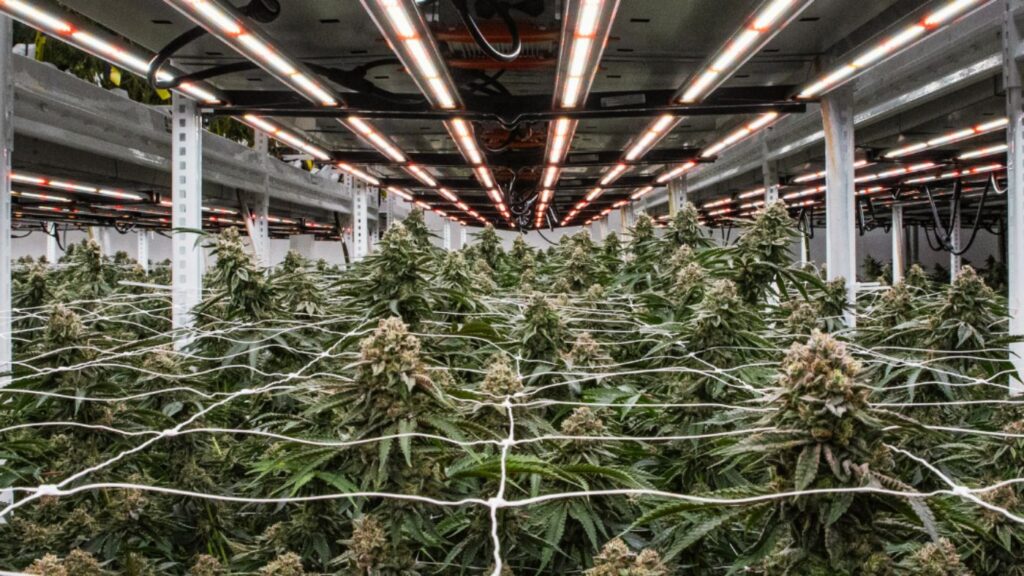
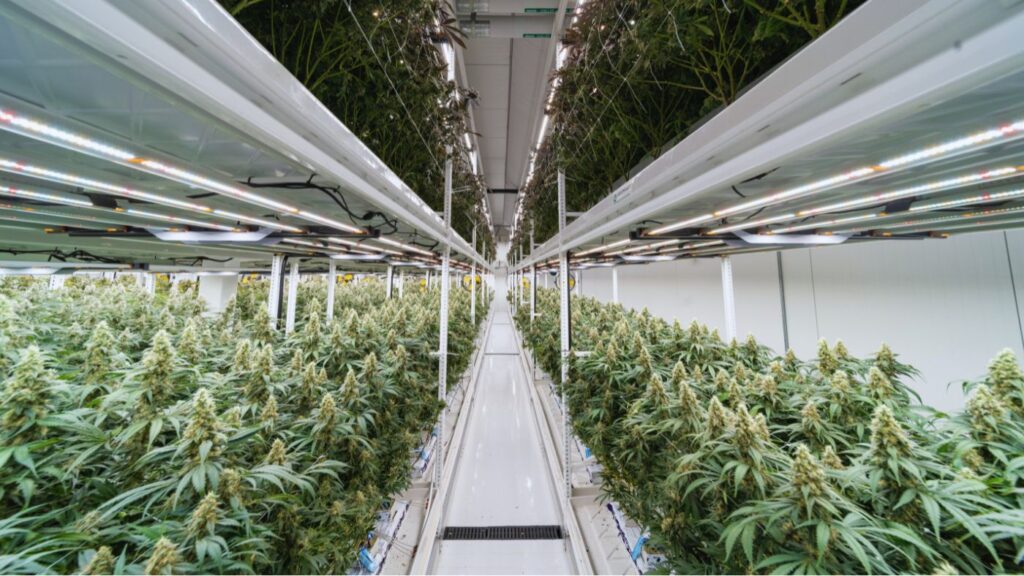
Many cultivators who once relied on single-tier grows are embracing vertical cultivation to maximize outputs in a static footprint, reduce facility costs, and remain competitive. But here’s the reality: simply stacking plants higher doesn’t guarantee better results. Most operators who attempt vertical cultivation fail to capture its full potential. They focus on the racks and lights but ignore the mechanical systems, airflow, spacing, and human workflow that make or break profitability. Multi-tier cultivation isn’t just about stacking plants higher—it’s about engineering a system that runs like a high-performance machine.
Vertical cannabis operations demand precision. If your systems aren’t dialed in—from racking layout, HVACD optimization, to ergonomic workflow—you risk trading efficiency for chaos. In this piece, we’ll break down the four critical pillars of dialing in your vertical facility:
- Optimizing and Automating Mechanical Systems
- Dialing in Plant Spacing for Yield Density
- Designing Airflow Strategies by Room and Level
- Building Ergonomic Workflows That Protect Labor and Boost Throughput
These aren’t “nice-to-haves.” They’re the difference between operators who bleed cash in vertical grows—and those who significantly increase revenue and profitability with consistent, high-quality yields.
Optimizing and Automating Mechanical Systems
Vertical cannabis cultivation can create unique challenges and stress environmental control systems. Single-tier HVAC setups rarely translate to multi-tier environments, where heat and humidity stratify between canopy levels. Without finely tuned systems, you’ll see microclimates, inconsistent VPD, uneven growth, and conditions ripe for microbial contamination.
Key components to optimize:
- HVACD Load Calculations: Multi-tier environments demand more precise load calculations than single-tier grows. Undersized systems drive microclimates, while oversizing leads to wasted CapEx and poor efficiency.
- Zoned Environmental Control: Each rack level behaves like a mini-environment. Accurately recording and controlling temp, RH, and airflow at each tier—rather than across the room as a whole—is critical for consistency.
- Automation Integration: Advanced facility automation platforms allow operators to monitor VPD, light intensity, airflow, and CO₂ levels across tiers, then auto-adjust to maintain target ranges. When commissioned correctly, this reduces labor costs while protecting yields.
- Redundancy and Risk Mitigation: Vertical grows often run hotter and more humid. Backup dehumidification, dual-stage chillers, airflow redundancies, and alert systems prevent catastrophic crop loss.
Dialing in Plant Spacing for Optimized Yields
The temptation in vertical growing is to overstack and overplant, chasing maximum canopy density. However, tighter spacing without airflow and lighting strategies leads to environmental fluctuations, disease pressure, and underperformance (low yields, excess smalls, and waste).
Best practices for plant spacing in vertical facilities:
- Uniform Light Distribution: Ensure fixtures deliver consistent PPFD across each tier. Overcrowding leads to shading that reduces photosynthetic efficiency.
- Optimal Canopy Density: With many commercial cultivars, 1 plant per 1.5 to 2 square feet is a sweet spot that balances canopy coverage with airflow. Going denser could create moisture loads that create suboptimal growth conditions and a risk of powdery mildew/bud rot.
- Cultivar-Specific Adjustments: Tall, lanky cultivars require different spacing than compact, bushy strains. Facility operators must align genetics with rack design and environmental system capabilities.
- Dynamic Canopy Management: Techniques like multi-layer trellising, low-stress training (LST), or strategic defoliation become even more critical in vertical setups to keep airflow consistent and prevent canopy shading.
Bottom line: Don’t just chase maximum plants per square foot—chase grams per square foot with healthy, uniform canopies.
Airflow Strategies by Room and Level
Airflow is the Achilles’ heel of most vertical grows. Hot air rises, CO₂ stratifies, and humidity builds unevenly between tiers. Without engineered airflow, you’re essentially running multiple microclimates stacked on each other.
Strategies to implement:
- Tier-Specific Airflow: Deploy under-canopy fans, duct socks, or vertical circulation fans that move air evenly between racks. Each level requires its own distribution pattern. Each solution has pros and cons and may affect other variables throughout your operation. Airflow mapping should be utilized to inform design, commission, and dial your airflow strategy.
- Room-Level Circulation: Air handlers should create laminar flow across the room rather than random turbulence. Poor design = pockets of stale, humid air.
- Negative Pressure Management: Proper pressurization ensures that air moves in predictable patterns, limiting the spread of contaminants or spores between rooms.
- Automation with Sensors: Placing RH, temp, and CO₂ sensors at each tier level gives operators real-time data to fine-tune. This system should be appropriately commissioned, calibrated, and maintained routinely.
Pro tip: Many high-yielding facilities implement precision ducting to direct conditioned air evenly across every plant surface. This one step can drastically improve plant health and reduce disease outbreaks.
Optimizing Worker Ergonomics and Workflow
Labor is one of the highest operating costs in cannabis cultivation. In vertical grows, poorly designed layouts, racks, and workflows lead to wasted hours, injuries, and burnout. Well-designed and ergonomic processes and procedures can reduce labor costs while improving crop quality.
Areas to focus on:
- Rack Access: Catwalks/platforms, mobile lifts, and rolling ladders should be integrated into daily workflows—poor rack access results in slower harvests and increased worker strain.
- Tool & Tray Placement: Workers should never have to climb or stretch excessively to reach equipment. Consider retractable tray systems or tier-specific storage solutions.
- Workflow Mapping: Map the path of a worker across the room—from transplant to defoliation to harvest. Eliminate bottlenecks where workers crisscross paths or double-handle plants.
- Harvest Ergonomics: Consider how trimming and handling occur in multi-tier setups. Poor ergonomics increases repetitive stress injuries and slows throughput.
Pro tip: Facilities that invest in ergonomic workflow design often see reduced turnover, improved morale, and higher throughput—all of which flow directly into EBITDA margins.
Why This Matters: The ROI of Precision Vertical Farming
Dialing in these systems isn’t just about growing better cannabis. It’s about building a scalable, acquisition-ready business. Investors and MSOs aren’t buying plants—they’re buying predictable EBITDA and associated IP. Facilities that master mechanical systems, plant spacing, airflow, and ergonomic workflows consistently:
- Increase yields by 50-100% per square foot
- Reduce labor costs by up to 25%
- Lower compliance and contamination risks
- Position themselves as high-value acquisition targets
In a market where margins are razor-thin, that’s the difference between survival and dominance.
Don’t Just Build Vertical—Build Smart!
Vertical cannabis operations are a game-changer, but only when engineered with precision. Treat each rack as its own ecosystem and align mechanical, biological, and human systems for maximum efficiency.
Since 2012, The Team at Catalyst BC has helped operators across the U.S. and abroad design and optimize vertical cultivation facilities that deliver measurable ROI and long-term scalability. From feasibility analysis to workflow mapping, we partner with leadership teams to transform facilities into high-performance powerhouses.
Vertical Cannabis Operations FAQs
Vertical cannabis operations, also called vertical cannabis cultivation or multi-tier cannabis grows, are advanced grow systems where plants are stacked on multiple levels to maximize space, efficiency, and ROI.
Vertical cannabis cultivation is gaining popularity because it increases yield per square foot, lowers facility costs, and allows operators to remain competitive in a tight cannabis market.
Airflow in vertical cannabis operations is optimized by using tier-specific airflow strategies, precision ducting, and real-time sensors to eliminate microclimates and ensure consistent plant health.
HVACD optimization in cannabis vertical farming ensures proper temperature, humidity, and VPD control across multiple tiers, preventing microclimates, disease outbreaks, and crop loss.
In multi-tier cannabis grows, plant spacing should balance canopy coverage with airflow. Overcrowding reduces yield quality, while proper spacing ensures higher grams per square foot.
Ergonomic workflows in vertical cannabis operations reduce labor costs, prevent injuries, and improve throughput by designing better rack access, storage, and worker movement patterns.
ROI benefits of vertical cannabis farming include up to 100% more yield per square foot, 25% lower labor costs, and stronger EBITDA performance, making facilities more acquisition-ready.
Common mistakes in vertical cannabis cultivation include poor airflow design, overplanting, inadequate HVACD systems, and neglecting worker ergonomics.
Cannabis consultants help optimize vertical farming by designing facility layouts, calibrating HVACD systems, mapping workflows, and integrating compliance into daily operations.
Vertical cannabis cultivation is best for operators ready to invest in precision facility design, automation, and workflow optimization. Without these, vertical grows risk inefficiency and compliance failures.
Additional Resources
Free eBooks For Cannabis Business Success




Latest Articles
- How Much Does It Cost to Open a Dispensary in 2026?
 The allure of jumping into the legalized cannabis industry often paints a picture of quick riches and burgeoning demand, yet the reality of establishing a licensed cannabis dispensary is far more nuanced, capital-intensive, and fraught with unique financial challenges. For aspiring entrepreneurs and seasoned investors alike, understanding the true dispensary startup costs is the absolute bedrock of success.
 - Virginia Cannabis Facility Design & Build-Out for the 2027 Market
 This guide covers the major considerations involved in planning and building a Virginia cannabis facility, with a focus on retail and cultivation operations and additional considerations relevant to processors and microbusinesses. It is written from the build side of the business, because that is where many otherwise-strong applicants stumble: they underestimate utility needs, local approvals, security infrastructure, commissioning, and the time required to convert a site into an inspection-ready operation.
 - Virginia Dual-Use Cannabis Conversion (2027): The $10M Medical-to-Adult-Use Pathway
 For Virginia’s existing medical cannabis operators, the 2026 retail framework created a distinct and high-stakes transition: pharmaceutical processors may apply for verification to exercise dual-use privileges and serve both registered medical patients and adult-use customers. The pathway covers the processor and its permitted cannabis dispensing facilities, and it carries a one-time $10 million fee, a required medical cannabis program preservation plan, an impact-licensee business accelerator commitment, and a firm May 1, 2027 payment or installment-plan deadline.
 - Virginia Impact Cannabis License (2027): Social Equity & the Equity Business Loan Fund
 Virginia’s adult-use cannabis framework creates a meaningful pathway for applicants from communities and backgrounds affected by cannabis prohibition and enforcement. The law does not create a separate, stand-alone impact license. Instead, it creates an impact-licensee designation that qualifying applicants may pursue alongside an underlying marijuana establishment license, such as retail, cultivation, processing, microbusiness, transportation, delivery, or testing.
 - Virginia Cannabis Microbusiness License (2027): Eligibility & the Two-Location Model
 This guide explains the initial eligibility pathways for the licenses the CCA may issue by May 1, 2027, the difference between a microbusiness license and an impact designation, the indoor and outdoor cultivation limits, the precise rules governing two locations, and the financial, security, and operational readiness standards applicants should prepare to demonstrate. Several implementation details – including fees and the specific combination of privileges the CCA will authorize – still depend on forthcoming regulations.
 - Virginia Cannabis Cultivation License (2027): The Tiered System Explained
 For operators whose strength is growing cannabis, Virginia’s emerging adult-use market presents a significant opportunity – and a cultivation license is the gateway to it. The June 2026 framework authorizes the Virginia Cannabis Control Authority (CCA) to begin accepting license applications on or after February 1, 2027 and issuing licenses on or after May 1, 2027. It also establishes five cultivation tiers with maximum canopies ranging from 5,000 to 35,000 square feet.