

Estimated reading time: 9 minutes
Table of contents
- Who Qualifies as a Minnesota Social Equity Applicant
- How OCM Social Equity Verification Works
- The 65% Ownership and Control Rule
- What Minnesota Cannabis Social Equity Status Means for Licensing
- Minnesota Cannabis Social Equity Grants: CanRenew and CanGrow
- Records, Expungement and Social Equity
- Success Stories: See How Catalyst BC Has Helped Cannabis Businesses Enter and Lead the Market
- Minnesota Cannabis Social Equity FAQs
- Additional Resources
- Free eBooks For Cannabis Business Success
- Latest Articles
Cliff Notes: Minnesota cannabis social equity in 2026
Minnesota cannabis social equity status shapes who can win and buy the state’s capped cannabis licenses. The essentials as of October 2026:
- Who qualifies: one of the statute’s criteria, including a cannabis conviction before May 1, 2023, a family member’s conviction, veteran or National Guard service, five years in a qualifying area, or currently working and managing a small farm.
- Verification: free, ongoing and permanent; email ocm.licensing@state.mn.us to request the application.
- 65% rule: verified individuals must hold at least 65% of ownership and control, including for three years after a social equity license is issued.
- 2026 change: one investor can now take as much as 33% controlling ownership in as many as four social equity businesses.
- Results: verified social equity owners hold 43% of Minnesota’s 369 licensed cannabis businesses (OCM, September 2026).
Updated October 4, 2026, from Minn. Stat. §342.17, OCM’s verification page and Laws 2026, chapter 123.
Editor’s note: originally published February 2025; rewritten October 4, 2026 to reflect Minnesota Statutes chapter 342, Laws 2026, chapter 123, and OCM guidance current on that date.
Who Qualifies as a Minnesota Social Equity Applicant
A social equity applicant is either an individual who meets one of the criteria in Minnesota law, or a business in which such individuals hold at least 65% of the controlling ownership. The statute lists seven criteria, grouped below into five categories (Minn. Stat. §342.17). An individual qualifies by meeting one criterion; there is no Minnesota residency requirement (OCM Social Equity Verification Process).
- Cannabis record: was convicted of, found delinquent for, or received a stay of adjudication for a cannabis or marijuana possession or sale offense before May 1, 2023.
- Family member’s record: had a parent, guardian, child, spouse or dependent convicted of such an offense, or was a dependent of someone convicted.
- Military service: is a military veteran, including a service-disabled veteran, or a current or former member of the National Guard, or lost honorable status because of a cannabis or marijuana offense.
- Where you live: has lived for the last five years in one or more areas that experienced disproportionate cannabis enforcement, or that have a poverty rate of 20% or more, a median family income no higher than 80% of the statewide figure, 20% or more of households receiving nutrition assistance, or high social vulnerability on the CDC/ATSDR index.
- Farming: has helped run a farm for at least three years, currently does most of that farm’s day-to-day physical work and management, and the farm had gross sales between $5,000 and $100,000 in the previous year.
How OCM Social Equity Verification Works
- Request the application. OCM accepts verification applications on an ongoing, rolling basis; email ocm.licensing@state.mn.us with your name to request one.
- Document one criterion. Convictions must have occurred before May 1, 2023.
- Verify every qualifying owner. Each person who makes up the 65% must be verified before the business applies for a license.
- Keep your result. Verification is free, and a verified status remains current for future licensing rounds.
Verification is not a license application, and it does not guarantee that a business will be classified as a social equity business once licensed (OCM Social Equity Verification Process).
The 65% Ownership and Control Rule
OCM reads “ownership and control” to include both financial interest and governance control, so verified individuals must hold at least 65% of each. The rule follows the business through its life:
- Before licensure: no transfer may reduce social equity ownership below 65% (OCM Making Cannabis Business Changes).
- After licensure: a social equity license can be sold only to a buyer that keeps at least 65% social equity ownership for at least three years after issuance.
- Outside investors: the remaining 35% or less can be held by others, who must be disclosed as true parties of interest. A 2026 law change, in force August 1, 2026, lets a single investor take as much as 33% controlling ownership in as many as four social equity businesses (Laws 2026, chapter 123).
What Minnesota Cannabis Social Equity Status Means for Licensing
Until July 1, 2027, the four capped license types are split into equal social equity and general pools (Minn. Stat. §342.14, subd. 1b, as amended in 2026). Each pool holds the same number of licenses:
| License type with a cap | Licenses in each pool (social equity and general) |
|---|---|
| Cultivation | 25 each |
| Manufacturing | 12 each |
| Retail | 75 each |
| Mezzobusiness | 50 each |
Ceilings, not targets: the statute lets OCM stop short of these numbers until July 1, 2027.
From July 1, 2027, OCM sets fresh caps, and the social equity pool may not be smaller than the general pool. The results so far favor verified applicants: on September 15, 2026, verified social equity owners held 43% of Minnesota’s 369 licensed cannabis businesses, and 86% of licenses issued in the four capped types had gone to social equity businesses (OCM one-year market update).
No application window is open for the capped types, and OCM has not yet scheduled the next one (OCM Application Process). Applicants still in the pipeline should note that any qualified-applicant status earned before June 1, 2026 lapses on January 1, 2027.
Minnesota Cannabis Social Equity Grants: CanRenew and CanGrow
OCM’s Division of Social Equity runs CanRenew, which funds organizations investing in communities where long-term residents are eligible to be social equity applicants (Minn. Stat. §342.70). Its first year of funding, announced in August 2025, awarded $1 million to 12 organizations from 145 proposals seeking more than $55.9 million. CanGrow’s first round, announced in April 2026, gave four organizations $50,000 training grants each, and one also received a $382,910 loan grant (OCM one-year market update).
Records, Expungement and Social Equity
A cannabis conviction before May 1, 2023 is one route to verified status, yet many of those records have since been sealed by Minnesota’s automatic cannabis expungement or the Clean Slate Act. Our guide to Minnesota cannabis expungement explains how records are sealed. If your record has been sealed, ask OCM which documents it will accept before you apply for verification.
Verified owners and their investors weigh the same questions: who controls the business, how money is disclosed and when ownership can change. For those questions across every Minnesota license type, see our Minnesota cannabis consultants page, or book a Minnesota consultation.
Success Stories: See How Catalyst BC Has Helped Cannabis Businesses Enter and Lead the Market
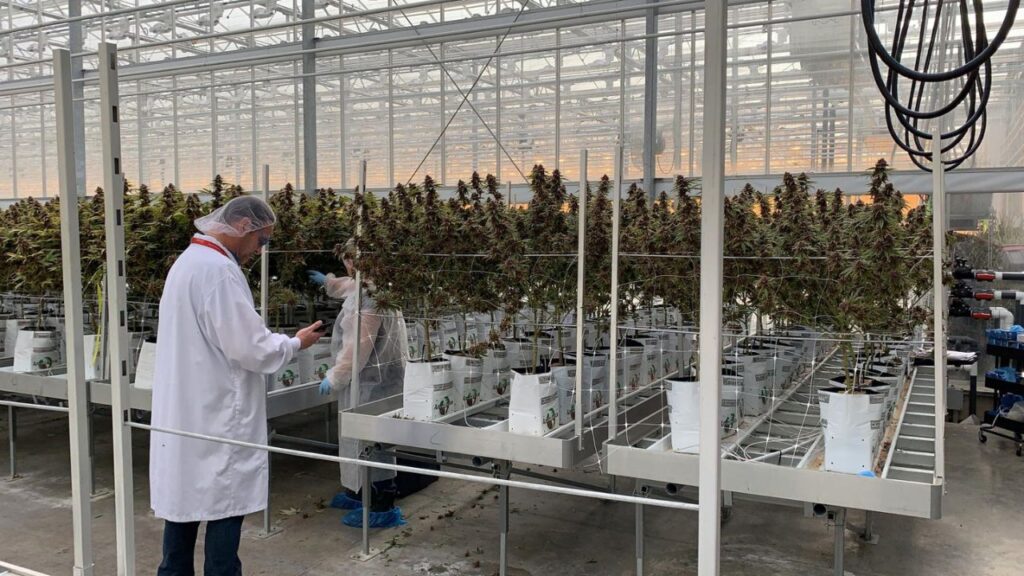
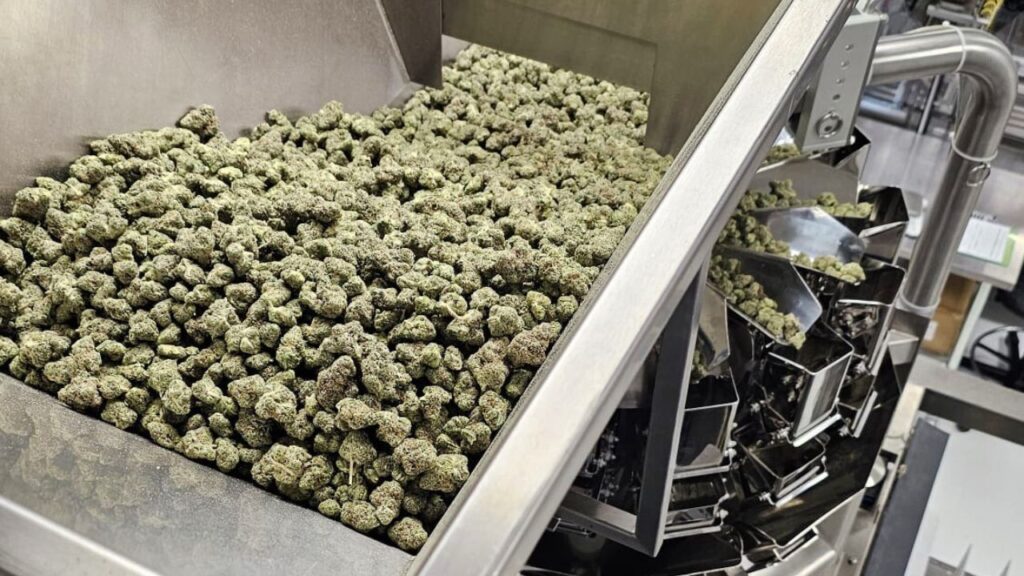
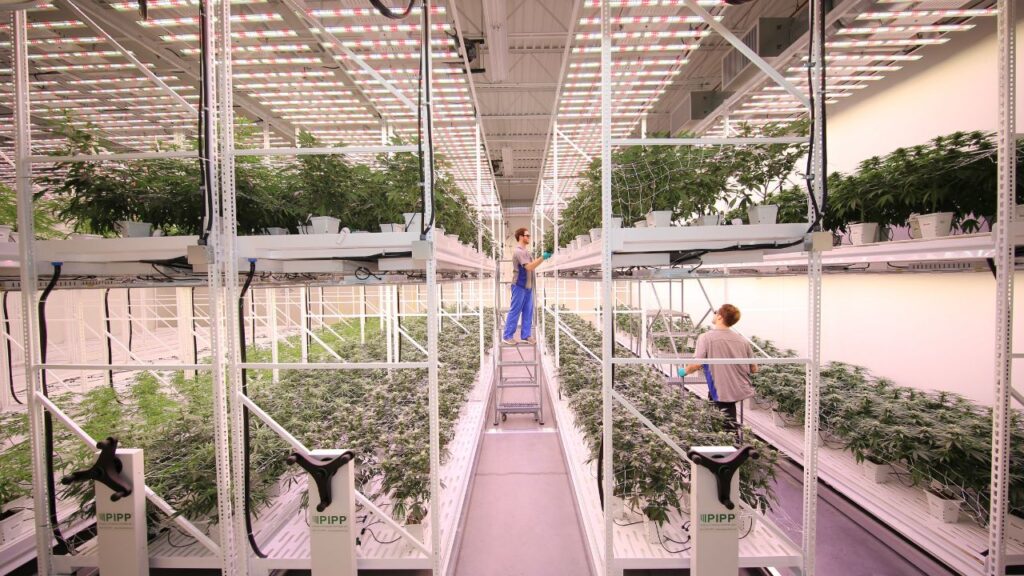
From startup and facility build-outs to exits, these projects show the work of the same team. The Leafline Labs tile is our Minnesota project, in Cottage Grove.

Minnesota Cannabis Social Equity FAQs
Anyone who meets one of the statute’s criteria, grouped here into five: a cannabis conviction before May 1, 2023; a family member with such a conviction; military veteran or National Guard service; five years living in a qualifying area; or three years helping run a small farm while currently doing most of its day-to-day work and management. A business qualifies when such individuals hold at least 65% of its controlling ownership.
Email ocm.licensing@state.mn.us with your name to request a verification application. OCM accepts them on an ongoing, rolling basis, and verification is free.
No. The statute has no residency requirement, although the area criterion requires five years of residence in a qualifying area.
No. OCM says a verified status remains current for future licensing rounds. Qualified-applicant status for a specific license application is different and now lasts six months.
Verified social equity individuals must hold at least 65% of both the financial interest and the governance control of the business, before licensure and for at least three years after a social equity license is issued.
Up to 35%, disclosed as a true party of interest. From August 1, 2026, one investor can take as much as 33% controlling ownership in as many as four social equity businesses.
Yes. CanRenew funds organizations investing in communities whose long-term residents are eligible to be social equity applicants, and CanGrow has awarded training and loan grants.
Additional Resources
- Catalyst BC in Minnesota
- MN Cannabis License Options for 2026–2027
- Minnesota Cannabis Microbusiness License Guide
- Minnesota Cannabis Expungement Guide
- Breaking Barriers: Tribal Cannabis Business
Free eBooks For Cannabis Business Success




Latest Articles
- How Much Does It Cost to Open a Cannabis Dispensary in 2026
 The allure of jumping into the legalized cannabis industry often paints a picture of quick riches and burgeoning demand, yet the reality of establishing a licensed cannabis dispensary is far more nuanced, capital-intensive, and fraught with unique financial challenges. For aspiring entrepreneurs and seasoned investors alike, understanding the true dispensary startup costs is the absolute bedrock of success.
 - Virginia Cannabis Facility Design & Build-Out for the 2027 Market
 This guide covers the major considerations involved in planning and building a Virginia cannabis facility, with a focus on retail and cultivation operations and additional considerations relevant to processors and microbusinesses. It is written from the build side of the business, because that is where many otherwise-strong applicants stumble: they underestimate utility needs, local approvals, security infrastructure, commissioning, and the time required to convert a site into an inspection-ready operation.
 - Virginia Dual-Use Cannabis Conversion (2027): The $10M Medical-to-Adult-Use Pathway
 For Virginia’s existing medical cannabis operators, the 2026 retail framework created a distinct and high-stakes transition: pharmaceutical processors may apply for verification to exercise dual-use privileges and serve both registered medical patients and adult-use customers. The pathway covers the processor and its permitted cannabis dispensing facilities, and it carries a one-time $10 million fee, a required medical cannabis program preservation plan, an impact-licensee business accelerator commitment, and a firm May 1, 2027 payment or installment-plan deadline.
 - Virginia Impact Cannabis License (2027): Social Equity & the Equity Business Loan Fund
 Virginia’s adult-use cannabis framework creates a meaningful pathway for applicants from communities and backgrounds affected by cannabis prohibition and enforcement. The law does not create a separate, stand-alone impact license. Instead, it creates an impact-licensee designation that qualifying applicants may pursue alongside an underlying marijuana establishment license, such as retail, cultivation, processing, microbusiness, transportation, delivery, or testing.
 - Virginia Cannabis Microbusiness License (2027): Eligibility & the Two-Location Model
 This guide explains the initial eligibility pathways for the licenses the CCA may issue by May 1, 2027, the difference between a microbusiness license and an impact designation, the indoor and outdoor cultivation limits, the precise rules governing two locations, and the financial, security, and operational readiness standards applicants should prepare to demonstrate. Several implementation details – including fees and the specific combination of privileges the CCA will authorize – still depend on forthcoming regulations.
 - Virginia Cannabis Cultivation License (2027): The Tiered System Explained
 For operators whose strength is growing cannabis, Virginia’s emerging adult-use market presents a significant opportunity – and a cultivation license is the gateway to it. The June 2026 framework authorizes the Virginia Cannabis Control Authority (CCA) to begin accepting license applications on or after February 1, 2027 and issuing licenses on or after May 1, 2027. It also establishes five cultivation tiers with maximum canopies ranging from 5,000 to 35,000 square feet.