Minnesota Cannabis Consultants for OCM Entry and Operations
Minnesota cannabis consulting for a market where the Office of Cannabis Management (OCM) accepts only five license types, none for growing, making or selling cannabis. We serve investors new to cannabis and licensed operators chasing yield; our records list 58+ licenses secured and a Minnesota cultivation client from 2021.
A Decade of Harvesting Success - Trusted by Cannabis Operators Worldwide
Three OCM Dates to Plan Around
Updated: 10/4/2026. Minnesota allows adult-use cannabis for people 21 and older alongside a medical program and a separate lower-potency hemp edible market, all under one statute (Minnesota Statutes, chapter 342). The Office of Cannabis Management (OCM) licenses, inspects and runs the medical program; its adult-use rules, Minnesota Rules chapter 9810, took effect April 14, 2025 (OCM Rules status page). State-licensed retail began September 16, 2025, and by September 15, 2026 Minnesota had 369 licensed cannabis businesses, 43% owned by verified social equity applicants, and more than $250 million in adult-use and medical sales (OCM one-year market update, September 15, 2026).
The practical consequence: the 2025 window for cultivation, manufacturing and retail licenses has closed and OCM has not scheduled another, so new money enters through businesses already in the pipeline. For an applicant holding preliminary approval, the deadline that matters most is its own: 18 months from the approval notice, plus any extension, after which OCM “must not issue a license.”
Meet Catalyst BC's Founders
-
Leif Olsen
Chief Executive Officer
-
Michael Williamson
Chief Operating Officer
-
Ian Miller
Executive Chair
Our partners bring multi-faceted expertise across business strategy, licensing, facility development, finance, and commercial operations. That breadth is complemented by subject matter experts across the wider Catalyst BC team, allowing us to bring the right combination of experience to each client and project. The result is bespoke, collaborative support shaped around your business, priorities, and goals - with the right expertise brought to the table when it matters most.
Hiring a Minnesota Cannabis Consultant When OCM Won’t Give Business Advice
OCM is plain about the limits of its help: it “is unable to provide legal or business advice and cannot assist in decisions on which license type to apply for or which license classification to pursue” (OCM Social Equity Verification Process).
Looking for Minnesota’s certified medical cannabis consultant (CMCC) role, the patient adviser in medical retailers? OCM approves that training (OCM CMCC Training Programs); this page covers business consulting.
New to Cannabis and Weighing a Minnesota Stake
The capped licenses were awarded by lottery in 2025, so the way in today is a stake in an approved applicant or a licensed business. Three rules narrow that. Before licensure, an applicant cannot sell a majority interest or change who holds majority control, and a preliminary approval cannot be transferred. After licensure, a change in majority ownership needs OCM’s prior written approval. And a social equity license can go only to a verified social equity owner during its first three years (OCM Making Cannabis Business Changes). That third rule covers most of the market: 86% of the capped licenses issued so far went to verified social equity businesses.
Supply is growing: 102 license holders held 486,720 plants on September 15, 2026, against 72,083 plants at 11 holders a year earlier.
For applicants still waiting, qualified-applicant status, OCM’s finding that an application met its requirements, now lasts six months, and status gained before June 1, 2026 expires on January 1, 2027; OCM must then deny the old application, and the applicant may apply anew (Laws 2026, chapter 123).
A passive investment as defined in federal regulations (31 C.F.R. §800.243), roughly a stake with no control rights, board seat or say in decisions, does not make you a “true party of interest,” the statute’s term for an owner or controller who must be disclosed. Most other owners with control or profit rights are true parties of interest; landlords on fixed rent, salaried staff, flat- or hourly-fee consultants and banks are not. A true party of interest may hold only one license unless chapter 342 allows more, but that limit does not apply at 10% or less controlling ownership, and since August 1, 2026 one person may hold up to 33% controlling ownership in up to four social equity businesses. Before licensure, no transfer may take a social equity applicant’s qualifying ownership below 65%.
How money comes back to you is where Minnesota is strict. Anyone who shares in revenue or profit is a disclosed true party of interest. A financier, meaning anyone other than a bank or government that gives or lends money and expects to be repaid, may not take ownership, control, a share of revenue or profits, or a profit-sharing interest in exchange for a loan or gift unless it is disclosed to OCM as a true party of interest, and a cannabis business must disclose the source of all money before investing it. Chapter 342 does not mention using a license as collateral, so any security terms need your counsel’s review. A merger, consolidation, reorganization or bankruptcy of the license holder requires a new license, so plan exits around that.
On tax, federal law (Internal Revenue Code section 280E) bars a cannabis business from deducting ordinary business expenses, but Minnesota lets OCM-licensed cannabis and hemp businesses subtract those disallowed expenses on the state return (Minnesota Department of Revenue, Cannabis Income Tax Subtraction).
Our work for investors: diligence on the business you plan to buy into and the market case through our cannabis business strategy work; the capital plan, source-of-funds file and return model through our cannabis financial planning work; ownership disclosures and testing, event or hemp edible applications through our cannabis license application support; and site, local certification and commissioning work through our cannabis startup support.
Licensed in Minnesota: Canopy Tiers, Remediation Plans and Cost per Gram
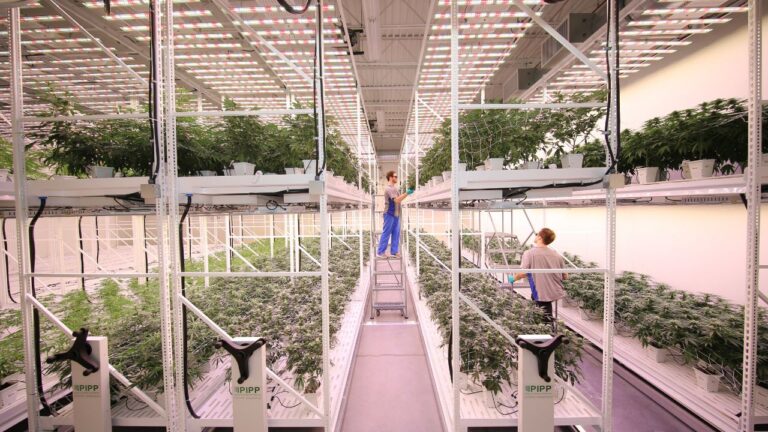
For an operating licensee the pressure is yield and cost. OCM’s one-year update reports sales totals but no price per gram, so cost per gram has to come from your own books. Canopy, the area where mature, flowering plants grow, is capped by license type: indoors, 5,000 square feet for a microbusiness, 15,000 for a mezzobusiness and 30,000 for a cultivator, though OCM may raise these limits to meet market demand. Chapter 342 counts each tier of a multi-tier system toward canopy and leaves out space for immature plants and seedlings, and OCM’s cultivation rule measures indoor canopy by each distinct area of flowering plants, including trays, shelves and tiers (Minn. R. 9810.2000). Vertical racks therefore add yield per square foot of building, not canopy allowance.
Testing leaves little room for error. A batch that fails a contaminant or homogeneity standard must be disposed of or remediated, meaning treated to bring it back within limits, under a written plan OCM approves first; no remediation may start before approval, and OCM will not approve a plan that relies on increasing the batch size (Minn. R. 9810.3100). In our experience, HVAC, dehumidification and airflow are the first defense against a failed microbial test.
Growing into a bigger license has its own gate. From January 1, 2027, a microbusiness may petition to become a mezzobusiness only after holding and operating a medical cannabis cultivation endorsement for two years, in good standing, and only if OCM announces that licenses are available.
We work on cannabis facility design and HVACD engineering (heating, ventilation, air conditioning and dehumidification), controlled environment agriculture targets for temperature, humidity and airflow, cannabis vertical farming layouts that stay inside counted canopy, operational optimization and, where cost per gram climbs faster than output, a cannabis turnaround diagnostic. We also build renewal and change filings and draft remediation plans for OCM approval. Michael Williamson, our Chief Operating Officer and a former licensed operator, has designed and consulted on more than 7 million square feet of indoor, greenhouse and outdoor cultivation facilities.
Our Minnesota footprint. Leif Olsen, our Chief Executive Officer, leads our licensing and application work. Our records list one Minnesota client, from 2021, for cultivation systems, post-harvest workflow and executive advisory. We have no Minnesota office; we work with Minnesota clients on-site and remotely, and the same team runs Catalyst BC’s national cannabis consulting practice.
Before you sign with anyone: if all you need is a hemp edible retailer license, the application fee is $250 and you may not need a consultant at all. Outside help pays for itself where a failed site or a bad ownership structure could cost you the approval. To talk through a Minnesota file, contact us or call (USA) 303-305-3787.

Investing in Minnesota cannabis
- Cannabis Business Strategy ConsultingStake and acquisition diligence
- Cannabis Financial Planning & ModelingCapital plans and source-of-funds files
- Cannabis Licensing & Application SupportTesting, event and hemp edible files
- Cannabis Startup SupportSite, local certification and opening
Already licensed in Minnesota
- Cannabis Facility Design & HVAC / HVACD EngineeringRooms sized to counted canopy
- Cannabis Controlled Environment Agriculture (CEA)Climate targets that cut failed tests
- Cannabis Vertical Farming ConsultingRacks with every tier counted
- Cannabis Operational OptimizationGrams per square foot, cost per gram
- Cannabis Business Turnaround & Operational RecoveryWhen costs outpace output
Compliant Harvests
Square Feet of Cultivation, Production, and Retail Facilities Designed
Licenses Secured
Which OCM Licenses Can You Still Apply For in Minnesota?
Five, all taken on a rolling basis: lower-potency hemp edible (LPHE) manufacturer, retailer and wholesaler; cannabis event organizer; and cannabis testing facility (OCM Application Process). Every other license type was open only from February 18 to March 16, 2025, and OCM says additional opportunities “have not been determined.”
Minnesota application status by license type (October 1, 2026)
| License or route | Status (October 1, 2026) | Notes |
|---|---|---|
| Cannabis testing facility | Open, rolling | May hold no other license (OCM Available License Types) |
| Cannabis event organizer | Open, rolling | Local approval first; a separate license for each event |
| LPHE manufacturer, wholesaler, retailer | Open, rolling | Hemp-derived edibles and beverages, not cannabis |
| Social equity verification | Open, rolling | Free; no residency requirement |
| Microbusiness, mezzobusiness, cultivator, manufacturer, retailer | Closed March 16, 2025 | Next opportunity not determined |
| Wholesaler, transporter, delivery service | Closed March 16, 2025 | Next opportunity not determined |
| Medical cannabis combination business | Closed March 16, 2025 | Becomes the macrobusiness license January 1, 2027 |
| Buying an issued license | Available with OCM approval | After final site inspection; social equity licenses only to social equity buyers for three years |
Statuses from OCM’s Application Process, License Types and Social Equity Verification pages, read September 28 and 29, 2026.
Minnesota OCM dates to plan around, December 2026 to July 2027
| Date | What happens |
|---|---|
| December 11, 2026 | The federal hemp definition change takes effect unless other federal action occurs; Minnesota’s LPHE definitions do not change (OCM Federal Hemp Changes) |
| January 1, 2027 | The medical cannabis combination business becomes the cannabis macrobusiness; event organizer fees change; OCM may open reclassification petitions |
| January 1, 2027 | Qualified-applicant status gained before June 1, 2026 expires; later status lasts six months |
| July 1, 2027 | The interim caps end: OCM must begin deciding how many cultivator, manufacturer, retailer and mezzobusiness licenses it will issue, with social equity numbers equal to or above general numbers |
Dates from OCM’s Federal Hemp Changes page (read October 1, 2026) and Laws 2026, chapter 123, sections 13, 14, 16 and 17.
Minnesota timers that run from your approval notice or license date
| Timer | Rule |
|---|---|
| Preliminary approval | Expires 18 months after notice; OCM must grant a first extension of up to six months on request and may grant one more for good-faith efforts |
| Local certification | Your city or county has 30 days to certify zoning, fire and building code compliance |
| Renewal notice | OCM notifies you 90 days before expiration, then reminds you at 60 and 30 days if you have not filed (OCM Cannabis License Renewal) |
| Renewal filing | OCM recommends filing at least 30 days before expiration |
| Cultivation plan change | Notice to OCM at least ten business days before the change (Minn. R. 9810.2000) |

| Ownership change review | OCM says 60 to 90 days |
Timers from Minn. Stat. §342.14 as amended by Laws 2026, chapter 123, §342.13, Minn. R. 9810.2000 and OCM’s Renewal and Making Changes pages.
Until OCM announces a new window, anyone selling you a Minnesota cultivation or retail license “in the next round” is guessing.
Fourteen OCM License Types, Four Caps and the Coming Macrobusiness
Minnesota’s statute lists 14 license types. Canopy limits are written into chapter 342, and OCM may raise any of them to meet market demand, though mezzobusiness and cultivator outdoor limits top out at three and four acres.
Minnesota license types and the activities each permits
| License | What it allows |
|---|---|
| Microbusiness | Grow, make and sell; one store; up to 5,000 sq ft indoors or one-half acre outdoors (OCM may raise both) |
| Mezzobusiness (capped) | Up to three stores; up to 15,000 sq ft indoors (OCM may raise) or one acre outdoors (OCM may allow three acres) |
| Cultivator (capped) | Grow for other businesses; up to 30,000 sq ft indoors (OCM may raise) or two acres outdoors (OCM may allow four) |
| Manufacturer (capped) | Concentrates, edibles and other products for other cannabis businesses |
| Retailer (capped) | Up to five stores; no more than one retail business per city and three per county |
| Medical cannabis combination business | Up to 60,000 sq ft medical canopy plus up to 30,000 sq ft adult use; one store per congressional district |
| Macrobusiness (from January 1, 2027) | Replaces the combination business; 38,000 sq ft indoors, up to 45,000 after three renewals; at most eight licenses before 2030 |
| Wholesaler, transporter, delivery service | Resell, move product between licensees, or deliver from retailers to customers |
| Testing facility | Tests cannabis and hemp products; may hold no other license |
| Event organizer | Events for people 21 and older, up to four consecutive days |
| LPHE manufacturer, wholesaler, retailer | Hemp-derived edibles and beverages; each store needs local registration |
OCM Available License Types page and Minn. Stat. §§342.10, 342.28 to 342.32 and 342.515 (Laws 2026, chapter 123, section 103), read September 29 and October 1, 2026.
Minnesota license caps: social equity and general pools
| Capped license | Social equity pool | General pool |
|---|---|---|
| Cultivator | 25 | 25 |
| Manufacturer | 12 | 12 |
| Retailer | 75 | 75 |
| Mezzobusiness | 50 | 50 |
Maximums OCM may issue before July 1, 2027, under Minn. Stat. §342.14, subd. 1b, as amended by Laws 2026, chapter 123, section 16. OCM is not required to reach them.
On January 1, 2027 the medical cannabis combination business becomes the cannabis macrobusiness, at the same fees. OCM may also open petitions to move into larger license types. Our Minnesota microbusiness license guide covers the smallest growing license in detail.
What Chapter 342 Charges: OCM License Fees and Local Registration Caps
Minnesota sets its fees in statute, not rule (Minn. Stat. §342.11). The initial license fee covers issuance and the first annual renewal, so the renewal fee first falls due at the second renewal.
Section 342.11 fees by license type
| License | Application | Initial license | Renewal |
|---|---|---|---|
| Microbusiness | $500 | $0 | $2,000 |
| Mezzobusiness | $5,000 | $5,000 | $10,000 |
| Cultivator | $10,000 | $20,000 | $30,000 |
| Manufacturer | $10,000 | $10,000 | $20,000 |
| Retailer | $2,500 | $2,500 | $5,000 |
| Wholesaler | $5,000 | $5,000 | $10,000 |
| Transporter | $250 | $500 | $1,000 |
| Testing facility | $5,000 | $5,000 | $10,000 |
| Delivery service | $250 | $500 | $1,000 |
| Event organizer (through Dec. 31, 2026) | $750 | $750 | No renewal fee |
| LPHE manufacturer | $250 | $1,000 | $1,000 |
| LPHE wholesaler | $250 | $10,000 | $10,000 |
| LPHE retailer, per retail location | $250 | $250 | $250 |
| Medical cannabis combination business | $10,000 | $20,000 | $70,000 |
Minn. Stat. §342.11(b) (2025 Supplement), checked against Laws 2026, chapter 123, section 13. All fees nonrefundable.
Local registration and other charges set in chapter 342
| Charge | Amount | Set by |
|---|---|---|
| Local retail registration, initial | Local option: up to $500 or up to half the initial license fee, whichever is less; covers the first annual renewal | Minn. Stat. §342.22, subd. 2 |
| Local retail registration, renewal | Local option: up to $1,000 or up to half the renewal license fee, whichever is less | Minn. Stat. §342.22, subd. 2 |
| Local application fee | Not allowed | Minn. Stat. §342.22, subd. 2(b) |
| Relocation application review (OCM) | No more than $250, if OCM sets a fee by rule | Minn. Stat. §342.12 |
Local registration fees are nonrefundable. Derived: because a microbusiness pays a $0 initial state license fee, the most a city or county can charge for its initial retail registration is also $0.
Fee changes that start January 1, 2027
| License | Change on January 1, 2027 |
|---|---|
| Cannabis macrobusiness (replaces the combination business) | $10,000 application, $20,000 initial, $70,000 renewal |
| Cannabis event organizer | $750 application, $0 initial, $750 renewal, and a $750 application for each temporary event |
Laws 2026, chapter 123, section 13, effective January 1, 2027.
Neither OCM’s license-type pages nor section 342.11 set a minimum capital figure, so none appears here. Site control, build-out, security, Metrc (the state’s seed-to-sale tracking system) and the months before revenue usually cost far more than state fees.
From Lottery Number to Operating License: Minnesota’s 18-Month Path
OCM awarded the four capped types by lottery, not by score, on June 5 and July 22, 2025. A drawn number was not a license. OCM’s results page (OCM License Lottery Results) lists the final steps: background checks, a signed labor peace agreement, a site with local approvals and final business plans.
Within 18 months of preliminary approval, the applicant gives OCM the site address, legal description and any updated security plan. OCM sends the file to the city or county for certification, schedules a site inspection, collects the license fee and must decide within 90 days of receiving the site information and background check results. Since the 2026 amendments, OCM may deny final authorization when the site fails local zoning, the State Fire Code or the State Building Code.
Opening a dispensary in Minnesota: five steps from preliminary approval
- Hold, or invest in, a preliminary approval. An investor takes a minority stake in an applicant holding preliminary approval, and the applicant completes steps 2 to 4. A buyer of an issued retail, microbusiness or mezzobusiness license, after its final site inspection and with OCM’s prior written approval, starts at step 5.
- Clear the site. Confirm zoning, buffers and any local retail cap before signing a lease.
- Win local certification. The city or county has 30 days to certify zoning and code compliance.
- Pass OCM’s final steps. Background checks, labor peace agreement, final plans, site inspection and license fee.
- Register and stock. Get the local retail registration before the first sale, set up Metrc and run employee background checks.
Minnesota Ownership Rules: True Party of Interest, Social Equity and Transfers
Minnesota tracks every true party of interest: owners, members, officers, stockholders in a private company, anyone with control, and anyone with a right to a share of revenue or profit. An individual may be a true party of interest in only one application per license type unless the stake is 10% or less or the 33% social equity exception applies.
Paying a consultant without creating a true party of interest
Chapter 342’s definition excludes “a consultant receiving a flat or hourly rate compensation under a written contractual agreement” from true party of interest status. A consultant paid a share of revenue or profit is not excluded, and would have to be disclosed and counted toward the ownership limits in section 342.185. Ask how any consultant, including us, will be paid before you sign.
Social equity status
An applicant qualifies by meeting one section 342.17 criterion: a pre-May 2023 cannabis possession or sale offense by the applicant or a close family member; veteran status, or honorable status lost over a cannabis offense; five years in a qualifying area; or running a small farm. A business needs at least 65% qualifying ownership and control. Verification is free, and OCM says a status already verified remains current.
Restructuring a license you already hold
OCM treats any change in majority ownership as a transfer, even between two entities with the same owners, and says “notification of transfer alone does not constitute prior written approval.” Under the 2026 amendments, one business may hold hemp edible and cannabis licenses at once.
Minnesota Site Selection: 1,000-Foot Buffers, Local Certification and Retail Registration
A city or county cannot prohibit a licensed cannabis business, but by ordinance it can set reasonable time, place and manner rules and bar cannabis businesses within 1,000 feet of a school or 500 feet of a day care, residential treatment facility or an attraction in a public park regularly used by minors, such as a playground or athletic field. A local government that registers retailers may cap registrations, but not below one for every 12,500 residents, and a city or town need not register a retailer at all if its county already has one active registration per 12,500 residents. The state cannot license a cannabis business in Indian country without the consent of the Tribal government (Minn. Stat. §342.13).
Every store of a microbusiness, mezzobusiness, retailer, combination business or hemp edible retailer must register with its city, town or county before the first sale. A local government can suspend a registration for up to 30 days.
Event organizers work in the opposite order: local approval comes before the OCM application, as our notes on planning a licensed cannabis event in Minnesota explain.
Minnesota Cannabis Compliance Consulting: Renewal, Final Plans of Record, Metrc and Tax
Renewal. Licenses renew every year through Accela, OCM’s licensing portal. If a renewal is not approved by the expiration date, “even if it is under review, the license holder must cease all operations.” A license holder must keep at least one active site or surrender the license.
Plan changes. Adding square footage, repurposing a room, structural work or replacing lighting or mechanical systems is a material change to the final plans of record, and material changes must be reviewed before renewal. For cultivation plan changes, OCM’s Making Changes page says notice is due “at least 10 business days” ahead in one place and “at least 10 days” in another; the rule, Minnesota Rules part 9810.2000, says ten business days, and this page follows the rule.
Inspections, tracking and testing. OCM reported about 3,000 pre-licensure, routine and regulatory inspections as of September 15, 2026. Every plant and product carries a serialized Metrc tag, at the licensee’s cost (OCM Inventory Management (Metrc)). Cultivators and manufacturers follow the sampling rules in chapter 9810 and OCM’s testing standards, Version 2.0 of July 1, 2026, and contract with an OCM-licensed laboratory (OCM Testing Standards). Packaging and labels follow sections 342.62 and 342.63 and OCM’s guide updated September 4, 2026 (OCM Packaging, Labeling and Retail Posting Requirements).
People. Since March 1, 2026, prospective employees are checked through the Bureau of Criminal Apprehension with fingerprints and written consent (OCM Background Checks for Employees).
Tax. The Department of Revenue applies a 15% gross receipts tax to taxable cannabis sales, on top of the 6.875% state general sales tax and any local sales tax (Minnesota Department of Revenue, Cannabis Tax).
Two Minnesota Starting Points: a Clean Ownership Structure or a Lower Cost per Gram
Investors get a true party of interest and deal-structure review: what OCM will let them own, how their money must be disclosed and when control can change hands, in writing before they wire funds. Licensed operators get a canopy and cost-per-gram review: counted canopy, environment, the likely causes of failed tests and a change plan that fits OCM’s material-change and remediation rules. If we are not the right fit, we will say so.
What Investors and Growers Ask About Minnesota Cannabis Licenses
Can I still apply for a Minnesota cannabis business license this year?
Only for five license types: cannabis testing facility, cannabis event organizer, and lower-potency hemp edible manufacturer, wholesaler and retailer, which OCM takes on a rolling basis. Applications for every other license type closed March 16, 2025, and OCM says further opportunities have not been determined.
What does each Minnesota cannabis license cost under section 342.11?
Application, initial and renewal fees include: microbusiness $500, $0 and $2,000; retailer $2,500, $2,500 and $5,000; cultivator $10,000, $20,000 and $30,000. All are nonrefundable, and there is no social equity discount.
How long does a Minnesota preliminary approval last, and can it be extended?
Eighteen months from the notice of preliminary approval. OCM must grant a first extension of up to six months on request and may grant one more for an applicant making good-faith efforts.
How much of a Minnesota cannabis business can an outside investor own?
A passive investment as defined in 31 C.F.R. §800.243 is not a true party of interest. Other owners with control or profit rights must be disclosed and may hold only one license unless the stake is 10% or less controlling ownership; one person may hold up to 33% controlling ownership in up to four social equity businesses.
Do vertical racks count toward a Minnesota canopy limit?
Yes. Chapter 342 counts each tier of multi-tier cultivation toward plant canopy, and space used only for immature plants and seedlings is not counted, so racks add yield per square foot of building, not canopy allowance.
Can a Minnesota city block a dispensary or cap retail registrations?
A city or county cannot prohibit a licensed cannabis business, but it can set time, place and manner rules, keep cannabis businesses 1,000 feet from schools and cap retail registrations at no fewer than one per 12,500 residents; a city need not register a retailer if its county already meets that ratio.
What taxes does a Minnesota cannabis retailer collect?
A 15% gross receipts tax on taxable cannabis sales, plus the 6.875% state general sales tax and any local sales taxes. OCM, citing Department of Revenue figures, reports $45.6 million in state tax revenue from cannabis and lower-potency hemp edible sales combined, September 2025 to July 2026.
What changes for Minnesota cannabis businesses on January 1, 2027?
The medical cannabis combination business becomes the cannabis macrobusiness at the same fees, event organizer fees change, qualified-applicant status gained before June 1, 2026 expires, and OCM may open petitions to move into larger license types.
Selected Catalyst BC Projects
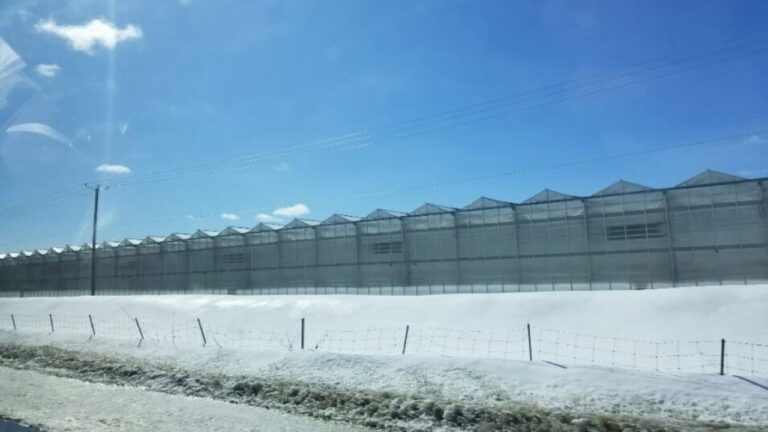
One of the tiles below is our Minnesota project, in Cottage Grove; the others show the same team’s cultivation and facility work in other markets. Each tile opens its project page.

Hexo Corp.
Gatineau, Quebec, Canada

Bostica
Lynn, MA, United States

Leafline Labs
Cottage Grove, MN, United States

View All Projects
View all Catalyst BC Projects
Minnesota Guides from Catalyst BC: Licensing, Microbusinesses and Events

MN Cannabis License Options for 2026–2027: What’s Open and How to Get In
On October 4, 2026, a new MN cannabis license is available in only five categories, which the Office of Cannabis Management (OCM) reviews year-round: the

Minnesota Cannabis Event Organizer License: How to Host a Legal Cannabis Lounge Event
Minnesota’s adult-use cannabis law (2023) does not create a permanent lounge license, but it allows temporary consumption events via a Cannabis Event Organizer license for

Minnesota Cannabis Microbusiness License: What It Allows and How to Get One in 2026
Are you considering starting a cannabis microbusiness in Minnesota? With the recent legalization of recreational cannabis and updates to the licensing process, now is the
Minnesota Regulatory Sources: OCM Pages, Chapter 342, the 2026 Session Laws and Rules 9810
Provenance. Every regulatory figure on this page is drawn from the Minnesota Office of Cannabis Management’s pages and releases, Minnesota Statutes chapter 342, Laws 2026 chapter 123, Minnesota Rules chapter 9810 and the Minnesota Department of Revenue. Each statute section cited was checked against the revisor’s amendment history on October 1, 2026; chapters 123 and 40 are the only 2026 laws that amend them, and chapter 40 changes only a hemp-product testing deadline that this page does not rely on, and the rules show no amendment since April 2025. Fees, caps, canopy rules, distances and deadlines are adopted and in force; the January 1, 2027 changes are enacted but not yet in effect. Sales, license, plant and inspection counts are OCM’s September 15, 2026 figures. Company figures come from Catalyst BC’s own records. Sources were read September 28 to October 1, 2026. Where this page and OCM, the statute or the rules differ, the official text governs.
Office of Cannabis Management pages
- OCM home page
- OCM, Application Process (application status; 2025 window)
- OCM, Available License Types (license limits and fees)
- OCM, License Lottery Results (June 5 and July 22, 2025 lotteries)
- OCM, Cannabis License Renewal (notice timing; ceasing operations)
- OCM, Making Cannabis Business Changes (transfers; 60–90-day review; plan-change notice)
- OCM, Social Equity Verification Process (65% test; “unable to provide legal or business advice”)
- OCM, Rules (chapter 9810 in effect April 14, 2025)
- OCM, CMCC Training Programs (the certified patient-adviser role in medical retailers)
OCM license holder resources
- OCM, Inventory Management (Metrc tags and costs)
- OCM, Standards for Sampling and Testing Cannabis and Hemp Products, Version 2.0 (July 1, 2026)
- OCM, Packaging, Labeling and Retail Posting Requirements (guide updated September 4, 2026)
- OCM, Background Checks for Employees (BCA checks from March 1, 2026)
- OCM, Federal Hemp Changes (December 11, 2026 effective date)
OCM releases and data
Minnesota Statutes, session laws and rules
- Minnesota Statutes, chapter 342 (2025 edition; plant canopy, true party of interest, financiers, testing)
- Minnesota Statutes §342.11, Licenses; Fees
- Minnesota Statutes §342.22, Retailers; Local Registration
- Laws of Minnesota 2026, chapter 123 (S.F. 4401), signed May 26, 2026 (caps, extensions, ownership, transfers, reclassification, qualified-applicant expiry, 2027 fees)
- Minnesota Rules, part 9810.2000 (cultivation; canopy measurement; plan-change notice)
- Minnesota Rules, part 9810.3100 (product testing; remediation)
- Minnesota Statutes §342.13, Local Control (buffers, registration caps, Tribal consent)
Minnesota Department of Revenue
Contact Us
Enough about us. We want to hear more about you, your project, and your vision! Get in touch with a real live person today. Don’t worry, we don’t have a long, confusing phone menu, and your email isn’t going to the abyss, we promise. At Catalyst, we provide the service and support we’d want to experience ourselves!