
Estimated reading time: 8 minutes
Table of contents
- Introduction
- Legal Possession and Personal Liberty
- Expungement, Release, and Resentencing
- Delivery
- Licensing and Regulatory Structure
- Taxation and Revenue Distribution
- Local Control
- Improving Medical Access
- Conclusion
- New York’s Marijuana Regulation & Taxation Act FAQs
- Additional Resources
- Free eBooks For Cannabis Business Success
- Latest Articles

Introduction
On March 31, 2021, Governor Andrew Cuomo signed legislation (S.854-A/A.1248-A) legalizing adult-use cannabis in New York resulting in the New York Marijuana Regulation and Taxation Act of 2021.
The law will establish the Office of Cannabis Management to implement a comprehensive regulatory framework that will cover medical, adult-use, and cannabinoid hemp. The law will also expand New York State’s existing medical marijuana and cannabinoid hemp programs.
Below is a summary of key provisions of the New York Marijuana Regulation and Taxation Act.
Legal Possession and Personal Liberty
- Personal possession limit of up to three ounces of cannabis and 24 grams of cannabis concentrate. Legal possession of up to three ounces is effective immediately.
- Home cultivation: A maximum of 12 plants can be grown per household with more than one adult.
- Three mature plants and three immature plants for adults over 21
- Six mature plants and six immature plants maximum per household
- Home growing will not take effect until regulators set rules for it. Regulators have a maximum of six months to do so for medical patients and must do so for adult-use consumers no later than 18 months after the first retail adult-use sales begin.
- Police cannot use the odor of cannabis to justify searches.
- Legislation permits the sale of hemp flower in the cannabinoid hemp program and allows for smokeable forms only when adult-use retail stores are operational.
Expungement, Release, and Resentencing
- Legalized conduct will be automatically expunged.
Delivery
- Retailers, microbusinesses, and delivery licensees are allowed to deliver to cannabis consumers.
- Cultivators are prohibited from holding delivery licenses.
- No entity may hold an interest in more than one delivery license.
- No more than 25 full-time employees per delivery licensee.
- The granting of delivery licenses shall promote social and economic equity applicants.
Licensing and Regulatory Structure
- Legislation establishes the New York State Cannabis Control Board and the Office of Cannabis Management.
- The Office of Cannabis Management — a new independent agency operating as part of the New York State Liquor Authority — is responsible for regulating the adult-use cannabis market as well as the existing medical marijuana and hemp programs and will be overseen by a five-member Cannabis Control Board. The governor shall select three members, including the chairperson. The President of the Senate and Speaker of the Assembly shall select one member each.
- A goal is set of 50% of licenses going to social and economic equity applicants. Social equity applicants are defined as people from “communities disproportionately impacted by the enforcement of cannabis prohibition,” as well as minority- and women-owned businesses, disabled veterans, and financially distressed farmers.
- Regulators may allow existing medical cannabis businesses to convert no more than three of their existing storefronts to dual use if they pay a one-time “special licensing fee” to fund social and economic equity and incubator assistance.
- Social consumption sites and delivery services are permitted.
Taxation and Revenue Distribution
- Legislation imposes a hybrid tax, with both a potency-based tax on distributors and a point-of-sale tax:
- levies a tax on distributors at 0.5 cents per milligram of THC for flower, 0.8 cents per milligram of THC for concentrates, and 3 cents per milligram of THC for edibles; and
- imposes a point of sale retail tax of 9% state tax and a 4% local tax (75% of the local earnings would go to municipalities and 25% to counties).
- After regulatory and administrative costs, 40% of cannabis revenue will go to community grants reinvestment, 20% to schools, and 40% to drug treatment facilities and public education, including for a youth-focused public health education and prevention campaign, a statewide public health campaign on the health effects of cannabis, and for substance use disorder treatment.
Local Control
- Cities, towns, and villages may opt-out of allowing adult-use cannabis retail dispensaries or on-site consumption licenses by passing a local law by December 31, 2021 or nine months after the effective date of the legislation.
Improving Medical Access
- The state’s existing medical cannabis program will be changed to expand the list of qualifying conditions and allow patients to smoke marijuana products.
- Patients can also obtain a 60-day, rather than a 30-day, supply.
Conclusion
The New York Marijuana Regulation and Taxation Act marks a pivotal shift in cannabis legislation, ushering in a comprehensive framework that supports adult-use legalization, expands medical access, and prioritizes social and economic equity. From legal home cultivation and automatic expungement to progressive licensing opportunities and targeted revenue reinvestment, this landmark legislation positions New York as a model for cannabis reform.
As the state continues to roll out regulations and licensing pathways, now is the time for entrepreneurs, operators, and advocates to prepare. Whether you’re exploring entry into the New York cannabis market, seeking guidance on compliance, or looking to understand how these changes affect your business or community — staying informed and engaged is key.
Looking to get licensed, expand your cannabis operations, or navigate regulatory requirements in New York? Contact Catalyst BC today for expert consulting, turnkey solutions, and hands-on support every step of the way. Let’s build a compliant, equitable, and thriving cannabis future together.
Learn more about our New York Cannabis Consulting Services or Book a Complimentary Consultation.
New York’s Marijuana Regulation & Taxation Act FAQs
The New York State Office of Cannabis Management (OCM) was established upon passage of the Marijuana Regulation and Taxation Act (MRTA) in March 2021 to implement a regulatory framework for medical and adult-use cannabis and hemp in the state of New York.
Start by booking a complimentary consultation with our New York consulting team. From securing municipal approvals, and applying for and receiving a cannabis license, to developing SOPs and facility designs, there are significant considerations involved. Our consultants provide end-to-end support to help you launch and sustain your New York based cannabis business.
Our consultants offer cannabis business planning, application writing, facility design, municipal approval, operational guidance, and cannabis M&A advisory services to help you achieve your goals in the cannabis industry. View our services page for more information.
Yes. Our team of operational advisors and technical writers will craft a comprehensive, compliant, and unique application.
Visit our New York cannabis page to learn more about local laws and regulations, license types, fees, and more.
To obtain a license, applicants must meet all eligibility requirements and submit a competitive application. If you do not meet the eligibility requirements for a license, or you apply and are not selected, you may have other opportunities to apply for an adult-use cannabis license in the future.
Our consulting team offers a complimentary consultation and is excited to partner with you in your journey. Contact us to set up your consultation call today.
The Office of Cannabis Management Enforcement Division who upholds New York’s cannabis laws and regulations.
Yes, recreational cannabis has been legal in New York since 2021. It can only be purchased legally at state-approved dispensaries.
New York has allowed medical marijuana since 2016.
In 2021, New York legalized recreational marijuana.
As of 2022, recreational cannabis is sold legally in New York, including on Native American reservations.
Recreational cannabis is only available for purchase at state-approved dispensaries.
The cannabis business licensing application process is complex and demands meticulous planning, regulatory compliance, and operational expertise. Numerous variables and intricate details must align with the framework established by cannabis regulators and local authorities. Learn more about the process here.
New Yorkers 21 years and older can grow up to six plants in their home for personal use (3 mature plants and 3 immature plants) and a maximum of twelve plants per household (6 mature plants and 6 immature plants), even if there are three or more adults 21 and over in the residence.
Additional Resources
Free eBooks For Cannabis Business Success




Latest Articles
- How Much Does It Cost to Open a Cannabis Dispensary in 2026
 The allure of jumping into the legalized cannabis industry often paints a picture of quick riches and burgeoning demand, yet the reality of establishing a licensed cannabis dispensary is far more nuanced, capital-intensive, and fraught with unique financial challenges. For aspiring entrepreneurs and seasoned investors alike, understanding the true dispensary startup costs is the absolute bedrock of success.
 - Virginia Cannabis Facility Design & Build-Out for the 2027 Market
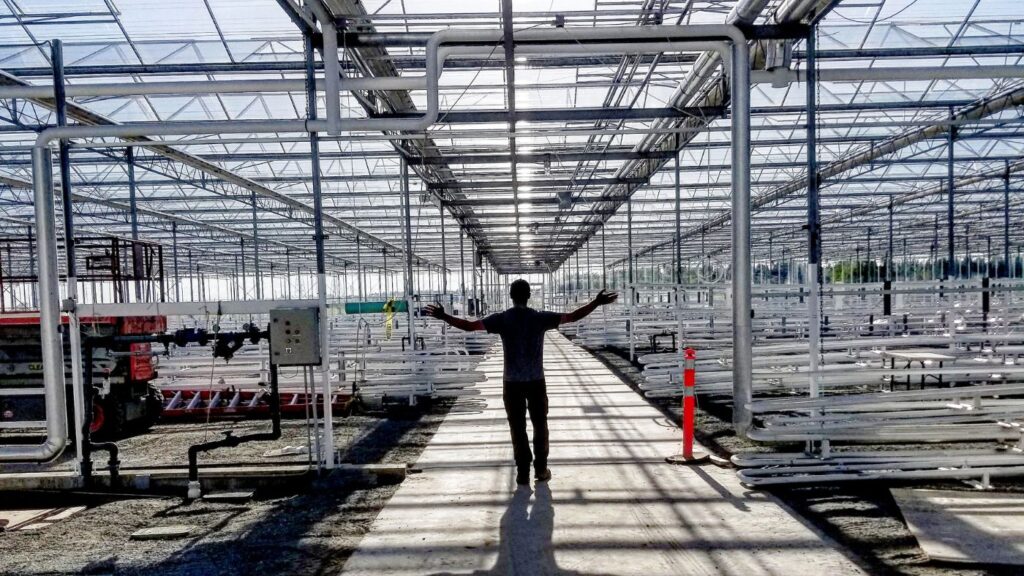 This guide covers the major considerations involved in planning and building a Virginia cannabis facility, with a focus on retail and cultivation operations and additional considerations relevant to processors and microbusinesses. It is written from the build side of the business, because that is where many otherwise-strong applicants stumble: they underestimate utility needs, local approvals, security infrastructure, commissioning, and the time required to convert a site into an inspection-ready operation.
 - Virginia Dual-Use Cannabis Conversion (2027): The $10M Medical-to-Adult-Use Pathway
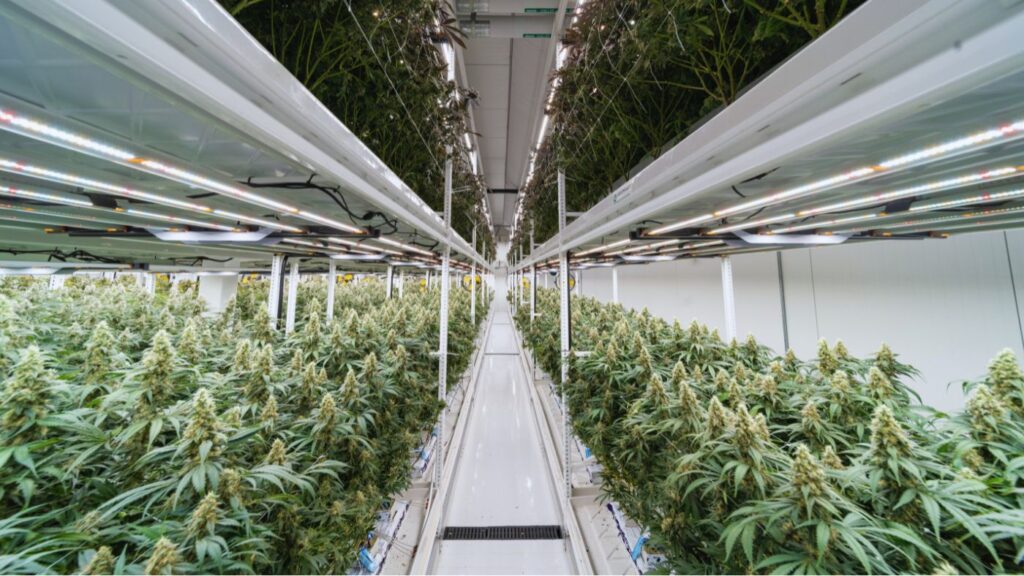 For Virginia’s existing medical cannabis operators, the 2026 retail framework created a distinct and high-stakes transition: pharmaceutical processors may apply for verification to exercise dual-use privileges and serve both registered medical patients and adult-use customers. The pathway covers the processor and its permitted cannabis dispensing facilities, and it carries a one-time $10 million fee, a required medical cannabis program preservation plan, an impact-licensee business accelerator commitment, and a firm May 1, 2027 payment or installment-plan deadline.
 - Virginia Impact Cannabis License (2027): Social Equity & the Equity Business Loan Fund
 Virginia’s adult-use cannabis framework creates a meaningful pathway for applicants from communities and backgrounds affected by cannabis prohibition and enforcement. The law does not create a separate, stand-alone impact license. Instead, it creates an impact-licensee designation that qualifying applicants may pursue alongside an underlying marijuana establishment license, such as retail, cultivation, processing, microbusiness, transportation, delivery, or testing.
 - Virginia Cannabis Microbusiness License (2027): Eligibility & the Two-Location Model
 This guide explains the initial eligibility pathways for the licenses the CCA may issue by May 1, 2027, the difference between a microbusiness license and an impact designation, the indoor and outdoor cultivation limits, the precise rules governing two locations, and the financial, security, and operational readiness standards applicants should prepare to demonstrate. Several implementation details – including fees and the specific combination of privileges the CCA will authorize – still depend on forthcoming regulations.
 - Virginia Cannabis Cultivation License (2027): The Tiered System Explained
 For operators whose strength is growing cannabis, Virginia’s emerging adult-use market presents a significant opportunity – and a cultivation license is the gateway to it. The June 2026 framework authorizes the Virginia Cannabis Control Authority (CCA) to begin accepting license applications on or after February 1, 2027 and issuing licenses on or after May 1, 2027. It also establishes five cultivation tiers with maximum canopies ranging from 5,000 to 35,000 square feet.