
Estimated reading time: 18 minutes
Table of contents
- Overview
- What a Missouri Cannabis Microbusiness License Actually Is
- Round 3 at a Glance: The 2026 Dates That Matter
- License Types: Dispensary vs. Wholesale
- Who Qualifies: Microbusiness Eligibility Criteria
- How the Lottery Works – and Your Real Odds
- The 2026 Rule Changes Every Applicant Must Know
- Why Licenses Get Revoked – Learn From the First Two Rounds
- What You Need Ready Before July 13
- The Bigger Picture: Why This License Is Worth Fighting For
- Work With Catalyst BC on Your Missouri Microbusiness Application
- Missouri Cannabis Microbusiness License FAQs
- Additional Resources
- Free eBooks For Cannabis Business Success
- Latest Articles

Editor’s Notes: This article is part of our Missouri 2026 Licensing Hub. Other topics covered in this series are:
- 2026 Missouri Microbusiness License Application Guide
- Guide to the Missouri microbusiness 2026 lottery
- How to avoid predatory ownership deals
- Missouri Microbusiness 2026 Eligibility Guide
- Dispensary vs. wholesale: Which License Should You Choose
- Post-award Roadmap From Lottery to Opening Day
Overview
When Missouri voters passed Amendment 3 in November 2022, they did something most adult-use states never attempted: they wrote a small-business equity program directly into the state constitution. The result is the marijuana microbusiness license – and in the summer of 2026, the single most important window for that program is about to open. Having advised applicants and operators across multiple state licensing cycles, I can tell you plainly that the third and final scheduled round under Missouri’s original constitutional rollout is the last guaranteed on-ramp into Missouri’s billion-dollar cannabis market for entrepreneurs who don’t already hold a comprehensive license. If you have been waiting for your moment, this is it.
This guide is written for the person sitting where most of my clients sit right now: eligible, motivated, short on time, and surrounded by outdated online advice that still references 2024 and 2025 deadlines. Below, I walk through exactly what the Missouri cannabis microbusiness license is, what is changing in 2026, who qualifies, how the lottery actually works, and where applicants are losing licenses they already won. I have spent enough cycles inside these programs to know that the difference between a winning file and a denied one is rarely talent or capital – it is preparation, accuracy, and an honest understanding of the rules. Let’s get you there.
What a Missouri Cannabis Microbusiness License Actually Is
A microbusiness license is a marijuana facility license issued only to eligible individuals and entities, designed to create a path to ownership for people who would otherwise be priced out of the industry. It is administered by the Missouri Division of Cannabis Regulation (DCR), which sits within the Department of Health and Senior Services (DHSS). Unlike comprehensive licenses – which were largely converted from the legacy medical program and are effectively capped – microbusiness licenses are constitutionally mandated, awarded by lottery, and reserved for applicants who meet specific equity criteria laid out in Article XIV, Section 2 of the Missouri Constitution.
The constitution requires a minimum of 144 microbusiness licenses, issued across three lottery rounds: 48 microbusiness dispensary licenses and 96 microbusiness wholesale (cultivation and manufacturing) licenses. The first round was drawn in 2023, the second in 2024, and the third – the subject of this guide – opens in July 2026. Because the DCR has revoked a substantial share of previously awarded licenses for ineligibility, the third round is larger than originally projected: the Division will award at least 77 licenses in this round to reach the constitutional floor.
There is one structural feature of this license that I want every applicant to internalize before anything else, because it defines your entire business model: the microbusiness tier operates as a closed loop. A microbusiness may only buy from and sell to other microbusinesses (plus licensed testing facilities). You cannot source product from a comprehensive cultivator, and you cannot wholesale into a comprehensive dispensary. This is not a footnote. It is the central commercial constraint of the license, and it shapes everything from your supply strategy to your site selection.
Round 3 at a Glance: The 2026 Dates That Matter
The DCR confirmed the third-round timeline in June 2026. These are the dates to build your plan around.
| Milestone | Date / Detail |
| Application window opens | July 13, 2026 |
| Application window closes | July 27, 2026 |
| Licenses available | At least 77 (to reach the 144 constitutional minimum) |
| Application fee | $1,637 (qualifying applicants not selected may request a refund, subject to DCR requirements) |
| Lottery drawing | September 9, 2026 |
| Expected license issuance | December 2026 |
| Pre-application training | Required before you apply (three-video online course) |
| Regulator | Missouri Division of Cannabis Regulation (DCR), within DHSS |
| Official portal | The DCR online registry at cannabis.mo.gov |
The window is two weeks long and it is firm. Untimely applications, or applications submitted without the fee, are denied and excluded from the lottery – there is no grace period and no appeal that recovers a missed deadline. In my experience, the applicants who succeed treat the opening date as a deadline that has already passed: by July 13, your entity, your eligibility documentation, your site control, and your completed training should already be in hand.
License Types: Dispensary vs. Wholesale
Missouri offers exactly two microbusiness license types, and you may apply for only one. Choosing between them is the first real strategic decision in your application, and it deserves more thought than most applicants give it.
| Feature | Microbusiness Dispensary | Microbusiness Wholesale |
| Core activity | Retail sale to consumers, patients, and caregivers | Cultivation, manufacturing, processing, packaging |
| Supply relationships | Acquires marijuana product from microbusiness wholesalers and may transact with testing facilities as authorized | May sell or transfer product to microbusiness dispensaries, other microbusiness wholesalers, and testing facilities |
| Cultivation limit | Not applicable | Up to 250 flowering plants at any given time |
| Licenses per round (historic split) | Fewer per district | More per district |
| Typical capital intensity | High (buildout, retail location, security, POS) | High (cultivation infrastructure, environmental controls) |
| Best fit | Operators with retail/customer-facing strength | Operators with cultivation or production expertise |
The wholesale license is constrained by a plant count rather than a canopy square footage – up to 250 flowering plants at a time, a meaningful limit compared to a comprehensive cultivator’s tens of thousands of square feet of canopy. That ceiling is exactly why facility and production design matter so much on the wholesale side. When plant count is capped, profitability depends heavily on yield and quality per plant, crop turns, genetics, product mix, labor efficiency, manufacturing strategy, and facility utilization.

Expert Insight – The closed-loop math. Congressional district affects an applicant’s lottery group, but it does not confine the business’s future supply relationships. Microbusinesses may establish relationships with eligible microbusiness operators across Missouri. Applicants should therefore evaluate the statewide network of operating wholesalers and dispensaries, regional transportation costs, expected product availability, and the number of businesses that have actually received approval to operate—not merely the license mix within one district.
Leif Olsen – Catalyst BC Chief Executive Officer
Who Qualifies: Microbusiness Eligibility Criteria
The microbusiness program is an equity program, and eligibility is the gatekeeper. The applying entity must be majority-owned by individuals who each meet at least one of the qualifying criteria set out in Article XIV, Section 2. The DCR’s official eligibility list governs, and recent program guidance references several qualifying categories. The criteria most commonly relied upon are summarized below.
| Qualifying pathway | What it requires |
| Income and net worth | Net worth of less than $250,000 and household income below 250% of the federal poverty level for at least three of the ten calendar years before applying. |
| Service-connected disability | A service-connected disability supported by a current Veterans Health Identification Card, VA benefit summary letter, VA award letter, or other documentation accepted by DCR. |
| Nonviolent marijuana offense | The applicant—or the applicant’s parent, guardian, or spouse—was arrested for, prosecuted for, or convicted of a qualifying nonviolent marijuana offense on or before December 8, 2021. Offenses involving distribution to a minor or driving under the influence do not qualify. |
| Disproportionately impacted residency | Current residence in a qualifying ZIP code or census tract where at least 30% of residents live below the federal poverty level, unemployment is at least 50% higher than the state average, or marijuana-related incarceration is at least 50% higher than the statewide rate. |
| Unaccredited school district | Graduation from a school district that was unaccredited—or had a similar designation—at the time of graduation, or residence for three of the past five years in a ZIP code containing a qualifying unaccredited school district. |
Three eligibility rules trip up applicants every single round, and I want them stated explicitly:
First, ownership is about real control, not paper. The majority eligible owners must actually possess the knowledge, decision-making authority, and operational control expected of owners. A structure where an eligible person is the named owner but a third party holds the real strings is exactly what the DCR is now hunting for – and revoking.
Second, no double-dipping. An owner of a microbusiness may not be an owner (10% or greater financial or voting interest) of any other licensed marijuana facility in Missouri, whether medical, comprehensive, or another microbusiness.
Third, one application per entity and per individual, per round. If an individual or entity appears on more than one application, every application they appear on is denied. There is no upside to hedging across multiple filings – it is a disqualifying error.
How the Lottery Works – and Your Real Odds
Microbusiness licenses are not scored and ranked like the old medical applications. By law they are selected through a random lottery conducted by the Missouri Lottery, drawn without reference to applicant identities. After the window closes, qualifying applications are sorted by congressional district and by license type – wholesale or dispensary – and assigned a sequential identifier within each group. With eight congressional districts and two license types, that produces 16 separate lottery sets. The Division then reviews the drawn applications in the order they were selected, working down each district’s list until the available licenses in that group are filled.
This structure has two practical consequences. The first is geographic: your odds are a function of your district, not the state as a whole. A district that attracts 50 wholesale applicants for a handful of slots is a far tougher draw than one that attracts a dozen. Smart applicants research filing patterns and, where their plans allow, choose the district where their probability is highest. The second consequence is that eligibility is verified after the draw, not before it – so a flawless, well-documented file is what converts a lucky draw into an actual license.

Expert Insight – Why “random” still rewards preparation. Applicants sometimes conclude that because the selection is a lottery, the quality of their file doesn’t matter. That is precisely backward. The lottery decides the order in which the Division reviews you; your documentation decides whether you survive the review. In prior rounds, applicants were drawn near the top of their district and then lost the license because their ownership structure, eligibility proof, or attestations didn’t hold up. The lottery is the easy part. Surviving the eligibility verification is where licenses are won and lost.
Andy Schnack – Catalyst BC Operations Advisor
The 2026 Rule Changes Every Applicant Must Know
This is the single most important section of this guide, and the one your competitors’ outdated pages do not cover. At the end of May 2026, a new set of DCR rules took effect – rules first proposed in 2024 after the Division revoked dozens of licenses from the first two rounds. They change how you apply and what you must understand before you do.
The headline change is at least one eligible individual contributing to the applicant’s majority ownership must complete DCR’s required pre-application training before the application is submitted. Its explicit purpose is to educate applicants about predatory practices so they recognize and avoid them. Do not treat this as a formality – it is the Division telling you, in its own words, what behavior will get your license revoked.
The rules also tighten ownership-control protections. Applicants may not enter into agreements that strip away or diminish the power and operational control of the eligible owners – including agreements that would automatically transfer ownership in the future – until after the Division completes its eligibility verification and the licensee finishes all mandatory post-award training. In plain terms: the eligible owners must genuinely own and run the business, not just lend their name to it.
Finally, the fingerprint process moved. Rather than collecting fingerprints from every applicant up front, the Division now requires fingerprint submissions after the lottery, from the owners of top-drawn applications, for the state and federal background check conducted through the Missouri State Highway Patrol. Owners are defined as individuals with a 10% or greater voting or financial interest, and all owners must be at least 21.
Why Licenses Get Revoked – Learn From the First Two Rounds
I tell every prospective applicant the same thing: the most valuable due diligence you can do is study why the Division revoked the licenses it already issued. DCR revoked nine licenses following the first round and another 25 following the second round. Of the 25 second-round revocations, 24 involved failure to demonstrate eligible majority ownership and operation, while one involved a disqualifying felony. A pattern emerged in which “designated contacts” or outside operators recruited eligible people to file applications, then locked them into agreements that quietly limited their voting power and share of profits.
The lesson is not that partnering with experienced operators or investors is forbidden – it is that the eligible owners must retain genuine control and genuine economic upside. If an arrangement reads as though the eligible owner is a placeholder, it may not survive DCR’s post-issuance ownership and eligibility review the Division now conducts, and the license will be revoked. Structure your ownership, your operating agreement, and your capital stack so that they reflect the constitutional intent: the people who qualify are the people who own and run the business.

Expert Insight – The red flags I screen for. When I review a proposed microbusiness structure, I look for three warning signs: management or services agreements that route the bulk of profit to a non-eligible party; options or automatic-transfer clauses that hand the business to an investor down the line; and operating agreements where the eligible “owner” lacks day-to-day decision authority. Any one of these will sink an otherwise winning application. Build the structure right the first time – retrofitting it after a revocation notice is far harder, and the appeal odds are poor.
Michael Williamson – Catalyst BC Chief Operating Officer
What You Need Ready Before July 13
A microbusiness application is simpler than a comprehensive one – the DCR has said as much – but “simpler” is not “casual.” Here is the readiness checklist I run my clients through before the window opens:
- A properly structured applicant entity or sole proprietorship, majority owned and operated by eligible individuals.
- Documentation proving each eligible owner’s qualifying criterion (income and net worth records, VA disability card, offense records, or proof of residency in a qualifying area).
- A compliant proposed facility location and proposed blueprints. Although DCR’s published guidance does not expressly require site control at application, obtaining a properly contingent lease, option, or other form of site control is a Catalyst BC best practice.
- Completed pre-application training (the three-video course).
- A clean, honest ownership structure and operating agreement that gives eligible owners real control.
- The $1,637 application fee, submitted with the application within the window.
- A plan to promptly submit fingerprints after the lottery if requested by DCR as part of its review of a top-drawn application.
Once awarded, the license is valid for three years and is subject to an annual license fee. Renewal must be submitted no sooner than 90 days and at least 30 days before the license expires. Winning the lottery is the beginning, not the end – the build-out, compliance program, seed-to-sale tracking, and operational approval process that follow are where most of the real work begins.
The Bigger Picture: Why This License Is Worth Fighting For
Missouri’s adult-use market crossed more than a billion dollars in sales in its first twelve months of operation, and the state remains a comparatively high-price market. The microbusiness tier is the only structurally protected on-ramp for new, independent operators into that market – a constitutionally guaranteed set of licenses that large multistate operators are barred from holding. That protection is precisely what makes the license valuable and precisely why the application process is scrutinized so heavily. The third round is the last scheduled opportunity to claim one of these licenses through the original constitutional allotment. Additional licensing opportunities could arise through future revocations or other state action, but applicants should not assume another comparable round will occur. I would not recommend building a plan around the possibility of a future round.
Work With Catalyst BC on Your Missouri Microbusiness Application
The third round is a genuine opportunity, but it is also a one-shot, high-stakes process where small structural mistakes cost real licenses – and where the difference between an applicant who wins and one who is later revoked usually comes down to how the business was built before a single document was filed. At Catalyst BC, this is the work we do every day: confirming eligibility pathways, structuring ownership so it reflects true constitutional intent and survives the Division’s verification, selecting and securing a compliant location in the right congressional district, and designing facilities that perform under the program’s plant and supply constraints. We have guided operators through licensing and post-award build-outs across multiple state markets, and we know exactly where Missouri applicants stumble. If you intend to file in the July 13–27 window, the time to prepare your entity, your documentation, and your strategy is now – not on July 12.
Reach out to our team to schedule a consultation, and let’s build an application that doesn’t just enter the lottery, but holds up after you win it.
About the authors: This guide was prepared by the Catalyst BC cannabis consulting team. Catalyst BC advises cannabis operators on state licensing strategy, ownership structuring, regulatory compliance, and cannabis facility design and commissioning across U.S. and international markets. Our consultants bring direct experience with competitive license applications, social-equity and microbusiness programs, cultivation facility engineering (HVACD, environmental controls, and yield optimization), and Owner’s Representative services
Missouri Cannabis Microbusiness License FAQs
The third-round application window opens July 13, 2026 and closes July 27, 2026. Applications are submitted through the DCR’s online registry portal, and late or fee-less applications are excluded. Treat July 13 as a deadline you must be fully ready for, not a starting line.
The Division will award at least 77 licenses in the third round. That number was set to bring the total up to the constitutional minimum of 144 microbusiness licenses, after a significant share of first- and second-round licenses were revoked for ineligibility.
The application fee is $1,637, due with your application. It is refundable if you are not selected in the lottery, provided you met the eligibility criteria and have no pending or future legal actions tied to a denial. Budget separately for the substantial capital you will need to actually build and operate the business if awarded.
A dispensary sells finished product to consumers, patients, and caregivers; a wholesale facility cultivates, manufactures, and processes product. Wholesale is capped at 250 flowering plants at any time. You may apply for only one type, and both can transact only within the microbusiness closed loop and with testing labs.
The entity must be majority-owned by individuals who each meet at least one qualifying criterion – such as low income and net worth, a service-connected disability, a non-violent marijuana offense in the family, or residency in a disproportionately impacted area. Confirm your specific pathway against the DCR’s official eligibility list before applying.
Yes. Selection is a random drawing conducted by the Missouri Lottery, without reference to applicant identities. Applications are grouped by congressional district and license type, creating 16 lottery sets. Eligibility is verified after the draw, so a well-documented application is what turns a favorable draw into an issued license.
Rules effective at the end of May 2026 require a three-video pre-application training, prohibit agreements that strip eligible owners of control until after verification and post-award training, and move fingerprint collection to after the lottery for top-drawn owners. They exist to stop the predatory ownership arrangements that triggered prior revocations.
No. An owner of a microbusiness may not hold a 10% or greater interest in any other Missouri marijuana facility – medical, comprehensive, or another microbusiness. The program is reserved for new, independent, eligible owners.
The Division revoked roughly a third of issued licenses, mostly because eligible owners were found to be standing in for third parties who held the real control and profit. Avoid it by ensuring your eligible owners genuinely control the business and share meaningfully in its economics – and by avoiding automatic-transfer or control-stripping clauses.
Being drawn is the start of a verification and build-out process: the Division reviews your application and ownership, owners submit fingerprints, and you complete post-award training before standing up a compliant facility with seed-to-sale tracking. The license runs three years with an annual fee and renews at least 90 days before expiration.
Additional Resources
Free eBooks For Cannabis Business Success




Latest Articles
- How Much Does It Cost to Open a Cannabis Dispensary in 2026
 The allure of jumping into the legalized cannabis industry often paints a picture of quick riches and burgeoning demand, yet the reality of establishing a licensed cannabis dispensary is far more nuanced, capital-intensive, and fraught with unique financial challenges. For aspiring entrepreneurs and seasoned investors alike, understanding the true dispensary startup costs is the absolute bedrock of success.
 - Virginia Cannabis Facility Design & Build-Out for the 2027 Market
 This guide covers the major considerations involved in planning and building a Virginia cannabis facility, with a focus on retail and cultivation operations and additional considerations relevant to processors and microbusinesses. It is written from the build side of the business, because that is where many otherwise-strong applicants stumble: they underestimate utility needs, local approvals, security infrastructure, commissioning, and the time required to convert a site into an inspection-ready operation.
 - Virginia Dual-Use Cannabis Conversion (2027): The $10M Medical-to-Adult-Use Pathway
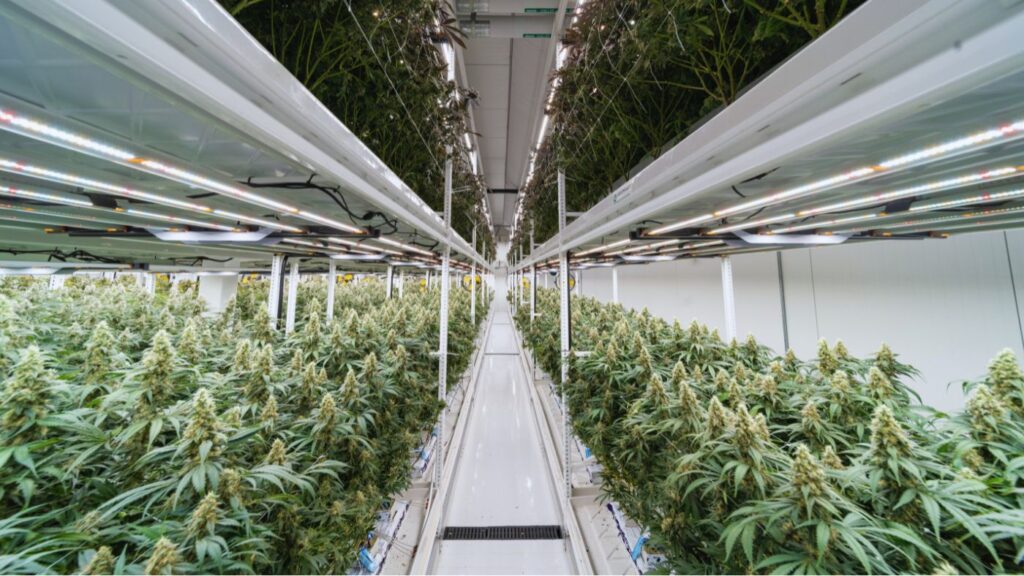 For Virginia’s existing medical cannabis operators, the 2026 retail framework created a distinct and high-stakes transition: pharmaceutical processors may apply for verification to exercise dual-use privileges and serve both registered medical patients and adult-use customers. The pathway covers the processor and its permitted cannabis dispensing facilities, and it carries a one-time $10 million fee, a required medical cannabis program preservation plan, an impact-licensee business accelerator commitment, and a firm May 1, 2027 payment or installment-plan deadline.
 - Virginia Impact Cannabis License (2027): Social Equity & the Equity Business Loan Fund
 Virginia’s adult-use cannabis framework creates a meaningful pathway for applicants from communities and backgrounds affected by cannabis prohibition and enforcement. The law does not create a separate, stand-alone impact license. Instead, it creates an impact-licensee designation that qualifying applicants may pursue alongside an underlying marijuana establishment license, such as retail, cultivation, processing, microbusiness, transportation, delivery, or testing.
 - Virginia Cannabis Microbusiness License (2027): Eligibility & the Two-Location Model
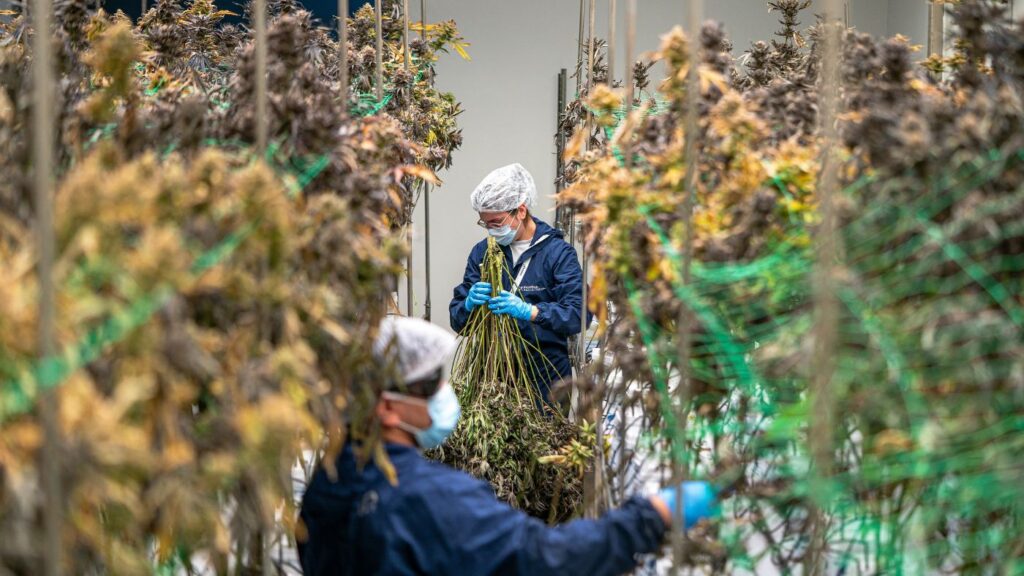 This guide explains the initial eligibility pathways for the licenses the CCA may issue by May 1, 2027, the difference between a microbusiness license and an impact designation, the indoor and outdoor cultivation limits, the precise rules governing two locations, and the financial, security, and operational readiness standards applicants should prepare to demonstrate. Several implementation details – including fees and the specific combination of privileges the CCA will authorize – still depend on forthcoming regulations.
 - Virginia Cannabis Cultivation License (2027): The Tiered System Explained
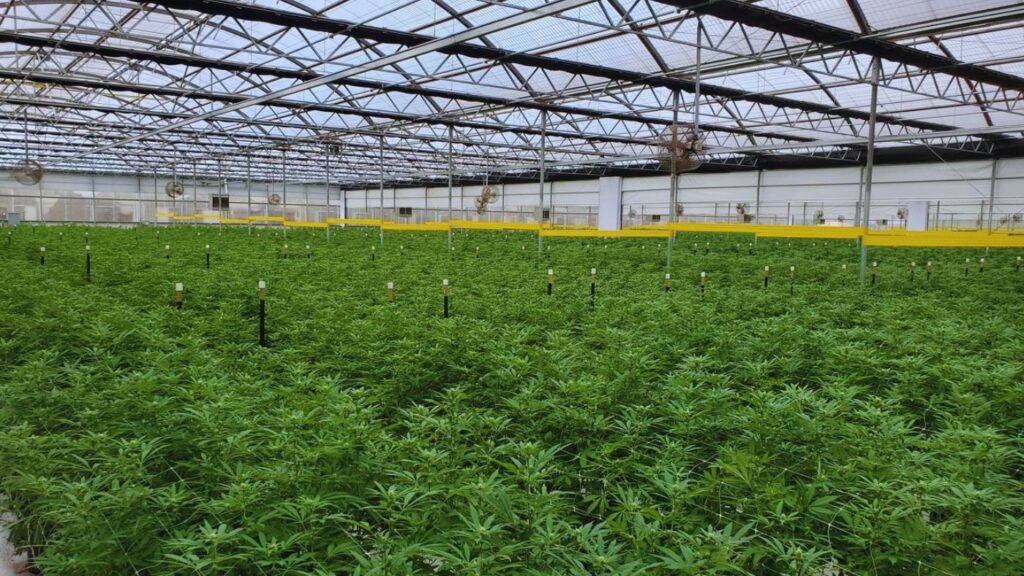 For operators whose strength is growing cannabis, Virginia’s emerging adult-use market presents a significant opportunity – and a cultivation license is the gateway to it. The June 2026 framework authorizes the Virginia Cannabis Control Authority (CCA) to begin accepting license applications on or after February 1, 2027 and issuing licenses on or after May 1, 2027. It also establishes five cultivation tiers with maximum canopies ranging from 5,000 to 35,000 square feet.