
Estimated reading time: 13 minutes
Table of contents
- Overview
- The Missouri Cannabis Market in 2026
- The Missouri Licensing Landscape: Two Worlds
- Why the Microbusiness Program Is the 2026 Opportunity
- The Round 3 Microbusiness Opportunity at a Glance
- Your Complete Missouri Microbusiness Resource Library
- The Path From Application to Operation
- Key Dates and Deadlines
- Work With Catalyst BC on Your Missouri Cannabis License
- Missouri Cannabis License FAQs
- Additional Resources
- Free eBooks For Cannabis Business Success
- Latest Articles
Overview
Missouri has quietly become one of the most important cannabis markets in the country – and, for new entrepreneurs, one of the few where a genuine ground-floor licensing opportunity still exists in 2026. Most states with mature adult-use markets have effectively closed their doors to newcomers; their licenses are capped, converted from legacy operators, or locked up by multistate companies. Missouri is different. Written directly into the state constitution is a small-business equity program – the marijuana microbusiness license – that is awarded by lottery, reserved for eligible individuals, and entering the third and final scheduled round under the original constitutional rollout this summer. Having guided operators through licensing across many states, I can tell you that this is a rare window where deep pockets do not determine lottery selection, but careful preparation may determine whether a drawn application survives eligibility review and advances toward operation
This guide is the hub for everything you need to understand Missouri cannabis licensing in 2026: how the market got here, what license types exist, why the microbusiness program is the live opportunity, and where to go deep on each part of the application. Think of it as your map. Each section points to a detailed resource so you can move from a high-level understanding to a winning application without getting lost in outdated advice – and there is a great deal of outdated advice on this topic.
The Missouri Cannabis Market in 2026
Missouri voters legalized medical cannabis in 2018 and adult-use cannabis in November 2022 through Amendment 3, which passed with a constitutional framework that did two unusual things. First, it converted the existing medical operators into the backbone of the adult-use market almost immediately, producing one of the fastest commercial rollouts in the nation. Second, it created the microbusiness license as a constitutionally guaranteed pathway for marginalized and underrepresented individuals to own cannabis businesses. The market that resulted is large and high-priced: adult-use sales crossed more than a billion dollars in the first year of operation, and Missouri remains a comparatively high-revenue market for licensed operators.
The Missouri Division of Cannabis Regulation (DCR), housed within the Department of Health and Senior Services (DHSS), administers the entire program. Understanding the DCR’s structure and intent is the foundation for understanding which licenses are actually available to you in 2026.
The Missouri Licensing Landscape: Two Worlds
Missouri’s cannabis licenses fall into two fundamentally different categories, and conflating them is the most common mistake I see newcomers make.
| License family | Who holds them | Availability in 2026 |
| Comprehensive (and medical) | Largely converted from legacy medical operators | Effectively closed – not generally accepting new applications |
| Microbusiness | Eligible individuals via constitutional equity program | Open – third standard lottery round in summer 2026 |
Missouri is not currently accepting new applications for comprehensive cultivation, manufacturing, or dispensary licenses. Entry into that portion of the market generally requires acquiring an interest in an existing licensed business and obtaining DCR approval for the resulting ownership or entity changes. They were mostly converted from the medical program and are capped, which means a newcomer cannot simply apply for one. The microbusiness license is the opposite: it is constitutionally mandated, reserved for eligible applicants, and large operators are barred from holding it. That protection is exactly what makes it the meaningful opportunity for new entrepreneurs, and why this hub focuses on it.
Unlike comprehensive operators, microbusinesses generally operate within a closed supply chain: microbusiness wholesalers supply microbusiness dispensaries, and those dispensaries depend on the availability, capacity, and product mix of other microbusiness licensees.

Expert Insight – Don’t chase a license that isn’t available. I regularly meet aspiring Missouri operators who spend months researching “how to open a dispensary in Missouri,” assuming they can apply for a comprehensive retail license. They generally can’t – those aren’t open. The license that is open to new, eligible entrepreneurs is the microbusiness license. Pointing your energy at the opportunity that actually exists is the first strategic decision, and it saves enormous wasted effort.
Leif Olsen – Catalyst BC Chief Executive Officer
Why the Microbusiness Program Is the 2026 Opportunity
The microbusiness program is structured to issue a minimum of 144 licenses across three lottery rounds – 48 microbusiness dispensary licenses and 96 microbusiness wholesale (cultivation and manufacturing) licenses. The first round was held in 2023 and the second in 2024. The third round opens this summer. Because the DCR revoked a significant share of previously awarded licenses for ownership ineligibility, the third round is larger than originally planned, with at least 77 licenses available to bring the program up to its constitutional floor. DCR does not evaluate ownership solely by looking at percentages on an organizational chart. Operating agreements, management contracts, financing terms, voting rights, profit distributions, options, and related agreements may all affect whether eligible owners genuinely control and benefit from the business.
This is the final scheduled on-ramp under Missouri’s original three-round constitutional rollout. Additional licensing opportunities could arise through future revocations or other state action, but applicants should not assume another comparable round will occur. For a prepared, eligible applicant, the third round is the opportunity to act on now.
The Round 3 Microbusiness Opportunity at a Glance
| Element | Detail |
| Application window | July 13–27, 2026 |
| Licenses available | At least 77 (toward the 144 constitutional minimum) |
| License types | Microbusiness dispensary OR microbusiness wholesale (choose one) |
| Application fee | $1,637 (qualifying applicants who are not selected may request a refund, subject to DCR requirements) |
| Selection | Random lottery, sorted into 16 district-and-type sets |
| Lottery date | September 9, 2026 |
| Expected issuance | December 2026 |
| New for 2026 | Mandatory pre-application training; tightened anti-predatory ownership rules |
| Regulator | Missouri Division of Cannabis Regulation (cannabis.mo.gov) |
Your Complete Missouri Microbusiness Resource Library
This hub connects to six in-depth guides, each covering one critical part of the microbusiness process. Read them in this order for a complete picture, or jump to the one that addresses your immediate question.
1. Start here: the complete application guide. Our flagship resource walks through the entire Round 3 process end to end – what the license is, the closed-loop market structure, the dates, the requirements, and how to prepare. Begin with the complete Missouri microbusiness license application guide.
2. Understand your odds: the lottery. Selection is a random draw, but it’s structured in a way that lets you improve your statistical odds. Learn how the 16 district drawings work and what prior rounds revealed about competition in our guide to the Missouri microbusiness lottery.
3. Protect your license: avoid predatory deals. The most common way to lose a microbusiness license is to win it and then have it revoked over ownership. Learn the red flags and the new 2026 rules in how to avoid predatory ownership deals.
4. Confirm you qualify: eligibility. The program is an equity program, and eligibility is the gate. Work through the five qualifying pathways, the documentation, and the disqualifiers in our Missouri microbusiness eligibility guide.
5. Choose your license type: dispensary vs. wholesale. You may apply for only one, and the choice shapes your odds, capital, and operation. Compare them in dispensary vs. wholesale: which license should you choose.
6. Plan beyond the win: post-award roadmap. Winning the lottery is the starting gun, not the finish line. Map the review, build-out, and compliance work ahead in the post-award roadmap from lottery to opening day.
The Path From Application to Operation
Stepping back from the individual guides, here is the full arc of a Missouri microbusiness, so you can see how the pieces fit together:
- Confirm eligibility under one of the five qualifying pathways, with documentation in hand.
- Choose your license type – dispensary or wholesale – based on odds, the closed-loop gap in your district, your competency, and your capital.
- Complete the pre-application training and assemble a clean, defensible ownership structure.
- Secure compliant site control in a district chosen with the competitive data in mind.
- File one application with the $1,637 fee within the July 13–27 window.
- Enter the lottery on September 9, where your district-and-type set determines your competition.
- Survive the eligibility review – drawn applicants are verified in order, often on a three-business-day response clock.
- Submit fingerprints and complete post-award training for owners of drawn applications.
- Build, commission, and stand up compliance – facility, security, and seed-to-sale tracking. Microbusiness licensees must generally obtain operational approval within two years of license issuance.
- Open and operate within the microbusiness closed loop, maintaining ownership integrity for the life of the license.
Each of those steps is covered in depth in the resource library above. The throughline – and the thing I emphasize to every client – is that this is a process you largely win or lose before you file, through eligibility, structure, and preparation.

Expert Insight – Freshness is your competitive edge as an applicant, too. Most of the online guidance about Missouri microbusiness licensing still references 2024 and 2025 dates and misses the new 2026 rules entirely. That’s a problem for those guides’ readers, but it’s also a lesson: the regulatory details that matter most are the ones that just changed. Anchor your preparation to current DCR guidance, and treat any resource that doesn’t mention the new pre-application training and anti-predatory rules with caution.
Michael Williamson – Catalyst BC Chief Operating Officer
Key Dates and Deadlines
| Date | Milestone |
| Before July 13, 2026 | Complete eligibility documentation, training, site control, and structure |
| July 13–27, 2026 | Application window – file with the $1,637 fee |
| September 9, 2026 | Lottery drawing |
| After the lottery | Eligibility review (often a three-business-day response window); fingerprints for drawn owners |
| December 2026 | Expected license issuance |
| Ongoing | Build-out, compliance, and operation; license valid for three years, with an annual license fee and renewal required every three years |
Work With Catalyst BC on Your Missouri Cannabis License
Missouri’s microbusiness program is a genuine, constitutionally protected opportunity to enter a billion-dollar market – but it’s a one-shot, high-stakes process where the difference between winning and being revoked is decided long before the lottery, in how you establish eligibility, structure ownership, and prepare your application. At Catalyst BC, this is exactly what we do: confirming eligibility, structuring ownership to satisfy constitutional intent and survive the Division’s review, selecting the right license type and district, designing and commissioning facilities that perform under the program’s constraints, and guiding operators from application through build-out to opening day. We have helped operators win licenses and stand up operations across multiple state markets, and we know precisely where Missouri applicants stumble. With the July 13–27 window approaching, the time to prepare is now. Explore the deep-dive guides linked throughout this hub, then contact us to build an application that doesn’t just enter the lottery, but holds up after you win it.
About the authors: This guide was prepared by the Catalyst BC cannabis consulting team. Catalyst BC advises cannabis operators on state licensing strategy, ownership structuring, social-equity and microbusiness compliance, regulatory affairs, and cannabis facility design and commissioning across U.S. and international markets. Our consultants bring direct experience with competitive license applications, cultivation facility engineering, and Owner’s Representative services for new market entrants. This article is provided for informational purposes only and does not constitute legal advice; applicants should confirm current requirements with the Missouri Division of Cannabis Regulation and consult qualified counsel regarding their specific circumstances.
Missouri Cannabis License FAQs
For new, eligible entrepreneurs, the available license is the microbusiness license, through its third lottery round (application window July 13–27, 2026). Comprehensive and medical licenses are largely closed, having been converted from legacy operators and capped.
The Missouri Division of Cannabis Regulation (DCR), within the Department of Health and Senior Services (DHSS). Official information is at cannabis.mo.gov.
A constitutionally mandated license reserved for eligible individuals, designed to create a pathway to cannabis ownership for marginalized or underrepresented Missourians. It comes in two types – dispensary and wholesale – and is awarded by lottery.
At least 77 in the third round, bringing the program toward its constitutional minimum of 144. This round is larger than originally planned because a substantial share of earlier licenses were revoked for ownership ineligibility.
The microbusiness application fee is $1,637, refundable if you’re not selected and you met the eligibility criteria. Your real capital needs for building and operating the business are far higher.
By random lottery, conducted by the Missouri Lottery and sorted into 16 sets by congressional district and license type. Eligibility is verified after the draw, so a clean, well-documented application is essential.
An entity majority-owned and operated by individuals who each meet at least one of five qualifying criteria – covering income and net worth, veteran disability, non-violent marijuana offenses, and residency in disproportionately impacted areas. Our eligibility guide covers each pathway.
New rules effective at the end of May 2026 require a three-video pre-application training, tighten the definition of “owned and operated,” restrict control-stripping ownership agreements, and move fingerprint collection to after the lottery. These changes respond to the revocations of the first two rounds.
Being drawn starts an eligibility review, fingerprinting, and post-award training, followed by facility build-out, compliance setup, and opening. The license is valid three years with an annual fee and renewal at least 90 days before expiration.
The third round is the final standard round under the original constitutional allotment. A fourth round is only possible if further revocations create openings, so for eligible applicants, acting in 2026 is the reliable path.
Additional Resources
Free eBooks For Cannabis Business Success




Latest Articles
- How Much Does It Cost to Open a Cannabis Dispensary in 2026
 The allure of jumping into the legalized cannabis industry often paints a picture of quick riches and burgeoning demand, yet the reality of establishing a licensed cannabis dispensary is far more nuanced, capital-intensive, and fraught with unique financial challenges. For aspiring entrepreneurs and seasoned investors alike, understanding the true dispensary startup costs is the absolute bedrock of success.
 - Virginia Cannabis Facility Design & Build-Out for the 2027 Market
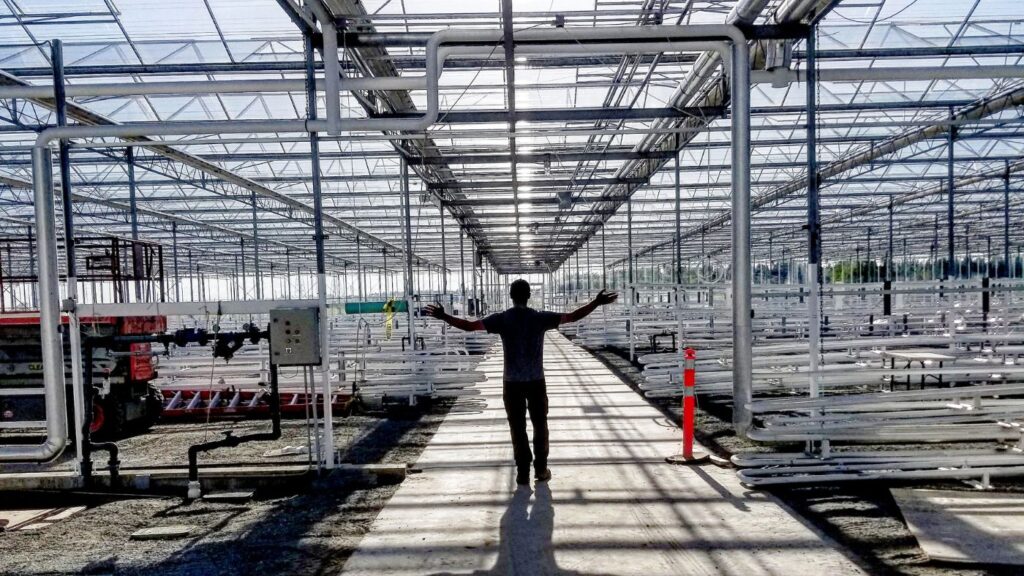 This guide covers the major considerations involved in planning and building a Virginia cannabis facility, with a focus on retail and cultivation operations and additional considerations relevant to processors and microbusinesses. It is written from the build side of the business, because that is where many otherwise-strong applicants stumble: they underestimate utility needs, local approvals, security infrastructure, commissioning, and the time required to convert a site into an inspection-ready operation.
 - Virginia Dual-Use Cannabis Conversion (2027): The $10M Medical-to-Adult-Use Pathway
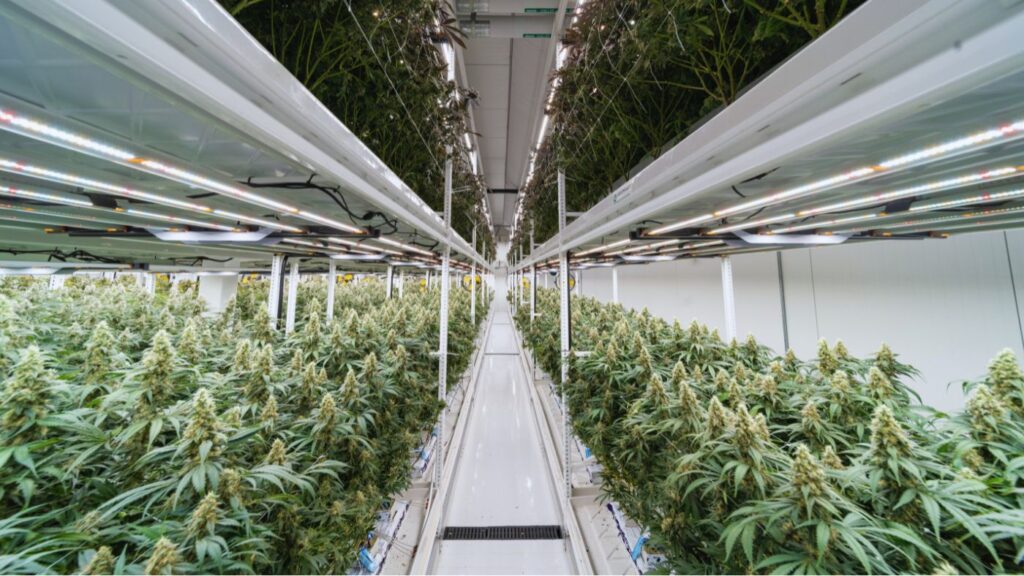 For Virginia’s existing medical cannabis operators, the 2026 retail framework created a distinct and high-stakes transition: pharmaceutical processors may apply for verification to exercise dual-use privileges and serve both registered medical patients and adult-use customers. The pathway covers the processor and its permitted cannabis dispensing facilities, and it carries a one-time $10 million fee, a required medical cannabis program preservation plan, an impact-licensee business accelerator commitment, and a firm May 1, 2027 payment or installment-plan deadline.
 - Virginia Impact Cannabis License (2027): Social Equity & the Equity Business Loan Fund
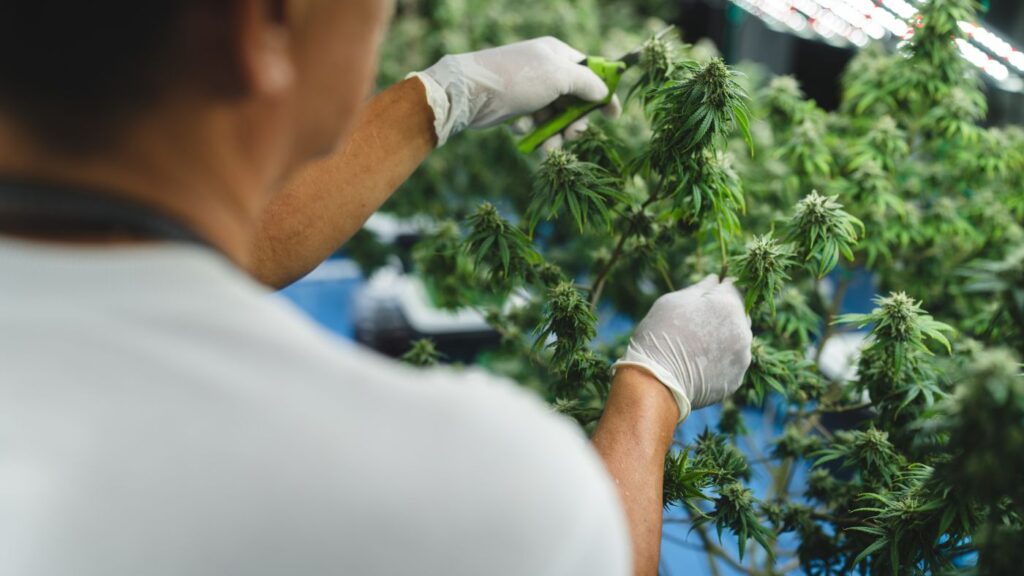 Virginia’s adult-use cannabis framework creates a meaningful pathway for applicants from communities and backgrounds affected by cannabis prohibition and enforcement. The law does not create a separate, stand-alone impact license. Instead, it creates an impact-licensee designation that qualifying applicants may pursue alongside an underlying marijuana establishment license, such as retail, cultivation, processing, microbusiness, transportation, delivery, or testing.
 - Virginia Cannabis Microbusiness License (2027): Eligibility & the Two-Location Model
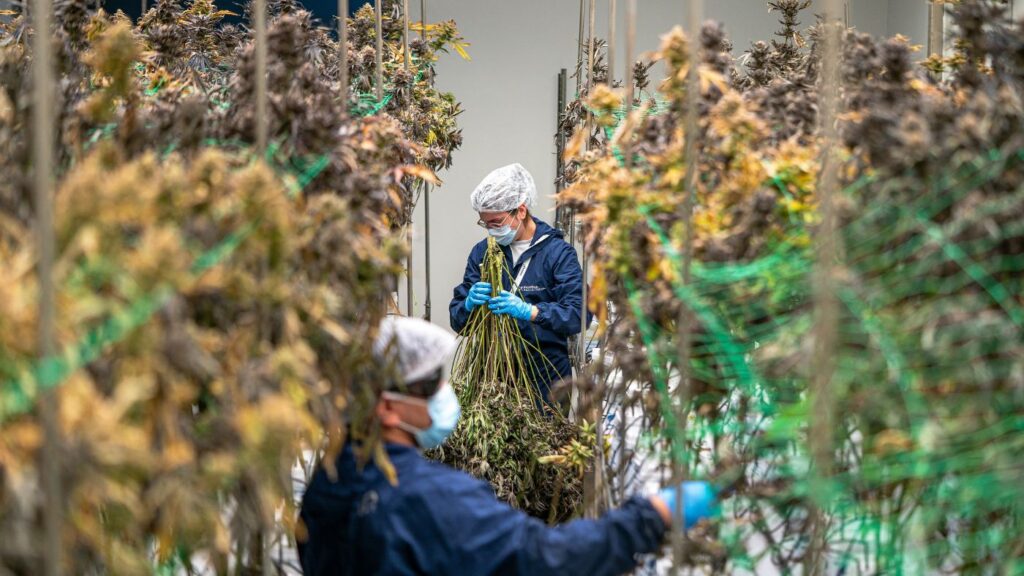 This guide explains the initial eligibility pathways for the licenses the CCA may issue by May 1, 2027, the difference between a microbusiness license and an impact designation, the indoor and outdoor cultivation limits, the precise rules governing two locations, and the financial, security, and operational readiness standards applicants should prepare to demonstrate. Several implementation details – including fees and the specific combination of privileges the CCA will authorize – still depend on forthcoming regulations.
 - Virginia Cannabis Cultivation License (2027): The Tiered System Explained
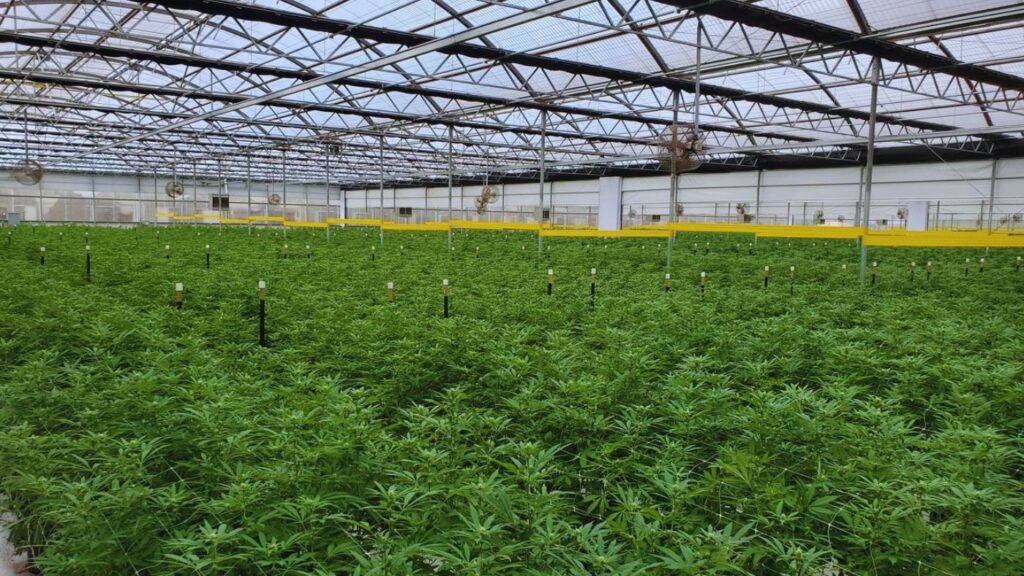 For operators whose strength is growing cannabis, Virginia’s emerging adult-use market presents a significant opportunity – and a cultivation license is the gateway to it. The June 2026 framework authorizes the Virginia Cannabis Control Authority (CCA) to begin accepting license applications on or after February 1, 2027 and issuing licenses on or after May 1, 2027. It also establishes five cultivation tiers with maximum canopies ranging from 5,000 to 35,000 square feet.