Missouri Cannabis Consultants for DCR License Buyers and Capped Growers
Missouri cannabis consulting starts with a closed door: the Division of Cannabis Regulation (DCR) is not accepting new cultivation, manufacturing or dispensary applications. Investors enter by buying a DCR-approved stake; licensed growers compete under a 30,000-square-foot indoor canopy cap. Our records show 58+ licenses secured nationwide.
A Decade of Harvesting Success - Trusted by Cannabis Operators Worldwide
Missouri Rule, Lottery and Local-Vote Dates
Updated: 10/9/2026. Missouri regulates medical marijuana under Article XIV, Section 1 of its constitution, effective December 6, 2018, and adult use under Section 2, effective December 8, 2022. Both run through the Division of Cannabis Regulation inside the Department of Health and Senior Services (DHSS), under the rules in 19 CSR 100-1 (19 CSR 100-1). The latest amendments to the application and microbusiness rules took effect May 30, 2026, and an emergency amendment on criminal-history review for agent ID cards took effect September 30, 2026 (DCR rules page).
Three dates matter now. The DCR will take public comments from November 2 to December 2, 2026 on proposed amendments to its ownership-and-employment and facilities rules (DCR announcement). After the September 9, 2026 lottery, the DHSS expects to issue third-round microbusiness licenses in December. And a local government can put a ban on adult-use dispensaries to voters only at a presidential general election; the next is November 7, 2028 (our date arithmetic from Article XIV, Section 2.5).
Meet Catalyst BC's Founders
-
Leif Olsen
Chief Executive Officer
-
Michael Williamson
Chief Operating Officer
-
Ian Miller
Executive Chair
Our partners bring multi-faceted expertise across business strategy, licensing, facility development, finance, and commercial operations. That breadth is complemented by subject matter experts across the wider Catalyst BC team, allowing us to bring the right combination of experience to each client and project. The result is bespoke, collaborative support shaped around your business, priorities, and goals - with the right expertise brought to the table when it matters most.
What a Missouri Cannabis Consultant Does That the DCR Will Not
The DCR licenses facilities, inspects them, approves ownership changes and checks microbusiness eligibility. It does not value a license, model a buyer’s return or size a dehumidifier. A Missouri cannabis consultant works on the owner’s side of those files: diligence before a purchase, the ownership-change filing, and the facility, testing and odor work the DCR inspects.
Buying Into Missouri Cannabis While New Licenses Stay Closed
With applications closed, the route in for now is an existing license. DCR approval is required before any change that makes an individual a new owner, meaning a holder of 10% or more of a license’s financial or voting interest; that request costs $5,000 and is decided within 90 days of a complete application. A change of 50% or more costs $8,000, is decided within 150 days and may be filed only after the facility is approved to operate (19 CSR 100-1.100(2)). No entity may own more than 10% of the licenses outstanding in a facility type, rounded down (Article XIV, Section 2.4(9) to (11)). A license other than a microbusiness must reach approval to operate within a year of issuance or may be revoked absent a waiver, and one that loses control of its site is suspended or restricted until a new site is approved or access is restored (19 CSR 100-1.100(4)(E) and (F)).
Ballot risk is low: no cannabis measure is on Missouri’s November 3, 2026 ballot (2026 ballot measures).
Federal tax is the bigger variable. The April 2026 federal rule moved marijuana held under a state medical license out of Schedule I, the most restricted federal drug schedule, and says holders of state medical marijuana licenses are no longer subject to Section 280E, the federal rule that bars business deductions (91 FR 22714). Whether that reaches adult-use sales under a comprehensive license is unsettled; in our reading adult-use activity may still face 280E, so ask your tax adviser. Missouri already lets licensees subtract the 280E amount when figuring Missouri adjusted gross income (Article XIV, Section 2.6(8)).
Our work for Missouri investors: diligence on a target’s licenses, owners and inspection record through cannabis business strategy; a Missouri cannabis business plan with fees, taxes and a Section 280E scenario through cannabis financial planning; ownership-change filings, and a Missouri cannabis license application when the DCR next opens a window, through cannabis license application support; and build-out to inspection through cannabis startup support.
Already Licensed by the DCR: Canopy Caps and Rack Rules
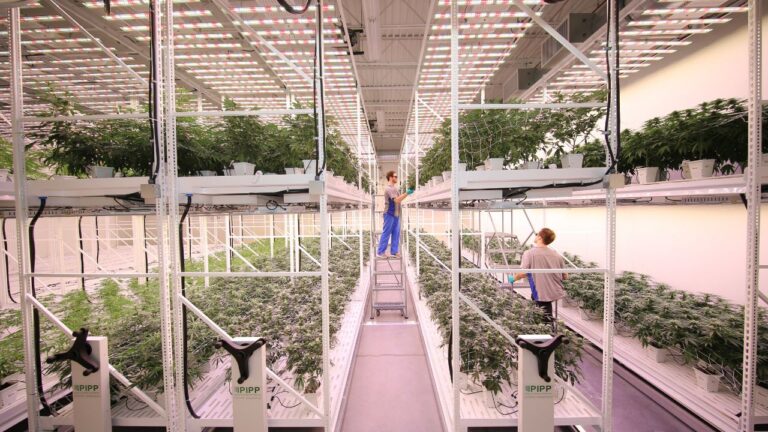
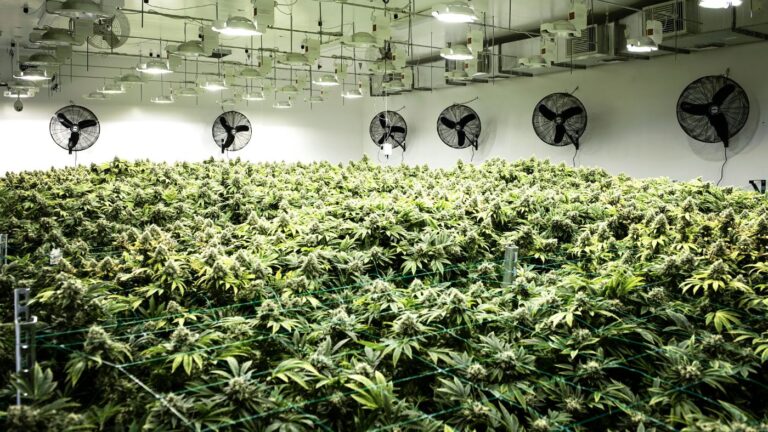
An indoor medical or comprehensive cultivation license is capped at 30,000 square feet of flowering canopy, an outdoor license at 2,800 flowering plants, a greenhouse at either limit as the licensee elects, and a microbusiness wholesale facility at 250 flowering plants (19 CSR 100-1.160(2)(A)). Every level of a vertical rack counts toward canopy (19 CSR 100-1.010(35)), so racking adds density, not allowance. Michael Williamson, our Chief Operating Officer and a co-founder, has 25,000+ hours in cultivation and dispensary operations, including over 3,000 compliant harvests, and co-founded Greenhaus Industries, which patented stackable cultivation trays (company-reported).
For Missouri rooms we offer Missouri cannabis facility design with HVAC and dehumidification sized to the lighting load and an odor plan an engineer can certify, controlled environment agriculture targets that pass testing the first time, cannabis vertical farming where the canopy math still pays, operational optimization of harvest scheduling, labor and Metrc records (the state’s seed-to-sale tracking system) and, when margins slip, a cannabis turnaround diagnostic.
Our Missouri record: our records list Missouri client work in 2019 and 2021 (company-reported).
Our team: Leif Olsen, our Chief Executive Officer and a co-founder, leads our licensing work. Ian Miller, our Executive Chair and a co-founder, holds a master’s degree in building construction.
Where we work: we have no Missouri office; we deliver work on-site and remotely, and the same team runs Catalyst BC’s national cannabis consulting practice.
A word against our own interest: the microbusiness lottery awards no points for a polished application, and the DCR provides the required pre-application training, so in our view an eligible applicant does not need a consultant to enter the draw. To talk through a Missouri file, contact us or call (USA) 303-305-3787.

Investing in Missouri cannabis
- Cannabis Business Strategy ConsultingDiligence on licenses and owners
- Cannabis Financial Planning & ModelingFees, taxes, 280E scenario
- Cannabis Licensing & Application SupportOwnership-change filings
- Cannabis Startup SupportBuild-out to approval to operate
Already licensed in Missouri
- Cannabis Facility Design & HVAC / HVACD EngineeringHVAC, dehumidification, odor
- Cannabis Controlled Environment Agriculture (CEA)Rooms that pass testing
- Cannabis Vertical Farming ConsultingTiers inside the canopy cap
- Cannabis Operational OptimizationHarvests, labor and Metrc
- Cannabis Business Turnaround & Operational RecoveryRecovery when margins slip
Compliant Harvests
Square Feet of Cultivation, Production, and Retail Facilities Designed
Licenses Secured
Can You Get a New Missouri Cannabis License in 2026?
Not a comprehensive one. The DHSS says applications for cultivation, manufacturing, testing and dispensary licenses are closed and that it will post notice when it accepts them again (DCR fee schedule); only seed-to-sale, transportation and warehouse certification applications are open (DCR how-to-apply page). The third microbusiness round took applications from July 13 to 27, 2026, and the lottery was drawn September 9; the DHSS expects to issue those licenses in December (DHSS release, June 22, 2026).
New comprehensive licenses become available only if a category falls below its constitutional minimum or the DHSS decides more are needed, and at least half of any such licenses must go by lottery to owners of a microbusiness that has operated for at least a year (Article XIV, Section 2.4(3)). Our Missouri cannabis licensing hub tracks each window.
Two other proposals are pending. An amendment to 19 CSR 100-1.180 would allow curbside pickup within 50 feet of a dispensary’s public entrance, for orders placed and paid in advance (proposed amendment); a proposed 19 CSR 100-1.200 would create research licenses (DHSS proposed rules).
Review takes time even when nothing goes wrong. The NJ-CRC’s posted averages, dated September 9, 2025, are 4 to 5 weeks for a conditional application and 12 to 26 weeks for an annual or conversion application (NJ-CRC License Application Process).
DCR application status by license type, October 9, 2026
| License or certification | Status | Note |
|---|---|---|
| Comprehensive cultivation, manufacturing, dispensary; testing | Closed | The DHSS will post notice before accepting applications |
| Microbusiness wholesale or dispensary | Third-round lottery drawn September 9, 2026 | The DCR is processing top-drawn applications |
| Transportation certification | Open | No lottery |
| Seed-to-sale certification | Open | For tracking-system vendors |
| Offsite warehouse certification | Open to licensees | Filed after the facility passes its commencement inspection |
| Medical-to-comprehensive conversion | Open to medical licensees; $2,000 fee | The DCR must decide within 60 days or the request is deemed approved |
DCR fee schedule and how-to-apply page; DHSS release, June 22, 2026; 19 CSR 100-1.060(1) and (5). Every source is listed at the bottom of this page.
Missouri microbusiness licenses: eligibility, limits and control
| Rule | Detail |
|---|---|
| Two license types | Wholesale: cultivate up to 250 flowering plants and manufacture, selling to other microbusinesses. Dispensary: buy only from microbusinesses and sell to other microbusinesses, patients, caregivers and adults 21+ |
| Minimum per round | Six per congressional district, at least two dispensary and four wholesale, on the 2018 map of eight districts, over three rounds |
| Who qualifies | Majority owned and operated by individuals who each meet one test: low net worth and income, a service-connected disability, a non-violent marijuana arrest or conviction (theirs or a parent’s, guardian’s or spouse’s, at least a year before December 8, 2022; not for supplying a minor or impaired driving), residence in a high-poverty, high-unemployment or high-incarceration area, or an unaccredited school district |
| Ownership limits | One microbusiness license per entity; its owners may not own any other Missouri license unless they surrender the microbusiness license or drop below 10% |
| Control | Eligible owners must hold more than 50% of voting power and management control; no agreement may remove that control until eligibility is verified and post-award training is done, and the microbusiness must stay majority owned and operated by eligible individuals |
| Award | Random lottery by the Missouri Lottery; 48 hours to accept; the DCR has 60 days after issuance to verify eligibility |
| Fees, July 2026 to June 2027 | $1,637 to apply; the first annual fee of $1,637 is due on the license anniversary |
| Operating deadline | Approval to operate within two years of issuance |
Article XIV, Section 2.4(12) and (13); 19 CSR 100-1.060(6) and 1.190; DCR fee schedule.
Medical vs comprehensive licenses in Missouri
| Point | Medical license | Comprehensive license |
|---|---|---|
| Sells to | Qualifying patients and caregivers | Patients, caregivers and adults 21 and over |
| State tax on retail sales | 4% (Section 1) | 6% on adult-use sales, plus up to 3% local tax where voters approve it |
| Annual fee, cultivation | $32,099.67 | $28,920.33 |
| Ownership changes needing approval | Same-owner entity transfer, 50% or more, location | Also any new owner of 10% or more |
| Moving to comprehensive | $2,000 conversion with two plans: serving both markets, and promoting participation by communities hurt by prohibition | Keeps the medical license’s expiration date |
Article XIV, Section 1.4(1) and Section 2.6(1) and (5); 19 CSR 100-1.060(1) and 1.100(2) and (3); DCR fee schedule.
Investors buying an existing license should jump to buying a license.
DCR License Classes and the 10% Ownership Ceiling
Missouri licenses cultivation, manufacturing and dispensary facilities in medical and comprehensive versions, microbusiness wholesale and dispensary facilities, testing facilities, and transportation, seed-to-sale and warehouse certifications (Article XIV, Section 2.4). The medical and comprehensive dispensary count may not be limited to fewer than 24 per congressional district combined (Section 1.3(17)), and a testing facility may not share common control with any cultivator, manufacturer, microbusiness or dispensary.
Each facility needs its own license, and several licenses may share one location with DCR approval, except a testing facility (19 CSR 100-1.100(1)(A)); the rules add a certification for each offsite warehouse (19 CSR 100-1.060(5)).
Missouri license types side by side: activities and caps
| License | What it allows | Limit |
|---|---|---|
| Cultivation (medical or comprehensive) | Grow, process and package; make prerolls but not infused products | 30,000 sq ft indoor canopy or 2,800 outdoor flowering plants |
| Manufacturing | Make marijuana-infused products | 10% ownership ceiling per entity |
| Dispensary | Sell to patients, and to adults 21+ if comprehensive | Relocation only within its congressional district |
| Microbusiness wholesale | Cultivate and manufacture for microbusinesses | 250 flowering plants |
| Microbusiness dispensary | Sell products bought from microbusinesses | One microbusiness license per entity |
| Testing facility | Test for licensees | No common control with a cultivator, manufacturer, microbusiness or dispensary; may not share space |
19 CSR 100-1.100(1)(D), 1.160, 1.190; Article XIV, Section 2.4(6) and (9) to (12).
Missouri cannabis milestones, 2018 to 2026
| Date | Event |
|---|---|
| December 6, 2018 | Article XIV, Section 1 (medical) takes effect |
| December 8, 2022 | Article XIV, Section 2 (adult use) takes effect |
| October 2, 2023 | First-round microbusiness licenses issued |
| July 24, 2024 | Second-round microbusiness licenses issued |
| May 30, 2026 | Amended application and microbusiness rules take effect |
| September 9, 2026 | Third-round microbusiness lottery drawn |
DHSS 2024 annual report; DCR data and reports page; 19 CSR 100-1.060 and 1.190; DCR lottery results page.
A facility license is valid for three years. The renewal request and fee are due at least 30 but no more than 90 days before expiration, and the DCR grants renewal, except for good cause, unless the license is suspended or revoked (19 CSR 100-1.060(7)). The annual fee is still due in a renewal year, and the online registry sends renewal notices 90, 60 and 30 days before expiration (DCR renewal page).
DCR Fees: $28,920 a Year for a Comprehensive Cultivation License
The DCR adjusts most of its fees each year by the Consumer Price Index (fee schedule). From July 1, 2026 to June 30, 2027, a comprehensive cultivation license costs $28,920.33 a year and $5,139.00 to renew; a comprehensive dispensary or manufacturing license costs $11,568.13 a year and $3,083.40 to renew. Medical licenses cost more: $32,099.67 a year for cultivation.
The first annual fee is due 30 days after a license is issued; a microbusiness pays its first annual fee on the anniversary of licensure. Application fees are nonrefundable, except that a microbusiness applicant not chosen by lottery may request a refund from 31 days to six months after the denial (19 CSR 100-1.060(2)(C)).
What each DCR license costs to hold, July 2026 to June 2027
| License | Annual fee | Renewal fee (every three years) |
|---|---|---|
| Comprehensive cultivation | $28,920.33 | $5,139.00 |
| Medical cultivation | $32,099.67 | $6,419.93 |
| Comprehensive dispensary or manufacturing | $11,568.13 | $3,083.40 |
| Medical dispensary or manufacturing | $12,839.87 | $3,851.96 |
| Microbusiness dispensary or wholesale | $1,637.00 | $1,637.00 |
| Testing, transportation or warehouse certification | $2,892.03 | $2,892.03 |
DCR fee schedule, July 1, 2026 to June 30, 2027. Fees marked with an asterisk there change each year with the Consumer Price Index.


Ownership change and location fees
| Change | Comprehensive or medical | Microbusiness |
|---|---|---|
| Transfer to a new entity with the same owners | $2,000 | $1,000 |
| New owner of 10% or more (not medical) | $5,000 | $2,500 |
| Ownership change of 50% or more | $8,000 | $4,000 |
| Facility location change | $5,000 | $2,500 |
| Waiver or variance request | $100 | $100 |
19 CSR 100-1.100(2) and (3); DCR fee schedule.
Missouri market data, 2024 and 2025
| Measure | DHSS figure |
|---|---|
| Adult-use retail sales | $1.26 billion |
| Medical retail sales | $182 million |
| Business change applications received | 172, of which 99 were ownership changes |
| Second-round microbusiness applications denied by lottery | 2,026, against 57 licenses issued |
| Microbusiness licenses revoked after eligibility review | 25 effective April 14, 2025 (24 for ownership and operation, 1 for a felony) |
DHSS, 2024 Missouri Medical and Adult-Use Cannabis Annual Report (program year December 1, 2023 to November 30, 2024); Chief Equity Officer Activity Report 2025. Ownership-change filings show stakes changing hands.
Budget accordingly: at today’s rates a comprehensive cultivation licensee pays $91,899.99 in annual and renewal fees over a three-year term, three annual fees of $28,920.33 plus one $5,139.00 renewal, not counting an $8,000 fee for any later ownership change of 50% or more (our arithmetic from the DCR fee schedule). Article XIV sets the cultivation annual fee at $25,000 and indexes it to the Consumer Price Index, which is why the current figure is higher.
How a Missouri License Changes Hands
No facility may sell or transfer its license without the department’s express consent, which may not be unreasonably withheld (Article XIV, Section 2.9(10)). The rules give four approval routes for a comprehensive license: a transfer to a new entity with the same owners, decided within 60 days; a change that makes an individual a new owner, within 90 days; a change of 50% or more from the last approved ownership, within 150 days; and a location change, within 90 days (19 CSR 100-1.100(2)). A medical licensee needs approval only for the same-owner transfer, a 50% change and a location change.
A full asset transfer must include the purchase agreement, any merger or sale agreement, every brand, management or consultant agreement, and the lease or deed. The DCR expects requested documents within seven calendar days unless it grants more time, and an incomplete file is denied and must be refiled with a new fee (DCR business change page).
How to open a dispensary in Missouri by buying an operating license: five steps
These steps follow 19 CSR 100-1.030 and 1.100 and Article XIV, Section 2.5 for a buyer of an existing comprehensive dispensary license.
- Choose the target: a purchase of 50% or more can be filed only once the license has Approval to Operate.
- If you will move the store, secure a site at least 1,000 feet from any then-existing school, day-care center or church unless the local government allows closer, inside the license’s congressional district, where adult-use dispensaries are not banned.
- File the business change application for the ownership change, and any location change, with the ownership reporting tool and fingerprints within two weeks.
- For a new location, build out after approval and request the commencement inspection once you are within 30 days of being ready to operate, with labeled blueprints and the DCR self-inspection checklist.
- Open the new location only after the DCR emails its Approval to Operate letter.
In our view, Missouri purchases stall on the deal documents more than on the facility.
Who Counts as an Owner in Missouri, and Who Qualifies for a Microbusiness
An owner holds a financial or voting interest of 10% or more in a license, while an ownership interest is any amount (19 CSR 100-1.010(74) and (75)). No owner may have a disqualifying felony offense, owners must report a felony charge within 30 days, and no licensee may be owned by or affiliated with an entity holding a state contract related to the DHSS marijuana program (19 CSR 100-1.070(1)).
In our view, microbusiness control is where investors most often misjudge a Missouri deal. The eligible owners must hold more than 50% of voting power and of the power to direct management and sign agreements, and that control may not be undercut by a board or by disproportionate or exploitative termination fees (19 CSR 100-1.190(1)(F)). A microbusiness application must include every agreement affecting ownership or control that exists when it is filed, including management, consulting and loan agreements (19 CSR 100-1.060(4)(E)), and a microbusiness owner who wants a stake in another license must bring the microbusiness stake below 10% by the time the DCR approves the change. Our guide to predatory microbusiness deals walks through the clauses.
A microbusiness licensee may apply for other medical or comprehensive licenses and, if granted one, must move to it on a timetable the DCR sets and surrender the microbusiness license. Once verified, an individual’s eligibility is permanent and can pass to a spouse, descendants or other approved relatives through estate planning, unless it rested on false or misleading information or the owner breaks other owner-status rules (19 CSR 100-1.190(1)(C) and (D)).
Correction to published guidance (October 9, 2026): a consulting firm’s Missouri page, last modified July 16, 2026, lists the microbusiness application and annual fees as $1,500, says fingerprints are due within two weeks of applying, and says the cultivation license is not available for the adult-use market. The DCR’s fee schedule sets $1,637 for July 2026 to June 2027, a July 13, 2026 variance moved microbusiness fingerprints to after the lottery, and comprehensive cultivation licenses supply the adult-use market.
Missouri Site Selection: 1,000 Feet, District Lines and Local Ban Votes
Unless the local government allows it, no new facility may be sited within 1,000 feet of a then-existing elementary or secondary school, child day-care center or church, measured along the shortest lawful walking path from the facility’s wall or entrance to the school’s, day-care center’s or church’s property line or entrance (Article XIV, Section 2.5(4)). The test applies when the license, certification or local zoning application is filed, whichever is earlier, and again on relocation, and a dispensary or microbusiness may relocate only within its congressional district (19 CSR 100-1.100(1)(C) and (D)). Applications must attach the local zoning rules, with the applicable sections highlighted (19 CSR 100-1.060(3)(H)).
A local government may ban adult-use dispensaries, comprehensive and microbusiness, only by a vote held at a presidential general election, and the ban needs 60% of the votes; a majority vote or an ordinance can repeal it (Section 2.5(1) and (2)). Local governments may set time, place and manner rules but may not make operation unduly burdensome, and a medical dispensary in a banning jurisdiction may apply for a comprehensive license at a new site in the same congressional district (Section 2.4(19)).
DCR Testing Holds, Odor Plans and the 6% Adult-Use Tax
Every harvest or process lot is tested (19 CSR 100-1.110(7)(A)). Product that fails goes on administrative hold in the state tracking system, and within 15 days the licensee must tell the DCR whether it will reanalyze, remediate by an approved method, destroy the lot or request another method, and it must finish within three months (19 CSR 100-1.110(10) and (11)). Product that fails for heavy metals may not be remediated; a lot that fails reanalysis may be remediated once, and one that fails remediation may be reanalyzed once. The laboratory reports results in the state tracking system within 24 hours of finishing its analysis (19 CSR 100-1.110(7)(B)).
Before operating, a cultivator must have its odor control plan certified by a professional engineer or certified industrial hygienist (19 CSR 100-1.160(2)(B)), and every licensee must pass a commencement inspection before starting operations, using new space or changing how a space is used (DCR commencement inspections page). Every product design, package design and label needs DCR approval before use (DCR data and reports page), and every employee, contractor and volunteer needs a $75 agent ID card before starting work, apart from short maintenance visits (19 CSR 100-1.070(2)). A Missouri cannabis compliance consulting review checks the odor certification, the testing record, Metrc and the blueprints before an inspector does.
Adult-use retail sales carry a 6% state tax, medical sales a 4% tax instead, and a local government may add up to 3% on adult-use sales if its voters approve, all on top of general state and local sales taxes (Article XIV, Section 2.6; Section 1.4).
What the Canopy and Sales Rules Mean for a Missouri Grower
Microbusiness wholesalers may transfer products only to other microbusinesses and to testing and transportation facilities (19 CSR 100-1.190(3)(B)), so they sell into the microbusiness network, not to comprehensive dispensaries. With canopy capped and every rack level counted, in our view a Missouri grower gains most from yield per square foot, first-time test passes and buyers lined up before a room is planted, not from more space.
Two Missouri Engagements We Offer: License-Deal Diligence and a Canopy-Cap Yield Audit
Investors get a license review before they sign: the target’s license types against the 10% ceiling, every owner and agreement the DCR will read, renewal and inspection history, local ballot risk, and a Missouri cannabis business plan with fee and Section 280E scenarios for your tax adviser. Licensees get a canopy-cap yield audit: grams per square foot by room, rack levels against the 30,000-square-foot cap, HVAC and odor loads, failed-test history and a compliance check of your Metrc records. Microbusiness owners get a control review of every proposed investor, management or loan agreement against the DCR’s control test before they sign. Send your license numbers and your deal or production figures, and we will tell you plainly if another firm suits you better.
Missouri Licensing Questions From Buyers and DCR Licensees
Are any new Missouri cannabis licenses available in 2026?
No new comprehensive cultivation, manufacturing or dispensary licenses, and no testing certifications; the DHSS says those applications are closed. Transportation, seed-to-sale and warehouse certifications are open, and the third microbusiness lottery was drawn on September 9, 2026.
Can I buy an existing Missouri dispensary or cultivation license?
Yes, with DCR approval. A change that makes an individual a new owner of 10% or more costs $5,000 and is decided within 90 days of a complete application, and a change of 50% or more costs $8,000, is decided within 150 days and may be filed only after the facility is approved to operate.
How many Missouri cannabis licenses can one company own?
No entity may own more than 10% of the licenses outstanding in a facility type, cultivation, manufacturing or dispensary, rounded down. A microbusiness owner may not own another Missouri license unless the owner drops below 10%, or the microbusiness wins one and surrenders its microbusiness license.
What does a Missouri cultivation license cost each year?
From July 1, 2026 to June 30, 2027, $28,920.33 a year for a comprehensive license and $32,099.67 for a medical one, plus a renewal fee every three years.
Can an investor fund a Missouri microbusiness?
Yes, but not control it. Eligible owners must hold more than 50% of voting power and management control, the application must disclose every loan, management and consulting agreement in place when it is filed, and no agreement may remove their control before eligibility is verified and post-award training is done; after that they must keep majority ownership and control.
How big can a Missouri grow be?
An indoor medical or comprehensive license allows 30,000 square feet of flowering canopy, counting every rack level, an outdoor license 2,800 flowering plants, a greenhouse either limit, and a microbusiness wholesale facility 250 flowering plants. Several licenses in one facility multiply the limit.
What happens when a Missouri batch fails testing?
It goes on administrative hold. Within 15 days you must tell the DCR whether you will reanalyze, remediate, destroy it or request another method, and finish within three months. Heavy-metal failures cannot be remediated.
Can a Missouri city ban dispensaries?
Only adult-use dispensaries, only by a vote at a presidential general election, and only with 60% of the votes. The next such election is November 7, 2028. Medical dispensaries cannot be banned this way.
Cultivation and Facility Projects We Draw On for Missouri
These projects show the cultivation, extraction and facility work we offer Missouri licensees; each tile opens its full write-up, and all of them are on our projects page.

Hexo Corp.
Gatineau, Quebec, Canada

Bostica
Lynn, MA, United States

Leafline Labs
Cottage Grove, MN, United States

View All Projects
View all Catalyst BC Projects
Further Reading on Missouri Microbusinesses and Costs

How Much Does It Cost to Open a Dispensary in 2026?
The allure of jumping into the legalized cannabis industry often paints a picture of quick riches and burgeoning demand, yet the reality of establishing a

Drawn in the Missouri Microbusiness Lottery – Now What? The 2026 Post-Draw Roadmap
Being drawn in the lottery feels like the finish line. In reality, it is the starting gun. The September 9, 2026 drawing will establish the

How to Avoid Predatory Ownership Deals in a Missouri Microbusiness (2026 Guide)
The Missouri Division of Cannabis Regulation has revoked a significant share of the microbusiness licenses issued during the first two rounds, with most revocations involving
Missouri Sources: Article XIV, 19 CSR 100-1 and DCR Records
Provenance. Figures checked against the constitution, regulation and agency text by Catalyst BC on October 8 and 9, 2026. Article XIV was read on the Missouri Revisor of Statutes site; 19 CSR 100-1 was read in the Secretary of State’s Code of State Regulations PDF (April 30, 2026 update), by text extraction. DCR pages, the June 22, 2026 DHSS release, the 2024 annual report and the Chief Equity Officer’s 2025 activity report were read on the DHSS site. Market data come from those two DHSS reports; budget figures and the 2028 election date are our own arithmetic. Company figures come from Catalyst BC’s own records. Where this page and the official text differ, the official text governs.
Missouri Constitution and rules
- Missouri Constitution, Article XIV, Section 2, marijuana legalization, regulation and taxation
- Missouri Constitution, Article XIV, Section 1, right to access medical marijuana
- 19 CSR 100-1, Division of Cannabis Regulation rules (Code of State Regulations)
Division of Cannabis Regulation records
- DCR home page and announcements
- DCR cannabis rules and law page
- DCR fee schedule, July 1, 2026 to June 30, 2027
- DCR how to apply, facility information
- DCR how to apply, microbusiness
- DCR guidance for microbusiness applicants
- DCR microbusiness eligibility information
- DCR microbusiness lottery results, September 9, 2026
- DCR microbusiness fingerprint submission timeframe variance, July 13, 2026
- DCR business change applications page
- DCR facility conversion to comprehensive license requests
- DCR facility licensee renewal page
- DCR commencement inspections page
- DCR failed mandatory testing forms page
- DCR data and reports page
- DHSS proposed rules page
- DHSS release, third-round microbusiness application timeline, June 22, 2026
- DHSS, 2024 Missouri Medical and Adult-Use Cannabis Annual Report
- DHSS, Chief Equity Officer Activity Report 2025
- DHSS, proposed amendment to 19 CSR 100-1.180 (curbside pickup)
Ballot and federal law
Contact Us
Enough about us. We want to hear more about you, your project, and your vision! Get in touch with a real live person today. Don’t worry, we don’t have a long, confusing phone menu, and your email isn’t going to the abyss, we promise. At Catalyst, we provide the service and support we’d want to experience ourselves!