
Estimated reading time: 6 minutes
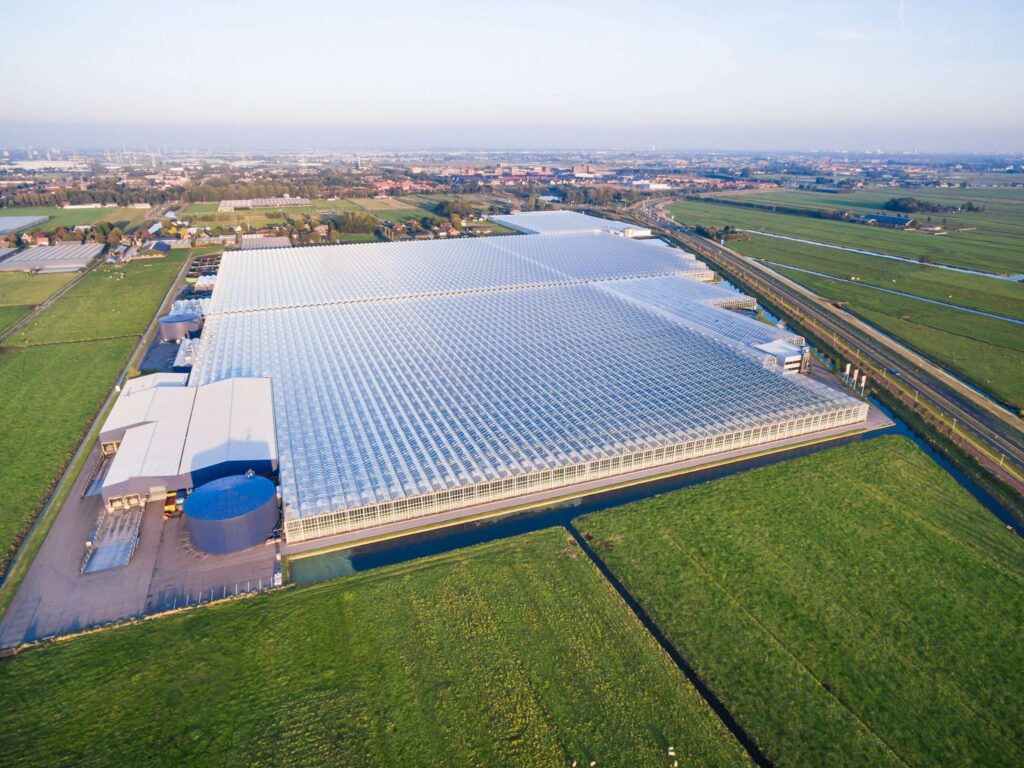
The increasing supply of legal marijuana is turning into a major buzz kill for growers as prices plunge — and an opportunity for companies that can help cut production costs. Greenhouse cannabis production is helping growers cut costs.
Prices are tumbling as formerly illicit cultivators emerge from the shadows to invest millions of dollars in massive pot factories. In Colorado, the average price sought by wholesalers has fallen 48 percent to about $1,300 a pound since legal sales to all adults started in January 2014, according to Cannabase, operator of the state’s largest market. Supply is surging as growers expand and install the latest agricultural technology.
“Anybody that is investing in this sector or starting a business in this sector needs to be doing so with the understanding that the price of cannabis is going to drop precipitously,” said Troy Dayton, chief executive officer of Oakland, California-based Arcview Group, a marijuana investor consortium.
“The agricultural technology space is already booming, and now they get to lay their hands on the cannabis industry.”
The focus on efficiency can cut production costs for some indoor growers to less than $300 a pound from more than $1,000, said J. Chandler, vice president at Urban-Gro in Lafayette, Colorado. His company sells machinery originally developed for tomato greenhouses, such as automated feeding and watering systems from Israel’s Netafim Ltd. and France’s Dosatron International.
“If you want to compete on a price game, you have to use versions of our technology to do it,” Chandler said. “Everybody is putting in irrigation systems, so that’s good for us.”
Cultivation Technologies also sells high-efficiency lights from Canada’s PL Light Systems, which compete with Gavita, a Dutch company purchased this year by Scotts Miracle-Gro Co. Scotts has been on a buying frenzy over the past two years, gobbling up leading companies that provide specialty fertilizers, lighting and other supplies for hydroponics, the indoor method of growing crops favored by U.S. cannabis cultivators.
Retail prices also are dropping, though not as fast as in the wholesale market. Marijuana shops in Colorado collected an average $6.61 per gram in November, down 25 percent from the first quarter of 2014, according to BDS Analytics, a research firm.
The regulated market in North America could triple to more than $20 billion in five years, from $6.7 billion last year, after California, Maine, Massachusetts and Nevada legalized adult recreational pot use in November, according to Arcview.
One caveat surrounding the booming cannabis industry is President-elect Donald Trump’s choice for attorney general, Sen. Jeff Sessions of Alabama, an ardent marijuana foe. But it remains to be seen if Trump or the Republican-controlled Congress will attempt to challenge the states that have legalized the drug.
While more than half of U.S. states permit medical use, transporting cannabis across state lines remains a federal crime, making each state a market unto itself. That means growers in cloudy coastal Oregon or frigid Maine must use technology to create the warm, sunny conditions favored by pot plants, and they need to do it as efficiently as possible.
Seeking Sunlight
Decades of prohibition necessitated growing marijuana in clandestine basements, warehouses and garages, making growers comfortable with indoor production, said Leif Olsen, managing partner at Denver-based Good to Great Consulting. But with legalization comes an increasing need to compete on cost, and that will eventually shift the industry to efficient greenhouse production, he said.
“Growing inside is definitely an antiquated concept,” Olsen said. “It’s coming out of hiding.”
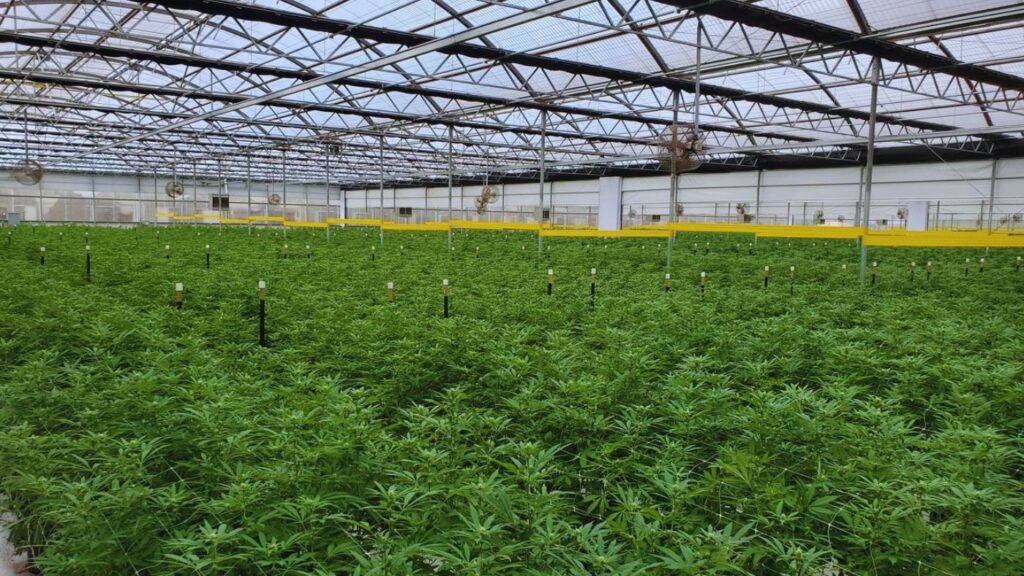
A hybrid greenhouse featuring insulated walls and a glass ceiling may consume less than half the energy of a warehouse, said Brandy Keen, vice president at Boulder-based Surna Inc. And a well designed climate-control system can cut energy needs while also providing pure water for plants with reclaimed condensate, she said.
The drive toward efficiency isn’t cheap. Brian Lade, owner of Smokey Point Productions in Arlington, Washington, started growing marijuana in a garage at age 17. He endured police raids and a few days in jail before the laws changed. Now he’s raised $25 million to expand his 15,000-square-foot warehouse operation to 135,000 square feet (12,500 square meters).
That’s enough space to pump out 1,700 pounds of buds monthly from dozens of custom-bred strains such as Dirty Girl and Cinderella’s Dream, up from 100 pounds (45 kilograms). He also can process 2,200 pounds of purchased marijuana into cannabis oil and other concentrates for vaping.
While Lade increased production by 16 times, his employee count is up only four-fold, to 100, thanks to economies of scale and automation, he said. A machine mixes soil ingredients, pours the dirt into containers and then digs holes for young plants. A conveyor belt carries the container to an employee who does the delicate job of planting. Rather than relying on people to trim away leaves and stems from harvested pot, he’s trying out machines that automate the job.
“If you want to provide cannabis to your people, you’ve got to adapt or die,” said Lade, 40. “We are basically just going way bigger and then adding efficiencies like the machines and computer software.”
Energy-efficient Gavita lighting is installed in his old and new facilities. Computerized plumbing delivers custom-mixed nutrients to the plants. A climate-control system supplied by Surna not only maintains ideal pot-growing temperatures and humidity levels, but also helps eliminate mold problems, Lade said.
A hospital-clean environment with employees wearing uniforms washed on premises cuts down on plant pests.
“The cleaner you can be, the less chemicals you have to use,” Lade said.
Yet Lade knows he can do more to cut costs, specifically by building a hybrid greenhouse to capture light from the sun. That’s not a good option in perpetually overcast Washington, so he’s exploring the possibility of setting up shop in sunny Nevada or California, states where recreational use was approved in November.
Leif is now the Chief Marketing Officer of Catalyst BC and spends the majority of his time helping clients secure licenses in newly legal states and turn those opportunities into profitable cultivation operations, extraction facilities and dispensaries. His areas of expertise include licensing & compliance, large-scale facility management and retail operations. Follow Leif at LinkedIn.
Originally published in The Cannabist January 17, 2017
Related Articles
Consulting Services For Cannabis, Hemp, Psilocybin, and Natural Medicine
- Consulting Services Overview
- Business Strategy
- Financial Planning
- Cannabis, Hemp, Psilocybin, & Natural Medicine Licensing and Applications
- Facility Design
- StartUp Support
- Genetic Development
- Business Turnaround
- Operational Optimization
- Vertical Farming
- Controlled Environmental Agriculture (CEA)
- State and Country Services Directory
- Blog
- Home
Testimonials and Public Relations
Latest Articles
- How Much Does It Cost to Open a Dispensary in 2026?
 The allure of jumping into the legalized cannabis industry often paints a picture of quick riches and burgeoning demand, yet the reality of establishing a licensed cannabis dispensary is far more nuanced, capital-intensive, and fraught with unique financial challenges. For aspiring entrepreneurs and seasoned investors alike, understanding the true dispensary startup costs is the absolute bedrock of success.
 - Virginia Cannabis Facility Design & Build-Out for the 2027 Market
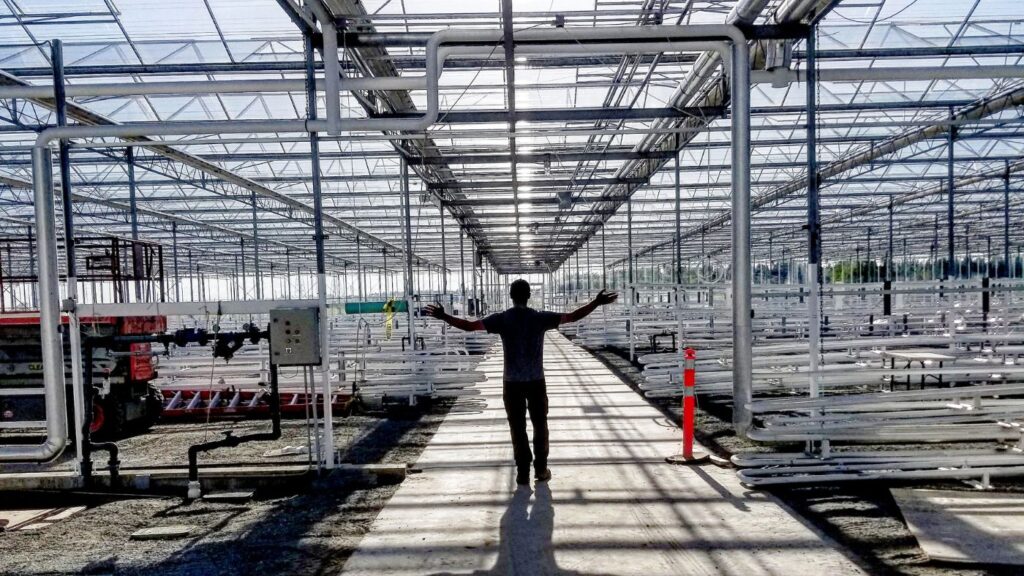 This guide covers the major considerations involved in planning and building a Virginia cannabis facility, with a focus on retail and cultivation operations and additional considerations relevant to processors and microbusinesses. It is written from the build side of the business, because that is where many otherwise-strong applicants stumble: they underestimate utility needs, local approvals, security infrastructure, commissioning, and the time required to convert a site into an inspection-ready operation.
 - Virginia Dual-Use Cannabis Conversion (2027): The $10M Medical-to-Adult-Use Pathway
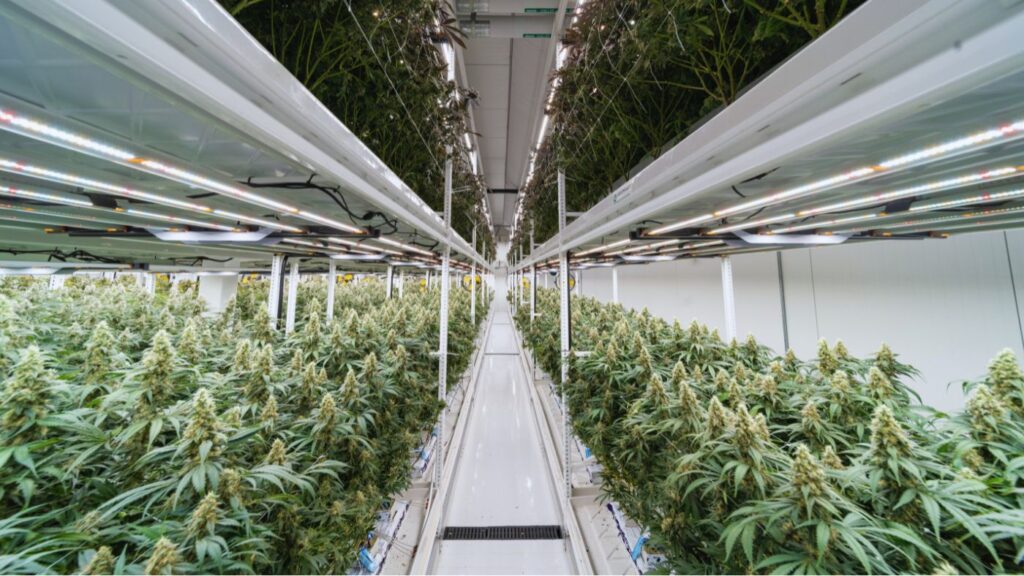 For Virginia’s existing medical cannabis operators, the 2026 retail framework created a distinct and high-stakes transition: pharmaceutical processors may apply for verification to exercise dual-use privileges and serve both registered medical patients and adult-use customers. The pathway covers the processor and its permitted cannabis dispensing facilities, and it carries a one-time $10 million fee, a required medical cannabis program preservation plan, an impact-licensee business accelerator commitment, and a firm May 1, 2027 payment or installment-plan deadline.
 - Virginia Impact Cannabis License (2027): Social Equity & the Equity Business Loan Fund
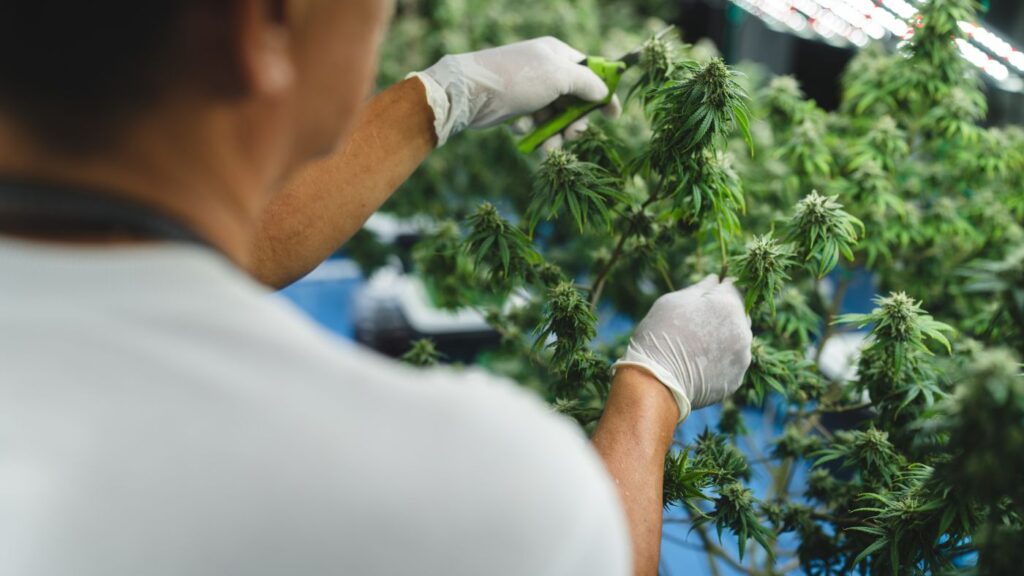 Virginia’s adult-use cannabis framework creates a meaningful pathway for applicants from communities and backgrounds affected by cannabis prohibition and enforcement. The law does not create a separate, stand-alone impact license. Instead, it creates an impact-licensee designation that qualifying applicants may pursue alongside an underlying marijuana establishment license, such as retail, cultivation, processing, microbusiness, transportation, delivery, or testing.
 - Virginia Cannabis Microbusiness License (2027): Eligibility & the Two-Location Model
 This guide explains the initial eligibility pathways for the licenses the CCA may issue by May 1, 2027, the difference between a microbusiness license and an impact designation, the indoor and outdoor cultivation limits, the precise rules governing two locations, and the financial, security, and operational readiness standards applicants should prepare to demonstrate. Several implementation details – including fees and the specific combination of privileges the CCA will authorize – still depend on forthcoming regulations.
 - Virginia Cannabis Cultivation License (2027): The Tiered System Explained
 For operators whose strength is growing cannabis, Virginia’s emerging adult-use market presents a significant opportunity – and a cultivation license is the gateway to it. The June 2026 framework authorizes the Virginia Cannabis Control Authority (CCA) to begin accepting license applications on or after February 1, 2027 and issuing licenses on or after May 1, 2027. It also establishes five cultivation tiers with maximum canopies ranging from 5,000 to 35,000 square feet.
Explore Our Articles
cannabis applications Cannabis Bar Cannabis Business Optimization cannabis careers Cannabis Compliance Cannabis Consumption Cannabis Consumption Bar Cannabis Inventory Management Systems Cannabis Investors cannabis jobs Cannabis Legalization cannabis licensing Cannabis Lounge cannabis marketing Cannabis Operational Procedures cannabis outreach Cannabis Regulations Cannabis Security Cannabis Software Cannabis Startup Cannabis Supply Chain Cannabis Technology Colorado controlled environment agriculture Cultivation cultivation facility Dispensary Design facility design Financial Planning HVAC HVACD Iowa Kansas Legal Update Legislation Medical Cannabis Minnesota Natural Medicine Nebraska New York Odor Control Oregon Psilocybin Psychedelics Recreational Cannabis
Free Ebook – Start Your Own Legal Cannabis Business