
Estimated reading time: 14 minutes
Table of contents
- Overview
- Why Facility Planning Can’t Wait for a License
- Designing a Compliant Dispensary
- Designing a Cultivation Facility
- Compliance Infrastructure Both Facility Types Need
- The Build-Out Roadmap
- Work With Catalyst BC on Your Virginia Cannabis Facility
- Success Stories: See How Catalyst BC Has Helped Cannabis Businesses Enter and Lead the Market
- Virginia Cannabis Facility Design FAQs
- Additional Resources
- Free eBooks For Cannabis Business Success
- Latest Articles
Editor’s Notes: This article is part of our Virginia 2027 Licensing Hub. Last Updated: 8/27/2026. Other topics covered in this series are:
- Virginia Cannabis License 2027 Application Guide
- How to Open a Dispensary in Virginia
- Virginia Cannabis Microbusiness License Guide
- Virginia Cannabis Cultivation License Guide
- Virginia Impact Cannabis License Guide
- Virginia Cannabis Facility Design and Build-Out
- Virginia Dual-Use Cannabis Conversion Guide
Overview
Most of the conversation around Virginia’s new cannabis market focuses on licenses. Who can apply, when, and for what. But a license does not replace the need for compliant, functional premises, and the businesses that open rapidly and efficiently and operate profitably will be the ones that treat facility planning as seriously as the application itself. Virginia’s adult-use framework, enacted through HB 30 in June 2026, took effect July 1, 2026. General retail sales are authorized to begin July 1, 2027, and the Cannabis Control Authority (CCA) may begin accepting applications on or after February 1, 2027, through licensing periods it announces. Having designed, commissioned, and operated cannabis facilities across multiple markets (US and International), our team can tell you that the facility is where compliance, cost, workflow, and long-term performance are won or lost. The right work to begin now is site screening, programming, budgeting, and technical due diligence. Not irreversible construction based on rules that have not yet been finalized.
This guide covers the major considerations for planning and building a Virginia cannabis facility, with a focus on retail and cultivation operations, as well as additional considerations relevant to processors and microbusinesses. It is written from a build/development perspective, because that is where many otherwise strong applicants stumble: they underestimate utility needs, local approvals, security infrastructure, specialized equipment, commissioning, and the time required to convert a site into an inspection-ready, efficient operation.
Why Facility Planning Can’t Wait for a License
The timing is more flexible and more complicated than a simple five-month race from application to market launch. The CCA may begin accepting applications on or after February 1, 2027, but it must announce licensing periods for the relevant license types. Applicants selected through a lottery receive preliminary license approval and generally have 18 months to provide the final site and required facility information, with a possible one-time extension of up to 6 months for good-faith progress. July 1, 2027, is the statewide retail market launch date, not a universal opening deadline for every new licensee.

Expert Insight – Start planning early without locking in bad assumptions. Facility programming, utility analysis, site screening, preliminary layouts, budgets, and local conversations can begin before the CCA publishes every technical rule. Virginia does not require an applicant to secure premises until the final stage of license approval, so use contingencies and preserve flexibility. The goal is to be ready to execute after preliminary approval. Not to commit to an expensive site or construction scope that later proves incompatible with the rules or license awarded.
Leif Olsen – Catalyst BC Chief Executive Officer
Designing a Compliant Dispensary
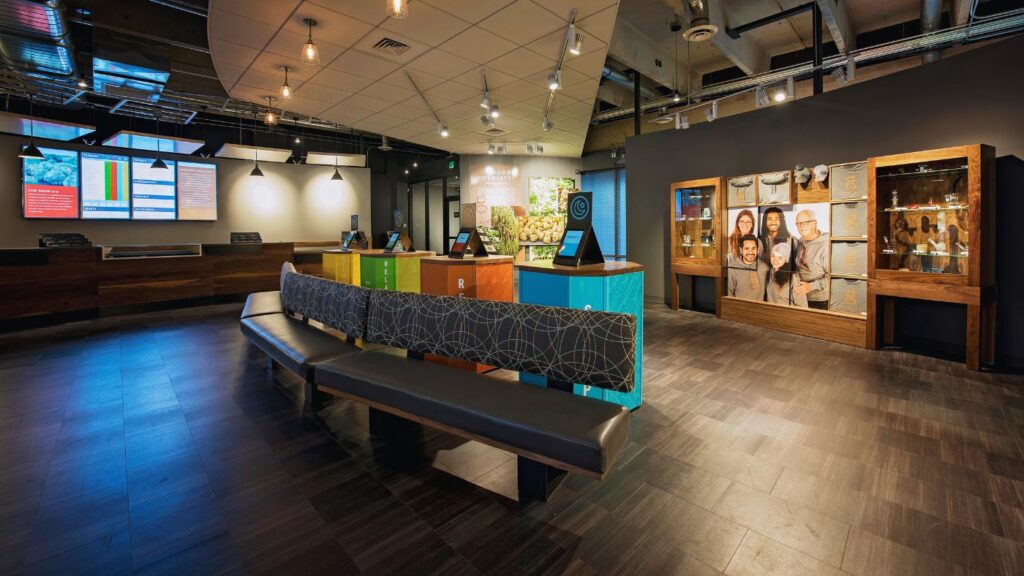
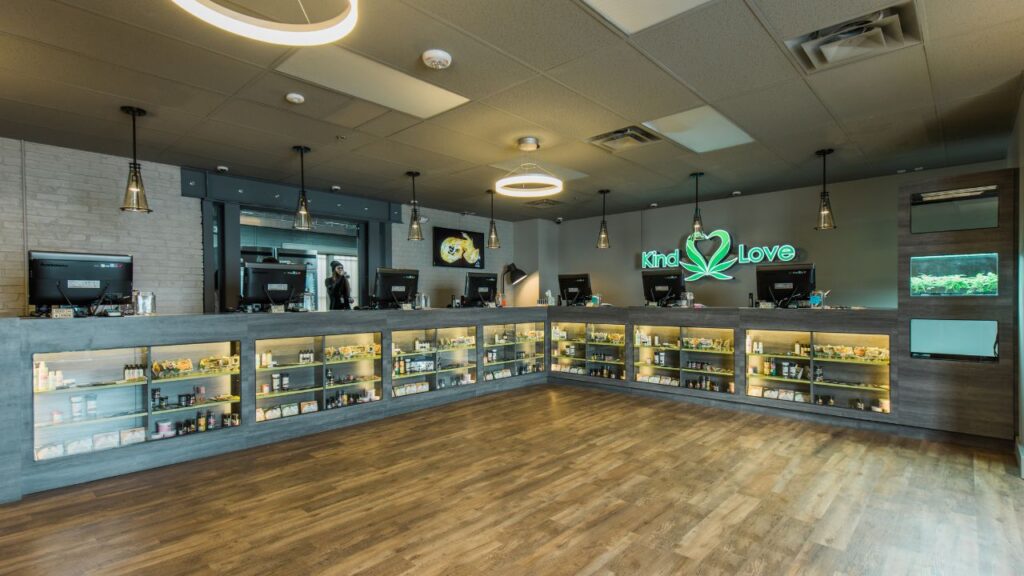
A cannabis dispensary is a specialized retail environment governed by security, tracking, sanitation, recordkeeping, and consumer protection requirements that ordinary retail does not face. HB 30 establishes the framework, but the CCA still must finalize many of the technical standards. A sound design should therefore satisfy the confirmed requirements while preserving enough infrastructure and flexibility to incorporate the final regulations.
| Design element | Consideration |
| Location compliance | A retail store or retailing microbusiness may be refused if it is within 1,000 feet of a hospital; a public, private, or parochial school or institution of higher education; or a child day program. Confirm the CCA’s measurement rules and all local zoning and land use requirements. Note: There is a 2,500 Sq Ft Limitation to consider. |
| Security and surveillance | Plan camera coverage, alarms, access control, secure communications, and data retention with capacity to meet the CCA’s final technical standards. |
| Secure storage | Provide restricted access storage for cannabis products and cash, with receiving, quarantine, returns, and waste workflows separated as appropriate. |
| Seed-to-sale integration | Coordinate point of sale, inventory, receiving, labeling, and recordkeeping with the state seed to sale system the CCA must establish. |
| Customer and employee flow | Design age verification, queuing, controlled access, secure receiving, staff circulation, accessibility, and transaction throughput as one coordinated workflow. |
| Build and permitting | Comply with local building, fire, accessibility, signage, occupancy, and business requirements, and preserve flexibility for the CCA’s final facility rules and site inspection. |
The strongest dispensaries balance regulatory control with genuine retail experiences in a space that supports secure operations and inspection readiness while also delivering efficient receiving, inventory control, employee movement, customer throughput, accessibility, and merchandising. Localities cannot broadly opt out of the market. Still, they retain authority over zoning, land use, construction, and business regulation, so a site that works under state law can still fail at the local level.
Designing a Cultivation Facility
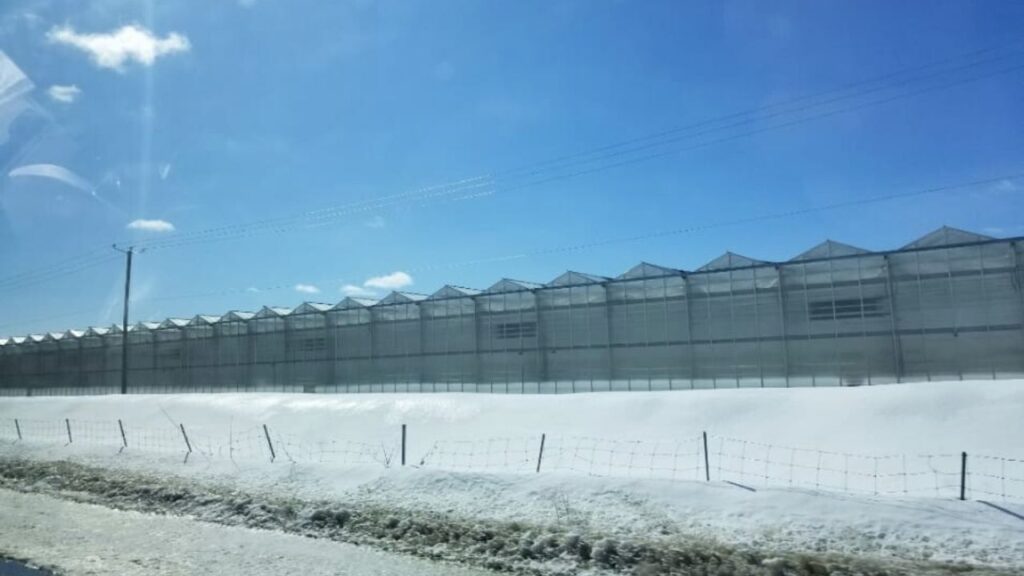
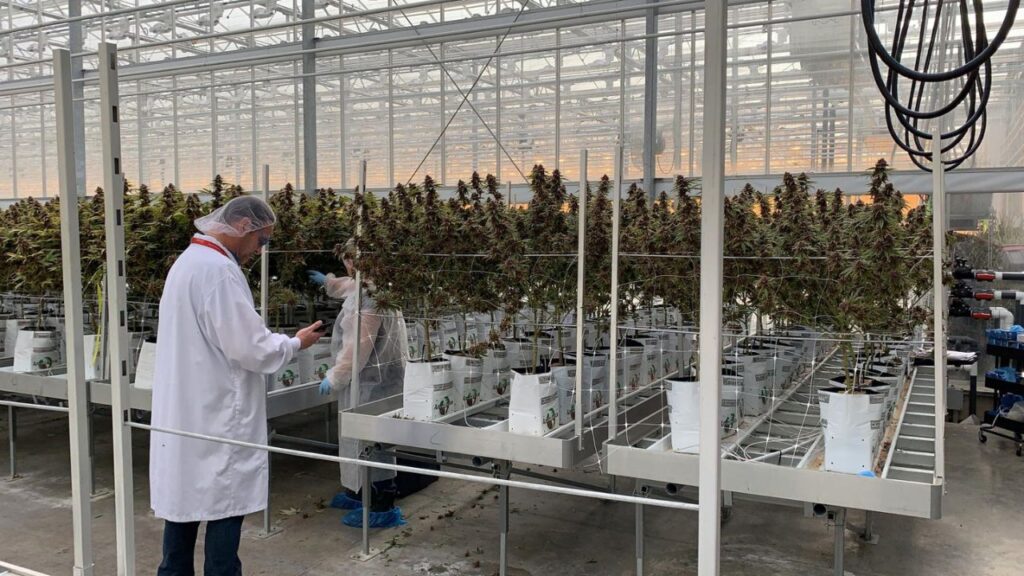
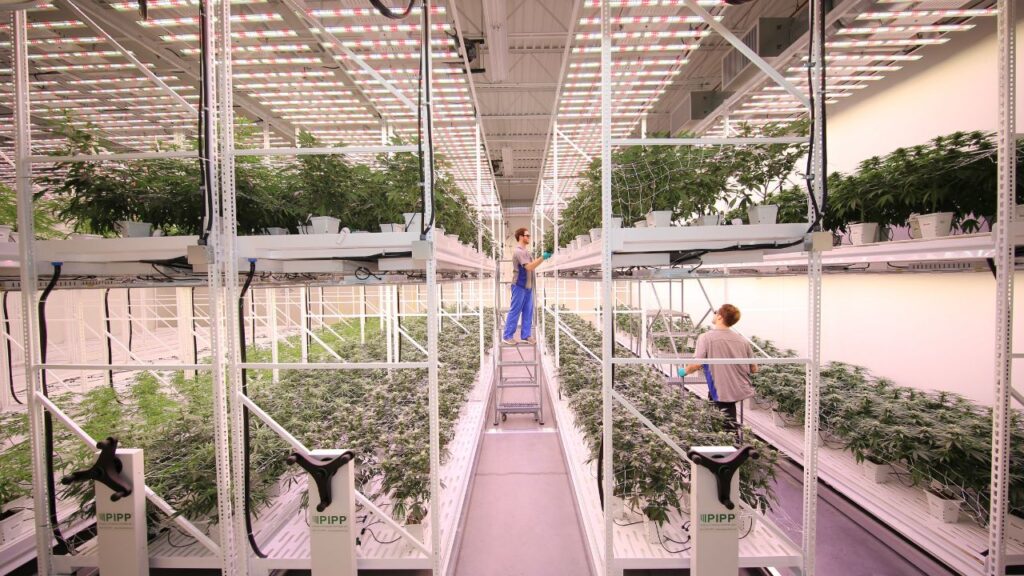
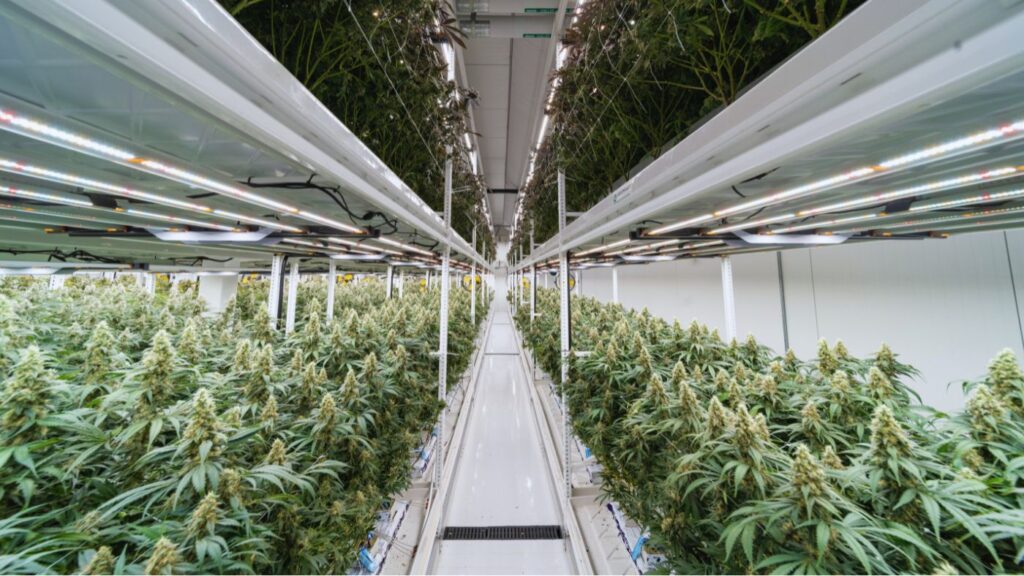
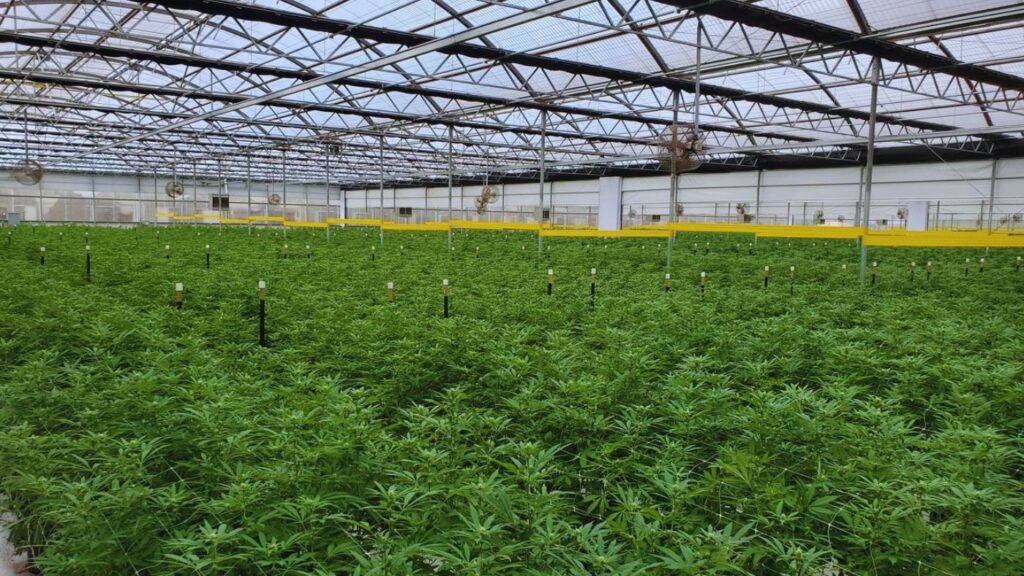
Cultivation facilities present a different and complex engineering challenge. HB 30 creates tiered cultivation licenses with canopy limits, so facility quality directly affects how much saleable production an operator can generate from the licensed area. Profitability is not determined by yield alone; it depends on yield and quality per square foot, crop turns, genetics, labor efficiency, energy use, product mix, biosecurity, and the reliability of the facility’s mechanical and control systems. The final regulations will also govern outdoor and greenhouse security, sanitation, and operating requirements, so the facility concept must align with both the intended cultivation method and the license tier.
| System | Why it’s decisive |
| Lighting | Intensity, spectrum, uniformity, fixture layout, and controls influence yield, quality, energy use, and heat load across the licensed canopy. |
| HVAC and environmental control | Temperature, humidity, dehumidification, pressurization, and filtration must remain stable through changing crop and weather loads. |
| Irrigation, fertigation, and drainage | Water quality, nutrient delivery, runoff management, sanitation, and drainage design underpin repeatable production and protect the building. |
| Airflow, filtration, and CO2 | Uniform air movement and appropriate filtration support plant health; any CO2 enrichment must be integrated with life safety monitoring, controls, and applicable code requirements. |
| Electrical and utility capacity | Load calculations must account for lighting, HVAC, dehumidification, irrigation, processing, controls, and future operating conditions; inadequate service can derail a site. |
| Redundancy, alarms, and response | Critical system redundancy, remote alarms, emergency procedures, spare parts planning, and trained response personnel reduce the risk of a localized failure becoming a crop loss. |
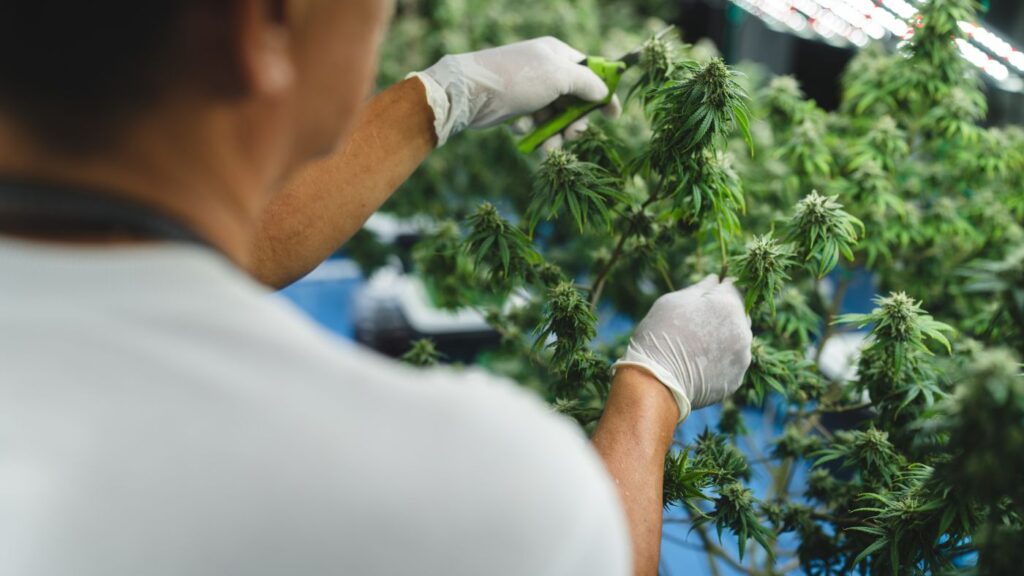
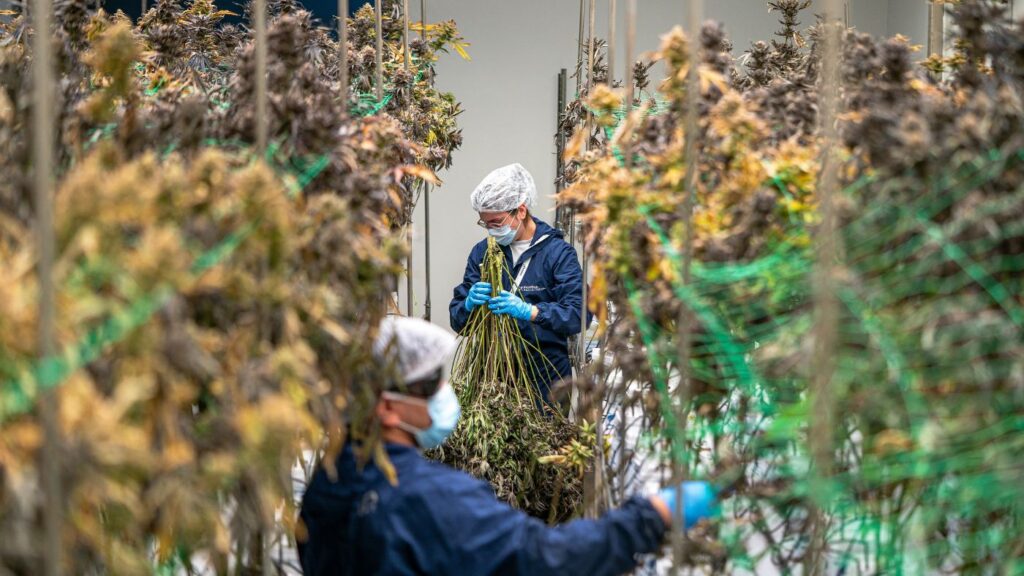
A cultivation facility is a controlled environment agriculture manufacturing system, not simply a collection of grow rooms. Architecture, structure, mechanical systems, electrical distribution, water, drainage, controls, sanitation, workflow, and cultivation strategy must be designed as one integrated operating system. A high-performing design should also account for maintenance access, cleanability, pest exclusion, material and personnel flow, waste handling, drying or post-harvest needs, and the consequences of equipment downtime.

Expert Insight – Commission before you cultivate, process, or open. Installation is not proof of performance. Commissioning should verify that environmental systems maintain setpoints under representative loads, lighting is uniform, irrigation and drainage operate as intended, alarms and controls communicate correctly, security devices cover the designed areas, and staff understand the response procedures. Discovering those problems before plants, inventory, or customers enter the facility is far less expensive than correcting them during operation.
Michael Williamson – Catalyst BC Chief Operating Officer
Compliance Infrastructure Both Facility Types Need
Whether retail or cultivation, Virginia marijuana establishments will need compliance infrastructure built into the premises. HB 30 requires seed-to-sale tracking, complete and accessible records, sanitary and security standards, inspections, and controls over licensed products and restricted areas. The CCA must still publish the detailed technical regulations, so designs should reserve sufficient capacity for cameras, data, access control, power, storage, and recordkeeping to adapt. Processing facilities that produce edible products must also account for applicable Virginia food law and Department of Agriculture and Consumer Services inspection requirements. Microbusinesses will be subject to the relevant cultivation, processing, and retail requirements based on their activities.
The Build-Out Roadmap
For most facility types, the path from early planning to operation follows a similar arc:
- License strategy and facility programming: Define the license type, operating model, capacity, workflow, utility needs, equipment, staffing, budget, and site selection criteria before committing to a property.
- Site screening and contingent control: Evaluate zoning, the applicable 1,000-foot retail and microbusiness buffers, power, water, sewer, fire access, building condition, security, neighbors, transportation, and expansion constraints. Virginia does not require secured premises until the final approval stage.
- Preliminary approval and site finalization: A lottery-selected applicant generally has 18 months to provide the final address and legal property description, identify the locality, update the security plan, and provide applicable agricultural inspection information, with one possible six-month extension for good-faith progress.
- Local approvals and detailed design: Finalize possession of the premises, confirm zoning and land use compliance, and complete architectural, structural, mechanical, electrical, plumbing, security, process, and code design for permitting.
- Construction and systems integration: Build the space and coordinate utilities, environmental controls, lighting, irrigation, processing equipment, security, point-of-sale, seed-to-sale, data, and life safety systems.
- Commissioning and operational readiness: Test systems under representative conditions, correct deficiencies, train staff, finalize SOPs, and verify that workflows, alarms, records, and emergency procedures function together.
- CCA inspection and final authorization: The CCA will notify the locality, schedule a site inspection, and require the applicable license fee. The locality may submit objections, and final authorization depends on the site, background review, zoning, information, and fees satisfying the statutory requirements.
- Operation and ongoing compliance: Maintain possession of the licensed premises, operate the tracking, security, sanitation, and recordkeeping systems, and become operational within 12 months after license issuance or risk revocation.
These activities overlap, but they still have critical dependencies. A phased approach allows applicants to advance due diligence and design far enough to understand cost and feasibility while delaying irreversible commitments until the license type, preliminary approval, site, local approvals, and final CCA rules are sufficiently clear.
Related: Virginia cannabis consulting.
Work With Catalyst BC on Your Virginia Cannabis Facility
A license provides access to Virginia’s market; a well-planned, properly built facility determines whether the operator can obtain final approval and perform once open. Catalyst BC supports facility programming, site and utility diligence, design coordination, environmental and production systems, build-out oversight, commissioning, operational readiness, and Owner’s Representative services for retail, cultivation, processing, and microbusiness projects. Our team helps operators translate HB 30 into a facility plan that is technically credible today and flexible enough to incorporate the CCA’s final regulations. With adult-use sales authorized to begin July 1, 2027, and licensing periods still to be announced, the priority now is disciplined preparation rather than premature construction. Contact our team to develop a Virginia cannabis facility strategy engineered for compliance, operability, and long-term performance.
About the authors: This guide was prepared by the Catalyst BC cannabis consulting team. Catalyst BC advises cannabis operators on facility programming, site and utility diligence, environmental control, build-out, commissioning, operational readiness, and Owner’s Representative services, as well as state licensing strategy and regulatory compliance, across U.S. and international markets. This article is provided for informational purposes only and does not constitute legal, engineering, architectural, or construction advice; applicants should confirm current facility requirements with the Virginia Cannabis Control Authority and retain appropriately licensed professionals for their specific project.
Success Stories: See How Catalyst BC Has Helped Cannabis Businesses Enter and Lead the Market
From initial startup and facility build-outs to high-value exit strategies, our cannabis consultants provide the expertise needed to navigate the complexities of the legal cannabis industry.
Virginia Cannabis Facility Design FAQs
Begin now with programming, site screening, utility analysis, budgeting, and local due diligence. Licensing periods and technical rules must still be announced, so plan flexibly in advance and avoid irreversible construction commitments until the approval path is clearer.
A retail store or retailing microbusiness may be refused if it is within 1,000 feet of a hospital; a public, private, or parochial school or institution of higher education; or a child care program. Local zoning and land use requirements also apply.
Virginia’s cultivation licenses are tiered by canopy, so profitability depends on how effectively the operator uses the licensed area. Yield and quality matter, but so do crop turns, labor, energy, product mix, biosecurity, and system reliability.
The design may include lighting, HVAC, and dehumidification, environmental controls, irrigation and fertigation, drainage, airflow and filtration, electrical distribution, water treatment, controls, alarms, sanitation infrastructure, and critical system redundancy. CO2 enrichment, if used, must comply with life safety requirements.
Commissioning verifies that installed systems perform together under representative conditions before plants, inventory, or customers enter the facility. It identifies deficiencies while they are less disruptive and expensive to correct.
Virginia requires seed-to-sale tracking, accessible records, sanitary and security controls, restricted areas, and inspection access. The CCA will establish final technical standards. Edible processors must also plan for applicable food law and agriculture inspection requirements.
The schedule depends on the facility, utilities, local approvals, equipment, and final CCA rules. The Catalyst team is well-versed in developing highly accurate price and time forecasts based on each project’s unique variables. Preliminary approvals generally allow 18 months to complete final licensing requirements, with a possible six-month extension.
Often, yes, but feasibility depends on zoning, buffers, power, water, sewer, structure, drainage, fire access, security, and existing system condition. A low-cost lease can become expensive if major upgrades are required.
Yes. Dispensaries prioritize secure receiving and storage, customer flow, age verification, POS, accessibility, and throughput. Cultivation facilities prioritize environmental systems, utilities, sanitation, biosecurity, material flow, and crop reliability. Processing and microbusiness facilities may combine multiple categories.
Premises are not required until the final approval stage, but applicants still need a credible operating, financial, security, and facility strategy. Early programming and site diligence demonstrate readiness without forcing premature commitment to a noncompliant or uneconomic property.
Additional Resources
Free eBooks For Cannabis Business Success




Latest Articles
- How Much Does It Cost to Open a Dispensary in 2026?
 The allure of jumping into the legalized cannabis industry often paints a picture of quick riches and burgeoning demand, yet the reality of establishing a licensed cannabis dispensary is far more nuanced, capital-intensive, and fraught with unique financial challenges. For aspiring entrepreneurs and seasoned investors alike, understanding the true dispensary startup costs is the absolute bedrock of success.
 - Virginia Cannabis Facility Design & Build-Out for the 2027 Market
 This guide covers the major considerations involved in planning and building a Virginia cannabis facility, with a focus on retail and cultivation operations and additional considerations relevant to processors and microbusinesses. It is written from the build side of the business, because that is where many otherwise-strong applicants stumble: they underestimate utility needs, local approvals, security infrastructure, commissioning, and the time required to convert a site into an inspection-ready operation.
 - Virginia Dual-Use Cannabis Conversion (2027): The $10M Medical-to-Adult-Use Pathway
 For Virginia’s existing medical cannabis operators, the 2026 retail framework created a distinct and high-stakes transition: pharmaceutical processors may apply for verification to exercise dual-use privileges and serve both registered medical patients and adult-use customers. The pathway covers the processor and its permitted cannabis dispensing facilities, and it carries a one-time $10 million fee, a required medical cannabis program preservation plan, an impact-licensee business accelerator commitment, and a firm May 1, 2027 payment or installment-plan deadline.
 - Virginia Impact Cannabis License (2027): Social Equity & the Equity Business Loan Fund
 Virginia’s adult-use cannabis framework creates a meaningful pathway for applicants from communities and backgrounds affected by cannabis prohibition and enforcement. The law does not create a separate, stand-alone impact license. Instead, it creates an impact-licensee designation that qualifying applicants may pursue alongside an underlying marijuana establishment license, such as retail, cultivation, processing, microbusiness, transportation, delivery, or testing.
 - Virginia Cannabis Microbusiness License (2027): Eligibility & the Two-Location Model
 This guide explains the initial eligibility pathways for the licenses the CCA may issue by May 1, 2027, the difference between a microbusiness license and an impact designation, the indoor and outdoor cultivation limits, the precise rules governing two locations, and the financial, security, and operational readiness standards applicants should prepare to demonstrate. Several implementation details – including fees and the specific combination of privileges the CCA will authorize – still depend on forthcoming regulations.
 - Virginia Cannabis Cultivation License (2027): The Tiered System Explained
 For operators whose strength is growing cannabis, Virginia’s emerging adult-use market presents a significant opportunity – and a cultivation license is the gateway to it. The June 2026 framework authorizes the Virginia Cannabis Control Authority (CCA) to begin accepting license applications on or after February 1, 2027 and issuing licenses on or after May 1, 2027. It also establishes five cultivation tiers with maximum canopies ranging from 5,000 to 35,000 square feet.