
Estimated reading time: 14 minutes
Table of contents
- Overview
- Why Virginia Uses a Tiered Cultivation System
- What HB 30 Establishes
- Cultivation Success is a Facility Engineering Equation
- How to Prepare Now
- Work With Catalyst BC on Your Virginia Cultivation License
- Success Stories: See How Catalyst BC Has Helped Cannabis Businesses Enter and Lead the Market
- Virginia Cannabis Cultivation License FAQs
- Additional Resources
- Free eBooks For Cannabis Business Success
- Latest Articles
Editor’s Notes: This article is part of our Virginia 2027 Licensing Hub. Last updated 8/27/2026. Other topics covered in this series are:
- Virginia Cannabis License 2027 Application Guide
- How to Open a Dispensary in Virginia
- Virginia Cannabis Microbusiness License Guide
- Virginia Cannabis Cultivation License Guide
- Virginia Impact Cannabis License Guide
- Virginia Cannabis Facility Design and Build-Out
- Virginia Dual-Use Cannabis Conversion Guide
Overview
For operators whose strength is cultivation, Virginia’s emerging adult-use market presents a significant opportunity, and securing a cultivation license is the critical first step toward participating. HB 30, enacted June 2026, authorizes the Virginia Cannabis Control Authority (CCA) to begin accepting license applications on or after February 1, 2027, and issuing licenses on or after May 1, 2027. It also establishes five cultivation tiers, with maximum canopy areas ranging from 5,000 to 35,000 square feet. Having designed and commissioned cannabis cultivation facilities across multiple markets, I can tell you that cultivation licensing is where application strategy, budget, production planning, and facility engineering meet. This guide explains the enacted tier structure, the initial licensing pathways, and what each choice means for your facility and business model.
A note up front: the five tiers and their maximum canopy limits are established in the enacted framework. What remains for the CCA to finalize are the detailed application periods, license fees, operating standards, outdoor cultivation security requirements, and other regulations needed to implement the market. The CCA must announce which license types and quantities will be available during each licensing period, so applicants should not assume that every cultivation tier will be offered in the first general application window. There is still a good bit of nuance that will become more clear as the CCA releases draft regulations in September.
Why Virginia Uses a Tiered Cultivation System
Virginia establishes five cultivation license tiers based on flowering canopy. Tier I and Tier II may operate indoors or outdoors, while Tiers III through V are limited to indoor cultivation. The tiered system allows the CCA to balance supply with market demand while creating entry points for businesses of different scales. It also means that the chosen tier directly affects facility size, utility demand, capital requirements, staffing, production capacity, and commercial risk.
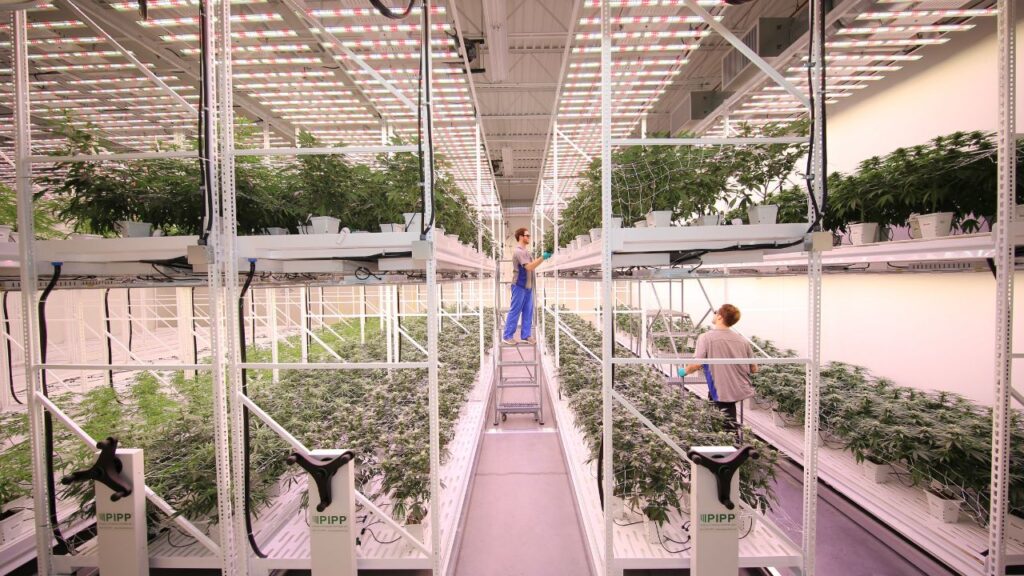
Virginia’s statutory definition of canopy is broader than the footprint occupied by plants. It includes the area used to produce flowering plants, such as pathways, walkways, and space between rows. Mother plants, clones, immature or nonflowering plants, drying, curing, processing, storage, offices, and other nonproduction areas are excluded. In a multilayer system, the surface area of every flowering level counts toward the canopy. Applicants must therefore design the facility and production model around the state’s measurement method, not simply the nominal dimensions of the flower benches.

Expert Insight – Match your tier to your whole business, not just your ambition. The instinct is to pursue the largest tier available on the theory that more canopy automatically means more revenue. In practice, the right tier is the one your capital can build, that fits within the constraints of your site and your team can operate, and that the market can absorb. A larger facility that outruns its funding, labor capacity, or sales channels becomes a liability. Model each tier using realistic sell-through, price compression, production yield, annual cycles, operating costs, and working capital needs before choosing a scale.
Michael Williamson – Catalyst BC Chief Operating Officer
What HB 30 Establishes
The framework gives the CCA flexibility to adjust authorized canopy within the statutory parameters based on market demand, utilization, sales, transfers, inventory, and licensing activity. It may also increase canopy beyond those parameters when doing so would assist or encourage impact licensee participation. Before January 1, 2028, however, only five Tier V licenses may be issued. Beginning in 2028, the CCA may make additional Tier V licenses available; if it does, the number reserved for impact licensee applicants must be at least equal to the number available to other applicants.
| Parameter | Enacted requirement |
| Tier I | Indoor or outdoor cultivation; maximum canopy of 5,000 square feet |
| Tier II | Indoor or outdoor cultivation; maximum canopy of 10,000 square feet |
| Tier III | Indoor cultivation only; maximum canopy of 15,000 square feet |
| Tier IV | Indoor cultivation only; maximum canopy of 25,000 square feet |
| Tier V | Indoor cultivation only; maximum canopy of 35,000 square feet; no more than five licenses before January 1, 2028 |
| Canopy measurement | Includes flowering production areas, pathways, walkways, and row spacing; each flowering level in a multilayer system is counted |
| Initial hemp pathway | Up to 10 cultivation licenses may be issued by May 1, 2027 to qualifying legacy industrial hemp growers or processors through a streamlined process and a $500,000 fee |
| Application timing | The CCA may accept applications on or after February 1, 2027 and issue licenses on or after May 1, 2027; each licensing period will identify the tiers and number of licenses available |
The initial rollout also includes a separate pathway for certain industrial hemp growers and processors whose Virginia registrations date to before January 1, 2021. By May 1, 2027, the CCA must issue no more than 10 cultivation licenses through that pathway. Eligible applicants must satisfy the licensing requirements and pay a one-time $500,000 fee, which may be paid through an approved installment plan lasting no more than three years. This is a specialized early entry route and should not be confused with the general cultivation licensing periods.
Cultivation Success is a Facility Engineering Equation
In a tiered, canopy-capped system, profitability depends on how effectively an operator converts authorized flowering space into consistent, saleable product. The relevant levers extend beyond yield per square foot. They include crop turns, grade ratios, genetic selection, labor efficiency, energy intensity, pest and pathogen prevention, post-harvest capabilities, testing outcomes, and the ability to sell production at sustainable prices. Facility design must support the full production system rather than maximizing flower room area at the expense of propagation, drying, curing, sanitation, storage, and workflow.
The performance of a cultivation facility depends on lighting intensity and uniformity, precise control of temperature and humidity, irrigation and fertigation, airflow, CO2 strategy, IPM, biosecurity, and the reliability of the mechanical and electrical systems that maintain stable conditions.
Virginia will also permit outdoor cultivation under Tier I and Tier II. A secure agricultural greenhouse is considered indoor cultivation when it is surrounded by a privacy fence at least 8 feet high and has monitored ingress and egress. Only one license authorizing outdoor cultivation may be issued for a parcel, and contiguous parcels under common ownership or control cannot be used to multiply outdoor cultivation licenses.
| Profitability lever | Why it matters under a canopy cap |
| Saleable yield and grade-out | Revenue depends on the sales price for the various components that make up Usable Plant Material (UPM), not total harvested biomass |
| Product quality and consistency | Potency, appearance, terpene expression, safety, and consistency affect demand and price |
| Annual crop cycles and downtime | Efficient room turnover optimizes annual output within confined canopy allotment |
| Environmental uniformity | Stable conditions across all cultivation, post-harvest and operational areas protects yield, and crop health |
| Labor and energy efficiency | Cost per pound is shaped by yield, workflow, automation, utility demand, and equipment performance |
| Post-harvest recovery | Drying, curing, trimming, storage, and testing determine how much cultivated material becomes saleable inventory and sales price. |
| System reliability | Redundancy, alarms, maintenance, and commissioning reduce the risk of catastrophic crop loss |

Expert Insight – Design for your tier’s economics before you build. I’ve seen cultivation businesses struggle not because their license was wrong, but because their facility was improperly designed, engineered, built, commissioned, operated, and all the above. In a capped-canopy environment, every flowering square foot must perform, but the supporting spaces and systems must also be sized correctly. Retrofitting an underperforming grow is far more expensive than building it correctly (even in a modular way), and the lost production during remediation can threaten the entire business.
Leif Olsen – Catalyst BC Chief Executive Officer
How to Prepare Now
Because the CCA will announce the license types, quantities, opening date, and closing date for each licensing period, cultivation applicants should use the current runway to:
- Confirm your licensing pathway and likely tier, including whether the specialized legacy hemp pathway applies or whether you will compete in a general licensing period.
- Identify and diligence a suitable site with workable zoning, adequate electrical service, water, drainage, fire access, structural capacity, and room for future operations. Final licensure requires possession of the licensed premises, but applicants selected for preliminary approval generally have up to 18 months to finalize the required site information.
- Design around the statutory canopy limits so flowering rooms, aisles, row spacing, and every level of a single-level or multilayer system are counted accurately, while sufficient support space remains for propagation, drying, curing, storage, sanitation, and employee flow.
- Choose the cultivation method carefully because only Tiers I and II allow for outdoor cultivation, and greenhouses treated as indoor cultivation must satisfy the statutory fencing and monitored access conditions.
- Build a capital and operating plan that covers design, construction, commissioning, genetics, labor, testing, inventory holding, payment terms, and operations through the first successful sales cycles. Not merely through the first harvest. Finally, and possibly most importantly, build in contingency, because no project ever goes quite according to plan; it’s always good to build in a little padding.
- Structure ownership and monitor the CCA because all license transfers and ownership or control changes require prior written Board approval. In contrast, the five-year restriction on transferring more than 49% applies specifically to impact licensees. Track the CCA’s licensing period announcements, fees, application rules, and outdoor cultivation regulations.
For help applying this in Virginia, visit our Virginia cannabis consulting page.
Work With Catalyst BC on Your Virginia Cultivation License
A cultivation license in Virginia’s new market is where licensing strategy, budgeting, capital raising, production planning, and facility engineering converge. The enacted tiers provide clear maximum canopy limits, but successful applicants must still choose a commercially appropriate scale, understand how Virginia counts canopy, identify a viable site, and build a facility that can produce consistent quality at a sustainable cost. Catalyst BC supports cultivation licensing strategy, financial modeling, tier and capacity modeling, site evaluation, facility programming, environmental design coordination, commissioning, and Owner’s Representative services. Whether you are looking to apply under the general, impact, or the specialized legacy hemp pathway, the design and financial planning should begin before the application window opens. Contact our team to build a Virginia cultivation operation engineered to perform.
About the authors: This guide was prepared by the Catalyst BC cannabis consulting team. Catalyst BC advises cannabis operators on state licensing strategy and cannabis facility design, environmental control, commissioning, and yield optimization across U.S. and international markets. Our consultants bring direct experience with cultivation facility design, engineering, operations, and Owner’s Representative services for new market entrants. This article is provided for informational purposes only and does not constitute legal advice; applicants should confirm current cultivation tier requirements with the CCA and consult qualified professionals regarding their specific circumstances.
Success Stories: See How Catalyst BC Has Helped Cannabis Businesses Enter and Lead the Market
From initial startup and facility build-outs to high-value exit strategies, our cannabis consultants provide the expertise needed to navigate the complexities of the legal cannabis industry.


Virginia Cannabis Cultivation License FAQs
It authorizes the licensee to cultivate, label, and package marijuana; acquire plants and seeds from other cultivation facilities; and transfer or sell authorized marijuana, plants, and seeds to other licensed establishments. It does not authorize direct adult-use retail sales to consumers.
Five. Tier I allows up to 5,000 square feet of indoor or outdoor canopy; Tier II allows up to 10,000 square feet indoors or outdoors; Tier III allows up to 15,000 square feet indoors; Tier IV allows up to 25,000 square feet indoors; and Tier V allows up to 35,000 square feet indoors.
Yes. No more than five Tier V cultivation licenses may be issued before January 1, 2028. Beginning in 2028, the CCA may determine whether to make additional Tier V licenses available, with at least equal availability for impact licensee applicants if more are issued.
Match the tier to available capital, site infrastructure, management depth, production economics, and realistic sales demand. The largest tier is not automatically the best choice; unused capacity and an underfunded build-out can be more damaging than a smaller, disciplined operation.
Profitability depends on saleable yield and grade ratios, product quality, crop turns, labor and energy efficiency, post-harvest recovery, testing outcomes, system reliability, and market pricing. Canopy is only one part of the production model.
Canopy includes flowering production space, pathways, walkways, and space between rows. Mother plants, clones, immature or nonflowering plants, drying, curing, processing, storage, offices, and other nonproduction areas are excluded. Every tier in a multilayer system is counted.
The CCA may begin accepting applications on or after February 1, 2027, but it must first announce the specific license types, quantities, and application dates for each licensing period. A separate streamlined process applies to certain legacy industrial hemp growers and processors.
Yes. A license cannot be assigned, sold, transferred, relocated, or subjected to an ownership or control change without prior written CCA Board approval. The five-year restriction on transferring a controlling interest of more than 49% applies specifically to licenses issued with an impact designation.
A viable site needs workable zoning, sufficient electrical and mechanical capacity, water and drainage, fire and emergency access, security, waste handling, and space for cultivation and support functions. Applicants selected for preliminary approval generally have 18 months to provide final site information, and licensees must maintain possession of the licensed premises.
The five tiers, maximum canopy limits, indoor and outdoor permissions, and initial hemp operator pathway are established in the enacted framework. The CCA still must finalize detailed regulations, fees, licensing period availability, outdoor security requirements, and application procedures.
Additional Resources
Free eBooks For Cannabis Business Success




Latest Articles
- How Much Does It Cost to Open a Dispensary in 2026?
 The allure of jumping into the legalized cannabis industry often paints a picture of quick riches and burgeoning demand, yet the reality of establishing a licensed cannabis dispensary is far more nuanced, capital-intensive, and fraught with unique financial challenges. For aspiring entrepreneurs and seasoned investors alike, understanding the true dispensary startup costs is the absolute bedrock of success.
 - Virginia Cannabis Facility Design & Build-Out for the 2027 Market
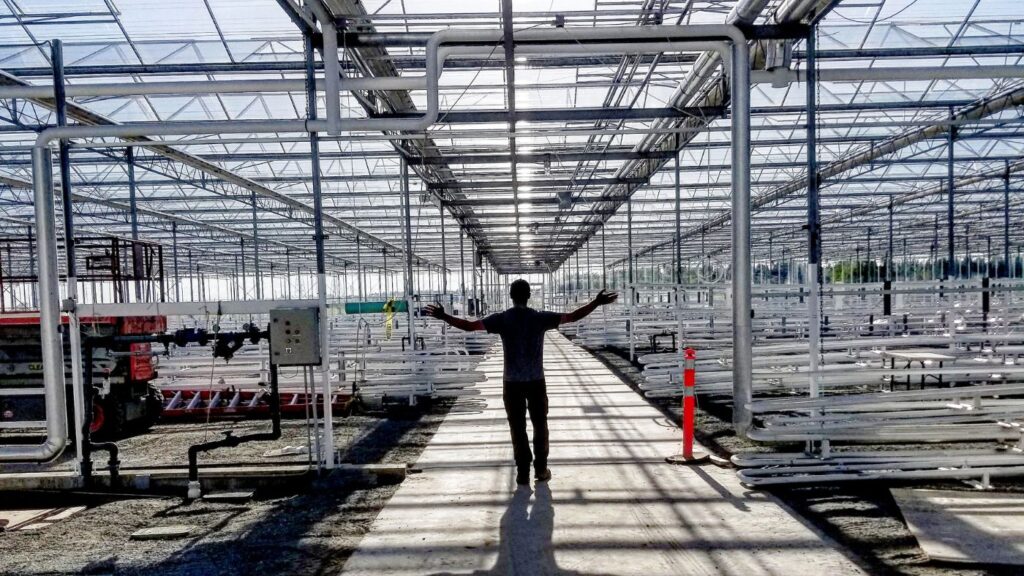 This guide covers the major considerations involved in planning and building a Virginia cannabis facility, with a focus on retail and cultivation operations and additional considerations relevant to processors and microbusinesses. It is written from the build side of the business, because that is where many otherwise-strong applicants stumble: they underestimate utility needs, local approvals, security infrastructure, commissioning, and the time required to convert a site into an inspection-ready operation.
 - Virginia Dual-Use Cannabis Conversion (2027): The $10M Medical-to-Adult-Use Pathway
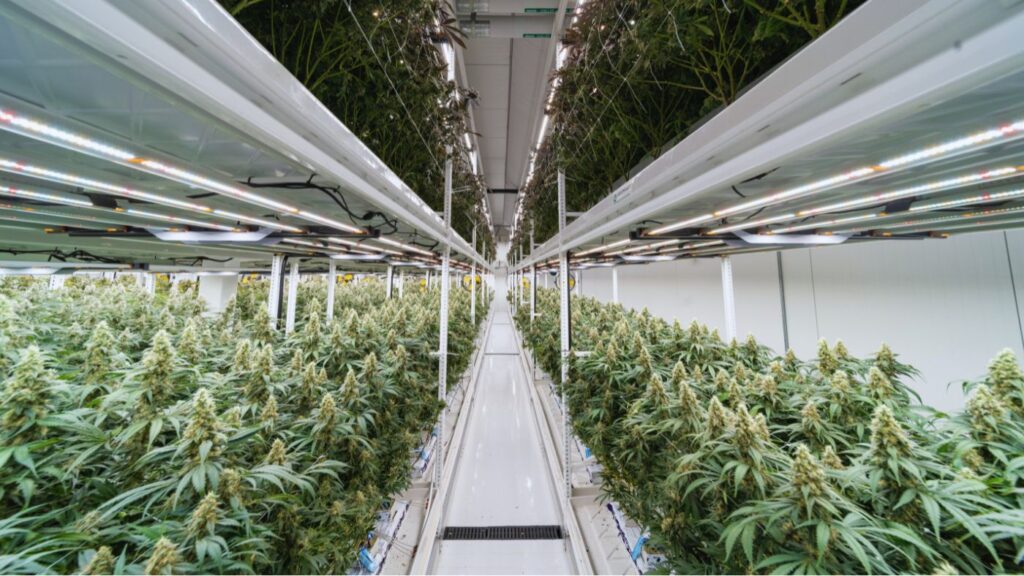 For Virginia’s existing medical cannabis operators, the 2026 retail framework created a distinct and high-stakes transition: pharmaceutical processors may apply for verification to exercise dual-use privileges and serve both registered medical patients and adult-use customers. The pathway covers the processor and its permitted cannabis dispensing facilities, and it carries a one-time $10 million fee, a required medical cannabis program preservation plan, an impact-licensee business accelerator commitment, and a firm May 1, 2027 payment or installment-plan deadline.
 - Virginia Impact Cannabis License (2027): Social Equity & the Equity Business Loan Fund
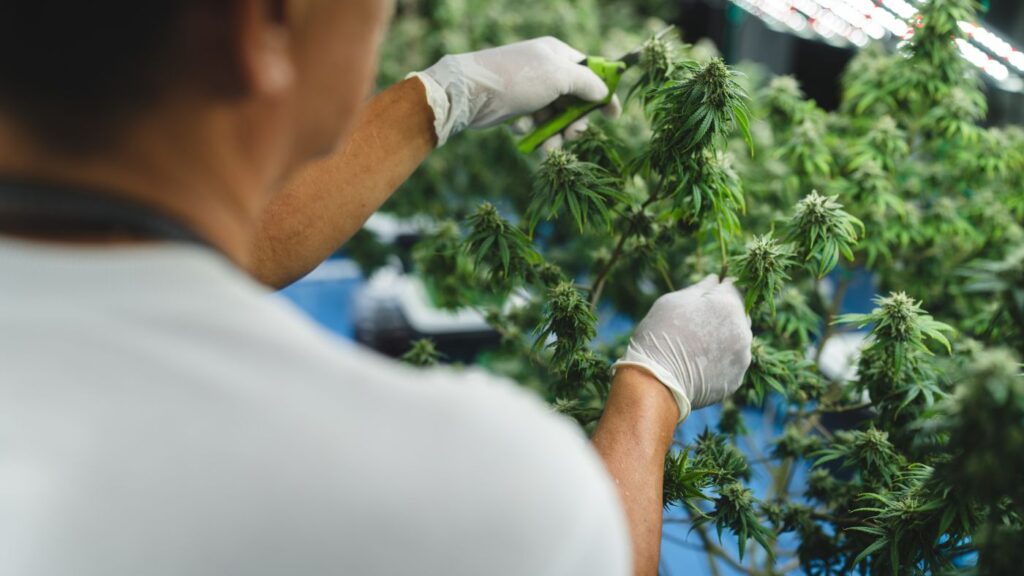 Virginia’s adult-use cannabis framework creates a meaningful pathway for applicants from communities and backgrounds affected by cannabis prohibition and enforcement. The law does not create a separate, stand-alone impact license. Instead, it creates an impact-licensee designation that qualifying applicants may pursue alongside an underlying marijuana establishment license, such as retail, cultivation, processing, microbusiness, transportation, delivery, or testing.
 - Virginia Cannabis Microbusiness License (2027): Eligibility & the Two-Location Model
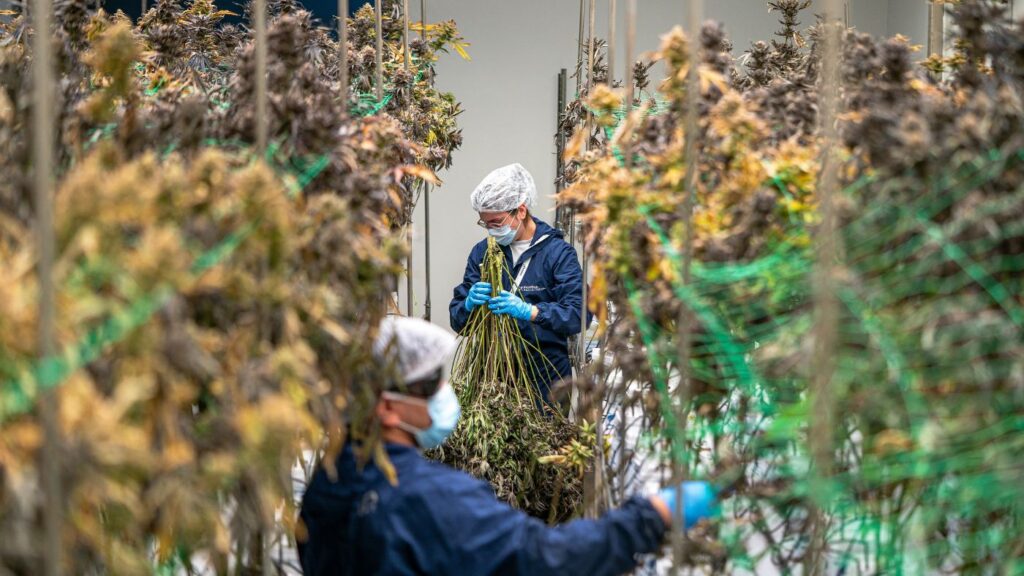 This guide explains the initial eligibility pathways for the licenses the CCA may issue by May 1, 2027, the difference between a microbusiness license and an impact designation, the indoor and outdoor cultivation limits, the precise rules governing two locations, and the financial, security, and operational readiness standards applicants should prepare to demonstrate. Several implementation details – including fees and the specific combination of privileges the CCA will authorize – still depend on forthcoming regulations.
 - Virginia Cannabis Cultivation License (2027): The Tiered System Explained
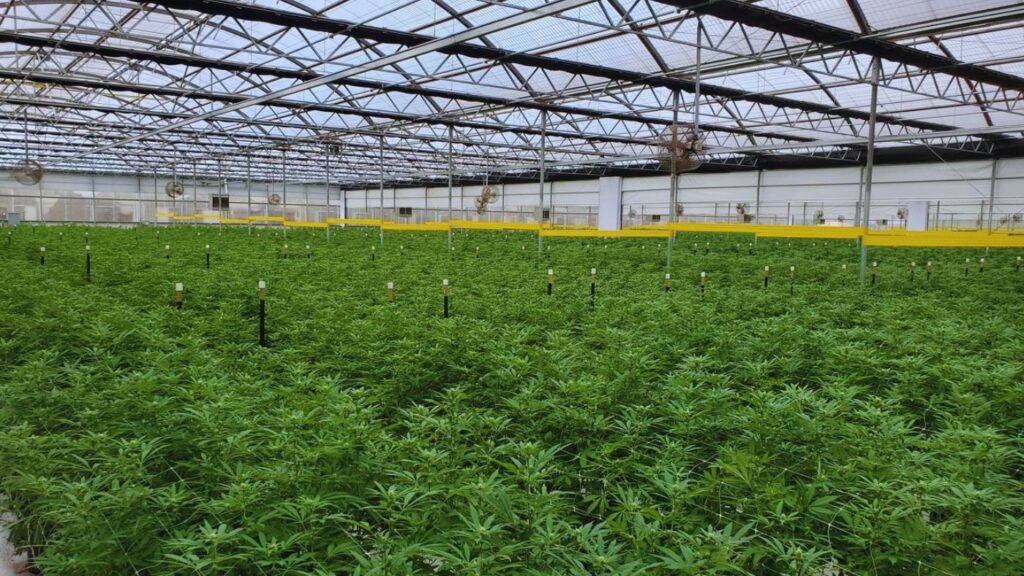 For operators whose strength is growing cannabis, Virginia’s emerging adult-use market presents a significant opportunity – and a cultivation license is the gateway to it. The June 2026 framework authorizes the Virginia Cannabis Control Authority (CCA) to begin accepting license applications on or after February 1, 2027 and issuing licenses on or after May 1, 2027. It also establishes five cultivation tiers with maximum canopies ranging from 5,000 to 35,000 square feet.