
Estimated reading time: 15 minutes
Table of contents
- Overview
- What Virginia Actually Established in June 2026
- HB 30 at a Glance
- The License Types You Can Pursue
- Costs, Taxes, and the Equity Funding Model
- How the Application Process Works & What to Do Now
- A Realistic Word on Timing and Risk
- Work With Catalyst BC on Your Virginia Cannabis License
- Success Stories: See How Catalyst BC Has Helped Cannabis Businesses Enter and Lead the Market
- Virginia Cannabis License 2027 Application FAQs
- Additional Resources
- Free eBooks For Cannabis Business Success
- Latest Articles
Editor’s Notes: This article is part of our Virginia 2027 Licensing Hub. Other topics covered in this series are:
- Virginia Cannabis License 2027 Application Guide
- How to Open a Dispensary in Virginia
- Virginia Cannabis Microbusiness License Guide
- Virginia Cannabis Cultivation License Guide
- Virginia Impact Cannabis License Guide
- Virginia Cannabis Facility Design and Build-Out
- Virginia Dual-Use Cannabis Conversion Guide
Overview
As of July 2026, Virginia has enacted a framework for a regulated adult-use cannabis market. The Commonwealth already legalized adult possession and limited home cultivation in 2021; HB 30 establishes the licensing, operating, tax, and enforcement structure needed for legal commercial sales. For prospective operators, the preparation period is now real, but the opportunity is more structured than a single statewide application opening. The Virginia Cannabis Control Authority (CCA) will announce licensing periods by license type and quantity as it implements the market.
The key statutory dates are clear. By February 1, 2027, the CCA must adopt implementing regulations and begin the application process for at least some license types; the Authority may begin accepting applications on or after that date and may begin issuing licenses on or after May 1, 2027. Adult-use retail sales may begin July 1, 2027. This guide explains the enacted framework, the available license types, the qualification and lottery process, site and operational deadlines, taxes and equity provisions, and the work applicants should complete before the CCA publishes each licensing period notice.
What Virginia Actually Established in June 2026
Context matters. Virginia did not legalize possession in 2026. It established the commercial adult-use marketplace through HB 30, the 2026–28 biennial budget bill, whose enactment clauses carry the retail marijuana framework. The framework authorizes the CCA to license cultivation, processing, testing, transportation, delivery, retail, and microbusiness operations; verify dual-use privileges for existing pharmaceutical processors; create seed-to-sale tracking and product testing rules; investigate ownership and financial relationships; and enforce the licensed market.
The statute establishes the operating structure, but the CCA still must set many implementation details, including application forms, fees, security standards, outdoor cultivation rules, delivery requirements, and the license types and quantities offered during each licensing period. Before accepting applications, the CCA must announce the available license types, any numerical limits, and the opening and closing dates. Applicants should therefore prepare against the enacted requirements without assuming that every license type will be available in the first general application period.

Expert Insight – HB 30 creates a real market and real deadlines, but the CCA controls the sequence of licensing periods. Build the business fundamentals now: ownership, disclosures, capital, business plan, operating plan, labor peace plan, and a conditional site strategy while preserving enough flexibility to respond to the license types, quantities, fees, and forms the CCA announces.
Leif Olsen – Catalyst BC Chief Executive Officer
HB 30 at a Glance
| Element | Enacted requirement |
| Regulator | Virginia Cannabis Control Authority (CCA) |
| Regulations and applications | By February 1, 2027, regulations must be adopted and the application process for some license types must begin |
| Initial license issuance | The CCA may begin issuing licenses on or after May 1, 2027 |
| Adult-use retail sales | May begin July 1, 2027 |
| Retail store ceiling | No more than 350 retail marijuana store licenses statewide |
| Initial microbusiness issuance | Up to 100 licenses on or before May 1, 2027 through specified initial eligibility pathways |
| Legacy-hemp pathway | Up to 10 cultivation and 10 processing licenses for qualifying pre-2021 Virginia hemp operators; $500,000 one-time fee |
| Additional first-wave licenses | At least 55 additional licenses distributed among impact licensees and other license types by July 1, 2027 |
| Selection method | Qualification review first; impartial lottery for preliminary approval when qualified demand exceeds available licenses |
| Site finalization | Selected applicants generally have 18 months to finalize site information; one six-month extension may be available |
| Labor peace | Required for applicants, renewal applicants, and license holders; an executed attestation is required with the application |
| Retail cannabis tax | 6% before July 1, 2029 and 8% thereafter, in addition to ordinary sales taxes |
| Local cannabis tax | Each locality must impose an additional 1% to 3.5% tax on taxable retail cannabis sales |
| Equity funding | 75% of annual license fees collected May 1, 2027-May 1, 2028 deposited into the Cannabis Equity Business Loan Fund for impact licensees |
The License Types You Can Pursue
HB 30 creates several distinct license types, each suited to a different business model. Understanding which one fits your capital, expertise, and goals is the foundational decision.
| License type | What it authorizes | Best fit |
| Retail store | Consumer sales, in-person delivery, and transfers to licensed delivery operators | Retail and customer-experience operators |
| Microbusiness | Board-approved combination of cultivation, processing, and retail privileges within small-scale limits | Qualified smaller operators using an integrated model |
| Cultivation – Tiers I-V | Indoor or outdoor cultivation depending on tier, with flowering canopy limits from 5,000 to 35,000 square feet | Operators with horticulture, production, and facility expertise |
| Processing facility | Processing, labeling, packaging, and wholesale transfer of marijuana and marijuana products | Manufacturers, extractors, and product companies |
| Transporter | Secure movement of marijuana and marijuana products between licensed establishments | Specialized B2B logistics providers |
| Delivery operator | Consumer delivery services | Last-mile delivery operators |
| Testing facility | Independent research and testing; ISO/IEC 17025 accreditation required | Qualified analytical laboratories |
Two distinctions matter. First, an impact licensee designation is not a separate license type. It is an ownership and control designation that can attach to an available license and provides access to a priority lottery and Equity Fund support. Second, Virginia limits market concentration: a person may generally hold interests in no more than five establishment licenses (excluding transporter licenses) and no more than one Tier V cultivation license. Additionally, a microbusiness licensee shall not hold or control any other license and may operate only one licensed premises. Testing facilities must remain ownership independent, and a microbusiness owner may not hold an interest in another marijuana establishment.
Costs, Taxes, and the Equity Funding Model
The CCA will set application and annual license fees, and the statute requires annual fees to be sufficient to cover regulatory costs. Retail cannabis sales carry a dedicated state tax of 6% before July 1, 2029, and 8% thereafter, in addition to the ordinary Virginia retail sales and use tax. Each locality may also levy an additional cannabis tax between 1% and 3.5%. Applicants should model the full consumer tax burden, not just the dedicated state cannabis rate, when forecasting pricing and legal-market competitiveness.
Virginia’s equity architecture centers on the impact designation. An impact applicant must be at least 51% owned and directly controlled by qualifying individuals who satisfy the statutory geographic test and at least one additional qualifying criterion. If qualified impact demand exceeds reserved licenses, the CCA first conducts an impact-only lottery; unsuccessful impact applicants then enter the general qualified pool. From May 1, 2027, through May 1, 2028, 75% of annual license fees, not every application fee, must be deposited into the Cannabis Equity Business Loan Fund, which may provide loans, grants, and other support to impact licensees. The Cannabis Impact Business Support Team provides broader planning and application assistance.

Expert Insight – Build a business that works without assuming a grant, license flip, or silent control partner. Equity assistance is a potential capital tool, not guaranteed financing. All license assignments, transfers, and changes in ownership or control require prior Board approval. The five-year restriction applies specifically to impact licensees and prevents the transfer of a controlling interest of more than 49%, subject to limited exceptions. Investors, management agreements, brand licenses, and financing documents should be evaluated together so the disclosed owners retain the control and economics the application represents.
Michael Williamson – Catalyst BC Chief Operating Officer
More on how we support Virginia operators: Virginia cannabis consulting.
How the Application Process Works & What to Do Now
Virginia’s process separates application qualification from final site licensure. Applicants should use the current runway to prepare for both stages:
- Choose the license type and ownership model
Match the license to your capital, operating experience, supply chain role, and ownership limits. Determine whether the applicant will seek an impact designation or qualify for an initial microbusiness or legacy hemp pathway.
- Build the disclosure, capital, and labor peace file.
Prepare complete ownership and control disclosures, sources and uses of funds, evidence of financial responsibility, background check materials, and an executed labor peace agreement attestation. The CCA may examine management, financing, and brand licensing agreements for undisclosed control or undue influence.
- Develop a disciplined site strategy. Not an unconditional real estate gamble.
State law does not require applicants to have secured premises until the final approval stage. Use zoning diligence and conditional control where practical. Retail stores and retail-authorized microbusinesses cannot be within 1,000 feet of a hospital, school, institution of higher education, or child day program, and the CCA may consider neighborhood impacts, store density, and local objections.
- Prepare for qualification review and a lottery.
The CCA first determines which applications are complete and qualified. Applicants generally receive 10 calendar days to cure a deficiency or respond to an information request. When qualified demand exceeds supply, the CCA uses a lottery for preliminary approval, with a separate first-stage lottery for reserved impact licenses. Unselected applications are generally retained for one year for later licensing periods.
- Plan the facility and operating system before final authorization.
A preliminary approval generally gives the applicant 18 months to finalize the site, update the security plan, satisfy zoning, complete required inspections, and pay the license fee. Build the design, permitting, seed-to-sale, security, testing, staffing, SOP, and commissioning roadmap early enough to become operational asap!
- Monitor each CCA licensing period announcement.
February 1 is not necessarily a universal opening for every license type. The notice for each period will identify the licenses offered, the quantity available if limited, and the application opening and closing dates. Fees and final forms also remain pending.
A Realistic Word on Timing and Risk
HB 30 has been enacted, and the CCA now confirms that adult-use retail sales may begin on July 1, 2027. The remaining uncertainty is implementation rather than whether a market exists: the CCA still must adopt regulations, publish forms and fees, announce the first licensing periods, and determine which license types and quantities will be offered. That creates execution risk, especially for real estate and capital commitments, but it also creates a meaningful preparation advantage. The prudent posture is to complete work that survives regulatory change, including ownership diligence, capital planning, labor peace, operating design, site screening, and facility programming, while keeping deal terms flexible until the CCA publishes the applicable notice and rules.
Work With Catalyst BC on Your Virginia Cannabis License
Virginia has moved from legislative uncertainty to implementation. The applicants best positioned for 2027 will be those who choose the correct license and ownership structure, prepare a qualification-ready file, understand the lottery and preliminary approval sequence, screen sites without taking unnecessary risk, and design a facility and compliance program capable of achieving operational readiness within the statutory deadline. Catalyst BC supports licensing strategy across Virginia’s license types, impact and ownership analysis in coordination with qualified counsel, application development, site and zoning diligence, capital and capacity planning, facility design, commissioning, and Owner’s Representative services. Contact our team to build a Virginia strategy around the enacted rules while the CCA completes implementation.
About the authors: This guide was prepared by the Catalyst BC cannabis consulting team. Catalyst BC advises cannabis operators on state licensing strategy, ownership structuring, regulatory compliance, and cannabis facility design and commissioning across U.S. and international markets. Our consultants bring direct experience with competitive license applications in newly opening markets, cultivation facility engineering, and Owner’s Representative services for new market entrants. This article is provided for informational purposes only and does not constitute legal advice; applicants should confirm current requirements with the Virginia Cannabis Control Authority and consult qualified counsel regarding their specific circumstances.
Success Stories: See How Catalyst BC Has Helped Cannabis Businesses Enter and Lead the Market
From initial startup and facility build-outs to high-value exit strategies, our cannabis consultants provide the expertise needed to navigate the complexities of the legal cannabis industry.
Virginia Cannabis License 2027 Application FAQs
Not yet for general adult-use retail. Adults 21 and older may legally possess limited amounts and cultivate up to four plants per household, but licensed adult-use retail sales may begin July 1, 2027.
The CCA may begin accepting applications on or after February 1, 2027, and its public timeline says the application process for some license types will begin by that date. Each licensing period notice will identify the license types, quantities, and opening and closing dates.
The Virginia Cannabis Control Authority. The CCA adopts regulations, administers licensing and lotteries, conducts ownership and background review, oversees seed-to-sale tracking and testing, and enforces the licensed market.
HB 30 caps the number of retail marijuana stores at 350 statewide. Other license types generally do not have a permanent statutory ceiling, although the CCA may limit them by licensing period. The initial rollout includes up to 100 microbusiness licenses, up to 10 legacy hemp cultivation licenses, up to 10 legacy hemp processing licenses, and at least 55 additional licenses by July 1, 2027.
Cultivation facilities in five tiers, processing facilities, retail stores, microbusinesses, transporters, delivery operators, and testing facilities. Existing pharmaceutical processors may be verified for dual-use privileges. Impact is a designation attached to an underlying license, not a separate license type.
The dedicated state cannabis tax is 6% before July 1, 2029, and 8% thereafter. It is added to ordinary Virginia retail sales and use taxes, and a locality may impose an additional cannabis tax between 1% and 3.5%.
The framework does not create a general local opt-out; localities retain authority over zoning, land use, building, and business regulation, and may object during final review. Retail stores and retail-authorized microbusinesses also face a 1,000-foot buffer from hospitals, schools, institutions of higher education, and child care programs.
Qualified impact applicants receive access to reserved license priority lotteries and may qualify for loans, grants, or other support through the Cannabis Equity Business Loan Fund. The Cannabis Impact Business Support Team provides technical and planning assistance. Funding is not automatic, and impact businesses must maintain qualifying ownership and direct control.
Yes. Existing pharmaceutical processors can seek verification of dual-use privileges and must either pay the $10 million conversion fee in full or commit to an approved installment plan. The process also includes medical program preservation and impact business support obligations.
The commercial framework is enacted through HB 30, and the July 1, 2027, retail launch is official. The CCA still must finalize regulations, application forms, fees, security and operating requirements, and the specific license types and quantities available in each licensing period.
Additional Resources
Free eBooks For Cannabis Business Success




Latest Articles
- How Much Does It Cost to Open a Dispensary in 2026?
 The allure of jumping into the legalized cannabis industry often paints a picture of quick riches and burgeoning demand, yet the reality of establishing a licensed cannabis dispensary is far more nuanced, capital-intensive, and fraught with unique financial challenges. For aspiring entrepreneurs and seasoned investors alike, understanding the true dispensary startup costs is the absolute bedrock of success.
 - Virginia Cannabis Facility Design & Build-Out for the 2027 Market
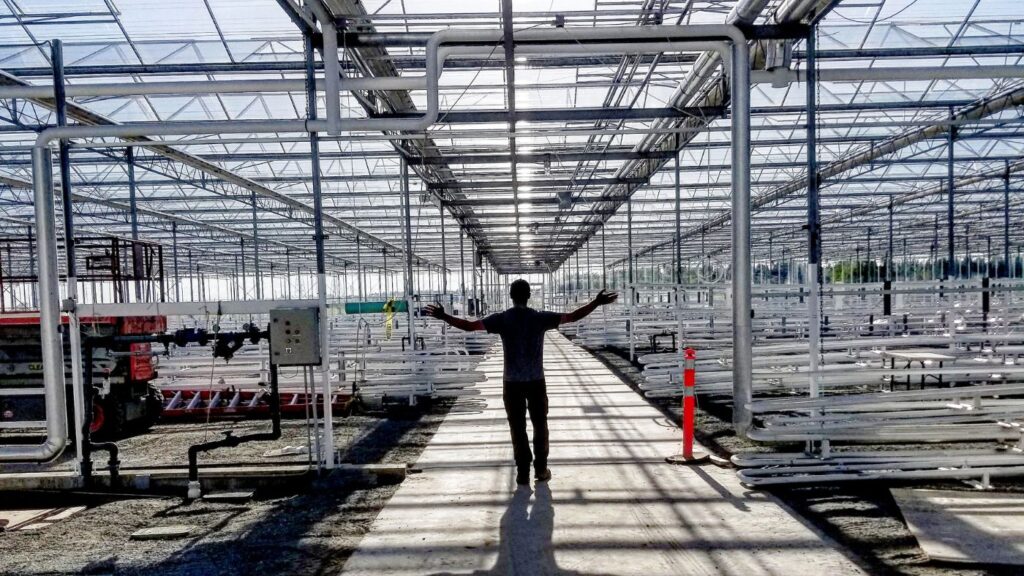 This guide covers the major considerations involved in planning and building a Virginia cannabis facility, with a focus on retail and cultivation operations and additional considerations relevant to processors and microbusinesses. It is written from the build side of the business, because that is where many otherwise-strong applicants stumble: they underestimate utility needs, local approvals, security infrastructure, commissioning, and the time required to convert a site into an inspection-ready operation.
 - Virginia Dual-Use Cannabis Conversion (2027): The $10M Medical-to-Adult-Use Pathway
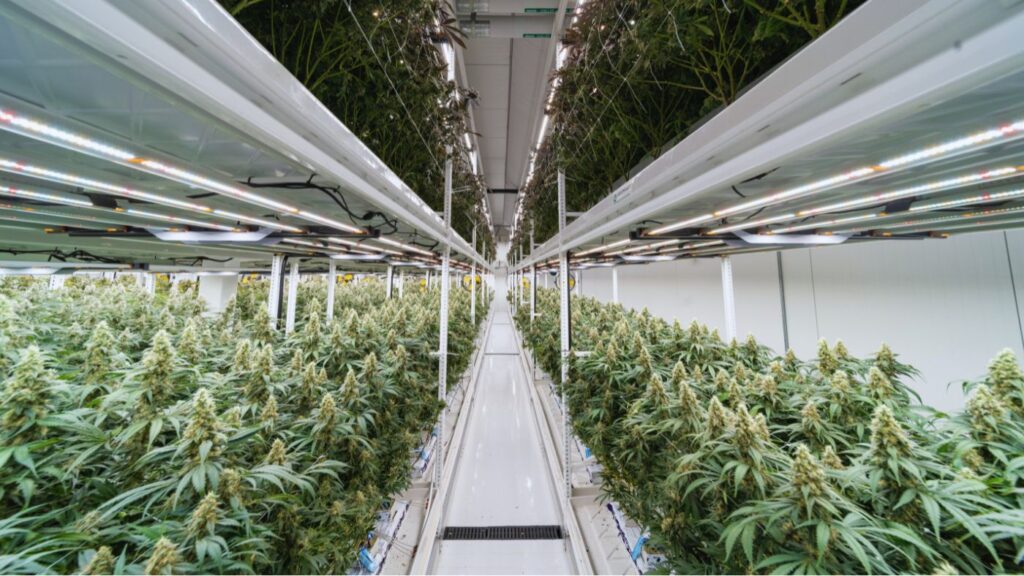 For Virginia’s existing medical cannabis operators, the 2026 retail framework created a distinct and high-stakes transition: pharmaceutical processors may apply for verification to exercise dual-use privileges and serve both registered medical patients and adult-use customers. The pathway covers the processor and its permitted cannabis dispensing facilities, and it carries a one-time $10 million fee, a required medical cannabis program preservation plan, an impact-licensee business accelerator commitment, and a firm May 1, 2027 payment or installment-plan deadline.
 - Virginia Impact Cannabis License (2027): Social Equity & the Equity Business Loan Fund
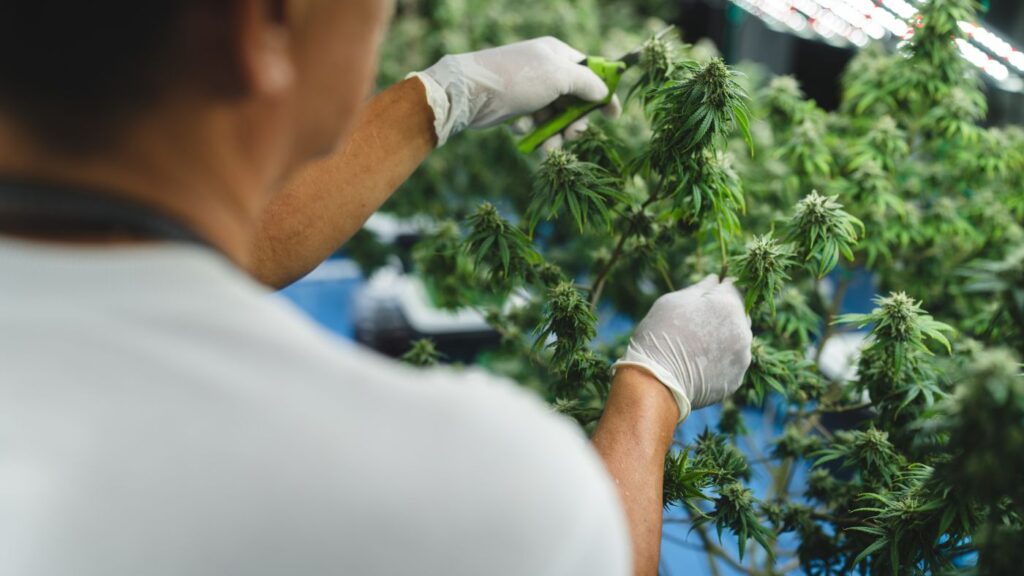 Virginia’s adult-use cannabis framework creates a meaningful pathway for applicants from communities and backgrounds affected by cannabis prohibition and enforcement. The law does not create a separate, stand-alone impact license. Instead, it creates an impact-licensee designation that qualifying applicants may pursue alongside an underlying marijuana establishment license, such as retail, cultivation, processing, microbusiness, transportation, delivery, or testing.
 - Virginia Cannabis Microbusiness License (2027): Eligibility & the Two-Location Model
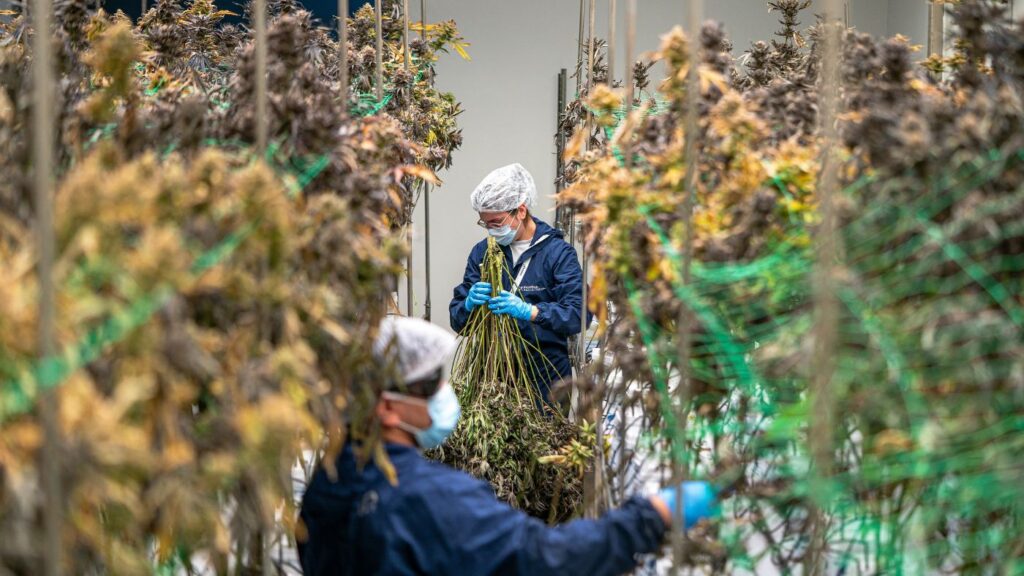 This guide explains the initial eligibility pathways for the licenses the CCA may issue by May 1, 2027, the difference between a microbusiness license and an impact designation, the indoor and outdoor cultivation limits, the precise rules governing two locations, and the financial, security, and operational readiness standards applicants should prepare to demonstrate. Several implementation details – including fees and the specific combination of privileges the CCA will authorize – still depend on forthcoming regulations.
 - Virginia Cannabis Cultivation License (2027): The Tiered System Explained
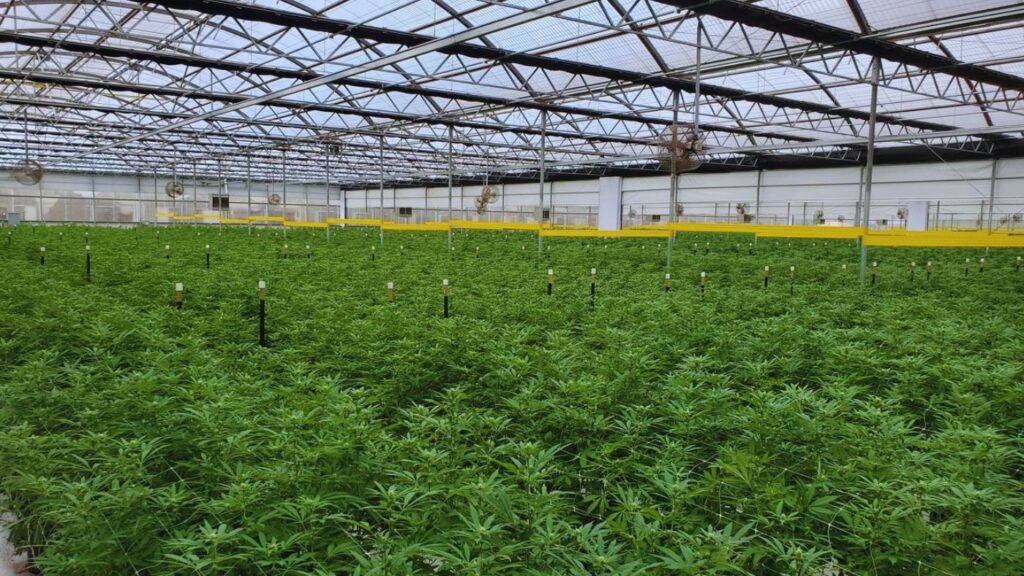 For operators whose strength is growing cannabis, Virginia’s emerging adult-use market presents a significant opportunity – and a cultivation license is the gateway to it. The June 2026 framework authorizes the Virginia Cannabis Control Authority (CCA) to begin accepting license applications on or after February 1, 2027 and issuing licenses on or after May 1, 2027. It also establishes five cultivation tiers with maximum canopies ranging from 5,000 to 35,000 square feet.