
Estimated reading time: 13 minutes
Table of contents
- Overview
- What the Microbusiness License Is
- The Two-Location Model: Why It Matters
- Eligibility and Equity Criteria
- The Anti-Predatory Guardrails
- How to Prepare Now
- Work With Catalyst BC on Your Virginia Microbusiness License
- Success Stories: See How Catalyst BC Has Helped Cannabis Businesses Enter and Lead the Market
- Virginia Cannabis Microbusiness License FAQs
- Additional Resources
- Free eBooks For Cannabis Business Success
- Latest Articles
Editor’s Notes: This article is part of our Virginia 2027 Licensing Hub. Last Updated: 8/27/2026. Other topics covered in this series are:
- Virginia Cannabis License 2027 Application Guide
- How to Open a Dispensary in Virginia
- Virginia Cannabis Microbusiness License Guide
- Virginia Cannabis Cultivation License Guide
- Virginia Impact Cannabis License Guide
- Virginia Cannabis Facility Design and Build-Out
- Virginia Dual-Use Cannabis Conversion Guide
Overview
Among Virginia’s new adult-use license types, the microbusiness license is one of the most distinctive. It can authorize a smaller operator to conduct activities related to cultivation, processing, and retail under a single license, as determined by the Cannabis Control Authority (CCA). But it is not an unrestricted vertically integrated license, and it is not limited exclusively to impact applicants. The enacted framework establishes specific cultivation limits, strict ownership restrictions, and a two-location structure that must be planned carefully.
This guide explains the initial eligibility pathways for the licenses the CCA may issue by May 1, 2027, the difference between a microbusiness license and an impact designation, the indoor and outdoor cultivation limits, the precise rules governing two locations, and the financial, security, and operational readiness standards applicants should prepare to demonstrate. Several implementation details, including fees and the specific combination of privileges the CCA will authorize, still depend on forthcoming regulations.
What the Microbusiness License Is
A Virginia microbusiness license may authorize activities otherwise permitted for cultivation facilities, processing facilities, and retail marijuana stores, but only to the extent determined by the Board. If cultivation is authorized, the license allows no more than 5,000 square feet of indoor canopy and 10,000 square feet of outdoor canopy, unless the Board establishes comparable limits by regulation. A person holding an interest in a microbusiness may not hold an interest in any other marijuana establishment license.
The initial rollout is narrower than SB 542, the vetoed 2026 standalone bill indicated. HB 30’s enacted microbusiness provisions are the controlling text. On or before May 1, 2027, the CCA may issue up to 100 microbusiness licenses to applicants that qualify through one of three pathways: certain legacy Virginia industrial hemp growers or processors, impact license applicants, or farmers meeting.
U.S. Department of Agriculture qualifications. Every applicant must also satisfy the applicable licensing requirements and the CCA’s financial, security, and operational readiness criteria. The 100-license figure applies to this initial issuance mandate; HB 30 does not clearly establish it as a permanent, lifetime cap on all future microbusiness licenses.
| Element | HB 30 as enacted |
| Initial issuance | The CCA may issue up to 100 microbusiness licenses on or before May 1, 2027 |
| Initial eligibility | Qualifying legacy hemp grower or processor, impact license applicant, or qualifying USDA farmer, plus applicable readiness requirements |
| Authorized activities | Cultivation, processing, and retail activities, in the combination determined by the Board |
| Cultivation limits | Up to 5,000 square feet of indoor canopy and 10,000 square feet of outdoor canopy, or comparable limits established by regulation |
| Locations | No more than two locations, within 20 miles of one another, under the same license and common ownership and control |
| Privilege limitation | Cultivation, processing, or retail sales may not be exercised at more than one location each |
| Other license interests | A microbusiness owner may not hold or control an interest in another marijuana establishment license |
| Impact support | Equity Fund assistance is reserved for impact licensees; the Cannabis Impact Business Support Team assists potential applicants more broadly |
| Application timing | The CCA must begin accepting applications for the initial microbusiness licenses on or before February 1, 2027 |
The Two-Location Model: Why It Matters
Virginia permits a microbusiness to conduct authorized activities at no more than two separate locations. The locations must be appropriately zoned and approved by their localities, must be within 20 miles of one another, and must operate under the same license and common ownership and control. The key restriction is that no single privilege may be duplicated: cultivation, processing, and retail sales may each be exercised at only one location.
That means the two-location allowance does not permit operating two stores or two cultivation sites. A workable model might place cultivation and processing at one location and retail at the second, or use a different allocation approved by the CCA. A second location is optional, not mandatory, and it should be used only when the operational benefit justifies the additional zoning, security, build-out costs, staffing, transportation, and compliance burden.

Expert Insight – Map the privileges before you choose the properties. Start with the operating model, not with two attractive pieces of real estate (two locations can mean double the costs). Decide where cultivation, processing, storage, retail, and product movement will occur; confirm that each privilege appears at only one location; then test the 20-mile limit, zoning, security, utilities, workflow, and transportation costs. The best two-location plan functions as a single coordinated operation rather than two loosely connected businesses.
Leif Olsen – Catalyst BC Chief Executive Officer
Eligibility and Equity Criteria
Eligibility for the initial microbusiness issuance is defined more precisely in HB 30 than in the introduced version of SB 542. Applicants who prepared against the earlier bill should reverify their pathway against the enacted language. An applicant must qualify as one of the following: (1) a qualifying Virginia industrial hemp grower or processor whose registration dates to before January 1, 2021, and who satisfies the applicable good standing conditions; (2) an impact license applicant; or (3) a farmer meeting U.S. Department of Agriculture qualifications. These are alternative pathways into the initial microbusiness pool, not requirements that every applicant satisfies simultaneously.
An impact designation is not synonymous with a microbusiness license. It is a designation that can attach to a license when at least 51% of the applicant is owned and directly controlled by qualifying individuals who meet Virginia’s geographic and personal eligibility standards. A microbusiness may enter through the impact pathway, but it may also qualify through the legacy hemp or USDA farmer pathways. Regardless of pathway, the CCA may require proof of financial responsibility, security planning, operational readiness, disclosed ownership, and compliance with the general licensing standards.
The Anti-Predatory Guardrails
Virginia applies ownership transparency and anticircumvention rules across the market. License assignments, sales, transfers, and changes in ownership or control require prior written Board approval, and the CCA may review financing, management, and brand licensing agreements for undue influence. A microbusiness also cannot be paired with an ownership interest in another marijuana establishment. The five-year transfer restriction, however, applies specifically when the microbusiness also holds an impact designation: an impact licensee may not transfer a controlling interest of more than 49% during the first five years, subject to limited regulatory exceptions.

Expert Insight – Separate legitimate capital from disguised control. Investors and service providers can support a business without controlling it. HB 30 presumes that passive investments below 10% and management or brand agreements without actual or contractual control are permissible unless the facts show undue influence. For an impact-designated microbusiness, qualifying owners must retain at least 51% ownership and direct control. Document decision rights, economics, financing terms, intellectual property arrangements, and exit provisions clearly, and have qualified Virginia counsel review the complete structure rather than evaluating each agreement in isolation.
Michael Williamson – Catalyst BC Chief Operating Officer
How to Prepare Now
The CCA must begin accepting applications for the initial microbusiness licenses on or before February 1, 2027, and may issue up to 100 by May 1, 2027. Prospective applicants should focus on the following:
- Confirm the correct eligibility pathway and assemble evidence supporting legacy hemp status, impact eligibility, or USDA farmer qualification, together with complete ownership disclosures.
- Design the privilege and location plan before committing to real estate. A second site is optional; both locations must be within 20 miles of each other, and cultivation, processing, and retail may not be duplicated.
- Build a readiness file covering capital, sources of funds, security, operations, staffing, compliance systems, supply chain, and a realistic path from preliminary approval to operation.
- Diligence sites without overcommitting too early because state law does not require possession of the premises until the final licensing stage. Selected applicants generally receive up to 18 months to provide final site information, subject to extension rules; any retail location must also comply with zoning and applicable 1,000-foot buffers.
- Use support programs accurately by engaging the Cannabis Impact Business Support Team for business planning and application assistance, while recognizing that Equity Business Loan Fund grants, loans, and services are reserved for impact licensees and are not guaranteed financing.
Operators weighing a project in Virginia can find state-specific guidance on our Virginia cannabis consulting page.
Work With Catalyst BC on Your Virginia Microbusiness License
Virginia’s microbusiness license creates a meaningful, small-scale, potentially vertically integrated entry path, but it is more structured than a simple two-location license. Applicants must qualify through an authorized initial pathway, select a commercially sensible combination of privileges, respect the indoor and outdoor canopy limits, build a compliant ownership structure, and show that the business is financially and operationally ready. Catalyst BC helps applicants evaluate eligibility, model cultivation/processing/retail configurations, develop one or two location operating plans, assess sites and utilities, prepare compliance and security systems, and coordinate ownership and financing analysis with qualified counsel. With the CCA required to begin accepting initial microbusiness applications on or before February 1, 2027, the work should begin now. Contact our team to build a microbusiness strategy designed to earn approval and operate sustainably.
About the authors: This guide was prepared by the Catalyst BC cannabis consulting team. Catalyst BC advises cannabis operators on state licensing strategy, impact, and microbusiness compliance; ownership structuring; regulatory affairs; and cannabis facility design and commissioning across U.S. and international markets. This article is provided for informational purposes only and does not constitute legal advice; applicants should confirm current microbusiness eligibility and requirements with the Virginia Cannabis Control Authority and consult qualified counsel regarding their specific circumstances.
Success Stories: See How Catalyst BC Has Helped Cannabis Businesses Enter and Lead the Market
From initial startup and facility build-outs to high-value exit strategies, our cannabis consultants provide the expertise needed to navigate the complexities of the legal cannabis industry.
Virginia Cannabis Microbusiness License FAQs
It is a limited license that may authorize cultivation, processing, and retail activities in a combination determined by the CCA. It carries cultivation, location, ownership, security, tracking, and operating restrictions and is not automatically an unrestricted vertically integrated license.
The CCA may issue up to 100 initial microbusiness licenses on or before May 1, 2027. That figure governs the initial rollout and should not be described as a confirmed permanent lifetime cap on all future microbusiness licenses.
It can combine cultivation, processing, and retail privileges under a single license and may operate up to two locations. The sites must be within 20 miles of each other and under common ownership and control, and no individual privilege may be exercised at both locations.
Applicants must qualify as certain legacy Virginia industrial hemp growers or processors, impact license applicants, or farmers meeting USDA qualifications. They must also satisfy the CCA’s applicable licensing, financial, security, and operational readiness standards.
The Cannabis Impact Business Support Team provides business planning, administrative, and outreach assistance to potential licensees. The Cannabis Equity Business Loan Fund provides grants, loans, and other support specifically to impact licensees; it is not automatic funding for every microbusiness.
No. A microbusiness may use up to two approved locations within 20 miles, but retail sales may be exercised at only one location. The same restriction applies separately to cultivation and processing.
Yes. Any assignment, sale, transfer, or change in ownership or control requires prior written approval of the Board. The separate five-year restriction on transferring a controlling interest of more than 49% applies when the license carries an impact designation.
A standard retail license primarily authorizes consumer sales. A microbusiness may combine Board-approved cultivation, processing, and retail privileges within smaller-scale limits. Still, its owners cannot hold interests in other marijuana establishments, and its cultivation and location rules are more specialized.
Now. Confirm the eligibility pathway, ownership, privilege mix, capital plan, and potential sites before the CCA opens the initial process. Site possession is not required until the final stage, so use conditional arrangements and disciplined diligence rather than taking unnecessary real estate risk.
HB 30 is enacted: initial eligibility categories, cultivation limits, two location conditions, other license restrictions, and application timing are established. The CCA must still finalize fees, application forms, operating regulations, and the precise privileges and corresponding limits it will authorize.
Additional Resources
Free eBooks For Cannabis Business Success




Latest Articles
- How Much Does It Cost to Open a Dispensary in 2026?
 The allure of jumping into the legalized cannabis industry often paints a picture of quick riches and burgeoning demand, yet the reality of establishing a licensed cannabis dispensary is far more nuanced, capital-intensive, and fraught with unique financial challenges. For aspiring entrepreneurs and seasoned investors alike, understanding the true dispensary startup costs is the absolute bedrock of success.
 - Virginia Cannabis Facility Design & Build-Out for the 2027 Market
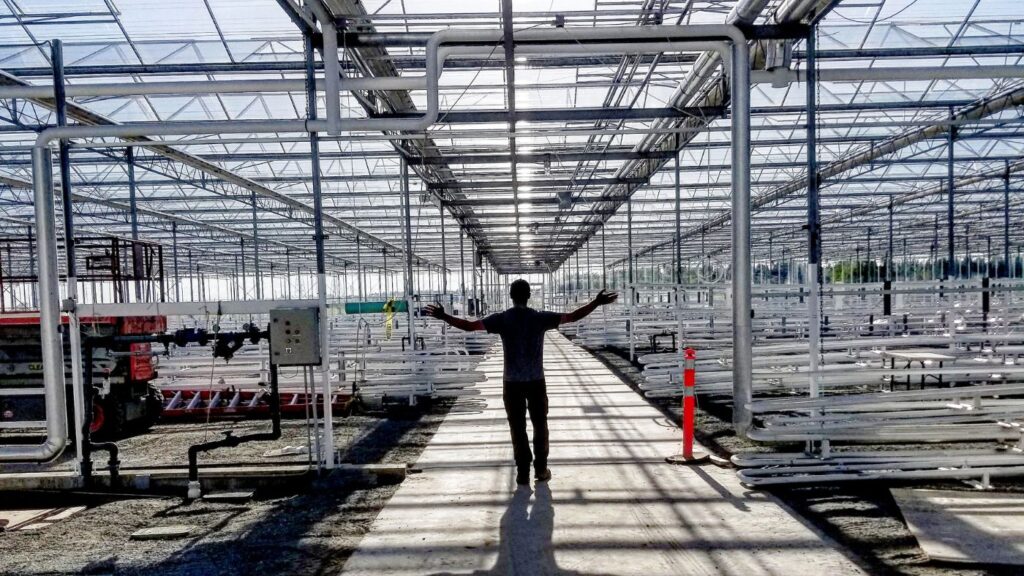 This guide covers the major considerations involved in planning and building a Virginia cannabis facility, with a focus on retail and cultivation operations and additional considerations relevant to processors and microbusinesses. It is written from the build side of the business, because that is where many otherwise-strong applicants stumble: they underestimate utility needs, local approvals, security infrastructure, commissioning, and the time required to convert a site into an inspection-ready operation.
 - Virginia Dual-Use Cannabis Conversion (2027): The $10M Medical-to-Adult-Use Pathway
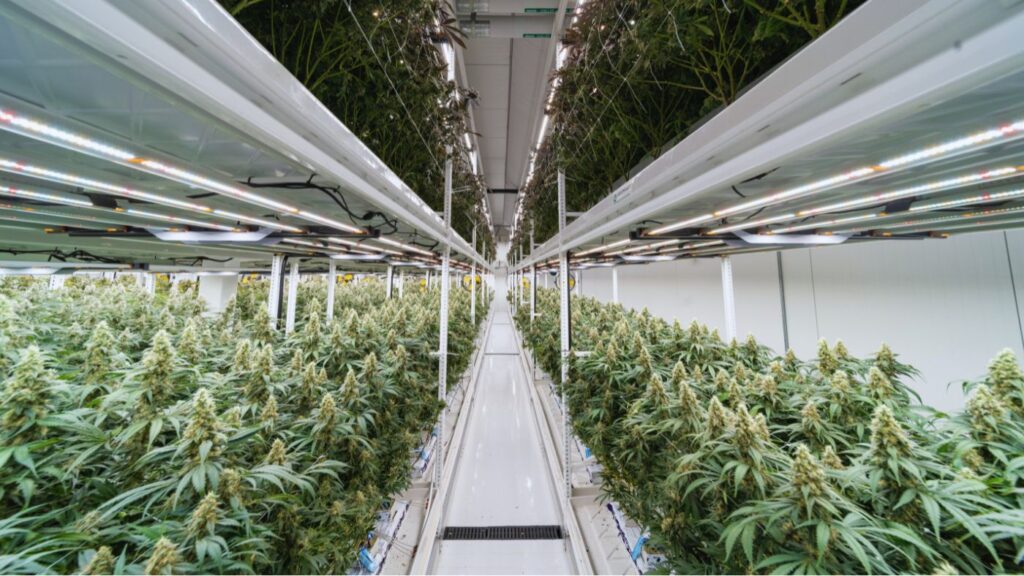 For Virginia’s existing medical cannabis operators, the 2026 retail framework created a distinct and high-stakes transition: pharmaceutical processors may apply for verification to exercise dual-use privileges and serve both registered medical patients and adult-use customers. The pathway covers the processor and its permitted cannabis dispensing facilities, and it carries a one-time $10 million fee, a required medical cannabis program preservation plan, an impact-licensee business accelerator commitment, and a firm May 1, 2027 payment or installment-plan deadline.
 - Virginia Impact Cannabis License (2027): Social Equity & the Equity Business Loan Fund
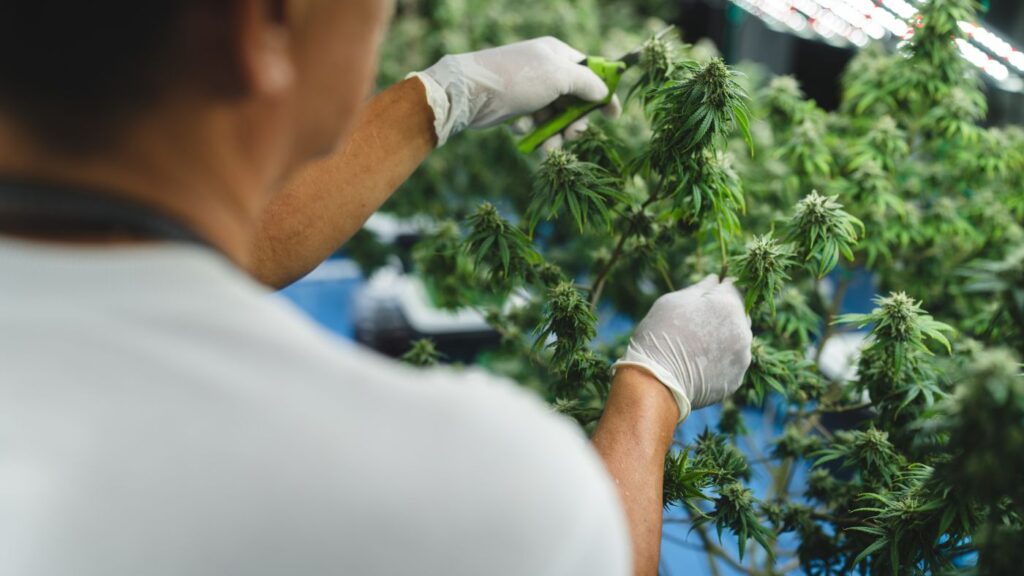 Virginia’s adult-use cannabis framework creates a meaningful pathway for applicants from communities and backgrounds affected by cannabis prohibition and enforcement. The law does not create a separate, stand-alone impact license. Instead, it creates an impact-licensee designation that qualifying applicants may pursue alongside an underlying marijuana establishment license, such as retail, cultivation, processing, microbusiness, transportation, delivery, or testing.
 - Virginia Cannabis Microbusiness License (2027): Eligibility & the Two-Location Model
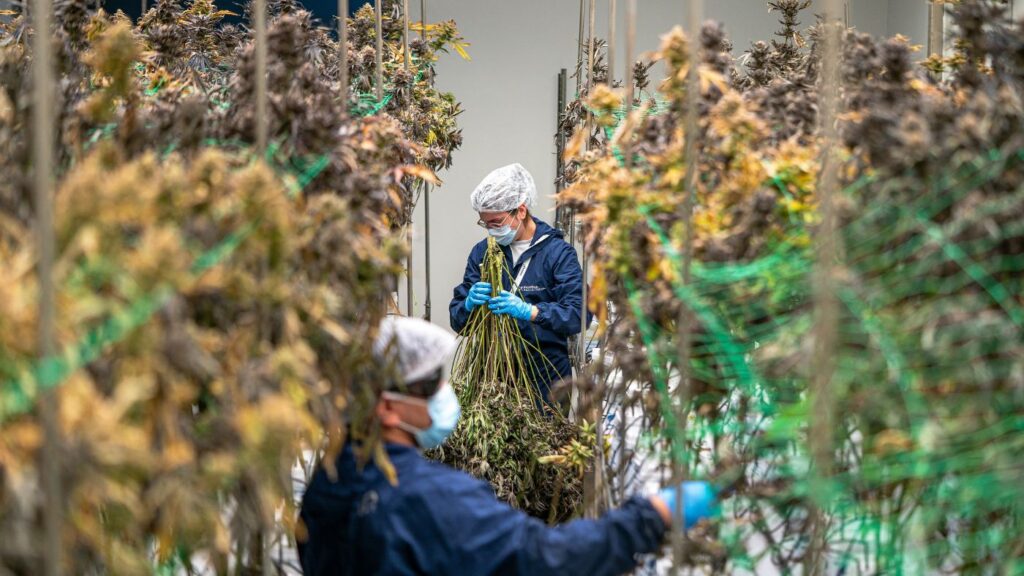 This guide explains the initial eligibility pathways for the licenses the CCA may issue by May 1, 2027, the difference between a microbusiness license and an impact designation, the indoor and outdoor cultivation limits, the precise rules governing two locations, and the financial, security, and operational readiness standards applicants should prepare to demonstrate. Several implementation details – including fees and the specific combination of privileges the CCA will authorize – still depend on forthcoming regulations.
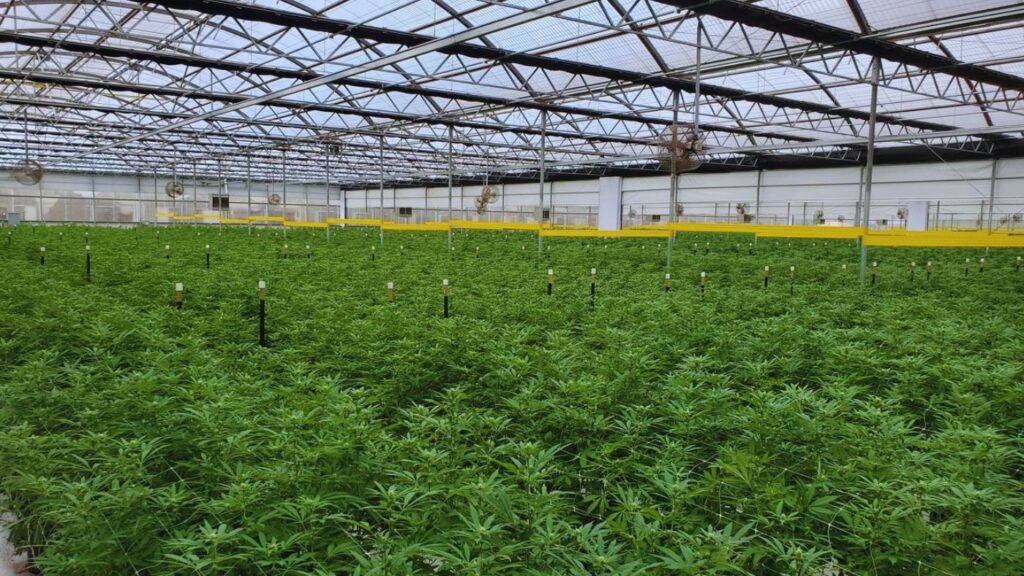
 - Virginia Cannabis Cultivation License (2027): The Tiered System Explained
 For operators whose strength is growing cannabis, Virginia’s emerging adult-use market presents a significant opportunity – and a cultivation license is the gateway to it. The June 2026 framework authorizes the Virginia Cannabis Control Authority (CCA) to begin accepting license applications on or after February 1, 2027 and issuing licenses on or after May 1, 2027. It also establishes five cultivation tiers with maximum canopies ranging from 5,000 to 35,000 square feet.