New Mexico Cannabis Consultants: CCD Licenses, Grow Costs
New Mexico cannabis consulting starts with an open door: the Cannabis Control Division (CCD) accepts license applications now and caps no license type. Investors choose between a new license and buying a stake; flower’s retail price fell 62% by early 2025, squeezing growers. Our records: 58+ licenses secured.
A Decade of Harvesting Success - Trusted by Cannabis Operators Worldwide
New Mexico Hemp and Excise Dates
Updated: 10/9/2026. New Mexico licenses adult-use and medical cannabis businesses under the Cannabis Regulation Act, and the Cannabis Control Division of the Regulation and Licensing Department issues, renews, suspends and revokes those licenses (NMSA 26-2C-6). Since July 1, 2026, the cannabis excise tax has been 14% of the price paid, and it does not apply to medical sales to registry cardholders; it rises one point each July 1 to 18% from July 1, 2030 (NMSA 7-42-3), so retail price models need a new rate each year until 2030.
Under Public Law 119-37, enacted November 12, 2025, the federal hemp definition excludes products containing cannabinoids the plant cannot naturally produce from November 12, 2026 (P.L. 119-37, Section 781). When a delay in Public Law 119-103 ends on December 11, 2026, the definition also excludes final products with more than 0.4 milligrams of THC and similar cannabinoids combined per container (P.L. 119-103, Section 2019), a far lower line than New Mexico’s own hemp rule draws.
Meet Catalyst BC's Founders
-
Leif Olsen
Chief Executive Officer
-
Michael Williamson
Chief Operating Officer
-
Ian Miller
Executive Chair
Our partners bring multi-faceted expertise across business strategy, licensing, facility development, finance, and commercial operations. That breadth is complemented by subject matter experts across the wider Catalyst BC team, allowing us to bring the right combination of experience to each client and project. The result is bespoke, collaborative support shaped around your business, priorities, and goals - with the right expertise brought to the table when it matters most.
Where a New Mexico Cannabis Consultant Fits Beside the CCD
The CCD licenses, inspects and disciplines cannabis businesses and tracks their inventory in the New Mexico Seed-to-Sale System (NMS2S). Its compliance officers can explain the rules, but its FAQ says they “cannot offer any operational/legal advice” and refers licensees to counsel or a consultant (CCD compliance FAQ). A New Mexico cannabis consultant works on the owner’s side: water and site screening, applications in the CCD’s NM-PLUS portal, plant-count strategy, acquisition diligence, facility design and the operating fixes that keep a license renewable.
Putting Money Into New Mexico Cannabis: New License or Equity Stake
The state sets no limit on the number of licenses of any type (CCD licensing FAQ), and no city or county may completely prohibit a licensee (NMSA 26-2C-12). In our view, entry is cheap and profit is the hard part. Licensed retailers sold $47.4 million of cannabis in August 2026, $37.3 million adult-use and $10.1 million medical (CCD sales data), a monthly total that has stayed between $44.3 million and $52.5 million since January 2024 (our reading of the CCD’s monthly series).
A license cannot be transferred or assigned, and it cannot be subject to a security transaction, a lien or receivership (NMSA 26-2C-6(G) and (H)), so, in our reading, lenders must take security in other assets and investors buy into the licensed entity. Anyone controlling 10% or more of the financial or voting interest, and every officer or board member, is a controlling person (NMSA 26-2C-2(Q)); banks and licensed lenders are not. On federal tax, the Schedule III order effective April 28, 2026 says holders of state medical marijuana licenses are no longer subject to Section 280E, the rule that bars business deductions for Schedule I and II trafficking, while adding that it is not a tax determination (91 FR 22714). The CCD says New Mexico law is unchanged and encourages licensees to get their own legal and tax advice (CCD bulletin 26-07); in our view, how the order treats a New Mexico license that covers both medical and commercial activity is unsettled.
What we offer New Mexico investors: diligence on a target’s controlling persons, water rights, CCD enforcement record and NMS2S inventory through cannabis business strategy; a New Mexico cannabis business plan built on plant fees, the excise schedule and current prices through cannabis financial planning; NM-PLUS application packets through cannabis license application support; and build-out to first harvest or opening day through cannabis startup support.
Licensed by the CCD: Retail Flower Fell From $10.61 to $4.04 a Gram
A CCD-commissioned study of 85 million retail sales records found the weighted average price of flower fell from $10.61 a gram in April 2022 to $4.04 in February 2025, before taxes, while concentrate prices fell 77.33% (CCD supply and demand study, 2025). Flower and uninfused pre-rolls slipped from 63.92% to 52.81% of dollar sales, flower infused with concentrate rose from 0.19% to 5.07%.
Plant counts cap how many flowering plants a grow holds. Producers and vertically integrated licensees are placed in one of four levels by mature plants, a mature plant being a female plant in the flowering stage, and no licensee may grow more than 20,000 mature plants at one time (16.8.8 NMAC). An increase comes in 500-plant increments, at renewal and one other time a year, and the CCD weighs whether the licensee sold at least 80% of its cannabis each month for the last three months. Immature plants do not count toward the level.
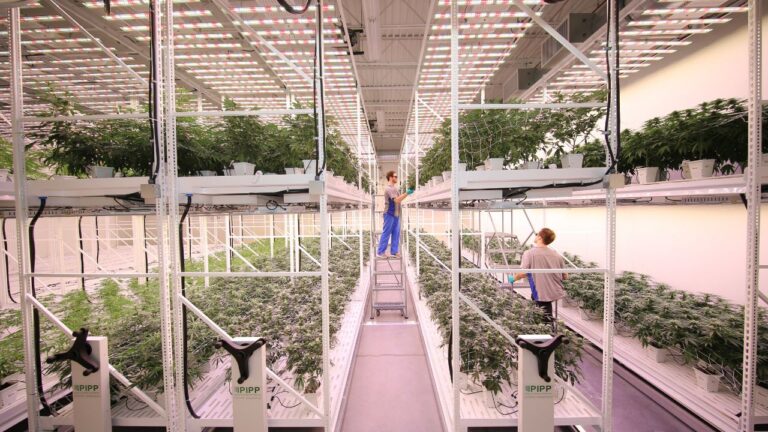
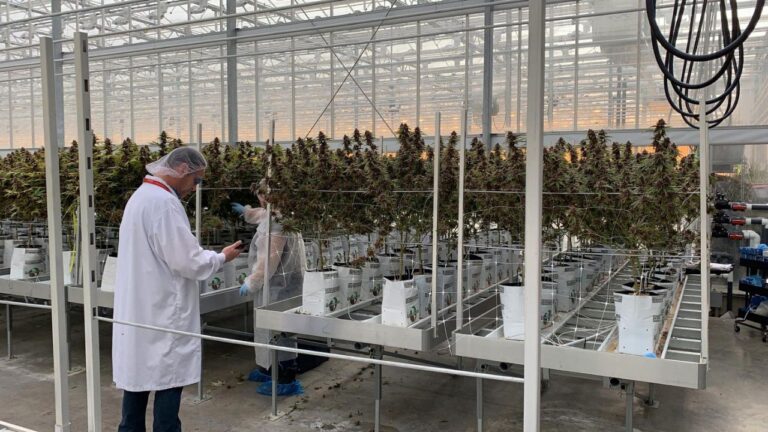
For New Mexico rooms we offer New Mexico cannabis facility design with HVAC and dehumidification sized for the climate, controlled environment agriculture targets by room, cannabis vertical farming to add yield without a larger footprint, operational optimization of harvests, labor and NMS2S records and, when cost per gram outruns price, a cannabis turnaround plan.
Our Chief Operating Officer and co-founder Michael Williamson has 25,000+ hours in cultivation and dispensary operations and co-founded Greenhaus Industries, which patented stackable trays for growing on multiple tiers (both company-reported).
Our record and team: Catalyst BC has no New Mexico client to date, and our records show 58+ licenses secured in other states. Leif Olsen, our Chief Executive Officer and a co-founder, leads our licensing work, and Ian Miller, our Executive Chair and a co-founder, raised $22 million in private equity (company-reported) for a greenfield cultivation and processing operation. We have no New Mexico office; we work on-site and remotely, and the same team runs Catalyst BC’s national cannabis consulting practice.
A word against our own interest: the CCD posts video tutorials that guide licensees through NM-PLUS (CCD licensing tutorials), and a well-organized applicant with a verified water source can file without a consultant. To talk through a New Mexico file, contact us or call (USA) 303-305-3787.

Investing in New Mexico cannabis
- Cannabis Business Strategy ConsultingDiligence on a licensee to buy into
- Cannabis Financial Planning & ModelingPlant fees, excise tax, price per gram
- Cannabis Licensing & Application SupportNM-PLUS packets and water records
- Cannabis Startup SupportBuild-out to first harvest
Already licensed in New Mexico
- Cannabis Facility Design & HVAC / HVACD EngineeringClimate control for dry, high sites
- Cannabis Controlled Environment Agriculture (CEA)Room targets that pass testing
- Cannabis Vertical Farming ConsultingMore yield in the same building
- Cannabis Operational OptimizationHarvests, labor and NMS2S records
- Cannabis Business Turnaround & Operational RecoveryCost per gram back under price
Compliant Harvests
Square Feet of Cultivation, Production, and Retail Facilities Designed
Licenses Secured
Applying in New Mexico Now: NM-PLUS, Water Rights and a 90-Day Clock
You can apply now. The CCD issues 10 license types, and every New Mexico cannabis license application, amendment and renewal goes through its online NM-PLUS portal; paper applications are no longer accepted (CCD apply page). You register the business and each controlling person first, and an agent filing for you needs its own account. Once the CCD deems an application complete, it has 90 days to issue or deny the license (NMSA 26-2C-7(B)); the CCD itself publishes no processing times, because it relies on information from other state agencies.
Producers face one more gate: all water rights must be approved before an applicant may apply for a producer license. Municipal water needs only a letter from the provider approving cannabis use; other sources go to the Office of the State Engineer (OSE), water hauling is limited to one “bridge” year, and a domestic well may not supply a commercial grow. Producer, manufacturer, retailer and courier applicants also show local compliance, usually a local business license that may include zoning approval and a fire inspection, and registration for gross receipts tax.
CCD and hemp filings and their conditions
| Filing | Status | Condition or note |
|---|---|---|
| Cannabis producer or producer microbusiness | Open on NM-PLUS | Water right or provider letter approved before applying |
| Manufacturer | Open on NM-PLUS | Liquefied petroleum (LP) gas permits issued before a Class IV (volatile solvent or CO2 extraction) license |
| Retailer | Open on NM-PLUS | Local business license or proof none is issued |
| Vertically integrated or integrated microbusiness | Open on NM-PLUS | Qualify for each activity requested |
| Courier, testing lab, research lab | Open on NM-PLUS | No other licensee except a research lab may hold a testing lab license |
| Consumption area | Open on NM-PLUS | The local jurisdiction may deny it |
| Hemp grow license (NMDA) | 2026 license forms posted | Annual, continuous, breeding; nursery for plant sales |
| Hemp facility permit (NMED) | Applications available | Extraction, manufacturing, warehouse or retail manufacturer |
CCD apply page and licensing FAQ; NMSA 26-2C-6(G); 16.8.2.8 NMAC; NMDA hemp registration; 20.10.2.8 NMAC. Every source is listed at the bottom of this page.
Key parts of a New Mexico producer application
| Item | Rule |
|---|---|
| Owners | Every controlling person listed, at least 21, with criminal history screening |
| Local compliance | A current local business license, or evidence the jurisdiction issues none |
| Tax | Registration with the Taxation and Revenue Department for gross receipts tax |
| Water | A provider letter, or OSE documentation of a valid water right or permit |
| Conservation plan | Drip irrigation, water collection, natural lighting, energy efficiency and renewable energy, or why they are not feasible |
| Plants and water | Proposed mature and immature plant counts and monthly water use for 12 months |
| Equity plan | A social and economic equity plan covering the licensee, controlling persons and employees |
16.8.2.22 NMAC.
Water sources the CCD and OSE accept for a grow
| Source | What to file |
|---|---|
| Municipal water | A letter from the provider permitting cannabis use; the CCD reviews it |
| Private water right | OSE validation that the right fits the use and place of use |
| Hauled water | OSE approval, an approved hauler and a letter; one bridge year only |
| Domestic well | Personal use only, not a commercial grow |
CCD licensing FAQ; OSE commercial cannabis water page.
Investors buying into an existing licensee should jump to ownership changes.
Ten CCD License Types, Four Plant Levels and a 200-Plant Microbusiness
The CCD licenses producers, producer microbusinesses, manufacturers, retailers, couriers, testing and research laboratories, consumption areas, integrated cannabis microbusinesses and vertically integrated establishments (CCD license types). A vertically integrated licensee may hold several sublicenses of each activity under one license; an integrated microbusiness may hold only one of each, with no more than 200 mature plants, the same ceiling as a producer microbusiness.
Several licensees may share one licensed premises, but none may occupy premises that also house a business licensed to sell or serve alcohol. Consumption areas are the one license a local jurisdiction may refuse outright; our New Mexico cannabis lounge guide covers them.
CCD license types and what each allows
| License | What it allows |
|---|---|
| Producer | Cultivate, have unprocessed cannabis tested and sell it wholesale to other licensees |
| Producer microbusiness | Produce at one premises with no more than 200 mature plants |
| Manufacturer | Process cannabis into products, have them tested and package them |
| Retailer | Sell to patients, caregivers and adults 21 and older with valid ID |
| Vertically integrated establishment | Courier, manufacture, produce or retail, with multiple sublicenses |
| Integrated microbusiness | One each of production, manufacturing, retail and courier, 200 mature plants |
| Courier | Deliver to patients, caregivers and consumers |
| Consumption area | Serve cannabis for on-site use; no alcohol |
| Testing laboratory | Sample and test products for wholesale or retail |
| Research laboratory | Study cultivation and cannabis; no product testing |
CCD license types page; NMSA 26-2C-2.
Mature plant levels for producers and vertically integrated licensees
| Level | Mature plants |
|---|---|
| Level 1 | 201 to 2,000 |
| Level 2 | 2,001 to 6,000 |
| Level 3 | 6,001 to 12,000 |
| Level 4 | 12,001 to 16,000 |
| Maximum for any licensee | 20,000 at one time |
| Producer or integrated microbusiness | No more than 200 |
16.8.8.9 NMAC; NMSA 26-2C-2.
Each license runs 12 months from approval. Renewal applications go in through NM-PLUS no earlier than 60 days and no later than 30 days before expiration, and a licensee whose renewal is not approved in time may not sell, transfer or manufacture cannabis until it is (CCD renewal page). A license that expires before a renewal is filed is gone: the business must apply again, may get a new track-and-trace account and may not be able to move its old inventory, and producers re-verify water rights each year (CCD bulletin 26-04).
CCD License and Plant Fees, and New Mexico’s Cannabis Excise Tax
The Act fixes half the license fees and caps the other half (NMSA 26-2C-9). Producers, manufacturers, retailers and laboratories pay $2,500 a year, a vertically integrated license $7,500, a producer microbusiness $1,000 and an integrated microbusiness $2,500 (16.8.11 NMAC). Cultivating licensees other than microbusinesses add $5 for each mature commercial plant, or $2.50 for each plant of a licensee growing only medical cannabis, assessed at licensing, at each plant increase and at renewal. Total fees for a vertically integrated license covering both markets may not exceed $125,000, and a license for medical activity only pays half the license fee. One wording gap: the rule charges $1,000 for each additional licensed premises, while the CCD’s fee page and the Act’s vertically integrated line say “each licensed premises” (CCD fee page); confirm with the CCD how the first premises is billed before budgeting.
Annual CCD license fees
| License | Annual fee | Each additional premises |
|---|---|---|
| Producer | $2,500 | $1,000 |
| Manufacturer | $2,500 | $1,000 |
| Retailer | $2,500 | $1,000 |
| Testing or research laboratory | $2,500 | $1,000 |
| Vertically integrated establishment | $7,500 | $1,000 |
| Producer microbusiness | $1,000 | None listed |
| Integrated microbusiness | $2,500 | None in rule ($500 in Act) |
| Courier | $250 | $100 |
| Consumption area | $2,500 | None listed |
16.8.11.9 NMAC.
Plant, amendment and background-check fees
| Item | Fee |
|---|---|
| Mature commercial plant | $5 a year |
| Mature plant, medical-only licensee | $2.50 a year |
| Microbusiness plants | No per-plant fee |
| License amendment | $75 |
| Designating a non-controlling person as agent | $75 |
| State background check, each controlling person | $15, paid to the Department of Public Safety |
16.8.11.10 and 16.8.11.11 NMAC; CCD licensing FAQ.
Cannabis taxes in New Mexico
| Tax | Rate or rule | Applies to |
|---|---|---|
| Cannabis excise tax | 14% to June 30, 2027, then up one point each July 1 to 18% from July 1, 2030 | Retail sales of cannabis products, filed and paid monthly by the 25th |
| Medical sales | No excise tax | Sales to registry cardholders and reciprocal (out-of-state) participants |
| Gross receipts tax | Applies, with deductions | Deductions for sales for resale and for medical cannabis |
NMSA 7-42-3 and 7-42-4; Taxation and Revenue Department cannabis excise page.
Budget accordingly (our arithmetic from 16.8.11 NMAC): a producer at the top of Level 2, 6,000 commercial plants, pays $32,500 a year, the $2,500 license plus $30,000 in plant fees; at the 20,000-plant maximum it pays $102,500 before premises fees. A retailer pays $2,500. Every $1 million of adult-use retail sales owes $140,000 in excise tax at 14%, and $150,000 from July 1, 2027.

How to Open a Dispensary in New Mexico: Five Steps With the CCD
These steps follow the Cannabis Regulation Act and 16.8.2 NMAC for a standalone retailer.

- Check the local rules: the city or county may limit hours and density but may not ban you or require more than 300 feet from a school or daycare center.
- Form the business, register it for gross receipts tax, and have every controlling person (at least 21), LLC member and partner complete a $15 state background check.
- Obtain the local business license, or proof your jurisdiction issues none, then register the business and controlling persons in NM-PLUS and file the retailer application with the $2,500 fee.
- Answer CCD requests quickly: information not received within 90 days of the date the application was deemed complete starts a denial, and the CCD must decide within those same 90 days.
- Once licensed, open a cannabis excise tax account, record every sale in NMS2S, stock only products derived from New Mexico sources (NMSA 26-2C-37) and file excise returns by the 25th of each month.
In our view, New Mexico openings stall on local approvals and, for growers, water paperwork more often than on the CCD file itself, so our cannabis licensing and application team checks both first.
Who Can Own a New Mexico Licensee, and How Control Changes Hands
Every applicant and controlling person must be at least 21 (16.8.2.8 NMAC). The CCD may refuse a license on grounds that include, where substantially related to the business, a pending investigation, felony indictment or conviction involving fraud, deceit or embezzlement or the use of minors to produce or sell cannabis; a completed sentence for a cannabis offense may not be the sole reason for denial (NMSA 26-2C-7(D) and (G)). A person whose license was revoked waits three years to reapply.
Control changes by amendment, not transfer. Every licensee needs CCD approval, after a background check, before a new controlling person, LLC member or partner takes on duties; the CCD decides most amended applications within 90 days of a complete filing, and removing someone takes an affidavit from all controlling persons. Producers also need approval before changing their water source, their plant count or the size of the premises, or before a 10% or greater increase in water use.
New Mexico runs no license lottery, but every producer applicant files a social and economic equity plan, the CCD weighs it in setting the plant level, and the division’s goal is that at least half of applicants, licensees and employees represent the groups the Act names, including communities harmed by prohibition enforcement and rural producers (16.8.1.8 NMAC). The CCD names microbusiness licenses and $2.50 medical plant fees as entry points for smaller businesses (CCD social equity page).
Correction to published guidance (October 9, 2026): a law firm’s New Mexico license guide, as captured on October 9, 2026, says legalization generated “over $300 million in tax revenue in just one year” and lists 8 license types. The State reported $300 million in adult-use sales, not tax, in the first year from April 2022 (CCD announcements), and the CCD issues 10 license types.
Where a New Mexico Cannabis Business Can Locate, and How It Proves Its Water
Local rules decide the street, not whether you can open. A local jurisdiction may adopt time, place and manner rules that reasonably limit license density and operating hours, but it may not prevent licensed transport on public roads, require a premises more than 300 feet from a school or daycare center that existed when the business was licensed, or force an existing licensee to relocate. The CCD will not license premises within a tribal nation, tribe or pueblo unless the tribal government and the department have an intergovernmental agreement.
For growers, water decides the site. Off municipal water, an outdoor grow needs a water right for irrigation and an indoor grow one for commercial use at the proposed place of use, and the OSE checks both the ownership and the configuration before a producer can apply. Producers also need written CCD approval before construction, electrical, plumbing, mechanical or LP gas work that requires a permit, and the CCD must answer within 10 days of the request. Moving a grow means an amended license and, if the water right does not move with it, a new OSE filing; before you sign a lease, confirm zoning, the school buffer and the water record, which is where our cannabis facility design work starts.
CCD Testing, NMS2S Tracking and Inspections, Plus New Mexico Hemp Rules
New Mexico’s microbial panel sets action levels for E. coli, the four Aspergillus species, Salmonella and, for some edibles, three other pathogens; it sets no total yeast and mold count, though the CCD may require testing for additional microbes (16.8.7 NMAC). A batch that fails may be retested, and within 120 days dried cannabis or concentrate that fails microbial testing may be remediated only by volatile-solvent extraction, then retested.
Since September 4, 2026, all cannabis activity runs on NMS2S, the State’s free seed-to-sale system, which replaced BioTrack; couriers now track deliveries in it, products must pass testing before they are marked sale-ready, and producers may receive only listed inventory types (CCD NMS2S page). The CCD aims to inspect every licensed facility at least once a year, a failed inspection brings a re-inspection in 30 to 90 days, and a civil penalty may reach $10,000 per violation (NMSA 26-2C-8). Every premises needs digital video at 1280 by 720 pixels or better, recording at 15 frames per second or more, with footage kept 30 days and footage of a theft or security incident kept 12 months (16.8.2.10 NMAC). Our New Mexico cannabis compliance consulting review checks NMS2S records, testing and remediation logs and excise filings against the rules before an inspector does.
New Mexico Hemp: NMDA Grow Licenses, NMED Permits and the 0.4 mg Federal Line
The New Mexico Department of Agriculture (NMDA) licenses hemp growing (NMDA hemp registration), and the New Mexico Environment Department (NMED) permits extraction, processing and manufacturing (NMSA 76-24-8). From March 29, 2026, NMED’s rule caps hemp finished products at 0.3% total THC, 2.0 milligrams of total THC per serving and 20 milligrams per package, with tinctures allowed 100 milligrams, broad-spectrum products 6 milligrams per package and cosmetics and vapes exempt from the milligram caps, and since January 28 allows only nine synthetic or semi-synthetic cannabinoids, including CBD and CBG, at 98% purity or more (20.10.2 NMAC). A CCD licensee that stores or uses hemp extract, such as CBD distillate, needs an NMED hemp warehouse permit (CCD bulletin 26-05).
In our view, a hemp manufacturer whose full-spectrum products carry more than the federal 0.4 milligrams per container from December 11 should cost out a CCD manufacturer license now, because those products leave the federal hemp definition.
Two Ways to Start in New Mexico: Entry Diligence or a Cost-per-Gram Review
Investors get diligence before they commit: the target’s controlling-person filings, CCD enforcement history, water rights, NMS2S inventory and excise record, and a New Mexico cannabis business plan that carries plant fees, the rising excise rate and the CCD’s sales trend. Licensees get a cost-per-gram review: yield and failed tests by room, HVAC and dehumidification capacity, sell-through against the 80% plant-increase test, labor and pricing by product. Send your license numbers and your deal or production figures, and we will tell you plainly if another firm suits you better.
New Mexico Licensing, Water, Tax and Hemp Questions From Investors and Growers
Is New Mexico accepting cannabis license applications in 2026?
Yes. The CCD accepts applications for all 10 license types through NM-PLUS and sets no cap on any of them. A producer must have its water source approved before applying.
What does a New Mexico cannabis license cost each year?
Annual fees include $2,500 for a producer, manufacturer, retailer or laboratory, $7,500 for a vertically integrated license, $1,000 for a producer microbusiness and $250 for a courier; most licenses add $1,000 for each additional premises ($100 for a courier). Producers and vertically integrated licensees, but not microbusinesses, also pay $5 a year per mature commercial plant, or $2.50 if they grow only medical cannabis.
Can I buy into a licensed New Mexico cannabis business?
Yes, with CCD approval. A license cannot be transferred, so investors buy into the licensed entity; anyone taking 10% or more of the financial or voting interest becomes a controlling person, and every new controlling person, LLC member or partner needs CCD approval of an amended license, decided within 90 days, before taking on duties.
How many plants can a New Mexico cannabis producer grow?
Producers are placed in four levels running from 201 to 16,000 mature plants, and no licensee may grow more than 20,000 mature plants at one time. Increases come in 500-plant steps at renewal and once more a year, microbusinesses are limited to 200 mature plants, and immature plants do not count.
Do I need water rights to grow cannabis in New Mexico?
Yes, or city water. A producer must prove its water supply before applying: a letter from a municipal provider, or an Office of the State Engineer record of a valid water right configured for the use. A domestic well cannot supply a commercial grow, and water hauling is allowed for one bridge year only.
What is New Mexico’s cannabis excise tax?
It is 14% of the retail price from July 1, 2026 to June 30, 2027, rising one point each July 1 to 18% from July 1, 2030. Retailers file and pay it monthly by the 25th, gross receipts tax applies as well, and sales to medical cardholders are exempt from the excise tax.
Can a New Mexico city ban cannabis businesses?
No. A city or county may set time, place and manner rules, limit density and hours, and refuse consumption areas, but it may not completely prohibit a licensee or require a buffer of more than 300 feet from a school or daycare center.
Does making hemp products need a New Mexico permit?
Yes. Extracting, manufacturing or storing hemp extract needs an NMED permit, including for CCD licensees that use hemp extract, and growing hemp needs an NMDA license. Most hemp finished products may contain no more than 2.0 milligrams of total THC per serving and 20 milligrams per package.
Grow and Facility Projects We Bring to New Mexico Growers
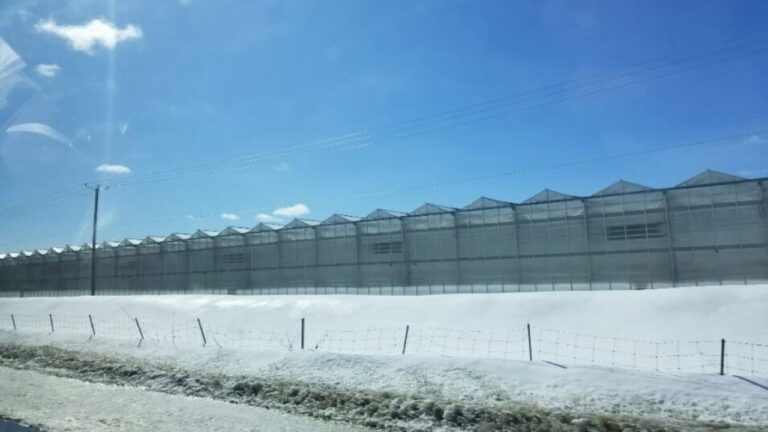
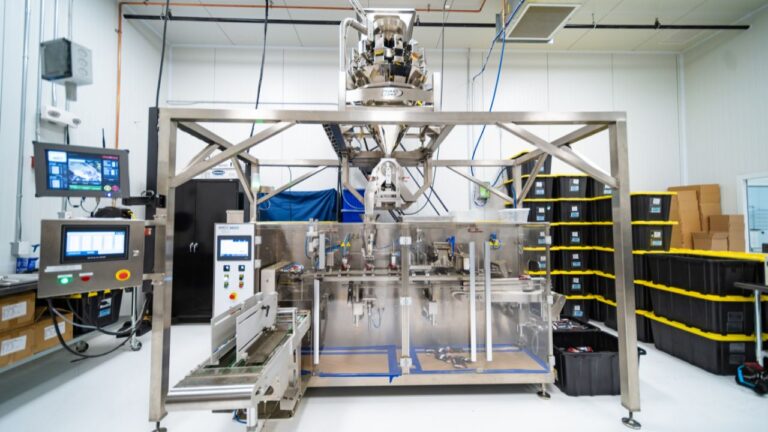
These projects, all outside New Mexico, show the cultivation, extraction and facility work we offer New Mexico licensees; each tile opens its full write-up, and all of them are on our projects page.

Hexo Corp.
Gatineau, Quebec, Canada

Bostica
Lynn, MA, United States

Leafline Labs
Cottage Grove, MN, United States

View All Projects
View all Catalyst BC Projects
Further Reading for New Mexico Applicants and CCD Licensees

How Much Does It Cost to Open a Dispensary in 2026?
The allure of jumping into the legalized cannabis industry often paints a picture of quick riches and burgeoning demand, yet the reality of establishing a

Open a Cannabis Lounge in New Mexico: Licensing & Compliance Guide
New Mexico’s Cannabis Regulation Act (2021) explicitly authorizes On-Site Consumption Area licenses (often called “consumption lounge” permits) under the NM Cannabis Control Division (CCD). The

Demystifying HVACD Systems for Cannabis Grow Facilities
Cannabis grow rooms require precisely controlled environments, making Heating, Ventilation, Air Conditioning, and Dehumidification (HVACD) systems essential for success. As plants progress through their growth
New Mexico Sources: Cannabis Regulation Act, 16.8 NMAC, CCD Guidance, Tax, Hemp and Federal Law
Provenance. Figures checked against the statute, rule and agency text by Catalyst BC on October 9, 2026. New Mexico statutes were read in the New Mexico Compilation Commission’s unannotated NMSA on NMOneSource (chapter files dated December 31, 2025); 16.8 NMAC was read on the State Records Center and Archives site; NMED’s 20.10.2 NMAC was read in the final rule effective January 28, 2026; agency PDFs were read by text extraction. License counts and sales come from the CCD’s Cannabis Reporting Online Portal; budget and tax figures marked as our arithmetic are our own. Company figures come from Catalyst BC’s own records. Where this page and the official text differ, the official text governs.
New Mexico statutes
- NMSA 26-2C-2, definitions (Cannabis Regulation Act)
- NMSA 26-2C-6, licensing cannabis activities; limitations
- NMSA 26-2C-7, applications, issuance, denial and revocation
- NMSA 26-2C-8, disciplinary actions and civil penalties
- NMSA 26-2C-9, application and licensing fees
- NMSA 26-2C-12, local control
- NMSA 26-2C-37, intrastate source
- NMSA 7-42-3 and 7-42-4, Cannabis Tax Act
- NMSA 76-24-2 and 76-24-8, Hemp Manufacturing Act
New Mexico Administrative Code
- 16.8.1 NMAC, general provisions (social and economic equity)
- 16.8.2 NMAC, licensing and operational requirements
- 16.8.7 NMAC, quality control, inspection and testing
- 16.8.8 NMAC, cannabis plant limits
- 16.8.11 NMAC, fees
- 20.10.2 NMAC, hemp post-harvest processing (NMED final rule, effective January 28, 2026)
Cannabis Control Division pages, bulletins and data
- CCD, apply for a license (NM-PLUS)
- CCD licensing FAQs
- CCD license types
- CCD license fees
- CCD, renew a license
- CCD licensing video tutorials
- CCD compliance FAQs
- CCD track-and-trace transition (NMS2S)
- CCD social equity page
- CCD news and announcements
- CCD industry bulletin 26-04, renewals and water verification (May 28, 2026)
- CCD industry bulletin 26-05, hemp warehouse permits (May 29, 2026)
- CCD industry bulletin 26-07, federal rescheduling (June 16, 2026)
- New Mexico cannabis market supply and demand analysis report (June 2025)
- CCD Cannabis Reporting Online Portal, licensing data (September 3, 2026)
- CCD Cannabis Reporting Online Portal, sales data
Other state agencies
- Taxation and Revenue Department, cannabis excise tax
- Office of the State Engineer, commercial cannabis water use
- New Mexico Department of Agriculture, hemp registration
Federal law
Contact Us
Enough about us. We want to hear more about you, your project, and your vision! Get in touch with a real live person today. Don’t worry, we don’t have a long, confusing phone menu, and your email isn’t going to the abyss, we promise. At Catalyst, we provide the service and support we’d want to experience ourselves!