Colorado Cannabis Consultants for MED Licenses, Buyouts and Yield per Plant
Colorado cannabis consulting starts with a yes: you can apply now wherever the local authority tells the Marijuana Enforcement Division (MED) it is accepting new business applications. Investors can also buy into existing licensees, and growers can raise yield per plant. Our records show 58+ licenses secured.
A Decade of Harvesting Success - Trusted by Cannabis Operators Worldwide
MED Changes Taking Effect
Updated: 10/8/2026. The MED, part of the Colorado Department of Revenue, licenses and regulates the medical and retail marijuana industries under the Colorado Marijuana Code (Title 44, Article 10) and the rules at 1 CCR 212-3. Every state license is conditioned on local approval, and a business may not operate until it holds both. Business and owner licenses now run for up to two years, paid in two annual payments, and the MED counted 2,106 approved business licenses in February 2026.
On September 10, 2026 the State Licensing Authority adopted rule revisions that take effect November 1, 2026, including a 2.4% inflationary increase to all fees except social equity fees (MED adoption order). The new Metrc tracking contract cuts the plant tag fee from $0.45 to $0.40 through June 30, 2028 and sets licensee support at $50 a month from November 1, 2026 to June 30, 2027, then $600 a year (Industry Bulletin 26-08). Average market rates, the prices behind the excise tax, reset each quarter; the next quarter starts January 1, 2027.
Meet Catalyst BC's Founders
-
Leif Olsen
Chief Executive Officer
-
Michael Williamson
Chief Operating Officer
-
Ian Miller
Executive Chair
Our partners bring multi-faceted expertise across business strategy, licensing, facility development, finance, and commercial operations. That breadth is complemented by subject matter experts across the wider Catalyst BC team, allowing us to bring the right combination of experience to each client and project. The result is bespoke, collaborative support shaped around your business, priorities, and goals - with the right expertise brought to the table when it matters most.
Hiring a Colorado Cannabis Consultant in a Mature, Price-Compressed Market
The MED licenses businesses, owners and employees, inspects and investigates licensees and monitors product safety; its job is not to value a license, structure a purchase or design a grow. A Colorado cannabis consultant works on the owner’s side of those decisions: diligence, the filings the MED requires, the business plan and the rooms that have to pass inspection and testing.
How Outside Capital Enters Colorado Cannabis
For investors, the main routes are a new license where the local authority is accepting applications, the purchase of an existing licensee, a minority stake, or a lending, leasing or royalty role that stops short of ownership. Anyone who will own 10% or more, or will control the business, is a controlling beneficial owner (for a bank, insurer or other qualified institutional investor, only above 30%) and needs a finding of suitability from the MED (Rule 2-235); a change of controlling owner needs MED approval before the interest transfers (Rule 2-245(A)(1)). Publicly traded companies, qualified private funds and trusts can own licensees.
Federal rescheduling shapes returns. In Industry Bulletin 26-05, the MED says the April 2026 federal rescheduling rule applies to medical marijuana licensees, while retail marijuana remains in Schedule I in its view; the rule suggests medical licensees will get relief from Section 280E, the federal ban on deducting business expenses, though Treasury guidance is pending, and Colorado had already decoupled its state taxes from 280E (Industry Bulletin 26-05). Under the federal rescheduling rule, medical licensees can apply for a DEA registration, but the MED notes that the rule does not automatically authorize interstate commerce, which MED licensees remain barred from. Have your tax adviser confirm how the tax relief applies to your entity.
Our work for Colorado investors: acquisition diligence on a licensee, its owners and its MED record through cannabis business strategy; a Colorado cannabis business plan priced at current wholesale rates through cannabis financial planning; the Colorado cannabis license application, suitability and change-of-owner filings through cannabis license application support; and build-out to opening through cannabis startup support.
Already Licensed by the MED: Plant-Count Tiers, $601 Bud and Tighter Testing
Colorado caps retail cultivation by plant count, not canopy. Tier 1 allows up to 1,800 plants and Tier 5 starts at 10,201 (Rule 6-220(B)). Under Rule 6-220(B), every retail cultivation license granted since November 30, 2015 starts at Tier 1, and immature plants no taller or wider than 15 inches are left out of the count. When a facility harvesting more than twice a year applies for the next tier after 180 days of steady cultivation and transfers, the MED looks at whether it cultivated at least 85% of its authorized plants and transferred at least 85% of its packaged inventory.
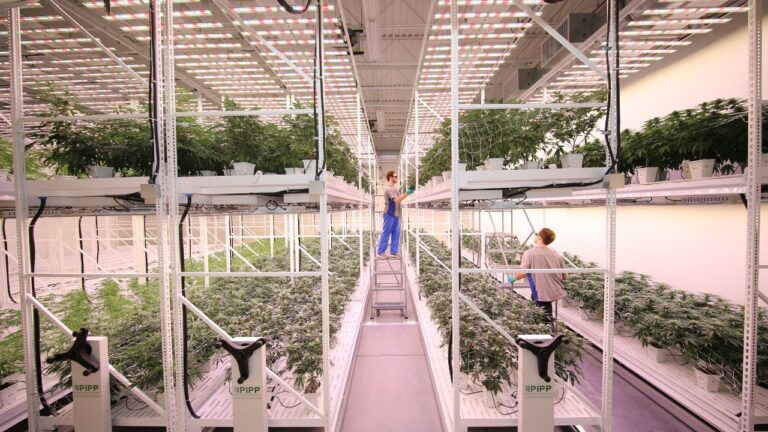
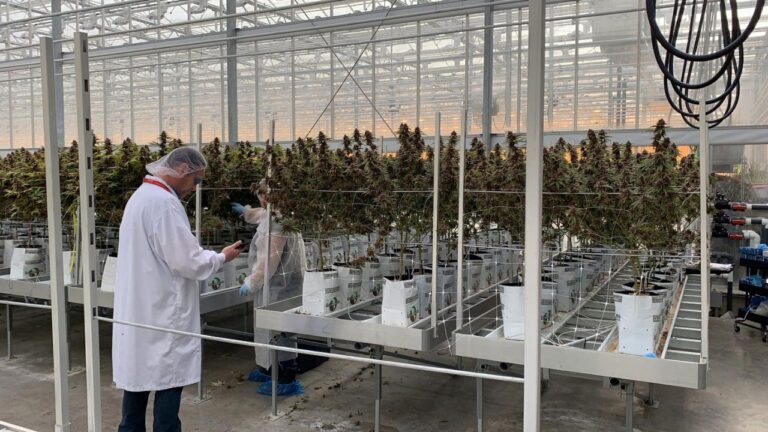
Prices set the pressure. The Department of Revenue’s average market rate for retail bud is $601 a pound for October to December 2026 (average market rate), down from $750 for October to December 2023 (average market rate history). In our work, a plant-count cap makes yield per plant the lever: fewer, larger flowering plants, multi-tier racking for immature stock, dehumidification sized for dense canopies and a dry room that holds water activity (the moisture available to mold) within the MED’s 0.65 testing limit.
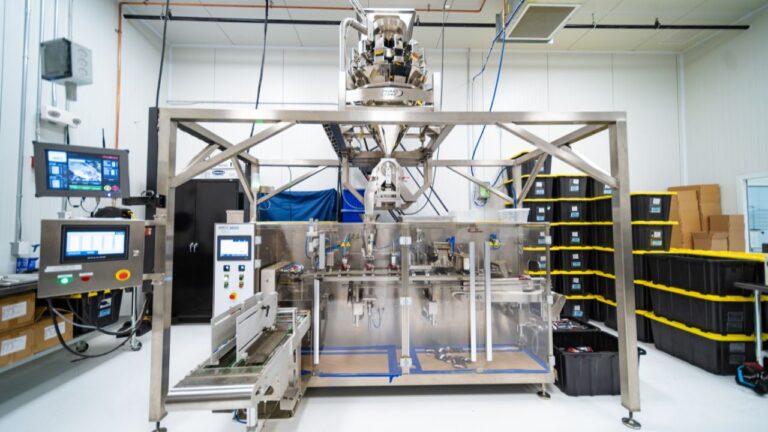
For Colorado rooms we work on Colorado cannabis facility design with HVACD (heating, ventilation, air conditioning and dehumidification), controlled environment agriculture targets set against the MED’s microbial limits, cannabis vertical farming for propagation and plant-count planning, operational optimization of harvests and Metrc reconciliation and, when margins slip, a cannabis turnaround diagnostic. Our Chief Operating Officer and co-founder Michael Williamson has 25,000+ hours (company-reported) in cultivation and dispensary operations and co-founded Greenhaus Industries, which patented stackable trays for growing on multiple tiers.
Our Colorado record and team: Leif Olsen, our Chief Executive Officer and a co-founder, co-founded, operated and exited Kind Love, one of Colorado’s first medical and adult-use cannabis companies. Michael Williamson moved to Denver in 2009 and co-founded Kind Love, which included 95,000 square feet of indoor cultivation, extraction, a commercial kitchen and a dispensary. Our records list Colorado client work from 2015 to present, including Antero Sciences in Salida, Clarity Gardens and National Green Source. We have no Colorado office; we deliver work on-site and remotely, and the same team runs Catalyst BC’s national cannabis consulting practice.
A word against our own interest: the MED posts its rules, forms and fee schedule free (MED forms page), and an owner can file a renewal or change-of-owner application without a consultant. To talk through a Colorado file, contact us or call (USA) 303-305-3787.

Investing in Colorado cannabis
- Cannabis Business Strategy ConsultingDiligence on a Colorado licensee
- Cannabis Financial Planning & ModelingPro formas at today’s bud prices
- Cannabis Licensing & Application SupportSuitability and change-of-owner filings
- Cannabis Startup SupportLocal approval to opening day
Already licensed in Colorado
- Cannabis Facility Design & HVAC / HVACD EngineeringDry rooms that hold water activity
- Cannabis Controlled Environment Agriculture (CEA)Climate that passes microbial tests
- Cannabis Vertical Farming ConsultingRacks for immature stock
- Cannabis Operational OptimizationHarvests, labor and Metrc
- Cannabis Business Turnaround & Operational RecoveryRecovery when margins slip
Compliant Harvests
Square Feet of Cultivation, Production, and Retail Facilities Designed
Licenses Secured
Can You File a New Colorado Marijuana Business Application Today?
Yes, where the local authority allows it. The MED will not accept a new business application in a city or county unless that local authority has told the MED it is accepting new medical or retail applications, and it tells applicants to start the local license application at the same time (MED business license page). The MED’s local authority list, last updated January 20, 2026, names 149 local authorities that allow medical or retail businesses and 132 that do not (our count) (MED local authority list).

Since July 1, 2026, licenses with identical controlling owners can file one unified initial or renewal application, on paper for now, with a $100 fee reduction per license (Industry Bulletin 26-06). Applicants who qualify as social equity licensees can apply on their own or through the accelerator program, hosted by an endorsed licensee (MED social equity page).
The MED’s 2025 enforcement update reports that business renewal applications fell 10% in 2025 from 2024 and names hemp-derived intoxicating products as one factor undercutting the regulated industry (MED 2025 regulatory and enforcement update). In our experience, falling renewals and hemp competition make an existing licensee with local approval in hand worth pricing against a new build.
MED filings open on October 8, 2026
| Filing | Status | Detail |
|---|---|---|
| New business license | Open where the local authority accepts | Application DR 8548, findings of suitability, MED fee and separate local fee |
| Unified initial or renewal application | Open since July 1, 2026 | Paper only; identical controlling owners; $100 off per license |
| Change of controlling owner | Open | MED approval before the interest transfers |
| Passive stake under 10% | No application in most cases | Conditions in Rule 2-245(C)(5) |
| Social equity license or accelerator | Open | Natural person finding of suitability (DR 8520) first |
| Retail cultivation tier increase | Open after one harvest season (one or two harvests a year) or 180 days (more than two) | $320 request fee |
MED business license and unified application pages; Rules 2-245 and 6-220; MED fee schedule.
How many Colorado licenses MED lists today
| License type | Medical | Retail |
|---|---|---|
| Stores | 268 | 644 |
| Cultivation facilities | 176 | 412 |
| Products manufacturers | 120 | 184 |
| Hospitality businesses | — | 8 |
| Hospitality and sales businesses | — | 4 |
| Delivery permits | 3 | 10 |
MED licensed facility lists updated October 1, 2026 (our count of listed licenses).
From application to an operating business
| Stage | Rule |
|---|---|
| Owners | Each controlling owner obtains a finding of suitability; fingerprints within 7 days after submitting |
| Application | Local application copy, proof of premises possession, facility and security diagrams, recent financial statements |
| Fees | MED fees with the application; retail applicants pay the local portion by separate check |
| Local approval | State license conditioned on local approval; no operations before both |
| License term | Up to two years; second payment due at least 12 months before expiration |
Rules 2-220, 2-225 and 2-235; MED business owner license page.
Investors buying into an existing licensee should jump to ownership.
Medical, Retail and Hospitality Licenses the MED Issues
Colorado runs two parallel license tracks, medical and retail, and each facility may do only what its license type allows (MED licensed facilities page). A commonly owned medical and retail business may share a premises when the local authority permits it, with separate inventories, displays and records. Hospitality licenses allow on-site consumption, and the accelerator licenses let a social equity licensee operate on an endorsed licensee’s premises.
Plant tiers also work in reverse: at renewal or after an investigation the MED may cut a facility above 1,800 plants to a lower tier, weighing factors such as selling less than 70% of its packaged inventory in a 180-day period. Inventory is capped too: a mostly indoor retail cultivation facility harvesting more than twice a year may not hold more harvested marijuana than the flower and trim it transferred in the previous 180 days (Rule 6-220(C) and (D)).
What each MED business license allows
| License | What it allows |
|---|---|
| Medical or retail store | Sells to registered patients, or to adults 21 and older |
| Medical or retail cultivation facility | Grows and harvests; licensed by plant count |
| Medical or retail products manufacturer | Makes edibles, concentrates and other products for wholesale |
| Testing facility | Tests potency and contaminants |
| Transporter | Transports and temporarily stores for licensees |
| Business operator | Provides professional operating services to licensees |
| Hospitality business; hospitality and sales business | A premises where marijuana may be consumed; the second may also sell it |
| Accelerator cultivator, manufacturer or store | A social equity licensee operating on an endorsed licensee’s premises |
| Research and development | Grows and possesses marijuana for research only |
MED licensed facilities page; Rule 1-115 definitions.
Cultivation plant-count tiers and renewal fees
| Tier or class | Plants | Renewal, each of two payments |
|---|---|---|
| Retail Tier 1 | 1 to 1,800 | $2,420 |
| Retail Tier 2 | 1,801 to 3,600 | $3,520 |
| Retail Tier 3 | 3,601 to 6,000 | $4,520 |
| Retail Tier 4 | 6,001 to 10,200 | $6,565 |
| Retail Tier 5 | 10,201 to 13,800, then steps of 3,600 | $9,350, plus $1,110 per 3,600-plant step |
| Medical Class 1, 2, 3 | 1 to 500; 501 to 1,500; 1,501 to 3,000 | $2,420; $3,520; $5,200 |
Rule 6-220(B); MED fee schedule, Rule 2-125.
The MED emails a renewal notice 90 days before a license expires (Rule 2-225). The second annual payment is due at least 12 months before the license expires; in Industry Bulletin 26-02 the MED said it will seek minimum fines of $2,500 per business license and $1,000 per owner license, plus the fee, when a missed payment reaches an order to show cause (Industry Bulletin 26-02).
MED Application and License Fees by Owner Level and Plant Tier
New-license fees rise with the number of direct controlling owners: Level 1 is one to four, Level 2 is five to nine and Level 3 is ten or more (MED fee schedule, effective January 5, 2026). Retail applicants also pay a separate local portion to the local jurisdiction. The adopted rules add 2.4% to every fee except social equity fees on November 1, 2026.
New license fees for a Level 1 business
| License | First payment | Second payment |
|---|---|---|
| Medical store | $8,460 | $8,460 |
| Medical products manufacturer or Class 1 cultivation | $3,210 | $3,210 |
| Retail store | $3,120 plus $2,500 local | $5,620 |
| Retail products manufacturer or Tier 1 cultivation | $2,440 plus $2,500 local | $4,940 |
| Retail hospitality and sales business | $5,745 plus $2,500 local | $8,245 |
| Social equity retail store | $1,420 | $1,420 |
MED fee schedule, Rules 2-115 and 2-145(C); fees effective January 5, 2026.
Renewal fees for stores and manufacturers
| License | Each of two payments |
|---|---|
| Medical or retail store | $2,420 |
| Medical or retail products manufacturer | $2,420 |
| Retail hospitality and sales business | $2,420 |
| Social equity retail store | $635 |
MED fee schedule, Rules 2-125 and 2-145(C)(2). Cultivation renewals are in the plant-tier table under Licenses.
Owner, ownership-change and other fees
| Item | Fee |
|---|---|
| Finding of suitability: natural person controlling owner or passive owner | $720 |
| Finding of suitability: owner entity with one to four controlling owners | $1,430 |
| Finding of suitability: publicly traded corporation | $35,120 |
| Finding of suitability: qualified private fund, institutional investor or trust | $7,140 |
| Change of controlling owner involving up to four owners | $2,940 |
| Tier or class increase request | $320 |
| Change of location | $690 |
| Reduced testing allowance certification | $4,200 |
| Delivery permit, first and second payment | $5,515 each |
MED fee schedule, Rules 2-110, 2-120, 2-130, 2-135 and 2-140.
Budget accordingly: a new Level 1 retail store pays $5,620 at application, $3,120 to the MED and $2,500 to the local jurisdiction, then $5,620 a year later, or $11,240 over a two-year license before local license fees and the 2.4% increase (our arithmetic from the fee schedule). Each natural person controlling owner adds a $720 finding of suitability and a $180 owner license fee at each payment. Our cannabis startup costs breakdown covers the build-out side of the budget.
How a Colorado Retail Store Gets Its State and Local Licenses
An initial business application carries the local license application, proof that the applicant will possess the premises, a facility diagram with a separate security and camera plan, organizational documents and financial statements prepared in the previous 365 days (Rule 2-220(A)). If the MED grants a license before the local authority acts, the state license is conditioned on local approval and is revoked if the local authority denies the application.
Five steps to open a dispensary in Colorado
These steps apply to a new retail store license (Rules 2-220 and 2-235; MED business license page).
- Confirm that the city or county is accepting retail store applications and meet its time, place and manner rules.
- Secure the premises with a lease, deed or other document showing you will possess it.
- File a finding of suitability for each controlling owner, with fingerprints within 7 days after submitting.
- File the business application with the MED fee, and the local portion by separate check.
- Obtain the local license and a state sales tax license, then open; neither marijuana license alone lets you operate.
In our work, delays more often start with local approval, leases and building permits than with the state file, so our cannabis licensing and application team checks those first.
Colorado Ownership: 10% Owners, Passive Stakes, Funds and Social Equity
A controlling beneficial owner holds 10% or more of a licensee, alone or acting in concert, or controls it, which includes managers (Rule 1-115). Every other owner is a passive beneficial owner. A new passive owner needs no application, approval or notice if the person was not a direct beneficial interest owner before November 1, 2019, stays passive, creates no undisclosed controlling owner and is not otherwise subject to disclosure (Rule 2-245(C)(5)). Existing licensed controlling owners may reallocate their interests among themselves by notice with the next application, if no new controlling owner is added and every owner whose share changes agrees.
For a buyer of a controlling stake, the MED’s investigation ends in a contingent approval letter, valid for one year. The buyer then shows local approval, or that none is required, and closes within 3 to 30 days of notifying the MED; until every approval is issued, the buyer may not operate the business.
Landlords, lenders, equipment lessors and management companies are indirect financial interest holders rather than owners when their contracts do not pay them a percentage of revenue or profits; a licensor paid a commercially reasonable royalty for intellectual property is also an indirect financial interest holder. Disclosure is required for a holder of two or more indirect interests, a holder who is also a passive owner, or a lender whose undisclosed debt exceeds 50% of the business’s operating capital (Rule 2-230(A)(3)). A retail licensee that wants professional management can contract with one licensed business operator at a time; the operator acts as the licensee’s agent, so its violations count against the business it runs (Rule 6-605).
Social equity tests include five of the last 30 years living in an opportunity zone or disproportionately impacted area, or a marijuana arrest and conviction of the applicant or a parent, spouse or guardian. Social equity licensees must together hold at least 51% of the business, and an applicant may not already own more than three store or cultivation licenses. Reduced fees apply to a social equity licensee’s first two initial business license applications (Rule 2-145(A)). An established retail cultivator, manufacturer or store with two years of operation, or a listed alternative such as two years of cannabis management experience, can apply without a fee to host one through the accelerator program (accelerator endorsement page).
Correction to published guidance (October 8, 2026): a consulting guide dated February 24, 2026 says applicants must have lived in Colorado for at least two years. The MED’s 2025 legislation summary says HB 25-1209 removed the requirement that people with day-to-day control of a licensed business be Colorado residents; every controlling owner must still be found suitable and hold an owner license (MED 2025 legislation summary).
Local Approval, Premises and Co-Location Rules in Colorado
Local licensing authorities may add their own time, place and manner requirements, and they tell the MED whether each application meets them (Rule 1-135(B)). The local list shows how much that varies: Denver allows medical, retail and delivery businesses but accepts only social equity applicants for delivery. The list, last updated January 20, 2026, shows Colorado Springs as medical only, yet the MED’s 2025 enforcement report credits a voter-approved measure allowing retail businesses there for a rise in new retail applications, and the MED’s October 1, 2026 store list shows 58 retail stores with Colorado Springs addresses (our count), so check the city’s current rules, not the list.
Apart from accelerator cultivators hosted by an endorsed licensee, only one retail cultivation license is allowed per licensed premises, at a distinct address, and retail cultivation licenses can be collapsed into one premises only if, among other conditions, each has operated for at least 180 days and all have identical owners holding identical percentages (Rule 6-220(A)). A move to a new address needs a change of location application; since January 5, 2026, enlarging or shrinking a premises at the same address needs no prior approval but must be disclosed at renewal (Industry Bulletin 25-12). Stores deliver under an MED delivery permit, issued only after the applicant shows that the local jurisdiction has permitted delivery and is accepting permit applications where required (Rule 3-615(A)). Advertising on outdoor signs is barred within 500 feet of elementary or secondary schools, places of worship or public playgrounds (Rule 3-735(C)). Before you sign a lease, run the local screen; our cannabis facility design work starts there.
MED Testing, Metrc Tracking and Colorado Marijuana Taxes
Unless an exception or a reduced testing allowance applies, flower, shake and trim are tested for water activity, elemental impurities, pesticides and microbial contaminants before transfer or processing (Rule 4-215). Shiga toxin-producing E. coli, Salmonella and four Aspergillus species must be absent in 1 gram, total yeast and mold must stay below 10,000 colony-forming units per gram, and the water activity limit is 0.65. A batch that fails a contaminant test is destroyed, or decontaminated or remediated where the rule allows. After a failed pesticide or elemental impurities test, the business may request two more analyses of the original test batch, and a batch that fails a pesticide retest must be destroyed (Rule 4-240).
Expanded residual solvent testing, aimed at solvents that can convert hemp-derived cannabinoids into intoxicating ones, took effect September 28, 2026, except for triethylamine (Industry Bulletin 26-09). From November 1, 2026, infused products such as edibles that hold a reduced testing allowance need potency tests every 30 days instead of every 90.
Tracking and reporting run on short clocks: a receiving licensee must update Metrc by the end of the same business day, and adverse health events must be reported to the MED within two calendar days (Industry Bulletin 25-14).
How Colorado Taxes Medical and Retail Marijuana
A 15% state excise tax applies to the first sale or transfer from a retail cultivation facility to a retail store or products manufacturer, on the contract price for unaffiliated buyers and on the average market rate for affiliated ones or when no contract price is set; medical marijuana is not subject to it (Department of Revenue excise tax page). Retail sales carry a 15% retail marijuana sales tax and are exempt from the 2.9% state sales tax, which applies to medical marijuana (Department of Revenue sales tax page); local jurisdictions may add their own taxes (Department of Revenue tax FAQ).
Two Colorado Engagements for Buyers and Growers Before November 1
Buyers get an acquisition review before they sign: the controlling-owner map against the 10% test, the suitability and change-of-owner timeline, local approval status, the two-year fee calendar and a Colorado cannabis business plan priced at the current $601 bud rate. Licensees get a plant-count and testing review: tier use against the 85% tests, yield per plant, water activity and microbial history and a Colorado cannabis compliance consulting check of Metrc reconciliation ahead of the November 1 rules. Send your license numbers or deal terms, and we will tell you plainly if another firm suits you better.
What Buyers and MED Licensees Ask About Colorado Licensing
Can I apply for a new Colorado marijuana business license today?
Yes, if the city or county where you want to operate is accepting that license type. The MED will not accept a new application otherwise, and the state license stays conditioned on local approval. The MED’s January 20, 2026 list names 149 local authorities that allow medical or retail businesses.
Do I have to live in Colorado to own or run a licensed marijuana business?
No. HB 25-1209 removed the requirement that people with day-to-day control be Colorado residents. Every controlling owner must still obtain a finding of suitability and hold an owner license.
How much of a Colorado licensee can I buy without MED approval?
Below 10%, a new passive owner who stays passive and creates no undisclosed controlling owner usually needs no application, approval or notice; exceptions apply if the person was a direct beneficial interest owner before November 1, 2019 or disclosure is otherwise required. At 10% or more, or with control, you are a controlling owner and need a finding of suitability and MED approval before the transfer.
How much does a Colorado retail store license cost?
A Level 1 retail store pays $3,120 to the MED and $2,500 to the local jurisdiction at application, then $5,620 a year later. Renewals are $2,420 per annual payment. All MED fees except social equity fees rise 2.4% on November 1, 2026.
How do Colorado cultivation plant tiers work, and how do I add plants?
Retail cultivation is licensed by plant count, from Tier 1 at up to 1,800 plants to Tier 5 at 10,201 and up. A facility harvesting more than twice a year can apply for the next tier after 180 days of steady cultivation and transfers, and one harvesting once or twice a year after one harvest season; the MED looks for at least 85% of authorized plants cultivated and 85% of packaged inventory transferred. A two-tier jump needs 90% on both, or 80% cultivated with over 90% transferred.
What microbial and water activity limits must Colorado flower pass?
E. coli (STEC), Salmonella and four Aspergillus species must be absent in 1 gram, total yeast and mold must stay below 10,000 colony-forming units per gram, and water activity must not exceed 0.65.
What changes for Colorado licensees on November 1, 2026?
Rule revisions adopted September 10, 2026 take effect: a 2.4% increase to all fees except social equity fees, potency tests every 30 days for infused products holding a reduced testing allowance, and new rule text restating the longstanding ban on subleasing or subcontracting to unlicensed parties. Metrc support fees become $50 a month on the same date.
How is Colorado marijuana taxed?
Retail marijuana carries a 15% excise tax on the first transfer from a retail cultivation facility and a 15% retail marijuana sales tax on consumer sales. Medical marijuana is not subject to the excise tax and pays the 2.9% state sales tax. Local jurisdictions may add their own taxes.
Grow and Facility Projects That Inform Our Colorado Advice
These tiles show our team’s cultivation and facility work outside Colorado; our founders’ Denver operation has its own write-up on the Kind Love project page, and all projects are on our projects page.

Hexo Corp.
Gatineau, Quebec, Canada

Bostica
Lynn, MA, United States

Leafline Labs
Cottage Grove, MN, United States

View All Projects
View all Catalyst BC Projects
Colorado Guides on Lounges, Startup Costs and Grow Room Design

Cannabis HVAC Design: The Psychrometrics of Profit and Operational Scalability in 2026
In 2026, the global cannabis market has moved into a “Pharma-Grade” era. As of 2026, the leading cultivators are no longer just managing “temperature and

Cannabis Startup Costs: From Licensing to Profitability
Starting a legal cannabis business isn’t just about getting a license—it’s about building a profitable, compliant, and sustainable operation in one of the world’s most

Colorado Cannabis Lounge License: A Guide to Compliance and Success
Colorado law permits licensed on-site cannabis consumption spaces (often called “marijuana hospitality establishments”) with both state and local approval. The Marijuana Enforcement Division (MED) of
Colorado Sources: 1 CCR 212-3, MED Bulletins and Records, and Department of Revenue Tax Pages
Provenance. Figures checked against the rule and agency text by Catalyst BC on October 8, 2026. Rules were read in the Secretary of State’s official copy of 1 CCR 212-3, effective January 5, 2026; revisions adopted September 10, 2026 take effect November 1, 2026 and are described here from the MED’s adoption order. License counts are our own count of the MED’s facility and local authority lists; budget and price-change figures are our own arithmetic; company figures come from Catalyst BC’s own records. Where this page and the official text differ, the official text governs.
Colorado marijuana rules, 1 CCR 212-3
- Rule 1-115, definitions
- Rule 1-135, local licensing authorities
- Rule 2-110, finding of suitability and owner license fees
- Rule 2-115, initial application and license fees
- Rule 2-120, permit fees
- Rule 2-125, renewal fees
- Rule 2-130, ownership change fees
- Rule 2-135, applications to modify fees
- Rule 2-140, other application fees
- Rule 2-145, social equity fees
- Rule 2-220, initial applications
- Rule 2-225, renewals and license periods
- Rule 2-230, disclosure of financial interests
- Rule 2-235, suitability
- Rule 2-245, change of controlling beneficial owner
- Rule 3-615, delivery permits
- Rule 3-735, outdoor advertising
- Rule 4-215, contaminant testing
- Rule 4-240, failed tests
- Rule 6-220, retail cultivation production management
- Rule 6-605, retail business operator privileges
- Adoption order, rule revisions adopted September 10, 2026 (effective November 1, 2026)
Marijuana Enforcement Division records
- MED fee schedule, effective January 5, 2026
- Regulated marijuana business license application
- Business owner license application
- Unified applications
- Social equity licensee eligibility
- Accelerator-endorsed licensee eligibility
- Local authority status list (updated January 20, 2026)
- Licensed facility lists (updated October 1, 2026)
- Applications and forms
- Industry Bulletin 25-12, licensing rule revisions
- Industry Bulletin 25-14, operational plant and product rule revisions
- Industry Bulletin 26-02, second annual fee payment
- Industry Bulletin 26-05, Attorney General rescheduling order
- Industry Bulletin 26-06, unified applications
- Industry Bulletin 26-08, inventory tracking system contract
- Industry Bulletin 26-09, residual solvent testing
- 2025 MED regulatory and enforcement update (January 2026)
- MED 2025 legislation summary
Colorado Department of Revenue, Taxation Division
Contact Us
Enough about us. We want to hear more about you, your project, and your vision! Get in touch with a real live person today. Don’t worry, we don’t have a long, confusing phone menu, and your email isn’t going to the abyss, we promise. At Catalyst, we provide the service and support we’d want to experience ourselves!