Florida Cannabis Consultants for OMMU Entry and MMTC Growth

Florida cannabis consulting with no license window open: the Office of Medical Marijuana Use (OMMU) takes no treatment-center applications and has set no next round. We work with first-time cannabis investors and licensed treatment centers. Catalyst BC has secured 58+ licenses across our markets and four Florida clients since 2016.

A Decade of Harvesting Success - Trusted by Cannabis Operators Worldwide

Three OMMU Deadlines for New MMTCs

Mar 10, 2027Cultivation authorization request due*
Jun 8, 2027Processing authorization request due*
Sep 11, 2027Dispensing authorization request due*

Updated: 10/5/2026. Florida runs a medical-only program under Article X, section 29 of its constitution and its medical marijuana statute (Florida Statutes §381.986). The Office of Medical Marijuana Use, part of the Department of Health, licenses medical marijuana treatment centers (MMTCs): vertically integrated companies that alone may grow, process and dispense. On September 11, 2026 the department licensed 22 applicants from its April 2023 batching cycle, and its license list, read October 5, shows 49 MMTCs, 25 of them authorized to dispense (OMMU MMTC list).

The practical consequence: no application window is open, so the main way in for investors is buying into a licensed MMTC, and the 22 new licensees, which must build quickly, are the likeliest to need capital. *These dates apply to the 22 licensed on September 11, 2026: Rule 64-4.216 gives each 180, 270 and 365 days from that date to request cultivation, processing and dispensing authorization. OMMU cannot renew a license that is not growing, processing and dispensing by the date it must renew.

Meet Catalyst BC's Founders

  • Leif Olsen - Chief Executive Officer

    Leif Olsen

    Chief Executive Officer

  • Michael Williamson - Chief Operating Officer

    Michael Williamson

    Chief Operating Officer

  • Ian Miller - Executive Chair

    Ian Miller

    Executive Chair

Our partners bring multi-faceted expertise across business strategy, licensing, facility development, finance, and commercial operations. That breadth is complemented by subject matter experts across the wider Catalyst BC team, allowing us to bring the right combination of experience to each client and project. The result is bespoke, collaborative support shaped around your business, priorities, and goals - with the right expertise brought to the table when it matters most.

Learn more about our team

What a Florida Cannabis Consultant Can and Cannot Do Under Section 381.986

Florida law limits outside help in two ways. An MMTC “may not contract for services directly related to the cultivation, processing, and dispensing of marijuana” (a narrow exception covers some of the earliest licensees), so a consultant can design, train and audit, but your own employees must do the growing, processing and selling. And anyone with authority to direct an MMTC’s operations through an agreement or contract counts as a “manager” who must pass a level 2 background screening, a fingerprint-based criminal history check (§381.986(8)(b) and (e)).

Looking for a medical marijuana card? That starts with a qualified physician, not a business consultant; OMMU publishes the list (OMMU Qualified Physician List). This page covers MMTC licensing, investment and operations.

Putting Capital Into Florida Cannabis Without a License Window

There are four ways in today.

  • A stake in one of the 49 MMTCs, including the 22 licensed on September 11, 2026, which must fund cultivation, processing and dispensing sites and request dispensing authorization within 365 days.
  • A whole MMTC, bought through a change of ownership: the buyer must meet the statute’s requirements and file its own license application at least 60 days before closing. Publicly traded companies may own an MMTC.
  • A certified marijuana testing laboratory, which OMMU still takes applications for and which no MMTC may own or control (Florida Statutes §381.988).
  • The next batching cycle, which needs five consecutive years of registration to do business in Florida and a state plant-nursery registration certificate (Florida Statutes §581.131) before you apply.

Three ownership rules shape every deal. Anyone with 5% or more of the beneficial or voting interests is an “owner” who must pass screening, and any management role makes you a screened manager. Anyone holding 5% or more of one MMTC’s voting shares may not own any part of another. And no one may be awarded more than one license.

A stake in a new licensee needs its own diligence. OMMU’s license letters tell each one that any change from its initial application, “including changes to the organizational structure and capitalization table,” must go through a variance request (OMMU license letter, MMTC 2026-0029), so your investment itself may need OMMU’s approval. Ask two more questions. Was the $5 million financial assurance (a bond, letter of credit or cash the state can claim) received by September 25, 2026? Can the company meet its 180-, 270- and 365-day authorization deadlines? Missing either can cost the license.

Check whether a denied applicant has sought review. In a May 11, 2026 recommended order, a Division of Administrative Hearings judge proposed rescoring eight denied applicants (DOAH Recommended Order, Case No. 25-1076). The department’s September 11 final orders instead licensed the 22 it had chosen in November 2024. A party adversely affected may appeal within 30 days of a final order, and an appeal does not by itself stay it (Florida Statutes §120.68).

How money comes back to you is also restricted. An MMTC may not share profits with the owner or landlord of any site where marijuana is grown, processed, stored or dispensed, so a lease or sale-leaseback has to give the landlord no share of profits.

Federal scheduling changed in 2026. Since April 28, 2026, marijuana sold under a state medical license, including every Florida MMTC’s, has been in federal Schedule III. The federal rule says that takes such licensees outside Section 280E, which bars ordinary business deductions for Schedule I and II sellers (Federal Register, 91 FR 22714). It also opens DEA registration to state medical licensees and says it is not a determination of federal tax liability, so ask whether the MMTC has applied and what its tax counsel says.

Our work for investors: MMTC diligence and the market case through our cannabis business strategy work; the capital plan and certified financial statements through our cannabis financial planning work; change-of-ownership, variance, laboratory and batching-cycle filings through our cannabis license application support; and site and authorization readiness through our cannabis startup support.

Running a Florida MMTC: Humidity, Failed Batches and the Authorization Deadlines

For a licensed MMTC the pressure is cost and consistency in a crowded market. OMMU’s October 2, 2026 update lists 782 dispensing locations, and the three MMTCs with the most locations operate 335 of them, about 43% by our calculation (OMMU Weekly Update, October 2, 2026). OMMU publishes volumes, not prices; each dispensing MMTC posts its own, and your cost per milligram has to come from your own books.

Dispensing is just as concentrated. In the week of September 25 to October 1, 2026, those three MMTCs dispensed about 49% of the 420.3 million milligrams of THC dispensed statewide, by our calculation, and 26 of the 49 licensees dispensed nothing, 24 of them because they are not yet authorized to dispense. A new licensee enters that market needing a product mix and cost base that can win patients from incumbents.

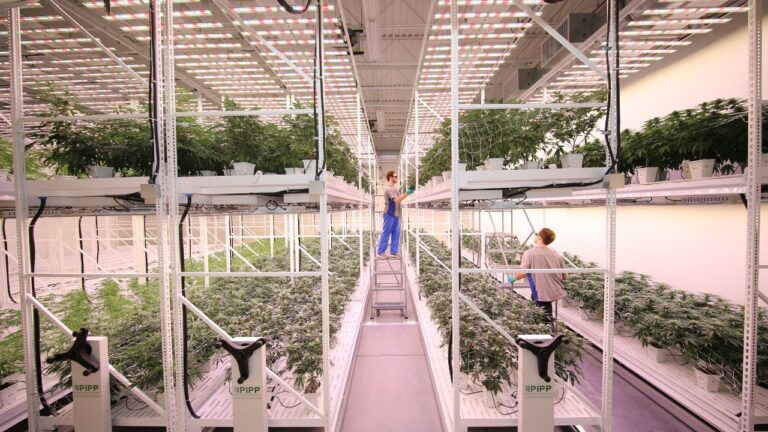
Section 381.986 sets no canopy or plant-count cap. You can grow only in the facilities your license application described. Changing them needs a variance, OMMU’s written approval to depart from the application, and you must have it before you start (Rule 64-4.023). Vertical racks can add yield per square foot inside an approved building, with the variance first if they change what the application described.

Testing leaves little room for error. Within 14 days of a failed contaminant test an MMTC must choose to retest, remediate or destroy the batch, and a retested batch must pass two new tests (Rule 64-4.212); edibles that fail cannot be remediated at all (Rule 64-4.213). In our experience, dehumidification sized for Florida’s humid air is the first defense against a failed microbial test.

An MMTC may buy plants, flower or oil from another MMTC only under three conditions: OMMU certifies a harvest failure from a cause such as a natural disaster, flood, fire or equipment malfunction; OMMU approves the transfer; and the buyer has been dispensing for eight straight weeks (Emergency Rule 64ER25-4). A new MMTC that loses a crop to a storm cannot buy replacement product, so hurricane-resistant buildings and backup power protect supply, not only the building.

We work on cannabis facility design and HVACD engineering (heating, ventilation, air conditioning and dehumidification), controlled environment agriculture targets, cannabis vertical farming layouts that fit an approved variance, operational optimization and a cannabis turnaround diagnostic. We also draft variance requests, corrective action plans and remediation notices. Michael Williamson, our Chief Operating Officer, graduated from the University of Central Florida in biology and neurology and is a former licensed operator; our records credit him with designing or consulting on more than 7 million square feet of cultivation facilities himself.

Who works on Florida engagements. Ian Miller, our Executive Chair, holds a Master of Science in Building Construction from the University of Florida and managed high-end construction in the Miami Beach area. Leif Olsen, our Chief Executive Officer, leads our licensing and application work. Our records list four Florida clients, the first in 2016. We have no Florida office; Florida engagements run on site and remotely, with the same team that runs Catalyst BC’s national cannabis consulting practice.

Before you sign with anyone: if all you need is a passive stake under 5% in a licensed MMTC, you may not need a consultant at all. Outside help pays for itself where a failed inspection, a rejected variance or a bad ownership structure could cost you the license. To talk through a Florida file, contact us or call (USA) 303-305-3787.


Investing in Florida cannabis

Already licensed in Florida

0 +
Years Regulated Cannabis Operations Experience
0 +

Compliant Harvests

0 M+

Square Feet of Cultivation, Production, and Retail Facilities Designed

0 +

Licenses Secured

Is OMMU Accepting MMTC Applications? Not Until It Sets a Batching Cycle

No. Florida takes MMTC applications only in batching cycles that the department sets by separate rule, each naming a five-day application window and the number of licenses available, with a $146,000 nonrefundable application fee (Emergency Rule 64ER22-9). No cycle is open. The last one ran April 24 to 28, 2023, for 22 licenses (Emergency Rule 64ER23-1); OMMU lists 74 application numbers, sent letters of intent to approve on November 26, 2024, and licensed the 22 on September 11, 2026 (OMMU April 2023 MMTC Batching Cycle).

The statute ties new licenses to patient growth: four more MMTCs within six months after each additional 100,000 active qualified patients. OMMU counted 941,963 active patients on October 2, 2026, but has not said how it applies that formula to the count or how many licenses a next cycle would offer. On September 11, 2026 it proposed Rule 64-4.214 to replace the emergency application rule with the same fee and five-day window (Notice of Proposed Rule 64-4.214).

There is no adult-use route in 2026: the Division of Elections lists the adult-use initiative’s election year as 2028 (Division of Elections, Initiative 25-01). Its summary would let MMTCs sell to adults.

If you want to be ready for the next cycle, the five-year clock is the one you cannot shorten: the applicant itself must have been registered to do business in Florida for five consecutive years before it applies. Each application also needs certified financial statements, a medical director, a diversity plan and proof the applicant can grow, secure and track product, and most of that can be prepared before a window opens.

Route Status (October 5, 2026) What it takes
New MMTC license Closed; no batching cycle set 5 years registered in Florida, a nursery registration certificate, $146,000 fee, scored application
Buy an existing MMTC Open, with approval Buyer must meet the statute’s requirements and file its own license application at least 60 days before closing; department decides within 30 days of a complete file
Stake of 5% or more Open, with screening Level 2 background screening; no ownership of any kind in another MMTC; OMMU tells new licensees cap-table changes need a variance
Stake under 5%, no management role Open, with limits Outside the statute’s “owner” definition, but barred if you hold 5% or more of another MMTC’s voting shares; cap-table changes at the 22 new licensees need a variance
Certified testing laboratory Applications accepted $78,000 per testing facility (Rule 64-4.301); ISO/IEC 17025:2017 accreditation; no MMTC ownership or control
Swipe to see the full table →

Statuses from OMMU’s MMTC, April 2023 batching cycle and laboratory pages and its September 14, 2026 license letter, read October 5, 2026; requirements from §381.986(8), §381.988 and Rule 64-4.301.

Date What happened
July 8, 2015 The first dispensing organization application window closed
2023 to 2025 Five licenses issued to applicants from the 2022 Pigford/Black Farmers cycle
April 24–28, 2023 Application window for 22 licenses; OMMU lists 74 application numbers
November 26, 2024 Letters of intent to approve sent to 22 applicants
May 11, 2026 A Division of Administrative Hearings judge recommends rescoring eight denied applicants
September 11, 2026 Final order licenses the 22 chosen in 2024; financial assurance due September 25, 2026
October 5, 2026 OMMU’s list shows 49 MMTCs, 25 authorized to dispense
Swipe to see the full table →

Dates from OMMU’s 2015 application, 2022 Pigford/Black Farmers, April 2023 batching cycle and MMTC pages, its license letters and the DOAH recommended order, read October 5, 2026.

Clock Rule
Financial assurance $5 million bond, letter of credit or cash within 10 business days of final approval, or the license is revoked
Cultivation authorization Request within 180 days of licensure; OMMU inspects within 14 business days
Processing authorization Request within 270 days of licensure
Dispensing authorization Request within 365 days of licensure
Deficiencies found Corrective action plan within 7 days; corrections within 30 days
Food-safety inspection Every processing facility passes a Good Manufacturing Practices inspection within 12 months of licensure
Renewal File 120 to 150 days before the two-year license period ends (Emergency Rule 64ER25-1 required 90 to 120 days until October 6, 2026); no renewal unless growing, processing and dispensing
Swipe to see the full table →

Rules 64-4.216 and 64-4.217, Rule 64-4.215 (Emergency Rule 64ER25-1 before October 6, 2026) and §381.986(8)(b) and (e)9.

Until the department publishes a batching-cycle rule, anyone selling you a place in the “next Florida round” is guessing at the date and the number of licenses. Our Florida cannabis licensing and business opportunities guide covers the market background.

One Vertically Integrated License: the MMTC and Its Three Authorizations

Florida issues one license to grow, process and sell marijuana. An MMTC must grow marijuana in an enclosed structure, process it and dispense it, and it may not buy from or sell to another MMTC except after a certified harvest failure. Licensure alone allows none of that: OMMU authorizes cultivation, then processing, then dispensing, each after an inspection (Rule 64-4.216). Before cultivation authorization, a new licensee must also integrate its own seed-to-sale tracking system with the department’s (Rule 64-4.221).

The statute reserved one license for a class member of the federal Pigford and Black Farmers discrimination cases. A 2023 law then let that 2022 cycle’s applicants cure their applications, and OMMU’s list shows five licenses issued to them from 2023 to 2025.

Activity Rule
Cultivation Inside an enclosed structure, in a room separate from other plants; no restricted-use pesticides
Processing Enclosed rooms; solvent extraction under department rule; testing by a certified laboratory before dispensing
Edibles Food establishment permit; no more than 200 mg THC per edible and 10 mg per serving; potency variance no greater than 15%
Dispensing No dispensing from premises between 9 p.m. and 7 a.m.; delivery to patients allowed 24 hours a day
Supply limits No more than a 70-day supply in 70 days; smokable flower capped at 2.5 ounces per 35 days unless OMMU approves more
Contracting No contracting out services directly related to cultivating, processing or dispensing
Advertising Internet advertising only with department approval; an exterior or window sign showing only the business name, approved trade name or approved logo
Swipe to see the full table →

Florida Statutes §381.986(8)(c), (e), (f) and (h), read October 5, 2026.

Laboratory Certified
ACS Laboratory, Sun City Center June 24, 2020
Modern Canna Science, Lakeland June 30, 2020
ACT Laboratories of Florida, Davie July 15, 2020
TerpLife Labs, Tampa January 21, 2022
Method Testing Labs, Brandon March 6, 2023
Kaycha Labs Miramar October 29, 2025
Swipe to see the full table →

OMMU Certified Marijuana Testing Laboratories page, read October 5, 2026.

A certified laboratory may acquire marijuana only from an MMTC and may not pass it on except to another certified laboratory, so a lab earns its revenue from testing fees, not product sales.

Florida MMTC Costs: $146,000 to Apply, $5 Million in Assurance and a Formula Renewal Fee

Florida sets MMTC fees by rule. The renewal fee is recalculated for each two-year period: the department’s spending on the program over two fiscal years, less initial application fees received, divided by the number of licensed MMTCs (Rule 64-4.215, which takes effect October 6, 2026 and replaces Emergency Rule 64ER25-1).

ChargeAmountSet by
MMTC application$146,000, nonrefundableEmergency Rule 64ER22-9
Financial assurance at licensure$5,000,000 bond, letter of credit or cash§381.986(8)(b)7.; Rule 64-4.217
Reduced financial assurance$2,000,000 once serving at least 1,000 qualified patients, after OMMU approvesRule 64-4.217
Biennial renewal (applications due January 1, 2025 to December 31, 2026)$1,340,383.11MMTC Renewal Fee Schedule (Form DH8054); Rule 64-4.215 from October 6, 2026
Certified testing laboratory application$78,000 per testing facilityRule 64-4.301
Administrative fineUp to $10,000 for each listed violation§381.986(10)(f)
Swipe to see the full table →

Fee schedule PDF and rules read October 5, 2026. The 2027–2028 renewal fee has not been published, and the rules read for this page state no amount for the statute’s supplemental licensure fee (which funds state public education campaigns and medical marijuana research) or for a change-of-ownership application.

StepRule text
1Add the department’s actual spending for the two most recently completed state fiscal years
2Subtract MMTC initial application fees received in those years
3Divide by the number of licensed MMTCs on the date the fee is calculated
Swipe to see the full table →

Rule 64-4.215(7). If OMMU calculates the 2027–2028 fee after September 11, 2026, the cost is split across more licensees, including the 22 new ones; the result still depends on what the department spent and the application fees it received.

Section 381.986 sets no minimum capital figure beyond the financial assurance, but an applicant must show the money to operate for the first two-year license period, with certified financial statements. Site control, a cultivation and processing campus, dispensaries and the months before dispensing authorization usually cost far more than state fees.

From Batching Cycle to First Sale: How Florida Awards and Authorizes an MMTC

Evaluators score applications under the department’s instructions manual, and an application counts only in the cycle it was filed in. The statute asks applicants to show the ability to cultivate and produce marijuana, secure premises and staff, account for all product, dispense statewide or regionally, employ a medical director and carry a diversity plan.

Approval starts the deadlines. Within 10 business days the licensee posts $5 million in financial assurance (Rule 64-4.217). It then requests each authorization, OMMU inspects within 14 business days, and any deficiency needs a corrective action plan within 7 days and a fix within 30. No marijuana may be present at a facility before OMMU approves it.

How to open a dispensary in Florida when only an MMTC may dispense

  1. Hold, or buy into, an MMTC. Only an MMTC may dispense, so an investor takes a stake in a licensee or buys one through the change-of-ownership process.
  2. Check the local rules. Confirm the city or county has not banned dispensing facilities and that the site clears the 500-foot school rule.
  3. Secure authorizations upstream. A new MMTC must hold cultivation and processing authorization before OMMU grants dispensing authorization.
  4. Build to the security rules. A full alarm system, continuous video kept at least 45 days, a waiting area and a private consultation room.
  5. Pass the dispensing inspection. Request dispensing authorization and correct any deficiency within 30 days.

Who Can Own a Florida MMTC: the 5% Owner Test, Transfers and No Cross-Ownership

Florida screens every owner, manager and employee. An “owner” holds 5% or more of beneficial or voting interests, and where one person holds the beneficial right and another the vote, both count. Level 2 screening has standard disqualifying offenses. For MMTCs it also excludes anyone with a pending arrest for, or a guilty finding or plea on, an offense under chapters 837 (perjury), 895 (racketeering) or 896 (offenses related to financial transactions). The usual exemptions from disqualification do not apply. An individual may not be an applicant, owner, officer, board member or manager on more than one MMTC application.

Changing who owns or runs an MMTC

A licensed MMTC may transfer ownership to a buyer that meets the statute’s requirements:

  1. The MMTC notifies the department at least 60 days before the change.
  2. The buyer files its own application at least 60 days before the change.
  3. The department flags errors within 30 days, and missing information is due within 21 days.
  4. The department approves or denies within 30 days of a complete file.

Officers, board members and managers can be added by written notice, but only after they pass screening; a new medical director needs a variance under Rule 64-4.023.

What no variance can change

The department may not grant a variance from the five-year Florida registration requirement, the nursery certificate or the cross-ownership ban.

Site Selection for Florida Grows and Dispensaries: 500-Foot School Rules and Local Bans

The state preempts local regulation of cultivation, processing and delivery. No cultivation or processing facility may sit within 500 feet of a public or private elementary, middle or secondary school. A dispensing facility faces the same 500 feet unless the county or city approves the site in a public proceeding that finds it promotes public health, safety and welfare.

A county or city may ban dispensing facilities by ordinance. One that does not ban them may not cap their number, may not apply location or permitting rules stricter than those for pharmacies, and may not charge an MMTC more than it charges pharmacies for a license or permit. Every facility must still meet the Florida Building Code and the Florida Fire Prevention Code.

Before signing a lease, check for a local ban, the distance to every school parcel and OMMU’s approval of the location, which its weekly update lists.

Florida Cannabis Compliance Consulting: Variances, Testing, Inspections and Tax

Application promises. An MMTC must keep doing what its license application said it would do. Renewal is not a way around that: a renewal application may not contain variance requests or information that changes the initial application.

Inspections and fines. The department inspects each MMTC at least every two years and may inspect unannounced. Fines run up to $10,000 for each listed violation, and the department may suspend, revoke or refuse to renew a license.

Testing. A certified laboratory samples each retail batch, failing flower can be fixed (remediated) by processing it into another product, and a remediated batch cannot be remediated again (Rule 64-4.213). OMMU lists six certified laboratories (OMMU Certified Marijuana Testing Laboratories).

Advertising. The 2026 budget implementing law repealed Emergency Rule 64ER25-6 on MMTC advertising and marketing (Chapter 2026-233, Laws of Florida); OMMU proposed a replacement, Rule 64-4.227, on August 24, 2026 (OMMU Notices). Until Rule 64-4.227 is adopted, the statute’s own limits apply: online advertising needs department approval, and a storefront sign shows only the business name, approved trade name or approved logo.

Tax. Medical marijuana and delivery devices are exempt from Florida sales tax (Florida Statutes §212.08(2)(l)).

Two Florida Starting Points: an Ownership Review or a Cultivation Audit

Investors get an MMTC ownership and deal review: who counts as an owner or manager, what the cross-ownership ban rules out, how the 60-day transfer process fits your closing date and how returns can flow without landlord profit-sharing, in writing before you wire funds. Licensed MMTCs get a cultivation and authorization audit: humidity and airflow, the likely causes of failed tests, a remediation plan and the variance file any expansion needs. If we are not the right fit, we will say so.

Florida MMTC Questions from Investors and Licensed Operators

No. OMMU takes applications only in batching cycles it sets by rule, and none is open. The last window ran April 24 to 28, 2023, for 22 licenses, and those applicants received final approval on September 11, 2026.

The application fee is $146,000 and nonrefundable. An approved applicant posts $5 million in financial assurance within 10 business days, and the biennial renewal fee for renewals due in 2025 and 2026 is $1,340,383.11. The fee for later renewals has not been published.

Rule 64-4.216 requires requests for cultivation, processing and dispensing authorization within 180, 270 and 365 days of licensure. The department may not renew a license that is not cultivating, processing and dispensing by its renewal date. It may sell only after OMMU grants dispensing authorization.

Not with 5% or more of the voting shares. Anyone holding 5% or more of one MMTC’s voting shares may not acquire any ownership of another, and an individual or entity may be awarded only one license.

Section 381.986 sets none. Growth is limited by the facilities the MMTC’s application represented, and a change to those representations needs an approved variance before work starts.

If it fails for contaminants, the MMTC has 14 days to choose to retest, remediate or destroy it. A retested batch must pass two new tests, edibles cannot be remediated, and a remediated batch cannot be remediated a second time.

A county or city may ban dispensing facilities. If it allows them, it may not cap their number or apply rules stricter than those for pharmacies, and the 500-foot school buffer applies unless it approves the site in a public proceeding.

No. The Florida Supreme Court dismissed review of initiative 25-01 on February 4, 2026, and the Division of Elections lists its election year as 2028.

Selected Catalyst BC Projects

None of the projects below is in Florida. They show the same team’s cultivation and facility work in other markets, and each tile opens its project page.

Exterior view of the Hexo Venlo glasshouse row spanning over 1 million square feet.

Hexo Corp.

Gatineau, Quebec, Canada

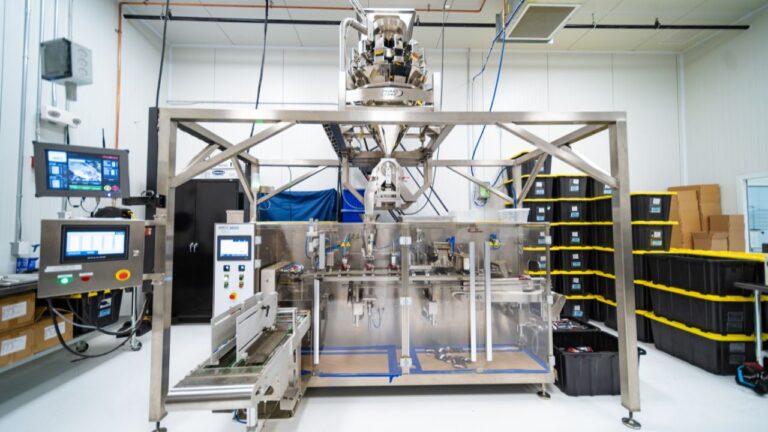
Modern stainless steel automated cannabis pre-roll processing machine in a dedicated production room.

Bostica

Lynn, MA, United States

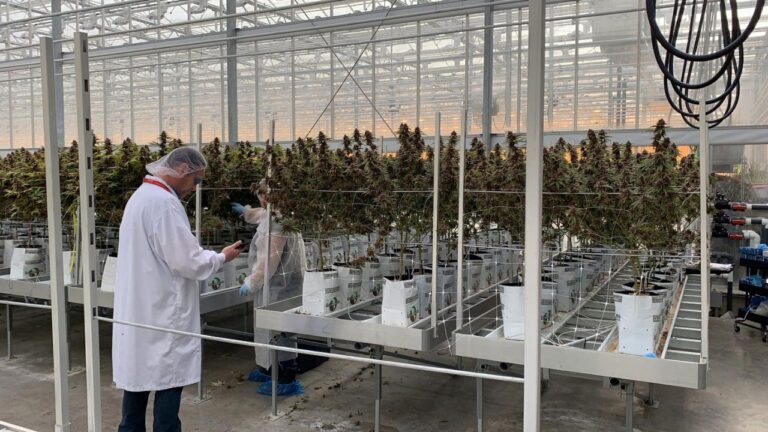
Catalyst BC consultants and LeafLine Cultivation Director inspecting vibrant plants in an organized vertical grow room.

Leafline Labs

Cottage Grove, MN, United States

Catalyst BC consultant recording air, environmental, and plant data measurements within a cultivation facility.

View All Projects

View all Catalyst BC Projects

Further Reading on Florida Licensing, Dispensary Costs and Grow-Room HVAC

Provenance. Every regulatory figure on this page is drawn from the Florida Department of Health Office of Medical Marijuana Use’s pages and reports, Florida Statutes sections 381.986, 381.988 and 212.08, Florida Administrative Code chapter 64-4 and its emergency rules, and the Laws of Florida. Section 381.986 was checked against its amendment history on October 5, 2026: the latest amending law, chapter 2026-233, changes only the rulemaking exemption in subsection (17), and the 2026 statute text used here includes it. Fees, financial assurance, authorization clocks, ownership rules and distances are adopted and in force, except where noted: Rule 64-4.215 takes effect October 6, 2026 and replaces Emergency Rule 64ER25-1; Rule 64-4.214 is proposed, not adopted, and Emergency Rule 64ER22-9, which it would replace, remains in force. Patient, location and license counts are OMMU’s figures as of October 2 and October 5, 2026. The September 11, 2026 licensure date and the September 25, 2026 financial-assurance deadline come from OMMU’s license letters. Company figures come from Catalyst BC’s own records. Sources were read October 5, 2026. Where this page and OMMU, the statute or the rules differ, the official text governs.

Office of Medical Marijuana Use pages

Florida Statutes (2026)

Florida Administrative Code and Register

Administrative hearing and federal rule

Laws of Florida and the Division of Elections

Contact Us

Enough about us. We want to hear more about you, your project, and your vision! Get in touch with a real live person today. Don’t worry, we don’t have a long, confusing phone menu, and your email isn’t going to the abyss, we promise. At Catalyst, we provide the service and support we’d want to experience ourselves!

Scroll to Top