Buy In or Grow More: Vermont Cannabis Consultants Who Know the CCB

Vermont cannabis consulting starts with what is open: the Cannabis Control Board (CCB) accepts manufacturing, wholesale, propagation and lab applications, but not new cultivation or retail ones. We help investors buy into licensed companies and help growers raise yield; our records list 58+ licenses secured.

A Decade of Harvesting Success - Trusted by Cannabis Operators Worldwide

Upcoming CCB Dates and 2027 Fee Changes

Oct 23, 2026Written comments close on the event-permit procedures
Oct 28, 2026Next regular Cannabis Control Board meeting
Jul 1, 2027Outdoor license fees halve; employee cards go to two years

Updated: 10/7/2026. Vermont created the Cannabis Control Board in 2020 with Act 164 to license and regulate adult-use and medical cannabis (CCB Strategic Vision). The market has been shrinking: the Board counted 629 active licenses in March 2025 and 531 on September 17, 2026, including 311 cultivators, 110 retailers and 94 manufacturers (CCB Executive Director report, September 30, 2026). Vermont stores sold $14.68 million of cannabis in August 2026 across 107 retailers, by the CCB’s count (CCB Data Dashboard, June–August 2026).

The dates ahead are rule and fee changes, not a licensing round. Comments on the draft event-permit procedures close October 23, 2026, and the Board’s next regular meeting is October 28 (CCB meetings calendar). On July 1, 2027, outdoor cultivation fees fall by about half and employee ID cards become two-year cards (Act 176 of 2026). Before it reopens any closed license type, the Board must give at least 30 days’ public notice (CCB Rule 1, 1.10).

Meet Catalyst BC's Founders

  • Leif Olsen - Chief Executive Officer

    Leif Olsen

    Chief Executive Officer

  • Michael Williamson - Chief Operating Officer

    Michael Williamson

    Chief Operating Officer

  • Ian Miller - Executive Chair

    Ian Miller

    Executive Chair

Our partners bring multi-faceted expertise across business strategy, licensing, facility development, finance, and commercial operations. That breadth is complemented by subject matter experts across the wider Catalyst BC team, allowing us to bring the right combination of experience to each client and project. The result is bespoke, collaborative support shaped around your business, priorities, and goals - with the right expertise brought to the table when it matters most.

Learn more about our team

Where a Vermont Cannabis Consultant Fits Between You and the CCB

The CCB requires a free pre-application orientation, and its own rule says that orientation is not a full eligibility review and is not legal advice (Rule 1.13). A Vermont cannabis consultant fills the gap between the rules and a file the Board will approve.

Investing in Vermont Cannabis While New Grow and Store Licenses Are Closed

If you are new to cannabis and bring capital, know two rules before you look at deals. First, Vermont treats anyone who owns 10% or more of a licensed company as a person who controls it (7 V.S.A. § 861(18)), and every individual who controls it must submit fingerprints for a criminal background check (Rule 1.4.2). Second, one applicant and its affiliates may hold only one license of each type, labs excepted, with one location per license (7 V.S.A. § 901(d)(3)).

With new cultivation and retail applications closed, buying shares of a licensed company today is the only way into a grow or a store (see buying in). Closing before the Board approves the change and issues the amended license ends the license on the spot, and operating afterward can bring a fine of up to $20,000 (CCB Ownership Changes Guidance). For sizing a store purchase, the median Vermont retailer sold $107,500 of cannabis in August 2026 (CCB dashboard).

Vermont also softens the federal tax hit: the state lets cannabis businesses take ordinary business deductions on Vermont income taxes that federal law denies (CCB notice on the property tax credit).

What we offer Vermont investors: deal diligence through cannabis business strategy; the capital plan and pro forma through cannabis financial planning; change-of-control and new-license filings through cannabis license application support; and site, local approval and opening work through cannabis startup support.

Already Licensed in Vermont: Unused Canopy, Energy Rules and Thin Flower Margins

Vermont growers hold far more canopy than they use. The CCB’s September 30, 2026 report shows licensees using about 36% of licensed indoor canopy and 63% of outdoor canopy (our arithmetic from the report). That matters at renewal: the Board may renew a cultivator in a lower tier matched to its actual use if, without good cause, it used less than the capacity of the tier below over the past 12 months; tier 1 is exempt (Rule 1.3.5).

Growth runs the other way through a waiver. A tier 1 or tier 2 cultivator that used its canopy, sold most of its lots and has a plan for a unique market demand may ask to move up one tier (CCB Cultivation Tier Increase Guidance); the Board approved one such request on September 30, 2026 (CCB minutes, September 30, 2026). The higher tier’s annual fee is due when you file and is neither prorated nor refunded, so time the filing close to renewal.

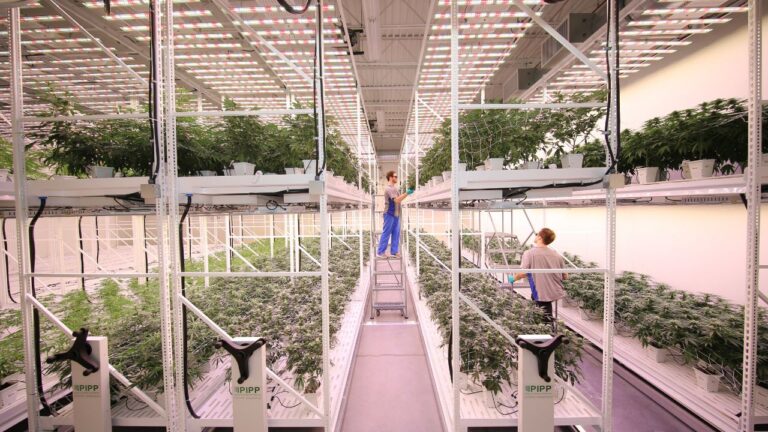
Retail flower, pre-rolls included, averaged $6.89 a gram in August 2026 on the CCB’s dashboard; in our experience cost per gram, not more canopy, decides most margins. For Vermont grow rooms we offer cannabis facility design and HVACD (heating, ventilation, air conditioning and dehumidification), controlled environment agriculture climate targets, cannabis vertical farming layouts that add yield inside a licensed canopy, operational optimization and, when margins slip, a cannabis turnaround diagnostic. Michael Williamson, our Chief Operating Officer, co-founded Greenhaus Industries, where his team developed and patented stackable trays that let growers farm on several levels.

Who leads Vermont engagements: Leif Olsen, our Chief Executive Officer and a co-founder, leads licensing and change-of-control work. We have no Vermont clients yet and no Vermont office; we would deliver Vermont work on-site and remotely, and the same team runs Catalyst BC’s national cannabis consulting practice.

A word against our own interest: the CCB publishes its rules, forms and guidance free, and its orientation costs nothing, so a small manufacturer or propagator with a clean file and a simple ownership structure can often apply without us, and an existing grower can often renew without us. To talk through a Vermont file, contact us or call (USA) 303-305-3787.


Investing in Vermont cannabis

Already licensed in Vermont

0 +
Years Regulated Cannabis Operations Experience
0 +

Compliant Harvests

0 M+

Square Feet of Cultivation, Production, and Retail Facilities Designed

0 +

Licenses Secured

Which Vermont License Applications the CCB Accepts Today

Four license types are open: manufacturing, wholesale, propagation and testing. Cultivation and retail applications “remain closed for new applicants” (CCB adult-use applications page). Existing retailers may apply for a medical-use endorsement. The Board paused new retail applications in October 2024 and new medical-only dispensary applications in July 2025 (CCB notice, August 1, 2025).

Filing Status Who can file
Manufacturer, tiers 1–3 Open New applicants
Wholesaler Open New applicants
Propagation cultivator Open New applicants
Testing laboratory Open New applicants; one applicant may hold several lab licenses
Medical-use endorsement Open Retailers with six months of continuous, compliant operation
Cultivator (indoor, outdoor, mixed) Closed to new applicants Tier 1 and 2 licensees may seek one tier up by Board waiver (Rule 1.3.4)
Retailer Closed to new applicants Existing licensees only; changes of control need Board approval
Retail relocation New requests deferred since May 27, 2026 Exception possible if a site becomes unusable (CCB relocation notice)
Medical-only dispensary Paused since July 2025 No new applications
Swipe to see the full table →

Statuses from the CCB applications page and notices, read October 7, 2026; every source is listed at the bottom of this page.

Date What happens
October 23, 2026 Written comments close on the draft event-permit procedures
October 28, 2026 Regular CCB meeting
July 1, 2027 Outdoor cultivation fees cut; outdoor tier 6 fee line deleted; employee ID cards become $100 for two years (Act 176, Secs. 10a, 13 and 32)
By July 1, 2027 The CCB must start rulemaking for event permits (Act 176, Sec. 10)
By November 15, 2027 The CCB reports to the Legislature on the event-permit pilot
July 1, 2028 The event-permit law is repealed (Act 176, Sec. 29)
Swipe to see the full table →

Dates from the CCB calendar, the CCB September 2026 meeting recap and Act 176 of 2026.

Clock Rule
Dormant application May be dismissed after 90 days (Rule 1.2.3)
Material change in governing documents Written notice to the CCB within 20 days (Rule 1.4)
After a license is issued Begin operating within 60 days (Rule 1.12)
Renewal The CCB sends notice at least 120 days before expiration; file up to 90 days early; the file must be complete 30 days before expiration (Rule 1.15.1)
Lapsed license A license expired more than 60 days is presumed to need a new application (Rule 1.15.2)
Tier increase waiver Apply in the higher tier within 90 days of the Board’s approval (Rule 1.3.4)
Approved relocation Move within 60 days of approval (Rule 1.17)
Swipe to see the full table →

CCB Rule 1, adopted text posted July 2025.

For the route into a closed license type, see buying in.

Vermont’s Six License Types Now That the Integrated License Is Gone

Act 176 repealed the integrated license on July 1, 2026, leaving six types: cultivator, propagator, wholesaler, product manufacturer, retailer and testing laboratory (Act 176, Secs. 17 and 29). Licenses at one site need the Board’s approval to co-locate, and two retailers may share a site only when one runs a mentorship or accelerator program for the other (CCB Rule 2, 2.2.18).

License What it allows Key limit
Cultivator Grows, processes and sells cannabis to wholesalers, manufacturers, retailers and medical dispensaries Tiered by canopy, indoor, outdoor or mixed (next table)
Propagation cultivator Grows clones and immature plants for cultivators and retailers; sells hemp seeds to the public (7 V.S.A. § 904b) Up to 3,500 square feet; may not produce flower
Wholesaler Buys, processes, packages and sells to other licensees No sales to the public
Product manufacturer, tier 1 Water, food or heat-and-pressure extraction Home business, one employee at most, under $50,000 in gross revenue a year
Product manufacturer, tier 2 Same methods as tier 1, any size No flammable solvent or supercritical CO2 extraction
Product manufacturer, tier 3 All lawful extraction methods Solvent extraction in a building under the Division of Fire Safety; no butane or hexane extraction
Retailer Sells to adults 21 and older at one storefront Two ounces of flower per sale since July 1, 2026 (Act 176, Sec. 2)
Testing laboratory Tests cannabis for licensees, dispensaries and the public Cannot do required testing for a licensee whose owner owns or controls the lab
Swipe to see the full table →

7 V.S.A. §§ 904–908, CCB Rule 1.3 and the CCB Adult-Use Fee Guidance.

Tier Indoor canopy Outdoor canopy (or plants) Mixed: indoor canopy + outdoor plants
1 1,000 sq ft 1,000 sq ft (125 plants) 1,000 sq ft + 125
2 2,500 sq ft 2,500 sq ft (312 plants) 2,500 sq ft + 312
3 5,000 sq ft 5,000 sq ft (625 plants) 1,000 sq ft + 625
4 10,000 sq ft 10,000 sq ft (1,250 plants) 1,000 sq ft + 1,250
5 15,000 sq ft 20,000 sq ft (2,500 plants) 1,000 sq ft + 2,500
6 25,000 sq ft 37,500 sq ft (4,687 plants) —
Swipe to see the full table →

CCB Rule 1.3.1. Outdoor plant counts assume 8 square feet per plant; canopy is the greater of table area or the area plants actually occupy. Indoor applicants must use square feet.

The medical-use endorsement is a retail growth path that remains open. A retailer with six months of continuous, compliant operation may apply; the endorsement lets it sell to registered patients free of cannabis excise and sales tax, sell flower and concentrates above the adult-use potency caps, deliver, and serve patients curbside (Rule 1.7.1; 7 V.S.A. § 907(f); 32 V.S.A. § 9741(55)). The CCB’s September 30, 2026 report listed 36 endorsed retail locations.

CCB License Fees Under 7 V.S.A. § 910, Before and After July 1, 2027

A new applicant pays a one-time $1,000 application fee (waived for social equity applicants), which is not refunded if the application is denied, and a $100 local fee with each license (CCB Adult-Use Fee Guidance). An applicant may first pay a $500 intent-to-apply fee, which cuts the application fee by $500 if it applies within a year (7 V.S.A. § 910(11)).

Municipal fees, local tax, rent, zoning counsel, fit-out and working capital will dwarf these. For a grower, any canopy addition carries the $2,000 modification fee, and a higher tier also raises the licensing fee, so more yield inside the current tier usually pays back first.

Tier Indoor Outdoor until June 30, 2027 Outdoor from July 1, 2027 Mixed
1 $1,500 $750 $375 $2,250
2 $3,750 $1,875 $925 $5,625
3 $8,000 $4,000 $2,000 $5,500
4 $16,000 $8,000 $4,000 $9,500
5 $36,000 $18,000 $9,000 $19,500
6 $75,000 $34,000 Fee line deleted —
Swipe to see all fees →

7 V.S.A. § 910(1); outdoor changes from Act 176, Sec. 10a, effective July 1, 2027. The CCB’s Fee Guidance lists indoor and outdoor tiers 1–5 only.


Fee Amount
Wholesaler $4,000 a year
Manufacturer, tier 1 / 2 / 3 $750 / $2,500 / $15,000 a year
Retailer $10,000 a year; $10,250 with a medical-use endorsement
Testing laboratory $1,500 a year
Propagation cultivator $500 a year
Product registration $50 a year for each product
Employee ID card $50 a year; $100 for a two-year card from July 1, 2027
Local license fee $100 a year with each license, paid to the town
Application / intent to apply $1,000 once / $500 once
Event permit $500 per application
Swipe to see all fees →

7 V.S.A. § 910 as amended by Act 176, Secs. 13 and 20; event-permit fee from 7 V.S.A. § 912(e) (Act 176, Sec. 5).

License yearShare of the license fee paid
Year 1None; the application fee is also waived
Year 225%
Year 350%
Year 475%
Year 5 and later100%
Swipe to see the full table →

CCB Adult-Use Fee Guidance. The $100 local fee, $50 product fees and $50 ID card fees are never waived.

Budget accordingly: a new tier 3 manufacturer pays $16,100 to the state and town before it opens, the $1,000 application fee plus the $15,000 license fee and the $100 local fee, then $50 for each product and each employee card (our arithmetic from § 910). Our cannabis startup costs breakdown covers the rest of the budget.

Corrected October 7, 2026: some published Vermont guides still list a $100,000 integrated license and say applications have no closing date. Act 176 repealed that license on July 1, 2026, and the CCB says cultivation and retail are closed.

How the CCB Reviews a Vermont Application, From Orientation to Opening

License review is pass-or-fail, not a contest: the Board issues a license to any applicant that meets every requirement in its rules and in 7 V.S.A. chapter 33 (Rule 1.12). The Board’s priority policy gives first-time social equity applicants top priority (Rule 1.14), and the CCB reviews economic empowerment applicants ahead of standard ones.

How to open a dispensary in Vermont while retail is closed

Vermont licenses adult-use stores as retailers; in Vermont law, “dispensary” means a medical-only business. These steps apply to new retail applicants once the Board reopens retail. A buyer of a licensed store follows the change-of-control route under buying in, but steps 1 and 2 still decide whether its site works.

  1. Confirm that your town has voted by Australian ballot to allow cannabis retailers.
  2. Secure a site you have the right to occupy for most of the license term, clear of the school rule under town votes.
  3. Complete the CCB orientation, then file through the CCB portal with an operating plan, owner background checks and a security plan.
  4. Obtain a local control license if your town has a cannabis commission; the Board checks for it before issuing.
  5. Pay the state and local license fees, receive the license and begin operating within 60 days.

Criminal history is weighed, not applied as a blanket bar: nonviolent drug offenses do not automatically disqualify an applicant, and credit scores may not be a reason for denial (7 V.S.A. § 883). What sinks files in our experience is an incomplete ownership chart or a missing lease. That is where our cannabis licensing and application team and startup support begin.

Buying Into a Licensed Vermont Business: Control, Stock Sales and Social Equity

Any change in who controls a licensee needs express Board approval before closing (Rule 1.17). The Board may waive approval in writing only for two simple exits: a controller leaving without shifting majority control, or one of two 50/50 partners leaving. Before it votes, the Board may require that governing documents be current, that the deal not give anyone a second license of the same type or break another licensing rule, that no one gains control without the Rule 1.4 disclosures, that the deal not evade a court or regulatory order, and that everyone involved be in good standing with the Department of Taxes, with outgoing owners attesting they owe no tax.

Structure matters. A stock sale keeps the licensed company and amends its license; an asset sale requires the buyer to apply as a new applicant, which a store or grow buyer cannot do while those types are closed. A license is not property: owners cannot move it to a new company, even one they own (CCB Ownership Changes Guidance). Financiers who are not owners must be 21 or older and may have to disclose their owners and undergo background checks; commercial banks are exempt (Rule 1.4.3).

Timing: once background checks clear, the CCB places the amendment before the Board at its next available regular meeting (CCB Ownership Changes Guidance). For targets, the CCB’s Active Licenses Report lists every licensee by name, license type, tier, town and expiration date.

Social equity status can cut fees. A Vermont resident qualifies who is Black or Hispanic, was jailed for a cannabis conviction, has a close family member who was, or shows personal harm from a disproportionately affected community; a business qualifies at 51% such ownership (CCB Social Equity Guidance). Businesses at least 51% owned by women, veterans, LGBTQIA+ people, Indigenous people, Asian American or Pacific Islander people or other people of color may qualify as economic empowerment applicants. Of 531 active licenses in September 2026, 80 were social equity and 120 economic empowerment.

Watch one longer-term change: Act 176 lets the Governor sign interstate cannabis agreements, but none can take effect until federal law or a Justice Department opinion allows interstate transfers, or Vermont’s Attorney General finds the legal risk acceptable (Act 176, Sec. 27b).

Town Opt-In Votes, Local Cannabis Commissions and the Vermont School Rule

A cannabis store may operate only in a town whose voters approved retail sales by Australian (secret paper) ballot; a later repeal does not close a store already operating (7 V.S.A. § 863). The CCB’s dashboard counts 79 of 253 towns opted in, home to about 357,000 of 659,000 residents. Any town may form a local cannabis commission to issue local control licenses tied to zoning, sign and nuisance rules, but it may not charge for them, and no town may ban or effectively ban cannabis businesses by ordinance or zoning bylaw.

The school rule is narrower than a flat 500-foot radius. A store may not sell on school property or on property abutting it within 500 feet, abutting meaning sharing a boundary or separated only by a public highway, river or stream (18 V.S.A. § 4237(d)); distance runs from the edge of the public sales floor to school property (Rule 2.8.1). The CCB still asks relocating stores to map school property within 1,000 feet (CCB Retail Relocation Guidance), and the Board is drafting retail siting rules for future licensing and relocations (CCB July 2026 meeting recap).

Outdoor grows are treated like farming for state land-use permits, and towns may set canopy setbacks of up to 25 feet in a cultivation district and up to 50 feet elsewhere; with no zoning, the setback is 10 feet (7 V.S.A. § 869(f)). Our cannabis facility design work starts with that site screen.

Vermont Cannabis Compliance Consulting: Testing, Energy Rules, Payment Terms and Tax

Testing runs by cultivar. Every cultivar is tested for potency and pathogens, smokable flower for water activity, and up to five cultivars submitted together may be pooled for pesticide testing (Rule 2.9.1). A batch that fails for a food-crop pesticide used with reasonable care may be remediated at most twice; cannabis remediated for Aspergillus, a mold, may never be sold as flower or an infused pre-roll (Rule 2.2.19). Flower may not exceed 30% THC, and concentrates sold to the public 60%, except prefilled vape products (7 V.S.A. § 868).

Indoor rooms and greenhouses carry energy rules. Within a year of licensing, indoor cultivation lighting must reach a photosynthetic photon efficacy (light output per watt) of at least 1.9, and dehumidification must use one of four approved designs: efficient standalone units, HVAC or chilled water with heat recovery covering 75% of reheat, or desiccant systems for a dew point of 50°F or below (Rule 2.5). Greenhouses that add electric light need fixtures of at least 1.7 PPE, unless total connected lighting load is under 40 kilowatts (Rule 2.5.4). Keep 24 months of electric bills (CCB Energy Efficiency Guidance).

Getting paid is regulated too: consignment is banned, retailers take ownership when product transfers, and payment terms may not run past 90 days from the transfer (Rule 2.8.14).

The CCB’s September report counted 73 inspections, 45 of them at cultivation sites. Each licensee must complete a Board enforcement seminar every three years to renew, and staff who sell to the public need Board-approved training before their first sale and every 24 months (7 V.S.A. § 865).

What Vermont charges at the register

Retailers collect a 14% cannabis excise tax on top of the 6% sales tax, plus the local option sales tax in towns that have one, which towns cannot waive for cannabis (CCB Municipal Guidance); the excise is itemized separately, the sales tax is not charged on it, and excise returns are due by the 25th of each month (32 V.S.A. § 7902; § 7904; § 9771).

Before You Sign a Vermont Purchase Agreement or Add Canopy

Investors get a change-of-control review before they commit: who counts as a controller, what the Board will ask before it votes, and how to sequence the deal so the license survives closing. Licensed growers get a canopy-and-energy review: utilization against your tier, the tier-cut and tier-up rules, lighting and dehumidification against Rule 2.5, and cost per gram against current retail flower prices. Some clients need one answer, others a longer engagement; send your license type, town and deal or production figures, and if we are not the right fit, we will say so.

Vermont Cannabis Control Board Licensing Questions

For some types. On October 7, 2026, the CCB was accepting applications for manufacturers, wholesalers, propagation cultivators and testing labs, and medical-use endorsements from existing retailers. New cultivation and retail applications are closed, and the Board must give 30 days’ notice before reopening them.

A new applicant pays a $1,000 application fee (waived for social equity applicants) plus a $100 local fee. Annual cultivation fees run from $750 for outdoor tier 1 ($375 from July 1, 2027) to $75,000 for indoor tier 6; a retailer pays $10,000, and a manufacturer $750, $2,500 or $15,000 by tier (7 V.S.A. § 910).

Yes, but only after the Board approves and issues an amended license. Buying 10% or more of a licensed company, or any stake that gives you control, is a change of control; closing early ends the license. An asset purchase needs a new application, impossible for a store or grow while those types are closed.

Less than 10%. Vermont law deems anyone who owns 10% or more of the equity, or the equivalent, to control the company, and every controller must be disclosed; each one who is an individual submits fingerprints for a background check. Control can also come through a contract, so a management agreement that gives control counts.

Tier 1 and tier 2 cultivators can, by Board waiver. A cultivator that used its canopy, sold most of its lots in the past 12 months and has a plan for unique market demand may get a waiver to apply one tier up in the same license type; it must apply within 90 days, without the $1,000 application fee.

Within a year of licensing, indoor cultivation lighting must reach a photosynthetic photon efficacy of at least 1.9, and dehumidification must use one of four approved designs. Growers keep 24 months of electric bills (Rule 2.5).

Yes. A retailer may operate only where voters approved retail sales by Australian ballot. Towns may also form a local commission that issues free local control licenses tied to zoning, sign and nuisance rules, but no town may use an ordinance or bylaw to ban a cannabis business.

Retail buyers pay a 14% cannabis excise tax and the 6% sales tax, plus any local option sales tax. The retailer files excise returns by the 25th of each month. Registered patients buying from a dispensary or an endorsed retailer pay neither tax.

Catalyst BC Cultivation and Facility Projects Outside Vermont

These projects in other markets show the cultivation and facility work we would bring to a Vermont project, and the results for each sit in our case studies.

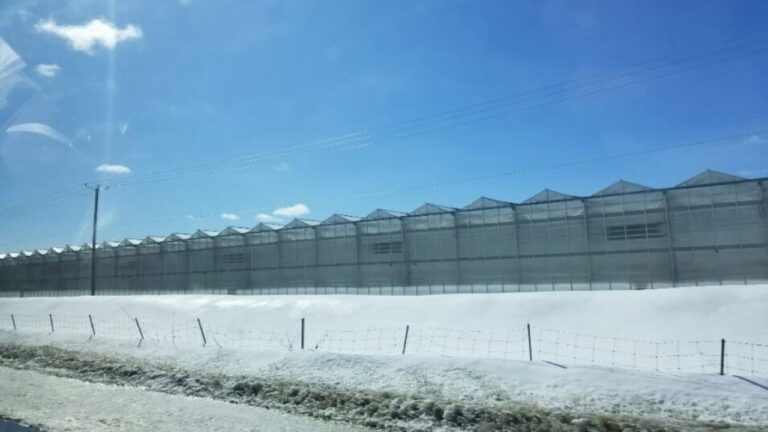
Exterior view of the Hexo Venlo glasshouse row spanning over 1 million square feet.

Hexo Corp.

Gatineau, Quebec, Canada

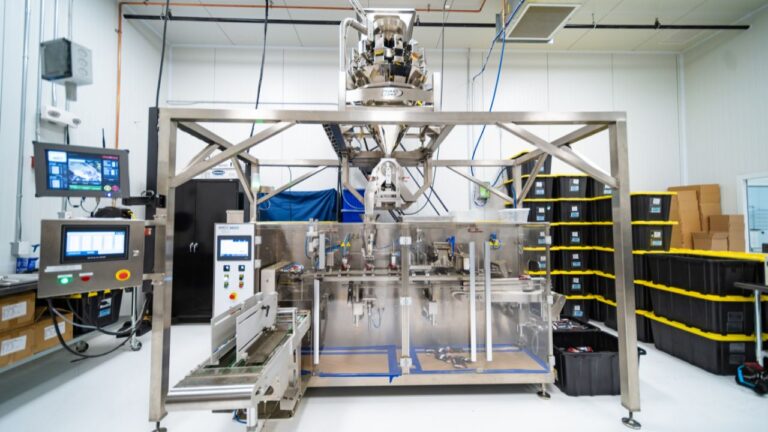
Modern stainless steel automated cannabis pre-roll processing machine in a dedicated production room.

Bostica

Lynn, MA, United States

Catalyst BC consultants and LeafLine Cultivation Director inspecting vibrant plants in an organized vertical grow room.

Leafline Labs

Cottage Grove, MN, United States

Catalyst BC consultant recording air, environmental, and plant data measurements within a cultivation facility.

View All Projects

View all Catalyst BC Projects

More Reading: Startup Budgets and Grow-Room Climate

Provenance. Figures checked against the rule and statute text by Catalyst BC on October 7, 2026, and reviewed by Leif Olsen, Chief Executive Officer. The Legislature’s online statutes show the 2025 text, so changes made by Act 176 were read in the act as enacted (signed June 18, 2026). Canopy-use percentages and the manufacturer budget are our own arithmetic from CCB figures; company figures come from Catalyst BC’s own records. Where this page and the official text differ, the official text governs.

Vermont statutes and Act 176

Cannabis Control Board rules and guidance

Cannabis Control Board pages, notices and data

Contact Us

Enough about us. We want to hear more about you, your project, and your vision! Get in touch with a real live person today. Don’t worry, we don’t have a long, confusing phone menu, and your email isn’t going to the abyss, we promise. At Catalyst, we provide the service and support we’d want to experience ourselves!

Scroll to Top