




















US Virgin Islands Cannabis Consultants for OCR Licensing and Yield
US Virgin Islands cannabis consulting starts with timing: OCR’s dispensary window closed October 15, 2025, and its cultivation window ended September 16, 2026, so new applicants prepare for the next round. We ready investors for it and help licensees open and grow. We have secured 58+ licenses elsewhere (company-reported).
A Decade of Harvesting Success - Trusted by Cannabis Operators Worldwide
Upcoming OCR and Federal Hemp Dates
Updated: 10/10/2026. The US Virgin Islands licenses adult-use, medical and sacramental cannabis under one law, the Virgin Islands Cannabis Use Act (Act 8680), signed January 18, 2023. The Office of Cannabis Regulation (OCR), part of the Department of Licensing and Consumer Affairs, licenses businesses under rules signed May 4, 2024. Its approval notices through September 2026 list 13 dispensary, 16 cultivation, 8 manufacturing and 2 research and development applicants (our count), and approval stays conditional until OCR inspects the premises and issues a Certificate to Operate.
On November 12, 2026 a new federal hemp definition starts to apply to products with cannabinoids the plant cannot naturally produce, and on December 11, 2026 the rest of it applies. OCR must publish successful applicants and their scores within 90 days of an application deadline; OCR says the cultivation period had ended as of September 16, 2026, so results are due by December 15, 2026 at the latest.
Meet Catalyst BC's Founders
-
Leif Olsen
Chief Executive Officer
-

Michael Williamson
Chief Operating Officer
-
Ian Miller
Executive Chair
Our partners bring multi-faceted expertise across business strategy, licensing, facility development, finance, and commercial operations. That breadth is complemented by subject matter experts across the wider Catalyst BC team, allowing us to bring the right combination of experience to each client and project. The result is bespoke, collaborative support shaped around your business, priorities, and goals - with the right expertise brought to the table when it matters most.

Where a US Virgin Islands Cannabis Consultant Helps and Where OCR Decides
OCR licenses, inspects and enforces. The Act defines a consultant as a person who visits a licensee’s premises temporarily to advise, and caps that person at 90 days a year on the premises unless OCR grants a waiver for commercial necessity (Act 8680). In our view, most of a US Virgin Islands cannabis consultant’s work is therefore off-site: the application file, the ownership structure, the build drawings and the procedures an inspector checks.
Investing in the US Virgin Islands From Outside: A Resident Majority and Approved Stakes
The Act intends commercial cannabis to be maintained by Virgin Islands residents, so a licensee needs a resident majority, and outside money comes in through passive interests OCR approves before any funds move. Details are under ownership.
For investors: island and license selection through cannabis business strategy; a US Virgin Islands cannabis business plan with OCR fees and the 18% sales tax through cannabis financial planning; the merit-scored application through cannabis license application support; and the build to a Certificate to Operate through cannabis startup support.
Already Approved in the US Virgin Islands: Inspection, Humidity and Island-Only Supply
A conditional approval is not permission to sell. OCR’s dispensary notice says no cannabis activity may start until OCR issues a final Certificate to Operate, and the rules bar OCR from issuing a license until it has inspected the premises. A cultivator must begin production within six months of licensure or risk the license unless it shows good cause, which excludes cost overruns and insufficient financing (OCR Rules and Regulations).
OCR’s testing policy fails any flower or inhalable plant material above 0.65 water activity (a measure of free moisture), which in our view makes dehumidification the first design decision (OCR testing standards). The rules also authorize cultivators and dispensaries to transfer cannabis to and from businesses on the same island, so in our reading each island stocks its shelves from its own grows.
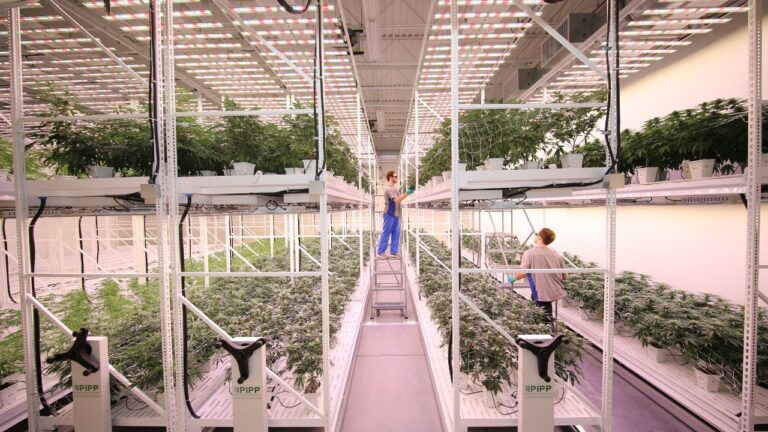
For approved licensees we offer US Virgin Islands cannabis facility design with HVACD (heating, ventilation, air conditioning and dehumidification), controlled environment agriculture targets set against that water-activity limit, cannabis vertical farming to fit a plant count into a smaller room, operational optimization of harvests, labor and Metrc (seed-to-sale tracking) records, and a cannabis turnaround diagnostic when margins slip. Our Chief Operating Officer and co-founder Michael Williamson has 25,000+ hours (company-reported) in cultivation and dispensary operations and co-founded Greenhaus Industries, which patented stackable cultivation trays for growing on multiple tiers (company-reported).
Our US Virgin Islands record and team: Catalyst BC has no Virgin Islands client, and we will not imply one. Leif Olsen, our Chief Executive Officer and a co-founder, is a licensing specialist (company-reported), and Ian Miller, our Executive Chair and a co-founder, holds a master’s degree in building construction (company-reported). We have no US Virgin Islands office; we deliver work on-site and remotely, and the same team runs Catalyst BC’s national cannabis consulting practice.
A word against our own interest: nobody can file a dispensary or cultivation application for you until OCR opens another round, and a routine change-of-ownership request needs no consultant. To talk through a US Virgin Islands deal or facility, contact us or call (USA) 303-305-3787.
Investing in US Virgin Islands cannabis
- Cannabis Business Strategy ConsultingIsland and license selection
- Cannabis Financial Planning & ModelingOCR fees, 18% tax, capital proof
- Cannabis Licensing & Application SupportMerit-scored OCR applications
- Cannabis Startup SupportConditional approval to opening
Already licensed in US Virgin Islands
- Cannabis Facility Design & HVAC / HVACD EngineeringDehumidification for island humidity
- Cannabis Controlled Environment Agriculture (CEA)Rooms that pass water-activity tests
- Cannabis Vertical Farming ConsultingPlant counts in a smaller footprint
- Cannabis Operational OptimizationHarvests, labor and Metrc records
- Cannabis Business Turnaround & Operational RecoveryRecovery for a slow first year
Compliant Harvests
Square Feet of Cultivation, Production, and Retail Facilities Designed
Licenses Secured
Is OCR Accepting US Virgin Islands Cannabis License Applications?
Not for a dispensary or cultivation license today. The dispensary application window closed on October 15, 2025, and OCR’s cultivation application page says that period ended September 16, 2026 and asks applicants to subscribe to its newsletter for the next round’s opening dates (OCR cultivation application page). There is no open US Virgin Islands cannabis license application for a dispensary or grow until OCR announces one. OCR’s manufacturing, research and development and micro-cultivation forms carry no closing notice, so confirm with OCR before you prepare one.
Unsuccessful dispensary applicants got one narrow second chance. Cannabis Advisory Board Resolution 01-2026, adopted May 13, 2026, let applicants who missed the minimum scoring threshold amend within 30 days of OCR’s public notice for a $5,000 fee, with no change of ownership, and says it is not a reopening of the application process (CAB Resolution 01-2026).
Future rounds follow the caps: the Act says the number of licenses may never exceed the island quantities in § 787. When OCR revokes a license, a licensee surrenders one or OCR issues new or additional licenses, OCR must run a merit-based process. Additional licenses after January 1, 2025 need a study showing demand will exceed supply within 24 months, and since Act 8925 they also need the Legislature’s authorization and the Governor’s approval (Act 8925).
Approved applicants by island against the Act’s caps, through September 2026
| Island | Dispensary | Cultivation | Manufacturing | Research and development |
|---|---|---|---|---|
| St. Thomas | 7 of 7 | 5 of 15 | 5 | 2 |
| St. John | 3 of 3 | 1 of 5 | 1 | None listed |
| St. Croix | 3 of 7 | 10 of 15 | 2 | None listed |
| Total | 13 of 17 | 16 of 35 | 8 | 2 |
Our count of OCR approval notices dated January 15, July 8 and September 10, 2026 (OCR says the July 8 cultivation list reflects all approved applicants); caps from Act 8680 § 787. Approval is conditional until OCR issues a Certificate to Operate.
How the US Virgin Islands program reached this point
| Step | Date |
|---|---|
| Act 8680 signed | January 18, 2023 |
| OCR Rules and Regulations signed | May 4, 2024 |
| Act 8925 approved | October 31, 2024 |
| Dispensary application window closes | October 15, 2025 |
| First conditional cultivation approvals | October 16, 2025 |
| Conditional dispensary approvals | January 15, 2026 |
| CAB Resolution 01-2026 adopted | May 13, 2026 |
| Cultivation and manufacturing approvals | July 8, 2026 |
| Cultivation period over, per OCR | September 16, 2026 |
OCR home and Governance pages; Act 8925; OCR notices; CAB Resolution 01-2026.
Key parts of a merit-based license application
| Item | What to provide |
|---|---|
| People | Fingerprints, 15 years of addresses and an FBI fingerprint check for each owner and financial interest holder |
| Residency | Proof each owner meets the residency test, with the date residency began |
| Structure and money | Ownership on a current and fully diluted basis, and the lawful source of funds |
| Premises | A diagram with cameras and boundaries, proof of possession and an emergency response plan |
OCR Rules 777-12(b).
Who may own the applicant, and how outside money can come in, is under ownership.
OCR License and Permit Types and the Island-by-Island Caps
The Act lets OCR issue five licenses (cultivation, manufacturing, dispensary, research and development, and testing facility) and five permits (adult-use lounge, cannabis use, temporary cannabis use, onsite consumption and micro-cultivation), and Act 9072 added an intoxicating hemp retailer license. Each license or permit goes to a specific person at a defined location and is valid for one year unless OCR sets a shorter term, and a person may apply for more than one of the first four license types at the same location if co-location breaks no rule.
The Act sets numeric caps, island by island, for dispensaries, cultivators and hemp retailers: St. Thomas up to 7 dispensary, 15 cultivation and 6 hemp retailer licenses, St. John 3, 5 and 2, and St. Croix 7, 15 and 6. A dispensary licensee may also hold a cultivation license, but the remaining cultivation licenses go to people without a dispensary license. Dispensaries must source at least 70% of the cannabis they sell from unaffiliated third parties, subject to OCR-approved exclusions, and under the rules must buy 15% by weight from micro-cultivators, a share OCR may change on at least 90 days’ notice.
What each OCR license and permit allows
| Type | Cap or limit | What it allows |
|---|---|---|
| Cultivation license | St. Thomas 15, St. John 5, St. Croix 15; up to 1,000 flowering plants | Grow, cure, process, package and sell to other businesses on the same island |
| Manufacturing license | No island cap in the Act | Make concentrates and products; edibles up to 100 mg THC per unit and 10 mg per serving |
| Dispensary license | St. Thomas 7, St. John 3, St. Croix 7 | Sell to adults 21 and over, qualified patients and designated caregivers |
| Research and development license | No island cap in the Act | Research on cannabis; may sell only seeds and immature plants to licensees |
| Testing facility license | One OCR-certified lab per major island by bid; more labs may be licensed later | Test cannabis items for licensees |
| Micro-cultivation permit | One per individual and address; 50 flowering, 200 immature plants | Small-scale growing for sale to licensees, by licensed farmers |
| Lounge, cannabis use and temporary use permits | Distance limits apply | On-site consumption by adults 21 and over |
| Onsite consumption permit | Cultivation licensees only | Consumption in a designated area of the cultivation premises |
| Intoxicating hemp retailer license | St. Thomas 6, St. John 2, St. Croix 6 | Sell intoxicating hemp products; not gas stations, convenience stores or grocery stores |
Act 8680 §§ 777, 778, 787, 788 and 792 to 797; Act 9072 § 4; OCR Rules 777-13 and 777-15.
Daily dispensary purchase limits for residents and visitors
| Buyer | Daily limit |
|---|---|
| Resident (45 days or more in the territory) | 1 ounce of cannabis, 10 grams of concentrate, 2,000 mg of products |
| Non-resident (fewer than 45 days) | 14 grams of cannabis, 3 grams of concentrate, 500 mg of products |
Act 8680 § 794.
Renewals and changes: licenses expire each year on the date they were issued unless OCR sets another date. File the renewal at least 30 days before expiry; OCR is to grant it within 30 days if the fee is paid, the business follows its approved plans and its license was never suspended or revoked, though OCR may deny a renewal for a history of non-compliance. A change of owners or equity, a move or a change to the licensed premises needs OCR’s prior approval.
OCR Fees, the Certificate to Operate and the 18% Cannabis Sales Tax
The Act caps application fees at $50,000 for a dispensary, $20,000 for cultivation and $10,000 for manufacturing; renewal fees equal application fees unless the Cannabis Advisory Board decides otherwise. OCR’s 2026 fee schedule, which marks every fee nonrefundable, sets the actual figures in the tables below (OCR fee schedule).
Dispensaries levy a cannabis sales tax of at least 18%, and a licensee may not sell or transfer cannabis without having paid all required taxes; every rate and exemption is in the tax table below.
OCR license fees for 2026
| License | Fee | Renewal | Act cap on the application fee |
|---|---|---|---|
| Dispensary | $10,000 application | $25,000 | $50,000 |
| Certificate to Operate (listed with manufacturing and dispensaries) | $15,000 | Not listed | None stated |
| Cultivation application | $2,500, “added to the License Fee if Application is Successful” | Not listed | $20,000 |
| Cultivation Tier 1 (51 to 350 flowering, 201 to 1,000 immature plants) | $2,500 | $2,500 | $20,000 (application) |
| Cultivation Tier 2 (351 to 650 flowering, 1,001 to 2,000 immature) | $5,000 | $5,000 | $20,000 (application) |
| Cultivation Tier 3 (651 to 1,000 flowering, 2,001 to 3,000 immature) | $7,500 | $7,500 | $20,000 (application) |
| Manufacturing | $5,000 | $5,000 | $10,000 |
| Research and development | $1,500 | $1,500 | None stated |
| Micro-cultivation permit (up to 50 flowering, 200 immature) | $1,000 | Not listed | $1,000 |
OCR Fee Schedule 2026 (all fees nonrefundable); Act 8680 § 803(b).
Change, agent and permit fees
| Item | Fee |
|---|---|
| Change of ownership request | $1,000 |
| Adding a financial interest holder | $1,000 |
| Change of business location | $500 |
| Modifying licensed premises | $500 |
| Agent registration card, and its renewal | $250 |
| Adult-use lounge or on-site cannabis use permit | $1,500 |
| Temporary use (event) permit | $250 for one event; $1,500 for up to 12 events in 12 months |
OCR Fee Schedule 2026.
US Virgin Islands cannabis taxes and sales charges
| Charge | Rate | Who pays or collects |
|---|---|---|
| Cannabis sales tax | At least 18% of sales | Dispensary levies it; resident patients with an OCR patient card are exempt |
| Non-resident cannabis fee | $20 per purchase, shown on the receipt | Customers resident in the territory 45 days or fewer |
| Cultivation tax | $0.50 per gram | Cultivator, on cannabis transferred to another licensee |
Act 8680 § 802.
Budget accordingly (our arithmetic): a dispensary pays OCR $10,000 to apply plus $15,000 for its Certificate to Operate, $25,000 in license fees before opening, then $25,000 a year to renew. A Tier 3 cultivator’s license is $7,500 a year, and because the schedule says the $2,500 application fee is “added to the License Fee” when an application succeeds, ask OCR how it is applied before you model it.
Correction to published guidance (October 10, 2026): a consulting firm’s US Virgin Islands page, last modified October 24, 2025, says OCR may add licenses if current operations will not meet demand within the next 12 months. Act 8680 § 787(f) sets a 24-month horizon and, since Act 8925, also requires the Legislature’s and the Governor’s approval.
How an OCR Merit Score Becomes an Open US Virgin Islands Dispensary
How to open a dispensary in the US Virgin Islands, in five steps
These steps assume OCR opens another dispensary round.
- Form a Virgin Islands entity whose majority owners meet the residency test, and document capital with bank statements, irrevocable lines of credit or the equivalent.
- Secure possession of premises at least 250 feet from schools, houses of worship and cruise-ship docks, unless the historic-district exemption for dispensaries applies.
- Score in the merit round: business, financial and floor plans (300 points), experience (200), staffing and training (100), security and records (200), emergency plan (50) and social equity (150), out of 1,000.
- Win a conditional approval, then build, pass OCR’s inspection of the premises and plans, and pay the $15,000 Certificate to Operate fee.
- Have every employee apply for an OCR agent identification card, keep to the permitted hours of 8 a.m. to 7 p.m., and staff at least two people whenever the store is open.
Conditional licenses may go to the applicants with the highest scores, and ties that exceed the licenses available are settled by lottery. The social equity plan’s 150 of 1,000 points go to applicants majority-owned by people the criminal justice system harmed for conduct the Act now allows or by members of OCR-certified religious groups harmed over sacramental use, and to female-owned or service-disabled veteran entities.
Cultivation files score the business plan, cultivation plan, facility suitability, security and records, and product safety and labeling at 150 points each, training and emergency plans at 50 each, and social equity at 150. The suitability section asks for evidence of size, power allocation, air exchange and air flow, so our cannabis licensing and application team drafts it with the engineers.
Who Can Own a US Virgin Islands Cannabis License, and How Outside Capital Fits
An entity licensee must be formed under Virgin Islands law with its principal place of business in the territory, and its majority owners must be residents; if no one holds a majority, residents must own at least 51% on a fully diluted basis (counting options and convertibles as exercised), though the rules say 50.1%; plan for 51%. The Act defines a resident mainly as someone who has lived in the territory 10 of the last 15 years (plus two other routes) and stays subject to Virgin Islands income tax while holding the license.
Outside capital comes in through interests OCR approves first. A financial interest is a passive right to a share of revenue or profit; every holder must be a lawful U.S. resident, the agreement is void until OCR approves it, and no funds may be provided before that written approval. A permitted interest, held only by a natural person who is a U.S. citizen, is an option, warrant, convertible debt or other OCR-defined agreement that can convert to ownership, on application to OCR, only once the holder meets every ownership qualification. A royalty on licensed intellectual property may not exceed 30% of the gross wholesale revenue earned from that property.
One point deserves a lawyer’s eye: OCR’s application rule asks every owner, not only the majority, to prove residency. In our reading a non-resident minority equity stake is unlikely to pass OCR review, so we structure outside money as approved financial or permitted interests unless OCR confirms otherwise in writing.
Only owners may control a licensee, though an OCR-approved manager may run daily operations. A change in majority ownership is barred for one year after a license is issued unless death, disability, substantial financial hardship or another reason OCR allows by regulation makes it necessary, and no ownership change is approved until all taxes, fines, penalties and interest are paid.
Neither a person who, in the previous 12 months, held elected executive or legislative office in the territory, worked for the Department of Licensing and Consumer Affairs or OCR, or sat on the Board, nor that person’s immediate family member may hold a license, and no owner may have a disqualifying felony. A licensee has 90 days to remove an owner OCR finds unsuitable, so our cannabis business strategy diligence on a buy-in starts with each owner’s residency dates and criminal history.
Where US Virgin Islands Cannabis Businesses May Locate on Each Island
Dispensary and manufacturing premises may not be within 250 feet of a school or house of worship or of the perimeter of a cruise ship-bearing dock or pier, and the cultivation section, though its amended wording is awkward, uses the same 250-foot figures. A business that met the distance when it applied is not required to relocate.
Dispensaries in the Charlotte Amalie, Christiansted and Frederiksted historic districts and the town of Cruz Bay are exempt from the dispensary distance requirements, and OCR must adopt security, odor-control and community-engagement rules for them; for cultivators and manufacturers there, OCR can waive or reduce the distances if it adopts such rules.
Lounge and use permits may not be within 250 feet of a school or house of worship or of the Charlotte Amalie, Havensight and Crown Bay cruise ship docks, or less than 500 feet from the primary Frederiksted dock or the Cruz Bay tender pier.
A license stays on its island: a licensee may move within that island with OCR’s approval but never to another island. Before you sign a lease, confirm the distances and historic-district rules; our cannabis facility design work starts with that screen.
OCR Testing, Labels, Sourcing and Hurricane Rules for Licensees
Under OCR’s testing standards, effective May 14, 2026, every product must be tested by an OCR-approved laboratory with ISO/IEC 17025 accreditation (the international standard for testing labs) before it reaches a dispensary, on a panel of potency within 10% of the label, heavy metals, at least 60 pesticides and foreign material, plus pathogen, microbial and mycotoxin tests for inhalable, medical and ingested products. Failed batches go into quarantine, and remediation needs OCR’s permission and a passing retest. Finished products carry a label from the Inventory Tracking System with a QR code that opens the test results (OCR labeling policy).
A US Virgin Islands cannabis compliance consulting review checks those labels, the certificate-of-analysis (lab report) trail, the monthly sourcing reports and the Metrc data before an inspection. OCR inspectors may enter during business hours and other times of apparent activity. No one under 21 may work for a licensee, every employee and consultant submits to an FBI fingerprint check before hire and applies for an OCR agent identification card, and anyone who works for a licensee, whether owner, employee or agent, must be a Virgin Islands resident while doing that work.
Disasters such as hurricanes have their own rule. A licensee hit by a disaster may ask OCR for temporary relief from specific requirements, and it may move cannabis to a secure, restricted location without prior approval if it notifies OCR in writing within 24 hours, lets OCR access the new location and files a relief request within 10 business days.
US Virgin Islands Intoxicating Hemp: OCR Licensing and the Federal Change
Act 9072 makes it unlawful to sell, possess or make intoxicating hemp products or artificially derived cannabinoids, such as THCA and delta-8 products, without an OCR license or permit, and creates a retailer license that may not go to a gas station, convenience store or grocery store or operate within 250 feet of a school or church (Act 9072). Act 9079 gave retailers 75 days after its effective date to sell or dispose of existing stock (Act 9079), and the comment period on OCR’s draft intoxicating hemp rules has ended (OCR draft hemp rules page).
Federally, Public Law 119-37 redefines hemp from November 12, 2026, at first only for products with cannabinoids the plant cannot naturally produce; from December 11, 2026 the total-THC test (THC plus THCA), the exclusion of synthesized cannabinoids and a 0.4-milligram per-container cap for final products also apply (P.L. 119-37, Section 781; P.L. 119-103, Section 2019).
Two US Virgin Islands Engagements: Next-Round Readiness and a Certificate-to-Operate Build
Investors get next-round readiness: a resident-majority ownership structure with OCR-ready financial or permitted interest agreements, a site screen against the 250-foot rules, a US Virgin Islands cannabis business plan with OCR fees and the 18% tax, and a section-by-section draft against the 1,000-point scoring. Approved licensees get a Certificate-to-Operate build: facility drawings with dehumidification sized for OCR’s 0.65 water-activity limit, inspection-ready procedures, Metrc and sourcing-report setup, and a hurricane relief plan. Send us your details, and we will tell you plainly if another firm suits you better.
What Investors and OCR Licensees Ask About the US Virgin Islands
Can I still file a US Virgin Islands cannabis license application in 2026?
No for dispensary and cultivation licenses: the dispensary window closed October 15, 2025, and OCR says the cultivation period ended September 16, 2026. OCR’s manufacturing, research and micro-cultivation forms show no closing notice, so ask OCR before preparing one.
Do I have to live in the US Virgin Islands to own a cannabis business there?
Yes for majority owners, and OCR’s application rules ask every owner to prove residency; the Act’s test is mainly 10 of the last 15 years in the territory. Lawful U.S. residents living outside the territory can hold OCR-approved passive financial interests, and U.S. citizens can hold permitted interests that convert only once they qualify as owners.
What does a US Virgin Islands dispensary pay OCR before it opens?
$25,000 in license fees under OCR’s 2026 schedule ($10,000 to apply and $15,000 for the Certificate to Operate), plus $250 for each employee’s agent card, then $25,000 a year to renew; every fee is nonrefundable. The Act caps the dispensary application fee at $50,000.
How are US Virgin Islands cannabis applications scored?
On 1,000 points, with 150 for the social equity plan. Conditional licenses may go to the highest scores, and ties that exceed the licenses available are settled by lottery.
Can a US Virgin Islands grower ship cannabis to another island?
No, not under the current rules, which authorize cultivators and dispensaries to transfer cannabis to and from businesses on the same island. The Act requires OCR to seek approval from all relevant local and federal entities before it writes inter-island transport rules, and a license cannot move to another island.
What do OCR’s testing standards mean for growers in a humid climate?
Any flower or inhalable plant material above 0.65 water activity fails, and the policy sets a dry-flower moisture range of 5% to 13%. In our view, dehumidification and drying-room capacity decide whether a US Virgin Islands grow passes.
What happens to a US Virgin Islands cannabis business after a hurricane?
It may ask OCR for temporary relief from specific requirements, and may move cannabis to a secure location without prior approval if it meets the rule’s four conditions: a secure, restricted site, written notice within 24 hours, OCR access and a relief request within 10 business days.
Who regulates intoxicating hemp in the US Virgin Islands?
OCR. Act 9072 requires an OCR license or permit to sell, possess or make intoxicating hemp products such as THCA and delta-8 products, and caps hemp retailer licenses at six on St. Thomas, two on St. John and six on St. Croix.
Grow-Room and Facility Projects Behind Our US Virgin Islands Advice
These projects show the cultivation, extraction and facility work we offer US Virgin Islands licensees; each tile opens its full write-up, and all of them are on our projects page.

Hexo Corp.
Gatineau, Quebec, Canada
Bostica
Lynn, MA, United States
Leafline Labs
Cottage Grove, MN, United States
View All Projects
View all Catalyst BC Projects

Reading for US Virgin Islands Investors and OCR Licensees

Cannabis HVAC Design: The Psychrometrics of Profit and Operational Scalability in 2026
In 2026, the global cannabis market has moved into a “Pharma-Grade” era. As of 2026, the leading cultivators are no longer just managing “temperature and
Dialing In Your Vertical Cannabis Operations: The Hidden Levers of Efficiency, Yield, and ROI
Dial in your vertical cannabis operations for maximum efficiency, yield, and profitability. By focusing on mechanical systems, plant spacing, airflow strategies, and ergonomic workflows, operators

Cannabis Startup Costs: From Licensing to Profitability
Starting a legal cannabis business isn’t just about getting a license—it’s about building a profitable, compliant, and sustainable operation in one of the world’s most
US Virgin Islands Sources: the Cannabis Use Act, OCR Rules, Notices and Policies, Hemp and Federal Law
Provenance. Figures checked against the statute, rule and agency text by Catalyst BC on October 10, 2026, and reviewed by Leif Olsen, Chief Executive Officer. Acts 8680 and 9079 and the 2024 OCR Rules and Regulations are scanned documents, which we read through optical character recognition; OCR approval notices are images, which we transcribed. Approval counts are our count of OCR’s public notices, budget figures are our own arithmetic, and company figures come from Catalyst BC’s own records. Where this page and the official text differ, the official text governs.
US Virgin Islands law
- Act 8680, the Virgin Islands Cannabis Use Act (19 V.I.C. chapter 34)
- Act 8925 (2024), amending the Cannabis Use Act
- Act 9072 (2026), intoxicating hemp and artificially derived cannabinoids
- Act 9079 (2026), Section 3, disposal of intoxicating cannabinoid products
- OCR Rules and Regulations for the Virgin Islands Cannabis Use Act (signed May 4, 2024)
OCR notices, fees and policies
- Office of Cannabis Regulation home page
- OCR Governance & Regulations page
- OCR Fee Schedule 2026
- OCR cultivation license application page (period ended September 16, 2026)
- Cannabis Advisory Board Resolution 01-2026
- OCR notice: conditional dispensary approvals as of January 15, 2026
- OCR notice: cultivation approvals as of July 8, 2026
- OCR notice: manufacturing approvals as of July 8, 2026
- OCR notice: approvals as of September 10, 2026
- OCR-POL-TEST-052026, Virgin Islands Cannabis Testing Standards
- OCR-POL-RID-0526, Finished Product Labeling and QR Code Guidance
- OCR draft intoxicating hemp rules, public comment page
Federal law
Contact Us
Enough about us. We want to hear more about you, your project, and your vision! Get in touch with a real live person today. Don’t worry, we don’t have a long, confusing phone menu, and your email isn’t going to the abyss, we promise. At Catalyst, we provide the service and support we’d want to experience ourselves!