Texas Cannabis Consultants for DPS License Seekers and TCUP Operators

Texas cannabis consulting starts here: the Department of Public Safety (DPS) is not taking dispensing organization applications and has announced no new window. Investors can still buy into licensees or hemp; licensees, in our view, compete on patient access and clean tests. Our records show 58+ licenses secured.

A Decade of Harvesting Success - Trusted by Cannabis Operators Worldwide

Federal Hemp and Legislature Dates

Nov 12, 2026Federal hemp definition excludes cannabinoids the plant cannot make
Dec 11, 2026Federal 0.4 mg THC per container line for final hemp products
Jan 12, 2027Texas Legislature convenes in regular session

Updated: 10/8/2026.

Texas created the Compassionate Use Program (TCUP) through Senate Bill 339 in 2015, and Health and Safety Code Chapter 487 has DPS license the dispensing organizations that grow, process and dispense low-THC cannabis. House Bill 46, effective September 1, 2025, requires 15 licenses. DPS lists three active licenses (DPS licensed dispensaries), and its May 8, 2026 corrected tabulation names 12 conditional awards (DPS corrected tabulation), so 12 of the 15 seats are still being built out.

The first two dates matter to hemp sellers. Public Law 119-37 rewrites the federal hemp definition 365 days after its November 12, 2025 enactment, and Public Law 119-103 limits that change to cannabinoids the plant cannot produce naturally until December 11, 2026. After that, a final hemp-derived product with more than 0.4 milligrams of total THC per container is no longer federal hemp. The Legislature convenes on the second Tuesday in January of odd-numbered years, January 12, 2027 by our date arithmetic (Government Code 301.001), the next regular session for any change to Chapter 487.

Meet Catalyst BC's Founders

  • Leif Olsen - Chief Executive Officer

    Leif Olsen

    Chief Executive Officer

  • Michael Williamson - Chief Operating Officer

    Michael Williamson

    Chief Operating Officer

  • Ian Miller - Executive Chair

    Ian Miller

    Executive Chair

Our partners bring multi-faceted expertise across business strategy, licensing, facility development, finance, and commercial operations. That breadth is complemented by subject matter experts across the wider Catalyst BC team, allowing us to bring the right combination of experience to each client and project. The result is bespoke, collaborative support shaped around your business, priorities, and goals - with the right expertise brought to the table when it matters most.

Learn more about our team

What a Texas Cannabis Consultant Adds When DPS Seats Are Spoken For

DPS licenses, inspects and disciplines dispensing organizations, keeps the Compassionate Use Registry of Texas (CURT) that physicians use to prescribe, and scores applicants when a window opens. A Texas cannabis consultant works on the owner’s side: diligence, DPS filings, build-out and rooms that pass inspection and testing.

Investing in Texas Medical Cannabis When No Application Window Is Open

Texas has one license type, the vertically integrated dispensing organization, and the statute sets the count at 15, subject to enough eligible applicants (Health and Safety Code 487.104(d)). Three are active and 12 hold conditional awards, and DPS keeps 12 more applicants on an eligibility list that it draws from if a licensee fails to become operational in time or a conditional awardee cannot continue. DPS also says an applicant may not sell its application spot, and substantive ownership changes will not be allowed during the conditional period.

The routes in today are narrow: a stake in one of the three active licensees, subject to DPS registration and background checks; ancillary real estate, equipment and services; consumable hemp under the Department of State Health Services (DSHS); or a file ready for a future window. Texas does not require applicants to be residents.

For a future window, the 2025 round is the best guide: DPS published four exhibit scoring categories weighted 25% each, did not require site control at application, and asked returning applicants to rank the ten public health regions open to them, Region 7 excluded (DPS form CUP-101B).

Our work for Texas investors: diligence on a licensee, its owners and its DPS record through cannabis business strategy; a Texas cannabis business plan with fee, capital and two-year budget projections through cannabis financial planning; registration and ownership filings through cannabis license application support; and build-out to the DPS onsite inspection through cannabis startup support.

Licensed or Conditionally Awarded by DPS: the 24-Month Clock, One Cultivation Site and Product Limits

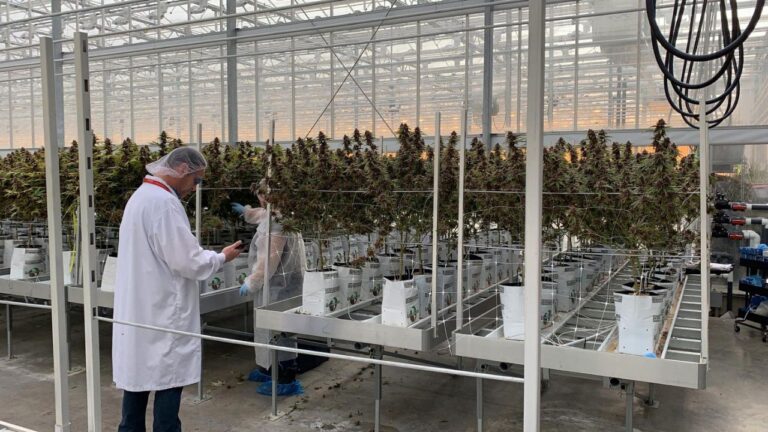
A licensee must begin dispensing within 24 months after its license is issued and keep dispensing for the license term (Health and Safety Code 487.1045). DPS authorizes one cultivation center address for seed-to-sale work; two production facilities are not allowed, although one campus may hold several buildings and grow rooms. All cultivation must take place in an enclosed, secured building (37 TAC 12.31).

Products are capped at 10 milligrams of THC per dosage unit and one gram of THC per package; within those caps, the levers in our view are extraction yield, formulation accuracy, dry-room control and a build that clears inspection on time.

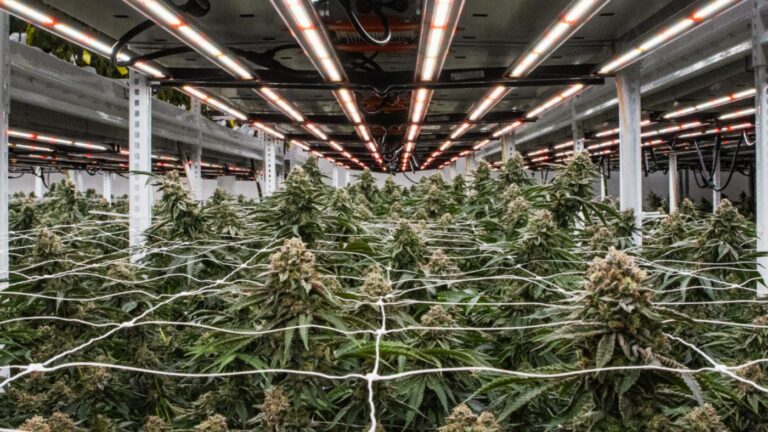
For Texas rooms we work on Texas cannabis facility design with HVACD (heating, ventilation, air conditioning and dehumidification) and extraction ventilation, controlled environment agriculture set against the testing panel, cannabis vertical farming to add canopy inside one enclosed building, operational optimization of harvest and inventory records and, when margins slip, a cannabis turnaround diagnostic. Our Chief Operating Officer and co-founder Michael Williamson co-founded and operated a vertically integrated company with 95,000 square feet (company-reported) of indoor cultivation, extraction, a commercial kitchen and a dispensary, and has 25,000+ hours (company-reported) in cultivation and dispensary operations.

Our Texas record and team: our records list no Texas client engagement, so this page rests on the statute, the DPS rules and records, and our work for licensed operators elsewhere. Leif Olsen, our Chief Executive Officer and a co-founder, leads our licensing work, and Ian Miller, our Executive Chair and a co-founder, raised $22 million (company-reported) in private equity for a new-build cultivation and processing operation. We have no Texas office; we deliver work on-site and remotely, and the same team runs Catalyst BC’s national cannabis consulting practice.

A word against our own interest: DPS told applicants that no license brokers or other third parties outside DPS are involved in its expansion process (DPS Phase 1 and Phase 2 FAQs), and no consultant can change how DPS scores or awards a license. To talk through a Texas file, contact us or call (USA) 303-305-3787.


Investing in Texas cannabis

Already licensed in Texas

0 +
Years Regulated Cannabis Operations Experience
0 +

Compliant Harvests

0 M+

Square Feet of Cultivation, Production, and Retail Facilities Designed

0 +

Licenses Secured

Is Texas Taking Dispensing Organization Applications in Late 2026?

No. DPS accepted new and supplemental applications from August 15 to September 15, 2025 and accepted no late applications (DPS news and updates). Applicants from the 2023 window competed in Phase I by supplementing their files, and those ranked 10th to 12th joined the Phase II pool; first-time applicants competed in Phase II and paid a $7,356 application fee by wire. We found no notice of a new window on the DPS program pages on October 8, 2026. Under 37 TAC 12.11(a), a future period must be announced on the DPS website and in the Texas Register, stay open at least 90 days, and be decided within 180 days of closing.

DPS announced nine conditional licensees on December 1, 2025 (Phase I release) and three more, with a 12-name eligibility list, on April 1, 2026 (Phase II release). On May 8, 2026 it corrected its tabulation, rescinding three conditional awards and granting three to companies from that eligibility list. A conditional license does not permit cultivation or sales until final approval.

Correction to published guidance (October 8, 2026): a consulting page last modified September 30, 2026 still tells readers the state “just opened” the August 15 to September 15, 2025 window. That window closed more than a year ago.

Filing Status Detail
New dispensing organization license Closed Window ended 5:00 p.m. CT, September 15, 2025
Eligibility list Set by DPS 12 applicants listed after the May 8, 2026 correction
Satellite location approval Open to licensees DPS acts within 180 days of the request
Director, owner, manager, member and employee registration Open to licensees Filed in CURT; $530 each
License renewal Open to licensees Any time in the six months before expiration
Consumable hemp license or retail registration Open (DSHS, not DPS) Manufacturer license or retail registration per location
Swipe to see the full table →

DPS news, licensing and FAQ pages; Health and Safety Code 487.1035; 37 TAC 12.13 and 12.14; DSHS Consumable Hemp Program. Every source is listed at the bottom of this page.

Step When Result
Window announced August 8, 2025 12 new licenses: nine by December 1, 2025, three by April 1, 2026
Application window August 15 to September 15, 2025 Phase I supplements from 2023 applicants; Phase II new applications
Phase I awards December 1, 2025 Nine conditional licensees
Phase II awards April 1, 2026 Three conditional licensees and a 12-name eligibility list
Corrected tabulation May 8, 2026 Three awards rescinded and three granted; 25% category weighting applied
Swipe to see the full table →

DPS news releases of December 1, 2025, April 1, 2026 and May 8, 2026; DPS applicant score sheet.

Stage Rule
Due diligence Disciplinary history, financial suitability and litigation reviewed before any license fee is invoiced
Onsite inspection Must pass before licensure; 60 days to fix a failure, plus one 30-day extension DPS may grant on request
License fee $488,520 for two years, paid on license approval
Registrations In 2025 DPS deferred registration applications until licenses were issued; filed in CURT
First dispensing Within 24 months after the license is issued
Final award DPS FAQ 11 ties it to the start of seed-to-sale operations, while DPS releases bar cultivation before final approval; confirm the sequence with DPS
Swipe to see the full table →

DPS news releases, new applications page and FAQs; Health and Safety Code 487.1045; 37 TAC 12.11(c) and 12.14.

Investors weighing a stake in an existing or conditional licensee should jump to ownership.

One Vertical DPS License, 15 Seats and Satellite Locations

A dispensing organization is licensed to cultivate, process and dispense low-THC cannabis to registered patients, and DPS describes the license as fully integrated “seed-to-sale”: there are no separate cultivation or dispensing licenses (DPS FAQ 13). DPS must issue and renew licenses so that registered patients have adequate access in each public health region, and its May 8, 2026 list ties each conditional award to a region.

Activity Rule
Cultivation Inside an enclosed, secured building or an enclosure within a building
Processing and extraction Engineer-certified extraction system, staffed by a trained registered employee
Dispensing Only to a CURT patient or legal guardian, after checking the registry entry
Delivery By registered employees in secured vehicles with a trip plan
Satellite locations Secure storage for distribution and, as DPS describes them, dispensing; pickup locations approved before September 1, 2025 count as satellites
Research Prohibited beyond what cultivation or production requires
Swipe to see the full table →

Health and Safety Code 487.001, 487.1035 and 487.107; 37 TAC 12.2, 12.7, 12.31, 12.32 and 12.35; DPS FAQ 14.

Category Count Detail
Active licenses 3 License numbers 0004, 0005 and 0006
Conditional awards 12 Public health regions 3 and 6 two each; regions 1, 2, 4, 5, 8, 9, 10 and 11 one each
Eligibility list 12 Replacements if a licensee fails the 24-month requirement
Statutory total 15 Subject to enough eligible applicants
Applicants on the score sheet 104 Ranked by DPS before the May 8, 2026 correction
Swipe to see the full table →

DPS licensed dispensaries page and May 8, 2026 corrected tabulation release; DPS applicant score sheet (our count); Health and Safety Code 487.104(d).

The license fee covers a two-year period (37 TAC 12.14). A license may be renewed any time in the six months before it expires; renewal is approved only after the licensee passes a DPS inspection, which an inspection within 90 days before filing satisfies, and a license expired more than six months requires a new original application (37 TAC 12.13). DPS may suspend a license for up to 30 days for a first violation, up to 90 days for multiple first-time violations or a second within two years, and up to 180 days for repeated violations or a third within two years (37 TAC 12.22). Since October 29, 2025, DPS may revoke a license that does not begin dispensing within 24 months of issuance or stops dispensing during its term, which includes not producing to demand or not filling prescriptions promptly (37 TAC 12.23).

Texas Dispensing Organization Fees, Insurance and the Two-Year Financial Test

The application fee is nonrefundable and DPS offers no reduced fee; the license fee is paid when the license is approved (DPS fee FAQ). Each applicant must show the financial ability to maintain operations for at least two years from the date of application (Health and Safety Code 487.102), with a projected two-year budget and a description of available assets.

FeeAmountWhen
Application$7,356With the application; nonrefundable
License, two years$488,520On license approval
Biennial renewal$318,511Every two years
Registration per registered person, owners and members included$530Original and each renewal
Swipe to see the full table →

37 TAC 12.14; DPS fee schedule and application information FAQ.

RequirementAmount or evidence
General liability, each occurrence$1,000,000
General aggregate$2,000,000
Product liability$1,000,000
Financial abilityOperations for at least two years from the date of application
Financial evidenceBusiness organization, owners or shareholders, controlling persons, two-year budget and available assets
Swipe to see the full table →

37 TAC 12.11(b)(6) and (b)(7)(E); Health and Safety Code 487.102(1)(D).

FeeAmount
Consumable hemp product license, per facility per year$10,000 ($10,300 with the Texas.gov fee)
License amendment for a change of ownership$10,000
Minor amendment (location, name or address)$125
Retail hemp registration, per location per year$5,000 ($5,150 with the Texas.gov fee)
Late renewal$1,000 delinquency fee
Swipe to see the full table →

25 TAC 300.202 and 300.502 (DSHS adopted rule text, effective March 31, 2026); DSHS licensing and registration page.

Budget accordingly: a new dispensing organization pays DPS $495,876 for its first two years, the $7,356 application plus the $488,520 license fee, then $318,511 every two years, about $159,256 a year, plus $530 for each registered person (our arithmetic from 37 TAC 12.14).

From DPS Application to an Operating Texas Dispensing Organization

A complete application includes proof of ownership and current status from the Texas Secretary of State and a Certificate of Good Standing from the Comptroller, plus fees, insurance, criminal history disclosures and registration filings for every director, owner, manager, member and employee, which DPS deferred in 2025 until licenses were issued (37 TAC 12.11). DPS then weighs technical ability (cultivation, analytical organic chemistry, microbiology and laboratory methods, plus patient education and federal health-privacy (HIPAA) handling), site and security plans, inventory control and the two-year financial test.

Five steps to open a dispensary in Texas once DPS awards a license

These steps follow Health and Safety Code Chapter 487 and 37 TAC Chapter 12.

  1. Check the people: no owner registered as a TCUP prescribing physician, no owner with an interest in another dispensing organization or application, and every registrant at least 21 with no disqualifying conviction.
  2. Pass DPS due diligence on disciplinary history, financial suitability and litigation.
  3. Confirm the site: at least 1,000 feet from a school or day care center that existed before the initial application; keep cultivation inside an enclosed, secured building and obtain local building, fire and nuisance permits.
  4. Build the security, extraction and inventory systems and pass the DPS onsite inspection and the fire marshal inspection; the $488,520 license fee is paid when DPS then approves the license.
  5. Register every director, owner, manager, member and employee, fill prescriptions only after checking each CURT entry, and begin dispensing within 24 months.

In our work, schedules slip on extraction-room engineering, fire marshal sign-off and staff registration more often than on floor plans, so our cannabis licensing and application team checks those first.

Owning a Stake in a Texas Licensee: Physicians, Second Stakes and Background Checks

DPS lists two specific ownership restrictions: a physician registered to prescribe in TCUP may not hold an ownership interest in a dispensing organization, and a person with an ownership interest may not hold one in another dispensing organization or application (DPS FAQ 1 and 4). Under the rules, anyone owning more than 10 percent counts as a director, and the statute requires each director, owner, manager, member and employee to register with DPS. Since July 2, 2026, each registrant must also prove eligibility under the federal Personal Responsibility and Work Opportunity Reconciliation Act with a document verified through the federal SAVE program, such as a REAL ID, a U.S. passport or a foreign passport with a visa and valid I-94 (37 TAC 12.12(a)(3)).

The statute bars a licensee from transferring its license until the prospective holder and its directors, owners, managers, members and employees pass a criminal history background check and are registered (Health and Safety Code 487.105). Background checks do not apply to an owner or other person who does not exercise direct control over daily operations, although DPS says it conducts background checks as necessary at multiple levels of ownership once a conditional award is made.

Under the rules, a felony conviction for a listed offense, such as fraud, theft or a Health and Safety Code drug offense, disqualifies a registrant for ten years from conviction, and a Class A or B misdemeanor for five; certain violent and sexually violent offenses disqualify permanently (37 TAC 12.3). A first-time applicant denied a license is not entitled to a hearing (Health and Safety Code 487.104(b-1)).

An applicant relying on a parent company’s finances must also report the parent’s outstanding state or federal tax liabilities and debt obligations, including those of its other subsidiaries. Diligence on a stake starts with the DPS license list, the owner roster against the physician and second-stake bars, the inspection and suspension record, the 24-month status and the insurance file.

Where Texas Allows Dispensing Organizations: Regions, 1,000 Feet and Local Rules

All regulated premises must be at least 1,000 feet from any private or public school or day care center that existed before the initial license application, measured from the closest points of the property lines (37 TAC 12.7(n)). A city or county may not prohibit the cultivation, production, storage, dispensing or possession of low-THC cannabis, yet licensees still follow local building, fire, noise and odor permitting. Before you sign a lease, confirm the 1,000-foot test, the region plan and the fire code path; our cannabis facility design work starts with that screen.

Patients must be permanent Texas residents with a condition a physician may certify, such as chronic pain, traumatic brain injury or Crohn’s disease (Occupations Code 169.003). DPS’s August 2026 report charts 169,058 under an active patient count heading but footnotes the figure as a lifetime count since 2017 (DPS patient count report). DPS did not consider satellite or pickup locations during the 2025 application process, so 2025 awardees request satellites after licensure. Each needs DPS approval and, since October 29, 2025, a pre-approved floor plan and security plan, a locked storage area and cameras that keep 90 days of footage (37 TAC 12.35).

DPS Product Limits, Testing and Security, and Texas Consumable Hemp

Low-THC cannabis may contain no more than 10 milligrams of tetrahydrocannabinols in each dosage unit, and smoking is not a permitted medical use (Occupations Code 169.001). A dispensing organization may not dispense a package or a pulmonary inhalation device containing more than one gram of THC, or a product with a cannabinoid that is not a phytocannabinoid, meaning one created naturally by the plant or decarboxylated from one without a catalyst (Health and Safety Code 487.107 and 487.1071). A physician may prescribe pulmonary inhalation if the patient’s condition makes it medically necessary (Occupations Code 169.006).

One trap for formulators: 37 TAC 12.7(q), last amended in 2017, still says dispensed product may contain no more than 0.5% THC by weight and at least 10% cannabidiol, and the same chapter says the more restrictive requirement governs where the rules and the Act conflict. Confirm the formulation with DPS before you build a product line.

Representative samples of processed products are tested for THC and cannabidiol levels, residual solvents, pesticides, fungicides, fertilizers, mold and heavy metals, and only minimum-risk pesticides may be used. Hydrocarbon extraction needs continuous gas detection set no higher than 10% of the lower explosive limit, and mechanical ventilation in an extraction or processing facility must run at negative pressure.

Corrective actions are due within 30 calendar days of a written DPS notice of violation. Inventory is counted physically at least monthly, a discrepancy audit is due within 15 business days, and theft or diversion is reported within two days. Cameras must be able to record at least 90 days of footage, and the premises must pass a fire marshal inspection every year.

Under the production-limit rule, statewide output may not exceed the prior 12 months’ demand grown at the rate of the estimated intractable epilepsy population, unless DPS raises the limit after a revised DSHS report, and output and plant counts are split among licensees (37 TAC 12.61). A Texas cannabis compliance consulting review checks plant counts as well as records before an inspector does.

Texas Consumable Hemp: DSHS Licenses, Total THC and the Age-21 Rule

DSHS licenses hemp processors and consumable hemp product manufacturers and registers retailers, and a product sold at retail may not exceed 0.3% delta-9 THC (Health and Safety Code 443.152). Processing or manufacturing a consumable hemp product for smoking is prohibited (Health and Safety Code 443.204), though DSHS says retail sale of smokable products continues under a court injunction (DSHS Consumable Hemp Program). DSHS rules effective March 31, 2026 measure total delta-9 THC, counting THCA (the precursor that becomes THC when heated), at 0.3% or less on a dry weight basis, bar sales to anyone under 21 and require a valid photo ID check before every sale (25 TAC 300.101, 300.301 and 300.701), making permanent the age-21 limit DSHS first set by emergency rule on October 2, 2025.

DSHS also says the Supreme Court of Texas confirmed that delta-8 THC is a controlled substance apart from trace amounts the plant produces naturally. Federally, final hemp-derived products with more than 0.4 milligrams of total THC per container leave the hemp definition on December 11, 2026 (P.L. 119-37, Section 781; P.L. 119-103, Section 2019). In our view, a hemp operator weighing a TCUP stake should first test its owners against the ownership bars and its balance sheet against the two-year financial test, both covered earlier on this page.

Two Ways We Work on Texas Files: Expansion Readiness and a TCUP Facility Audit

Investors get a stake or readiness review: the owner roster against the physician and second-stake bars, the registration path, and a Texas cannabis business plan with the $495,876 first-two-year DPS fee load and the two-year financial test. Licensees and conditional awardees get a facility audit: the build schedule against the 24-month clock, extraction rooms and security against 37 TAC 12.7 and 12.31, formulations against the 10-milligram and one-gram limits, and a satellite plan by region that meets 37 TAC 12.35. Send your license status and your deal or build figures, and we will tell you plainly if another firm suits you better.

What Investors and DPS Licensees Ask About Texas Medical Cannabis

No. DPS took applications from August 15 to September 15, 2025 and has announced no new window. It named 12 conditional licensees and keeps 12 applicants on an eligibility list for replacements.

Fifteen. House Bill 46 requires DPS to issue 15 dispensing organization licenses if enough eligible applicants apply. Three are active, and 12 hold conditional awards.

The application fee is $7,356 and nonrefundable, the license fee is $488,520 for two years, and the biennial renewal is $318,511. Registration costs $530 for each registered person, including owners and members.

Yes, within limits. Every director, owner, manager, member and employee registers with DPS; background checks reach those who exercise direct control over daily operations, and DPS may check other ownership levels after a conditional award. A physician registered to prescribe in TCUP may not own a stake, nor may an owner of another dispensing organization or application. A license may not transfer until the new holder’s people pass background checks and register, and DPS disallows substantive ownership changes during the conditional period.

The statute allows no more than 10 milligrams of THC per dosage unit and one gram of THC per package or inhalation device. DPS rule 12.7(q) still lists 0.5% THC by weight, and its rules say the more restrictive requirement governs a conflict, so confirm formulations with DPS.

Yes, through DPS-approved satellite locations, which store product for distribution and, as DPS describes them, dispense to patients. DPS acts on each request within 180 days, a licensee may not open a second satellite in a public health region until it operates one in every region, and cultivation stays at one licensed address.

No, according to the U.S. Department of Justice. Its rule effective April 28, 2026 moved marijuana subject to a state medical marijuana license to Schedule III, a less restrictive federal drug schedule, and it says state licensees will no longer be subject to the Section 280E deduction ban. It also says the rule is not a tax determination, so confirm your position with a tax adviser.

DSHS rules effective March 31, 2026 measure total delta-9 THC, including THCA, at 0.3% or less and bar sales to anyone under 21, making permanent an October 2, 2025 emergency rule. Federally, final hemp products with more than 0.4 milligrams of total THC per container leave the hemp definition on December 11, 2026.

Cultivation, Extraction and Build Projects Behind Our Texas Advice

These projects show the cultivation, extraction and facility work we bring to Texas licensees; each tile opens its full write-up, and all of them are on our projects page.

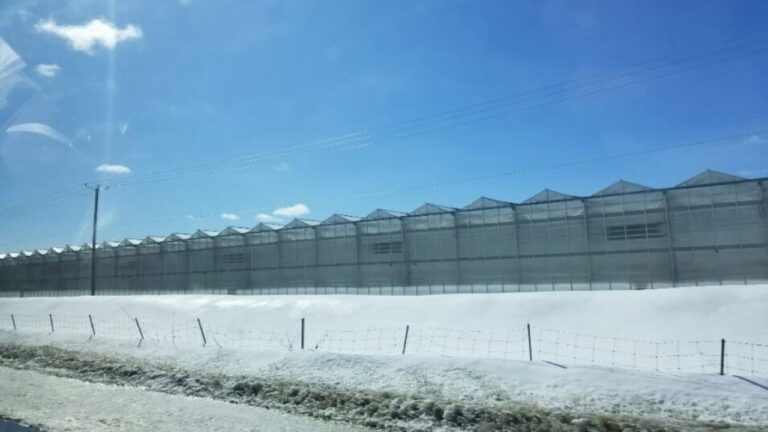
Exterior view of the Hexo Venlo glasshouse row spanning over 1 million square feet.

Hexo Corp.

Gatineau, Quebec, Canada

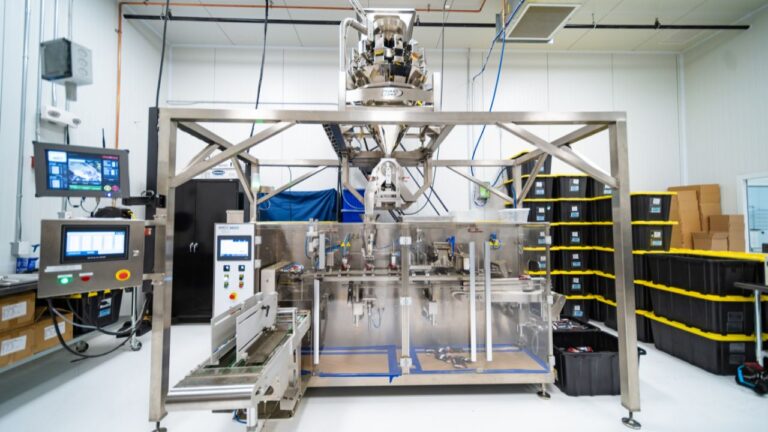
Modern stainless steel automated cannabis pre-roll processing machine in a dedicated production room.

Bostica

Lynn, MA, United States

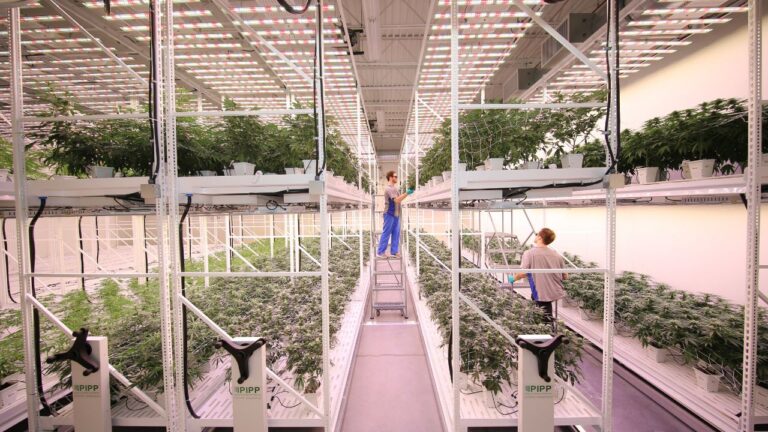
Catalyst BC consultants and LeafLine Cultivation Director inspecting vibrant plants in an organized vertical grow room.

Leafline Labs

Cottage Grove, MN, United States

Catalyst BC consultant recording air, environmental, and plant data measurements within a cultivation facility.

View All Projects

View all Catalyst BC Projects

Reading for Texas TCUP Applicants and Licensees

Provenance. Figures checked against the statute, regulation and agency text by Catalyst BC on October 8, 2026. Texas statutes were read on the Legislature’s statutes site, current through the 89th Legislature, 2nd Called Session, 2025. 37 TAC Chapter 12 was read in the Secretary of State’s Texas Administrative Code viewer and checked against Texas Register adoptions: rules 12.11, 12.23 and 12.35 changed effective October 29, 2025, rules 12.12, 12.13 and 12.16 effective July 2, 2026, and the viewer shows rules 12.2, 12.7 and 12.14 last adopted on March 10, 2017. DSHS rules were read in the adopted text effective March 31, 2026. License and region counts are our own count from DPS records; the budget figures and the January 12, 2027 date are our own arithmetic. Company figures come from Catalyst BC’s own records. Where this page and the official text differ, the official text governs.


Texas statutes

Texas administrative rules

DPS and DSHS records

Federal law

Contact Us

Enough about us. We want to hear more about you, your project, and your vision! Get in touch with a real live person today. Don’t worry, we don’t have a long, confusing phone menu, and your email isn’t going to the abyss, we promise. At Catalyst, we provide the service and support we’d want to experience ourselves!

Scroll to Top