Rhode Island Cannabis Consultants for CCC Retail Bids and Yield

Rhode Island cannabis consulting starts with a deadline: the Cannabis Control Commission (CCC) is taking adult-use retail license applications until 4:00 p.m. on November 23, 2026. We help investors file for one of 18 general or cooperative licenses and help licensed growers raise yield; our records show 58+ licenses secured.

A Decade of Harvesting Success - Trusted by Cannabis Operators Worldwide

CCC Deadlines Before Year-End

Nov 23, 2026Retail applications close at 4:00 p.m.
Dec 11, 2026Hemp over 0.4 mg total THC per container barred
Dec 31, 2026Minimum-operations rule enforced

Updated: 10/8/2026. Rhode Island regulates adult-use cannabis under the Rhode Island Cannabis Act (R.I. Gen. Laws chapter 21-28.11) and medical cannabis under the Edward O. Hawkins and Thomas C. Slater Medical Marijuana Act (chapter 21-28.6). The CCC oversees both through its Cannabis Office (CCC Cannabis Office page), and its rules took effect May 1, 2025. The CCC’s 2026 annual report counts nine licensed compassion centers, all authorized to sell to adults, and 55 licensed cultivators (CCC 2026 annual report).

November 23, the retail deadline, also starts enforcement of a wider pesticide panel: flower harvested on or after November 23 must pass the added pesticides before it can be offered at retail (CCC Bulletin 2026-4). From December 11, unless federal guidance changes, hemp-derived products over 0.4 mg of total THC per container are noncompliant and cannot be transferred to a cannabis retailer (Bulletin 2026-7). By December 31, every licensee must be operating, meaning a cultivator is cultivating, processing, packaging or manufacturing and a retailer is selling, unless it holds a variance, the CCC’s pre-approval for a change, to pause (CCC minimum operations guidance).

Meet Catalyst BC's Founders

  • Leif Olsen - Chief Executive Officer

    Leif Olsen

    Chief Executive Officer

  • Michael Williamson - Chief Operating Officer

    Michael Williamson

    Chief Operating Officer

  • Ian Miller - Executive Chair

    Ian Miller

    Executive Chair

Our partners bring multi-faceted expertise across business strategy, licensing, facility development, finance, and commercial operations. That breadth is complemented by subject matter experts across the wider Catalyst BC team, allowing us to bring the right combination of experience to each client and project. The result is bespoke, collaborative support shaped around your business, priorities, and goals - with the right expertise brought to the table when it matters most.

Learn more about our team

Hiring a Rhode Island Cannabis Consultant Before the November 23 Deadline

The CCC qualifies applications, runs the drawing and inspects licensees, but the burden of building an application rests with the applicant. A Rhode Island cannabis consultant works on that side: ownership structure, site and zoning, the business plan and rooms that pass inspection and testing.

Buying Into One of Rhode Island’s New Retail Licenses

The door is open to outsiders. After a federal court enjoined the 2025 round on April 8, 2026, the General Assembly removed the Rhode Island residency requirement (2026 amendments, H 8544), and the CCC now says applicants no longer need to be residents or have a principal place of business in the state (CCC adult-use retail FAQ, updated September 18, 2026). The CCC sets no minimum capital, but every application must describe the amount and source of equity, debt and operating capital, with financial statements or other documents showing where the funds come from.

Three of the CCC’s rules shape how capital can be spread. An applicant may file only one application per zone, and no person or entity may be an interest holder, anyone with an ownership, financial or control stake, in more than one application in the same zone. No one may be a majority owner of more than one cultivator, product manufacturer, retailer or compassion center. And the CCC counts anyone holding a veto over even one type of decision as a controlling person, and no one may be a controlling person in more than one applicant or licensee.

Investors who skip the drawing may instead seek a stake in one of the 55 licensed cultivators or nine compassion centers. No license may be sold or transferred without the CCC’s prior approval, which may require a new application, and compassion centers carry extra ownership rules under the medical act.

Our work for Rhode Island investors: zone and structure decisions through cannabis business strategy; a Rhode Island cannabis business plan with source-of-funds documentation through cannabis financial planning; the retail exhibits in all three versions through cannabis license application support; and the build to a final license through cannabis startup support.

Already Licensed in Rhode Island: Canopy Classes, Pesticide Panels and Retests

Rhode Island prices hybrid and adult-use cultivator licenses by canopy, the surface area dedicated to mature plants, and every tier of a rack counts. The CCC’s canopy guidance, effective February 23, 2026, shows a 1,120-square-foot flower room with twelve 4-by-8-foot tables holding 384 square feet of canopy, which becomes 768 square feet on two tiers (CCC canopy transition guidance). Class A covers up to 5,000 square feet and Class B 5,001 to 10,000, any canopy increase needs the CCC’s prior approval, and a cultivator may ask to step down a class and pay a lower fee at its next renewal.

So in Rhode Island, extra tiers add licensed canopy as well as yield, and can push a grow into a higher class and fee. In our experience, the math that matters is grams per square foot of canopy, not per square foot of building, and the climate has to hold mold and microbial counts down across every tier. Our Chief Operating Officer and co-founder Michael Williamson co-founded Greenhaus Industries, which patented stackable trays for growing on multiple tiers, and has 25,000+ hours (company-reported) in cultivation and dispensary operations.

For licensed rooms we work on Rhode Island cannabis facility design with HVACD (heating, ventilation, air conditioning and dehumidification), controlled environment agriculture targets per tier, cannabis vertical farming layouts tested against the canopy class, operational optimization of testing and inventory flow and, when margins slip, a cannabis turnaround diagnostic.

Our Rhode Island record: we have not yet had a Rhode Island client. Leif Olsen, our Chief Executive Officer and a co-founder, leads our licensing work, and Ian Miller, our Executive Chair and a co-founder, raised $22 million (company-reported) in private equity to build a greenfield cultivation and processing operation outside Rhode Island. We have no Rhode Island office; we deliver work on-site and remotely, and the same team runs Catalyst BC’s national cannabis consulting practice.

A word against our own interest: the CCC posts its application instructions, forms and a retail FAQ of 81 answered questions free, and an organized applicant can file without a consultant. To talk through a Rhode Island file, contact us or call (USA) 303-305-3787.


Investing in Rhode Island cannabis

Already licensed in Rhode Island

0 +
Years Regulated Cannabis Operations Experience
0 +

Compliant Harvests

0 M+

Square Feet of Cultivation, Production, and Retail Facilities Designed

0 +

Licenses Secured

Is the CCC Accepting Retail License Applications in October 2026?

Yes. The CCC opened its adult-use retail application period at 9:00 a.m. on August 7, 2026, and will not accept applications after 4:00 p.m. on Monday, November 23, 2026; applications go in only through the state’s cannabis licensing portal (CCC adult-use retail application page). Each applicant submits every form and exhibit three times: Version A unredacted, Version B redacted for public release and Version C stripped of names for an initial anonymous review (CCC application instructions and exhibits, 2026). An incomplete application is not reviewed, and its fee is not refunded.

Other license types are not taking applications. The CCC’s cultivator page says the application period for cultivators is closed (CCC cultivators page), its compassion center page says the same for compassion centers (CCC compassion centers page), and we found no open period for product manufacturers on the CCC’s site on October 8, 2026. The social equity certification window closed September 11, 2026, so the six social equity retail licenses are open only to applicants already certified. A Rhode Island cannabis license application must be complete when filed: the CCC may ask for more information, but applicants may not add material on their own.

Correction to published guidance (October 8, 2026): a Rhode Island consulting page we read on October 8, 2026 still tells applicants to get ready before the window opens and counts seven hybrid retailers. The CCC opened the window on August 7, 2026, and its 2026 annual report counts nine compassion centers with hybrid authorization.

Filing Status Detail
General adult-use retail license Open Until 4:00 p.m., November 23, 2026; one application per zone
Workers’ cooperative retail license Open Same deadline; the applicant must be organized as a workers’ cooperative
Social equity retail license Open to certified applicants Certification window closed September 11, 2026
Cultivator license Closed No new cultivator licenses available
Compassion center license Closed Renewals only, through the licensing portal
Variance for a change in ownership, premises or canopy Open to licensees File at least 60 calendar days before the change
Swipe to see the full table →

CCC adult-use retail, cultivator and compassion center pages, read October 8, 2026; CCC general FAQ; 560-RICR-10-10-1, § 1.3.3. Every source is listed at the bottom of this page.

Zone Municipalities in the CCC’s 2026 instructions General / social equity / cooperative
1 Burrillville, Cumberland, Glocester, North Smithfield, Woonsocket 2 / 1 / 1
2 Central Falls, Johnston, Lincoln, North Providence, Providence 2 / 1 / 1
3 Coventry, Foster, West Greenwich, West Warwick 2 / 1 / 1
4 Cranston, North Kingstown, Warwick 2 / 1 / 1
5 Charlestown, Exeter, Hopkinton, Narragansett, Richmond, South Kingstown, Westerly 2 / 1 / 1
6 Bristol, East Providence, Middletown, Newport, New Shoreham, Pawtucket, Portsmouth, Tiverton, Warren 2 / 1 / 1
Swipe to see the full table →

CCC application instructions, Section D; R.I. Gen. Laws § 21-28.11-10.2; § 21-28.11-10.3.

Stage Rule
Selection Qualified applicants are drawn at random, zone by zone, in a drawing the public can observe
Provisional approval Nine months to finish the prerequisites (twelve for social equity); past that, show substantial completion and good cause
Before the final license Annual fee ($30,000 for general and cooperative licenses), certificate of occupancy, completed divestiture, seed-to-sale system, a union’s labor peace attestation and a CCC inspection
After the final license Start sales within three months (six for social equity); stock inventory and pass a second inspection before the first sale
Term and renewal One-year license, renewed each year with an inspection
Swipe to see the full table →

560-RICR-10-10-1, §§ 1.4(H) to (K), 1.5(I) to (L) and 1.6(I) to (L).

Investors weighing a stake rather than a solo bid should read ownership before choosing zones.

Rhode Island’s Hybrid Retailers, Cultivators and 24 New Retail Licenses

Rhode Island’s licensing law sits mainly in two statutes and two CCC rule parts: Part 1 on applications and licensing (560-RICR-10-10-1) and Part 2 on operations (560-RICR-10-10-2). The CCC licenses compassion centers, which may also hold hybrid authorization to sell to adults; cultivators; cannabis product manufacturers; and the three adult-use retail license types. The CCC has adopted the Rhode Island Department of Health’s laboratory regulations, and the Department of Health continues to license testing laboratories.

An adult-use retailer may not cultivate, and only a hybrid retailer may sell both medical and adult-use cannabis. A product manufacturer may not cultivate and is licensed at a single location. The CCC’s general FAQ adds that no license yet allows a social consumption business such as a lounge.

License What it allows Key limit
Compassion center Cultivates, manufactures and dispenses medical cannabis to registered patients and caregivers The statute allows nine at one time; all nine are licensed
Hybrid cannabis retailer A compassion center also authorized to sell adult-use cannabis Adult-use sales at one premises only
Cultivator (medical, hybrid or adult-use) Grows, processes and sells to licensed businesses Single location; no sales to consumers; class set by canopy (medical-only: by facility size)
Cannabis product manufacturer Makes and packages products for other licensees, for both markets Single location; may not cultivate
Adult-use retailer (general, social equity, workers’ cooperative) Sells adult-use cannabis to consumers 21 and older Adult-use sales only; may not cultivate
Swipe to see the full table →

560-RICR-10-10-1, §§ 1.7 to 1.10; R.I. Gen. Laws § 21-28.6-12; § 21-28.11-7; § 21-28.11-10; CCC adult-use retail FAQ, question 64.

Requirement Rule
Who qualifies A person arrested for, convicted of or adjudicated delinquent for a now-decriminalized cannabis possession offense before May 25, 2022, or a member of an impacted family; an entity must be at least 51% owned and controlled by such people
Impacted family Someone whose parent, legal guardian, child, spouse or dependent was such a person, or who was such a person’s dependent
Other jurisdictions An equivalent offense from another jurisdiction counts with official documentation
Residency Not required
Certification Window closed September 11, 2026; the CCC has scheduled no new window
Fees No application fee; annual fee $0 in year 1, then $7,500, $15,000, $22,500 and $30,000 from year 5
Transfers A social equity license may be transferred only to another qualified social equity applicant
Swipe to see the full table →

CCC social equity FAQ, updated October 2, 2026; R.I. Gen. Laws § 21-28.11-31(g).

Licenses under the Cannabis Act generally run one year, and the CCC issues a renewal within 30 days to a licensee in good standing that has filed and paid its taxes (§ 21-28.11-21).

CCC Application, License and Canopy Fees for Rhode Island Operators

Retail application fees are charged per zone and are nonrefundable, including when an applicant is not drawn or withdraws. An applicant using an active social equity certification number pays no application fee for any retail license type.

ItemFee
General retail license, application (per zone)$7,500
General retail license, annual$30,000
Workers’ cooperative retail license, application / annual$7,500 / $30,000
Social equity retail license, application$0
Cannabis product manufacturer, application / annual$2,000 / $4,500
Compassion center, application / annual$10,000 / $500,000
Hybrid retailer authorization, annual$30,000
Commercial cannabis identification card, per person, annual$100
Swipe to see all fees →

560-RICR-10-10-1, §§ 1.3.5(B) and 1.14.

ClassCanopyAnnual fee
Micro-license0 to 2,500 sq. ft.$4,500
Class A0 to 5,000 sq. ft.$10,000
Class B5,001 to 10,000 sq. ft.$20,000
New adult-use cultivator, applicationAny class$4,500
Swipe to see the full table →

560-RICR-10-10-1, §§ 1.10.3 and 1.10.4(B).

ItemAmount
State sales tax7%
State cannabis excise tax10% of each retail sale
Local cannabis excise tax3% of each retail sale, paid to the city or town where the cannabis is delivered
Municipal feesNo cannabis-specific fee, tax or charge beyond those generally assessed on local businesses
Wrongful failure to cooperate with an inspectionMisdemeanor: up to a year in prison or $5,000 per violation per day, or both, and revocation
Swipe to see the full table →

R.I. Gen. Laws § 21-28.11-13; § 44-18-18; § 21-28.11-14; § 21-28.11-20(d).

Budget accordingly: a general retail applicant drawn in one zone pays the CCC $37,500 before opening, the $7,500 application fee plus the first $30,000 annual fee, and $30,000 every year after. Applying in all six zones costs $45,000 in nonrefundable fees, and a winner drawn in several zones may keep only one. The retailer adds the three taxes to the price, and their rates total 20% of the sale (our arithmetic from § 21-28.11-13 and § 44-18-18). The security plan must include a plan to open a secured deposit account before licensed activity; the CCC lists four local financial institutions that serve cannabis businesses, without endorsing them (CCC financial institutions list). Our cannabis startup costs breakdown covers the build-out side of the budget.

How the CCC Draws Rhode Island Retail Winners, Zone by Zone

The CCC does not score retail applications against each other. It reviews each complete application to decide whether it is qualified, and may inspect a proposed premises first. It also sends each application to the city or town, and under the statute it may approve a license only if no notice of non-compliance from the municipality arrives within 45 days (§ 21-28.11-17.1). Every qualified applicant then enters a public random drawing for its zone, and an authorized representative must attend in person.

An applicant drawn in more than one zone must choose one zone on the spot, and the next applicant is drawn for each zone it gives up. A selected applicant may not move outside its zone, and may move within the zone only with the CCC’s approval. The retail FAQ says the CCC grants no zoning extension this round: final zoning approval must be in the application by November 23. The CCC has not announced the drawing date; it plans to draw all three license types close together.

Five steps to open a Rhode Island dispensary in this round

These steps apply to a general or workers’ cooperative retail applicant (560-RICR-10-10-1, §§ 1.4 and 1.6).

  1. Secure site control with a lease or purchase agreement, which may be contingent on selection, and get final zoning approval, such as a zoning certificate or a granted special use permit.
  2. Map the 500-foot school buffer and draw the floor plan, then write the operations manual, business plan and security plan.
  3. File Forms 1 to 4 and Exhibits A to E in three versions, with the $7,500 fee for each zone, before 4:00 p.m. on November 23, 2026.
  4. Once qualified, attend the drawing; if selected, complete the prerequisites within nine months.
  5. Pay the $30,000 annual fee, pass the pre-license inspection, source inventory and pass the second inspection before the first sale.

In our work in other states, applications stall more often on zoning and site control than on writing, so our cannabis licensing and application team checks those first.

Who Can Own and Invest in a Rhode Island Cannabis License After the Residency Repeal

The CCC reads “interest holder” broadly. It covers every direct or indirect owner down to the individual, every officer, director and manager, anyone with managing or operational control, any investor or person with a financial interest, and any management company (560-RICR-10-10-1, § 1.2(A)(12)). A lender, guarantor or any holder who bears the risk of loss or can profit from the business has a material financial interest that must be disclosed. The retail FAQ treats a landlord whose lease takes a percentage of sales as an interest holder.

The statute allows one person to invest in several licensed businesses, provided no one is a majority owner of more than one (§ 21-28.11-19). The CCC defines majority as at least 51% ownership with control of daily operations, and interests can combine: with holders at 36%, 34% and 30%, any two together form a majority. The retail FAQ adds that an individual may hold an interest of more than 9.9% in only one license, and that a gift or other funding without repayment terms must be disclosed. No cannabis licensee or interest holder may hold any interest in a Rhode Island licensed testing laboratory. An existing licensee may also apply with a plan to divest its current interests, carrying it out only if selected. Time matters for exits: no variance that changes majority ownership, control, financial interest or compensation will be approved in the first year of licensed activities, unless the CCC finds that public health, safety, welfare or other grounds require it.

Where Rhode Island Allows New Cannabis Retail: Zones, Referendums and School Buffers

A city or town that did not already host a compassion center could put the question of new cannabis licenses on its ballot by November 8, 2022; where voters rejected it, the CCC issues no new license for recreational sales, and a town that opted out receives no local cannabis excise revenue (§ 21-28.11-15). The statute’s zone lists include six towns the CCC’s 2026 instructions do not list as included municipalities: Smithfield, Scituate, East Greenwich, Barrington, Jamestown and Little Compton; confirm with the CCC before choosing a site there. The CCC does not accept applications in any city or town that declined by referendum.

The premises must sit at least 500 feet from the property line of a pre-existing public or private K-12 school, unless the town has reduced the distance. A town may set time, place and manner rules, but its zoning may not cap establishments below the state limits, and its sign rules may be no stricter than those for liquor stores (§ 21-28.11-16). Site control needs an executed lease, a purchase agreement or proof of ownership; a letter of intent does not count, and two applicants may not claim the same unit.

A retailer may deliver only under a CCC-approved variance, between 8:00 a.m. and 8:00 p.m., to a Rhode Island address, with no more than $7,500 of product in a vehicle and no cash collected at the door.

Before you sign a lease, confirm the zoning, the school buffer and the building’s fit; our cannabis facility design work starts with that screen.

CCC Testing, Retests and Rhode Island’s Combined 20% Cannabis Taxes

Every product stays in quarantine until it passes the Department of Health’s testing rules, and a batch of dried flower may not exceed 15 pounds or mix strains (560-RICR-10-10-2, § 2.26). A certificate of analysis, the lab’s test report, expires one year after it issues, so unsold stock must be retested. After a failed test, a retest must be run by the laboratory that ran the first test, on unaltered material. Otherwise the batch is remediated with CCC approval or destroyed; for microbial failures the CCC pre-approves ozone, X-ray and hydrogen peroxide treatment (CCC approved remediation processes).

Testing is tightening. Bulletin 2026-4’s added pesticide panel also covers concentrates made on or after November 23, 2026. The CCC’s quality assurance program retests flower samples drawn at cultivators and vertically integrated compassion centers (Bulletin 2026-5), and since September 2026 it also pulls packaged flower off hybrid retail shelves to compare retest results with the certificate of analysis, particularly for potency, with relabeling or a recall possible (Bulletin 2026-6).

Demand is steady. The CCC reported $120.1 million in 2025 retail sales and $47.0 million in wholesale transfers between licensees (CCC 2025 sales release), then $30.6 million in retail sales and $13.8 million in wholesale transfers for the second quarter of 2026 (CCC second-quarter 2026 release). The annual report says the share of affiliated transfers, a compassion center moving product from its own cultivation, fell below last year’s 26%, so compassion centers are buying more from cultivators.

Rhode Island’s Three Taxes on Cannabis Sales and Where They Go

Adult-use retail sales carry the 7% sales tax, a 10% state cannabis excise tax and a 3% local cannabis excise tax, collected by the retailer and paid to the tax administrator in the manner of the sales tax. State excise revenue goes to a marijuana trust fund for uses including program administration, prevention, treatment and law enforcement training; the local excise goes to the city or town where the cannabis is delivered. Application and license fees under the Cannabis Act go to the social equity assistance fund, which the annual report put at $2,539,875 in August 2026.

Federal income tax is the bigger open question: 26 U.S.C. § 280E bars deductions and credits for a business trafficking in Schedule I or II controlled substances (26 U.S.C. § 280E). The annual report says hearings on moving cannabis to Schedule III have concluded, with decisions expected in the coming months.

Two Rhode Island Engagements for the November 23 Window

Investors get an application readiness review before they file: zone choice, interest holder map, site control, zoning evidence, Exhibits A to E in all three versions checked against the CCC’s instructions, plus a Rhode Island cannabis business plan with source-of-funds documents. Licensees get a canopy and testing review: a canopy diagram and class check, a pesticide-panel plan for harvests from November 23, and Rhode Island cannabis compliance consulting on retest and remediation records. Send your zone, license type and production figures, and we will tell you plainly if another firm suits you better.

What Applicants and Licensed Cultivators Ask About CCC Licensing

Yes. The CCC is accepting applications through its licensing portal until 4:00 p.m. on November 23, 2026. Late or incomplete applications are not accepted, and fees are not refunded.

No. After a federal court enjoined the 2025 round, the 2026 amendments removed the residency requirement, and the CCC says applicants no longer need to be residents or have a principal place of business in Rhode Island.

A general or workers’ cooperative applicant pays a $7,500 nonrefundable application fee for each zone and $30,000 a year once licensed. Certified social equity applicants pay no application fee, and a social equity license’s annual fee rises from $0 in year 1 to $30,000 by year 5.

The CCC may issue up to 24 retail licenses, four in each of six zones: two general, one social equity and one workers’ cooperative. Qualified applicants in each zone are selected by a public random drawing, not by scoring.

Yes, within limits. A person or entity may be an interest holder in only one application per zone, may not be a majority owner or controlling person in more than one applicant or licensee, and an individual may hold more than 9.9% of only one license.

Canopy is the surface area dedicated to mature plants, and each tier of a rack counts. Any canopy increase needs the CCC’s prior approval, and the published classes run to 10,000 square feet.

The failed batch is segregated. You may ask the same laboratory to retest unaltered material, remediate with CCC approval, or destroy the batch; ozone, X-ray and hydrogen peroxide are pre-approved for microbial failures.

Three: the 7% sales tax, a 10% state cannabis excise tax and a 3% local cannabis excise tax. The retailer adds them to the price and remits them to the state tax administrator.

Built Projects Behind Our Advice to Rhode Island Growers

Each tile opens a write-up of the cultivation, extraction and facility work we bring to Rhode Island files; all are on our projects page.

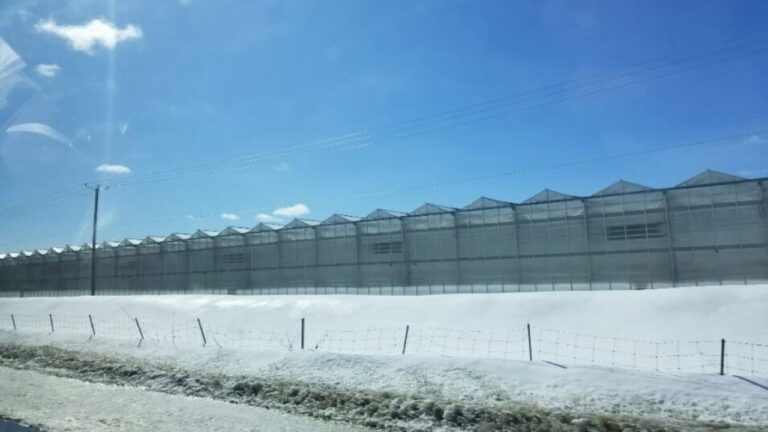
Exterior view of the Hexo Venlo glasshouse row spanning over 1 million square feet.

Hexo Corp.

Gatineau, Quebec, Canada

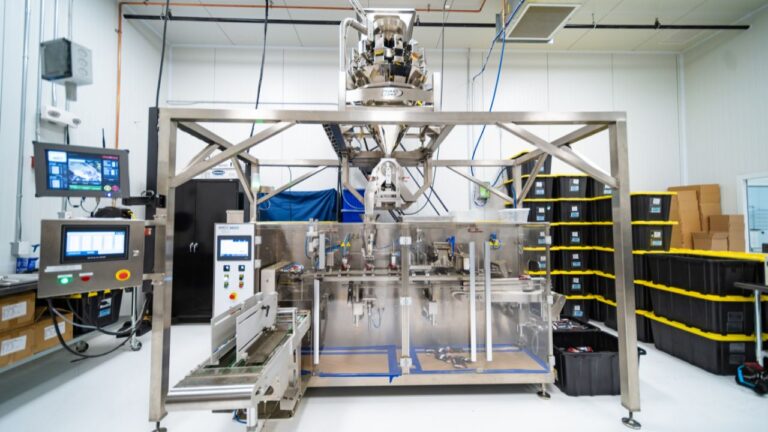
Modern stainless steel automated cannabis pre-roll processing machine in a dedicated production room.

Bostica

Lynn, MA, United States

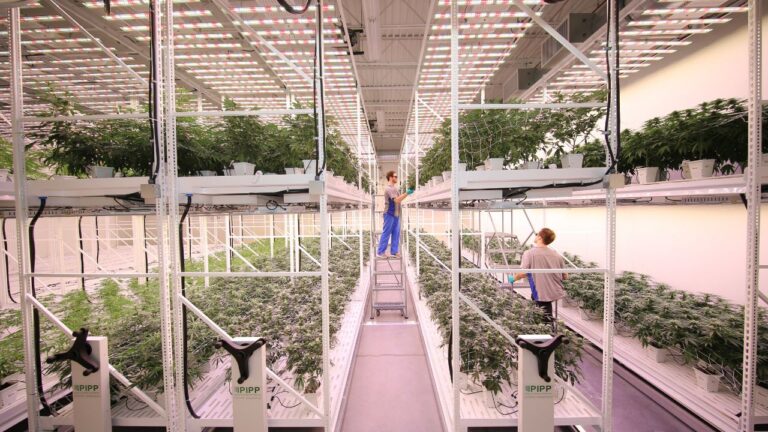
Catalyst BC consultants and LeafLine Cultivation Director inspecting vibrant plants in an organized vertical grow room.

Leafline Labs

Cottage Grove, MN, United States

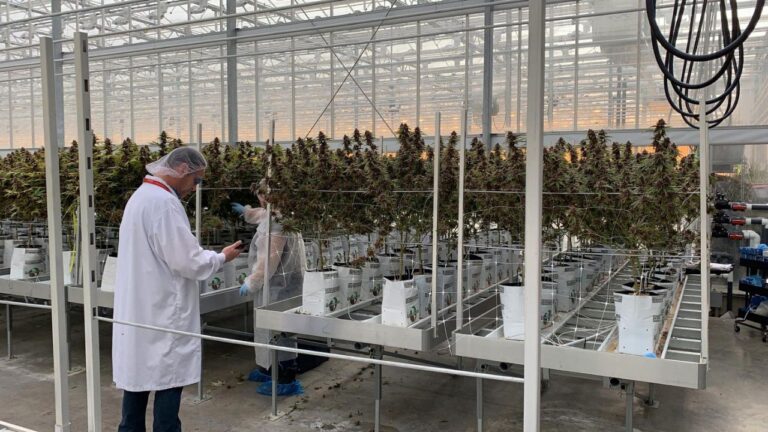
Catalyst BC consultant recording air, environmental, and plant data measurements within a cultivation facility.

View All Projects

View all Catalyst BC Projects

Reading for Rhode Island Applicants and Cultivators

Provenance. Figures checked against the statute, rule and agency text by Catalyst BC on October 8, 2026. The statutes were read on the Rhode Island General Assembly website, which had not yet incorporated the 2026 amendments; for those, this page relies on the bill text and the CCC’s own guidance. The rules were read on the Secretary of State’s Rhode Island Code of Regulations. The budget figures are our own arithmetic from the fee schedule; company figures come from Catalyst BC’s own records. Where this page and the official text differ, the official text governs.

Statutes and rules

Cannabis Control Commission pages and documents

CCC reports and releases

Contact Us

Enough about us. We want to hear more about you, your project, and your vision! Get in touch with a real live person today. Don’t worry, we don’t have a long, confusing phone menu, and your email isn’t going to the abyss, we promise. At Catalyst, we provide the service and support we’d want to experience ourselves!

Scroll to Top