Pennsylvania Cannabis Consultants for DOH Permits and Margins

Pennsylvania cannabis consulting starts with a plain answer: the Department of Health (DOH) has no open window for new grower/processor or dispensary permits. We help investors buy into permitted companies and help permitted growers protect margins as wholesale prices fall; our records show 58+ licenses secured.

A Decade of Harvesting Success - Trusted by Cannabis Operators Worldwide

Seed Window, Board Meeting and Tax Dates

Dec 1, 2026Annual seed and immature-plant import window opens, through Dec 30
Dec 2, 2026Medical Marijuana Advisory Board meeting
Jan 20, 2027Grower/processor 5% tax due for October to December 2026

Updated: 10/8/2026. Pennsylvania runs a medical-only program under the Medical Marijuana Act (Act 16), signed April 17, 2016 (Act 16 of 2016, as amended), and the Department of Health’s Bureau of Medical Marijuana issues every permit. The Act set initial limits of 25 grower/processors and 50 dispensaries with up to three locations each, plus up to 10 clinical registrants (§§ 616 and 2002), and Act 63 of 2023 later let an independent permittee add one permit of the other type (§ 617). On June 1, 2026 the Department counted 33 operational grower/processors, 196 operational dispensaries and 438,727 active patient certifications (DOH program update, June 24, 2026). The counts run past 25 and 50 because those were initial limits, a dispensary permit may cover three locations, and clinical registrant and Act 63 permits sit outside them.

The dates ahead are operating dates, not a licensing round. Grower/processors may bring in seeds and immature plants from outside Pennsylvania between December 1 and December 30 each year (28 Pa. Code § 1151a.24). The Medical Marijuana Advisory Board meets December 2, 2026 (Advisory Board page), and the 5% tax on grower/processor sales to dispensaries for October through December is due January 20, 2027 (Act 16, § 901).

Meet Catalyst BC's Founders

  • Leif Olsen - Chief Executive Officer

    Leif Olsen

    Chief Executive Officer

  • Michael Williamson - Chief Operating Officer

    Michael Williamson

    Chief Operating Officer

  • Ian Miller - Executive Chair

    Ian Miller

    Executive Chair

Our partners bring multi-faceted expertise across business strategy, licensing, facility development, finance, and commercial operations. That breadth is complemented by subject matter experts across the wider Catalyst BC team, allowing us to bring the right combination of experience to each client and project. The result is bespoke, collaborative support shaped around your business, priorities, and goals - with the right expertise brought to the table when it matters most.

Learn more about our team

What a Pennsylvania Cannabis Consultant Does Alongside the Department of Health

The Department decides who may hold a permit, reviews every change in ownership and must approve facility alterations before the work starts; assembling filings it will accept is the permittee’s job. A Pennsylvania cannabis consultant prepares those filings, models the economics behind them and flags what would stall them.

Investing in Pennsylvania Medical Cannabis With No Permit Window Open

If you are new to cannabis and bring capital, start with one rule: a Pennsylvania permit cannot be transferred to any person or any location (28 Pa. Code § 1141a.26). Investors therefore buy into the company that holds the permit, and the Department treats that purchase as a change in ownership. For a privately held company, owning any security counts as a controlling interest, so even a small stake makes you a principal, the Act’s term for an officer, director or owner, whom the Department must know about.

The market is large. The Department reports $9.6 billion in dispensary sales program-to-date as of June 1, 2026, and in our view its price chart shows why buyers now price operations, not scarcity: wholesale dry leaf has fallen by roughly three-quarters since January 2021. Returns come from the permittee’s profits; a grower/processor pays the 5% state tax on its sales to dispensaries out of them.

Ownership limits shape the deal. No person may hold more than one grower/processor permit or more than five dispensary permits, and outside Act 63 no more than five grower/processors may also hold dispensary permits (Act 16, § 616). Lenders are covered too: the Act defines a financial backer as an investor, mortgagee, bondholder, note holder or other source of equity or capital other than a bank or similar financial institution, and adding or removing a financial backer is itself a change in ownership.

Our work for Pennsylvania investors: target screening and diligence through cannabis business strategy; the capital plan and a Pennsylvania cannabis business plan through cannabis financial planning; change-in-ownership filings, renewals and any Pennsylvania cannabis license application through cannabis license application support; and site, zoning and opening work through cannabis startup support.

Already Permitted in Pennsylvania: Margins When Wholesale Flower Sells for $2.80 a Gram

The Department’s own figures show the squeeze. Its chart of dry-leaf (flower) prices puts the wholesale price at $10.65 a gram in January 2021 and $2.80 in May 2026, while the retail price fell from $14.90 to $7.49. In operations we have run, a fall that steep moves the margin fight from price to energy, labor and yield per square foot. Pennsylvania sets no canopy tier, a size band licensed by square feet of plant canopy; a grower/processor’s capacity is the indoor facility shown in the plot plans the Department approved.

Changing that capacity needs approval first. A permittee must file an application for approval of alteration, with a $250 fee, before it increases or decreases the facility’s total square footage or, to enhance permitted activities, adds electric fixtures or lighting equipment, lowers a ceiling or makes electrical changes that need a municipal inspection (§ 1141a.41). In our reading, racks with their own lights are added lighting equipment, so a vertical expansion starts with that filing.

A grower/processor may buy seeds, plants or bulk postharvest plant material from another grower/processor, and may import seeds and immature plants each December or in an extra 30-day window the Department approves on a written request filed at least 60 days ahead (§ 1151a.24). Within six months of becoming operational it must forecast its production by form, then tell the Department within 48 hours of learning its output may rise or fall from that forecast (§ 1151a.29).

For Pennsylvania rooms we work on Pennsylvania cannabis facility design and HVACD (heating, ventilation, air conditioning and dehumidification), controlled environment agriculture targets that pass testing, cannabis vertical farming layouts that add yield inside an approved footprint, operational optimization and, when margins slip, a cannabis turnaround diagnostic. Every grower/processor must also install a system to monitor, record and regulate temperature, humidity, ventilation, lighting and water supply (§ 1151a.27), which is where HVACD design meets compliance. Michael Williamson, our Chief Operating Officer and a co-founder, co-founded Greenhaus Industries, where his team developed and patented stackable trays for growing on several levels.

Who does the Pennsylvania work: Leif Olsen, our Chief Executive Officer and a co-founder, is a cannabis application and licensing specialist. We have no Pennsylvania clients yet and no Pennsylvania office; as Pennsylvania cannabis advisors we would deliver the work on-site and remotely, and the same team runs Catalyst BC’s national cannabis consulting practice.

A word against our own interest: the Department posts its request forms free, a change in ownership is a $250 filing rather than a hearing, and a simple reshuffle among owners the Department already knows may need only the form and your lawyer. To talk through a Pennsylvania file, contact us or call (USA) 303-305-3787.


Investing in Pennsylvania cannabis

Already licensed in Pennsylvania

0 +
Years Regulated Cannabis Operations Experience
0 +

Compliant Harvests

0 M+

Square Feet of Cultivation, Production, and Retail Facilities Designed

0 +

Licenses Secured

Is the Department of Health Taking Pennsylvania Permit Applications?

No. On October 8, 2026 neither the Department’s grower/processor page nor its dispensary page offered an open application (growers and processors page; dispensaries page). The newest route, Act 63 of 2023, lets only an independent permittee add one permit of the other type, and the Department lists all three of its application phases as closed, the last in fall 2025 (Act 63 page). In 2024 the Bureau said it planned Act 63 windows on an approximate nine-month schedule as they are needed (Act 63 Q&A); no fourth phase was posted when we checked.

Filing Status Who can file
New grower/processor permit Closed No application posted by the Department
New dispensary permit Closed No application posted by the Department
Act 63 permit Closed after Phase 3 (fall 2025) Independent permittees only
Additional dispensary location Open Existing dispensary permittees
Change in ownership Open Every permittee with an impending ownership change
Alteration or relocation Open Existing permittees, before the work or move
Permit renewal Open Each permittee, 4 to 6 months before expiry
Swipe to see the full table →

Statuses from the Department’s permit, Act 63 and request forms page, read October 8, 2026; every source is listed at the bottom of this page.

Date What happens
December 1–30, 2026 Annual window to obtain seeds or immature plants from outside Pennsylvania
December 2, 2026 Medical Marijuana Advisory Board meeting
January 20, 2027 Grower/processor tax return and payment due for October–December 2026
Swipe to see the full table →

Dates from 28 Pa. Code § 1151a.24, the Advisory Board page and Act 16, § 901.

Clock Rule
Permit renewal File not more than 6 months nor less than 4 months before expiry (§ 1141a.36)
New permit Notify the Department it is operational within 6 months of issuance (§ 1141a.42)
Deficiency notice on renewal Supply the missing information within 30 days (§ 1141a.36)
Approved relocation Move within 180 days; the Department may add up to 90 (§ 1141a.40)
Extra import window Request at least 60 days before the proposed start (§ 1151a.24)
Ownership change through the courts File the change-in-ownership form within 5 business days (DOH form)
Swipe to see the full table →

28 Pa. Code Chapters 1141a and 1151a and the Department’s change-in-ownership form.

For the route into an operating company, see buying in.

Pennsylvania Grower/Processor, Dispensary and Clinical Registrant Permits

The Department issues two kinds of permit: grower/processor, which grows and processes in an indoor, enclosed, secure facility, and dispensary, which dispenses to certified patients and caregivers (Act 16, §§ 702 and 801).

A grower/processor may provide medical marijuana only to permitted dispensaries, and a dispensary may obtain it only from permitted grower/processors (§ 616); grower/processors may also trade seeds, plants and bulk plant material with each other (§ 702). Laboratories are approved, not permitted, and test what grower/processors produce (§ 704). A dispensary may also sell the devices needed to administer medical marijuana and services the Department approves (§ 802).

Permit or status What it allows Key limit
Grower/processor Grows, processes and sells medical marijuana products to dispensaries Initial cap of 25; one per person
Dispensary Dispenses to patients and caregivers with a valid identification card Initial cap of 50; up to 3 locations each; 5 per person
Clinical registrant Holds one grower/processor and one dispensary permit tied to an academic clinical research center Up to 10; up to 6 dispensing locations each
Act 63 permit An independent grower/processor adds one dispensary permit, or the reverse Independent permittees only
Swipe to see the full table →

Act 16, §§ 616, 617 and 2002; 28 Pa. Code § 1141a.23.

Form Allowed?
Pill, oil, tincture or liquid Yes
Topical gel, cream or ointment Yes
Form for vaporization or nebulization Yes, including dry leaf or plant form for vaporization
Any new product, instrument or device Only with the Department’s prior written approval
Swipe to see the full table →

28 Pa. Code § 1151a.28.

Clinical registrants, the third row of the permit table, are the largest permit holders: each needs at least $15 million in capital and a contract with an academic clinical research center, an accredited Pennsylvania medical school that works with a licensed acute care hospital (Act 16, § 2002). Their permits sit outside the 25 and 50 limits.

Pennsylvania Permit Fees, Capital Proof and Renewal Costs

Fees go in by certified or cashier’s check or money order with the application, and permit and renewal fees are refunded if not granted (§ 1141a.28). The Department may check each applicant’s sworn capital with its banks (§ 1141a.30).

Item Grower/processor Dispensary
Application fee (nonrefundable) $10,000 $5,000
Initial permit fee $200,000 $30,000 for each location
Capital at application $2,000,000, with $500,000 on deposit $150,000 on deposit
Annual renewal fee $10,000, covering all locations $5,000, covering all locations
Permit term One year from issuance One year from issuance
Swipe to see all fees →

Act 16, §§ 607 and 610; 28 Pa. Code §§ 1141a.28 and 1141a.30.

FilingFee
Change in ownership$250
Change in location of an operational facility$250
Alteration of a facility$250
Additional dispensary location$5,000 application fee plus $30,000 for each location
Swipe to see the full table →

28 Pa. Code § 1141a.28(c) and § 1161a.40.

SanctionLimit
Civil penaltyUp to $10,000 for each violation
Continuing violationUp to $1,000 more for each day
PermitSuspension or revocation
OperationsCease and desist order to restrict operations
Swipe to see the full table →

28 Pa. Code § 1141a.47.

Budget accordingly: a new grower/processor permit costs $210,000 in state fees, the $10,000 application plus the $200,000 permit fee, with $2 million in capital behind it and $10,000 at each annual renewal. A three-location dispensary permit costs $95,000, the $5,000 application plus $30,000 for each of three locations, with $5,000 at each renewal (our arithmetic from § 1141a.28). Our cannabis startup costs breakdown covers the rest of the budget.

How the Department Weighs a Pennsylvania Permit or Ownership Filing

The Department may grant or deny a permit. Before granting one it must find, among other things, that the applicant will prevent diversion, comply with Pennsylvania law, can secure land, buildings and equipment quickly and is ready to operate, that the permit serves the public interest, and that the applicant, its financial backers and principals have good moral character and financial fitness (Act 16, § 603).

Correction to published guidance (October 8, 2026): a published Pennsylvania licensing page we read that day says the Department of Health and the Department of Agriculture each accept, review and issue permits. Only the Department of Health grants or denies grower/processor and dispensary permits (Act 16, §§ 103 and 603).

The Department issues permits in six medical marijuana regions and weighs each region’s population, patients and their conditions, public transportation, rural and urban health care needs and economic development needs (§ 1141a.24).

Every applicant also files a diversity plan, and renewals report on it. Each financial backer and principal signs an affidavit disclosing any management or controlling ownership role in the past 10 years in a business making or distributing controlled substances, anywhere, and any conviction above a summary offense or medical marijuana permit suspension or revocation (Act 16, § 602).

Assume competitors will read your file. The Department’s change-in-ownership form warns that submissions and attachments are public records under the Right-to-Know Law, so the permittee must mark exempt material and, if it claims exemptions, file a redacted copy.

How to open a dispensary in Pennsylvania today

With no new-permit window open, a new store comes mainly from an existing dispensary permittee adding a location, or from an investor buying into one under buying in.

  1. Secure the route: a dispensary permit with fewer than three locations, held by you or by a permittee you buy into and report to the Department.
  2. Screen the site: at least 1,000 feet from schools and daycare centers, not on a grow site or in a practitioner’s office, and zoned like other commercial uses.
  3. File the additional-location application with the $5,000 fee and $30,000 for each location.
  4. Build an indoor, enclosed, secure store with continuous video kept 180 days, and line up a physician or pharmacist for all open hours (a physician assistant or nurse practitioner may cover a permit’s other locations).
  5. Open only after the Department approves the location in writing and finds it operational.

In licensing files we have worked on in other markets, what stalls a file is an ownership chart that does not match the people disclosed. That is where our cannabis licensing and application team and startup support begin.

Buying Into a Pennsylvania Permittee: Ownership and Control Rules

Every impending change in ownership involving a change in control must be reported before it happens: the permittee submits the name of each individual joining and leaving, with all the information an initial application requires and the $250 fee (28 Pa. Code § 1141a.39). A change in ownership that occurs without the Department’s knowledge of every individual affiliating is a violation, and the Department can then suspend or revoke the permit or fine the permittee.

The definitions are broad. A change in ownership is the addition or removal of a principal, operator (the person who runs day-to-day operations) or financial backer, or a change in control; a change in control is the acquisition of a controlling interest at one time or over 12 consecutive months; and in a privately held company any security is a controlling interest (§ 1141a.21). The Department’s form says it does not give a formal approval of a change in ownership, but every underlying fact must be reported (Change in Ownership form).

Background checks follow the money. Principals, financial backers, operators and employees are fingerprinted, unless the person owns only publicly traded securities, or 5% or less of a private company with no right to elect a board member, and the Department finds the owner is not substantially involved (Act 16, § 602(a)(4); § 1141a.31). No financial backer, principal or employee convicted of a felony for manufacturing, delivering or possessing with intent to deliver a controlled substance may be affiliated until 10 years after the final disposition or one year after release, whichever is later.

Independent permittees that won Act 63 permits carry a lock. From the day the Act 63 permit issues until one year after the new facility is found operational, a change of control transaction, buying more than 20% of the ownership directly or through a parent, is void unless it is with a diverse group, a certified minority-, women-, veteran- or disadvantaged-owned business, and the Bureau treats that whole period as a blackout on any step toward such a deal (Change of Control Transaction form).

Cross-holdings matter for Act 63. The Act defines an independent permittee partly by not being materially the same as another permittee, which includes sharing profits or losses, common ownership above 5%, or common management, principals, employees, equipment, finances or capital (Act 16, § 103).

For targets, start with the Department’s list of operating dispensaries. Then price the permit’s obligations: a one-year term, renewal filed 4 to 6 months before expiry, and a renewal file that discloses investigations, compliance history and any product shortages or wait lists in the prior 12 months.

Pennsylvania Site Selection: School Buffers, Local Zoning and Regional Moves

A dispensary may not sit within 1,000 feet of a public, private or parochial school or a daycare center, measured from that property line to the dispensary’s nearest wall, and may not share a site with a grow facility or a practitioner’s office (28 Pa. Code § 1161a.26). The Department may waive the buffer only on clear and convincing evidence that patients need the access, and may then require extra security.

The rules tie you to the same zoning as similar businesses. A grower/processor meets the same zoning rules as other manufacturing, processing and production facilities in its district, and a dispensary the same rules as other commercial facilities (§ 1141a.49).

Moving is regional. An operational facility may relocate only with written approval, never outside the region of its original permit, and must stop operating at the old site when it opens the new one (§ 1141a.40). Our cannabis facility design work starts with that site screen.

Pennsylvania Cannabis Compliance Consulting: Testing, Tracking, Ads and Tax

The Act still directs the Department to require a test at harvest and at final processing (§ 704); only the regulation’s version, § 1171a.29(c)(1)-(2), is stayed. Samples are tested for pesticides, solvents, water activity and moisture, THC and CBD, microbiological contaminants, terpenes, heavy metals and mycotoxins (28 Pa. Code § 1171a.29). A failed sample may be re-tested at the grower/processor’s request; if the re-test also fails, the lot is destroyed unless it failed only for yeast or mold and is extracted into a topical form that passes a final test and is labeled remediated (§ 1171a.31). The Act ends that topical route once the Department publishes its approval of a research initiative’s recommendations (§ 702). In facilities we have worked on elsewhere, a yeast-and-mold rule like this makes humidity control the cheapest compliance tool a grower has.

Only pesticides on the Department of Agriculture’s list may be used, and each application is logged within 24 hours with the product, its EPA registration number and the amount, and kept for four years (§ 1151a.43).

Seed-to-sale tracking is continuous, and a dispensary files each receipt in the electronic tracking system before it dispenses (Act 16, § 801). Grower/processors and dispensaries run an electronic inventory system the Department can access directly, and both keep continuous video for at least 180 days (Act 16, §§ 701, 702 and 802).

Advertising must follow the federal rules for prescription-drug advertising, and the Department must approve promotional, advertising and marketing materials before use (§ 1141a.50).

Processors should track the courts too: on March 17, 2026 the Commonwealth Court temporarily enjoined the Bureau from applying § 1151a.27(f)(iii), an FDA route-of-administration test, to botanically derived terpenes added to vaporization products (Department’s growers and processors page).

Dispensaries carry clinical duties. A physician or pharmacist must be available, in person or by synchronous interaction (a real-time audio or video consult), whenever the dispensary is open; at a permit’s other locations a physician assistant or certified registered nurse practitioner may stand in (§ 801). A dispensary may not dispense more than a 90-day supply until the patient has used all but a 7-day supply.

Every permittee carries comprehensive liability insurance from the day its permit issues and workers’ compensation from the day it is found operational (§ 1141a.44). Principals and employees who handle product or serve patients complete the Department’s two-hour course: principals before opening, employees within 90 days (§ 1141a.48).

What Pennsylvania taxes on each sale

The state taxes the grower/processor, not the patient: 5% of its gross receipts from sales to dispensaries, which it may not add as a separate line on any invoice or receipt. The grower/processor pays quarterly, by January 20, April 20, July 20 and October 20, and medical marijuana is exempt from the state sales tax (Act 16, § 901).

Before You File a Pennsylvania Ownership Change or Facility Alteration

Investors get a change-in-ownership readiness review before they commit: who becomes a principal or financial backer, which people need fingerprints, the one-permit and five-permit limits and, for an Act 63 permittee, whether the one-year lock still runs. Licensed growers get an alteration and margin review: the lighting, square footage and ceiling changes that need approval, dehumidification against your failure history and cost per gram at today’s wholesale prices. Send your permit type, region and deal or production figures; if we are not the right fit, we will say so.

Pennsylvania Department of Health Permit Questions

No. On October 8, 2026 the Department offered no open application for a new grower/processor or dispensary permit, and all three Act 63 phases, which serve only independent permittees, were closed. Existing permittees may still file for additional dispensary locations, alterations, relocations and changes in ownership.

By buying an interest in the company that holds the permit, because a permit cannot be transferred. The permittee must report the change in ownership before it happens, naming each individual joining and leaving, with their application information and a $250 fee.

Yes, if the permittee is privately held: any security is then a controlling interest, so a new owner is a change in ownership. An owner of 5% or less with no right to elect a board member may be exempt from fingerprinting if the Department finds the owner is not substantially involved, but is still reported.

A grower/processor pays a $10,000 application fee, a $200,000 permit fee and $10,000 a year to renew, and must show $2 million in capital. A dispensary pays $5,000, $30,000 for each location and $5,000 a year, with $150,000 on deposit.

Yes, after approval. An increase or decrease in square footage or, to enhance permitted activities, additional electric fixtures or lighting equipment, a lowered ceiling or electrical work needing a municipal inspection requires an application for approval of alteration and a $250 fee first.

There is no square-foot canopy tier. Capacity is the indoor facility in the plot plans the Department approved, and a grower/processor must forecast its production within six months of becoming operational and notify the Department within 48 hours of a potential change.

The grower/processor may have the sample re-tested. If the re-test fails, the lot is destroyed unless it failed only for yeast or mold and is extracted into a topical form that passes a final test and is labeled remediated. If the re-test passes, a second approved laboratory must confirm it, and the Department may still require a root-cause analysis or a third test.

The grower/processor pays 5% of its gross receipts from sales to dispensaries, quarterly, by the 20th of January, April, July and October, and may not itemize the tax on invoices. Medical marijuana is exempt from the state sales tax.

Cultivation Projects Behind Our Pennsylvania Advice

These projects in other markets show the cultivation and facility work behind our Pennsylvania advice, and the results for each sit in our case studies.

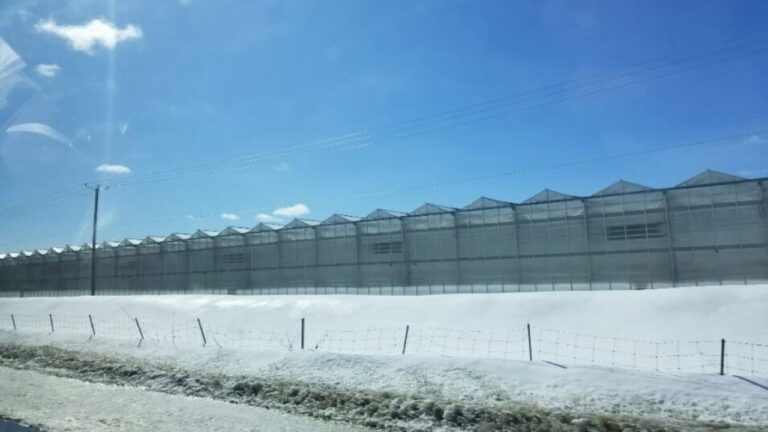
Exterior view of the Hexo Venlo glasshouse row spanning over 1 million square feet.

Hexo Corp.

Gatineau, Quebec, Canada

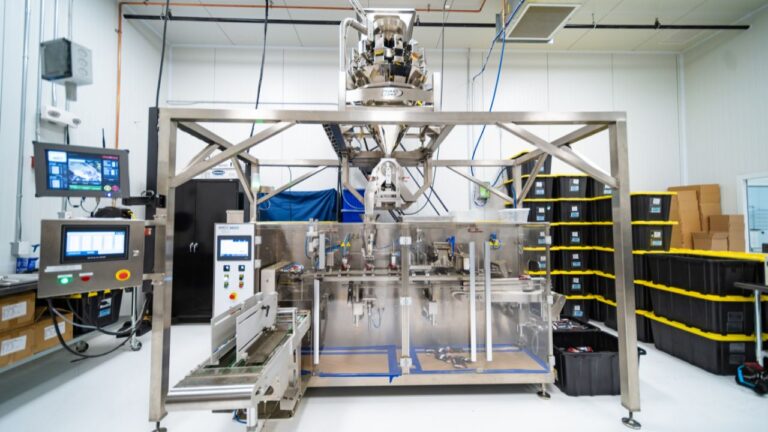
Modern stainless steel automated cannabis pre-roll processing machine in a dedicated production room.

Bostica

Lynn, MA, United States

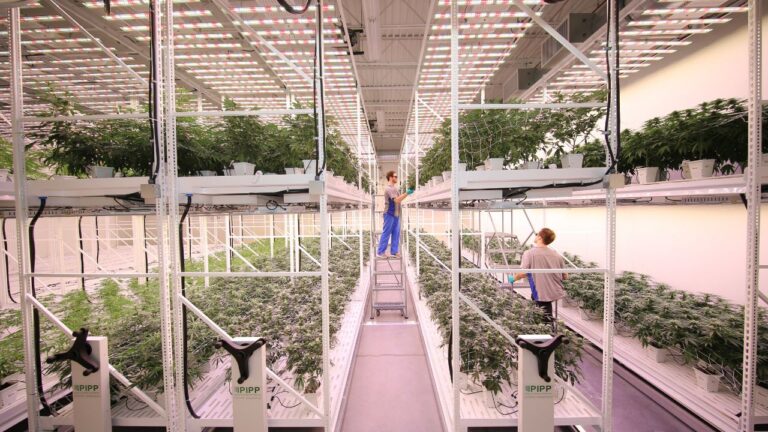
Catalyst BC consultants and LeafLine Cultivation Director inspecting vibrant plants in an organized vertical grow room.

Leafline Labs

Cottage Grove, MN, United States

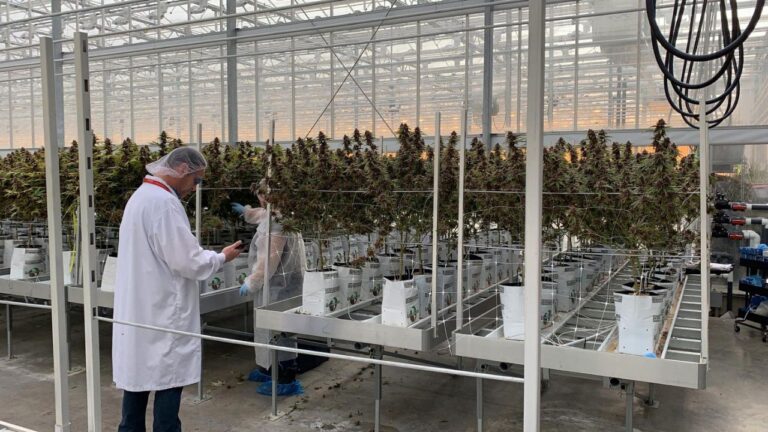
Catalyst BC consultant recording air, environmental, and plant data measurements within a cultivation facility.

View All Projects

View all Catalyst BC Projects

Reading for Pennsylvania Investors and Growers

Provenance. Figures checked against the statute and regulation text by Catalyst BC on October 8, 2026, and reviewed by Leif Olsen, Chief Executive Officer. Act 16 was read in the General Assembly’s current text, which shows the 2018, 2021 and 2023 amendments; the regulations were read in the Pennsylvania Code. Price figures were read from the Department’s June 24, 2026 chart by the position of its data labels; fee totals are our own arithmetic from the regulations; company figures come from Catalyst BC’s own records. Where this page and the official text differ, the official text governs.

Statute and regulations

Department of Health pages, forms and data

Contact Us

Enough about us. We want to hear more about you, your project, and your vision! Get in touch with a real live person today. Don’t worry, we don’t have a long, confusing phone menu, and your email isn’t going to the abyss, we promise. At Catalyst, we provide the service and support we’d want to experience ourselves!

Scroll to Top