Nevada Cannabis Consultants for CCB Ownership Transfers and Desert Grows
Nevada cannabis consulting starts with a closed door: the Cannabis Compliance Board (CCB) lists no open license application period, so most investors buy an ownership interest the CCB must approve. Licensed growers face taxable store sales that fell 8.1% in fiscal 2026. Our records show 58+ licenses secured nationwide.
A Decade of Harvesting Success - Trusted by Cannabis Operators Worldwide
Nevada CCB Deadlines Ahead
Updated: 10/9/2026. Nevada regulates medical and adult-use cannabis under one board. Voters passed Ballot Question 2 in 2016, and the Cannabis Compliance Board has run both programs since July 1, 2020, under chapters 678A to 678D of the Nevada Revised Statutes and the board’s rules, now codified in the Nevada Administrative Code (CCB laws and regulations page).
Three dates matter now. On October 15, 2026, the CCB holds a public hearing on proposed rules, including proposed rule R104-26, which would adopt ASTM D8334, a standard for sampling harvested cannabis, as Senate Bill 157 requires (notice of intent, R104-26). Under Senate Bill 41 (2025), sellers had to apply for a Cannabis Tax Permit by September 1, 2026; on January 1, 2027 the Department of Taxation sends denial notices and notifies the CCB to suspend the matching licenses, including those of non-applicants, until a permit is issued (Department of Taxation, Cannabis Tax Permit). And the Legislature convenes February 1, 2027, per our date arithmetic from Article 4, Section 2 of the Nevada Constitution; the CCB notes that only a legislative session can amend its statutes.
Meet Catalyst BC's Founders
-
Leif Olsen
Chief Executive Officer
-
Michael Williamson
Chief Operating Officer
-
Ian Miller
Executive Chair
Our partners bring multi-faceted expertise across business strategy, licensing, facility development, finance, and commercial operations. That breadth is complemented by subject matter experts across the wider Catalyst BC team, allowing us to bring the right combination of experience to each client and project. The result is bespoke, collaborative support shaped around your business, priorities, and goals - with the right expertise brought to the table when it matters most.
Where a Nevada Cannabis Consultant Fits Between Buyers, Growers and the CCB
The CCB licenses establishments, registers agents, approves transfers of interest, inspects facilities and reviews laboratory results. A Nevada cannabis consultant works on the owner’s side of those files: diligence before a purchase, the transfer-of-interest packet, and the facility, testing and inventory work the CCB inspects.
How Investors Get Into Nevada Cannabis While Windows Stay Shut
The statute lets the CCB accept applications for no more than 10 business days in a calendar year unless it sets a longer period by rule (NRS 678B.300). In our view, for most investors the route in is an existing license. A transfer of an ownership interest in any amount is not effective until the CCB has been notified and has found each new owner individually qualified (NAC 678B.119(1)). The CCB says there is no timeline for completing a transfer of interest, and it does not require owners to be United States citizens or Nevada residents (CCB FAQ).
Federal tax is the open question. The April 28, 2026 federal order moved marijuana held under a qualifying state medical license from Schedule I to Schedule III, a less restricted federal drug category, which could lift Section 280E, the federal rule that bars ordinary business deductions, for qualifying medical activity only; adult-use marijuana remains in Schedule I. The CCB says it cannot yet tell licensees whether Nevada’s adult-use licenses, each deemed a dual licensee for medical sales, qualify (CCB federal rescheduling update, May 20, 2026). Ask your tax adviser before changing a return.
Our work for Nevada investors: diligence on a target’s licenses, owners and inspection record through cannabis business strategy; a Nevada cannabis business plan with fees, excise taxes and a Section 280E scenario through cannabis financial planning; the transfer-of-interest packet, and a Nevada cannabis license application when the CCB next opens a window, through cannabis license application support; and build-out to final inspection through cannabis startup support.
Already Licensed by the CCB: Softer Sales and New Sampling Rules
Taxable sales reported by Nevada dispensaries and consumption lounges fell from $757.7 million in fiscal 2025 to $696.0 million in fiscal 2026, a drop of 8.1% (our arithmetic from Department of Taxation reports as of August 17, 2026; the totals include some non-cannabis sales, and late reports can change them) (FY2026 cannabis revenue report). In our reading, neither the statutes nor the rules cap a cultivator’s canopy; instead the board may limit the amount of cannabis in production after a public hearing (NAC 678B.006).
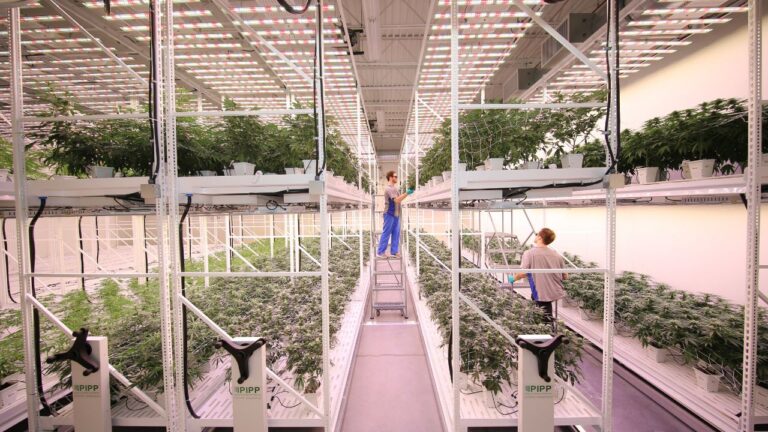
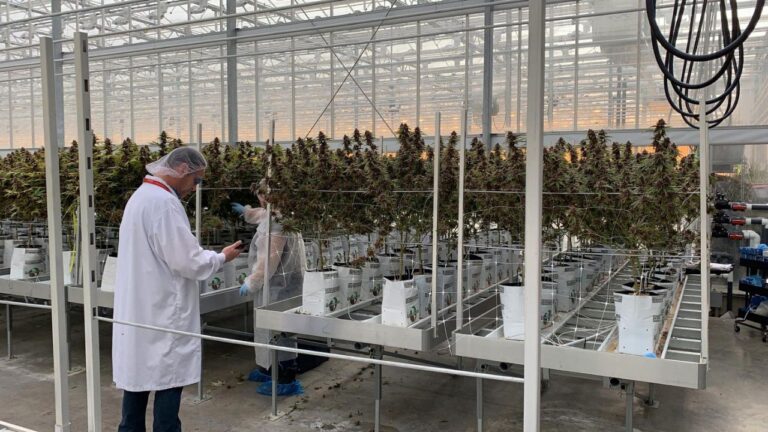
Michael Williamson, our Chief Operating Officer and a co-founder, has 25,000+ hours in cultivation and dispensary operations, including over 3,000 compliant harvests, and co-founded Greenhaus Industries, which patented stackable cultivation trays (company-reported). For Nevada rooms we offer Nevada cannabis facility design with HVAC and dehumidification sized to the lighting load and an odor plan, controlled environment agriculture targets that pass microbial testing the first time, cannabis vertical farming to add yield inside an existing building, operational optimization of harvest scheduling, labor and Metrc records (the state’s seed-to-sale tracking system) and, when margins slip, a cannabis turnaround diagnostic.
Our Nevada record: our records list Nevada client work in 2019 (company-reported), and our Las Vegas cultivation and extraction project write-up describes facility planning, commissioning and operations support there.
Our team: Leif Olsen, our Chief Executive Officer and a co-founder, leads our licensing work. Ian Miller, our Executive Chair and a co-founder, was founder and CEO of the Solace Companies, a wholesale vertically integrated Las Vegas licensee, and raised $22 million in private equity for a greenfield cultivation and processing operation (company-reported); the CCB’s September 2026 list shows Solace Enterprises LLC holding active cultivation and production licenses in Clark County (CCB active license list).
Where we work: we have no Nevada office; we deliver work on-site and remotely, and the same team runs Catalyst BC’s national cannabis consulting practice.
A word against our own interest: the board may waive its approval for a transfer of less than 5% (NAC 678B.122), and in our view a passive minority investor may not need a consultant to request that waiver. To talk through a Nevada file, contact us or call (USA) 303-305-3787.

Investing in Nevada cannabis
- Cannabis Business Strategy ConsultingDiligence on licenses and owners
- Cannabis Financial Planning & ModelingFees, excise taxes, 280E
- Cannabis Licensing & Application SupportTransfer-of-interest packets
- Cannabis Startup SupportBuild-out to final inspection
Already licensed in Nevada
- Cannabis Facility Design & HVAC / HVACD EngineeringHVAC, dehumidification, odor
- Cannabis Controlled Environment Agriculture (CEA)Rooms that pass testing
- Cannabis Vertical Farming ConsultingMore yield in the same building
- Cannabis Operational OptimizationHarvests, labor and Metrc
- Cannabis Business Turnaround & Operational RecoveryRecovery when margins slip
Compliant Harvests
Square Feet of Cultivation, Production, and Retail Facilities Designed
Licenses Secured
Is the CCB Accepting Nevada License Applications in 2026?
No general window is open. The CCB’s program page lists its last establishment window as July 15 to 26, 2024, for one cultivation and one production license in White Pine County (White Pine notice), and it announces open application periods through a public mailing list (CCB industry page). Retail store licenses are capped by county population: 80 in a county of 700,000 or more, 20 in a county of 100,000 to 700,000, four in a county of 55,000 to 100,000 and two in smaller counties (NRS 678B.260).
Medical licenses now come only in narrow cases. Since January 1, 2024, the CCB may issue or renew a medical establishment license only where the local government bans adult-use establishments (NRS 678B.215), and the CCB says the conversion of medical licenses into adult-use licenses was completed on December 31, 2024 (CCB monopoly guidance, February 14, 2025). A county with no medical establishments as of December 31, 2023 may ask the CCB to license one cultivation facility, one production facility or both, and if the CCB grants the request it opens a county round; a license issued that way after January 1, 2024 is an adult-use license unless the jurisdiction bans adult-use establishments (NAC 678B.086).
Review takes time even when nothing goes wrong. The NJ-CRC’s posted averages, dated September 9, 2025, are 4 to 5 weeks for a conditional application and 12 to 26 weeks for an annual or conversion application (NJ-CRC License Application Process).
Nevada license windows since 2022 and the route open today
| Route | Status on October 9, 2026 | Note |
|---|---|---|
| Consumption lounge licenses | Applications taken October 14 to 27, 2022 | Random number selection held November 30, 2022 |
| White Pine County cultivation and production | Applications taken July 15 to 26, 2024 | One license of each type |
| County-requested cultivation or production round | Only on a county board’s request | Counties with no medical establishment as of December 31, 2023; issued as adult-use unless the jurisdiction bans adult-use establishments |
| Transfer of an existing license or interest | Available with CCB approval | No set timeline, per the CCB |
CCB program page; White Pine notice; NAC 678B.086; CCB FAQ. Every source is listed at the bottom of this page.
Retail store caps and the 10% ownership ceiling
| County population | Retail store licenses | Ownership ceiling |
|---|---|---|
| 700,000 or more | 80 | No more than the greater of one license or 10% of licenses allocable in the county |
| 100,000 to under 700,000 | 20 | Same ceiling |
| 55,000 to under 100,000 | 4 | No statutory ceiling |
| Under 55,000 | 2 | No statutory ceiling |
NRS 678B.260 and 678B.270; a county’s licenses are reallocated if no applicant there qualifies. Clark and Washoe are the two counties over 100,000. The CCB counts every cultivation, production, retail, distributor and laboratory license in the county toward the 10% ceiling, including conditional and surrendered ones: 331 in Clark and 79 in Washoe as of January 1, 2025 (CCB monopoly guidance).
Consumption lounge licenses: who may hold one
| Rule | Detail |
|---|---|
| Retail lounge | Only the holder of an operational adult-use retail store, attached or immediately adjacent to that store |
| Independent lounge cap | No more than 20 licenses (a clause allowing more applied only if 20 had been issued by June 30, 2022; the first window opened in October 2022) |
| One person, one model | No one may hold both a retail store license and an independent lounge license |
| Transfer lock | No transfer of an independent lounge license until 2 years after it became operational; before then owners may transfer interests only if the original owners keep at least 51%, or after an original owner’s death or incapacity (NAC 678B.119(15)) |
| Lounges per person | The CCB issues no one more than one lounge license; a transfer may leave a buyer holding at most two (NRS 678B.328) |
| CCB list, September 2026 | 3 lounge licenses active and 23 conditional, retail and independent combined (our count) |
NRS 678B.322, 678B.325, 678B.326, 678B.328 and 678B.380(4); NAC 678B.119(15); CCB active license list, September 2026.
Investors buying an existing license should jump to buying in.
Six CCB License Types and the Dual-License Rule
The CCB licenses cultivation facilities, product manufacturing (production) facilities, distributors, testing laboratories, retail stores and consumption lounges (CCB industry page). Each adult-use establishment is deemed a dual licensee and may engage in medical activity as if it also held a medical license of the same type (NRS 678D.490). Since Senate Bill 168 (2025), a production facility may also package and sell usable cannabis, such as pre-rolls, to retail stores (CCB 2025 legislative guidance).
A licensed distributor is required to carry adult-use cannabis to a retail store, while a cultivator may move product to a production facility without one, in a vehicle the CCB has inspected (CCB FAQ).
Nevada license types side by side
| License | What it allows | Initial license fee (application fee extra) |
|---|---|---|
| Cultivation | Grow, harvest and package; sell to retail stores, production facilities and other cultivators, not to consumers | $3,000 |
| Production | Make cannabis products; since 2025, also package and sell usable cannabis to retail stores | $3,000 |
| Distributor | Transport cannabis between establishments | $15,000 |
| Testing laboratory | Test cannabis and cannabis products for potency and contaminants | $5,000 |
| Retail store | Sell to adults 21+ and, as a dual licensee, to medical patients | $20,000 |
| Consumption lounge | Sell single-use or ready-to-consume products for use on site | $10,000 |
CCB industry page and FAQ; NRS 678B.390; CCB 2025 legislative guidance.
Nevada cannabis milestones, 2016 to 2026
| Date | Event |
|---|---|
| November 8, 2016 | Voters pass Ballot Question 2 (adult use) |
| July 1, 2020 | The CCB takes over from the Department of Taxation |
| October 14 to 27, 2022 | First consumption lounge application window |
| January 1, 2024 | Medical licenses limited to jurisdictions that ban adult-use establishments |
| December 31, 2024 | Conversion of medical licenses to adult-use licenses completed |
| April 28, 2026 | Federal order moves qualifying state medical marijuana to Schedule III |
CCB program page; NRS 678B.215; CCB monopoly guidance; CCB federal rescheduling update.
An adult-use license expires one year after issuance (NRS 678B.250(5)), and the renewal application opens in the CCB’s portal 60 days before expiration (CCB industry page). Where the local government issues business licenses, a new license stays conditional until the establishment meets local rules, holds a local business license and passes a CCB inspection (NRS 678B.320); without a final inspection within 12 months the license must be surrendered unless the CCB extends the period, and an extension request is due at least 30 days before that deadline (NAC 678B.107).
What a Nevada License Costs Under the CCB Fee Schedule
The statute sets maximum fees (NRS 678B.390), and the CCB’s FAQ lists the amounts it charges: a retail store costs $20,000 to open and $5,000 a year to renew, and a cultivation or production facility $3,000 to open and $1,000 to renew. Each new applicant also pays a one-time, nonrefundable $5,000 application fee, except lounges: $100,000 for a retail lounge and $10,000 for an independent lounge, cut 75% for a qualifying social equity applicant (one who owns at least 51% and meets the CCB’s residence and cannabis-conviction tests), to $2,500 per the CCB FAQ.
Owners, officers, board members and workers need agent cards at $150 per job category, valid two years; an owner of less than 5% may seek a waiver (CCB industry page). The CCB may also bill hourly investigation charges, plus travel and background-check costs (NRS 678B.390(4) to (6)).
CCB license fees: initial and annual renewal
| License | Initial license fee | Annual renewal fee |
|---|---|---|
| Retail store | $20,000 | $5,000 |
| Cultivation facility | $3,000 | $1,000 |
| Production facility | $3,000 | $1,000 |
| Testing laboratory | $5,000 | $3,000 |
| Distributor | $15,000 | $5,000 |
| Consumption lounge | $10,000 | $10,000 |
CCB FAQ (adult-use fees); NRS 678B.390.
Application fees, agent cards and investigation charges
| Fee | Amount | Who pays |
|---|---|---|
| Application fee, establishment | $5,000 | Each applicant other than a lounge |
| Application fee, retail lounge | $100,000 | Holder of an operational retail store |
| Application fee, independent lounge | $10,000 ($2,500 for social equity) | Independent lounge applicant |
| Agent card | $150 per category, valid two years | Owners, officers, board members and workers (owners under 5% may seek a waiver) |
| Investigation charges | Hourly rate plus travel | Transfer, new application, management agreement approval or waiver |
NRS 678B.390(3) to (6); CCB FAQ; CCB industry page.
Nevada market data, fiscal 2025 and 2026
| Measure | Fiscal 2025 | Fiscal 2026 |
|---|---|---|
| Taxable sales, dispensaries and lounges | $757,714,911 | $695,995,234 |
| Clark County taxable sales | $567,626,861 | $506,357,507 |
| 15% wholesale excise collected | $37,300,235 | $33,477,104 |
| 10% retail excise collected | $74,549,473 | $70,369,114 |
Nevada Department of Taxation cannabis revenue reports, FY2025 (updated September 2, 2025) and FY2026 (updated August 17, 2026). Fiscal years run July to June. Taxable sales include some non-cannabis items, and late reports can change the totals.
Budget accordingly: a new retail store pays $35,000 in CCB fees over its first three years, the $5,000 application fee, the $20,000 initial license fee and two $5,000 renewals (our arithmetic from the CCB FAQ), before agent card fees, background-check costs, investigation charges and local business license costs. NAC 678B.283 still describes an hourly assessment for routine inspections and audits, but NRS 678B.390(8) bars charging for them; in our reading the statute controls (NAC 678B.283).
How a Nevada License Changes Hands Under NAC 678B.119
A Nevada license is nontransferable except under the CCB’s transfer rules, which may give priority to a transfer in which the seller is in receivership, involved in a recapitalization or party to a court proceeding involving financial distress (NRS 678B.380). No one may sell, assign, lease, grant or foreclose a security interest in, or create a voting trust over (moving an owner’s voting rights to a trustee), any interest in an establishment except under those rules, whether the license is conditional or final (NAC 678B.119(4)).
The rules give three filing routes: a transfer among existing owners; a transfer to a natural person, or an entity owned entirely by natural persons, who already holds an interest in another Nevada establishment; and a transfer to anyone else, which also needs a complete agent card application and fingerprints for each new owner (NAC 678B.119(10) to (12)). Each route requires every contract describing the deal and proof that no monopoly will be created. A transfer involving a conditional license also needs a notarized attestation that the new owner will build and operate at or above the standards of the original application (NAC 678B.119(9)).
How to open a dispensary in Nevada through a CCB-approved purchase: five steps
These steps follow NAC 678B.119 and NRS 678B.270 and 678B.500 for a buyer of an existing retail store license.
- Screen the target on the CCB’s license list (active or conditional) and run the 10% ownership ceiling if it sits in Clark or Washoe County.
- File an agent card application, with fingerprints, for each person who will receive an ownership interest.
- Submit the Transfer of Interest packet with the purchase agreement, organizational chart, Secretary of State filings, revised local business license and no-monopoly attestation.
- Answer the CCB investigation and pay any hourly investigation charges; the transfer is not effective until the CCB finds each new owner qualified.
- If you will move the store, get local approval at a public hearing and file a change of location; a move must stay within the same local jurisdiction.
In our view, Nevada purchases stall on hidden ownership: the CCB’s January 2025 biennial report lists unapproved transfers of interest and hidden ownership among the most common areas of concern in its investigations (CCB biennial report, 2025).
Who the CCB Must Approve: Owners, Profit Partners and Brand Licensors
No proposed owner, officer or board member may be under 21, have had an agent card revoked, have served as an owner, officer or board member of an establishment whose license was revoked, or have an excluded felony offense unless the CCB grants an exemption petition (NRS 678B.250(3)). Under NRS 678B.050, an excluded felony offense is a conviction for a category A felony or for two or more felonies, not counting an offense whose sentence, including probation or supervised release, was completed more than 10 years ago, and certain past conduct now legal under Nevada’s cannabis laws. In a transfer of interest, a passive investor owning less than 5% of a company’s shares is not treated as a prospective agent for the CCB’s background investigation (NAC 678B.122(5)).
Money flows draw the same scrutiny. Since April 9, 2024, the CCB reviews any agreement giving a non-licensee significant control and requires approval of one that shares profits from a facility’s overall operations, but not of a licensing agreement paid only from the licensed product (CCB management services agreement guidance). And because an establishment generally may acquire cannabis only from another Nevada licensee (NAC 678B.214(2)), the CCB’s June 23, 2026 bulletin bars split invoices in which part of the price goes to an unlicensed brand licensor (CCB split-payment guidance).
Correction to published guidance (October 9, 2026): a consulting firm’s Nevada page, last modified May 7, 2026, describes independent consumption lounges as places where customers can bring and use their own cannabis. Nevada law requires an independent lounge to buy single-use and ready-to-consume products from contracted retail stores and to ensure that only products bought from the lounge are consumed there (NRS 678D.475).
Nevada Site Rules: 1,000 Feet From Schools, 1,500 From Casinos in Clark and Washoe
A new establishment may not sit on airport property, within 1,000 feet of a school or within 300 feet of a community facility, such as a park, playground or child care facility, that existed when the application was filed. In a county of 100,000 or more, it also may not sit within 1,500 feet of a nonrestricted gaming licensee, such as a casino, that existed then. Distances run from the establishment’s front door to the closest point of the protected property line (NRS 678B.250(3) and (7)).
Local governments may adopt zoning and land-use rules for adult-use establishments, including bans (NRS 678D.510(1)(d)). An establishment may move within the same local jurisdiction only after the local government approves the site at a public hearing noticed at least seven working days ahead (NRS 678B.500). A retail lounge attached to a store that met the distance rules when licensed is exempt from them, but still may not sit on airport property (NRS 678B.322).
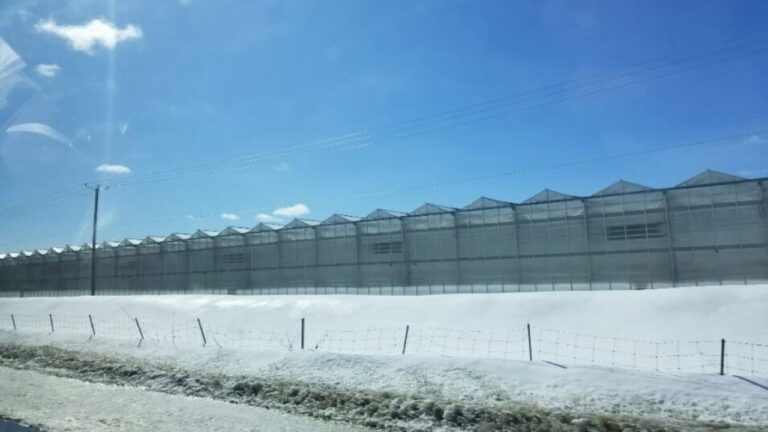
The building matters as much as the address. Cultivation must take place in an enclosed, locked facility, which the CCB’s FAQ says can include a medical greenhouse that meets its conditions. An outdoor grow may keep soil floors in its greenhouses, but activities other than growing and harvesting must take place in a brick-and-mortar building that meets the security and sanitation standards of an indoor grow (CCB FAQ).
CCB Inspections, Testing Lots and Nevada’s Two Excise Taxes
CCB agents conduct annual routine inspections and audits. From July 1, 2023 to June 30, 2024 they issued 198 statements of deficiencies (written findings of rule violations) and 157 statements of no deficiencies, and 9% of laboratory samples tested in fiscal 2023-24 failed; for usable cannabis the most common failures were total yeast and mold, Aspergillus (a mold) and total coliforms or Enterobacteriaceae (bacteria) (CCB biennial report, 2025).
Senate Bill 157 (2025) requires the CCB to adopt sampling rules that define a flower lot as up to 15 pounds, with total samples of at least 10, 15 or 20 grams by lot weight (NRS 678B.649); until the CCB adopts proposed rule R104-26, NAC 678A.135 still limits a flower lot to 5 pounds. The board’s remediation guide bars extraction or remediation of lots that fail for Salmonella or pathogenic E. coli, and of lots that fail for heavy metals, pesticides or mycotoxins (CCB extraction and remediation limits). Cultivators, producers, laboratories and retail stores file quarterly inventory counts and monthly activity reports within 30 days after each quarter ends (CCB industry page). A Nevada cannabis compliance consulting review checks Metrc records, sampling logs and failed-test history before an inspector does.
Nevada levies a 15% excise tax on a cultivator’s first wholesale sale, measured on fair market value for a sale to an affiliate and on the sales price otherwise, and a 10% excise tax on adult-use retail sales, which is in addition to sales tax; sales to medical cardholders at a dual licensee are exempt from the 10% tax (NRS 372A.290). Each location also needs its own Cannabis Tax Permit, which cannot be assigned (Department of Taxation).
What Falling Sales Mean for a Nevada Grower
With fiscal 2026 store sales down 8.1% and no canopy ceiling in our reading, in our view a Nevada grower gains most from first-time test passes, lower cost per pound and buyers lined up before a room is planted, not from more space.
Two Nevada Engagements: Transfer Diligence and a Test-Pass Audit
Investors get a transfer-of-interest review before they sign: the target’s license and Cannabis Tax Permit status, every owner, lender and brand agreement the CCB will read, the 10% ceiling in Clark or Washoe County, inspection history, and a Nevada cannabis business plan with excise-tax and Section 280E scenarios for your tax adviser. Licensees get a test-pass audit: failed-lot history by cause, sampling under the lot sizes proposed in R104-26, room-by-room HVAC and dehumidification loads, cost per pound and a compliance check of your Metrc records. Send your license numbers and your deal or production figures, and we will tell you plainly if another firm suits you better.
Nevada Questions From License Buyers and CCB Licensees
Can I apply for a new Nevada cannabis license in 2026?
Not for a general license. The CCB lists no open application period as of October 9, 2026; its last windows were for White Pine County in July 2024 and for consumption lounges in October 2022. Investors buy an existing license or interest with CCB approval.
Do I need to live in Nevada to own a cannabis business there?
No. The CCB says applicants for a license or agent card do not have to be United States citizens or Nevada residents. Owners, officers and board members need agent cards and background checks, though an owner of less than 5% may seek a waiver.
How do I buy into an existing Nevada cannabis business?
File a Transfer of Interest packet with every contract, an organizational chart and agent card applications for new owners. A transfer of any amount is not effective until the CCB finds each new owner qualified, unless the CCB waives approval for a transfer under 5%, and the CCB sets no timeline.
How many Nevada cannabis licenses can one owner hold?
In Clark and Washoe counties, no person or group may hold more than the greater of one license or 10% of the licenses allocable in the county, and the CCB counts every license type, including conditional and surrendered ones. Lounge licenses are exempt from that ceiling, but the CCB issues no one more than one lounge license, and a transfer may leave a buyer holding at most two (NRS 678B.328).
What does a Nevada retail store license cost?
A $5,000 application fee, a $20,000 initial license fee and a $5,000 annual renewal, plus $150 agent cards and any hourly investigation charges.
Can I open a cannabis consumption lounge in Nevada?
Only in a future CCB window, or by buying an existing license with CCB approval; an independent lounge license cannot transfer until it has operated two years, though owners may sell interests with CCB approval if the original owners keep at least 51%. A retail lounge requires an operational retail store.
What happens when a Nevada lot fails testing?
A 15% excise tax on the first wholesale sale, a 10% excise tax on adult-use retail sales and regular sales tax. Medical cardholder sales at a dual licensee skip the 10% tax.
How is Nevada cannabis taxed?
A 15% excise tax on the first wholesale sale, a 10% excise tax on adult-use retail sales and regular sales tax. Medical cardholder sales at a dual licensee skip the 10% tax.
Facility and Cultivation Work That Informs Our Nevada Advice
These projects show the cultivation, extraction and facility work we offer Nevada licensees; each tile opens its full write-up, and all of them are on our projects page.

Hexo Corp.
Gatineau, Quebec, Canada

Bostica
Lynn, MA, United States

Leafline Labs
Cottage Grove, MN, United States

View All Projects
View all Catalyst BC Projects
Further Reading on Dispensary and Startup Costs

How Much Does It Cost to Open a Dispensary in 2026?
The allure of jumping into the legalized cannabis industry often paints a picture of quick riches and burgeoning demand, yet the reality of establishing a

Cannabis Startup Costs: From Licensing to Profitability
Starting a legal cannabis business isn’t just about getting a license—it’s about building a profitable, compliant, and sustainable operation in one of the world’s most

Nevada Cannabis Lounge License Guide: What You Need to Know
Nevada has enthusiastically embraced consumption lounges. In 2021, Governor Sisolak signed AB 341 authorizing the Nevada Cannabis Compliance Board (CCB) to license cannabis consumption lounges.
Nevada Sources: NRS 678A to 678D, NAC 678B and CCB Records
Provenance. Figures checked against statute, regulation and agency text by Catalyst BC on October 9, 2026. NRS chapters 678B, 678D and 372A, NAC chapters 678A and 678B and Article 4 of the Nevada Constitution were read on the Nevada Legislature’s site (statutes revised April 15, 2026; NAC chapters revised June 7, 2026). CCB pages, guidance, notices, the 2025 biennial report and the September 2026 license list were read on the CCB site; market figures come from the Department of Taxation’s FY2025 and FY2026 cannabis revenue reports. The fee total, the sales change, the lounge count and the 2027 session date are our own arithmetic. Company figures come from Catalyst BC’s own records. Where this page and the official text differ, the official text governs.
Nevada statutes, rules and constitution
- NRS chapter 678B, licensing and control of cannabis
- NRS chapter 678D, adult use of cannabis
- NRS chapter 372A, cannabis excise taxes (NRS 372A.290)
- NAC chapter 678B, licensing and control of cannabis
- NAC chapter 678A, administration (NAC 678A.135, lot)
- Nevada Constitution, Article 4, Section 2 (legislative sessions)
Cannabis Compliance Board records
- CCB laws and regulations page
- CCB Nevada cannabis program page (application windows)
- CCB industry page (license types, agent cards, renewals, forms, social equity)
- CCB frequently asked questions (fees, transfers, conditional licenses)
- CCB public meetings page (October 15, 2026 hearing)
- CCB notice of intent to act upon a regulation, LCB File No. R104-26
- CCB notice of intent to act upon a regulation, LCB File No. R103-26
- CCB 2025 legislative guidance, July 17, 2025
- CCB licensee update on federal rescheduling, May 20, 2026
- CCB update to monopoly analysis, February 14, 2025
- CCB update to management services agreements, April 9, 2024
- CCB split-payment guidance, June 23, 2026
- CCB extraction and remediation limits
- CCB notice of intent to accept applications, White Pine County, May 31, 2024
- CCB biennial report, January 2025
- CCB active license list, September 2026
Department of Taxation
Contact Us
Enough about us. We want to hear more about you, your project, and your vision! Get in touch with a real live person today. Don’t worry, we don’t have a long, confusing phone menu, and your email isn’t going to the abyss, we promise. At Catalyst, we provide the service and support we’d want to experience ourselves!