Montana Cannabis Consultants: DOR Buy-Ins, Canopy Tiers, 2027 Entry

Montana cannabis consulting starts with timing: apart from tribal combined-use licenses, the Department of Revenue (DOR) allows no new licensed premises before July 1, 2027. Investors can buy an existing business; licensees, in our view, compete on canopy growth and clean tests. Our records show 58+ licenses secured outside Montana.

A Decade of Harvesting Success - Trusted by Cannabis Operators Worldwide

Montana Deadlines Through July 2027

Jan 15, 2027Fourth-quarter 2026 cannabis tax return due to DOR
Jun 30, 2027Last day of the hold on new licensed premises
Jul 1, 2027DOR begins taking applications from new applicants

Updated: 10/8/2026. Montana regulates adult-use and medical marijuana under the Montana Marijuana Regulation and Taxation Act, Title 16, chapter 12 of the Montana Code Annotated, adopted as Initiative 190 in November 2020. The Department of Revenue licenses and inspects every marijuana business through its Cannabis and Alcohol Regulation Division (CARD). Adult-use sales began on January 1, 2022. Senate Bill 27 of 2025 froze the industry’s footprint: from July 1, 2025 through June 30, 2027, DOR may accept applications only when they relate to an existing licensed premises (16-12-201, MCA).

On or after July 1, 2027, DOR must begin accepting applications from applicants who were not previously licensed and for premises not previously licensed, and a marijuana business with no license issued before July 1, 2025 starts at a tier 2 canopy license or lower. Meanwhile, dispensaries run on a quarterly tax calendar: they collect a 20% state tax on adult-use sales and 4% on medical sales (15-64-102, MCA) and file a return by the 15th of the month after each quarter, so the fourth-quarter 2026 return is due January 15, 2027.

Meet Catalyst BC's Founders

  • Leif Olsen - Chief Executive Officer

    Leif Olsen

    Chief Executive Officer

  • Michael Williamson - Chief Operating Officer

    Michael Williamson

    Chief Operating Officer

  • Ian Miller - Executive Chair

    Ian Miller

    Executive Chair

Our partners bring multi-faceted expertise across business strategy, licensing, facility development, finance, and commercial operations. That breadth is complemented by subject matter experts across the wider Catalyst BC team, allowing us to bring the right combination of experience to each client and project. The result is bespoke, collaborative support shaped around your business, priorities, and goals - with the right expertise brought to the table when it matters most.

Learn more about our team

Where a Montana Cannabis Consultant Fits Before CARD Signs Off

CARD reviews applications, inspects premises and resolves violations, and DOR says it cannot give legal or tax advice. A Montana cannabis consultant works on the owner’s side: diligence before a purchase, the documents behind an application, and the building, procedures and records that must pass inspection.

Buying Into Montana Cannabis Before the 2027 Reopening

Before July 2027, an investor’s route in is an existing licensed business, bought outright or through a stake. Montana licenses are nontransferable, but a licensee may sell its marijuana business, including live plants, inventory and material assets, to a person licensed by DOR, which may issue the buyer a temporary license (16-12-104, MCA).

Any individual, entity organized and based in a U.S. state or territory, or public company that would reach 5% or more of a licensee’s ownership interest (more than 15% for a qualified institutional investor such as a bank or insurer), or would gain control, becomes a controlling beneficial owner (16-12-102, MCA). Before such a stake changes hands, the licensee must notify DOR in writing and DOR must determine that the buyer qualifies. The Act also bars licensing when an owner, including a holder of 5% or more of the net profits or net worth (private loans and convertible securities count), has lived in Montana for less than one year; in our reading that reaches out-of-state money, so get DOR’s position in writing before you fund a deal.

Federal rules moved on April 28, 2026: marijuana subject to a state medical marijuana license is now in Schedule III, and the U.S. Department of Justice says those licensees are no longer subject to Section 280E, the federal tax rule that bars business deductions for Schedule I and II trafficking (91 FR 22714). The federal rule itself says it is not a tax determination. Other marijuana stays in Schedule I, and adult-use sales were 91% of Montana’s September 2026 dispensary sales (our arithmetic from DOR sales reports), so in our view, because sales to adults are not made for medical purposes, most Montana revenue sits outside the change; ask your tax counsel.

Our work for Montana investors: diligence on a seller’s license, canopy tier, county and inspection record through cannabis business strategy; a Montana cannabis business plan with license fees, the 20% tax and 2027 entry costs through cannabis financial planning; relinquishment and controlling-owner filings through cannabis license application support; and 2027 builds through cannabis startup support.

Already Licensed by CARD: Canopy Tiers, Racks and Price per Gram

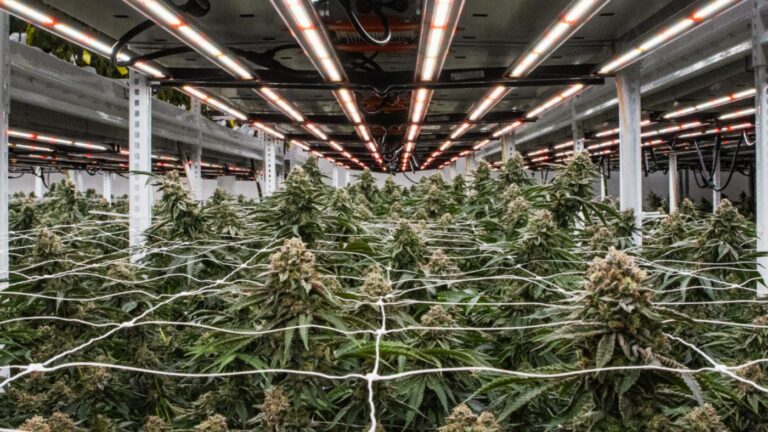
Montana licenses cultivation by canopy, the square footage dedicated to live plant production measured across the floor, platform or other support for the plants, in 13 tiers from a 250-square-foot micro tier to 50,000 square feet across up to nine indoor facilities. A cultivator may move up one tier per renewal only by showing that it uses its full canopy, that the tracking system shows it sold at least 80% of what its canopy produced over the two previous quarters (or that a market exists for more), and that any new facility sits in an approving county, and DOR inspects within 30 days before approving; a tribal combined-use cultivator may skip tiers up to tier 5 without the full-canopy and 80% tests (16-12-223, MCA). CARD measures canopy around the outermost plants and treats canopy areas as separate only when a physical boundary, such as an interior wall, or at least eight feet of open space divides them (ARM 42.39.405).

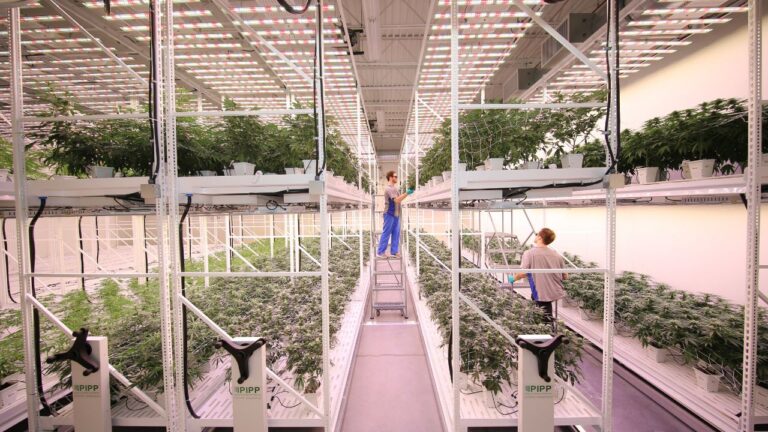
At $5.34 a gram for buds (the July 2024 to June 2025 average in DOR’s retail price study), every square foot of canopy has to earn its place. Because canopy counts each platform that supports plants, in our reading stacked racks add canopy rather than escape the cap, so in a fixed building the levers are canopy layout, cultivar choice, light intensity, climate stability and a pass rate that keeps lots out of remediation (reprocessing a failed lot before retesting).

For Montana rooms we offer Montana cannabis facility design with HVACD (heating, ventilation, air conditioning and dehumidification), controlled environment agriculture targets set against the moisture and microbial limits, cannabis vertical farming planned so every racked tier fits the canopy count, operational optimization of harvest scheduling and seed-to-sale (Metrc) records and, when margins slip, a cannabis turnaround diagnostic. Our Chief Operating Officer and co-founder Michael Williamson has 25,000+ hours (company-reported) in cultivation and dispensary operations and co-founded Greenhaus Industries, which patented stackable trays for growing on multiple tiers (company-reported).

Our Montana record and team: Catalyst BC has no Montana licensee client, and we will not imply one. Leif Olsen, our Chief Executive Officer and a co-founder, leads our licensing work, and Ian Miller, our Executive Chair and a co-founder, raised $22 million (company-reported) in private equity for a greenfield cultivation and processing operation outside Montana. We have no Montana office; we deliver work on-site and remotely, and the same team runs Catalyst BC’s national cannabis consulting practice.

A word against our own interest: Montana requires a licensee to disclose every third-party relationship, consulting included, before the work starts, and under a rule effective September 26, 2026 the consultant may not begin until the licensee receives DOR’s written notice that the disclosure is complete (ARM 42.39.116). If a seller’s own team already handles CARD well, you may not need us. To talk through a Montana file, contact us or call (USA) 303-305-3787.


Investing in Montana cannabis

Already licensed in Montana

0 +
Years Regulated Cannabis Operations Experience
0 +

Compliant Harvests

0 M+

Square Feet of Cultivation, Production, and Retail Facilities Designed

0 +

Licenses Secured

Can You Apply for a Montana Marijuana License in 2026?

Only for limited filings until July 1, 2027, when DOR must begin accepting new applicants and new premises.

Filings still open include a buyer’s application on a license or site the seller relinquishes (gives up so the buyer can be licensed), a licensee’s move of an existing premises, renewals, and tribal combined-use licenses (up to eight statewide, one per tribe), which DOR says are not subject to the moratorium (DOR combined-use license page). Anyone preparing a Montana cannabis license application for July 2027 should settle residency, local approval, the site and source-of-funding proof early, because DOR keeps the 20% processing fee even when it denies an application (DOR general license information).

Filing Status Detail
New cultivation, manufacturing or dispensary business at a new site Closed until July 1, 2027 DOR license pages: applications available starting July 1, 2027
New licensed premises Closed until July 1, 2027 Not allowed between July 1, 2025 and June 30, 2027
Application on a relinquished license or site Open Buyer applies within 10 calendar days of the seller’s relinquishment
Move of an existing licensed premises Open $2,500 change-of-location fee; local rules must permit the new site
Tribal combined-use license Open Eight statewide, one per federally recognized tribe in Montana
Renewal, with any one-tier canopy increase Open to licensees File at least 60 days before the license expires
Swipe to see the full table →

16-12-201, 16-12-223 and 16-12-225, MCA; ARM 42.39.104 and 42.39.107; DOR cultivator license page and DOR combined-use and relinquishment pages.

Step When Result
Senate Bill 27 of 2025 July 1, 2025 Footprint frozen: no new licensed premises through June 30, 2027
Reopening July 1, 2027 DOR begins accepting new applicants and new premises
Swipe to see the full table →

16-12-201, MCA; DOR notice on the SB 27 deadline.

Document What it shows
Montana residency documentation Residency of the applicant
Date of birth and consent to fingerprint Age and background checks
Property ownership or owner permission Right to use the site
Business organization chart and structure form Owners and control
Source of funding verification A suitable source of money
Building and fire inspection reports Building and fire sign-off
City and county approval Local authorization
Swipe to see the full table →

DOR general license information page; 16-12-203(1), MCA.

Buying rather than waiting for 2027? See buying a license.

Montana’s Six Statutory License Types and the 13-Tier Canopy Ladder

The Act names six license types: cultivator, manufacturer, adult-use or medical marijuana dispensary, testing laboratory, marijuana transporter and combined-use, and DOR may add subtypes and endorsements such as storage. A business may hold any combination, receives one license per business type and adds sites under it, and each location must be applied for, inspected and approved before it operates. Our count of DOR’s October 2026 license lists: 554 dispensary locations (546 adult-use, 8 medical-only), 319 cultivator locations, 188 manufacturer locations and 12 transporters.

Cultivation is indoor only, greenhouses included, except that a licensee growing outdoors before November 3, 2020 may continue without expanding that space; cultivators may not sell flower to other cultivators, and no licensee may grow or manufacture hemp at a licensed premises.

Dispensaries may not operate between 8 p.m. and 9 a.m., may not deliver to adult consumers, may not sell hemp flower, hemp plants or synthetic cannabinoids, and must keep each package within the limits in the package-limit table below, though registered cardholders may buy higher potencies (16-12-207(11), 16-12-208(7) and 16-12-224(8), MCA; ARM 42.39.409).

License What it allows Limit
Cultivator Grow, harvest, dry and package flower; sell to manufacturers and dispensaries 13 canopy tiers; indoor only
Manufacturer Turn marijuana into concentrates, extracts and infused products Fee tier set by monthly concentrate output
Dispensary Sell to cardholders only (medical) or to cardholders and adults 21+ (adult-use) Each location applied for, inspected and charged separately
Combined-use One cultivator license plus one dispensary for a tribe or a tribe-majority-owned business Eight statewide, one per tribe
Transporter Move product between licensees and deliver to cardholders, not to consumers License valid two years
Testing laboratory Test potency and contaminants ISO 17025:2017 accreditation required
Swipe to see the full table →

16-12-102, 16-12-104, 16-12-222, 16-12-223 and 16-12-225, MCA; ARM 42.39.405; DOR testing laboratory license page.

Product Limit per package
Flower 1 ounce; total potential psychoactive THC no higher than 35%
Edible or food product 100 milligrams of THC; 5 milligrams per serving
Capsule, suppository or transdermal patch 100 milligrams of THC each; 800 milligrams per package
Topical No more than 6% THC and 800 milligrams per package
Tincture and any other product 800 milligrams of THC
Swipe to see the full table →

16-12-224(8), MCA; a 10% deviation is allowed for products other than flower.

Renewal applications open 90 days before a license expires and are due at least 60 days before it, and a renewal received after expiration is not considered, so the license lapses (ARM 42.39.107). DOR must decide a complete application within 60 days for an existing licensee and 120 days for a new applicant, cutting the license fee 5% for each week a completed application stays pending past that limit.

Montana Canopy Fees up to $37,000, the 20% Processing Fee and the 20% Sales Tax

Montana sets most license fees in statute, and ARM 42.39.104 lists them too, though its 2024 text still prices manufacturers per facility where the 2025 statute prices them by the license’s total output. Every application carries a nonrefundable processing fee of 20% of the license fees applied for, and DOR collects the remaining 80% when it notifies the applicant of approval. A background check costs $30, a worker permit $50, and a dispensary license $5,000 for each location.

Tier Canopy up to (sq ft) Indoor facilities up to Annual fee
Micro 250 1 $1,000
Tier 1 1,000 1 $2,500
Tier 2 2,500 2 $5,000
Tier 3 5,000 3 $7,500
Tier 4 7,500 4 $10,000
Tier 5 10,000 5 $13,000
Tier 6 13,000 5 $15,000
Tier 7 15,000 5 $17,500
Tier 8 17,500 5 $20,000
Tier 9 20,000 6 $23,000
Tier 10 30,000 7 $27,000
Tier 11 40,000 8 $32,000
Tier 12 50,000 9 $37,000
Swipe to see the full table →

16-12-223(1)(b) and (4), MCA; the fee is charged per tier, not per facility.

Fee Amount
Manufacturer, up to 10 pounds of concentrate a month $5,000 a year
Manufacturer, between 10 and 15 pounds a month $10,000 a year
Manufacturer, 15 pounds or more a month $20,000 a year
Combined-use license $7,500 a year
Testing laboratory $5,000 a year
Transporter $10,000 for two years
Storage facility endorsement $1,000 a year
Change of location $2,500
Swipe to see the full table →

16-12-221(6) and 16-12-225(3), MCA; ARM 42.39.104.

Item Figure
State tax, adult-use sales 20% of the retail price
State tax, medical sales 4% of the retail price
County local-option tax Up to 3%, only after a county vote
Dispensary sales, September 2026 $28,055,429 ($25,577,747 adult-use; $2,477,682 medical)
Dispensary sales, October 2025 to September 2026 $331,771,676 (our sum of DOR monthly totals)
Average bud price, July 2024 to June 2025 $5.34 a gram
Swipe to see the full table →

15-64-102 and 16-12-310, MCA; DOR sales reports and retail price study; DOR cannabis tax page.

Budget accordingly (our arithmetic from 16-12-223, 16-12-224 and ARM 42.39.104): a new business entering in July 2027 at tier 2 pays $5,000 a year for cultivation, $1,000 of it up front as the processing fee, and adding one dispensary location brings its annual license total to $10,000, before $30 for each background check.

How a Montana Marijuana Business Changes Hands Under the Freeze

The license itself never moves: the seller relinquishes in the TransAction Portal (TAP) and receives a relinquishment identification number, and the buyer, whether a current licensee or a new applicant, applies within 10 calendar days with that number, the processing fee and all supporting documents (DOR relinquishment process). The relinquishment cannot be approved on its own: if DOR approves the buyer’s application, it issues a new license and the seller’s license ends immediately, and an incomplete or late application may be denied.

One statutory line deserves a written answer before you sign: 16-12-223(1)(f) starts any marijuana business with no license issued before July 1, 2025 at a tier 2 canopy license or lower. In our reading, a new entity buying a larger cultivator should ask DOR which tier it will hold.

Five steps to open a Montana dispensary location

These steps follow 16-12-201 to 16-12-224, MCA, and DOR’s license pages.

  1. Confirm the route: a relinquished license or site now, or a new application on or after July 1, 2027.

  2. Screen the site: a county whose voters approved Initiative 190 or the license category, local zoning, and the 500-foot same-street test.

  3. Assemble the TAP file: residency and date-of-birth proof, fingerprints, organizational chart and business structure form, source-of-funding proof, property owner permission, building and fire reports, and city and county approval.
  4. Pay the 20% processing fee, finish the build and pass CARD’s pre-licensing inspection, which requires the site to be fully ready to operate.
  5. Pay the remaining 80% on approval, staff with worker permits, set up Metrc, and open no earlier than the license’s effective date.

In our view, deals slow down on landlord permission, county approval and residency proof more often than on floor plans, so our cannabis licensing and application team checks those first.

Who Can Own a Montana Marijuana Business and What DOR Screens

DOR may not license a person if the person or an owner, including a holder of a financial interest, has a felony or drug-offense conviction, including a conviction under another state’s marijuana law within the past five years, and, after investigation, is found not sufficiently rehabilitated; is in the custody or under the supervision of the department of corrections or a youth court; has a fraud conviction under the Act or the former medical program; is under 21; has failed to pay taxes, child support or government judgments, to comply with Montana’s tax code (Title 15) or its alcohol, tobacco and marijuana code (Title 16), including filing required returns, or to stay current on a government student loan; lost a marijuana license to revocation within three years; or has lived in Montana for less than one year (16-12-203(2), MCA).

Applicants that are not individuals disclose an organizational chart showing controlling beneficial owners and their percentages, any bankruptcy or lawsuit, financial interests in marijuana businesses in any state, and any financial interest holder contributing over 50% of operating capital. DOR fingerprints everyone named on the application, every partner, LLC member, director and officer, and each individual with a controlling beneficial ownership or a 5% financial interest, repeats fingerprint checks every five years and runs name checks in the other years (16-12-129, MCA). Diligence also covers the seller’s tier history, Metrc compliance notifications, open violations and inherited third-party contracts; DOR judges a contract by its substance, not its labels.

Since September 26, 2026, a licensee must also name every natural person with day-to-day operational control, such as a general manager or head cultivator, and show that each is a Montana resident, at application, at each renewal and within 30 days of a change (ARM 42.39.105).

Correction to published guidance (October 8, 2026): a consulting firm’s Montana page last updated May 7, 2026 still says new applicants become eligible after July 1, 2025. Senate Bill 27 of 2025 moved that date to July 1, 2027.

Where Montana Marijuana Businesses May Operate: County Votes and the 500-Foot Rule

Apart from grandfathered former medical licensees, a marijuana business may not operate in a county whose voters rejected Initiative 190 in November 2020 until voters there approve its license category and DOR licenses it. Counties that approved the initiative skip that step, though an approving county or city may later vote to prohibit a category, effective on the 90th day after the election (16-12-301, MCA). DOR’s county list shows adult-use sales prohibited in 27 of Montana’s 56 counties (our count).

DOR must deny a new cultivator, manufacturer, dispensary or laboratory license if the premises sits within 500 feet of, and on the same street as, a building used exclusively as a place of worship, a noncommercial school or college (preschools included) or a licensed or registered child-care facility, unless the locality requires a greater distance or replaces the rule by ordinance. The distance runs in a straight line between public entrances, and the test applies to new license applications filed on or after January 1, 2024 (16-12-207(3), MCA; ARM 42.39.124).

Cultivation and manufacturing need a property the licensee owns, or leases with the owner’s written permission filed with DOR, and no part of that space may be shared with or leased to another licensee. Plants may not be visible from a street or public area without binoculars or other optical aids (16-12-208(1), MCA). Our cannabis facility design work starts by screening the county, any city vote and the street test.

CARD Testing, Remediation and Metrc Rules for Montana Licensees

Every marijuana item must pass testing in its final form before sale. ARM 42.39.614 fails a sample for moisture above 15%; for Salmonella, Shiga-toxin producing E. coli or pathogenic Aspergillus (A. flavus, A. fumigatus, A. niger and A. terreus) detected in 1 gram; for total aflatoxins or ochratoxin A above 20 micrograms per kilogram; for stems, seeds or other foreign matter above set percentages; and for residual solvents, heavy metals or pesticides above the limits in DOR’s testing appendix, with heavy metals tested at random. Composite test samples (one sample pooled from several lots or test batches, even within one lot) are prohibited, and since February 24, 2025 so are multi-strain harvest lots (one harvest of several cultivars).

A licensee may ask the laboratory to resample a failed batch within seven calendar days of notice, and the lab has 10 days to finish. Remediation must be disclosed to DOR first, and a remediated batch that fails again is destroyed, except that moisture and residual-solvent failures may be remediated and retested up to two times (ARM 42.39.613). A retest goes to the laboratory that failed the batch unless DOR gives written permission first (ARM 42.39.610).

Metrc is Montana’s seed-to-sale tracking system. Since August 22, 2026, packages of flower and usable marijuana, trim included, may not exceed five pounds, except packages bound for extraction that skip testing and whole wet plants straight from harvest. Packages of weight-based process lots (manufactured product batches) are capped at 5,000 grams (ARM 42.39.203). Licensees reconcile inventory by 11:59 p.m. each day, record each plant’s wet weight the day it is harvested and schedule harvests at least 72 hours ahead.

CARD inspects each premises every year and may make no more than two unannounced inspections a year unless a citation was issued there in the past two years or there is other just and reasonable cause (16-12-210, MCA); licensees answer deficiencies in TAP within 10 days (DOR inspections page). A Montana cannabis compliance consulting review checks Metrc records, certificates of analysis and the remediation log before an inspector does.

Two Montana Engagements: Buyer Diligence and a Canopy-and-Lab Audit

Investors get a buyer’s review before they sign: the seller’s license and tier history, county and city status, every owner checked against the residency and disqualification rules, the third-party contracts DOR would examine, and a Montana cannabis business plan with fees, the 20% tax and Schedule III questions for your tax adviser. Licensees get a canopy-and-testing audit: canopy measured the way CARD measures it, tier-increase evidence for your next renewal, moisture, microbial and remediation history by room, HVACD sized so lots pass the first time, and a Montana cannabis compliance consulting check of your Metrc packages. Send your license details and your deal or production figures, and we will tell you plainly if another firm suits you better.

Montana Questions From Buyers and CARD Licensees

Not for new premises. From July 1, 2025 through June 30, 2027, DOR may accept applications only when they relate to an existing licensed premises, and it begins accepting new applicants and new premises on July 1, 2027. Tribal combined-use licenses are not subject to the moratorium.

Yes. A licensee may sell its marijuana business, including live plants, inventory and material assets, to a person licensed by DOR. The seller relinquishes in TAP and the buyer applies within 10 calendar days with the seller’s relinquishment number; the license itself never transfers.

In our reading, yes for owners: the Act bars licensing if an owner, including a holder of 5% or more of net profits or net worth, has lived in Montana for less than a year, and each person with day-to-day operational control must be a Montana resident. Get DOR’s position in writing before you invest.

From $1,000 a year for a 250-square-foot micro tier to $37,000 for a 50,000-square-foot tier 12 canopy; 20% of that fee is due, nonrefundable, with the application and the rest on approval.

One tier per renewal, by showing that it uses all of its current canopy, that it sold at least 80% of its production over the two previous quarters or has a market for more, and that any new facility is in an approving county; tribal combined-use cultivators may move up to tier 5 at once.

Once for most failures, after disclosing the method to DOR; a remediated batch that fails again is destroyed. Moisture and residual-solvent failures may be remediated and retested up to two times.

A 20% state tax on adult-use sales and 4% on medical sales, plus a county local-option tax of up to 3% where voters approved one. Returns are due on the 15th of the month after each quarter ends.

Yes. DOR may issue eight combined-use licenses, one per federally recognized tribe in Montana or a business majority-owned by one, each pairing a cultivator license with one dispensary for $7,500 a year. They are not subject to the moratorium.

Cultivation and Build Projects That Inform Our Montana Advice

None of these projects is in Montana. Each tile opens a full write-up of the cultivation, extraction or facility work behind it, and the complete list sits on our projects page.

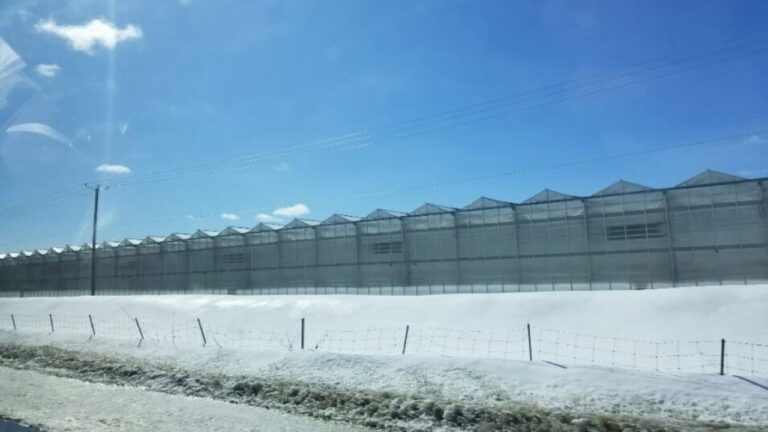
Exterior view of the Hexo Venlo glasshouse row spanning over 1 million square feet.

Hexo Corp.

Gatineau, Quebec, Canada

Modern stainless steel automated cannabis pre-roll processing machine in a dedicated production room.

Bostica

Lynn, MA, United States

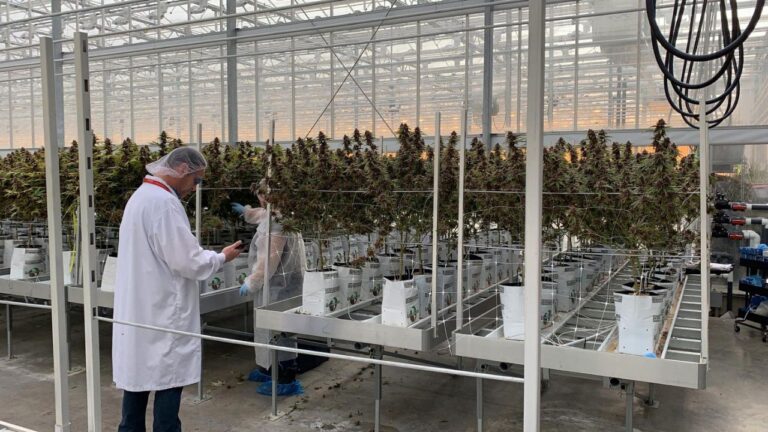
Catalyst BC consultants and LeafLine Cultivation Director inspecting vibrant plants in an organized vertical grow room.

Leafline Labs

Cottage Grove, MN, United States

Catalyst BC consultant recording air, environmental, and plant data measurements within a cultivation facility.

View All Projects

View all Catalyst BC Projects

Guides for Montana Buyers and CARD Licensees

Provenance. Figures checked against the statute, rule and agency text by Catalyst BC on October 8, 2026. Statutes were read in the Montana Code Annotated 2025 on the Montana Legislature’s site; rules were read in the Administrative Rules of Montana, Chapter 42.39, in the versions in effect on that date, including amendments effective August 22 and September 5 and 26, 2026. License location counts, the county count and the adult-use share of sales are our own counts and arithmetic from DOR’s lists and reports; budget figures are our own arithmetic. Company figures come from Catalyst BC’s own records. Where this page and the official text differ, the official text governs.

Montana statutes

Administrative Rules of Montana, Chapter 42.39

Department of Revenue pages and records

Federal law

Contact Us

Enough about us. We want to hear more about you, your project, and your vision! Get in touch with a real live person today. Don’t worry, we don’t have a long, confusing phone menu, and your email isn’t going to the abyss, we promise. At Catalyst, we provide the service and support we’d want to experience ourselves!

Scroll to Top