Michigan Cannabis Consultants for CRA Investors and Growers
Michigan cannabis consulting starts with an open door: the Cannabis Regulatory Agency (CRA) accepts license applications now and sets no license cap, but your city must allow the business. Investors choose a new license or acquisition; growers selling to retailers owe a 24% wholesale tax. Our records: 58+ licenses secured.
A Decade of Harvesting Success - Trusted by Cannabis Operators Worldwide
Michigan Tax and Hemp Deadlines
Updated: 10/8/2026. Michigan licenses medical marijuana facilities under the Medical Marihuana Facilities Licensing Act (MMFLA), in effect since December 20, 2016, and adult-use establishments under the Michigan Regulation and Taxation of Marihuana Act (MRTMA), which voters approved on November 6, 2018 and which took effect December 6, 2018 (MRTMA). The Cannabis Regulatory Agency administers both programs under one compiled body of administrative rules, R 420.1 to R 420.1004; the latest amendment in the agency’s posted text took effect March 7, 2022.
Since January 1, 2026, a 24% tax administered by the Michigan Department of Treasury has applied to certain wholesale transfers of adult-use marijuana. For 2026, businesses make good-faith quarterly payments, the third due October 20, and Treasury waives penalties and interest for the first three quarters if a business pays at least 75% of each quarter’s tax and files every 2026 return with full payment by January 20, 2027 (Treasury, March 17, 2026). From 2027, returns and full payment are due each quarter. Hemp processor-handler licenses run from December 1 to November 30, so a renewal must be postmarked by November 30.
Meet Catalyst BC's Founders
-
Leif Olsen
Chief Executive Officer
-
Michael Williamson
Chief Operating Officer
-
Ian Miller
Executive Chair
Our partners bring multi-faceted expertise across business strategy, licensing, facility development, finance, and commercial operations. That breadth is complemented by subject matter experts across the wider Catalyst BC team, allowing us to bring the right combination of experience to each client and project. The result is bespoke, collaborative support shaped around your business, priorities, and goals - with the right expertise brought to the table when it matters most.
What a Michigan Cannabis Consultant Adds Beside the CRA
The CRA licenses, inspects and disciplines businesses and tracks their inventory in Metrc, the state’s seed-to-sale tracking system; it does not pick a municipality, model a margin or design a grow room. A Michigan cannabis consultant works on the owner’s side: city and site screening, prequalification and license packets, acquisition diligence, facility design and the operating fixes that protect a license at renewal.
Investing in Michigan Cannabis: A New License or an Existing Licensee
Michigan sets no state cap on licenses: the MRTMA bars the CRA from adopting a rule that limits the number of any type of state license (MCL 333.27958(3)(a)). Any applicant may apply for any adult-use license type, and adult-use establishments have no capitalization requirement. Medical (MMFLA) applicants must show $150,000 to $500,000 in capitalization, depending on the license, with at least 25% in liquid assets. A license itself is not transferable: if a new entity is to run a licensed business, it files an asset purchase amendment (CRA licensing FAQ).
Federal status now splits Michigan’s two markets. A federal rule effective April 28, 2026 places marijuana subject to a state medical marijuana license in Schedule III and says holders of state medical marijuana licenses are no longer subject to Section 280E, the federal tax rule that bars business deductions for Schedule I and II trafficking, while adding that the rule is not a tax determination (91 FR 22714). The rule’s registrations do not authorize non-medical activity, so in our reading adult-use sales gain no such relief, and adult-use is nearly the whole market: $258.8 million in August 2026, against about $296,000 in medical sales (CRA monthly report, August 2026).
Our work for Michigan investors: diligence on a target licensee, its municipality, ownership and Metrc record through cannabis business strategy; a Michigan cannabis business plan with CRA fees, the wholesale tax and current prices through cannabis financial planning; prequalification and license packets through cannabis license application support; and build-out to the prelicensure inspection through cannabis startup support.
Already Licensed by the CRA: Treasury’s $630.81 Flower Price and the 24% Tax
Treasury’s average wholesale price for flower is $630.81 a pound for October through December 2026, derived from CRA retail sales data at an assumed 50% retail markup (Treasury price list, fourth quarter 2026). The 24% tax falls on the first sale or transfer of adult-use marijuana from a licensed establishment to an adult-use retailer, a medical provisioning center’s transfer to an adult-use retailer, and product a seed-to-sale microbusiness packages for its own retail sale. For affiliated businesses and seed-to-sale microbusinesses, Treasury’s average wholesale price replaces the invoice price (Revenue Administrative Bulletin 2026-3). The tax on affiliated flower is therefore $151.39 a pound this quarter (our arithmetic), whatever price the affiliates charge each other.
Testing decides what you can sell. A harvest batch may weigh no more than 50 pounds, product that fails a safety test must pass two consecutive tests on new samples before it can be sold, and product that fails for Aspergillus may be remediated only after it passes mycotoxin testing and the CRA approves a remediation request. Adult-use product passes total yeast and mold below 100,000 colony-forming units per gram; the medical limit is 10,000, and adult-use product at or under it may move without a CRA request to the owner’s equivalent medical license, such as a retailer’s provisioning center (CRA bulletin, July 16, 2026).
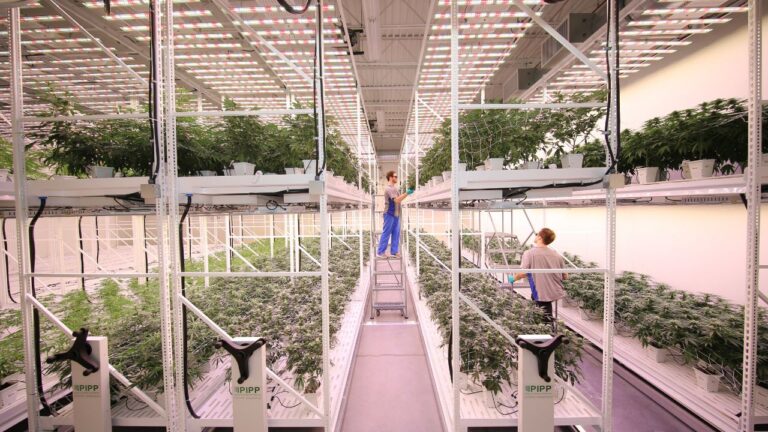
For Michigan rooms we offer Michigan cannabis facility design with HVACD (heating, ventilation, air conditioning and dehumidification) sized for clean yeast and mold counts, controlled environment agriculture targets by room, cannabis vertical farming to add yield inside an existing building, operational optimization of harvest size, labor and Metrc records and, when cost per pound outruns price, a cannabis turnaround plan. Our Chief Operating Officer and co-founder Michael Williamson has 25,000+ hours in cultivation and dispensary operations (company-reported) and co-founded Greenhaus Industries, which patented stackable trays for growing on multiple tiers.
Our Michigan record and team: our records list short Michigan engagements in 2020, and Catalyst BC has no current Michigan client. Leif Olsen, our Chief Executive Officer and a co-founder, leads our licensing work, and Ian Miller, our Executive Chair and a co-founder, raised $22 million in private equity (company-reported) for a greenfield cultivation and processing operation. We have no Michigan office; we work on-site and remotely, and the same team runs Catalyst BC’s national cannabis consulting practice.
A word against our own interest: the CRA publishes a licensing guidance document that walks applicants through each step and links its checklists (CRA guidance document), and a well-organized applicant can file without a consultant. To talk through a Michigan file, contact us or call (USA) 303-305-3787.

Investing in Michigan cannabis
- Cannabis Business Strategy ConsultingDiligence on a target licensee
- Cannabis Financial Planning & ModelingFees, wholesale tax, price per pound
- Cannabis Licensing & Application SupportPrequalification and license packets
- Cannabis Startup SupportBuild-out to prelicensure inspection
Already licensed in Michigan
- Cannabis Facility Design & HVAC / HVACD EngineeringDehumidification for clean counts
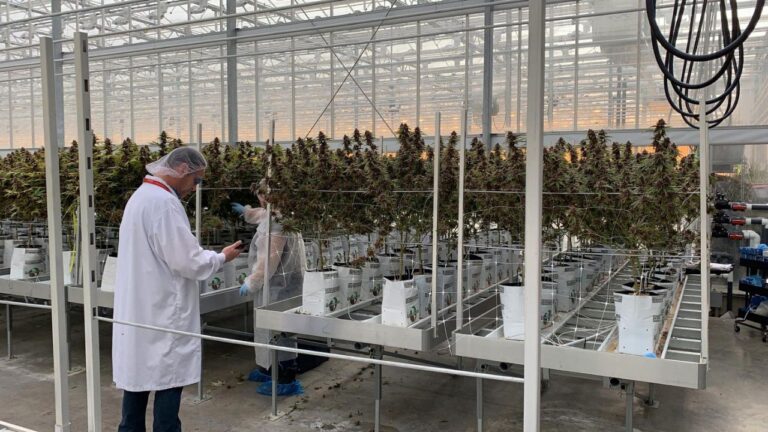
- Cannabis Controlled Environment Agriculture (CEA)Room targets set to test limits
- Cannabis Vertical Farming ConsultingMore yield in the same building
- Cannabis Operational OptimizationHarvests, labor and Metrc records
- Cannabis Business Turnaround & Operational RecoveryCost per pound back under price
Compliant Harvests
Square Feet of Cultivation, Production, and Retail Facilities Designed
Licenses Secured
Applying in Michigan Now: Prequalify, Build, Then Pass Inspection
You can apply now: the CRA accepts adult-use and medical license applications, online or on paper, in two steps (CRA adult-use page). Step 1, prequalification, starts a background investigation of the applicant and carries a $3,000 nonrefundable application fee; prequalification status lasts two years, though the CRA may withdraw a prequalification filing left pending for more than a year (Marihuana Rules, R 420.3). Step 2 is the license for a specific site. For adult-use, the CRA must approve or deny within 90 days of a complete application, and the applicant must have a physical structure that passes the prelicensure inspection within 60 days of submitting a complete application, so the CRA advises filing Step 2 only when the building is ready. A deficiency notice must be answered within five days.

The municipality decides first. Under the MRTMA a municipality may prohibit or limit adult-use establishments, and where its limit leaves more qualified applicants than licenses, it chooses among them by a competitive process (MCL 333.27959); under the MMFLA the CRA cannot issue a medical license unless the municipality has adopted an ordinance authorizing that type of facility (MCL 333.27205). Anyone preparing a Michigan cannabis license application should secure local approval and a lease contingency before paying for a build-out.
CRA filings open as of October 8, 2026
| Filing | Status | Detail |
|---|---|---|
| Prequalification (Step 1) | Open | $3,000 nonrefundable; status valid two years |
| Adult-use establishment license (Step 2) | Open | Site must pass the prelicensure inspection within 60 days |
| Medical facility license | Open | Municipal ordinance must authorize the facility type |
| Excess marijuana grower license | Open to qualifying growers | Five stacked adult-use Class C licenses plus two or more medical Class C licenses |
| Social equity program | Open | Fee reductions for qualifying individuals |
| Hemp processor-handler license | Open | Initial application at any time; $1,350 |
R 420.3, R 420.4(14), R 420.7 and R 420.23; MCL 333.27205; MCL 286.847 and 286.856; CRA monthly report, August 2026. Every source is listed at the bottom of this page.
CRA application volumes and processing days, August 2026
| Measure | Adult-use | Medical |
|---|---|---|
| Initial applications received | 52 | 4 |
| Initial applications issued or approved | 69 | 8 |
| Average Step 2 processing, initial applications | 46.70 days | 20.00 days |
| Average processing, prequalification | 29.69 days | 60.50 days |
CRA monthly report, August 1 to August 31, 2026. Both columns include prequalifications; a month’s approvals can include applications received earlier.
What a Step 2 location plan and file must include
| Item | Rule |
|---|---|
| Diagram | Size, entrances and exits, limited and restricted access areas, and any separate businesses at the site |
| Floor plan | Rooms, storage capacity, fire walls, and hazardous material locations and quantities |
| Building | Construction details, fire-rated walls, building type and zoning classification |
| Security plan | A plan showing the site meets the security rules |
| Occupancy | A certificate of use and occupancy and, if applicable, a fire safety inspection |
R 420.8(2) and R 420.11a(5).
Investors buying an existing licensee should jump to ownership changes.
CRA License Classes: Plant Counts, Stacking and the Excess Grower
Adult-use growers are licensed by plant count: Class A for up to 100 plants, Class B for 500 and Class C for 2,000, and the rules count only mature plants (R 420.102). Medical growers count every plant with observable root formation or in growth material, at 500, 1,000 or 1,500 per Class A, B or C license (MCL 333.27501). A grower may stack Class C licenses at one location, paying a separate fee or assessment for each, but no person may hold an ownership interest in more than five adult-use growers or more than one microbusiness. A licensee holding five stacked adult-use Class C licenses and at least two medical Class C licenses may add an excess marijuana grower license, in 2,000-plant increments up to the plants its medical Class C licenses allow.
A microbusiness grows up to 150 plants and sells only marijuana it grows and processes on its premises, while a Class A microbusiness grows up to 300 plants and may buy concentrate and infused products from a processor. Processors, retailers, secure transporters and safety compliance facilities complete the main adult-use list, alongside designated consumption establishment, event and educational research licenses; our Michigan consumption lounge guide covers the consumption licenses.
Adult-use licenses and what each allows
| License | What it allows | Plant limit |
|---|---|---|
| Class A, B or C grower | Grow and sell to processors and retailers | 100, 500 or 2,000 mature plants per license |
| Excess marijuana grower | Added plants for holders of five stacked Class C licenses | 2,000-plant increments, up to the medical Class C plant total |
| Microbusiness | Grow, process and sell its own marijuana to adults 21 and older | 150 mature plants |
| Class A microbusiness | Grow, package and sell; buy concentrate and infused products from processors | 300 mature plants |
| Processor | Buy from and sell to licensed establishments | None |
| Retailer | Sell to adults 21 and older and to licensed establishments | None |
| Secure transporter | Store and transport marijuana and money between establishments | None |
| Safety compliance facility | Test marijuana | None |
MCL 333.27959; R 420.102 to R 420.106 and R 420.23.
Medical licenses, plant counts and capitalization
| License | Plant limit | Capitalization required |
|---|---|---|
| Grower Class A | 500 plants | $150,000 |
| Grower Class B | 1,000 plants | $300,000 |
| Grower Class C | 1,500 plants | $500,000 |
| Processor | None | $300,000 |
| Provisioning center | None | $300,000 |
| Secure transporter | None | $200,000 |
| Safety compliance facility | None | $200,000 |
MCL 333.27501; R 420.11(2).
Each establishment and facility license runs one year. Adult-use licensees can renew up to 90 days before expiration, the CRA sends reminders from 120 days out, and there is no late renewal: a licensee that misses the expiration date must start the licensing process over (CRA renewal page). A medical licensee may renew within 60 days after expiration and keep operating if it files in that window. Adult-use licensees other than educational research licensees also file annual financial statements reviewed by a certified public accountant licensed in Michigan.
CRA Fees, Medical Assessments and Michigan’s Three Marijuana Taxes
A new applicant pays the $3,000 nonrefundable application fee with prequalification, plus any investigation costs above it. Adult-use licenses then carry an initial licensure fee, due within 10 days of approval or 90 days of a complete application, whichever comes first, and the same amount at each annual renewal (CRA fee FAQ). The rules let the CRA raise MRTMA fees by 10% at the start of a state fiscal year; the fee table the CRA publishes today matches the rule. Medical growers, processors, provisioning centers and secure transporters pay an annual regulatory assessment instead, unchanged for the fiscal year that began October 1, 2026 (CRA bulletin, July 6, 2026), and a municipality may charge an annual fee of up to $5,000 (MCL 333.27956).
Adult-use application, licensure and renewal fees
| License | Initial licensure and annual renewal fee |
|---|---|
| Application, with prequalification | $3,000, nonrefundable |
| Class A grower | $1,200 |
| Class B grower | $6,000 |
| Class C grower | $24,000 |
| Excess marijuana grower | $24,000 for each 2,000 plants |
| Microbusiness | $8,300 |
| Class A microbusiness | $18,600 |
| Processor | $24,000 |
| Retailer | $15,000 |
| Secure transporter or safety compliance facility | $15,000 |
| Designated consumption establishment or event organizer | $1,000 |
R 420.7 and Table 1; R 420.23(8); CRA fee FAQ.
Medical regulatory assessments for fiscal year 2027
| License | Assessment, initial and renewal |
|---|---|
| Grower Class A | $2,500 |
| Grower Class B | $4,000 |
| Grower Class C | $15,000 |
| Processor | $5,500 |
| Provisioning center | $3,813 |
| Secure transporter | $3,813 |
| Safety compliance facility | No fee |
CRA advisory bulletin, July 6, 2026 (October 1, 2026 to September 30, 2027).
Taxes on Michigan marijuana
| Tax | Rate | Applies to |
|---|---|---|
| Wholesale marijuana tax | 24% of the wholesale price | First sale or transfer of adult-use marijuana to an adult-use retailer, plus a provisioning center’s transfer to one, or a seed-to-sale business packaging its own product for retail; paid by the seller, transferor or packager |
| Adult-use excise tax | 10% of the sales price | Sales to anyone other than a licensed or tribal marijuana business |
| Sales tax | 6% | Retail sales, adult-use and medical |
| Average wholesale price, flower | $630.81 a pound | Affiliated and seed-to-sale transfers, October to December 2026 |
Treasury Revenue Administrative Bulletin 2026-3 and average wholesale price list; MCL 333.27963; CRA licensing FAQ.
Budget accordingly (our arithmetic from R 420.7): a new retailer pays $18,000 to the state in its first year, the $3,000 application plus the $15,000 licensure fee, and up to $5,000 more to its municipality; a grower stacking five Class C licenses pays $123,000, one application plus five $24,000 licensure fees, for up to 10,000 mature plants. A medical Grower Class C pays $15,000 a year for 1,500 plants, against $24,000 for 2,000 adult-use plants.
Opening a Michigan Marijuana Retailer, Step by Step
These steps follow the MRTMA and R 420.3 to R 420.11a for an adult-use retailer.
- Confirm the municipality: it must not prohibit marijuana establishments, it may cap their number or require a local license, and where it caps them it picks among competing applicants.
- Prequalify with the CRA: Step 1 disclosures, background checks and the $3,000 application fee.
- Secure a site outside any area zoned exclusively for residential use and at least 1,000 feet from a K-12 school unless the municipality sets a shorter distance, and prepare the location plan.
- Build to the plan, obtain a certificate of use and occupancy and any required fire safety inspection, and file Step 2 when the building can pass the prelicensure inspection within 60 days.
- Pay the $15,000 licensure fee by the earlier of 10 days after approval or 90 days after a complete application, file proof of at least $100,000 in financial responsibility for product liability, record every sale in Metrc and renew each year.
In our view, Michigan openings stall on municipal approvals and leases more often than on CRA paperwork, so our cannabis licensing and application team checks the city first.
Who May Own a Michigan Licensee, and How Control Changes Hands
The CRA treats managers and anyone holding more than a 10% direct or indirect interest as part of the applicant, and every person with a 2.5% or greater interest must be disclosed (R 420.1 and R 420.4). No owner may hold interests in both a safety compliance facility or secure transporter and a grower, processor, retailer or microbusiness, and a microbusiness owner may not also own a grower, processor, retailer, safety compliance facility or secure transporter. A prior conviction solely for a marijuana offense does not disqualify an adult-use applicant unless it involved distribution to a minor, but a pattern of convictions for dishonesty, theft or fraud may.
Control changes by amendment, not by transferring the license. A change in owners, officers, members or managers, or any attempted sale of an interest in a license, must be reported before it is made, and a material change needs CRA approval first. The CRA processes one ownership change at a time, an entity licensed under both acts must have matching ownership, and there is no amendment fee, although the CRA may bill investigation costs above the original application fee. A license is a revocable privilege, not property, and no one may pledge or borrow against it.
Social equity applicants get reduced fees: 25% for five cumulative years of residency in a listed community or for a marijuana misdemeanor, 40% for a marijuana felony and 10% for two years as a registered caregiver within the last five, applied to all adult-use licensing fees inside a listed community and for two years after licensure outside one (CRA social equity criteria).
Correction to published guidance (October 8, 2026): a consultancy’s Michigan licensing page, updated October 24, 2025 according to its page metadata, quotes application fees of $4,000 to $8,000 and annual license fees of $10,000 to $57,000. The CRA’s application fee is $3,000, adult-use licensure fees run from $1,000 to $24,000 per license or per 2,000 excess-grower plants, and the fiscal 2027 medical assessments run from no fee to $15,000.
Where a Michigan Marijuana Business Can Locate: City Rules, Zoning and Shared Sites
Location starts with the municipality, which may also regulate the time, place and manner of operation. It may not restrict the transport of marijuana through its borders, so a licensed retailer’s delivery may pass through a municipality that has opted out. Nor may it bar a grower, processor and retailer from sharing one facility or a site with a medical facility. Adult-use and medical growers must operate in an area zoned for industrial or agricultural use or in an area that otherwise meets each act’s siting requirements; microbusinesses are exempt from that zoning requirement.
Licenses can share a parcel. Separately licensed businesses at one location need distinct areas, separate inventory, records and point of sale, and a sales location’s entrance and inventory kept apart from the others. Equivalent licenses under common ownership, such as an adult-use retailer and a medical provisioning center, may share one space with CRA approval, without separate entrances or point-of-sale areas, if they keep medical and adult-use inventory and displays separate. Before you sign a lease, confirm zoning, the school buffer and the municipality’s license count; our cannabis facility design work starts with that screen.
CRA Testing, Metrc and Inspection Rules, and Michigan Hemp Processing
A licensed laboratory collects every sample itself, at least 0.5% of the harvest batch by weight; results enter Metrc within three business days of test completion, and the product stays quarantined until passing results are entered. Required tests cover potency, foreign matter, microbial screening including total yeast and mold, chemical residues, heavy metals, residual solvents for infused products and water activity, plus mycotoxins and other substances the CRA lists when it requests them.
The CRA may enter during operating hours without a warrant or notice, place an administrative hold on product during an investigation and audit records. The CRA’s FAQ lists Metrc at $0.45 per plant tag, $0.25 per package tag and a $40 monthly support fee. Our Michigan cannabis compliance consulting review checks Metrc records, the sampling log and the tax file against the rules before an inspector does.
Hemp Processor-Handler Licenses and the December 11, 2026 Federal Line
The CRA licenses hemp processor-handlers, and anyone who processes, handles, brokers or markets industrial hemp in Michigan needs that license unless it is a medical (MMFLA) processor, a testing facility or a college or university in the state (MCL 286.847). The application fee is $1,350, a renewal postmarked after November 30 owes a $250 late fee, and industrial hemp has a THC concentration of 0.3% or less on a dry-weight basis.
Under Public Law 119-37, enacted November 12, 2025, the federal hemp definition will exclude products with cannabinoids the plant cannot naturally produce from November 12, 2026 (P.L. 119-37, Section 781), and final products with more than 0.4 milligrams of THC and similar cannabinoids combined per container when a temporary delay under Public Law 119-103 ends on December 11, 2026 (P.L. 119-103, Section 2019). From then the definition also counts THCA toward the 0.3% THC limit and excludes intermediate products above 0.3% combined THC and similar cannabinoids, and products with cannabinoids synthesized outside the plant. In our view, a hemp processor whose products will fall outside the new definition should cost out a CRA marijuana processor license before December 11.
Two Ways to Start in Michigan: Licensee Diligence or a Cost-per-Pound Review
Investors get diligence before they sign: the target’s municipality and local license, its CRA disciplinary and amendment history, ownership caps across your other holdings, Metrc inventory and test history, and a Michigan cannabis business plan that carries the 24% wholesale tax, fees and current prices. Licensees get a cost-per-pound review: yield by room, yeast, mold and other failed tests, HVACD and dehumidification capacity, harvest batch planning and labor, priced against Treasury’s average wholesale price. Send your license numbers and your deal or production figures, and we will tell you plainly if another firm suits you better.
Michigan Licensing, Tax and Testing Questions From Investors and Growers
Can I apply for a Michigan marijuana license now?
Yes. The CRA accepts adult-use and medical applications in two steps, prequalification and a license for a specific site, and state rules set no cap on license numbers. Your municipality must allow the business, and for adult-use the site must pass a prelicensure inspection within 60 days of a complete application.
How much does a Michigan marijuana license cost?
The application fee is $3,000 with prequalification. Adult-use licensure fees, charged again at each annual renewal, are $1,200 for a Class A grower, $15,000 for a retailer and $24,000 for a Class C grower or processor. Medical licenses pay fiscal 2027 assessments of up to $15,000, and a municipality may add up to $5,000 a year.
Can I buy a licensed Michigan marijuana business?
Yes, with CRA approval. Ownership changes are filed as amendments before they happen, one at a time, and owners of more than 10% are vetted as applicants. The license itself is not transferable, so if a new entity will run the business, it files an asset purchase amendment.
How many grow licenses can one owner hold in Michigan?
An owner may hold interests in up to five adult-use growers, or in one microbusiness, which cannot be combined with a grower, processor, retailer, testing or transport license. Five stacked Class C licenses allow up to 10,000 mature plants at one location, and holders that also have two medical Class C licenses may add excess grower plants in 2,000-plant increments.
What is Michigan’s 24% wholesale marijuana tax?
Since January 1, 2026, a 24% tax administered by Treasury has applied to the wholesale price of the first sale or transfer of adult-use marijuana from a licensed establishment to an adult-use retailer, a medical provisioning center’s transfer to an adult-use retailer, and product a seed-to-sale business packages for its own retail sale, on top of the 10% excise tax and 6% sales tax at retail. Affiliated businesses and seed-to-sale microbusinesses use Treasury’s quarterly average wholesale price, $630.81 a pound for flower from October to December 2026.
What yeast and mold limit applies to Michigan marijuana?
Adult-use product passes total yeast and mold below 100,000 colony-forming units per gram; the medical limit is 10,000. Product that fails a safety test must pass two consecutive tests on new samples before sale, and Aspergillus failures may be remediated only after passing mycotoxin testing and with CRA approval.
Does Schedule III end Section 280E for Michigan licensees?
In our reading, only for marijuana under a state medical license. The federal rule effective April 28, 2026 moved marijuana subject to a state medical marijuana license to Schedule III and says holders of those licenses are no longer subject to Section 280E, but it is not a tax determination and its registrations do not authorize non-medical activity, so ask a tax adviser before changing a return.
Does a Michigan hemp business need a CRA license?
Yes, a processor-handler license if it processes, handles, brokers or markets industrial hemp, unless it is a medical processor, a testing facility or a college or university in the state. The application fee is $1,350, and licenses expire each November 30.
Grow and Facility Projects That Shape Our Advice to Michigan Licensees
These projects show the cultivation, extraction and facility work we offer Michigan licensees; each tile opens its full write-up, and all of them are on our projects page.

Hexo Corp.
Gatineau, Quebec, Canada

Bostica
Lynn, MA, United States

Leafline Labs
Cottage Grove, MN, United States

View All Projects
View all Catalyst BC Projects
Reading for Michigan Investors and CRA-Licensed Growers

How Much Does It Cost to Open a Cannabis Dispensary in 2026
The allure of jumping into the legalized cannabis industry often paints a picture of quick riches and burgeoning demand, yet the reality of establishing a

Cannabis Startup Costs: From Licensing to Profitability
Starting a legal cannabis business isn’t just about getting a license—it’s about building a profitable, compliant, and sustainable operation in one of the world’s most

Demystifying HVACD Systems for Cannabis Grow Facilities
Cannabis grow rooms require precisely controlled environments, making Heating, Ventilation, Air Conditioning, and Dehumidification (HVACD) systems essential for success. As plants progress through their growth
Michigan Sources: MRTMA, MMFLA, CRA Rules and Bulletins, Treasury Guidance and Federal Law
Provenance. Figures checked against the statute, rule and agency text by Catalyst BC on October 8, 2026. Michigan statutes were read on the Michigan Legislature’s site; the Marihuana Rules were read in the text the CRA posts, latest amendment effective March 7, 2022; CRA and Treasury PDFs and reports were read by text extraction. License counts, application volumes and sales come from the CRA’s August 2026 monthly report; budget and tax figures marked as our arithmetic are our own. Company figures come from Catalyst BC’s own records. Where this page and the official text differ, the official text governs.
Michigan statutes
- Michigan Regulation and Taxation of Marihuana Act, 2018 IL 1
- MCL 333.27956, municipal ordinances and fees
- MCL 333.27958, rules and limits on rules
- MCL 333.27959, state licenses, school buffer and ownership limits
- MCL 333.27963, 10% excise tax
- Medical Marihuana Facilities Licensing Act, 2016 PA 281
- MCL 333.27205, municipal ordinance requirement
- MCL 333.27501, grower license classes
- MCL 333.27603, regulatory assessment
- Industrial Hemp Research and Development Act, 2014 PA 547
- MCL 286.847, processor-handler license
Cannabis Regulatory Agency rules, pages and bulletins
- Marihuana Rules (CRA compilation), R 420.1 to R 420.1004
- CRA adult-use establishments page
- CRA medical facilities page
- CRA adult-use license renewal page
- CRA FAQ, adult-use application, licensure and renewal fees
- CRA FAQ, license transfers and ownership amendments
- CRA adult-use licensing guidance document
- CRA advisory bulletin, MMFLA regulatory assessments for fiscal year 2027 (July 6, 2026)
- CRA advisory bulletin, transfer of marijuana product between equivalent licenses (July 16, 2026)
- CRA social equity program qualifying criteria
- CRA industrial hemp processor-handler license fees
- CRA monthly report, August 1 to August 31, 2026
Michigan Department of Treasury
- Revenue Administrative Bulletin 2026-3, wholesale marijuana tax
- Average wholesale price list, October 1 to December 31, 2026
- Treasury guidance release, March 17, 2026
Federal law
Contact Us
Enough about us. We want to hear more about you, your project, and your vision! Get in touch with a real live person today. Don’t worry, we don’t have a long, confusing phone menu, and your email isn’t going to the abyss, we promise. At Catalyst, we provide the service and support we’d want to experience ourselves!