Maryland Cannabis Consultants: Buying In and Growing Under MCA Caps

Maryland cannabis consulting for a capped market: the Maryland Cannabis Administration (MCA) has no license round open, so newcomers buy into licensed businesses. We work with investors new to cannabis and licensed operators chasing yield; our records list 58+ licenses nationwide and three Maryland clients from 2015 to present.

A Decade of Harvesting Success - Trusted by Cannabis Operators Worldwide

Where MCA Rules Change Next

Jan 1, 2027Interim canopy-expansion limits end for pre-2023 growers
Jul 1, 2027Converted dispensaries stop delivering on their own
Jul 1, 2028Licenses converted in 2023 may change control

Updated: 10/4/2026. Maryland runs its medical and adult-use cannabis markets under one regulator, the Maryland Cannabis Administration (MCA), which applies Title 36 of the Alcoholic Beverages and Cannabis Article and COMAR 14.17, the agency’s regulations (MCA Laws, Regulations and Reports). Every license now authorizes a medical and adult-use business. MCA’s August 2026 data lists 27 licensed growers, 30 processors and 127 dispensaries, and $815.7 million in sales from January through August 2026 (MCA Data Dashboard download, August 2026).

The statute caps how many licenses can exist, and MCA says it has no date for its next licensing round (MCA Cannabis Policy FAQs), so the dates ahead are rule changes, not application deadlines. On January 1, 2027, the interim limits on canopy expansion by growers licensed before December 31, 2022 end. After June 30, 2027, dispensaries may no longer deliver medical cannabis on their own (Chapter 375 of 2026). A conditional licensee’s own deadline matters more: 24 months from issue, plus up to two six-month extensions available since September 14, 2026 (COMAR 14.17.05.05).

Meet Catalyst BC's Founders

  • Leif Olsen - Chief Executive Officer

    Leif Olsen

    Chief Executive Officer

  • Michael Williamson - Chief Operating Officer

    Michael Williamson

    Chief Operating Officer

  • Ian Miller - Executive Chair

    Ian Miller

    Executive Chair

Our partners bring multi-faceted expertise across business strategy, licensing, facility development, finance, and commercial operations. That breadth is complemented by subject matter experts across the wider Catalyst BC team, allowing us to bring the right combination of experience to each client and project. The result is bespoke, collaborative support shaped around your business, priorities, and goals - with the right expertise brought to the table when it matters most.

Learn more about our team

Hiring a Maryland Cannabis Consultant: What We Do, and What MCA Can’t

MCA lists what it cannot do for applicants: expedite applications outside its process, approve incomplete submissions, provide legal or business consulting, waive statutory or regulatory requirements, or approve ownership or financing structures it has not reviewed (MCA Pathway to Licensure). A Maryland cannabis consultant prepares the structure, financing terms and complete filings MCA can approve.

New to Cannabis, With Capital for a Maryland Stake

No one can apply for a new Maryland license today, so the way in is a stake in, or purchase of, a business that already holds one. Three rules narrow that. A conditional license, the 24-month starter license MCA issues before a business is approved to operate, cannot be sold or transferred (MCA Guidance on Transfers During Conditional Licensure). After final licensure, no license may change ownership or control for at least five years, outside listed exceptions such as death, bankruptcy or receivership (§36-503). For licenses converted from medical on or before July 1, 2023, MCA applies that lock until July 1, 2028 (MCA Transfer of Ownership guidance).

Most social equity licenses are not yet open for business: MCA’s August 2026 data download lists 197 social equity licenses from the 2024 lotteries and earlier rounds and marks only 23 as operational, so most stakes on offer carry buildout risk.

Ownership has firm limits. No one may own or control more than one grower, one processor and four dispensaries, counting standard and micro licenses together, but a passive investor, one holding less than 5% with no control, is exempt from that limit (§36-401). Any transfer that leaves a new owner at 5% or more needs MCA’s approval (COMAR 14.17.06.04).

The social equity share is where the sources disagree. A 2026 law lowered the statutory threshold from 65% to 55% on July 1, 2026 (Chapter 416 of 2026), and MCA’s 2026 legislative briefing says conditional licensees may now transfer up to 45% to owners who are not social equity applicants (MCA 2026 Legislative Updates briefing). COMAR 14.17.01.01 and MCA’s transfer guidance still say 65%, leaving outsiders 35%, and the guidance makes the named social equity owners keep at least 51%. Get MCA’s answer in writing before you price a stake.

Getting paid has its own rules. Owners must share profits in proportion to their stakes, but MCA allows a priority return: in its example, an investor who supplied $750,000 of $1 million may take up to 75% of profits until repaid (MCA Financing Options Guidance). A license, including a conditional one, can also secure a loan from a creditor registered with MCA (COMAR 14.17.17.01).

Our work for investors: acquisition diligence through our cannabis business strategy work; the capital plan, priority-return model and pro forma through cannabis financial planning; ownership and transfer filings through our cannabis license application support; and site, zoning and opening work through cannabis startup support.

Licensed in Maryland: Price per Gram, Canopy Caps and Failed Tests

For operating licensees the pressure is price: MCA’s median price per gram fell from $9.29 in December 2023 to $7.70 in August 2026 (MCA Data Dashboard download), so falling prices must be offset by more grams per square foot and lower cost per gram.

Canopy, the area used to grow flowering plants, is capped by license: more than 10,000 and up to 300,000 square feet of indoor canopy for a standard grower, and up to 10,000 for a micro grower. COMAR counts every layer of flowering plants on a rack or shelf (COMAR 14.17.01.01), and one square foot of indoor canopy equals four outdoors (COMAR 14.17.06.06). Vertical racks therefore fit more of your licensed canopy into the same building but cannot take you past the cap. Until January 1, 2027, an operating grower licensed before December 31, 2022 may expand only within interim limits: up to 25,000 square feet or by 20%, whichever is greater, for grows under 25,000 square feet, and by 20% for larger grows (§36-402). Any expansion also needs MCA’s prior approval of the modification (COMAR 14.17.10.02).

Testing is the other margin line. Since September 14, 2026, a grower whose test results reach a failure rate set by MCA (the rule leaves the number to MCA) must find the root cause, decontaminate, and send MCA a report and a plan to prevent recurrence (COMAR 14.17.10.03). MCA’s guidance adds that a pathogen-positive result stops production until MCA clears it, and repeat positives within 60 days need an MCA-approved corrective plan (MCA Growers Guidance). In our experience, HVAC (heating, ventilation and air conditioning), dehumidification and airflow are the first defense against those failures.

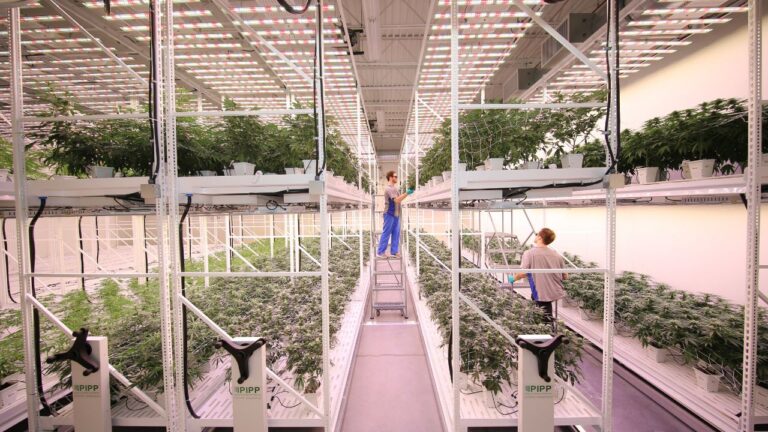
We work on cannabis facility design and HVACD (HVAC plus dehumidification) engineering, controlled environment agriculture targets for temperature, humidity and airflow, cannabis vertical farming layouts that fill licensed canopy, operational optimization and, where cost per gram climbs as prices fall, a cannabis turnaround diagnostic. Michael Williamson, our Chief Operating Officer and a former licensed operator, has, by our records, designed and consulted on more than 7 million square feet of indoor, greenhouse and outdoor cultivation facilities.

Who does the Maryland work: Leif Olsen, our Chief Executive Officer and a co-founder, leads our licensing and application work, and our records credit him with helping a client obtain one of Maryland’s first fifteen cultivation and dispensary licenses. We have no Maryland office; we work with Maryland clients on-site and remotely, and the same team runs Catalyst BC’s national cannabis consulting practice.

A word against our own interest: MCA will not hand out an inspection checklist because, in its words, “the checklist is COMAR,” and COMAR is free to read (MCA inspection guidance). You do not need a consultant to read it. Outside help earns its fee on the ownership structure, the site and the build. To talk through a Maryland file, contact us or call (USA) 303-305-3787.

Investing in Maryland cannabis

Already licensed in Maryland

0 +
Years Regulated Cannabis Operations Experience
0 +

Compliant Harvests

0 M+

Square Feet of Cultivation, Production, and Retail Facilities Designed

0 +

Licenses Secured

When Maryland’s Second Cannabis License Round Could Open

Not yet. No one can apply today for a new grower, processor, dispensary, incubator space or on-site consumption license, and MCA says it has no date for the next round. When a round comes, MCA must issue a request for applications at least 60 days before a 30-day application window opens (§36-404).

Route Status (October 2, 2026) Who can use it
New standard or micro grower, processor or dispensary; incubator space; on-site consumption No round open; no date published Future applicants
First licensing round Closed; lotteries held March 14 and June 28, 2024 205 selected social equity applicants (MCA Cannabis Business Licensing)
Registration of laboratory, transportation, disposal and security providers Open Register before serving licensees; valid 2 years (COMAR 14.17.09.02)
Conditional license extension Available since September 14, 2026 Up to two extensions of up to six months each
Transfer, management agreement, change of location, premises modification By request to MCA Existing licensees
Swipe to see the full table →

Statuses from MCA pages, COMAR 14.17 and MCA guidance read October 2, 2026; every source is listed at the bottom of this page.

Date What happens
October 1, every year Every grower reports its indoor and outdoor canopy to MCA (COMAR 14.17.06.06; COMAR 14.17.07.05 for micro growers)
July 1, every year Every licensee files its table of organization, ownership and control (COMAR 14.17.16.02)
January 1, 2027 Interim limits on canopy expansion by growers licensed before December 31, 2022 end (§36-402)
June 30, 2027 Last day converted dispensaries and registered delivery services may deliver medical cannabis on their own (§36-401(g)); after that, a standard dispensary delivers only through a micro dispensary partnership (MCA Dispensary Guidance)
July 1, 2028 Earliest date a license converted on or before July 1, 2023 may transfer a controlling interest, outside limited exceptions (MCA Transfer of Ownership guidance)
Swipe to see the full table →
Clock Rule
Renewal (every 5 years) MCA notice at least 90 calendar days before expiration; renewal filed at least 30 calendar days before (COMAR 14.17.06.02)
Corporate document review About 30 days; up to 60 days for incomplete or revised submissions (MCA Pathway to Licensure)
Management agreement review Allow 60 days (MCA Pathway to Licensure Webinar FAQ)
Pre-licensing inspection Usually scheduled about two weeks after the request; licensing decision expected within 30 days of passing (MCA inspection guidance)
Inventory discrepancy Investigate within 1 business day; report if unresolved after 30 business days (COMAR 14.17.10.08; COMAR 14.17.12.10)
Swipe to see the full table →

Any page that says Maryland applications are open today is wrong.

Standard, Micro, Incubator and On-Site Consumption Licenses in Maryland

MCA issues four kinds of license: standard, micro, incubator space and on-site consumption. In Maryland the license type fixes your scale, so pick the class that fits the business plan, not the entry fee.

License What it allows
Standard grower More than 10,000 and up to 300,000 sq ft of indoor canopy (1 sq ft indoors = 4 sq ft outdoors)
Micro grower Up to 10,000 sq ft of indoor canopy, or the outdoor equivalent
Standard processor Processing more than 2,000 pounds of cannabis a year
Micro processor Processing up to 2,000 pounds a year
Standard dispensary A store at a physical location; it may move only within the county where it was licensed
Micro dispensary A delivery service with no storefront and no more than 20 registered cannabis agents
Incubator space A premises run by a nonprofit where micro licensees operate
On-site consumption A lounge where cannabis may be consumed but not smoked indoors, only with an express local permit; its owners may not own a grower, processor or dispensary (§36-401(e)(3); §36-407)
Swipe to see the full table →

§36-401(c) and (e)(3), as amended by Chapter 375 of 2026; §§36-406 and 36-407; COMAR 14.17.06.03 for moving a dispensary.

License Total cap, converted licenses included Second-round cap
Standard grower 75 25
Standard processor 100 25
Standard dispensary 300 120
Micro grower 100 70
Micro processor 100 70
Micro dispensary 10 No figure in §36-404
Incubator space 10 10
On-site consumption 50 No figure in §36-404
Swipe to see the full table →

§36-401(d) and §36-404(f)–(g). Under the §36-404(g) lottery, micro and on-site consumption applications are limited to social equity applicants. MCA’s August 2026 license data lists no on-site consumption licensee.

A conditional licensee must give MCA a planned canopy calculation before its pre-licensing inspection (MCA Canopy Guidance); if a grower later reports more canopy than its license allows, MCA may cut its canopy by the percentage by which it went over (COMAR 14.17.06.06).

A micro dispensary delivers only to residences and medical facilities in its authorized service area, may keep inventory in up to three storage facilities, and may not carry more than $5,000 of product in a delivery vehicle (COMAR 14.17.12.03). MCA’s guidance also allows a micro dispensary with no inventory that delivers for standard dispensaries, between 8 a.m. and 11 p.m. (MCA Micro Dispensary Guidance).

Maryland Cannabis License Fees Under COMAR 14.17.21.02

The statute sets application fees and caps license fees: a standard initial license fee may not exceed $50,000, and a standard renewal fee may not exceed the lesser of 10% of annual gross revenue or $50,000 (§36-403). COMAR sets the actual amounts (COMAR 14.17.21.02). Each license fee covers a five-year term, and a social equity licensee’s license fee is cut by 50%.

License Application fee License fee (5-year term) Social equity licensee
Standard grower $5,000 $50,000 $25,000
Standard processor $5,000 $25,000 $12,500
Standard dispensary $5,000 $25,000 $12,500
Incubator space $5,000 $10,000 $5,000
On-site consumption $5,000 $10,000 $5,000
Micro grower, processor or dispensary $1,000 $10,000 $5,000
Swipe to see all fees →

COMAR 14.17.21.02A–B. The standard license fees apply at initial licensure and on renewal; the last column shows the 50% social equity reduction.

FeeAmount
Cannabis agent registration (every 2 years) / replacement card$25 / $50
Micro-to-standard conversionPro-rated by months left; COMAR states both $50,000 (grower) or $25,000 (others) per full term and a standard-minus-micro basis, so confirm with MCA; due within 18 months
Edible cannabis product permit application$1,000
Transfer of 5% or more: entity transferee / individual transferee$1,000 / $500 per person
Change of location$500
License reinstatement$2,000
Receivership application / management agreement$1,000 / $1,000
Swipe to see all fees →

COMAR 14.17.21.02C–H, licensee fees only; MCA may waive or reduce any fee.

LicenseBaseline capital
Micro dispensary$25,000
Micro processor$35,000
Micro grower$100,000
Standard dispensary$125,000
Standard processor$175,000
Standard grower$500,000
Swipe to see the full table →

MCA Guidance on Demonstrating Adequate Capitalization. These are the levels a conditional licensee must show access to, not a build budget.

Budget accordingly: the state fee is a small part of a Maryland budget. A standard grower pays $50,000 for five years but must show access to $500,000 of capital within six months of its conditional license (COMAR 14.17.05.05). Our cannabis startup costs breakdown covers the rest of the budget.

Maryland’s Pass/Fail Lottery and the MCA Pathway to Licensure

Maryland does not score applications against each other. MCA decides pass or fail on whether an application meets minimum qualifications in three documents: a detailed operational plan, a business plan showing a likelihood of success and appropriate employee working conditions, and a detailed diversity plan. In the first round every qualifying application went into a lottery, and the second round uses one too unless a disparity study triggers remedial measures (§36-404(d), (f) and (g)). You may file one application per license type and two per round, and MCA may not require you to own or possess property when you apply (§36-404).

How to open a dispensary in Maryland when a round opens

  1. Watch for MCA’s request for applications, issued at least 60 days before a 30-day window.
  2. File operational, business and diversity plans that pass the minimum qualifications; qualifying applications enter the lottery.
  3. If drawn, you are a selected applicant, not a licensee, and may not change ownership before MCA awards a conditional license.
  4. Work through MCA’s five-phase Pathway to Licensure, from corporate documents and location review to facility review and final licensure.
  5. Pass the pre-licensing inspection and receive MCA’s authorization to operate before receiving or selling any cannabis.

MCA’s Checklist for Final Licensure asks for zoning approval, all standard operating procedures, audited financials, five years of federal and state tax returns for the business and every 5% owner, and interviews of every 5% owner; allow 30 business days per item.

Among the common causes of delay MCA lists: incomplete ownership files, undisclosed financing, ownership changes during review, unapproved management agreements, unfinished buildout and local zoning problems. That is where our cannabis licensing and application team and startup support begin.

Maryland Social Equity, Genuine Ownership and Control

The statute defines a social equity applicant as one with at least 55% ownership and control held by individuals who lived in a disproportionately impacted area for at least 5 of the 10 years before applying, attended a public school in one for at least 5 years, or attended, for at least 2 years, a Maryland four-year college where at least 40% of students are Pell Grant eligible (§36-101). MCA may add other criteria.

Ownership must be genuine. An interest that is nominal, held without the benefits and risks of real ownership only to meet social equity or other licensing rules, is a misdemeanor punishable by a fine of up to $2,500, up to a year in prison or both, and MCA must deny or revoke the license (§36-1103).

Control is regulated as closely as equity: MCA’s definition of control includes the right to veto significant events, appoint or remove directors and officers, or sign contracts worth $10,000 or more in total. Board seats and veto rights in a term sheet can therefore amount to a transfer of control.

How Maryland treats the consultant you hire

MCA defines a management agreement to include consulting, advisory or marketing services related to a licensee’s operations; legal, financial and other services that do not hand over operations are excluded. Each one needs MCA approval before it takes effect and carries a $1,000 fee, and it may amount to a transfer of control if it pays more in a calendar year than the greatest of 25% of gross revenue, 50% of net profits or $250,000 (COMAR 14.17.06.05). Ask any adviser, including us, whether the scope hands over operations and how it is paid.

Maryland Dispensary Distances, County Zoning and Renewal Protests

A dispensary may not open within 500 feet of a pre-existing primary or secondary school, licensed child care center or registered family child care home, playground, recreation center, library, public park or place of worship, or within 1,000 feet of another dispensary (§36-410). Counties and municipalities may shorten those distances, stretch the dispensary gap to one-half mile, and add a buffer of up to 100 feet from residential zoning; converted dispensaries operating before July 1, 2023 are exempt.

Local governments may set reasonable zoning, but they may not unduly burden a licensee, charge fees out of line with similar businesses, or block deliveries from other jurisdictions (§36-405).

Standard dispensary licenses were awarded by county. A dispensary may move only within that county, pays the $500 change-of-location fee, and may not operate at the new site until MCA approves the change (COMAR 14.17.06.03).

At renewal, at least 10 residents, property owners or commercial tenants within 1,000 feet may file a sworn protest; tenants that hold or seek a license cannot. A protest filed at least 30 days before expiration forces a hearing unless MCA finds no reasonable ground. The hearing reviews the licensee’s previous four years and may not consider zoning (§36-411). Confirm the local ordinance and the 500- and 1,000-foot measurements before you sign a lease; our cannabis facility design work starts from that site review.

Maryland Cannabis Compliance Consulting: Inspections, Inventory and Tax

MCA’s inspection guidance describes five kinds of inspection: walk-throughs about once a month during buildout, a pre-licensing inspection usually attended by 6 to 12 investigators, at least one announced inspection a year, an unannounced review within the first 90 days of operation, and usually 2 to 5 unannounced inspections a year.

Dispensaries count inventory at least monthly and compare it with Metrc, the state’s seed-to-sale tracking system (COMAR 14.17.12.04). A discrepancy of more than 0.5% of total product weight or items must be investigated within one business day (COMAR 14.17.12.10), and MCA’s Dispensary Guidance applies that test to each Metrc product category.

A dispensary may not knowingly sell one person, in a single day, more than 1.5 ounces of usable cannabis, 12 grams of concentrate (vape devices count as concentrate) or edibles, capsules and tinctures above 750 milligrams of THC (COMAR 14.17.12.04).

Since July 1, 2026, every cannabis agent must complete a cannabis agent training program within 90 days of starting and at least once every two years; it replaces responsible vendor training (Chapter 375 of 2026).

Maryland’s 12% cannabis sales and use tax

Adult-use sales carry a 12% sales and use tax, up from 9% on July 1, 2025 (Tax-General §11-104); sales of medical cannabis are exempt (Tax-General §11-245). Counties, municipalities and special taxing districts may not impose their own tax on cannabis (§36-405).

Rules in progress

MCA’s September 16, 2026 informal draft would let MCA deny a renewal when a licensee owes taxes in any jurisdiction. It is only a proposal; a formal 30-day comment period follows publication in the Maryland Register.

Because MCA will not hand you a checklist, the gap assessment has to be built from COMAR itself. Our cannabis operational optimization work covers the first year after MCA authorizes operations.

Before You Wire Funds or Add Racks in Maryland

Investors get a stake review before they commit: how much MCA will let them own, whether the 35% or 45% outside-owner figure applies, how long the transfer lock runs and how a priority return can be structured. Licensed growers get a canopy and cost-per-gram review: canopy against the license cap, the likely causes of failed tests and a modification plan MCA can approve. Send your license type, county and capital or canopy figures; if we are not the right fit, we will say so.

Maryland Cannabis License and MCA Compliance Questions

No license round is open. MCA’s 2024 lotteries, open only to social equity applicants, selected 205 applicants, and its policy FAQ says it has no date for the next round. Open today: registration for laboratory, transportation, disposal and security providers, conditional-license extensions, and transfer and location requests from licensees.

Under COMAR 14.17.21.02, the application fee is $5,000 for a standard, incubator space or on-site consumption license and $1,000 for a micro license. License fees cover a five-year term: $50,000 for a standard grower, $25,000 for a standard processor or dispensary, and $10,000 for an incubator space, on-site consumption or any micro license. Social equity licensees pay 50% less on license fees.

Twenty-four months, the period COMAR has set since March 16, 2026. Since September 14, 2026, MCA may grant up to two six-month extensions: the first for active interest in a premises, such as a letter of intent signed by the licensee and the owner, and the second for legal control, such as a binding lease or title (COMAR 14.17.05.05). A licensee not operational when its time runs out may have its conditional license rescinded.

Under §36-101, as amended by Chapter 416 of 2026, an applicant with at least 55% ownership and control held by individuals who meet a residence, public-school or college test tied to disproportionately impacted areas or Pell Grant eligibility. COMAR 14.17.01.01 and MCA’s earlier guidance still say 65%, so confirm which figure MCA applies to your file.

Yes, within limits. A passive stake under 5% with no control needs no MCA approval; a transfer that leaves a new owner at 5% or more does. In a social equity conditional licensee, MCA’s 2026 briefing says up to 45% may go to outside owners, while COMAR and MCA’s earlier guidance still set the social equity share at 65%, leaving outsiders 35%. A license may not change ownership or control for at least five years after licensure, outside limited exceptions.

It can fit more of your licensed canopy into the same building, because COMAR counts every layer of flowering plants on a rack as canopy, but it never raises the cap: 300,000 square feet of indoor canopy for a standard grower and 10,000 for a micro grower. Any modification or renovation needs MCA’s prior approval.

Adult-use sales carry a 12% sales and use tax, up from 9% on July 1, 2025 (Tax-General §11-104). Sales of medical cannabis are exempt (§11-245). Counties, municipalities and special taxing districts may not impose their own tax on cannabis.

Both. Every Maryland cannabis license authorizes a medical and adult-use business, and the Maryland Cannabis Administration regulates both. Registered patients and caregivers keep separate access and buy tax-free.

Selected Catalyst BC Projects

The tiles below show our team’s cultivation and facility work in other markets; the full results sit in our case studies.

Exterior view of the Hexo Venlo glasshouse row spanning over 1 million square feet.

Hexo Corp.

Gatineau, Quebec, Canada

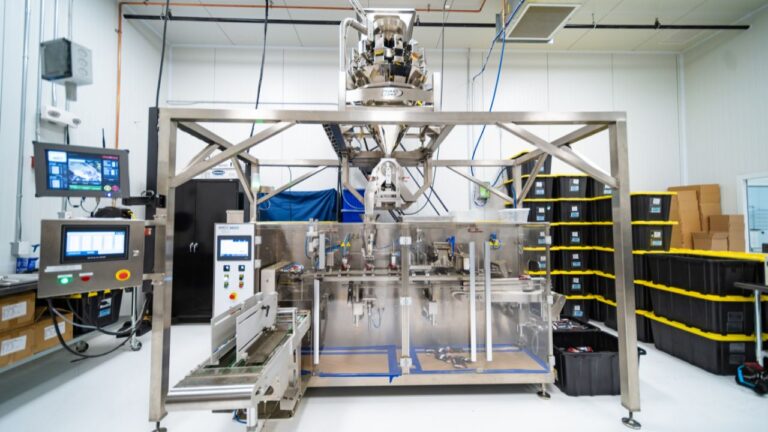
Modern stainless steel automated cannabis pre-roll processing machine in a dedicated production room.

Bostica

Lynn, MA, United States

Catalyst BC consultants and LeafLine Cultivation Director inspecting vibrant plants in an organized vertical grow room.

Leafline Labs

Cottage Grove, MN, United States

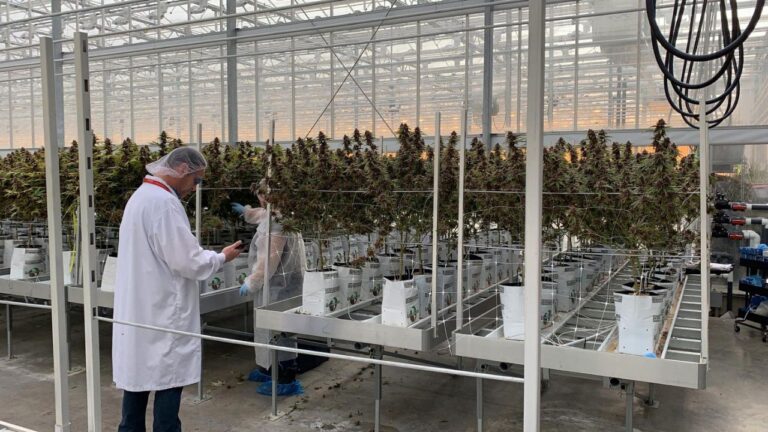
Catalyst BC consultant recording air, environmental, and plant data measurements within a cultivation facility.

View All Projects

View all Catalyst BC Projects

Catalyst BC Guides on Maryland Lounges and Cannabis Startup Costs

Provenance. Every regulatory figure on this page is drawn from Title 36 of the Alcoholic Beverages and Cannabis Article, Tax-General §§11-104 and 11-245, COMAR 14.17 and the Maryland Cannabis Administration’s pages, guidance and August 2026 data. Each statute section cited was read in the General Assembly’s current-text view, which includes Chapters 375 and 416 of 2026; its default codified view still shows text from before the 2026 amendments for §§36-101, 36-401, 36-404 and 36-407. Each COMAR regulation cited was checked against its amendment history and the Maryland Register through the October 2, 2026 issue; the September 14, 2026 amendments are reflected, and no later amendment has been published. Where COMAR or MCA guidance differs from the statute, the page says so and gives both. Items described as draft are proposed, not adopted. Company figures come from Catalyst BC’s own records. Sources were read September 28 to October 2, 2026. Where this page and the official text differ, the official text governs.


Maryland Cannabis Administration pages and data

MCA guidance and briefings

Rulemaking

Code of Maryland Regulations (COMAR 14.17)

Annotated Code of Maryland and 2026 session laws

Contact Us

Enough about us. We want to hear more about you, your project, and your vision! Get in touch with a real live person today. Don’t worry, we don’t have a long, confusing phone menu, and your email isn’t going to the abyss, we promise. At Catalyst, we provide the service and support we’d want to experience ourselves!

Scroll to Top