Maine Cannabis Consultants for OCP Licenses and Bigger Canopy

Maine cannabis consulting starts with a yes: the Office of Cannabis Policy (OCP) sets no statewide cap on adult use licenses and takes applications through its online portal now. We help investors enter and licensees grow canopy and margin; our records show 58+ licenses secured in other states.

A Decade of Harvesting Success - Trusted by Cannabis Operators Worldwide

Maine Outdoor-Only Caregiver Dates

Jan–Feb 2027Outdoor-only caregivers may keep immature plants
Jul 29, 2027Last day to switch to outdoor-only by change form
Jan 1, 2028January–February stop starts unless the law changes

Updated: 10/8/2026. Maine runs two cannabis programs, both regulated by the Office of Cannabis Policy, created in February 2019 within the Department of Administrative and Financial Services. The adult use program sits under Title 28-B, the Cannabis Legalization Act; OCP issued its first active licenses on September 8, 2020, and retail sales began October 9, 2020. The medical program sits under Title 22, chapter 558-C. OCP licenses cultivators, manufacturers, retail stores and testing facilities (OCP adult use page), and registers medical caregivers and dispensaries (OCP medical use page).

None of the dates here is an application deadline for adult use licenses. They come from a 2026 outdoor-cultivation law, effective July 29, 2026, that lets medical caregivers who grow only outdoors raise their limits up to five times. OCP will let those caregivers keep immature plants through February 2027; without a legislative fix, it will require them to stop all cultivation every January and February from January 1, 2028 (OCP caregiver guidance, August 27, 2026).

Meet Catalyst BC's Founders

  • Leif Olsen - Chief Executive Officer

    Leif Olsen

    Chief Executive Officer

  • Michael Williamson - Chief Operating Officer

    Michael Williamson

    Chief Operating Officer

  • Ian Miller - Executive Chair

    Ian Miller

    Executive Chair

Our partners bring multi-faceted expertise across business strategy, licensing, facility development, finance, and commercial operations. That breadth is complemented by subject matter experts across the wider Catalyst BC team, allowing us to bring the right combination of experience to each client and project. The result is bespoke, collaborative support shaped around your business, priorities, and goals - with the right expertise brought to the table when it matters most.

Learn more about our team

How a Maine Cannabis Consultant Shortens the OCP Path

OCP says plainly that it “cannot provide business or legal advice” (OCP legislation update, May 7, 2026). An application it finds incomplete restarts its 90-day review clock, and a town that opted in still decides each site. A Maine cannabis consultant’s work is the complete file, the ownership disclosures and the local approval plan.

Investing in Maine Cannabis: Who Can Own and How You Get In

If you are new to cannabis and bring capital, Maine is open to you. Maine’s adult use law no longer has a residency requirement, but a business applicant must be formed under Maine law, and every principal must be at least 21, submit to state and FBI record checks and have no disqualifying drug offense (28-B M.R.S. § 202 and § 204). Principals include a sole proprietor, corporate officers and directors (or shareholders if none are appointed), all general and limited partners, an LLC’s managers and anyone else given authority to direct operations. The application must name everyone with a direct or indirect financial interest in the license, and OCP’s instructions say those interests may include investors, lenders and royalty partners.

One limit shapes every deal. Nobody with a direct or indirect financial interest in a cultivation license may hold interests in more than 3 cultivation licenses, or in licenses whose combined canopy exceeds 30,000 square feet, apart from approved tier 4 increases (§ 205(2)). A second limit walls off testing: owners and investors in a testing facility or sample collector may not be caregivers or hold interests in a cultivation, manufacturing or store license or a medical dispensary, and other licensees may not invest in them.

There are two routes in today: apply for a new license, since Maine sets no statewide cap, or buy into an existing licensee (see ownership). A Maine cannabis business plan for a new license has to fit the one-year life of a conditional license.

In our experience, investors get paid through equity distributions, loans, royalties or a property lease, and OCP’s instructions require you to file each underlying document, from stock certificates to loan agreements, so check every holder against the cultivation limit (OCP application instructions).

Our work for Maine investors: diligence on a licensee and its ownership chain through cannabis business strategy; the capital plan and runway through cannabis financial planning; conditional license, transfer and relocation filings through Maine cannabis license application support; and town opt-in and site work through cannabis startup support.

Already Licensed in Maine: Canopy Tiers, Racks and the 85% Rule

Maine licenses grow space by plant canopy, the area where mature plants are grown: up to 500 square feet (or 30 mature plants) for tier 1, 2,000 for tier 2, 7,000 for tier 3 and 20,000 for tier 4 (§ 301). You can move up a tier at renewal only if you sold at least 85% of the cannabis you grew during the license term (§ 303). A tier 4 licensee may add 7,000 square feet no more than once every 2 years, again on the 85% test (§ 304).

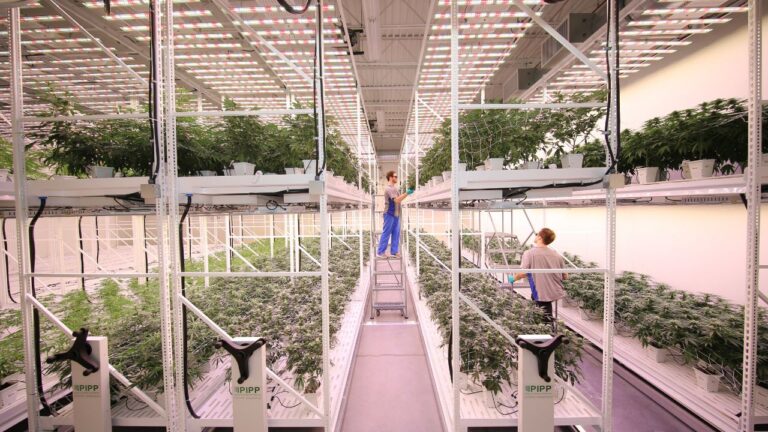
Racks do not escape your canopy limit. If you use a tiered or shelving system, the surface of every tier or shelf counts as canopy, and walkways inside the canopy boundary count too (OCP canopy guidance, October 30, 2023). Vertical growing therefore adds yield inside an existing building, not beyond your licensed square footage.

A 2026 law added definitions of indoor and outdoor cultivation to the adult use statute. If those definitions move your site into the outdoor-only class, with its lower license fees, OCP lets you switch at any renewal after July 29, 2026 (OCP outdoor guidance).

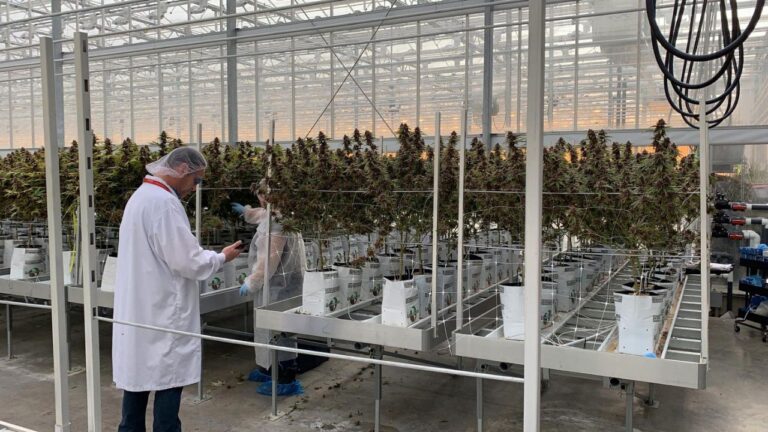
For Maine rooms we work on Maine cannabis facility design and HVACD (heating, ventilation, air conditioning and dehumidification), controlled environment agriculture targets aimed at passing microbial testing the first time, cannabis vertical farming layouts measured against your canopy limit, operational optimization to reach the 85% sell-through and, when margins slip, a cannabis turnaround diagnostic. Our Chief Operating Officer and co-founder Michael Williamson has 25,000+ hours in cultivation and dispensary operations and co-founded Greenhaus Industries, which patented stackable trays for multi-tier growing (company-reported, from our team bios).

Our Maine record: we have not yet had a Maine client. Leif Olsen, our Chief Executive Officer and a co-founder, leads our licensing work. Ian Miller, our Executive Chair and a co-founder, founded a vertically integrated licensee elsewhere whose license-activation inspections were flawless (company-reported), the kind of on-site inspection OCP schedules before it issues an active license. We have no Maine office; we deliver work on-site and remotely, and the same team runs Catalyst BC’s national cannabis consulting practice.

A word against our own interest: OCP posts its forms, the full rules and an 18-step instruction page free, and a single tier 1 grower with a clean file may not need us. For a larger Maine file, contact us or call (USA) 303-305-3787.


Investing in Maine cannabis

Already licensed in Maine

0 +
Years Regulated Cannabis Operations Experience
0 +

Compliant Harvests

0 M+

Square Feet of Cultivation, Production, and Retail Facilities Designed

0 +

Licenses Secured

No Statewide License Cap in Maine: Applying in Late 2026

Except for the ownership limits above, OCP may not limit the number of licenses of any type it issues to one qualified applicant or in total (§ 201). Each location needs its own license, and OCP’s 90-day decision clock covers only the conditional license, not local approval, the build-out or the inspection. A conditional licensee may not grow, make, test or sell cannabis. The catch is time: a conditional license lasts one year and cannot be renewed, and it expires if you have not obtained an active license by then, which takes, among other things, local authorization, a facility plan, tax and tracking registrations, the license fee and, under OCP’s instructions, an on-site inspection (§ 205(3) and (4)). Under OCP’s instructions (Step 15), a material change after the conditional license, including any change in ownership or control, reopens the application and requires a new Notary Form and a new Local Authorization Form.

Filing Status Limit or condition
Cultivation facility (tiers 1–4, nursery) Open Town must allow it; up to 3 cultivation licenses and 30,000 sq ft combined per interest holder, apart from approved tier 4 increases
Products manufacturing facility Open No statewide cap; town must allow it
Cannabis store Open No statewide cap; town must allow stores
Testing facility Open Town must allow it; no cross-ownership with cultivation, manufacturing, store or dispensary interests
Sample collector Open No local authorization required; same cross-ownership bar as testing
Transfer of 5% or more, or any change of principals Open to licensees Prior OCP approval and a $250 fee
Relocation Open to licensees Local authorization at the new site; $250 fee
Outdoor-only caregiver registration Open since July 29, 2026 One change-form switch allowed through July 29, 2027
Swipe to see the full table →

28-B M.R.S. §§ 201, 205, 210 and 211; 18-691 C.M.R. ch. 10 § 2(8) and ch. 20 § 12; OCP outdoor guidance, July 27 and August 27, 2026; read October 8, 2026.

Step Timing or rule
Review starts Only when every document and the application fee are in
Conditional license or denial Within 90 days of OCP receiving the completed Notary Form
Conditional license term One year from issuance; not renewable
Town decision Deemed denied if the town fails to act within 90 days, or 180 days if it gives written notice
OCP notice after local approval Within 10 days of receiving the town’s certification
On-site inspection Scheduled after the supplemental active-license materials
Active license Issued once the license fee is paid; valid one year
Swipe to see the full table →

OCP establishment application instructions; 28-B M.R.S. §§ 205 and 402(5).

Point Rule
OCP expiration notice 90 days before the license expires
Renewal application due At least 30 days before expiration
Late renewal Accepted for good cause; OCP may require a $2,500 late fee plus the application fee
Local authorization Required again at every renewal (sample collectors exempt)
After expiration No renewal accepted; operations stop and cannabis is forfeited for destruction
Operating during review Allowed if the renewal and fees were filed before expiration, unless OCP suspends or revokes the license first
Tier increase Requested at renewal; requires 85% of the crop sold
Swipe to see the full table →

28-B M.R.S. § 209, including (5); § 303; 18-691 C.M.R. ch. 10 § 2(9).

Investors buying into an operating licensee rather than starting new should read ownership next.

Five Adult Use License Types and the Medical Registrations

Adult use runs on 28-B M.R.S. chapter 1 (Cannabis Legalization Act) and the OCP rules at 18-691 C.M.R. chapters 5, 10, 20, 30 and 40, effective November 2024. Medical use runs on 22 M.R.S. chapter 558-C and 18-691 C.M.R. chapters 2 and 4. A conditional license may cover a cultivation facility, products manufacturing facility, cannabis store, testing facility or sample collector.

License What it allows Size limit
Cultivation, tier 1 Grow and sell to other licensees 30 mature plants or 500 sq ft of canopy
Cultivation, tier 2 Grow and sell to other licensees 2,000 sq ft of canopy
Cultivation, tier 3 Grow and sell to other licensees 7,000 sq ft of canopy
Cultivation, tier 4 Grow and sell to other licensees 20,000 sq ft, plus 7,000 sq ft increments
Nursery cultivation Immature plants, seedlings and seeds for stores, cultivators and consumers 1,000 sq ft of canopy
Products manufacturing Make concentrates and cannabis products No canopy limit
Cannabis store Sell to consumers 21 and older No canopy limit
Testing facility and sample collector Test, or collect samples for mandatory testing Owners kept out of growing, manufacturing, stores and medical dispensaries
Swipe to see the full table →

28-B M.R.S. §§ 301 and 501(3); § 201.

Registration Cultivation or activity limit
Caregiver, indoor/outdoor 30 mature and 60 immature plants, or 500 sq ft mature and 1,000 sq ft immature canopy
Caregiver, outdoor-only (from July 29, 2026) 150 mature and 300 immature plants, or 2,500 sq ft mature and 5,000 sq ft immature canopy, March to December
Registered dispensary Statewide certificates: the 8 held on April 1, 2018 plus 6 more; since January 1, 2021 OCP may not limit how many one person holds
Manufacturing facility, tier 1 Up to 40 pounds of harvested cannabis
Manufacturing facility, tier 2 Up to 200 pounds of harvested cannabis
Swipe to see the full table →

22 M.R.S. §§ 2423-A, 2423-F and 2428(11-A); OCP outdoor guidance, July 27, 2026.

Growers running both programs in one building must keep adult use and medical plant areas physically separate and designate each room on the Official Plan of Record; changing a room’s designation needs an Application for Change of Plan of Record (OCP co-location guidance).

OCP Application, License and Change Fees in 2026

You pay the application fee when you apply; OCP invoices the license fee before it issues the active license, and no fee is refunded, even if you withdraw or your license is revoked (18-691 C.M.R. ch. 10 § 2). Renewal fees are due every year in the same amounts.

License Application fee Annual fee, outdoor only Annual fee, indoor or both
Tier 1, plant count $100 $9 per mature plant $17 per mature plant
Tier 1, canopy $100 Not listed in the rule; statute caps it at $250 $500
Tier 2 $500 $1,500 $3,000
Tier 3 $500 $5,000 $10,000
Tier 4 $500 $15,000 $30,000
Each tier 4 canopy increase — +$5,000 +$10,000
Nursery $60 $350 $350
Swipe to see all fees →

18-691 C.M.R. ch. 10 § 2(6), effective November 6, 2024.

ItemFee
Products manufacturing facility$250 application; $2,500 license
Cannabis store$250 application; $2,500 license
Testing facility$250 application; $1,000 license
Sample collector$100 application; $250 license
Specified event permit$200 per event
Transfer of ownership or change of principals$250
Relocation$250
Individual identification card$50 original; $50 biennial renewal; $10 reissue
Renewal filed under 30 days before expiryOCP may require $2,500 plus the application fee
Swipe to see the full table →

18-691 C.M.R. ch. 10 § 2(3), (7), (8) and (9).

RegistrationFee range
Caregiver by plant count$50–$240 a year per group of up to 6 mature plants
Caregiver by canopy (500 sq ft or less)$50–$1,500 a year
Outdoor-only caregiver (OCP schedule)$240 a year for 30 mature plants, up to $1,500 for 2,500 sq ft
Registered dispensary$5,000–$12,000 a year; $3,000–$4,000 to relocate
Manufacturing facilityA year: tier 1 $50–$150; tier 2 $150–$250; hazardous extraction $250–$350
Swipe to see the full table →

22 M.R.S. § 2425-A; OCP outdoor guidance, July 27, 2026.

Budget accordingly: an indoor tier 2 grower pays $3,500 in the first year ($500 application plus $3,000 license) and an indoor tier 4 grower $30,500, before excise tax; a cannabis store pays $2,750 (our arithmetic from the rule). Our cannabis startup costs breakdown covers the rest of the budget.

Correction to published guidance (October 8, 2026): a Maine licensing guide we read on October 8, 2026 lists a $10,000 cultivation application fee and a $1,000 store license fee. Under 18-691 C.M.R. ch. 10 § 2, the cultivation application fee is $100 for tier 1 and $500 for tiers 2 to 4, and the cannabis store license fee is $2,500.

How OCP Reviews a Maine Application, Step by Step

Maine licensing is a qualification test, not a scored contest. OCP checks the applicant and each principal against the statute’s criteria, including age, Maine formation for a business applicant, no disqualifying drug offense, no prior revoked cannabis license, no unpaid court-ordered payments and a complete, truthful application. It also weighs two years of tax payment history, tax liens from the past five years and any cannabis violations in another jurisdiction (§§ 202 and 203). OCP may also deny an application, renewal, transfer or relocation for good cause, such as breaking a state or local rule or a condition on an earlier license, and a denial can be appealed to the Superior Court (§ 206).

How to open a dispensary in Maine, from town vote to first sale

Maine calls an adult use dispensary a cannabis store. The steps (OCP instructions):

  1. Confirm the town’s legislative body has voted to allow cannabis stores.
  2. Form your Maine entity and have each principal apply for an individual identification card and a criminal history record check.
  3. File the application and $250 fee, and get a decision on a conditional license within 90 days of a completed file.
  4. Secure a site at least 1,000 feet from a school property line, or a shorter distance of at least 500 feet if the town’s ordinance sets one, and obtain local authorization.
  5. Submit the facility plan and tax and tracking registrations, pass the on-site inspection and pay the $2,500 license fee.

We assemble ownership documents and the town record first; that is where our cannabis licensing and application team begins.

Maine Ownership Transfers, Principals and Financial Interests

A licensee may transfer all or part of its ownership with OCP approval. A transfer needs no prior approval, and can be reported at renewal, unless it results in a new person obtaining, or an existing person increasing, an ownership interest of 5% or more (§ 210). Anyone taking a stake must meet the same licensing requirements as an applicant, and each proposed principal is fingerprinted.

OCP’s rule also requires an approved transfer application, with the $250 fee, for any change in principals, whatever the ownership percentage, and it adds a step that catches passive capital: a financial interest that needs no prior approval still requires notice to OCP before the association begins, and OCP then considers whether the interest has been appropriately characterized and whether the cultivation limits are implicated (18-691 C.M.R. ch. 20 § 12(1) and (2)(B)). Ending a financial interest, or significantly changing it, must be reported within 5 business days. OCP may also deny a transfer if the licensee owes a fine or fee or is under investigation.

Before a new principal may own, manage or work with a licensee, the licensee must notify OCP, and the principal needs a criminal history record check and an individual identification card (§ 213).

On the medical side, OCP stopped enforcing residency requirements for dispensary officers and directors and for caregivers on November 30, 2022, after federal courts held the dispensary requirement unconstitutional (OCP residency letter).

Maine Town Opt-In, School Buffers and Site Possession

No cultivation, manufacturing, store or testing business can open in a Maine town until its legislative body votes to allow that type of business, by adopting or amending an ordinance or approving a town-meeting warrant article; until then you cannot even request local authorization (§ 402). A town may also limit the number of each type of business, set land-use rules and charge its own licensing fees (§ 401). In the unorganized and deorganized areas, local authorization comes through the Maine Land Use Planning Commission. A town that opts in may apply once, within three years of its ordinance, for up to $20,000 to cover its opt-in costs (OCP FAQ).

No town may authorize a site within 1,000 feet of the property line of a preexisting public or private school, or within a shorter distance of at least 500 feet if its ordinance sets one. You must show possession of the premises by lease, rental agreement, other arrangement or ownership, and keep it for the life of the license. OCP’s opt-in community data is a courtesy list it says it cannot guarantee, so we confirm each town’s ordinance directly.

Medical rules differ. From July 29, 2026, medical registrants may sell or transfer to qualifying patients and other registrants at medical cannabis trade shows and industry events, and on public property that is not a safe zone or otherwise closed to such sales, without an OCP permit (OCP municipal guidance, September 2, 2026); the law did not change the local approvals a caregiver retail store needs. Adult use stores need a specified event permit with town and property-owner authorization. Before you sign a lease, our cannabis facility design work screens the site against these limits.

Maine Testing, Metrc Tags and the 14% Adult Use Sales Tax

Maine cannabis compliance consulting starts with testing. Unless OCP waives a test that no licensed Maine lab can perform, no adult use cannabis may reach a consumer until mandatory testing shows it is within contaminant limits for residual solvents, harmful chemicals, yeasts, molds and mildew, harmful microbes and pesticides, plus THC potency, homogeneity and cannabinoid profile (§ 602). Since April 19, 2026, edibles made from concentrate that passed every contaminant test need only potency, cannabinoid and homogeneity testing (OCP edibles guidance).

A failed batch may be retested or remediated, except that pesticide and heavy-metal failures can only be retested. If flower or trim fails a retest without remediation, it may go to another licensee for extraction; a concentrate or product batch that fails that retest must be destroyed (18-691 C.M.R. ch. 40). The comment period on proposed changes to testing rules chapters 5 and 40 closed August 14, 2026; the changes had not been adopted when we read them on October 8, 2026. On April 27, 2026, OCP suspended the label statement for flower or trim treated with radiation or ozone; carcinogenic-gas treatment must still be labeled, and remediated cannabis must still pass testing (OCP remediation labeling guidance).

Tracking runs on Metrc, the state’s adult use inventory tracking system. Since May 1, 2026, a plant tag costs $0.46 and a package tag $0.26 (OCP Metrc letter, January 29, 2026). The monthly user fee rises from $40 to $45 only when Metrc’s mandatory-lab-test feature goes live, which OCP expected later in 2026 (OCP letter, August 18, 2026).

What Maine collects on adult use cannabis

From January 1, 2026, adult use retail sales carry a 14% sales tax, up from 10% (36 M.R.S. § 1811). Cultivators pay excise when they sell to other licensees or move cannabis to their own manufacturing facility or store: $223 per pound of flower, $63 per pound of trim, $23 per mature plant, $1 per immature plant or seedling and 20¢ per seed, down from $335, $94, $35, $1.50 and 30¢ (36 M.R.S. § 4923). No excise applies to a sale or transfer to another cultivation facility. Excise returns are due by the 15th of each month (36 M.R.S. § 4924). Federal Section 280E bars producers of Schedule I and II substances from most business tax deductions; OCP notes that Maine already allows those deductions on state taxes (OCP statement, December 23, 2025). A 2026 law, P.L. 2025, ch. 504, exempts certain transfers made so flower and trim can be treated with radiation or ozone and returned; OCP expects Maine Revenue Services to issue a tax alert on how it works (OCP legislation update, May 7, 2026).

Before You File With OCP or Add Maine Canopy

Investors get an ownership and town screen before they commit: the 3-license and 30,000 square foot test across every interest you hold, and a one-year plan that turns a conditional license into an active one. Licensees get a canopy and margin review: a remeasurement of racks and walkways against your tier, the 85% sell-through evidence for a tier increase, and a remediation and excise check on failed batches. Send your license type, town and deal or production figures, and we will tell you plainly if another firm suits you better.

Maine Cannabis License Questions From Investors and Growers

Yes. Maine sets no statewide cap on adult use licenses, and OCP takes applications through its online portal. Each cultivation, manufacturing, store or testing site still needs a town that has voted to allow it, and a conditional license expires after one year if it has not become an active license.

No. Maine’s adult use law no longer has a residency requirement, and OCP stopped enforcing medical residency rules in 2022. A business applicant must be formed under Maine law, and every principal must be at least 21, submit to criminal history record checks and have no disqualifying drug offense.

Cultivation application fees are $100 for tier 1 and $500 for tiers 2 to 4, with annual indoor license fees from $3,000 for tier 2 to $30,000 for tier 4. Products manufacturing facilities and cannabis stores pay a $250 application fee and a $2,500 license fee. No fee is refunded.

No more than 3, and their combined canopy may not exceed 30,000 square feet. Approved tier 4 increases aside, the limit applies to anyone with a direct or indirect financial interest.

Yes, at renewal. A licensee may move to a larger tier only if it sold at least 85% of its crop during the license term and stays within the combined canopy limit, and a tier 4 licensee may add 7,000 square feet no more than once every 2 years on the same test. A licensee that misses the test is considered for renewal at its current tier.

Yes. When a tiered or shelving system is used, the surface of each tier or shelf counts toward plant canopy, and walkways inside the canopy boundary count too.

Not currently. OCP states that medical cannabis is not subject to mandatory contaminant testing or statewide inventory tracking, while adult use cannabis must pass mandatory testing and be tracked in Metrc.

Since January 1, 2026, adult use retail sales carry a 14% sales tax. Cultivators pay an excise tax when they sell to other licensees or move cannabis to their own manufacturing facility or store, including $223 per pound of flower and $63 per pound of trim.

Grow-Room and Facility Work We Bring to Maine

These projects show the cultivation, extraction and facility work behind our Maine advice; each one’s results are in our case studies.

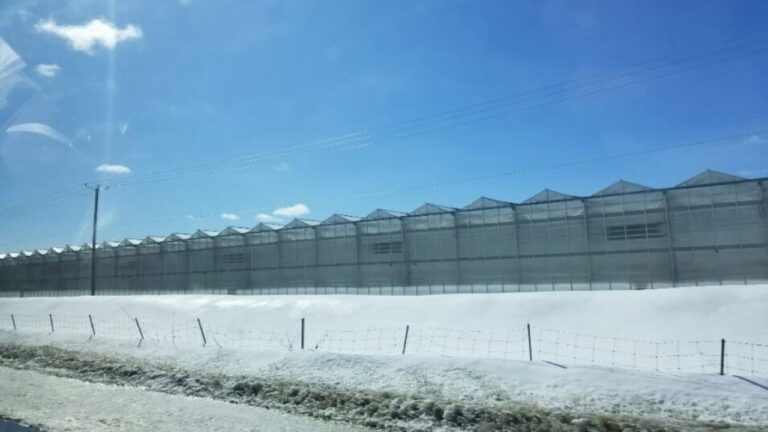
Exterior view of the Hexo Venlo glasshouse row spanning over 1 million square feet.

Hexo Corp.

Gatineau, Quebec, Canada

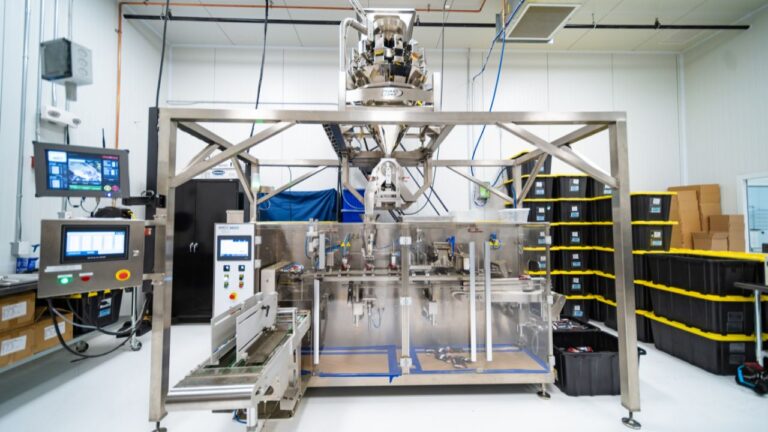
Modern stainless steel automated cannabis pre-roll processing machine in a dedicated production room.

Bostica

Lynn, MA, United States

Catalyst BC consultants and LeafLine Cultivation Director inspecting vibrant plants in an organized vertical grow room.

Leafline Labs

Cottage Grove, MN, United States

Catalyst BC consultant recording air, environmental, and plant data measurements within a cultivation facility.

View All Projects

View all Catalyst BC Projects

Reading for Maine Investors and Growers

Provenance. Figures checked against the statute, rule and OCP guidance text by Catalyst BC on October 8, 2026. The statutes were read in the Maine Legislature’s compiled chapters and section pages, and the rules in the PDFs OCP posts. Budget figures are our own arithmetic from the fee rule; company figures come from Catalyst BC’s own records. Where this page and the official text differ, the official text governs.

Statutes

Office of Cannabis Policy rules

Office of Cannabis Policy pages and guidance

Contact Us

Enough about us. We want to hear more about you, your project, and your vision! Get in touch with a real live person today. Don’t worry, we don’t have a long, confusing phone menu, and your email isn’t going to the abyss, we promise. At Catalyst, we provide the service and support we’d want to experience ourselves!

Scroll to Top