Louisiana Cannabis Consultants for LDH Permit Investors and Producers

Louisiana cannabis consulting starts with a closed door: the Louisiana Department of Health (LDH) issues no new production licenses or primary retail permits. Investors can buy into existing permit holders; licensees, in our view, compete on mold control and clean tests. Our records show 58+ licenses secured elsewhere.

A Decade of Harvesting Success - Trusted by Cannabis Operators Worldwide

Renewal, Report and Hemp Deadlines

Dec 1, 2026LDH retail permit renewal packets due for 2027
Dec 11, 2026Federal hemp cap: 0.4 mg THC-type cannabinoids per container
Feb 1, 2027LDH report to the legislature on both producers

Updated: 10/8/2026. Louisiana runs a medical-only program under R.S. 40:1046. The Louisiana Department of Health took over the program, including its producers, on August 1, 2022, and the retailers, formerly Board of Pharmacy permits, on January 1, 2025. The law allows two production licenses, now held by Ilera Holistic Healthcare and Good Day Farm, and no more than 30 retail locations including satellites. Its rule, LAC 51:XXIX, was last amended effective January 20, 2026 (Louisiana Register, January 2026), and R.S. 40:1046 itself ends on July 1, 2030.

Retail permit holders must file renewal packets by December 1 to keep their permits for the next year; a permit not renewed by December 31 is subject to suspension. Federal hemp drops products with cannabinoids the plant cannot produce on November 12, 2026, and on December 11, when a temporary federal delay ends, final products with more than 0.4 milligrams of THC and similar cannabinoids combined per container. By February 1, 2027, LDH must report each producer’s 2026 output, costs and shipments to the legislature.

Meet Catalyst BC's Founders

  • Leif Olsen - Chief Executive Officer

    Leif Olsen

    Chief Executive Officer

  • Michael Williamson - Chief Operating Officer

    Michael Williamson

    Chief Operating Officer

  • Ian Miller - Executive Chair

    Ian Miller

    Executive Chair

Our partners bring multi-faceted expertise across business strategy, licensing, facility development, finance, and commercial operations. That breadth is complemented by subject matter experts across the wider Catalyst BC team, allowing us to bring the right combination of experience to each client and project. The result is bespoke, collaborative support shaped around your business, priorities, and goals - with the right expertise brought to the table when it matters most.

Learn more about our team

What a Louisiana Cannabis Consultant Adds to an LDH File

LDH licenses, permits, inspects and reviews test results; it does not structure deals, design rooms or plan an owner’s budget. A Louisiana cannabis consultant works on the owner’s side: diligence before a purchase, the plans packets LDH requires, and the build-out and procedures that must pass its inspections and testing.

Investing in Louisiana Medical Marijuana Without a New License

For investors, the practical way in today is equity in a permit holder; nine of the ten are LLCs. Louisiana law says a membership interest (an LLC ownership share) in an entity that holds a marijuana retail permit may change hands without LDH approval (R.S. 40:1046(G)(1)(d)), while the permit itself is not transferable to other locations or owners. The two production licenses are nontransferable and renew each July 1; LDH may award a new one only through a competitive bid under the Procurement Code after a license is surrendered or revoked for failure to renew.

Federal rules moved on April 28, 2026: marijuana subject to a state medical marijuana license is now in Schedule III, a lower federal drug category, and the U.S. Department of Justice says state licensees are no longer subject to Section 280E, the federal tax rule that bars business deductions for Schedule I and II trafficking, while adding that the rule is not a tax determination (91 FR 22714). In our view, that change moves an investor’s after-tax return more than any fee on this page.

Our work for Louisiana investors: diligence on a permit holder, its region and its LDH record through cannabis business strategy; a Louisiana cannabis business plan with permit fees, the 7% producer fee and margins through cannabis financial planning; plans packets and bid responses through cannabis license application support; and satellite build-outs through cannabis startup support.

Already Licensed by LDH: Mold Limits, One Remediation and No Canopy Cap

A Louisiana batch that fails a test may be retested, or remediated once; if remediation fails, the batch is destroyed. The current rule sets mold and yeast below 100,000 colony-forming units per gram, ten times the 2022 limit, while E. coli and Salmonella must stay below 1 per gram. Neither R.S. 40:1046 nor the LDH rule caps a producer’s canopy (our reading of both), so in our view output is limited by the building, its climate control and its pass rate, not by a licensed canopy size.

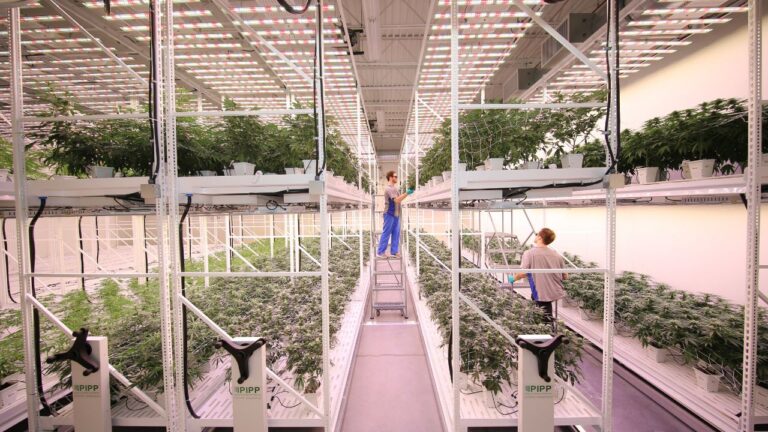
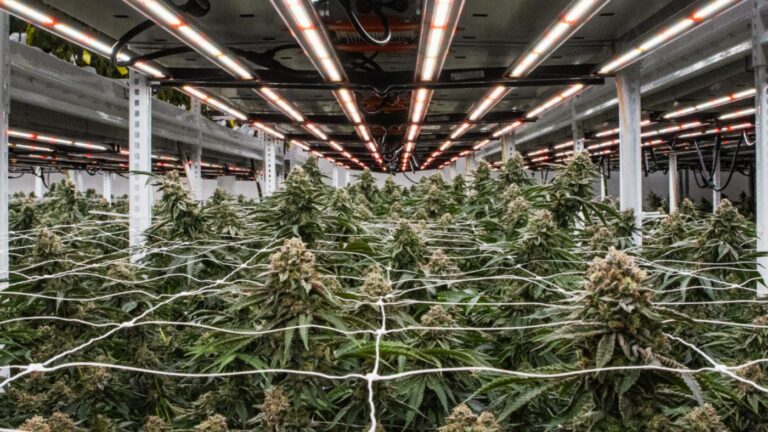
In our view, a grow in Louisiana’s humid air is won or lost on dehumidification, airflow and dry-room control, and in a fixed building the levers are cultivar choice, plant density, vertical racking, light intensity and climate stability.

For Louisiana rooms we offer Louisiana cannabis facility design with HVACD (heating, ventilation, air conditioning and dehumidification), controlled environment agriculture targets set against the test limits, cannabis vertical farming to add yield inside an existing footprint, operational optimization of harvest scheduling and labor and, when margins slip, a cannabis turnaround diagnostic. Our Chief Operating Officer and co-founder Michael Williamson has 25,000+ hours (company-reported) in cultivation and dispensary operations and co-founded Greenhaus Industries, which patented stackable trays for growing on multiple tiers (company-reported).

Our Louisiana record and team: Catalyst BC has no Louisiana licensee or permit-holder client, and we will not imply one. Leif Olsen, our Chief Executive Officer and a co-founder, leads our licensing work, and Ian Miller, our Executive Chair and a co-founder, raised $22 million (company-reported) in private equity for a greenfield cultivation and processing operation outside Louisiana. We have no Louisiana office; we deliver work on-site and remotely, and the same team runs Catalyst BC’s national cannabis consulting practice.

A word against our own interest: LDH posts its retailer plans-review form online (LDH form CP-2), and a well-organized applicant can complete it without a consultant. To talk through a Louisiana file, contact us or call (USA) 303-305-3787.


Investing in Louisiana cannabis

Already licensed in Louisiana

0 +
Years Regulated Cannabis Operations Experience
0 +

Compliant Harvests

0 M+

Square Feet of Cultivation, Production, and Retail Facilities Designed

0 +

Licenses Secured

Is Louisiana Taking New Marijuana License or Permit Applications?

Not for producers or primary retailers. LDH’s medical marijuana page says no new permits may be issued for non-satellite retail locations at this time (LDH medical marijuana page), and the law caps production at two licenses, both held. LDH selects a new producer or retail permit holder by competitive bid only when a holder returns its license or permit or loses it for failing to renew after 30 days’ written notice, or when a holder declines a satellite.

Three new-entry filings remain open. A retail permit holder may apply for a satellite location once its region passes a patient threshold; a testing laboratory may apply for an LDH license at any time; and consumable hemp processors, wholesalers and retailers apply for permits from LDH or the Office of Alcohol and Tobacco Control. Anyone preparing a Louisiana cannabis license application for a future bid should settle eligibility, site, plans and financing early; LDH returns an incomplete plans packet without processing it.

Filing Status Detail
New production license Closed Two licenses, both held; competitive bid only after a surrender or revocation
New primary retail permit Closed LDH: no new permits for non-satellite locations
Satellite retail location One location left under the 30 cap After LDH notice that the region passed 3,500 or 7,000 active patients
Testing laboratory license Open Accreditation, inspection and an LDH application
Retail permit renewal Open to permit holders Packet due December 1 for the next calendar year
Consumable hemp permits Open LDH processor permit; Office of Alcohol and Tobacco Control wholesale and retail permits
Swipe to see the full table →

LDH medical marijuana page; R.S. 40:1046(G) and (H); R.S. 40:1046.3; LAC 51:XXIX.2305; R.S. 3:1483 and 3:1484. Every source is listed at the bottom of this page.

Step When Result
Act 261 of 2015 2015 Production through the LSU and Southern University agricultural centers and their contractors
Ilera’s first shipment July 2020 Ilera Holistic Healthcare’s first approved products reach retailers
Acts 491 and 492 of 2022 August 1, 2022 LDH takes over the medical marijuana program
Act 150 of 2024 July 1, 2024 Licenses issued to the former university contractors; program end moved to 2030
Act 693 of 2024 January 1, 2025 LDH takes over retail permits from the Board of Pharmacy
LDH final rule January 20, 2026 LAC 51:XXIX amended and the retailer subpart adopted
Swipe to see the full table →

R.S. 40:1046(H)(1)(b); LDH medical marijuana page; LDH Act 150 report for 2025; Louisiana Register, January 2026.

Item Rule
Application The completed LDH form
Facility plans Site plan; plumbing, electrical, mechanical, HVAC and drainage schedules; finishes; secured product areas
Operations Hours, staffing and other goods and services sold on site
Pharmacist Name, phone and email of the registered pharmacist available to the retailer
Affidavit Notarized, sworn statement that the site meets the distance rules and local zoning
Swipe to see the full table →

LAC 51:XXIX.2303(C) and (D); LDH form CP-2 (rev. 1/26).

Investors buying into a permit holder should jump to ownership changes.

Louisiana’s Two Producer Licenses, Ten Retail Permits and Testing Labs

Two licensees cultivate, extract, process, produce and transport therapeutic marijuana: Advanced Biomedics LLC, doing business as Ilera Holistic Healthcare, and Good Day Farm Louisiana LLC (LDH licensee list). Ten retail permit holders sell to patients from primary and satellite locations, each designating a pharmacist for its stores, and approved laboratories test every batch. Retailers may stock only products from the two in-state producers.

Demand comes from clinician recommendations sent to a retailer. Physicians, nurse practitioners with prescriptive authority and medical psychologists may recommend marijuana for a listed condition or any condition the clinician considers debilitating and is qualified to treat, including by telehealth, and a recommendation expires within 12 months. Visiting patients with another jurisdiction’s registry card may also buy (R.S. 40:1046.1), and since August 1, 2026 licensed healthcare facilities must let terminally ill patients use recommended marijuana, not smoked or vaped, outside emergency, outpatient and behavioral health units (Act 602 of 2026).

License or permit What it allows Cap
Production license Cultivate, extract, process, produce and transport Two licenses statewide
Retail permit Sell to patients and caregivers, on site or by delivery Ten, plus any LDH issues in place of a declined satellite
Satellite location A second or third store for a permit holder in its region Two per permit holder; 30 retail locations in all
Laboratory license Test medical marijuana No cap in the statute
Consumable hemp permits Process, wholesale or sell hemp products No cap in the statute
Swipe to see the full table →

R.S. 40:1046(G) and (H); R.S. 40:1046.3; R.S. 3:1483 and 3:1484.

Region Permit holder Satellites
1 H & W Acquisition Company LLC 2
1 Crescent City Therapeutics, LLC 2
2 Capitol Wellness Solutions, LLC 2
3 Green Leaf Dispensary, LLC 1
4 The Apothecary Shoppe, LLC 2
5 Medicis, LLC 2
6 The Medicine Cabinet Pharmacy, LLC 2
7 Hope Pharmacy, LLC 2
8 Delta Medmar, LLC 2
9 Willow Pharmacy, Inc. 2
Swipe to see the full table →

LDH medical marijuana page, read October 8, 2026 (our count of base permits and satellite locations).

Production licenses run one year from July 1, and a producer files its prior-year output, costs and shipments with LDH by January 10 of the renewal year (LAC 51:XXIX.505). Retail permits renew by calendar year: packets are due December 1, a permit not renewed by December 31 is subject to suspension, and one not renewed by March 1 may be revoked. A permit holder also reports registered patient counts to LDH every quarter. Laboratory licenses renew by December 31, with renewal applications due by October 31.

LDH Producer Fees, the 7% Gross-Sales Fee and the $22,500 Retail Permit

Louisiana sets its marijuana fees in statute. Act 513 of 2025 set the retail permit fee at $22,500 a year for each of the ten permit holders (Act 513, amending R.S. 40:1046(G)(1)(b)). Each producer pays a $10,000 nonrefundable application fee, a $100,000 annual license fee and a fee of 7% of its gross sales of therapeutic marijuana, which the Department of Revenue collects for the Disability Services Fund.

FeeAmountWho pays
Application$10,000, nonrefundableProducer
Annual license$100,000Producer
Gross-sales fee7% of gross sales of therapeutic marijuanaProducer
Annual retail permit$22,500Each of the ten retail permit holders
Swipe to see the full table →

R.S. 40:1046(G)(1)(b) and (H)(4); LAC 51:XXIX.501(C); Act 513 of 2025.

Item Amount
LDH processor permit, per facility $175 (sales under $500,000) to $1,375 (over $5,000,000)
LDH product registration Not more than $50 per product
LDH plans review, new or substantially renovated facility $100, or $1,000 expedited
Wholesaler permit (Office of Alcohol and Tobacco Control) Not more than $500 a year
Retail permit, per place of business Not more than $175 a year
Excise tax on retail sales 3% of the retail price, on top of sales tax
Swipe to see the full table →

R.S. 3:1483(A) and (B); LDH Cannabis Program page; R.S. 3:1484(A) and (C); R.S. 47:1693.

Item Good Day Farm Louisiana Ilera Holistic Healthcare
Gross marijuana produced About 63,338 lbs About 9,061 lbs
Flower sold to retailers About 24,733 lbs About 4,500 lbs
Units shipped to retailers About 2,797,378 (all products, flower included) 452,073 non-flower finished units
Construction spending reported $27,700,000 $12,439,400 (includes landlord capital)
Swipe to see the full table →

LDH Act 150 report for calendar year 2025 (licensee-reported figures; the two licensees count units differently).

Budget accordingly: a retail permit holder renewing for 2027, 2028, 2029 and 2030 pays $90,000 in permit fees, four renewals at $22,500, the last for a year in which R.S. 40:1046 ends on July 1, 2030; a producer that wins a future bid owes $110,000 in its first year, the $10,000 application plus the $100,000 license fee, plus 7% of gross sales (our arithmetic from R.S. 40:1046).

How a Louisiana Producer License or Retail Permit Changes Hands

Production licenses are nontransferable (LAC 51:XXIX.501), and neither the statute nor the rule addresses a sale of ownership interests in a producer (our reading). A retail permit is not transferable to other locations or owners. When a permit holder surrenders a primary or satellite permit, or the facility undergoes a change of ownership, the rule lets a new applicant submit a full plans packet for LDH review (LAC 51:XXIX.2303). The statute separately lets a membership interest in the permit-holding entity change hands without LDH approval. In our reading, a sale of interests that leaves the permit-holding entity in place follows the statute, while a sale of the store to a new entity calls for a plans packet under the rule, and the statute awards a new permit only by competitive bid; confirm with LDH in writing before you sign.

Five steps to open a Louisiana medical marijuana retail location

These steps follow R.S. 40:1046(G) and LAC 51:XXIX.2303 to 2511, for a permit holder opening a satellite or a winner of a future bid.

  1. Confirm the route: an LDH satellite notice for your region, or a permit awarded through a competitive bid.
  2. Screen the site: inside the region, beyond the 15-, 10- or 5-mile radius from other permit holders’ stores, and allowed by local zoning.
  3. File the plans packet with facility plans, hours, staffing, the designated pharmacist and a notarized distance and zoning affidavit; a satellite application is due within 90 days of LDH’s notice.
  4. Build to the rule: secured product areas, alarms and cameras on entry and restricted areas, finishes, hand sinks, locker rooms and a point-of-sale system that links to the state tracking system.
  5. Open a satellite within 310 days of approval unless LDH grants more time for causes beyond your control, display the permit, and stock only products from the two Louisiana producers.

In our work, openings slow down on leases, distance surveys and local approvals more often than on floor plans, so our cannabis licensing and application team checks those first.

Who May Own a Louisiana Producer or Retailer, and What LDH Checks

Louisiana bars one group from production outright: no company that made a contribution to a candidate in a Louisiana election under the Campaign Finance Disclosure Act in the five years before bidding, or that is controlled in whole or in part by a person who did, may be eligible for a production license (R.S. 40:1046(H)(3)). Check that history across every owner before any bid.

Louisiana law bars any government suitability investigation as a prerequisite to a production license or permit, though the statute still requires criminal history checks of contractor employees (R.S. 40:1047(B)). Retail plans packets list the proprietor and partners and, for a corporation, an in-state agent for service of process registered with the Secretary of State, and each permit holder appoints a Louisiana-resident pharmacist with an active, unrestricted license to answer for its stores.

The April 2026 federal rule also creates an expedited DEA registration for holders of state medical marijuana licenses as manufacturers, distributors or dispensers, and a DEA registration suspends automatically if the state license is suspended, revoked or expires. Only applicants that filed within 60 days of publication, by June 27, 2026, may operate while DEA reviews (our reading), so diligence confirms the filing date.

Diligence also covers the permit’s renewal status, quarterly patient counts, inspection history and tracking-system inventory.

Correction to published guidance (October 8, 2026): a dispensary-software guide last updated July 6, 2026 still says the Louisiana Board of Pharmacy licenses dispensaries, quotes a $5,000 application fee, names agriculture-department suppliers and describes a 14-gram flower rule. Since January 1, 2025, LDH has permitted retailers, the retail fee in R.S. 40:1046 is the $22,500 annual permit fee, LDH regulates both producers, the limit is 71 grams of raw marijuana per patient every 14 days, and LDH is issuing no new non-satellite permits.

Where Louisiana Retailers May Open: Regions, Mile Radii and Patient Counts

Retail permits are allocated across LDH’s administrative regions as they existed on August 1, 2022, with at least one retailer in each. No permit holder may locate within 15 miles of another permit holder’s store; the radius is 10 miles in a region with a parish of more than 350,000 people and 5 miles in a region with a municipality that size, by the latest federal decennial census (R.S. 40:1046(G)(6)). The affected permit holders may waive the radius by written mutual agreement.

Satellites follow patients. When a region reaches 3,500 active, qualified patients, LDH notifies the region’s permit holders, which may each open a first satellite; at 7,000, a second. An active, qualified patient is one who has bought a therapeutic marijuana product at least once, counted quarterly over the preceding 24 months. If a permit holder declines a satellite, LDH may issue an additional permit in that region instead, and it must consider unserved parishes when it approves new locations. The law does not require a location to close if the count later drops below 3,500.

Each permit holder must offer delivery to patients in every ZIP code in its region at least once a month, and no delivery may go to an address outside Louisiana.

Production sites have their own building test: a complete roof on solid connecting walls, a secure foundation, complete visual screening, and cultivation and processing that cannot be perceived from outside by sight, odor, light, glare or noise, with ventilation adequate to prevent mold (R.S. 40:1046.2(B)). Before you sign a lease, confirm the region, the radius and local zoning; our cannabis facility design work starts with that screen.

LDH Testing, Remediation and Tracking, and Louisiana Hemp Rules

Every batch must pass microbial and fungal limits, pesticide residues, residual solvents, heavy metals, homogeneity for concentrates and extracts, and potency before it ships to a retailer, and potency may vary no more than 15% either way from the label (R.S. 40:1046.4). The laboratory records results in the tracking system and sends a certificate of analysis to LDH and the producer within 24 hours of finishing.

A failed sample may be retested or remediated by reasonably acceptable industry methods, but a product may be remediated only once; product that fails remediation testing is destroyed within 60 days, along with its whole batch. The January 2026 rule (LAC 51:XXIX.713, Table 1) lists limits for 58 pesticide entries, giving chlorpyrifos 0.2 and daminozide 1 part per million where the 2022 rule allowed none, and the unchanged 2022 text allows no detectable residue of any pesticide not listed (2022 rule text, §713(F)(4)).

LDH inspects producers at least twice a year and may inspect without notice on a complaint. Producers record each purchase, transfer and disposal in the Louisiana Medical Marijuana Tracking System, which LDH’s retailer form identifies as Metrc, within 24 hours, inventory all marijuana weekly and keep records for the current and three prior years. Producers keep on-site security staff at least from 8 a.m. to 5 p.m. and camera recordings for at least 30 days. Retailers check each patient’s history before every sale, refuse any sale over 71 grams of raw marijuana in 14 days, reconcile inventory every six months and hold waste no longer than 30 days.

A Louisiana cannabis compliance consulting review checks those records, the certificate trail and the pesticide program before an inspector does.

Louisiana Consumable Hemp and the December 11, 2026 Federal Line

Louisiana caps most consumable hemp products at 5 milligrams of total THC per serving and 40 milligrams per package; a beverage serving holds no more than 5 milligrams in at least 12 ounces, four containers to a package, and a tincture serving is 1 milliliter with no more than 1 milligram (R.S. 3:1483(B)). Products for inhalation and floral hemp are banned, buyers must be 21, and every product needs LDH registration and label approval.

Under Public Law 119-37 as limited by Public Law 119-103, the federal hemp definition will exclude final products with more than 0.4 milligrams of THC and similar cannabinoids combined per container when a temporary delay ends on December 11, 2026 (P.L. 119-37, Section 781; P.L. 119-103, Section 2019). Louisiana’s hemp law yields to more restrictive federal statutes, regulations and agency guidance (R.S. 3:1482(E)), so a 5-milligram serving allowed in Louisiana today is over the federal per-container line after that date. In our view, that is when hemp operators will ask whether a stake in a medical permit holder is worth buying.

Two Louisiana Engagements We Offer: Permit-Holder Diligence and a Mold-Risk Audit

Investors get a permit-holder review before they sign: the region, satellite rights and patient counts, the renewal record, the radius map, every owner checked against the campaign-contribution bar for any future production bid, and a Louisiana cannabis business plan with fees, the 2030 sunset and Schedule III tax questions for your adviser. Licensees get a mold-risk and testing audit: yeast and mold, microbial and pesticide results by room, HVACD sized so batches pass the first time, and a Louisiana cannabis compliance consulting check of your Metrc records. Send your permit or license details and your deal or production figures, and we will tell you plainly if another firm suits you better.

What Investors and LDH Licensees Ask About Louisiana

No. Louisiana’s two production licenses and ten retail permits are all held, and LDH says no new non-satellite retail permits may be issued at this time. LDH selects a new licensee or permit holder by competitive bid only after a license or permit is returned or revoked, or a satellite is declined. Laboratory and consumable hemp permits remain open.

Yes, as a member of an LLC permit holder. R.S. 40:1046(G)(1)(d) lets a membership interest in an entity that holds a retail permit change hands without LDH approval, but the permit itself is not transferable to other owners, and a change of ownership of the facility calls for a new applicant’s plans packet, while the statute awards new permits only by competitive bid.

The annual retail permit fee is $22,500 for each of the ten permit holders, set by Act 513 of 2025. Renewal packets are due December 1 for the following calendar year.

Ten retail permits, plus any LDH issues in place of a satellite a permit holder declines, and no more than 30 locations including satellites and no more than two satellites per permit holder in a region. LDH listed 29 locations on October 8, 2026 (our count).

Below 100,000 colony-forming units per gram under the LDH rule effective January 20, 2026, up from 10,000 in the 2022 rule. E. coli and Salmonella must stay below 1 per gram.

Once. A producer may remediate a failed batch by reasonably acceptable industry methods, and the remediated sample must pass in duplicate. Product that fails remediation testing is destroyed within 60 days, together with the whole batch.

The federal rule effective April 28, 2026 placed marijuana subject to a state medical marijuana license in Schedule III, and the U.S. Department of Justice says state licensees are no longer subject to the Section 280E deduction ban. It also says the rule is not a tax determination, so confirm your position with a tax adviser.

After December 11, 2026, federal hemp excludes final products with more than 0.4 milligrams of THC and similar cannabinoids combined per container, far below Louisiana’s 5-milligram serving limit, and Louisiana’s hemp law yields to more restrictive federal law.

Cultivation and Facility Projects Behind Our Louisiana Recommendations

These projects show the cultivation, extraction and facility work we offer Louisiana licensees; each tile opens its full write-up, and all of them are on our projects page.

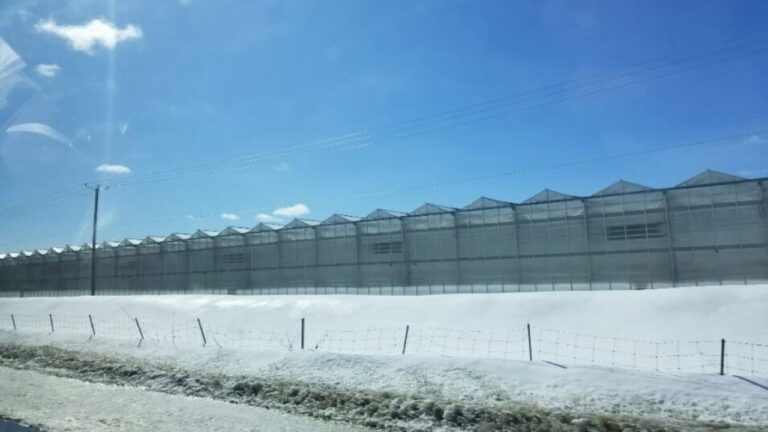
Exterior view of the Hexo Venlo glasshouse row spanning over 1 million square feet.

Hexo Corp.

Gatineau, Quebec, Canada

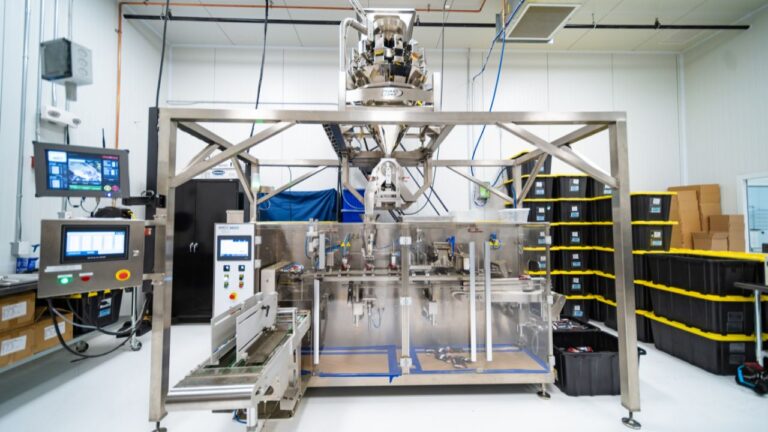
Modern stainless steel automated cannabis pre-roll processing machine in a dedicated production room.

Bostica

Lynn, MA, United States

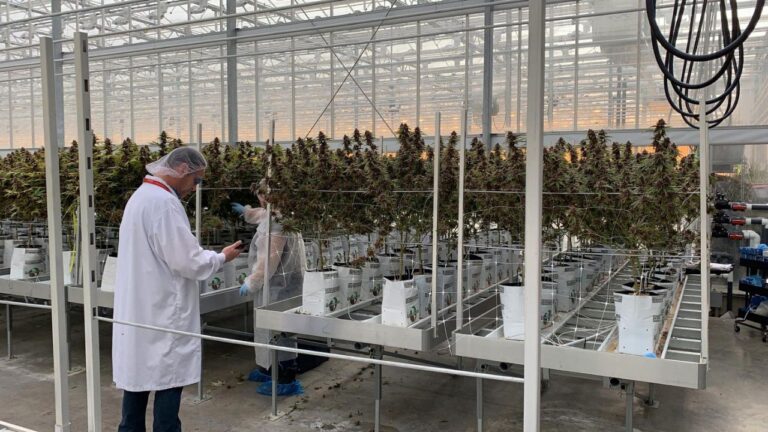
Catalyst BC consultants and LeafLine Cultivation Director inspecting vibrant plants in an organized vertical grow room.

Leafline Labs

Cottage Grove, MN, United States

Catalyst BC consultant recording air, environmental, and plant data measurements within a cultivation facility.

View All Projects

View all Catalyst BC Projects

Reading for Louisiana Investors and LDH Licensees

Provenance. Figures checked against the statute, regulation and agency text by Catalyst BC on October 8, 2026. Revised Statutes were read on the Louisiana Legislature’s site in their current versions, which include Acts of 2025; the LDH rule was read in the Louisiana Register for December 2022 and January 2026, the latest amendment effective January 20, 2026. LDH PDFs were read by text extraction. Retail location counts are our own count from the LDH list; producer volumes are licensee-reported figures in LDH’s Act 150 report; budget figures are our own arithmetic. Company figures come from Catalyst BC’s own records. Where this page and the official text differ, the official text governs.

Louisiana statutes and acts

Louisiana Department of Health rules and records

Federal law

Contact Us

Enough about us. We want to hear more about you, your project, and your vision! Get in touch with a real live person today. Don’t worry, we don’t have a long, confusing phone menu, and your email isn’t going to the abyss, we promise. At Catalyst, we provide the service and support we’d want to experience ourselves!

Scroll to Top