AMMC Licenses, Transfers and Yield: Arkansas Cannabis Consultants

Arkansas cannabis consulting starts with a plain answer: the Arkansas Medical Marijuana Commission (AMMC) is not taking new dispensary or cultivation applications. We help investors buy into licensed companies with the Commission’s approval and help licensed growers raise yield; our records show 58+ licenses secured.

A Decade of Harvesting Success - Trusted by Cannabis Operators Worldwide

Commission Dates and May 1 Renewals

Nov 5, 2026Medical Marijuana Commission meeting, 2:00 p.m.
Dec 3, 2026Medical Marijuana Commission meeting, 2:00 p.m.
May 1, 2027Last day to file dispensary and cultivation renewals

Updated: 10/7/2026. Arkansas voters created the medical program and the five-member Medical Marijuana Commission (MMC, also called AMMC) in 2016 with Amendment 98 (§ 19). The amendment caps the market at 20 to 40 dispensaries and 4 to 8 cultivation facilities (Amendment 98, § 8), and the Commission’s May and June 2026 renewal votes covered 37 dispensaries, 8 cultivation facilities and 7 processors (our count from its minutes). There is no adult-use market: a dispensary may dispense only to qualifying patients, including visiting patients carrying another state’s card, and their caregivers; its other transfers go to licensed businesses (§§ 3 and 12). The Alcoholic Beverage Control Division enforces the rules day to day, and the Department of Health runs patient cards and testing standards.

The dates ahead are meetings and a renewal deadline, not a licensing round. The Commission meets November 5 and December 3, 2026 (Medical Marijuana Commission), and ownership transfers are decided at those meetings. Dispensary and cultivation licenses expire every June 30, and the renewal application is due at least 60 days earlier, which puts the 2027 deadline at May 1 (20 CAR § 800-213, in the Code of Arkansas Rules).

Meet Catalyst BC's Founders

  • Leif Olsen - Chief Executive Officer

    Leif Olsen

    Chief Executive Officer

  • Michael Williamson - Chief Operating Officer

    Michael Williamson

    Chief Operating Officer

  • Ian Miller - Executive Chair

    Ian Miller

    Executive Chair

Our partners bring multi-faceted expertise across business strategy, licensing, facility development, finance, and commercial operations. That breadth is complemented by subject matter experts across the wider Catalyst BC team, allowing us to bring the right combination of experience to each client and project. The result is bespoke, collaborative support shaped around your business, priorities, and goals - with the right expertise brought to the table when it matters most.

Learn more about our team

What an Arkansas Cannabis Consultant Does Between You and the Commission

The Commission scores applications, votes on every ownership transfer and must approve management contracts; preparing a file it will accept is the applicant’s job. An Arkansas cannabis consultant builds that file for the Commission and for the Alcoholic Beverage Control Division (ABC), and flags what would sink it.

Investing in Arkansas Cannabis When the Licenses Are Already Issued

If you are new to cannabis and bring capital, three rules decide what you can own. First, the person applying and 60% of the individuals owning an interest in a dispensary or cultivation facility must be Arkansas residents of at least seven consecutive years (Amendment 98, § 8(c)). Second, no individual may own an interest in more than one cultivation facility and one dispensary (§ 8(l)). Third, the license is issued to a natural person and moves to another natural person only with the Commission’s approval (§ 8(q)).

With no dispensary or cultivation window open, the only way into an operating dispensary or grow today is buying into a licensed company (see buying in). The open route for new money is a processor or transporter license, which the Commission issues without a numerical limit (see license types).

Financing is regulated as closely as ownership. The Commission defines a management contract to include consulting on operations and debt or equity financing of a licensee, and under the rules it approved on April 2, 2026, now in its compiled rules, such a contract may not grant a security interest in the licensee or its assets, or any right to acquire ownership later (20 CAR § 800-801); the Commission’s pages do not state an effective date, so confirm it before you sign. Plan your returns as dividends from an approved ownership stake or as commercially reasonable fees, not as collateral.

Our work for Arkansas investors: target screening and diligence through cannabis business strategy; the capital plan and an Arkansas cannabis business plan through cannabis financial planning; transfer, processor and Arkansas cannabis license application work through cannabis license application support; and site, zoning and opening work through cannabis startup support.

Already Licensed in Arkansas: Capacity Set by Your Filed Plans, Not a Canopy Tier

Arkansas sets no canopy tier, a size band licensed by square feet of plant canopy, for a cultivation facility. It may grow what the Commission, with the Department of Health, finds reasonably necessary for patients, and the size and canopy of its production areas must match the plans it filed (20 CAR §§ 810-1102 to 810-1105). A dispensary may grow 50 mature plants at a time and harvest no more than 50 a month, or contract with a cultivation facility to grow those plants for it. A cultivation facility may run 24 hours a day but may sell only to dispensaries, other cultivation facilities and processors, so its customers are licensed businesses, mainly the 37 dispensaries renewed in 2026.

A licensee must notify the Commission at least 14 days before any change to its floor plan, including any increase or decrease in footprint or production capacity (20 CAR §§ 800-215 and 800-315). In 2026 the Commission took floor-plan changes as notice items without a vote (MMC minutes, March 5, 2026; July 16, 2026), so the work lies in the drawings, not in a hearing.

For Arkansas rooms we work on cannabis facility design and HVACD (heating, ventilation, air conditioning and dehumidification), controlled environment agriculture targets that pass testing, cannabis vertical farming layouts that add yield inside an approved footprint, operational optimization and, when margins slip, a cannabis turnaround diagnostic. Michael Williamson, our Chief Operating Officer and a co-founder, co-founded Greenhaus Industries, where his team developed and patented stackable trays for growing on several levels.

Who does the Arkansas work: Leif Olsen, our Chief Executive Officer and a co-founder, leads our licensing work. We have no Arkansas clients yet and no Arkansas office; we would deliver Arkansas work on-site and remotely, and the same team runs Catalyst BC’s national cannabis consulting practice.

A word against our own interest: the Commission posts its forms free, a reshuffle among existing owners adds no new background checks, and any consulting agreement we sign with a licensee is itself a management contract the Commission must approve before it takes effect. To talk through an Arkansas file, contact us or call (USA) 303-305-3787.


Investing in Arkansas cannabis

Already licensed in Arkansas

0 +
Years Regulated Cannabis Operations Experience
0 +

Compliant Harvests

0 M+

Square Feet of Cultivation, Production, and Retail Facilities Designed

0 +

Licenses Secured

Which Arkansas Licenses the Commission Will Accept Applications For Now

Dispensary and cultivation licenses open only when the Commission decides new licenses are needed and publishes a legal notice; applications then run from 10 to 90 days after the notice (20 CAR §§ 800-202, 800-203, 800-302 and 800-303). No such notice is open. On June 4, 2026 the Commission denied a petition to award the two remaining dispensary licenses in Zone 6, one of eight dispensary zones, from old applications, saying staff are updating the licensing rules (MMC minutes, June 4, 2026).

Filing Status Who can file
Dispensary license Closed Opens only after a Commission legal notice; licenses are awarded within 8 zones
Cultivation facility license Closed Opens only after a Commission legal notice
Processor license Accepted before each meeting Arkansas-incorporated entities; no numerical limit
Transporter/distributor license Accepted before each meeting Arkansas-incorporated entities; no numerical limit
Transfer of ownership Open Existing licensees; decided at a monthly meeting
Transfer of location Open Existing licensees; a dispensary stays in its zone
Management contract Open Licensees, before the contract takes effect
Swipe to see the full table →

Statuses from 20 CAR Part 800, the Commission’s applications and forms page and its 2026 minutes, read October 7, 2026; every source is listed at the bottom of this page.

Date What happens
November 5, 2026 Commission meeting; transfer files due 14 days before
December 3, 2026 Commission meeting
May 1, 2027 Dispensary and cultivation renewal applications due (60 days before June 30)
June 30, 2027 Every dispensary and cultivation license expires, with dispensary and cultivation agent cards; renewed licenses run from July 1
Swipe to see the full table →

Meeting dates from the Commission’s page; deadlines from 20 CAR §§ 800-213 and 800-313 and Amendment 98, §§ 8(n) and 9(g).

Clock Rule
Ownership transfer file Complete 14 days before the meeting; 21 days recommended (transfer form)
Processor or transporter application Filed by noon on the Friday before the next meeting (application instructions)
Selected dispensary or grow applicant License fee and performance bond due within 7 days of notice (§§ 800-210, 800-310)
Change affecting qualification Written notice at least 14 days ahead (§§ 800-215 and 800-315)
Temporary license Cultivation: up to 60 days (§ 800-218); dispensary: term set by the Commission, within the original license term (§ 800-319)
Denial of renewal or transfer Request a hearing within 15 days; hearing within 60 days (§§ 800-219 and 800-320)
Processor renewal File at least 30 days before the license’s one-year expiry (§ 800-403)
Swipe to see the full table →

20 CAR Part 800 and the Commission’s transfer and processor forms.

For the route into a dispensary or grow, see buying in.

Arkansas Medical Marijuana License Types and the Two Without a Cap

The Commission issues four kinds of license: cultivation facility, dispensary, processor and transporter or distributor (Amendment 98, §§ 8 and 24). Testing laboratories are not on that list; the Department of Health approves them. A dispensary license is valid only in the zone where it was awarded, and no county may have more than four dispensaries (20 CAR § 800-302).

License What it allows Key limit
Cultivation facility Grows, processes and packages; sells to dispensaries, other cultivation facilities and processors 4 to 8 statewide; no public sales
Dispensary Sells to qualifying patients and caregivers; may grow 50 mature plants 20 to 40 statewide, 8 zones, 4 per county
Processor Makes concentrates, extracts and other products; supplies dispensaries and cultivation facilities May not grow or dispense
Transporter/distributor Moves marijuana between licensed facilities May not grow, process or dispense
Swipe to see the full table →

Amendment 98, §§ 8, 13 and 24; 20 CAR §§ 800-302 and 810-1102.

License Residency Ownership limit
Cultivation facility Applicant and 60% of individual owners: 7 consecutive years in Arkansas One cultivation facility per individual
Dispensary Same seven-year rule One dispensary per individual
Processor No seven-year rule in the processor rules Arkansas-incorporated entity; owners 21 or older
Transporter/distributor No seven-year rule in the transporter rules Arkansas-incorporated entity; owners 21 or older
Swipe to see the full table →

Amendment 98, §§ 8(c), 8(l) and 24; 20 CAR §§ 800-204, 800-304 and 800-402. The rules measure the 60% by equity at application.

Processor and transporter licenses are the open doors. The Commission says the amendment places no limitation on their number and that it will license every qualified applicant (processor application instructions; transporter instructions). Each needs a $5,000 fee, a $100,000 performance bond naming the state and an Arkansas-incorporated entity (20 CAR §§ 800-402, 800-407, 801-202 and 801-207).

Arkansas License Fees, Performance Bonds and Proof of Funds

A selected applicant pays the license fee and posts a performance bond, a surety guarantee the Commission can claim if the license is revoked, within seven days; the table below gives each amount (20 CAR §§ 800-210, 800-213, 800-310 and 800-313). Agents, including dispensary owners, officers and volunteers, need a $50 ABC registry card that expires each June 30 (§ 810-2004; Amendment 98, § 9).

ItemCultivation facilityDispensary
Application fee$15,000$7,500
Proof at application$1,000,000 in assets or surety bond, plus $500,000 liquid$200,000 in assets or surety bond, plus $100,000 liquid
License fee on selection$100,000$15,000
Performance bond$500,000, held until the first sales tax report$100,000, held until the first renewal application
Annual renewal fee$100,000$22,500
Swipe to see all fees →

20 CAR §§ 800-204, 800-207, 800-210, 800-213, 800-304, 800-307, 800-310 and 800-313.

Item Amount
Processor license / renewal $5,000 / $5,000 a year
Processor performance bond $100,000, held until the first renewal application
Transporter license / renewal $5,000 / $5,000 a year
Transporter performance bond $100,000
Agent registry card $50: half with the application, half on approval
Swipe to see the full table →

20 CAR §§ 800-402, 800-407, 801-202, 801-207 and 810-2004.

Situation What happens
Cultivation applicant not selected $7,500 of the $15,000 application fee is refunded
Dispensary applicant not selected $3,750 of the $7,500 application fee is refunded
License first issued January 1 to July 1 The license fee may be prorated up to 50%
Voluntary surrender before expiry No part of the license fee is returned
Swipe to see the full table →

20 CAR §§ 800-207, 800-210, 800-214, 800-307, 800-310, 800-314 and 800-406.

Budget accordingly: a cultivation license costs $115,000 in state fees before the first harvest, the $15,000 application plus the $100,000 license fee, with a $500,000 bond posted beside it and another $100,000 due at each renewal. A dispensary costs $22,500 in state fees before opening, the $7,500 application plus the $15,000 license fee, with a $100,000 bond and $22,500 at each renewal (our arithmetic from Part 800). Our cannabis startup costs breakdown covers the rest of the budget.

Correction to published guidance (October 7, 2026): a published Arkansas licensing page we read that day lists testing among the cannabis licenses available in the state. The Commission licenses only cultivation facilities, dispensaries, processors and transporters or distributors; the Department of Health approves testing laboratories, and no dispensary or cultivation window is open.

How the Commission Scores and Awards Arkansas Licenses

When a window opens, licensing is a contest, not a checklist. A review panel of commissioners scores each verified application on merit criteria and ranks them, statewide for cultivation and within each zone for dispensaries (20 CAR §§ 800-209 and 800-309). Required criteria include experience running a regulated business, an operating plan that meets ABC and Department of Health rules, readiness to open and financial stability, including no bankruptcy filings for eight years. The Commission may also weigh ties to a physician or pharmacist, the county’s economic tier, ownership by minorities, veterans or women, and community benefits such as substance-abuse and compassionate-care plans and Arkansas ownership. The top scorers pay their fee and post their bond within seven days; the Commission may hold the rest in reserve for 24 months.

Assume competitors will read your file. The processor instructions warn that applications are public under the Arkansas Freedom of Information Act unless the applicant marks each confidential page and justifies the exemption, and the Commission decides what is released.

How to open a dispensary in Arkansas when the next window comes

These steps apply to a new dispensary applicant after a legal notice. Buyers of an operating store use the transfer route under buying in, but steps 1 and 2 still decide whether a relocation works.

  1. Confirm the zone and county: four dispensaries per county at most, and the license stays in its zone.
  2. Secure a site at least 1,500 feet from schools, churches, daycares and facilities for people with developmental disabilities, with the owner’s written consent and lender notice where needed.
  3. Form the Arkansas entity, line up seven-year residents for the applicant and 60% of owners, and prove $200,000 in assets or a bond plus $100,000 liquid.
  4. File between day 10 and day 90 after the legal notice, with the $7,500 fee, background-check consents and your merit responses.
  5. If selected, pay $15,000 and post the $100,000 bond within seven days, then pass the ABC inspection before opening.

A dispensary must also appoint a pharmacist consultant licensed by the Arkansas State Board of Pharmacy. In licensing files we have worked on in other markets, what sinks a file is an ownership schedule that does not tie to the residency proofs. That is where our cannabis licensing and application team and startup support begin.

Buying Into a Licensed Arkansas Business: Transfers, Residency and Management Deals

Every ownership change needs the Commission’s approval before it happens: a licensee may not change its owners, board members or officers from those in its application without approval; the rules make revocation the penalty for an unapproved sale or transfer of the license, so treat closing before approval as putting the license at risk (20 CAR §§ 800-216 and 800-317). Arkansas sets no minimum stake that escapes review, so a 5% buyer files the same transfer application as a majority buyer.

The transfer file must be complete 14 days before a meeting, and the Commission recommends 21 (Transfer of Ownership Application). It needs the deal documents, before-and-after ownership schedules totaling 100%, an organizational chart, current agent cards and background checks, the updated operating agreement, every executed management agreement, a description of any change to the original application’s terms and, where one person acts for all owners, their signed authorization. In the 2026 minutes we read, every approved transfer passed unanimously after ABC staff and the Attorney General’s office reported no issues, but missing documents or an owners’ dispute pushed files to later meetings.

We expect the residency math to decide most structures. The 60% test counts individuals in the amendment and equity in the rules, so model both, and remember the one-dispensary, one-cultivation limit applies to every individual owner. The license itself is issued to a natural person who holds it for the company, and it can pass only to another natural person with approval (§ 8(q)). If that person leaves control, the Commission may issue a temporary license to another qualified person: up to 60 days for a cultivation facility (§ 800-218), and for a term the Commission sets, never past the replaced license’s term, for a dispensary (§ 800-319).

Capital that cannot fit the residency split may look at a management or financing agreement instead, and the April 2026 rules limit that route: no security interest in the licensee, no option to buy in, a profit share no larger than the owners’, and owner supervision of the manager. ABC’s director told the Commission the rules aim at transparency about legitimate ownership and at out-of-state companies operating Arkansas businesses (MMC minutes, December 4, 2025).

For targets, the Commission’s minutes name every licensee that renews or transfers by license number, and dispensary renewals by zone (MMC minutes, May 7, 2026). Before you price a dispensary, check that its store is open: in December 2025 one licensed store told the Commission it had closed for repairs, and in March 2026 ABC staff said the Commission’s rules address only initial operation.

Arkansas Setbacks, Dispensary Zones and Local Zoning Limits

Setbacks are measured from your primary entrance to the nearest property line of the protected use. A dispensary must sit at least 1,500 feet from a public or private school, church, daycare center or facility for people with developmental disabilities that existed before the application; a cultivation facility must sit at least 3,000 feet from a school, church or daycare (Amendment 98, § 8(g)).

The building matters as much as the address. A cultivation facility must grow only inside a structure with a complete roof, solid walls from ground to roof and a secured base, and the grow must not be perceptible from outside by sight, odor, light or noise, with ventilation adequate to prevent mold (Amendment 98, § 8(t)).

Dispensaries are also tied to geography. The state is split into eight zones by county (Commission zone map), a license is valid only in its zone, and a store operated outside its zone loses its license (§ 800-316). Moving a dispensary or grow needs the Commission’s approval and fresh setback proof.

Local governments may zone dispensaries and cultivation facilities only as they zone a licensed retail pharmacy, and may ban them only through an election (§ 14).Our cannabis facility design work starts with that site screen.

Arkansas Cannabis Compliance Consulting: Testing, Inspections, Ads and Tax

ABC inspects every licensed facility at least once every six months, checking plans and drawings, the state inventory tracking system, alarms, video, locks, limited-access areas, perimeter restrictions, personnel records and inventory reports (20 CAR § 810-203). All usable marijuana is tagged with a unique ID in the state system, and the licensee pays for the tags and the connection (§ 810-1003).

Testing runs by batch, and a usable-marijuana batch may not exceed 10 pounds (20 CAR § 202-102). A batch that fails for microbes may be sterilized by extraction, such as hydrocarbon or closed-loop CO2, and then retested; a batch that fails for pesticides cannot be remediated and must be destroyed (20 CAR § 202-117). In facilities we have worked on elsewhere, that makes humidity control and a disciplined pesticide program the cheapest compliance tools a grower has. Pesticides may be applied only as the written operations plan allows, and each application is logged with the product and its EPA registration number (§§ 810-1101 and 810-1106).

Cultivation facilities and processors may not advertise to the public at all; dispensaries may use television, radio, print or the internet only with reliable evidence that no more than 30% of the audience is under 18, and ads must carry four required warnings (§ 810-1701).

Sales are limited too. Edibles are capped at 10 mg of THC per portion, a patient may buy no more than 2.5 ounces in 14 days (Amendment 98, §§ 8(e) and 10(b)), and dispensaries may deliver only to the Arkansas home on the patient’s card, on the day the order is processed, in an unmarked, alarmed vehicle staffed by two carded employees (§ 810-1609).

What Arkansas charges on each sale

Medical marijuana sales carry state and local sales tax like other goods, at a 6.5% state rate (DFA state sales and use tax rates), plus a 4% special privilege tax that a cultivation facility, dispensary or other marijuana business collects on the gross receipts of each sale of usable marijuana (Act 1098 of 2017).

Before You Sign an Arkansas Transfer or Management Agreement

Investors get a transfer-readiness review before they commit: residency math under both tests, the one-license limit for every owner, the documents the Commission will ask for and a deal structure that fits the April 2026 contract rules. Licensed growers get a capacity review: canopy against your filed plans, the floor-plan notice for any expansion, dehumidification against your failure history and cost per pound. Send your license type, zone and deal or production figures; if we are not the right fit, we will say so.

Arkansas Medical Marijuana Commission Licensing Questions

No. On October 7, 2026 no dispensary or cultivation window was open; one opens only after the Commission publishes a legal notice. The Commission does accept processor and transporter applications before each meeting, and existing licensees may apply to transfer ownership or location.

By buying an ownership interest in a licensed company and getting the Commission’s approval first. Any change in owners, board members or officers needs a transfer application filed at least 14 days before a monthly meeting; closing before approval puts the license at risk of revocation.

Yes, for most owners. The person applying and 60% of the individuals owning an interest must have lived in Arkansas for seven consecutive years. The processor and transporter rules contain no such residency requirement, though those entities must be incorporated in Arkansas.

A cultivation facility pays a $15,000 application fee, a $100,000 license fee, a $500,000 performance bond and $100,000 a year to renew. A dispensary pays $7,500, $15,000, a $100,000 bond and $22,500 a year. Processors and transporters pay $5,000 a year plus a $100,000 bond.

Yes, under a management contract the Commission approves before it takes effect. Under rules the Commission approved in April 2026 (effective date not posted), the contract must be priced at fair market value and supervised by the owners, and it may not grant a security interest, an option to buy in or a profit share above the owners’.

There is no square-foot tier. A cultivation facility may grow what the Commission finds reasonably necessary for patients, but its production areas must match the plans it filed, and it must notify the Commission 14 days before changing its footprint or production capacity.

It depends on the test. A batch that fails for microbes may be sterilized through extraction and retested, and one that fails for solvents may be remediated, but a batch that fails for pesticides cannot be remediated and must be destroyed. Batches of usable marijuana are capped at 10 pounds.

State and local sales tax apply as they do to other goods, at a 6.5% state rate, plus a 4% special privilege tax on the gross receipts of each sale of usable marijuana. The licensee files the privilege tax return monthly, by the 20th.

Grow and Facility Work We Would Bring to an Arkansas Licensee

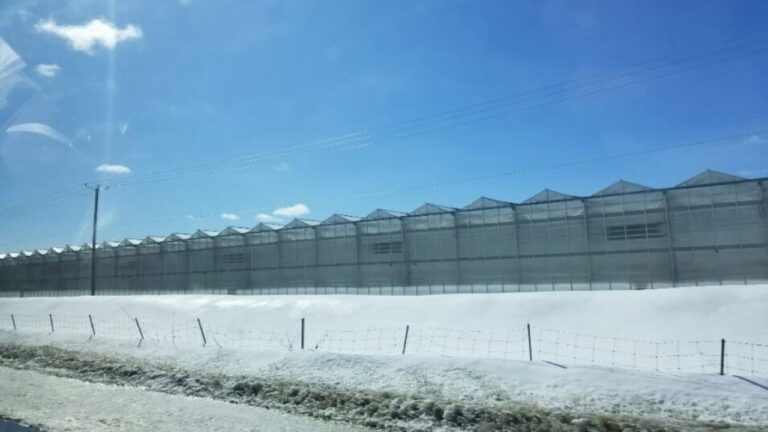
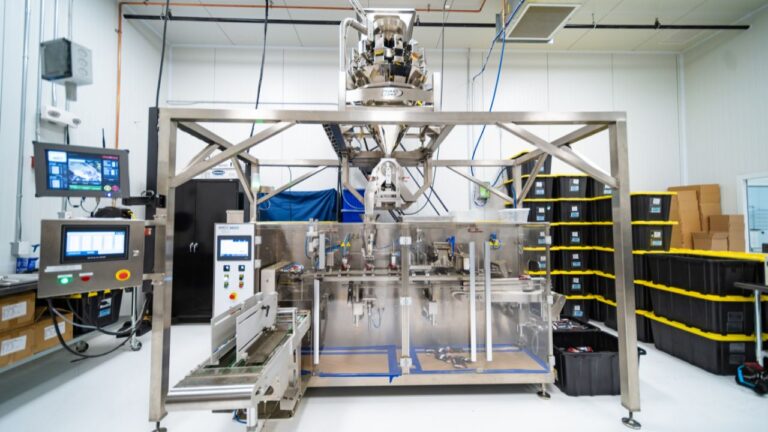
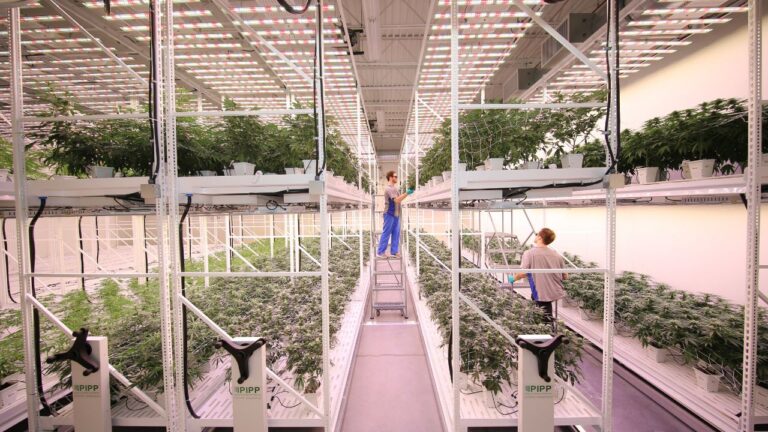
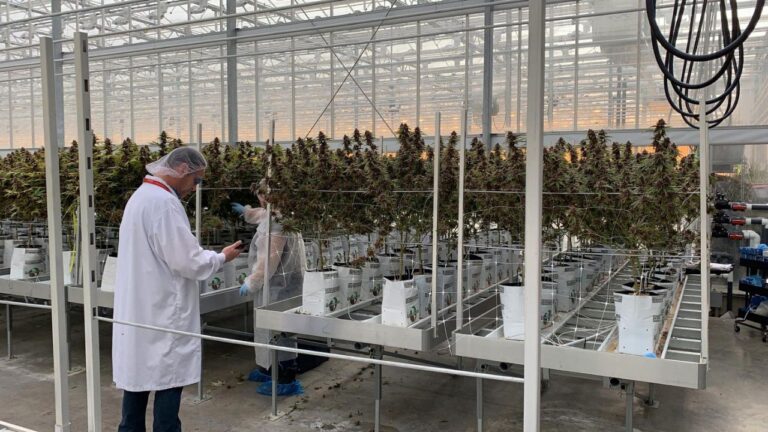
These projects in other markets show the cultivation and facility work behind our Arkansas advice, and the results for each sit in our case studies.

Exterior view of the Hexo Venlo glasshouse row spanning over 1 million square feet.

Hexo Corp.

Gatineau, Quebec, Canada

Modern stainless steel automated cannabis pre-roll processing machine in a dedicated production room.

Bostica

Lynn, MA, United States

Catalyst BC consultants and LeafLine Cultivation Director inspecting vibrant plants in an organized vertical grow room.

Leafline Labs

Cottage Grove, MN, United States

Catalyst BC consultant recording air, environmental, and plant data measurements within a cultivation facility.

View All Projects

View all Catalyst BC Projects

Further Reading for Arkansas Buyers and Growers

Provenance. Figures checked against the amendment, rule and statute text by Catalyst BC on October 7, 2026, and reviewed by Leif Olsen, Chief Executive Officer. Amendment 98 and the rules were read in the Commission’s compiled Medical Marijuana Rules (created September 1, 2026), whose amendment text is current through the 2026 fiscal session. Scanned minutes were read by text recognition and checked against the PDFs. License counts and the cultivation budget are our own arithmetic from Commission records; company figures come from Catalyst BC’s own records. Where this page and the official text differ, the official text governs.

Constitution, statute and rules

Medical Marijuana Commission pages, forms and minutes

Department of Finance and Administration

Contact Us

Enough about us. We want to hear more about you, your project, and your vision! Get in touch with a real live person today. Don’t worry, we don’t have a long, confusing phone menu, and your email isn’t going to the abyss, we promise. At Catalyst, we provide the service and support we’d want to experience ourselves!

Scroll to Top