






























Virginia Cannabis Consulting: CCA Licensing, Compliance and Buildout

From Application to Operations, Built Right from Day One. The Virginia Cannabis Control Authority opens license applications on February 1, 2027 and retail sales begin July 1, 2027, and on September 9, 2026 the CCA released its draft adult-use regulations at 3VAC10-10 et seq. Those drafts tell you what the application will cost, what the Authority will inspect, and just as usefully, which limits it has not set yet. Catalyst BC has secured 57+ cannabis licenses at a 96% success rate on competitive applications and designed more than 11M+ square feet of cultivation and production space. This page is what we currently know about Virginia, with the regulation section cited so you can check it.

A Decade of Harvesting Success - Trusted by Cannabis Operators Worldwide

Virginia's 2027 Launch Timeline

Feb 1, 2027Applications open
Jul 1, 2027Retail sales begin
Sep 9, 2026Draft regulations released

Updated: 9/25/2026. Virginia legalized possession in July 2021 but never stood up a commercial market. That changed in 2026: the Governor’s office announced an agreement on June 16, 2026 to create a retail market through the budget process, with applications opening February 1, 2027 and sales beginning July 1, 2027. Tax is set at 6% at the state level, rising to 8% after July 1, 2029, with localities able to add 1% to 3.5% on top of the existing retail sales and use tax.

The practical consequence is that Virginia is a pre-application market with a hard date. You have roughly four months from the release of the draft regulations to the opening of applications. Everything that takes longer than four months such as securing a site outside the buffer, lining up separate and distinct capital, recruiting a pharmacist-in-charge and a responsible party, getting local zoning in hand has to start before the window opens, not after. Operators who wait for final regulations will be assembling a site and a team while their competitors are submitting.

Meet Catalyst BC's Founders

  • Leif Olsen - Chief Executive Officer

    Leif Olsen

    Chief Executive Officer

  • Michael Williamson - Chief Operating Officer

    Michael Williamson

    Chief Operating Officer

  • Ian Miller - Executive Chair

    Ian Miller

    Executive Chair

Our partners bring multi-faceted expertise across business strategy, licensing, facility development, finance, and commercial operations. That breadth is complemented by subject matter experts across the wider Catalyst BC team, allowing us to bring the right combination of experience to each client and project. The result is bespoke, collaborative support shaped around your business, priorities, and goals - with the right expertise brought to the table when it matters most.


Learn more about our team

As Featured In:

Virginia License Types, Fees & Caps

Chapter 20 of the draft sets the fee schedule.

  • A retail marijuana store pays $4,000 to apply, $20,000 for initial authorization and $15,000 a year to renew, with a $2,500 re-inspection fee.
  • A microbusiness pays $1,000 to apply, $2,500 initially and $6,000 annually.
  • Cultivation is tiered: application fees run $3,000 for Tier I and Tier II, $5,500 for Tier III and $7,500 for Tiers IV and V; initial authorization runs $20,000, $25,000, $30,000, $35,000 and $50,000 across Tiers I to V; annual renewal runs $15,000, $20,000, $25,000, $30,000 and $45,000.
  • Processing facilities pay $5,000 to apply, $30,000 initially and $25,000 annually.
  • Transporters and delivery operators each pay $500 to apply, $2,500 initially and $5,000 annually.
  • Testing facilities pay $1,000, $2,000 and $2,000. Product registration is $50 per product, or $25 for a microbusiness (draft, pp.6-9).
License or permit Application Initial authorization Annual renewal Reinspection
Retail marijuana store $4,000 $20,000 $15,000 $2,500
Microbusiness $1,000 $2,500 $6,000 $1,000
Swipe to see all fees →

Draft 3VAC10-20-80 & -90, pp.8–9 · microbusiness product registration is $25 each

Cultivation tier Application Initial authorization Annual renewal
Tier I $3,000 $20,000 $15,000
Tier II $3,000 $25,000 $20,000
Tier III $5,500 $30,000 $25,000
Tier IV $7,500 $35,000 $30,000
Tier V $7,500 $50,000 $45,000
Swipe to see all fees →

Draft 3VAC10-20-60, pp.7–8 · plus $5,000 reinspection and $50 per registered product

License or permit Application Initial authorization Annual renewal Reinspection
Processing facility $5,000 $30,000 $25,000 $5,000
Marijuana transporter $500 $2,500 $5,000 $500
Delivery operator $500 $2,500 $5,000 $500
Testing facility $1,000 $2,000 $2,000 $2,000
Swipe to see all fees →

Draft 3VAC10-20-70 to -120, pp.8–9

License or permit Application Initial permit Annual renewal Reinspection
Pharmaceutical processor $10,000 $120,000 $100,000 $5,000
Cannabis dispensing facility $4,000 $40,000 $30,000 $5,000
Swipe to see all fees →

Draft 3VAC10-20-30 & -40, p.7

  • On the existing medical side, a pharmaceutical processor permit is in a different league: $10,000 to apply, $120,000 for the initial permit and $100,000 a year to renew, with an additional cultivation location costing $5,000 to apply, $80,000 initially and $64,000 annually.
  • A cannabis dispensing facility permit is $4,000, $40,000 and $30,000 (draft, p.7).

A qualified impact licensee applicant may ask the Authority to reduce or waive applicant and license fees, approved case by case (draft, p.6). That is the provision worth modeling before you decide which entity applies.

How the Virginia Application Works

Virginia is not an annual-window state. Under draft 3VAC10-30-100 the Authority publishes a notice of open applications only when a permit or license is actually available, and that notice carries the criteria, the fees and the deadline. The published criteria are your disciplinary history with any state or federal regulator, your ability to control diversion, theft and loss, your knowledge, procedures, security controls and ethics, and the extent to which you or your owners already hold a financial interest in another license or application. You may submit only one application per license type in response to any given notice.

Four things disqualify you outright and none of them is about the quality of your plan: missing the deadline, failing to pay every applicable fee, failing to notify the board promptly when submitted information changes, and failing to cooperate with an Authority inquiry (draft 3VAC10-30-110(B)(2)). Then comes the part most applicants misjudge. Where more than one applicant qualifies, the Authority may hold a lottery or similar process to decide who receives preliminary approval, and the board’s decision not to grant preliminary approval is final (draft 3VAC10-30-110(C)). You are not being scored into a ranked list you can appeal. You are being screened for qualification and then, potentially, drawn.

That changes the strategy. The return on a beautifully written narrative is capped; the return on being unambiguously qualified, complete and responsive is not. Once the Authority asks for anything further you have 10 calendar days to produce it (draft 3VAC10-30-120(B)). Material owners — anyone at 5% or more — go through a criminal background check, and no one convicted of a felony in the last five years may be a material owner, employee or agent (draft 3VAC10-30-120(A)).

Preliminary approval then starts an 18-month clock to complete every issuance requirement: a separate and distinct physical address, documentation of separate and distinct capital, a pharmacist-in-charge and a responsible party, construction or remodeling, equipment installation, and local zoning approval (draft 3VAC10-30-120(D)). Eighteen months is not generous for a build. It is the reason site control and a costed construction schedule belong in your pre-application work, not your post-approval work.

Site, Security & Buildout Rules

The site rule is a hard edge. A marijuana establishment’s address shall not be within 1,000 feet of a school or daycare (draft 3VAC10-30-130(A)(4)), and failing to secure property outside that radius is explicit grounds to revoke preliminary approval (draft 3VAC10-30-120(C)(3)). Read the definitions before you sign a lease: “school” covers any public school K-12, any private or religious school offering K-12 instruction at any grade, and any private or religious nursery school, preschool or licensed child-care center, while “daycare” picks up a child day center or family day home under § 22.1-289.02. A site that clears the public elementary school can still fail on a church preschool two streets away.

Alarm: a failure notification system plus a back-up able to stay operational through a power outage, a duress alarm, a panic alarm and an automatic voice dialer, auxiliary power, and the ability to signal the monitoring entity when breached even if the communication line is down.

Cameras: clear identification with an embedded date and time stamp; 24-hour recordings available for immediate viewing by the board on request and retained at least 30 days, longer where a pending investigation may need them. Cultivation areas need an unobscured view, and motion-activated flood-lights may face away from the plant canopy.

Entry control: commercial-grade non-residential door locks; secured secondary entrances including windows, roofs and ventilation systems; product in an approved safe or vault whenever the sales area is unattended; visitor badges with continuous employee escort; and a written request to the Authority before admitting a party of more than five people to secured areas (drafts 3VAC10-40-30, 3VAC10-40-140).

Compliance After You're Licensed

Virginia requires an RFID seed-to-sale electronic tracking system that follows the plant from seed or immature stage through sale or destruction, including a central inventory management system with standard and ad hoc reporting, and evidence you are using it is a condition of issuance (draft 3VAC10-30-10, 3VAC10-40-40).

At the counter, no single transaction may exceed two ounces of marijuana or the equivalent to one person, except amounts authorized by law for a qualifying patient. The draft fixes the equivalences: two ounces of botanical marijuana equals eight grams of concentrate or 800 milligrams of THC in an edible (draft 3VAC10-50-30). Every licensee needs a written recall plan naming recall coordinators, with a communications plan that notifies affected parties no later than 48 hours from issuing a recall notice, available for Authority inspection on request (draft 3VAC10-50-40).

A licensee may only advertise through a channel where at least 85% of the audience is reasonably expected to be 18 or older on reliable, up-to-date audience composition data, and never on television or radio outside regular school hours for elementary and secondary schools (draft 3VAC10-40-170(A))

Every advertisement must legibly identify the responsible licensee and carry a statement that the products are for patients and persons 21 or older. Any claim touching benefits, safety or efficacy must be supported by substantial, current clinical evidence and must also disclose side effects and risks. Owned websites and social accounts need a neutral age-screening mechanism verifying 21 or qualified patient status, and outdoor signage must still satisfy local rules (draft 3VAC10-40-190).

Cartoons, mascots, cartoon-like fonts, candy references and any imitation of food, soda or cereal are out, as is any seal or insignia implying Commonwealth endorsement (draft 3VAC10-40-160).

One provision deserves attention before you take investment. An impact licensee, and any person holding a direct or indirect beneficial interest,  may not sell, assign or transfer a controlling interest of more than 49% of the license for five years from issuance, unless the transfer is part of an estate plan to a family member or a trust for the licensee’s immediate family (draft 3VAC10-30-20(D)).

After five years a larger transfer to a non-qualifying buyer may be allowed, but the board may revoke impact privileges on review and the new holder inherits anything the transferor owes (draft 3VAC10-30-20(E)). If your capital structure assumes a near-term majority exit, it is incompatible with an impact license.

Virginia Cannabis Consultant & Compliance Services

Navigating Virginia’s emerging commercial cannabis landscape requires a structured framework spanning initial development through long-term operational scale:

  • In the pre-licensing phase, success relies on early-phase planning, strategy, and feasibility services, robust financial modeling, and an investor-ready capital raise strategy to build a viable foundation.
  • As application windows open, seamless market entry demands rigorous licensing and application management paired with tailored facility design support to ensure state compliance.
  • Following license approval, operations transition through targeted start-up and commissioning across cultivation, processing, and retail facilities, backed by a comprehensive go-to-market strategy.
  • To maintain long-term profitability and market share, post-licensing support focuses on cultivation, manufacturing, retail, and vertical integration optimization, supported by periodic facility audits, strategic mergers and acquisitions, and proactive regulatory compliance and risk management.
0 +
Years Regulated Cannabis Operations Experience
0 +

Compliant Harvests

0 M+

Square Feet of Cultivation, Production, and Retail Facilities Designed

0 +

Licenses Secured

Virginia Cannabis Compliance & Regulations FAQs

Applications open on February 1, 2027, per the agreement announced by the Governor’s office in June 2026. Virginia does not run a standing annual window: the Cannabis Control Authority publishes a notice of open applications when a license is available, and that notice carries the criteria, the fees and the deadline. You may submit only one application per license type per notice.

July 1, 2027. Possession has been legal since July 2021, but there has been no legal commercial retail market in the interim. Tax is 6% at the state level, rising to 8% after July 1, 2029, with localities able to add 1% to 3.5%.

Under the September 9, 2026 draft regulations, a retail store pays $4,000 to apply, $20,000 for initial authorization and $15,000 annually. A microbusiness pays $1,000, $2,500 and $6,000. Cultivation application fees run $3,000 to $7,500 depending on tier, with initial authorization from $20,000 to $50,000 and renewal from $15,000 to $45,000. These are draft figures and can change before final adoption.

The draft caps retail marijuana stores at 350 and Tier V cultivation facilities at five. The caps for Tier I through Tier IV cultivation and for processing facilities are not set – the draft prints a placeholder in place of each number. Anyone quoting you those figures today is not quoting the regulation.

The Virginia Cannabis Control Authority, an independent political subdivision of the Commonwealth governed by a five-person board with a CEO, both appointed by the Governor and confirmed by the General Assembly. It is advised by the 21-member Cannabis Public Health Advisory Council and draws its authority from Chapter 6 of Title 4.1 of the Code of Virginia.

1,000 feet from a school or daycare. The definitions are broad: “school” includes any private or religious nursery school, preschool or licensed child-care center, not only K-12 campuses. Failing to secure a compliant site is explicit grounds for the board to revoke preliminary approval.

Both, in sequence. The Authority first identifies qualified applicants against the criteria published in the notice, then, where more than one applicant qualifies, it may hold a lottery or similar process to award preliminary approval. The board’s decision not to grant preliminary approval is final, so there is no ranked appeal.

18 months from notification. In that time you must provide a separate and distinct physical address, document separate and distinct capital, employ a pharmacist-in-charge and a responsible party, complete construction or remodeling, install equipment and obtain local zoning approval. That is why site control and a costed build program belong in the pre-application phase.

Selected Cannabis Consulting Projects

Proven Experience Across Markets, Facilities, and Operations.

Every cannabis operation presents a different set of challenges. Our project experience spans large-scale cultivation, manufacturing, facility design and commissioning, operational optimization, and turnaround support across established and emerging regulated markets. For Virginia operators, that experience matters. We bring lessons learned from designing, launching, evaluating, and optimizing facilities across North America and apply them to the specific regulatory requirements, business objectives, and operational realities of your project. Catalyst BC provides cannabis consulting services to operators across more than 40 states and internationally.

Explore a selection of projects that demonstrate the depth, scale, and hands-on experience behind Catalyst BC.

Exterior view of the Hexo Venlo glasshouse row spanning over 1 million square feet.

Hexo Corp.

Gatineau, Quebec, Canada
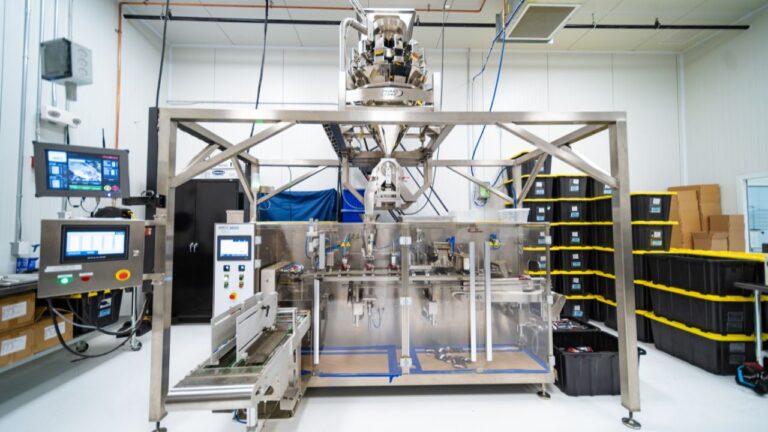
Modern stainless steel automated cannabis pre-roll processing machine in a dedicated production room.

Bostica

Lynn, MA, United States

Catalyst BC consultants and LeafLine Cultivation Director inspecting vibrant plants in an organized vertical grow room.

Leafline Labs

Cottage Grove, MN, United States
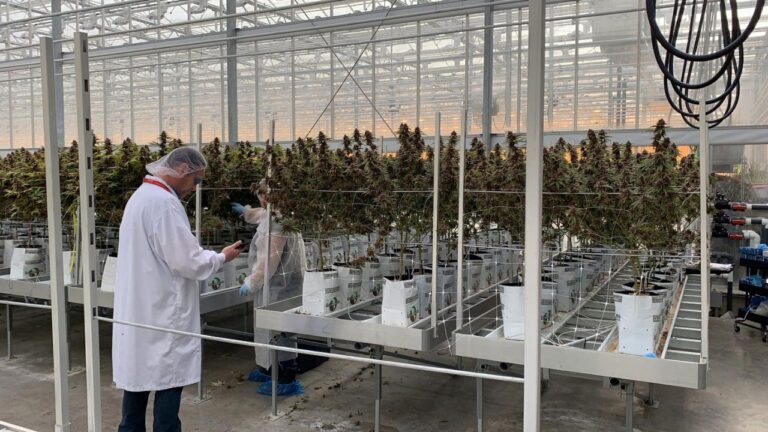
Catalyst BC consultant recording air, environmental, and plant data measurements within a cultivation facility.

View All Projects

View all Catalyst BC Projects
Virginia Cannabis Industry Insights and Resources

Provenance. All retail-market figures on this page are drawn from the Virginia Cannabis Control Authority draft regulations at 3VAC10-10 et seq., released September 9, 2026. These regulations are proposed, not adopted, and the draft section numbers below are not yet published in the Virginia Administrative Code. Statutory citations are to the Code of Virginia as currently in force. Medical program figures are from adopted regulations. Last reviewed September 25, 2026.

Virginia Cannabis Control Authority

CCA announcements

Code of Virginia — Authority and Board (Title 4.1, Chapter 6)

Code of Virginia — Adult-use licensing (Title 4.1, Chapter 8)

Code of Virginia — Medical cannabis (Title 4.1, Chapter 16)

Code of Virginia — Definitions referenced in siting rules

Virginia Administrative Code (adopted regulations)

Regulatory process

Contact Us

Enough about us. We want to hear more about you, your project, and your vision! Get in touch with a real live person today. Don’t worry, we don’t have a long, confusing phone menu, and your email isn’t going to the abyss, we promise. At Catalyst, we provide the service and support we’d want to experience ourselves!

Scroll to Top