Georgia Cannabis Consultants for GMCC Investors and Licensed Growers
Georgia cannabis consulting starts with one fact: the Georgia Access to Medical Cannabis Commission (GMCC) takes new dispensing applications only from its six production licensees, and no production license round is open. Investors enter through an approved stake in a licensee; licensees add dispensaries. Our records show 58+ licenses secured.
A Decade of Harvesting Success - Trusted by Cannabis Operators Worldwide
GMCC Filing Windows Ahead
Updated: 10/8/2026. Georgia’s Hope Act (O.C.G.A. § 16-12-200 and following) created the GMCC to license in-state production and dispensing of medical cannabis for patients on the Georgia Department of Public Health registry. The Putting Georgia’s Patients First Act (SB 220), effective July 1, 2026, renamed “low THC oil” as medical cannabis, allowed vaporization but not smoking, and capped each product package at 1,200 milligrams of THC. A registered patient or caregiver may now possess products holding up to 12,000 milligrams of THC in total, in labeled pharmaceutical containers.
The GMCC announced these windows at its September 30, 2026 meeting (GMCC meeting summary). The October 26 to 30 and January 25 to 29 windows accept dispensing applications only from Class 1 and Class 2 production licensees. The December 7 to 11 period is for dispensing licenses that expire December 31, 2026. With 56,650 active patients on September 23, 2026, the Hope Act now allows up to nine dispensing licenses for each production licensee: five to start, one more at 25,000 patients and one more for each further 10,000.
Meet Catalyst BC's Founders
-
Leif Olsen
Chief Executive Officer
-
Michael Williamson
Chief Operating Officer
-
Ian Miller
Executive Chair
Our partners bring multi-faceted expertise across business strategy, licensing, facility development, finance, and commercial operations. That breadth is complemented by subject matter experts across the wider Catalyst BC team, allowing us to bring the right combination of experience to each client and project. The result is bespoke, collaborative support shaped around your business, priorities, and goals - with the right expertise brought to the table when it matters most.
Hiring a Georgia Cannabis Consultant When All Six Production Licenses Are Held
The GMCC licenses producers and dispensaries, registers laboratories, inspects all three and sets the testing limits; it does not structure an investment, write a licensee’s dispensing application or design its rooms. A Georgia cannabis consultant works on that owner side: diligence on a licensee, the filings the GMCC requires, the business plan and the cultivation space that has to pass inspection and testing.
Buying Into One of Georgia’s Six Production Licensees
For investors, the first fact: an applicant for a production license must be a Georgia corporation or entity with a bank account at a Georgia bank or credit union (O.C.G.A. § 16-12-211(b)). In its fiscal year 2026 report, the GMCC listed that Georgia-entity limit among the parts of the Hope Act that may need updating. All six production licenses are issued, so the practical route in is a stake in a licensee, subject to the ownership rules in the ownership section.
Two federal and state points shape returns. Section 280E of the federal tax code denies deductions for trafficking in Schedule I and II substances (26 U.S.C. § 280E), and the GMCC reports that state-licensed medical cannabis moved to Schedule III effective April 22, 2026; have your tax adviser confirm how that applies to your entity. In Georgia, a licensee may not claim the state tax credits listed in § 16-12-218, including the county-tier job tax credit.
Our work for Georgia investors: diligence on a licensee, its owners and its GMCC record through cannabis business strategy; a Georgia cannabis business plan with dispensary-by-dispensary projections through cannabis financial planning; owner-change and dispensing filings through cannabis license application support; and build-out to the preliminary inspection through cannabis startup support.
Already Licensed by the GMCC: Canopy Caps, Vape Flower and Faster Store Growth
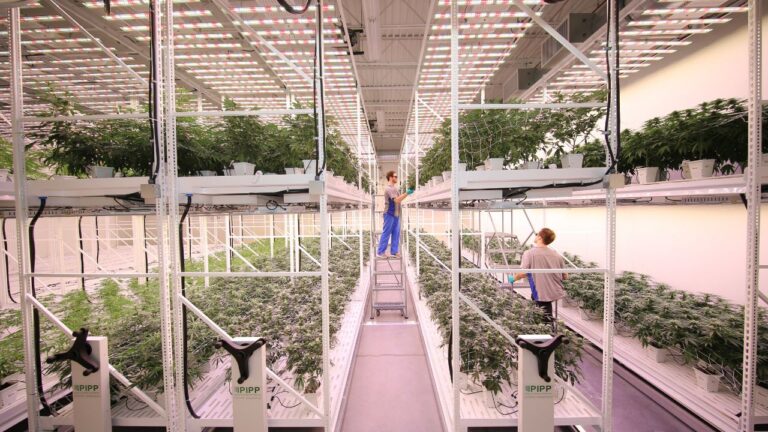
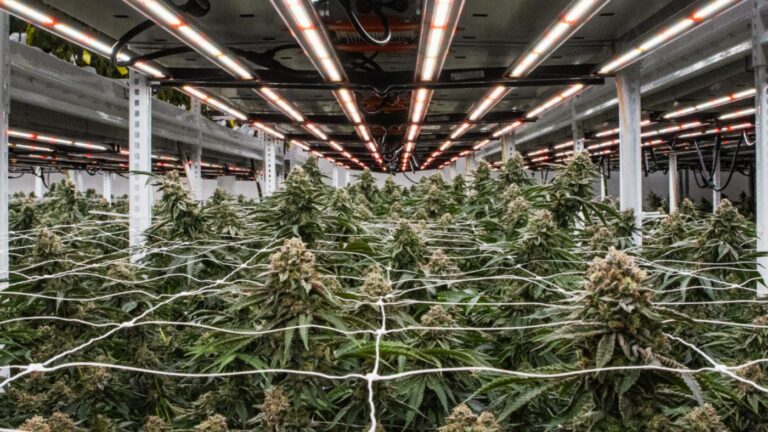
A Class 1 licensee may grow only indoors on up to 100,000 square feet of cultivation space, and a Class 2 licensee on up to 50,000. Under GMCC Rule 351-4-.04, canopy is the area holding mature flowering plants, and when plants grow on shelving the surface of each level counts toward the cap (Rule 351-4-.04(2)). Vertical tiers therefore do not add allowed canopy in Georgia. Propagation space with immature plants is not counted.
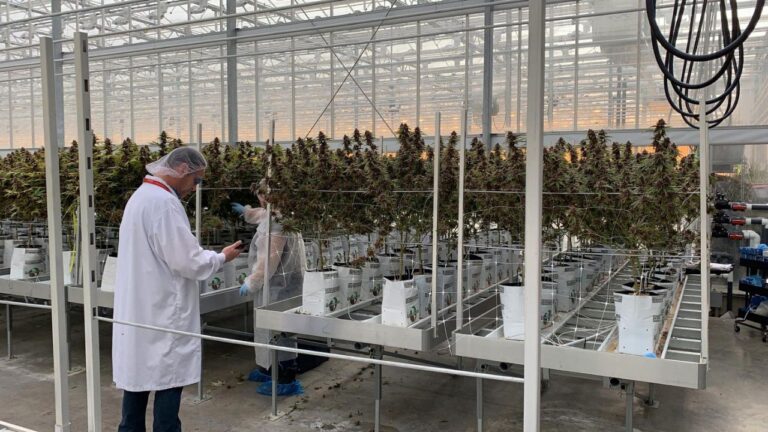
Since July 1, 2026, licensees may make vaporizer products, including flower for vaporization. The registry grew from 35,662 active patients on June 22 to 56,650 on September 23 (GMCC June 24 summary and September 30 summary). In our work, flower for vaporization puts dry and cure rooms, moisture control and yeast and mold results at the center of a Georgia grow, and the levers inside a fixed canopy are cultivar selection, plant density, light intensity and dehumidification capacity; each can raise grams per square foot without adding counted canopy.
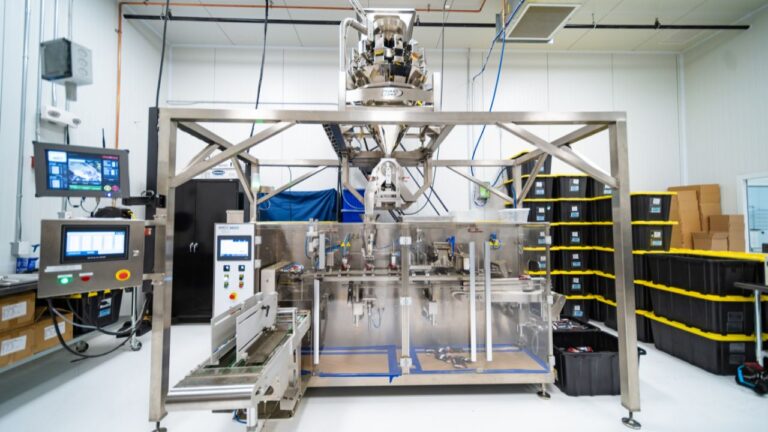
For Georgia rooms we work on cannabis facility design with HVACD (heating, ventilation, air conditioning and dehumidification), controlled environment agriculture targets set against the microbial limits, cannabis vertical farming layouts that count every shelf toward the cap, operational optimization of harvest scheduling and labor and, when margins slip, a cannabis turnaround diagnostic. Our Chief Operating Officer and co-founder Michael Williamson has 25,000+ hours (company-reported) in cultivation and dispensary operations and co-founded Greenhaus Industries, which patented stackable trays for growing on multiple tiers.
Our Georgia record and team: we have not yet had a Georgia client. Leif Olsen, our Chief Executive Officer and a co-founder, leads our licensing work, and Ian Miller, our Executive Chair and a co-founder, raised $22 million (company-reported) in private equity for a greenfield cultivation and processing operation outside Georgia. We have no Georgia office; we deliver work on-site and remotely, and the same team runs Catalyst BC’s national cannabis consulting practice.
A word against our own interest: the GMCC posts its rules, forms and fee schedule free (GMCC forms page), and a production licensee can file a dispensing application without a consultant. To talk through a Georgia file, contact us or call (USA) 303-305-3787.

Investing in Georgia cannabis
- Cannabis Business Strategy ConsultingDiligence on a Georgia licensee
- Cannabis Financial Planning & ModelingProjections by county fee tier
- Cannabis Licensing & Application SupportOwner changes and dispensing windows
- Cannabis Startup SupportBuild-out to preliminary inspection
Already licensed in Georgia
- Cannabis Facility Design & HVAC / HVACD EngineeringDry rooms for vape flower
- Cannabis Controlled Environment Agriculture (CEA)Climate that passes yeast and mold
- Cannabis Vertical Farming ConsultingTiers counted toward the canopy cap
- Cannabis Operational OptimizationHarvests, labor and seed-to-sale
- Cannabis Business Turnaround & Operational RecoveryRecovery before a renewal
Compliant Harvests
Square Feet of Cultivation, Production, and Retail Facilities Designed
Licenses Secured
Can You Apply for a GMCC License in October 2026?
Not for a production license. The GMCC’s production license page says the Commission does not currently have any open Request for Proposals for production licenses (GMCC Class 1 page); the last competitive round closed January 27, 2021. Under the Hope Act, a new Class 1 or Class 2 license can be issued as a replacement after a revocation or surrender (§ 16-12-221(a)), or as one of the extra licenses § 16-12-214 allows for minority- and women-owned businesses if the Commission’s study finds race or gender discrimination in licensing; the GMCC lists its 2022 and 2026 studies as completed.

Dispensing licenses are open in windows, but only to production licensees: GMCC Rule 351-3-.02 says only Class 1 or Class 2 production licensees are eligible to apply (Rule 351-3-.02(1)). Independent pharmacies are licensed separately, by the Georgia Board of Pharmacy. Anyone else preparing a Georgia cannabis license application has no GMCC window to file in; laboratories use a separate registration form.
GMCC filings open and closed on October 8, 2026
| Filing | Status | Detail |
|---|---|---|
| New Class 1 or Class 2 production license | Closed | No open Request for Proposals |
| New dispensing license | Windows for production licensees | October 26 to 30, 2026; January 25 to 29, 2027 |
| Dispensing license renewal | Scheduled | December 7 to 11 for licenses expiring December 31, 2026 |
| Change of name, owner or agent | Open to licensees | Change application, $1,000 fee |
| Dispensary relocation | During an application window | New dispensing application keeping the license number |
| Independent laboratory registration | Open to laboratories | Registration form and $10,000 fee |
GMCC September 30, 2026 meeting summary; GMCC production license and fee schedule pages; Rules 351-3-.02 and 351-6-.10. Every source is listed at the bottom of this page.
How Georgia has issued licenses so far
| Step | When | Result |
|---|---|---|
| Production license Request for Proposals | Opened November 23, 2020; closed January 27, 2021 | One competitive round for both classes |
| Class 1 production licenses | Issued September 21, 2022 | 2 licenses, to the highest-scoring applicants |
| Class 2 production licenses | Issued November 15, 2023; final award May 7, 2025 | 4 licenses, to the highest-scoring applicants |
| First dispensing licenses | April 26, 2023 | 5 issued; the first two dispensaries opened April 28, 2023 |
| Registry milestones | 25,000 patients (November 24, 2023) to 55,000 (September 23, 2026) | One more dispensing license per production licensee for each milestone |
GMCC Verify a License list (updated September 30, 2026); GMCC fiscal year 2026 report; GMCC September 30, 2026 meeting summary.
From dispensing approval to an open store
| Stage | Rule |
|---|---|
| License fee | Paid within 30 days after the dispensing license is issued |
| Preliminary inspection | Scheduled and passed within 180 days of issuance unless extended; no operations before it |
| Occupancy | Certificate of occupancy or other proof of completed inspections shown at the preliminary inspection |
| Opening notice | Tell the GMCC on or before the first day of dispensing (rule adopted September 30, 2026, once effective) |
| Renewal | Every year, during the renewal period, before expiration |
Rules 351-3-.02(7), 351-3-.03 and 351-6-.01; GMCC notice of amendments to Rule Chapter 351-6.
Investors who are not production licensees should jump to ownership.
Class 1, Class 2 and Dispensing Licenses Under Georgia’s Hope Act
Georgia runs a vertically integrated medical market. Each production licensee grows indoors and manufactures products, and the GMCC issues its dispensing licenses to production licensees, so every Commission-licensed store is tied to one of the six production licenses (§ 16-12-206(a)(2)). The Class 1 licenses belong to Botanical Sciences, LLC in Glennville and Trulieve GA, Inc. in Adel; the Class 2 licenses to FFD GA Holdings LLC in Macon, TheraTrue Georgia, LLC in Louisville, Natures GA, LLC in Dublin and Treevana Remedy Inc. in Milledgeville. The GMCC also registers independent laboratories. Hemp and the sale of hemp-derived products are regulated by the Georgia Department of Agriculture, not the GMCC.
What each GMCC credential allows, and its limits
| License | What it allows | Key limit |
|---|---|---|
| Class 1 production | Indoor cultivation and manufacturing | Up to 2 licenses; 100,000 sq ft of cultivation space; $2 million in cash reserves at application and award |
| Class 2 production | Indoor cultivation and manufacturing | Up to 4 licenses; 50,000 sq ft of cultivation space; $1.25 million in cash reserves at application and award |
| Dispensing | Retail outlet dispensing to registered patients | Applications only from production licensees; renewed each year |
| Independent laboratory | Tests products before sale | Registered and approved by the GMCC before testing |
| Designated university | Production for the University of Georgia or Fort Valley State University | None licensed at the end of fiscal year 2026 |
O.C.G.A. §§ 16-12-200, 16-12-206, 16-12-211 and 16-12-212; Rule 351-7-.01; GMCC fiscal year 2026 report.
Dispensing licenses allowed per production licensee
| Registry level | Date reached | Licenses per production licensee |
|---|---|---|
| Hope Act base | — | 5 |
| 25,000 patients | November 24, 2023 | 6 |
| 35,000 patients | June 22, 2026 | 7 |
| 45,000 patients | August 5, 2026 | 8 |
| 55,000 patients | September 23, 2026 | 9 |
O.C.G.A. § 16-12-206(a)(2); GMCC September 30, 2026 meeting summary.
Production licenses renew every year, within license contracts of at least five years; the GMCC list shows the Class 1 licenses expiring September 21, 2032 and the Class 2 licenses November 15, 2028. When a production license expires, every dispensing license that depends on it expires too (Rule 351-3-.03(8)). A new production licensee that is not fully operational within 12 months of the award loses its license. A license stays active while a complete, timely renewal is pending, but the GMCC will not renew a licensee with unpaid and undisputed fines.
GMCC Application, License and Renewal Fees by Class and County Tier
Fees collected by the GMCC are nonrefundable and nontransferable (GMCC fee schedule). Dispensing fees rise with the county tier of the store’s location, from Tier 1 to Tier 4; the GMCC forms page links the Department of Community Affairs job tax credit tier map, which ranks counties by unemployment, per capita income and poverty.
Production license fees
| Item | Class 1 | Class 2 |
|---|---|---|
| Application | $25,000 | $5,000 |
| License fee on award | $200,000 | $100,000 |
| Annual renewal | $100,000 | $50,000 |
| Change of name, owner or agent | $1,000 | $1,000 |
GMCC fee schedule; O.C.G.A. §§ 16-12-211(c) and (d), 16-12-212(c) and (d).
Dispensing license fees by county tier
| County tier | License fee | Annual renewal |
|---|---|---|
| Tier 1 | $15,000 | $25,000 |
| Tier 2 | $20,000 | $30,000 |
| Tier 3 | $25,000 | $35,000 |
| Tier 4 | $30,000 | $40,000 |
| Application, every tier | $5,000 | — |
| Change of name, owner or agent | $1,000 | — |
GMCC fee schedule.
Laboratory, transfer and penalty amounts
| Item | Amount |
|---|---|
| Independent laboratory registration | $10,000; renewals $1,500, then $2,500, then $5,000, then $10,000 each year after |
| Transfer fee per sale of a whole Class 1 business (1st, 2nd, 3rd, 4th and later) | $100,000; $150,000; $200,000; at least $200,000 |
| Transfer fee per sale of a whole Class 2 business (1st, 2nd, 3rd, 4th and later) | $12,500; $62,500; $112,500; at least $112,500 |
| Fine, first offense | Up to $25,000 |
| Fine, not remedied within 60 days | Up to $50,000 |
| Fine, not remedied within 90 days | Up to $75,000, and after a third notice an order to cease operations for up to 30 days |
GMCC fee schedule; O.C.G.A. § 16-12-222(e); § 16-12-203(17) as revised by SB 220.
Budget accordingly: a new Tier 4 dispensary costs a production licensee $35,000 in GMCC fees in its first year, the $5,000 application plus the $30,000 license fee, then $40,000 a year; a Tier 1 store costs $20,000, then $25,000. Nine stores at the Tier 4 renewal rate would carry $360,000 a year in renewals before the production license’s own renewal (our arithmetic from the fee schedule). Our cannabis startup costs breakdown covers the build-out side of the budget.
How a Georgia Production Licensee Wins a New Dispensing License
During an open window, a production licensee files a separate application for each proposed dispensary with the $5,000 fee, its production license number, its organizational documents, an executed lease, purchase or other written agreement for the site and an attestation that the site meets the statute’s location rules; the amendments adopted September 30 also accept a signed letter of intent to lease. It also shows distances to existing and its own proposed dispensaries, explains local patient need, submits scaled plans and describes the involvement of minority- and women-owned businesses, Georgia agricultural businesses and military veterans.
GMCC staff check each application against the Hope Act and the rules and recommend it, and the Commission votes; on September 16, 2026 it approved three new stores, in Macon, Kennesaw and Duluth (GMCC September 16 summary).
Five steps to open a Georgia dispensary after the window
These steps apply to a production licensee adding a store (Rules 351-3-.02 and 351-6-.01).
- Pick a site that meets the location rules and sign a lease, purchase or other written agreement before you file.
- Prepare scaled plans showing the dispensing area, restricted access areas, patient consultation rooms and an enclosed receiving bay.
- File during the window with the $5,000 application fee and the need statement for the area.
- Pay the county-tier license fee within 30 days after the license is issued.
- Pass the preliminary inspection within 180 days unless the GMCC extends it, showing a certificate of occupancy or other proof of completed inspections, then open and notify the GMCC.
In our work in other states, delays more often start with leases, zoning letters and occupancy than with floor plans, so our cannabis licensing and application team checks those first.
Owning Part of a Georgia Licensee: Five-Year Lock, 5% Owners and Transfer Fees
The Hope Act counts as an owner anyone who directly or indirectly owns or controls 5% or more of an applicant or licensee, and where one person holds the beneficial interest and another the votes, both are owners (§ 16-12-200(14), as revised by SB 220). For a dispensing licensee, adding or removing an owner takes a change application, the $1,000 change fee and GMCC approval, and Rule 351-6-.10 asks for the new owner’s other GMCC interests and any license revoked or disciplined elsewhere; the fee schedule lists the same $1,000 change fee for production licenses. The dispensing application also asks whether each owner or officer owns part of any cannabis-related license issued by another state.
Three statutory rules shape the timing and price of a deal. No production license may transfer ownership within five years of issuance, and later transfers need Commission approval, which may not be unreasonably withheld when the new owner meets every licensing requirement and the transfer serves registered patients; a denial can be appealed to the Superior Court of Fulton County (§ 16-12-222); five years from issuance falls on September 21, 2027 for the Class 1 licenses (our arithmetic); the GMCC lists the Class 2 licenses as issued November 15, 2023 but shows a final award on May 7, 2025, so ask the GMCC which date starts their clock. The statute does not say whether selling a minority stake counts as a transfer. The license itself cannot be assigned; when a licensee’s whole business is sold, the buyer pays the statutory transfer fee in the fee table, subject to approval. And an owner of a Class 1 or Class 2 license may not hold an interest in the other class of production license, or in more than one license of the same class; ownership interests in more than one license are cause for revocation of all of them.
Georgia law makes contracts related to growing, manufacturing and distributing cannabis solely for medical cannabis products enforceable and says they are not unenforceable because federal law prohibits the activity (§ 16-12-233). People with a drug-related felony may not work for or take part in a licensee’s business unless it was expunged or pardoned or their civil rights were restored; other felonies bar them unless one of those applies, or the conviction is over ten years old and they were released five years ago or accept weekly drug screening (§ 16-12-219).
Diligence starts with the GMCC’s license list, the licensee’s contract and renewal record, and its inspection reports and corrective action plans. Each production renewal must also document the involvement of minorities and women in ownership, management, employment and contracts. Correction to published guidance (October 8, 2026): a consulting page last modified September 30, 2026 says production licensees are eligible but then tells readers to form a business entity, raise capital and submit their own application for a Georgia dispensing license. Under GMCC Rule 351-3-.02(1), only Class 1 or Class 2 production licensees are eligible to apply, so an outside investor’s route is a stake in one of the six.
Where Georgia Allows Production Facilities and Dispensaries
No licensee may grow, process, manufacture, package or distribute within 3,000 feet of a covered entity, measured property line to property line: a public or private school, an early care and education program, or a place of public religious worship that existed before the license (§ 16-12-215(a), as revised by SB 220). SB 220 deleted the separate 1,000-foot buffer that applied to dispensing licensees; the GMCC’s dispensing application asks for an attestation that the site complies with § 16-12-215(a). The sources we read do not say whether the 3,000-foot rule now reaches dispensaries, so ask the GMCC before you sign. Since July 1, 2026, no dispensing license may be issued where retail sale of distilled spirits would be prohibited under § 3-3-21(a)(1), which bars it within 100 yards of a church building or a government alcoholic treatment center, or 200 yards of a school or college; that limit does not apply to State Board of Pharmacy licenses.
A local government may use its zoning powers to let dispensaries locate in places the subsection would otherwise rule out, when needed to serve registered patients in its jurisdiction. Licensees may not advertise to patients or the public; they may inform physicians, healthcare providers and registered patients, without unsupported medical claims, misleading statements or appeal to children or people under 21.
Delivery Rule 351-6-.11, adopted September 30, 2026, takes effect 20 days after filing: a dispensing licensee needs an approved delivery plan, verifies the registry card and identity, and ships with tracking and a signature to the Georgia address on the patient’s or caregiver’s state-issued photo ID or to a healthcare institution (GMCC delivery rule notice). Before you sign a lease, confirm the county tier and both distance tests; our cannabis facility design work starts with that screen.
GMCC Testing, Inspections, Seed-to-Sale and Sales Tax
Every product is tested in final packaged form by a GMCC-approved independent laboratory and needs a passing certificate of analysis (the laboratory’s test report), valid for 12 months, before it goes to a dispensary or pharmacy (Rule 351-4-.06). Under Rule 351-7-.08, total yeast and mold may not exceed 10,000 colony-forming units per gram, and Aspergillus fumigatus, flavus, niger and terreus may not exceed 1.0 colony-forming unit per gram (Rule 351-7-.08(h)). A failed batch is quarantined; the licensee may request up to two reanalyses, remediate the batch (which must then pass two separate tests) or dispose of it. The GMCC’s license list showed one registered laboratory, SJ Labs and Analytics in Macon; we treat test turnaround as a scheduling risk.
Pesticides must be certified organic by the Organic Materials Review Institute or a similar standards organization, and a licensee that uses any other pesticide has its license revoked. The GMCC runs operational, routine quarterly and randomized compliance inspections; in fiscal year 2026 it logged 89 site visits and inspections. After an inspection with findings, a licensee files a corrective action plan within seven days after receiving the report, unless the GMCC extends that deadline, and completes it within 14 days of the inspection; the amendments adopted September 30 count the 14 days from the written notice of violations (Rule 351-8-.02). Seed-to-sale tracking (§ 16-12-213) follows every plant, batch, transfer and sale, flags purchases above a patient’s authorized limit, and the Commission watches it daily.
SB 220 also makes it unlawful to smoke medical cannabis, to vaporize it at age 21 or younger, or to use it in any manner in a public place.
The September 30, 2026 rule package also adds wholesale sales of medical cannabis between production licensees on a case-by-case basis, effective 20 days after filing. In our work, a licensee with steady yield and clean certificates is best placed to sell into that channel.
Georgia Sales Tax on Medical Cannabis
The sale of medical cannabis and products is subject to all applicable sales and use taxes (§ 16-12-226). The GMCC reported $426,543 in sales tax on Commission-regulated products for fiscal year 2026 and $1,013,000 in application, registration and license fees, together more than $1.4 million for the state general fund (GMCC fiscal year 2026 report).
Two Georgia Engagements Timed to the January 2027 Window
Investors get a licensee review before they sign: the owner roster against the 5% owner test, the five-year transfer date, the cross-ownership limits, the renewal and inspection record and a Georgia cannabis business plan by county fee tier. Licensees get a canopy and testing review: a Georgia cannabis compliance consulting check of your shelf-level canopy count, certificates of analysis and corrective action plans, and HVACD sized for flower for vaporization, plus a site screen for the January 25 to 29 dispensing window. Send your license class and deal or production figures, and we will tell you plainly if another firm suits you better.
What Investors and GMCC Licensees Ask About Georgia Licensing
Can a new company apply for a Georgia medical cannabis license today?
Not directly. No production license Request for Proposals is open, and GMCC rules let only the six Class 1 and Class 2 production licensees apply for dispensing licenses. A new investor’s route is an ownership stake in a licensee, subject to GMCC change filings and approvals and the five-year transfer lock, or, in our experience, a role as a landlord, lender or supplier to one.
When is the next Georgia dispensing license window?
October 26 to 30, 2026, then January 25 to 29, 2027, as announced at the GMCC’s September 30, 2026 meeting. Each production licensee may now hold up to nine dispensing licenses.
How much does a Georgia dispensing license cost?
The application fee is $5,000. The license fee is $15,000 to $30,000 and the annual renewal $25,000 to $40,000, depending on the county tier of the store. All GMCC fees are nonrefundable.
When can a Georgia production license change hands?
No production license may transfer ownership within five years of issuance: September 21, 2027 for the Class 1 licenses; for Class 2, ask the GMCC whether the clock starts at issuance on November 15, 2023 or the final award on May 7, 2025. Later transfers need Commission approval, and a sale of a whole business carries a statutory transfer fee.
Do shelving tiers count toward Georgia’s canopy cap?
Yes. Under Rule 351-4-.04, the surface area of each shelving level holding mature flowering plants counts toward the 100,000 square foot Class 1 or 50,000 square foot Class 2 limit.
What microbial limits must Georgia products pass?
Total yeast and mold may not exceed 10,000 colony-forming units per gram, and the four listed Aspergillus species 1.0 colony-forming unit per gram. A failed batch is quarantined, and if remediated it must pass two separate tests before release.
When can Georgia dispensaries start delivering to patients?
Not yet. Rule 351-6-.11, adopted September 30, 2026, takes effect 20 days after it is filed with the Secretary of State. It requires an approved delivery plan, a verified registry card and identity, and tracked, signed delivery to the Georgia address on the patient’s or caregiver’s state-issued photo ID.
How is Georgia medical cannabis taxed, and which credits are off-limits?
Sales are subject to all applicable sales and use taxes. Licensees may not claim the state tax credits listed in O.C.G.A. § 16-12-218, including the county-tier job tax credit.
Grow Room, Extraction and Facility Projects Behind Our Georgia Advice
These projects show the cultivation, extraction and facility work we bring to Georgia licensees; each tile opens its full write-up, and all of them are on our projects page.

Hexo Corp.
Gatineau, Quebec, Canada

Bostica
Lynn, MA, United States

Leafline Labs
Cottage Grove, MN, United States

View All Projects
View all Catalyst BC Projects
Reading for Georgia Investors and GMCC Licensees

Dialing In Your Vertical Cannabis Operations: The Hidden Levers of Efficiency, Yield, and ROI
Dial in your vertical cannabis operations for maximum efficiency, yield, and profitability. By focusing on mechanical systems, plant spacing, airflow strategies, and ergonomic workflows, operators

Cannabis Startup Costs: From Licensing to Profitability
Starting a legal cannabis business isn’t just about getting a license—it’s about building a profitable, compliant, and sustainable operation in one of the world’s most

Demystifying HVACD Systems for Cannabis Grow Facilities
Cannabis grow rooms require precisely controlled environments, making Heating, Ventilation, Air Conditioning, and Dehumidification (HVACD) systems essential for success. As plants progress through their growth
Georgia Sources: O.C.G.A. Title 16 Article 9, SB 220, GMCC Rule Chapter 351 and Records
Provenance. Figures checked against the statute, rule and agency text by Catalyst BC on October 8, 2026. Unchanged Hope Act sections were read in a full-text mirror of the Official Code of Georgia, current as of March 28, 2024; SB 220 later replaced “low THC oil” with “medical cannabis” in several of them without other changes and left the others untouched, and the sections SB 220 rewrote were read in the act itself. GMCC rules were read on the Secretary of State’s rules site, current through filings of September 2, 2026; amendments adopted September 30, 2026 take effect 20 days after filing. Budget figures are our own arithmetic; company figures come from Catalyst BC’s own records. Where this page and the official text differ, the official text governs.
Statutes
- SB 220 (2026), Putting Georgia’s Patients First Act, as passed (revising O.C.G.A. §§ 16-12-190, 16-12-191, 16-12-200, 16-12-203, 16-12-215, 16-12-225, 16-12-230, 16-12-231 and 16-12-234, among other Code sections)
- O.C.G.A. § 16-12-213, tracking systems
- O.C.G.A. § 16-12-206, dispensing licenses
- O.C.G.A. § 16-12-211, Class 1 production licenses
- O.C.G.A. § 16-12-212, Class 2 production licenses
- O.C.G.A. § 16-12-214, minority and women owned business study
- O.C.G.A. § 16-12-218, tax credits not available to licensees
- O.C.G.A. § 16-12-219, felony convictions
- O.C.G.A. § 16-12-221, initial and replacement licenses
- O.C.G.A. § 16-12-222, license transfers and transfer fees
- O.C.G.A. § 16-12-223, revocation
- O.C.G.A. § 16-12-226, sales and use taxes
- O.C.G.A. § 16-12-233, contracts
- O.C.G.A. § 3-3-21, alcohol sales near churches and schools
- 26 U.S.C. § 280E, federal tax deductions
GMCC rules, Chapter 351
- Rule 351-3-.02, dispensing license applications
- Rule 351-3-.03, renewals
- Rule 351-4-.04, propagation and cultivation operations
- Rule 351-4-.06, quality control procedures
- Rule 351-6-.01, dispensing preliminary inspection
- Rule 351-6-.03, dispensary security
- Rule 351-6-.10, changes
- Rule 351-7-.01, independent laboratory registration
- Rule 351-7-.08, testing limits
- Rule 351-8-.02, production license inspections
- Notices of intent to amend Rule Chapter 351 and adopt Rule 351-6-.11 (adopted September 30, 2026)
- Notice of intent to amend Rule Chapter 351-4 (August 13, 2026)
Georgia Access to Medical Cannabis Commission records
- Fee schedule
- Verify a License (updated September 30, 2026)
- Class 1 production license
- Class 2 production license (final award May 7, 2025)
- Dispensing license applications
- Forms, including the county tier map link
- Department of Community Affairs, job tax credit tiers
- Frequently asked questions
- Commission meetings
- Meeting summary, June 24, 2026
- Meeting summary, September 16, 2026
- Meeting summary, September 30, 2026
- Notice of intent to adopt Rule 351-6-.11, delivery
- Fiscal year 2026 annual report (September 16, 2026)
Contact Us
Enough about us. We want to hear more about you, your project, and your vision! Get in touch with a real live person today. Don’t worry, we don’t have a long, confusing phone menu, and your email isn’t going to the abyss, we promise. At Catalyst, we provide the service and support we’d want to experience ourselves!