MSDH Licenses and Margins: Mississippi Cannabis Consultants

Mississippi cannabis consulting starts with an open door: MSDH and the Department of Revenue accept license applications now and decide complete files within 30 days. We help investors pick a license and structure, and help licensed growers protect margins. Our records show 58+ licenses secured elsewhere.

A Decade of Harvesting Success - Trusted by Cannabis Operators Worldwide

Next Federal Hemp and Excise Dates

Nov 12, 2026First part of new federal hemp definition applies
Dec 11, 2026Rest of federal hemp definition, incl. 0.4 mg cap
Jan 1, 2027MDOR resets the flower value used for excise tax

Updated: 10/8/2026. Mississippi runs a medical-only program under the Mississippi Medical Cannabis Act. The Mississippi State Department of Health (MSDH) licenses cultivation, processing, testing, transportation, disposal and research; the Department of Revenue (MDOR) licenses dispensaries. The program’s 2025 annual report counted 66,041 active patients, $138.9 million in retail sales and $2.18 million in cannabis excise tax collected, while cultivation licenses fell from 61 to 53 and dispensaries from 200 to 171 (MMCP annual report, 2025).

Three dates matter next. On November 12, 2026 a new federal hemp definition starts with products containing cannabinoids the plant cannot make; from December 11 its total-THC test and the 0.4-milligram per-container cap for final products apply. On January 1, 2027 MDOR recalculates the fair market value it uses to tax flower moved between commonly owned businesses. In March 2026 the governor vetoed a bill that would have lifted the 60% potency cap on concentrates, so that cap stands.

Meet Catalyst BC's Founders

  • Leif Olsen - Chief Executive Officer

    Leif Olsen

    Chief Executive Officer

  • Michael Williamson - Chief Operating Officer

    Michael Williamson

    Chief Operating Officer

  • Ian Miller - Executive Chair

    Ian Miller

    Executive Chair

Our partners bring multi-faceted expertise across business strategy, licensing, facility development, finance, and commercial operations. That breadth is complemented by subject matter experts across the wider Catalyst BC team, allowing us to bring the right combination of experience to each client and project. The result is bespoke, collaborative support shaped around your business, priorities, and goals - with the right expertise brought to the table when it matters most.

Learn more about our team

What a Mississippi Cannabis Consultant Does Beside MSDH and MDOR

MSDH and MDOR license, inspect and enforce; they do not choose your license tier, structure your ownership, design your rooms or model your margins. A Mississippi cannabis consultant works on the owner’s side of the file: the tier and agency decision, the application packet, the build that must pass inspection, and the procedures that keep a license in good standing.

Investing in Mississippi Medical Cannabis: Open Licenses and 10% Ownership Rules

For investors, the way in today is a new license or an approved stake in a licensee. Residency is required only for micro-cultivators and micro-processors, whose owners must be Mississippi residents and U.S. citizens for three years (Miss. Code Ann. § 41-137-35, as amended by HB 1158 of 2023). No person may hold a direct or indirect interest above 10% in more than one cultivation license, more than one processing license or more than five dispensary licenses, and any transfer of an ownership interest, including a partial one, needs the licensing agency’s approval first.

Within those limits, one owner may hold more than 10% of one cultivation license, one processing license and up to five dispensaries. When a cultivator sells flower or trim to a business it shares owners with, the 5% excise tax is figured on the fair market value MDOR sets rather than on the sales price, so an integrated model needs that value in its cash-flow plan.

A federal rule effective April 28, 2026 placed marijuana subject to a state medical marijuana license in Schedule III, a lower federal drug category; the U.S. Department of Justice says state licensees are no longer subject to Section 280E, the tax-code ban on business deductions for Schedule I and II trafficking, but that the rescheduling rule is not a tax determination (91 FR 22714). In our view, that change moves an investor’s after-tax return more than any license fee.

Our work for Mississippi investors: market and tier selection through cannabis business strategy; a Mississippi cannabis business plan with fees, the 5% excise tax and margins through cannabis financial planning; the MSDH or MDOR packet through cannabis license application support; and build-out to the first inspection through cannabis startup support.

Already Licensed in Mississippi: Canopy Tiers, Falling Flower Values and Mold Limits

Your canopy tier sets your annual fee, and MSDH counts the surface of every rack level or shelf in a racked flowering room, so adding vertical levels can move a cultivator into a higher tier. Meanwhile the value MDOR assigns to flower sold between commonly owned businesses fell from $3,200 a pound in 2022 to $1,505 for the second half of 2026, flower averaged $22.50 per 3.5-gram unit at retail in 2025, and the count of cultivation licenses fell from 61 to 53 that year.

In our view, Mississippi growers now compete on cost per pound and on passing the 10,000 colony-forming-unit yeast and mold limit the first time, which in a humid climate is won with dehumidification, airflow and dry-room control.

For licensed operators we offer Mississippi cannabis facility design with HVACD (heating, ventilation, air conditioning and dehumidification), controlled environment agriculture targets set against the test limits, cannabis vertical farming priced against the canopy tier it would trigger, operational optimization of harvest scheduling and labor and, when margins slip, a cannabis turnaround diagnostic. Our Chief Operating Officer and co-founder Michael Williamson has 25,000+ hours (company-reported) in cultivation and dispensary operations and co-founded Greenhaus Industries, which patented stackable trays for growing on multiple tiers (company-reported).

Our Mississippi record and team: Catalyst BC has no Mississippi licensee client, and we will not imply one. Leif Olsen, our Chief Executive Officer and a co-founder, is our licensing specialist, and Ian Miller, our Executive Chair and a co-founder, holds a master’s degree in building construction (company-reported). We have no Mississippi office; we deliver work on-site and remotely, and the same team runs Catalyst BC’s national cannabis consulting practice.

A word against our own interest: MSDH publishes its rules and a pre-application checklist (MMCP FAQ), reviews complete files in the order received, and a well-organized applicant can file without a consultant. To talk through a Mississippi file, contact us or call (USA) 303-305-3787.


Investing in Mississippi cannabis

Already licensed in Mississippi

0 +
Years Regulated Cannabis Operations Experience
0 +

Compliant Harvests

0 M+

Square Feet of Cultivation, Production, and Retail Facilities Designed

0 +

Licenses Secured

Is Mississippi Accepting Cannabis License Applications Now?

Yes. MSDH accepts applications for cultivation, processing, testing, transportation and waste disposal licenses through its online portal (MMCP About page), and MDOR is accepting dispensary applications. Each agency reviews a complete file and issues a determination within 30 days, in the order complete files arrive; MSDH gives an applicant three chances to correct a returned application before denying it (15 Miss. Admin. Code Pt. 22, R. 3.1.5 and 3.1.6).

Two local rules shape timing and cost. An applicant may not ask a city or county for zoning or permitting action until it holds its state license, and a dispensary application for a city or county that has opted out of the program is denied, forfeiting the $15,000 application fee.

MSDH advises every business to register with the Secretary of State as its first step. In our reading, the Act sets no statewide limit on the number of licenses, so the practical limits are location, the distance rules and the 10% ownership rules.

Filing Agency Status
Cultivation or micro-cultivation MSDH Open outside opted-out areas; tier by canopy
Processing or micro-processing MSDH Open outside opted-out areas; tier by biomass a year
Testing, transportation, disposal MSDH Open
Dispensary MDOR Open, except in cities and counties that opted out
Transfer of an ownership interest MSDH or MDOR Agency approval before the transfer
Work permit (owners of 10% or more, staff) MSDH or MDOR Required before work begins; valid five years
Swipe to see the full table →

MMCP About page; MDOR dispensary applicants page; 15 Miss. Admin. Code Pt. 22, R. 3.2.1, 3.10.1, 3.11.1 and 3.11.4. Every source is listed at the bottom of this page.

Law or action When What it did
SB 2095, Mississippi Medical Cannabis Act 2022 Created the program; MSDH and MDOR license businesses
HB 1158 Approved March 27, 2023 Amended the license, fee and operating sections, among others
SB 2857 Approved May 8, 2024 Ended the six-unit weekly limit for residents; revised background checks
SB 2748 Approved March 21, 2025 Redefined the MMCEU; local zoning action only after a state license
HB 895 and HB 1152 Vetoed March 26, 2026 HB 895: no concentrate potency cap, among other changes; HB 1152: a right-to-try pathway; both died
Federal Schedule III rule Effective April 28, 2026 State-licensed medical marijuana moved to Schedule III
Swipe to see the full table →

Mississippi Legislature bill status records; 91 FR 22714.

Item Rule
Applicants Names and required information for every individual and entity applying
Premises Location, scaled floor plan, limited-access areas, cameras, lighting and fencing; construction plans or photos
Operating plan Organization chart, job descriptions, regulated-industry experience, training plan, hours
Procedures Security, records, diversion, cultivation or processing methods, tracking, labeling, transport, waste, recall
Local Zoning attestation and any local license, or a dated list of local approvals still to come
Owners Names and fingerprints for anyone owning 10% or more, officers and board members named, and a notarized background affidavit for each applicant
Swipe to see the full table →

15 Miss. Admin. Code Pt. 22, R. 3.1.2(A) to (L).

Investors buying a stake in an existing licensee should jump to ownership transfers.

Mississippi’s Seven License Categories and Who Issues Each One

MSDH issues cultivation and micro-cultivation, processing and micro-processing, transportation, disposal, testing and research licenses; MDOR issues dispensary licenses. Only processing and research facilities may make concentrates, extracts or other cannabis products, though the MSDH rule lets cultivators make raw pre-rolls. Every licensee may buy, grow and use only cannabis grown in Mississippi, and none may leave the state.

Demand comes from certified patients. Physicians, physician assistants, nurse practitioners and optometrists registered with MSDH certify patients with qualifying conditions, and MSDH issues the patient cards. A resident cardholder may buy no more than 24 Mississippi Medical Cannabis Equivalency Units (MMCEUs) in any rolling 30 days; one MMCEU is 3.5 grams of flower or one gram of total THC in a concentrate or infused product.

License Agency What it allows
Cultivation or micro-cultivation MSDH Grow, harvest, dry, cure and trim; make raw pre-rolls; sell to licensees and dispensaries
Processing or micro-processing MSDH Buy from cultivators; make cannabis products; package and sell to licensees and dispensaries
Dispensary MDOR Sell to cardholders inside the dispensary; topicals also to non-cardholders 21 and older
Transportation MSDH Move and store cannabis between licensees
Disposal MSDH Dispose of or destroy cannabis and cannabis waste
Testing MSDH Collect and test samples for safety and potency
Research MSDH Buy from licensees to research and develop medicines
Swipe to see the full table →

15 Miss. Admin. Code Pt. 22, R. 3.2.1; Miss. Code Ann. § 41-137-39(21).

License Calendar 2024 Calendar 2025
Cultivation 61 53
Micro-cultivation 62 57
Processing 18 17
Micro-processing 16 20
Transportation 20 16
Waste disposal 6 5
Testing labs 4 2
Research 0 1
Dispensaries 200 171
Swipe to see the full table →

MMCP annual report for calendar year 2025 (dispensary count as of December 29, 2025).

An MSDH licensee may not start cultivating, producing or dispensing until MSDH inspects the site and sends written notice authorizing it (15 Miss. Admin. Code Pt. 22, R. 3.4.9); MSDH may issue a provisional license, generally for no more than four months, before operations start or while a temporary compliance issue that does not endanger patients is fixed. MSDH licenses run one year from issuance. MSDH sends a renewal notice at least 60 days before expiry, the renewal application is due within the 30 days before the license expires, and a licensee whose license is not renewed must stop operating and destroy its cannabis (15 Miss. Admin. Code Pt. 22, R. 3.7 and 3.8). MSDH will not renew a license if renewal would give any person an interest above 10% in more than one cultivation or processing license or more than five dispensaries, or if the licensee has not operated for a year without a reasonable justification.

We found no separate tier-change application in MSDH’s rules: site-plan changes go through a Business License Update in the licensing portal, and each renewal includes an updated diagram of the premises.

MSDH and MDOR Fees by Canopy Tier, Plus the 5% Excise and 7% Sales Tax

Mississippi sets its license fees in statute. Cultivators pay by canopy tier, from $1,500 to apply and $2,000 a year for the smallest micro-cultivator to $60,000 and $150,000 for Tier 6, up to 150,000 square feet on no more than two locations (Miss. Code Ann. § 41-137-35(2)). An MSDH applicant pays the application fee and the first annual license fee before its application counts as complete.

Tier Flowering canopy Application fee Annual license fee
Micro Tier 1 1,000 sq ft or less $1,500 $2,000
Micro Tier 2 Over 1,000 to 2,000 sq ft $2,500 $3,500
Tier 1 2,000 to 5,000 sq ft $5,000 $15,000
Tier 2 5,000 to 15,000 sq ft $10,000 $25,000
Tier 3 15,000 to 30,000 sq ft $20,000 $50,000
Tier 4 30,000 to 60,000 sq ft $30,000 $75,000
Tier 5 60,000 to 100,000 sq ft $40,000 $100,000
Tier 6 100,000 to 150,000 sq ft, up to two locations $60,000 $150,000
Swipe to see the full table →

Miss. Code Ann. § 41-137-35(2); 15 Miss. Admin. Code Pt. 22, R. 3.2.2.

License Application fee Annual license fee
Micro-processor Tier 1 (under 2,000 lbs of dried biomass a year) $2,000 $3,500
Micro-processor Tier 2 (2,000 to under 3,000 lbs) $2,500 $5,000
Processor (3,000 lbs or more) $15,000 $20,000
Dispensary (MDOR) $15,000 $25,000
Transportation $5,000 $7,500
Disposal $5,000 $7,500
Testing $10,000 $15,000
Research (college and university facilities exempt) $10,000 $15,000
Work permit $25 plus fingerprint fees Valid five years
Swipe to see the full table →

Miss. Code Ann. § 41-137-35(3) to (8); 15 Miss. Admin. Code Pt. 22, R. 3.2.2 and 3.11.9.

ItemAmount
Excise tax on a cultivator’s first sale or transfer of flower or trim5% of the sales price
Same, to a commonly owned or financially linked business5% of MDOR’s fair market value
Flower fair market value, July 1 to December 31, 2022$3,200 a pound
Flower fair market value, July 1 to December 31, 2026$1,505 a pound
Trim fair market value, July 1 to December 31, 2026$62 a pound
Sales tax charged by dispensaries7%, plus special levies in Jackson and Tupelo
Swipe to see the full table →

MDOR Medical Cannabis Taxation page (fair market values reset each January 1 and July 1).

Budget accordingly (our arithmetic): a Tier 2 cultivator’s first-year license fees are $35,000, the $10,000 application plus the $25,000 annual license, and a dispensary’s are $40,000. MDOR refunds both dispensary fees if it denies a license because the entrance is within 1,500 feet of a licensed dispensary, and only the $25,000 license fee for any other denial (MDOR Rule 35.XI.02.105).

How to Open a Mississippi Dispensary, and How a License Changes Hands

How to open a dispensary in Mississippi in five steps

These steps follow §§ 41-137-35 and -37 and MDOR’s Part XI rules.

  1. Form and register the entity with the Secretary of State and obtain an MDOR sales tax permit for the location; MDOR requires the permit number before it accepts the application.
  2. Screen the site: commercial use allowed, outside any opted-out city or county, at least 1,500 feet entrance to entrance from any licensed dispensary, and backed by a land survey from the past year showing 1,000 feet from schools, churches and child care facilities, or, if 500 to 1,000 feet, a waiver.
  3. File the MDOR application with the premises map, operating and security plans, proof you control the property, owner affidavits, and the $15,000 application and $25,000 license fees.
  4. After MDOR issues the license, obtain any local license and pass MDOR’s final inspection of the security plan and main entrance before any sale.
  5. Finish construction and pass the final inspection within 18 months if you are still building, train every work-permitted employee, record each sale in the tracking system, and renew every year.

Ownership changes need approval first. Both agencies allow a licensee to transfer ownership interests, including a partial interest, only after approving a transfer application from the incoming owner, with background checks; an attempt to transfer without approval can cost the license (15 Miss. Admin. Code Pt. 22, R. 3.10; 35 Miss. Admin. Code Pt. XI, Ch. 05). A license is valid only for the owner, premises and name on it, and a dispensary relocation needs MDOR approval and must meet the distance rules again.

In our work, openings slow down on leases, surveys and local approvals more often than on floor plans, so our cannabis licensing and application team checks those first.

Who May Own a Mississippi Cannabis License, and the Residency Myth

An individual applicant for a cultivation, processing, dispensary, transportation or disposal license must be at least 21, never have held a revoked cannabis license, have no disqualifying felony and no Mississippi tax delinquency, keep any professional license in good standing, and swear to be the true owner rather than an agent for someone else. For an entity, every owner, officer, board member and anyone with an economic interest must pass the age, revocation, felony, tax and professional-license tests. At an MSDH licensee, anyone owning 10% or more must be disclosed, fingerprinted and hold a work permit.

A disqualifying felony is a violent felony, or a felony drug conviction whose sentence, including probation or supervised release, was served within the previous five years. Neither location on Mississippi Choctaw Indian Reservation lands nor part-ownership by the Mississippi Band of Choctaw Indians disqualifies an applicant.

Diligence on a Mississippi licensee also covers its renewal history, inspection findings, fines, tax status, seed-to-sale (Metrc) records and every owner’s other cannabis interests against the 10% rules. It also asks whether the licensee applied for the federal expedited Drug Enforcement Administration (DEA) registration: under the April 2026 rule, applicants that filed within 60 days of publication, by June 27, 2026, may operate under their state license while DEA reviews (our reading), and a DEA registration is suspended automatically if the state license is suspended, revoked or expires.

Correction to published guidance (October 8, 2026): a consulting firm’s Mississippi page last updated June 30, 2026 still says that at least 35% of a cultivation or processing licensee must be owned by three-year Mississippi residents. That requirement stood repealed on December 31, 2022 under its own text (HB 1158 of 2023, § 41-137-35(11)); today only micro-cultivators and micro-processors face a residency rule.

Where Mississippi Cannabis Businesses May Locate: Zoning and Distance Rules

A cannabis business’s main entrance may not sit within 1,000 feet of the property line of a school, church or child care facility in place before the application, unless the facility approves and the licensing agency grants a waiver, and never within 500 feet (Miss. Code Ann. § 41-137-37, SB 2748 of 2025). Dispensaries add a second test: no main entrance within 1,500 feet of another dispensary’s main entrance, and when two complete applications conflict, the first license issued controls.

Dispensaries, testing and research facilities may locate where commercial use is allowed. Cultivation and processing facilities may locate where agricultural or industrial use is allowed, and in commercial areas only if the city or county authorizes it by variance or zoning change. Cultivation must take place in an indoor, enclosed, locked and secure facility, and every licensed site needs 24/7 alarm coverage, 24/7 video surveillance that keeps running in a power outage, good lighting and commercial grade locks on outside doors.

Cities and counties may set time, place and manner rules, require a local license at a fee consistent with what other businesses pay, and, unless they opted out in 2022, may not make dispensaries impracticable; opt-outs can cover cultivation, processing or sales, and MDOR maps dispensary opt-outs.

Before you sign a lease, confirm the zoning, the opt-out status and the survey distances; our cannabis facility design work starts with that screen.

MSDH Testing, Metrc Tracking, Potency Caps and Mississippi Hemp Rules

A batch passes microbial testing only if total yeast and mold stays at or below 10,000 colony-forming units per gram, total coliform at or below 100, and Shiga toxin-producing E. coli, Salmonella and four pathogenic Aspergillus species are not detected in a gram (15 Miss. Admin. Code Pt. 22, R. 5.4.2). If a sample fails, the same lab may reanalyze it, but a pass then needs a resample by another lab.

Flower that fails microbial testing may be sterilized by extraction or, under MSDH’s 2024 guidance, by ozone, UV light, radio frequency or ionizing irradiation; a batch failing pesticide testing cannot be remediated and is destroyed; and no batch may be remediated more than twice (Rule 5.5). Licensees track every plant and package in the state seed-to-sale system, Metrc, under a named system administrator.

No licensee may sell flower or trim above 30% total THC, and dispensaries may not sell tinctures, oils or concentrates above 60%; dispensaries sell only inside the store, with no drive-through, curbside or delivery. Cultivators may not grow plants modified with plant growth regulators.

Every licensee registers with MDOR for tax. MSDH must inspect each of its licensees on-site at least once, with or without notice. MSDH assessed $135,000 in fines in 2025, down from $275,000 in 2024, and MDOR assessed $23,500.

MSDH’s August 2024 yeast-and-mold guidance asked licensees to write the sterilization and remediation methods they will use into their standard operating procedures and file them through the licensing portal as a Business Update (MMCP TYMC guidance).

A Mississippi cannabis compliance consulting review checks those records, the certificate-of-analysis trail and the mold program before an inspector does.

Mississippi Hemp: USDA Licenses and the November 2026 Federal Change

Mississippi’s 2020 Hemp Cultivation Act authorized a state program, but the legislature did not fund it; the Mississippi Department of Agriculture and Commerce issues no hemp licenses, and growers apply to the U.S. Department of Agriculture (MDAC hemp page). Bills to regulate consumable hemp and legalize hemp beverages died in 2025 and again in 2026 (HB 1502 of 2025; SB 2572 of 2026).

Under Public Law 119-37, hemp is redefined federally on November 12, 2026 to exclude products containing cannabinoids the plant cannot naturally produce, and Public Law 119-103 delays the rest, including the total-THC test and the 0.4-milligram per-container line for final products, to December 11, 2026 (P.L. 119-37, Section 781; P.L. 119-103, Section 2019).

Two Mississippi Engagements We Offer: Tier and Structure Plans and a Mold-Risk Audit

Investors get a tier and structure plan before they file: the license and canopy tier to apply for, the 10% ownership map across every owner, the site, zoning and survey screen, and a Mississippi cannabis business plan with fees, the 5% excise tax, falling flower values and Schedule III tax questions for your adviser. Licensees get a mold-risk and testing audit: yeast and mold, microbial and pesticide results by room, HVACD sized so batches pass the first time, a canopy recount before any racking project, and a Mississippi cannabis compliance consulting check of your Metrc records. Send us your details, and we will tell you plainly if another firm suits you better.

What Investors and MSDH Licensees Ask About Mississippi

Yes. MSDH accepts cultivation, processing, testing, transportation and disposal applications through its online portal, and MDOR accepts dispensary applications. Each agency decides a complete application within 30 days, in the order complete applications arrive.

Not for most licenses. Only micro-cultivators and micro-processors must be owned by Mississippi residents and U.S. citizens of three years. Cultivation, processing, dispensary, transportation and disposal applicants must be at least 21 and meet the felony, tax and revoked-license tests, and anyone owning 10% or more is disclosed and fingerprinted.

Up to five with an interest above 10%. Miss. Code Ann. § 41-137-35(9) bars a direct or indirect interest above 10% in more than one cultivation license, more than one processing license or more than five dispensary licenses.

It depends on canopy. Fees run from a $1,500 application and $2,000 annual fee for a micro-cultivator of up to 1,000 square feet to a $60,000 application and $150,000 annual fee for Tier 6, up to 150,000 square feet.

It can. MSDH counts the surface of each tier or shelf in a flowering area as canopy, so racking can push a cultivator into a higher tier and a higher annual fee. Areas for immature plants and seedlings are not counted.

The lab may reanalyze it, but a pass then needs a resample by another lab. Microbial failures may be sterilized by extraction, ozone, UV, radio frequency or irradiation, pesticide failures are destroyed, and no batch may be remediated more than twice.

The federal rule effective April 28, 2026 placed marijuana subject to a state medical marijuana license in Schedule III, and the U.S. Department of Justice says state licensees are no longer subject to the Section 280E deduction ban. It also says the rule is not a tax determination, so confirm your position with a tax adviser.

Not through a state license. The Department of Agriculture and Commerce issues no hemp licenses, so growers hold USDA licenses, and bills to regulate consumable hemp died in 2025 and 2026. A new federal hemp definition phases in on November 12 and December 11, 2026.

Facility and Cultivation Work That Shapes Our Mississippi Advice

These projects show the cultivation, extraction and facility work we offer Mississippi licensees; each tile opens its full write-up, and all of them are on our projects page.

Exterior view of the Hexo Venlo glasshouse row spanning over 1 million square feet.

Hexo Corp.

Gatineau, Quebec, Canada

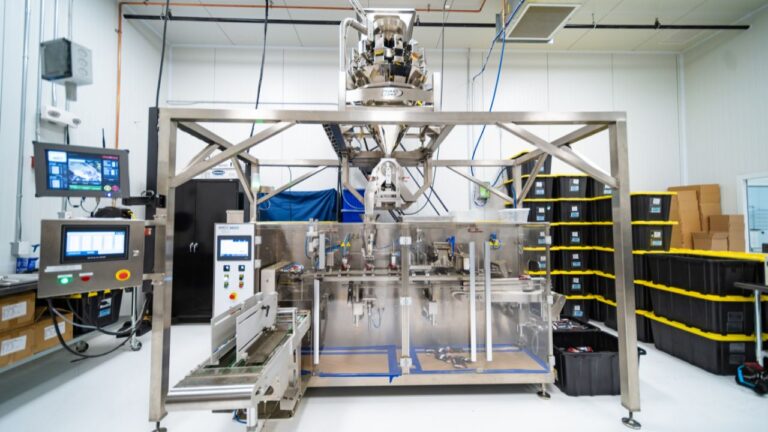
Modern stainless steel automated cannabis pre-roll processing machine in a dedicated production room.

Bostica

Lynn, MA, United States

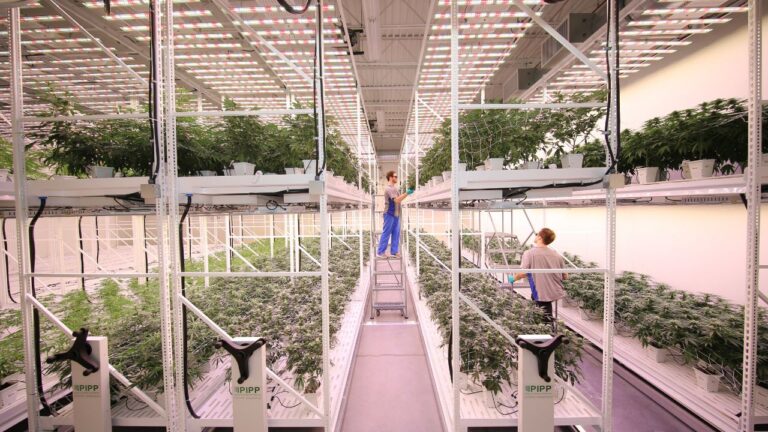
Catalyst BC consultants and LeafLine Cultivation Director inspecting vibrant plants in an organized vertical grow room.

Leafline Labs

Cottage Grove, MN, United States

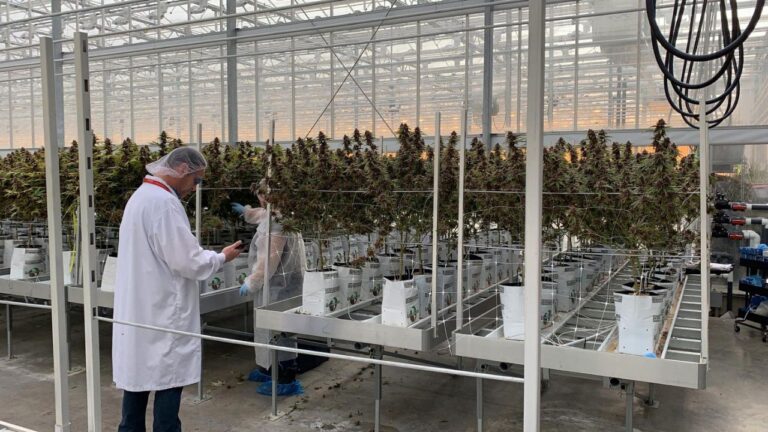
Catalyst BC consultant recording air, environmental, and plant data measurements within a cultivation facility.

View All Projects

View all Catalyst BC Projects

Reading for Mississippi Investors and MSDH Licensees

Provenance. Figures checked against the statute, regulation and agency text by Catalyst BC on October 8, 2026. Sections of Miss. Code Ann. Title 41, Chapter 137 were read in the enrolled text of the act that last amended each one (HB 1158 of 2023, SB 2857 of 2024 and SB 2748 of 2025) on the Mississippi Legislature’s site; the MSDH rules were read in the June 2026 compilation of 15 Miss. Admin. Code Part 22, and MDOR’s dispensary rules in 35 Miss. Admin. Code Part XI. Agency PDFs were read by text extraction. License counts, patient counts and sales come from the MMCP annual report for 2025; budget figures are our own arithmetic. Company figures come from Catalyst BC’s own records. Where this page and the official text differ, the official text governs.

Mississippi statutes and legislative records

MSDH, MDOR and MDAC rules and records

Federal law

Contact Us

Enough about us. We want to hear more about you, your project, and your vision! Get in touch with a real live person today. Don’t worry, we don’t have a long, confusing phone menu, and your email isn’t going to the abyss, we promise. At Catalyst, we provide the service and support we’d want to experience ourselves!

Scroll to Top