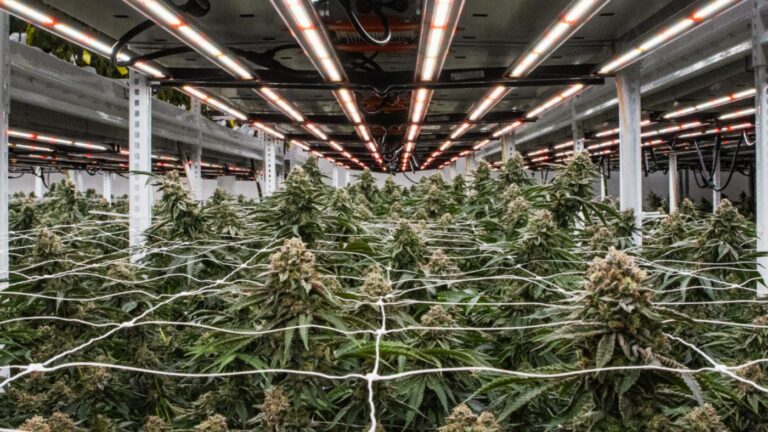
Kentucky Cannabis Consultants for Buying and Running OMC Licenses

Kentucky cannabis consulting starts here: the Office of Medical Cannabis (OMC) is not taking new business license applications and has posted no next window. Investors enter by buying an existing license, with OMC approval; licensees, in our experience, compete on yield and clean tests. Our records show 58+ licenses secured.

A Decade of Harvesting Success - Trusted by Cannabis Operators Worldwide

Hemp and Session Dates

Nov 12, 2026Federal hemp excludes cannabinoids the plant cannot make
Dec 11, 2026Full federal hemp redefinition: 0.4 mg THC per container
Jan 5, 2027Kentucky General Assembly convenes

Updated: 10/8/2026. Kentucky legalized medical cannabis through Senate Bill 47 (2023), codified in KRS Chapter 218B, and the Office of Medical Cannabis in the Cabinet for Health and Family Services licenses every cannabis business. The OMC took initial applications from July 1 to August 31, 2024, its license lotteries took place in October, November and December 2024, and on October 2, 2026 listed 48 dispensary licenses, 25 of them marked approved to operate (our count; OMC licensee list).

The first two dates matter to hemp sellers weighing a move into medical cannabis. Public Law 119-37 rewrites the federal hemp definition 365 days after its November 12, 2025 enactment; until December 11, 2026, Public Law 119-103 limits that change to products with cannabinoids the plant cannot produce naturally. Once that limit lapses, a final hemp-derived product holding more than 0.4 milligrams of total THC per container is no longer federal hemp. Under Section 36 of the Kentucky Constitution, the 2027 General Assembly convenes January 5, 2027 (our date arithmetic), its next regular session for any change to KRS Chapter 218B.

Meet Catalyst BC's Founders

  • Leif Olsen - Chief Executive Officer

    Leif Olsen

    Chief Executive Officer

  • Michael Williamson - Chief Operating Officer

    Michael Williamson

    Chief Operating Officer

  • Ian Miller - Executive Chair

    Ian Miller

    Executive Chair

Our partners bring multi-faceted expertise across business strategy, licensing, facility development, finance, and commercial operations. That breadth is complemented by subject matter experts across the wider Catalyst BC team, allowing us to bring the right combination of experience to each client and project. The result is bespoke, collaborative support shaped around your business, priorities, and goals - with the right expertise brought to the table when it matters most.

Learn more about our team

What a Kentucky Cannabis Consultant Does That the OMC Will Not

The OMC licenses, inspects and fines cannabis businesses and publishes technical advisories, which its own rule says do not have the force of law or regulation. A Kentucky cannabis consultant works on the owner’s side: the diligence before a deal, the filings the OMC requires, the build-out and the rooms that must pass inspection and testing.

Buying Into Kentucky Medical Cannabis Through an Approved License Sale

For investors, the route in today is a purchase: of a license, or of a stake in a licensee. Kentucky law says the cabinet shall approve the sale of a license if the purchaser and any new facilities meet the chapter’s requirements (KRS 218B.080(6)), and the OMC list records 28 approved sales between January 2025 and May 2026 (our count). The first, approved January 13, 2025, came less than a month after the December 2024 dispensary lottery. The buyer files what an initial applicant would, so it must also show sufficient capital, such as $150,000 for a dispensary, on deposit or through credit from a financial institution.

Federal rules moved on April 28, 2026: marijuana subject to a state medical marijuana license is now in Schedule III, a lower federal drug category, and the U.S. Department of Justice says state licensees are no longer subject to Section 280E, the federal tax rule that bars business deductions for Schedule I and II trafficking, while adding that its rule is not a tax determination (91 FR 22714). For state taxes, the OMC and the Department of Revenue told licensees in 2025 that they may pay online rather than in cash (OMC Technical Advisory 2025-005).

Our work for Kentucky investors: diligence on a target license, its owners and its OMC record through cannabis business strategy; a Kentucky cannabis business plan with fee, capital and margin projections through cannabis financial planning; the sale and ownership-change requests through cannabis license application support; and build-out to the OMC’s pre-opening inspection through cannabis startup support.

Already Licensed by the OMC: Tier Caps, Shelf Canopy and Destroyed Batches

A Tier I cultivator may not exceed 2,500 square feet of indoor growth area, Tier II 10,000, Tier III 25,000 and Tier IV 50,000 (KRS 218B.105(3)). When a tiered or shelving system is used, the surface of each tier or shelf counts toward that cap, while space used to store seeds, seedlings and clones up to eight inches, supplies, quarantine and offices does not. The OMC may raise the caps to as much as three times their size by regulation if a need for more cultivation is shown.

A harvest that fails yeast and mold (over 10,000 colony-forming units per gram), including on any re-analysis of the reserve sample, must be destroyed; it cannot be remediated. In our work, that puts dehumidification capacity, airflow and dry-room control at the center of a Kentucky grow, and the levers inside a fixed canopy are cultivar choice, plant density, light intensity and climate stability.

For Kentucky rooms we work on Kentucky cannabis facility design with HVACD (heating, ventilation, air conditioning and dehumidification), controlled environment agriculture targets set against the testing limits, cannabis vertical farming layouts that count every shelf toward the cap, operational optimization of harvest scheduling and labor and, when margins slip, a cannabis turnaround diagnostic. Our Chief Operating Officer and co-founder Michael Williamson has 25,000+ hours (company-reported) in cultivation and dispensary operations and co-founded Greenhaus Industries, which patented stackable trays for growing on multiple tiers.

Our Kentucky record and team: our records list two Kentucky client engagements in 2024. Leif Olsen, our Chief Executive Officer and a co-founder, leads our licensing work, and Ian Miller, our Executive Chair and a co-founder, raised $22 million (company-reported) in private equity for a greenfield cultivation and processing operation outside Kentucky. We have no Kentucky office; we deliver work on-site and remotely, and the same team runs Catalyst BC’s national cannabis consulting practice.

A word against our own interest: the OMC posts its sale, ownership-change and location forms online (OMC forms page), and a well-organized buyer can file them without a consultant. To talk through a Kentucky file, contact us or call (USA) 303-305-3787.


Investing in Kentucky cannabis

Already licensed in Kentucky

0 +
Years Regulated Cannabis Operations Experience
0 +

Compliant Harvests

0 M+

Square Feet of Cultivation, Production, and Retail Facilities Designed

0 +

Licenses Secured

Can You Get a Kentucky Medical Cannabis License in Late 2026?

Not a new one. The OMC’s How to Apply page says the initial business license application period is currently closed (OMC How to Apply); the OMC must publish a notice with the time frame and the number of licenses before the next one opens. Since January 1, 2025, the OMC must review each quarter whether new licenses are needed, and if it finds a need it must publish the factors it weighed (915 KAR 1:020, Section 11). We found no such notice on its business pages on October 8, 2026.

That leaves three routes for a new owner: buy a license, buy into a licensee through an approved change in ownership, or prepare for the next notice. Under the current rule, an applicant may file in only one license category per round, with one application per cultivator tier and one dispensary application per region, each with its own address and its own capital. When a round is open, the cabinet must acknowledge an application within 15 days and approve or deny it within 45 days of receiving it complete. Anyone preparing a Kentucky cannabis license application for a future round should check eligibility, site and capital now, because the rule gives an applicant ten calendar days to cure a deficiency.

Filing Status Detail
New license, any category Closed No notice of initial license availability posted
Sale of a license Open to licensees Written request with the sale price; OMC approval in writing
Change in ownership Open to licensees New owners file what initial applicants file
Change of location Open to licensees Dispensaries stay inside their region
License renewal Open to licensees At least 60 days before the license expires
Hemp-derived product retail permit Open (Department for Public Health, not the OMC) Retailer permit and product registration
Swipe to see the full table →

OMC How to Apply and Forms pages; 915 KAR 1:010, Section 5; 915 KAR 1:020, Sections 8 to 10; Cabinet for Health and Family Services hemp page. Every source is listed at the bottom of this page.

Step When Result
Application period July 1 to August 31, 2024 4,998 applications, 4,075 of them for dispensaries
Cultivator and processor lottery October 28, 2024 Tier I, II and III cultivators and processors
Dispensary lottery, nine regions November 25, 2024 Regions outside Bluegrass and Kentuckiana
Dispensary lottery, two regions December 16, 2024 Bluegrass and Kentuckiana, plus two Fayette and two Jefferson County licenses
Laboratory application period November 1 to 30, 2024 No lottery; no initial limit on laboratory licenses
Swipe to see the full table →

OMC application analytics (as of August 31, 2024); OMC business overview and How to Apply pages.

Stage Rule
License fee Paid within 15 calendar days of the OMC invoice, or no license issues
Opening notice 30 calendar days before the first day of business, with an opportunity for the OMC to inspect
Deficiencies Corrected and approved before operations start
Start-up inventory Cultivators and producers enter it within 14 days of the OMC opening the seed-to-sale window
Behind schedule Notify within 2 calendar days; corrective action plan within 7
Swipe to see the full table →

915 KAR 1:020, Sections 2, 4 and 6.

Investors who do not hold a license should jump to buying and opening.

Kentucky’s Cultivator Tiers, Processors, Producers, Dispensaries and Labs

KRS 218B.080 creates separate licenses for four cultivator tiers, dispensaries, processors, producers and safety compliance facilities (the testing laboratories), and each location generally needs its own license (KRS 218B.080(2) and (4)). The exception is a producer, which grows and processes under one license at no more than one cultivation and one processing facility. A licensee may hold licenses in only one category at a time, although a cultivator may hold licenses in more than one tier at separate addresses.

License What it allows Cap or first-round count
Tier I cultivator Indoor growing, sale of raw plant material to licensees 2,500 sq ft; 10 licenses offered
Tier II cultivator Same, larger canopy 10,000 sq ft; 4 licenses offered
Tier III cultivator Same, larger canopy 25,000 sq ft; 2 licenses offered
Tier IV cultivator Same, largest canopy 50,000 sq ft; not offered in the first round
Processor Turns raw plant material into products 10 licenses offered
Producer Grows and processes Not offered in the first round
Dispensary Sells to registered and visiting patients and caregivers 48 licenses, at least 4 per region
Safety compliance facility Tests samples for licensees No initial limit
Swipe to see the full table →

KRS 218B.080 and 218B.105(3); OMC initial license availability table; 915 KAR 1:020, Section 3(3).

Category Licenses listed Marked approved to operate
Tier I cultivator 10 7
Tier II cultivator 4 4
Tier III cultivator 2 2
Processor 10 5
Dispensary 48 25
Safety compliance facility 5 2
Swipe to see the full table →

OMC licensee list, updated October 2, 2026 (our count of entries and of the “***” marks the OMC uses for licensees approved to operate).

Every license runs one year from issuance. The OMC notifies a licensee 90 days before expiration, and a renewal filed less than 60 days before expiration is rejected (915 KAR 1:010, Section 5). Renewal depends on minimum performance standards, including diversion controls, a compliance record, corrective action on any findings, timely reports and survey responses. A licensee that meets them for two years is recognized as accredited for the next two. The OMC may suspend a license for up to six months, and a suspended cultivator may keep growing but may not sell.

Kentucky Application, License and Renewal Fees, and the Capital You Must Show

Application fees are nonrefundable, except that a late application is rejected with its fee returned; the first license fee is nonrefundable; and the annual renewal fee is refunded if the renewal is denied (915 KAR 1:020, Section 2). Each application must also document sufficient capital, on deposit or through credit from one or more financial institutions, and the same capital cannot back two applications.

TierApplicationFirst licenseAnnual renewal
Tier I$3,000$12,000$12,000
Tier II$10,000$25,000$25,000
Tier III$20,000$50,000$50,000
Tier IV$30,000$100,000$100,000
Swipe to see the full table →

915 KAR 1:010, Sections 2 and 4; 915 KAR 1:020, Section 2.

LicenseApplicationFirst licenseAnnual renewal
Processor$5,000$25,000$25,000
Producer$5,000 plus the tier fee$25,000 plus the tier fee$25,000 plus the tier fee
Dispensary$5,000$30,000$30,000
Safety compliance facility$3,000$12,000$12,000
Swipe to see the full table →

915 KAR 1:010, Sections 2 and 4; 915 KAR 1:020, Section 2.

ItemAmount
Capital, Tier I / II / III / IV cultivator$50,000 / $200,000 / $500,000 / $1,000,000
Capital, processor, dispensary or laboratory$150,000 each
Capital, producer$150,000 plus the tier amount
Liability insurance$1,000,000 per occurrence; $2,000,000 aggregate
Civil fineUp to $10,000 per violation, plus up to $1,000 a day while it continues
Swipe to see the full table →

915 KAR 1:010, Section 3(5); 915 KAR 1:020, Sections 5(5) and 12.

Budget accordingly: a dispensary buyer meets the $30,000 annual renewal; a new dispensary in a future round owes the OMC $35,000 in its first year, the $5,000 application plus the $30,000 license fee, then $30,000 a year, and must show $150,000 of capital besides; a Tier III cultivator owes $70,000, then $50,000 a year (our arithmetic from the fee rules).

How a Kentucky License Changes Hands and Opens for Business

A licensee that wants to sell emails a written request to the OMC with the sale price, the reasons, a transition plan and everything the buyer would file to enter a license lottery, plus the buyer’s attestations and a notarized affidavit (915 KAR 1:020, Section 10). The sale may not close until the OMC approves it in writing. The OMC will refuse a buyer that already holds a license in a different category, except that a cultivator may buy a license in another tier.

Five steps to open a Kentucky dispensary on a purchased license

These steps follow 915 KAR 1:010 and 1:020 and KRS 218B.110.

  1. Check the people: every principal officer and board member at least 21 with no disqualifying felony, no medicinal cannabis practitioner among the owners, and each 10% owner disclosed.
  2. File the sale request with the price, the buyer’s application documents, a transition plan and a notarized affidavit, then wait for written approval.
  3. Confirm the site: inside the license’s region, at least 1,000 feet from any existing elementary or secondary school or daycare center, and allowed by the local government; a move needs OMC approval first.
  4. Build, insure, train and write the standard operating procedures, then give the OMC 30 days’ notice and correct anything its inspection finds.
  5. Stock only tested product from licensed cannabis businesses, verify each registry card and photo ID, and hand out the advisory pamphlet.

In our work, closings slow down on leases, local approvals and principal background checks more often than on floor plans, so our cannabis licensing and application team checks those first.

Owning Part of a Kentucky Licensee: Disclosure, Felony Bars and Category Limits

An initial application discloses every person or entity with at least 10% equity, every parent company and any financial backer not involved in day-to-day operations (915 KAR 1:010, Section 3(5)). When ownership changes from what the application listed, the licensee asks the OMC for approval and files the same information for each new owner, with 15 calendar days to supply anything the OMC finds missing.

Among the bars on who can own or run a licensee, three stand out. A cannabis business may not be owned, in part or in whole, by a medicinal cannabis practitioner (KRS 218B.095(2)(e)). No principal officer or board member may have a disqualifying felony: a felony that led to classification as a violent offender, or a felony drug conviction, unless the sentence ended at least five years ago or the cabinet finds the conduct would likely have been lawful under KRS 218B but occurred before its enactment or was prosecuted outside Kentucky. And the OMC may deny a laboratory whose principal officers or board members also serve a cultivator, processor, producer or dispensary in Kentucky, or the reverse.

A buyer also inherits the location history. An approved move keeps the license’s expiration date, and the licensee must relocate within 90 days of the amended license, which the OMC may extend by up to 90 more days; it may never operate at both addresses. Diligence starts with the OMC licensee list, the license’s issue and expiration dates, its approved address against the lease, any corrective action plans, its seed-to-sale inventory records and its insurance.

Correction to published guidance (October 8, 2026): a consulting page last modified September 30, 2026 still describes a December 16, 2024 dispensary lottery as scheduled and tells readers to form an entity and write an application. The OMC’s How to Apply page says the initial business license application period is currently closed, so an outside investor’s route today is a purchase or an approved change in ownership.

Where Kentucky Allows Cannabis Businesses: Regions, Counties and Local Votes

No cannabis business may be located within 1,000 feet of an existing elementary or secondary school or a daycare center, measured in a straight line from property line to property line (KRS 218B.095(2)(a); 915 KAR 1:020, Section 4). No license issues for a personal residence or for land owned by the United States or the Commonwealth. Cultivation must take place in an enclosed, locked facility.

Dispensaries sit in 11 regions with at least four licenses each; Bluegrass and Kentuckiana have at least six, two of them in Fayette or Jefferson County, and other counties may have no more than one dispensary (915 KAR 1:020, Section 3). A dispensary may move within its region only with OMC approval and never outside it. Until the OMC licenses a business in its territory, a local government may prohibit all cannabis businesses by ordinance or put the question to voters, and a city inside a county that opted out may approve them itself (KRS 218B.130). Local ordinances may set time, place and manner rules and fees that cover added costs, but may not impose an undue burden.

Two operating rules also apply. KRS 218B.095 bars advertising medicinal cannabis sales in print, broadcast or online, apart from on-site signs, directory listings, trade or medical publications and charity sponsorships; 915 KAR 1:090 adds informational websites and social media but bars outside signs at grow and processing sites (915 KAR 1:090). A dispensary may deliver to the address on a cardholder’s registry card. Before you sign a lease, confirm the region, the county count and the 1,000-foot test; our cannabis facility design work starts with that screen.

OMC Testing, Remediation and Product Limits, and Kentucky Hemp-Derived THC

Harvest and production batches are tested by a licensed safety compliance facility for potency, pesticides, heavy metals, microbial impurities, mycotoxins and yeast and mold; production batches also for residual solvents and vitamin E acetate, and harvests for water activity, which must be below 0.65 (915 KAR 1:110, Section 3). Combined yeast and mold may not exceed 10,000 colony-forming units per gram; separately, the microbial panel requires that the four listed Aspergillus species not be detected in one gram. If a licensee asks for a re-analysis, the laboratory reruns the whole panel, not just the failed item, and reports results on a dry weight basis (OMC Technical Advisory 2025-007). A processor may hold unfinished extract above the 70% delta-9 THC product limit but may transfer it to another processor only once it is within that limit (Technical Advisory 2026-012).

The OMC’s August 27, 2026 advisory lists what may be fixed (Technical Advisory 2026-014): a batch that fails microbial testing may be sterilized, a harvest that fails water activity may be dried and cured again, and a production batch over its THC limit, or its solvent residues, may be brought down. Failures for yeast and mold, heavy metals, pesticides, mycotoxins or vitamin E acetate, and a harvest over the THC limit, mean destruction, and any batch may be remediated only twice.

Raw plant material may not exceed 35% delta-9 THC, edibles, oils and tinctures 10 milligrams per serving and other products 70%. Kentucky law prohibits smoking raw plant material, and vaping products go only to cardholders 21 or older.

Inspections may be unannounced, and inventory is tracked in the state’s seed-to-sale system; a Kentucky cannabis compliance consulting review checks those records before an inspector does.

Kentucky Hemp-Derived THC and the December 11, 2026 Federal Line

The Department for Public Health permits retailers and registers each product, and adult-use hemp products may not be sold to anyone under 21 (CHFS hemp-derived cannabinoid products page). Senate Bill 202 (2025) gave the Department of Alcoholic Beverage Control authority over distribution and retail sale of cannabis-infused beverages, limited to five milligrams of intoxicating cannabinoids per 12-ounce serving and to package sales in wet territory, where local voters approved all retail alcohol sales (SB 202 record; KRS 241.010(78)).

Under Public Law 119-37 as limited by Public Law 119-103, the federal hemp definition will exclude final products with more than 0.4 milligrams of total THC per container when that limit lapses on December 11, 2026 (P.L. 119-37, Section 781; P.L. 119-103, Section 2019). In our experience, hemp operators facing that line ask whether a medical license is worth buying; Kentucky law already tells the OMC to prioritize review of applications from hemp businesses in good standing with the Department of Agriculture when a round opens.

Two Kentucky Service Packages: License Purchase Review and Canopy Audit

Investors get a license purchase review before they sign: the seller’s OMC record and renewal date, the region and county limits, every owner checked against the practitioner and felony bars, the sale request package and a Kentucky cannabis business plan with fees, capital and Schedule III tax questions for your adviser. Licensees get a canopy and testing audit: shelf-level canopy against your tier, yeast and mold and water activity results by room, and HVACD sized to keep batches out of the destroy column, plus a Kentucky cannabis compliance consulting check of your records. Send your license type and deal or production figures, and we will tell you plainly if another firm suits you better.

What License Buyers and OMC Licensees Ask About Kentucky

No. The OMC says the initial business license application period is currently closed, and it opens a new one only by publishing a notice with the time frame and the number of licenses. A new investor’s routes today are buying a license or buying into a licensee, each with OMC approval.

Yes. KRS 218B.080(6) says the cabinet shall approve a sale if the buyer and any new facilities meet the chapter’s requirements, and the OMC list records 28 approved sales between January 2025 and May 2026. The buyer files what an initial applicant files, and the sale needs written OMC approval before it closes.

The application fee is $5,000, the first license fee $30,000 and the annual renewal $30,000. An applicant must also document $150,000 of sufficient capital. The application fee comes back only if the application is rejected as late, the first license fee is nonrefundable and a denied renewal’s fee is refunded.

The OMC issued 48 dispensary licenses across 11 regions, at least four per region. Bluegrass and Kentuckiana have at least six, two of them in Fayette or Jefferson County, and other counties may have no more than one dispensary. A dispensary may not move outside its region.

Yes. Under 915 KAR 1:030, the surface of each tier or shelf counts toward the cap: 2,500 square feet for Tier I, 10,000 for Tier II, 25,000 for Tier III and 50,000 for Tier IV.

If re-analysis confirms it, it must be destroyed. Kentucky allows no remediation for yeast and mold, heavy metals, pesticides, mycotoxins or vitamin E acetate failures. Microbial failures may be sterilized, water activity failures dried again and some production batch failures reduced, at most twice per batch.

The federal rule effective April 28, 2026 placed marijuana subject to a state medical marijuana license in Schedule III, and the U.S. Department of Justice says state licensees are no longer subject to the Section 280E deduction ban. It also says the rule is not a tax determination, so confirm your position with a tax adviser.

When the temporary limit in Public Law 119-103 lapses on December 11, 2026, federal hemp will exclude final hemp-derived products with more than 0.4 milligrams of total THC per container, under Public Law 119-37. In Kentucky, the Department for Public Health permits hemp retailers and registers products, and the Department of Alcoholic Beverage Control oversees infused beverages.


Grow Room, Extraction and Build Projects Behind Our Kentucky Advice

These projects show the cultivation, extraction and facility work we bring to Kentucky licensees; each tile opens its full write-up, and all of them are on our projects page.

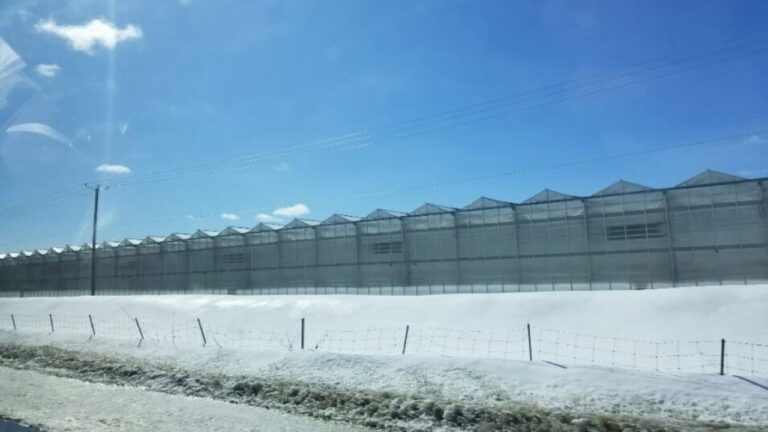
Exterior view of the Hexo Venlo glasshouse row spanning over 1 million square feet.

Hexo Corp.

Gatineau, Quebec, Canada

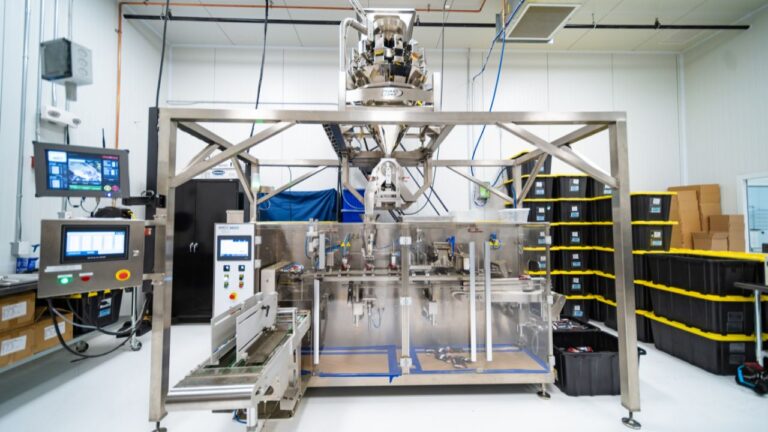
Modern stainless steel automated cannabis pre-roll processing machine in a dedicated production room.

Bostica

Lynn, MA, United States

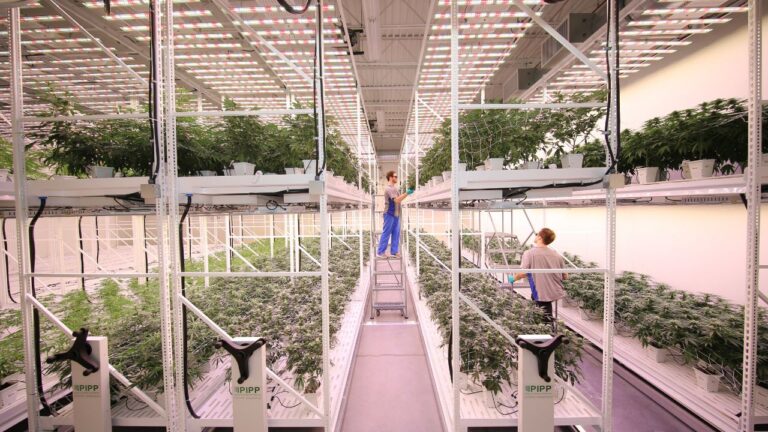
Catalyst BC consultants and LeafLine Cultivation Director inspecting vibrant plants in an organized vertical grow room.

Leafline Labs

Cottage Grove, MN, United States

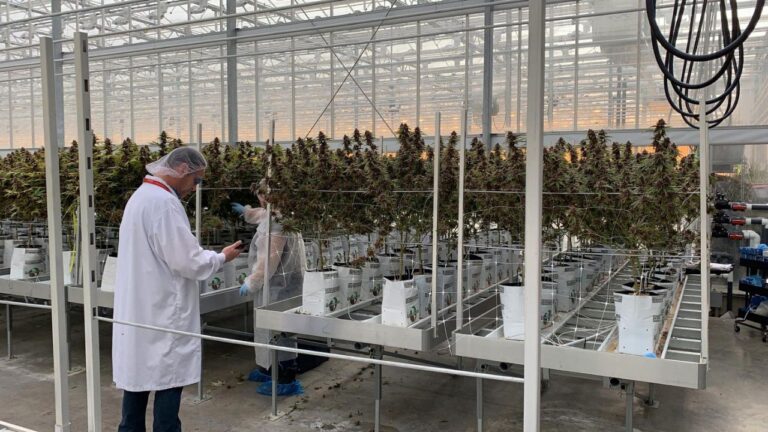
Catalyst BC consultant recording air, environmental, and plant data measurements within a cultivation facility.

View All Projects

View all Catalyst BC Projects

Reading for Kentucky License Buyers and OMC Licensees

Provenance. Figures checked against the statute, regulation and agency text by Catalyst BC on October 8, 2026. KRS sections were read on the Legislative Research Commission site in their current versions; 915 KAR Chapter 1 was read in the engrossed versions the commission publishes, effective August 28, 2024 or November 18, 2024. Scanned OMC advisories and the OMC fee and license tables were read by optical character recognition. License counts and sale counts are our own count from the OMC licensee list updated October 2, 2026; budget figures and the January 5, 2027 date are our own arithmetic. Company figures come from Catalyst BC’s own records. Where this page and the official text differ, the official text governs.

Kentucky statutes and constitution

Kentucky administrative regulations

Office of Medical Cannabis and other agency records

Federal law

Contact Us

Enough about us. We want to hear more about you, your project, and your vision! Get in touch with a real live person today. Don’t worry, we don’t have a long, confusing phone menu, and your email isn’t going to the abyss, we promise. At Catalyst, we provide the service and support we’d want to experience ourselves!

Scroll to Top