Ohio Cannabis Consultants for DCC Buy-Ins, Compliance, and Yield
Our Ohio cannabis consulting serves a market where the Division of Cannabis Control (DCC) accepts no new facility applications, so investors buy into existing license holders. We advise those investors and licensed growers working to raise yield. Our records list 58+ licenses secured and an Ohio client since 2020.
A Decade of Harvesting Success - Trusted by Cannabis Operators Worldwide
Three DCC Clocks for Ohio Owners
Updated: 10/4/2026. Ohio has allowed medical cannabis since House Bill 523 in 2016, with sales from January 14, 2019, and adult-use cannabis for people 21 and older under Issue 2, which voters approved on November 7, 2023; adult-use sales began August 6, 2024 (DCC Ohio Cannabis FAQ). Senate Bill 56, effective March 20, 2026, folded the adult-use statute into Ohio Revised Code chapter 3796, the Marijuana Control Program, run by the Division of Cannabis Control (DCC) in the Department of Commerce. DCC’s October 2, 2026 update lists 37 cultivators, 45 processors, 6 testing labs, 231 dual-use (medical and adult-use) dispensaries and 48 provisional dispensary licenses (DCC Update: By the Numbers).
The practical consequence: DCC is not taking new facility applications, so new money enters through license holders already in the system. The three clocks above govern any license a buyer takes on: renewal, expansion and, for an unbuilt dispensary, certification.
Meet Catalyst BC's Founders
-
Leif Olsen
Chief Executive Officer
-
Michael Williamson
Chief Operating Officer
-
Ian Miller
Executive Chair
Our partners bring multi-faceted expertise across business strategy, licensing, facility development, finance, and commercial operations. That breadth is complemented by subject matter experts across the wider Catalyst BC team, allowing us to bring the right combination of experience to each client and project. The result is bespoke, collaborative support shaped around your business, priorities, and goals - with the right expertise brought to the table when it matters most.
Hiring an Ohio Cannabis Consultant While the DCC Is Closed to New Applicants
Two DCC rules shape every Ohio engagement. A change of ownership “shall not be effective unless and until approved in writing by the division” (Ohio Adm.Code 1301:18-3-06), and the DCC may inspect a licensee “at any time, with or without notice” (Ohio Adm.Code 1301:18-9-01).
Putting Money Into an Ohio License You Did Not Apply For
The way in is a stake in a license holder or the purchase of one. A passive equity stake under 10%, held for investment only, is not “ownership” under the DCC’s definitions (Ohio Adm.Code 1301:18-1-01), but a licensee must notify the DCC in writing before it signs any agreement that changes its cap table (the list of who owns what share) or creates options or debt conversions (loans that can turn into equity) (Ohio Adm.Code 1301:18-3-05). A change of 10% or more, counted across the calendar year, needs the DCC’s written approval and a $1,000 fee, and the rule sets no deadline for that decision, so build approval time into the closing date. No person may own, hold a financial interest in or control more than one cultivator, one processor or eight dispensaries (the 1-1-8 cap), and a testing lab’s owners may hold nothing else (Ohio Adm.Code 1301:18-3-03). A provisional license, an award not yet cleared to operate, “is not transferable” (R.C. 3796.09).
How you are paid matters too: a management or consulting contract can make you a controller in the DCC’s eyes. The DCC’s definition of control (Ohio Adm.Code 1301:18-1-01) reaches anyone able to “make or significantly influence” strategic or management decisions, “through ownership, contract, or otherwise.” Before each certificate of operation (the DCC’s final permission to operate) is issued or renewed, an independent licensed auditor or CPA must certify the ownership file (Ohio Adm.Code 1301:18-3-04). A bank holding a mortgage or lien in the ordinary course is not treated as having control, and Ohio law shields banks that serve compliant licensees from state drug-funding, conspiracy and complicity charges under sections 2925.05, 2923.01 and 2923.03 (R.C. 3796.27).
Budget for the DCC’s financial-responsibility requirement as well: before a certificate is issued or renewed, a licensee needs product-liability insurance plus an Ohio escrow account or surety bond, from $750,000 for a Level I cultivator to $50,000 for a dispensary (Ohio Adm.Code 1301:18-3-08).
Our work for investors: diligence on the license holder and the market case through our cannabis business strategy work; the capital plan, escrow or bond and return model through our cannabis financial planning work; the notice of intent, change-of-ownership filing and disclosure file through our cannabis license application support; and site, local approval and certificate readiness through our cannabis startup support.
Already Licensed in Ohio: Price, Cultivation Area and Testing Rules
For an operating licensee the pressure is price: the DCC’s average dispensary sale price for plant material was $6.51 a gram, or $18.42 per tenth of an ounce, for September 20 to 26, 2026; it publishes no wholesale price.
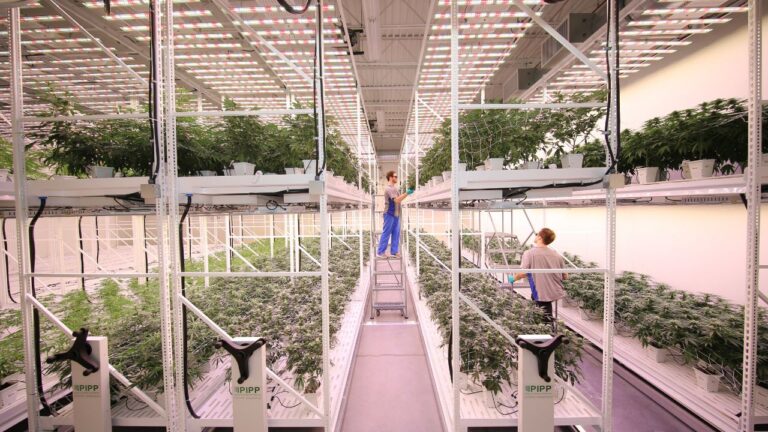
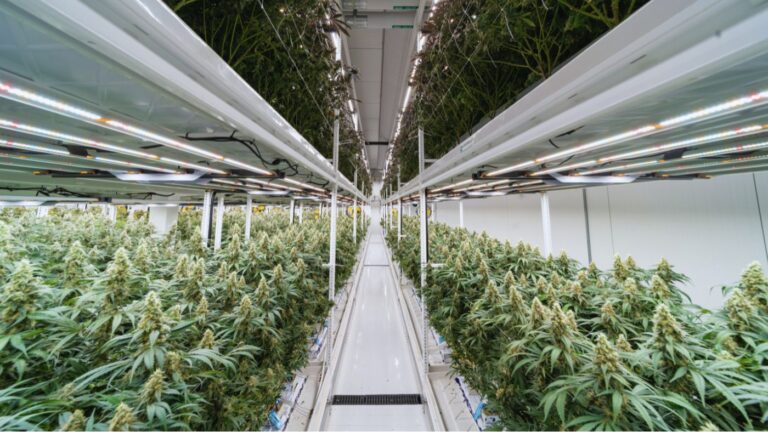
Level I cultivators may operate up to 100,000 square feet of cultivation area and Level II up to 15,000 (R.C. 3796.18). Cultivation area means the boundaries of the enclosed areas used for vegetative and flowering plants; areas used only for mother plants, clones or seedlings are left out. That definition measures area boundaries and says nothing about tiers, so get the DCC’s position in writing before you build a multi-tier vertical room.
Growing into your limit takes its own file. You must first use all of your current area, then submit plans and a completion timeline that becomes a mandatory condition, and the DCC has 90 days to approve, deny or ask for more (Ohio Adm.Code 1301:18-5-04). The file must also prove a steady supply: no more than 120 days between harvests totaling at least 15 pounds, and between sales or transfers totaling at least 20 pounds (Level I) or 10 pounds (Level II) (Ohio Adm.Code 1301:18-5-02).
Each batch’s certificate of analysis, with a pass or fail for every required test, goes into Metrc, the state’s seed-to-sale tracking system (Ohio Adm.Code 1301:18-4-16). A DCC rule proposed in July 2026, revised August 24 and not yet in effect, would require immediate destruction of batches that fail certain tests, such as salmonella, shiga toxin-producing E. coli, heavy metals or pesticides, and would allow remediation of other failures only under its conditions (Register of Ohio, proposed rule 1301:18-4-11). Since September 11, 2026, a package may state that the flower was not treated by irradiation, ozone, radio frequency or UV light (Ohio Adm.Code 1301:18-4-21).
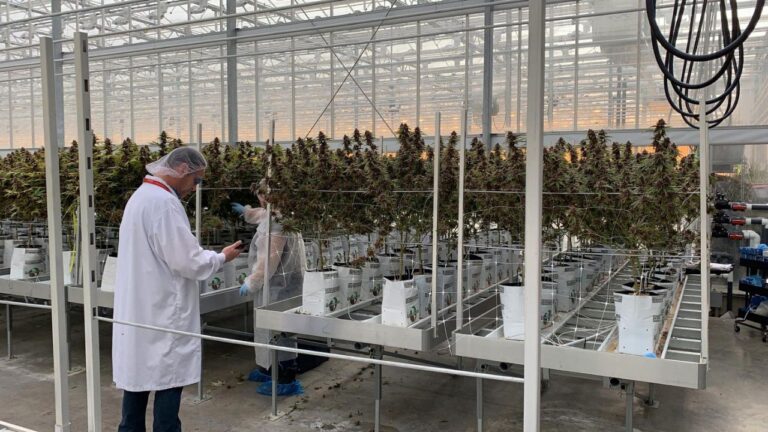
In our experience, HVAC, dehumidification and airflow are the first defense against a failed microbial test. We work on cannabis facility design and HVACD engineering (heating, ventilation, air conditioning and dehumidification), controlled environment agriculture targets for temperature, humidity and airflow, cannabis vertical farming layouts checked against counted cultivation area, operational optimization and, where cost per gram climbs faster than price, a cannabis turnaround diagnostic. We also prepare expansion requests and renewal files. Michael Williamson, our Chief Operating Officer, co-founded Greenhaus Industries, which developed multi-tier vertical cultivation systems, and our records credit him with designing and consulting on more than 7 million square feet of cultivation facilities.
Our Ohio record: our records list one Ohio client, Cielo Jardin, since 2020 (Cielo Jardin’s comments on our work). Leif Olsen, our Chief Executive Officer, leads our licensing and ownership work. We have no Ohio office; we work with Ohio clients on-site and remotely, and the same team runs Catalyst BC’s national cannabis consulting practice.
Before you sign with anyone: if all you want is a passive stake under 10% in an operating license holder, a securities lawyer may serve you better than we would. Outside help is worth paying for where an ownership change, an expansion or a renewal inspection could cost you the license. To talk through an Ohio file, contact us or call (USA) 303-305-3787.

Investing in Ohio cannabis
- Cannabis Business Strategy ConsultingLicense-holder and acquisition diligence
- Cannabis Financial Planning & ModelingCapital plans, escrow and bonds
- Cannabis Licensing & Application SupportOwnership-change and disclosure files
- Cannabis Startup SupportSite, local approval and opening
Already licensed in Ohio
- Cannabis Facility Design & HVAC / HVACD EngineeringRooms sized to counted cultivation area
- Cannabis Controlled Environment Agriculture (CEA)Climate targets against failed tests
- Cannabis Vertical Farming ConsultingRack plans cleared with the DCC first
- Cannabis Operational OptimizationCost per gram at Ohio flower prices
- Cannabis Business Turnaround & Operational RecoveryWhen costs outpace price
Compliant Harvests
Square Feet of Cultivation, Production, and Retail Facilities Designed
Licenses Secured
Is the Ohio DCC Taking Cannabis License Applications in 2026?
No. The DCC’s licenses page says it “is not accepting applications for cannabis facility licenses” (DCC Licenses), and its applications page says that apart from dual-use conversions and 10(B) dispensary licenses (extra dispensaries reserved for existing medical licensees), “No other license applications will be accepted at this time” (DCC Applications).

Ohio application status by route (October 2, 2026)
| License or route | Status | Notes |
|---|---|---|
| New Level I or Level II cultivator | Not accepting | No window announced |
| New processor | Not accepting | No window announced |
| New testing laboratory | Not accepting | Lab owners may hold no other license |
| New dispensary | Not accepting | Statewide cap of 400; 231 operating and 48 provisional |
| Dual-use conversion | Closed to new entrants | Only for holders of a medical license on December 7, 2023 |
| 10(B) dispensary | Closed to new entrants | Three per Level I cultivator, one per Level II, one per independent medical dispensary; the DCC is still approving applications already filed |
| Stake in, or purchase of, a license holder | Available with DCC approval | Written approval for changes of 10% or more |
| Level III cultivator | Eliminated | Removed by Senate Bill 56; none had been issued |
Statuses from the DCC Licenses, Applications and Ohio Cannabis FAQ pages, read October 1 and 2, 2026.
What Senate Bill 56 changed on March 20, 2026
| Topic | Before | From March 20, 2026 |
|---|---|---|
| Statute | Adult-use law in Revised Code chapter 3780 | Merged into chapter 3796; old licenses treated as equivalent and merged |
| Level III cultivators | Up to 40 licenses of up to 5,000 sq ft before expansion | Eliminated |
| Extra dispensaries | Authority for up to 50 more | Removed; statewide cap of 400 |
| Dispensary siting | One-mile spacing in DCC rule 1301:18-2-06 for proposed dispensaries | One-mile spacing and a liquor-permit ban in statute for any new license or relocation |
| Extract THC | Up to 90% | Up to 70%; flower up to 35% |
| Local control | Local limits under former chapter 3780 and chapter 3796 | Cities and townships may prohibit or limit, but not licensees from before March 20, 2026 |
| Advertising | DCC advertising rules | Statute requires DCC pre-approval of names, logos, signs and materials |
| Intoxicating hemp | Sold outside dispensaries | More than 0.4 mg THC per container is marijuana, sold only in licensed dispensaries |
Ohio Legislative Service Commission, S.B. 56 Final Analysis (April 2, 2026), and the DCC notice of March 24, 2026 (Intoxicating Hemp Ban Now In Effect).
Ohio market figures from the DCC update of October 2, 2026
| Measure | Figure |
|---|---|
| Cultivators with certificates of operation | 37 (23 Level I, 14 Level II) |
| Processors | 45 |
| Testing laboratories | 6 |
| Dual-use dispensaries | 231, plus 48 provisional licenses |
| Registered patients (July 31, 2026) | 473,844 |
| Sales since 2019 (to September 19, 2026) | $4.34 billion: $2.43 billion medical, $1.92 billion adult-use |
| Dispensaries expected once 10(B) licensing is complete | About 305 (DCC Ohio Cannabis FAQ), against the statutory cap of 400 |
| Average plant price, September 20 to 26, 2026 | $6.51 a gram; $18.42 per tenth of an ounce |
DCC Update: By the Numbers, last updated October 2, 2026. Sales row from the September 30 edition; the October 2 table repeats one figure in every column.
Starting 24 months after the first adult-use operator license, rule 1301:18-2-04 requires the DCC to review license numbers “on a biannual basis” and lets it open new application periods after weighing demand, supply and dispensary locations (Ohio Adm.Code 1301:18-2-04). The rule does not say whether that means twice a year or every two years. The first dual-use certificates of operation were issued on August 6, 2024, so the 24-month point has passed, and the DCC has announced no new round. Until it posts a notice naming the license type, deadline and fee, anyone selling you a place “in the next Ohio round” is guessing.
Level I, Level II, Processor, Dispensary and Lab: Ohio’s DCC License Set
Since Senate Bill 56, every cultivator, processor and dispensary license covers medical and adult-use cannabis together; a licensed cultivator, processor or dispensary must operate “respecting both” medical and adult-use cannabis (R.C. 3796.18 to 3796.20). There is no separate transporter license: each licensee moves its own product with badged staff, a Metrc manifest and an unmarked vehicle (Ohio Adm.Code 1301:18-3-13).
Ohio license types and what each allows
| License | What it allows |
|---|---|
| Level I cultivator | Grow and sell to other licensees; cultivation area set by the DCC up to 100,000 sq ft, which may be split across sites under one license |
| Level II cultivator | Same activities; cultivation area up to 15,000 sq ft |
| Processor | Buy from licensees and make permitted product forms in child-resistant packaging labeled with THC and CBD content |
| Dispensary | Sell medical cannabis on a physician’s recommendation and adult-use cannabis to buyers 21 and older; medical delivery under DCC rules; no more than eight per owner |
| Testing laboratory | Test for other licensees; ISO/IEC 17025 accreditation (the international standard for testing labs) within two years of the provisional license; owners may hold no other license |
| Patient registry and physician certificates | Not business licenses: the DCC runs the patient and caregiver registry, and the State Medical Board certifies physicians |
R.C. 3796.18 to 3796.20, Ohio Adm.Code 1301:18-3-03 and 1301:18-7-04, and the DCC home page, read October 1 and 2, 2026.
Daily purchase limits and THC caps that shape an Ohio product mix
| Rule | Limit |
|---|---|
| Seeds, clones and live plants | 6 units per customer per day |
| Flower, shake or trim, and raw single-serving units | 2.5 ounces per customer per day |
| All other products | 15,000 mg total THC per customer per day (DCC FAQ). Separately, the statute limits one day’s sale to the possession limit, which for extracts is 15 grams |
| THC content | 35% for plant material; 70% for extracts (the DCC may raise the extract limit) |
| Smoking and vaping products | No characterizing flavors except those that mimic the strain |
DCC Ohio Cannabis FAQ; S.B. 56 Final Analysis; Ohio Adm.Code 1301:18-4-08(B), effective December 26, 2025.
Relocating cultivation area to another site needs a DCC-reviewed transition plan and inspection; inventory moves only within the approved transition period, and the DCC then issues a modified certificate (Ohio Adm.Code 1301:18-5-04).
What an Ohio License Costs Under Rule 1301:18-2-09, Escrow Included
Ohio sets its fees by rule, not statute (Ohio Adm.Code 1301:18-2-09, effective August 28, 2025), and all of them are non-refundable. The certificate-of-operation fee is due when the DCC issues the certificate.
DCC application, certificate and renewal fees by license
| License | Application | Certificate of operation | Renewal |
|---|---|---|---|
| Level I cultivator | $20,000 | $180,000 | $200,000 a year |
| Level II cultivator | $2,000 | $18,000 | $20,000 a year |
| Processor | $10,000 | $40,000 | $50,000 a year |
| Testing laboratory | $2,000 | $18,000 | $20,000 a year, or $40,000 at once for the two-year term |
| Dispensary | $5,000 | $70,000 | $35,000 a year, or $70,000 at once for the two-year term |
Ohio Adm.Code 1301:18-2-09(A)(1) to (3). All fees non-refundable.
Other DCC fees: badges, ownership changes and product registration
| Item | Fee |
|---|---|
| Responsible party, owner or officer, or employee badge | $100 initial; $100 renewal |
| Change of ownership | $1,000 |
| Change of business or trade name | $500 |
| Change of location | $1,000 |
| Major modification | $1,000 |
| Product registration | $100 |
| Advertising review (proposed July 21, 2026; not in effect; the older medical rule 3796:6-5-01 lists $100 per advertisement) | $100 |
Ohio Adm.Code 1301:18-2-09(A)(4) to (9); proposed amendment filed July 21, 2026 (Register of Ohio, proposed 1301:18-2-09). An older medical rule, Ohio Adm.Code 3796:6-5-01 (2022), still lists $5,000 for a dispensary ownership change, relocation or major modification; this page follows the newer rule, so confirm the invoice amount with the DCC.
Financial responsibility: escrow or surety bond by license type
| License | Required | Reduction per approved petition |
|---|---|---|
| Level I cultivator | $750,000 | $250,000 |
| Level II cultivator | $75,000 | $25,000 |
| Processor | $250,000 | $75,000 |
| Testing laboratory | $75,000 | $25,000 |
| Dispensary | $50,000 | $15,000 |
Ohio Adm.Code 1301:18-3-08. The rule allows a petition to reduce “in the amount” listed after one compliant year, again after two, and to end the requirement after three; read that way, Level I goes $750,000, $500,000, $250,000. Confirm with the DCC. Products-liability insurance is also required.
Worked example, derived from the fee rule: a Level II cultivator pays $2,000 to apply and $18,000 at certification, then $20,000 a year, and posts a $75,000 escrow or bond. Site control, build-out, security, Metrc and the months before revenue usually cost far more than state fees.
How a Future Ohio Round Would Be Scored, and How Stakes Change Hands Now
When the DCC does open a round, it must first post a notice naming who may apply, the materials and non-refundable fee, the minimum eligibility, the deadline and the number of licenses (Ohio Adm.Code 1301:18-2-01). The statute then sets the test: no disqualifying offense, no financial ties to a testing lab, at least 500 feet from protected sites, tax compliance, “sufficient liquid capital,” no local moratorium and complete, truthful disclosure. If eligible applicants outnumber licenses, the DCC ranks business, operations, security, financial and environmental plans, location, jobs and employment practices. If the DCC holds a lottery, applicants rated “exceeds” get double the odds of “meets,” and “highly exceeds” double again. At least 15% of licenses are set aside, if enough eligible applicants apply, for entities 51% owned and controlled by Ohio residents who are U.S. citizens in the economically disadvantaged groups the law names (R.C. 3796.10, and section 3796.09 for growers, processors and labs).
A provisional license is a conditional award, not permission to operate. It requires owning or leasing the site and having local building and cannabis approvals with nothing under negotiation or dispute (Ohio Adm.Code 1301:18-2-07). The holder must then pass inspection for a certificate of operation. The rules allow 12 months for that (Ohio Adm.Code 1301:18-8-01 for dispensaries); the statute, as in force since March 20, 2026, lets the DCC revoke a provisional dispensary license not certified within 18 months, with up to two six-month extensions for good-faith effort (R.C. 3796.05). Where the two conflict the statute controls; confirm your deadline with the DCC.
How to open a dispensary in Ohio while new licenses are closed
- Buy a stake, buy a licensee outright, or wait. Take a stake in or acquire a licensed dispensary under the ownership rules, or prepare for a future round once the DCC posts a notice.
- Clear any new or relocated site. Check the 500-foot, one-mile, liquor-permit and local-ban rules in the siting section.
- Secure local approval. Local cannabis approval and building-code compliance must be in hand.
- Pass the DCC’s checks. Badges and background checks, the certified ownership file, the escrow or bond, and security systems.
- Open on a certificate. Pass inspection, receive the certificate of operation, set up Metrc and register for the 10% excise return.
Ohio Ownership Rules: the 10% Line, Notices of Intent and the 1-1-8 Cap
The DCC tracks ownership, financial interest and control separately. Financial interest covers any actual or future right to ownership or investment, held directly or through a spouse, parent or child.
What your consulting contract tells the DCC
Consulting, management, support and administrative-services agreements go to the DCC with the ownership file. A consultant whose contract gives it a say in strategic or management decisions could meet the control test and count toward the limits. Ask how any consultant, including us, will be paid and what decisions the contract gives it before you sign.
Buying, merging or restructuring an Ohio licensee
Beyond the notice and approval steps under Putting Money Into an Ohio License You Did Not Apply For, a change of 10% or more needs the DCC’s form, current and proposed cap tables naming every 10% owner, badges and fingerprints for new owners and any out-of-state license history.
Site Selection for an Ohio Cannabis Business: 500 Feet, One Mile and Local Opt-Outs
No cultivator, processor, dispensary or lab may sit within 500 feet of a parcel with a school, church, public library, public playground or public park, measured in a straight line from that parcel’s boundary to the cannabis facility’s building, and the DCC denies relocations or expansions that break the rule (R.C. 3796.30; Ohio Adm.Code 1301:18-3-01). A new dispensary or a relocation also cannot be within one mile of another licensed dispensary or at a location holding a permit to sell beer and liquor.
A city or township may prohibit, or limit the number of, cultivators, processors or dispensaries by ordinance or resolution, but cannot use that power against a business that held a provisional license or certificate before March 20, 2026 unless the ordinance came first (R.C. 3796.29). Local governments may not levy gross-receipts taxes, or any tax, fee or charge not generally charged on other businesses, on licensees (R.C. 3796.31), but they share the excise: 36% of adult-use excise revenue, after refunds, goes to the host community cannabis fund for cities and townships with at least one licensed dispensary (R.C. 3796.40).
One smaller Senate Bill 56 change also affects site budgets: land used to grow adult-use cannabis can no longer be valued as agricultural land for property tax (the S.B. 56 Final Analysis).
Ohio Cannabis Compliance Consulting: Renewals, Metrc, Package Approval and Excise
Renewal. Cultivator and processor certificates renew every year; lab and dispensary certificates every two years. At least 30 days before expiry the licensee files the renewal, proof of tax compliance and the fee, and it must pass a full inspection within the renewal period. If they are not complete by expiry, the certificate is suspended for up to 30 days, then revoked, and the business must “permanently cease all operations” (Ohio Adm.Code 1301:18-2-08).
Inspections and tracking. Every licensed facility is under video surveillance, is inspected in person several times a year and tracks all cannabis in Metrc. Dispensaries need full camera coverage, at least 45 days of video storage and real-time DCC access to the cameras.
Packaging and advertising. Since September 11, 2026, package and label designs need the DCC’s written approval before sale (Ohio Adm.Code 1301:18-4-19; 1301:18-4-20) and must carry the universal THC symbol, at least a quarter inch square (Ohio Adm.Code 1301:18-4-04). Advertising follows rule 1301:18-4-22, in effect since January 15, 2026, and Senate Bill 56 requires DCC pre-approval of names, logos, signs and ad materials. It also bars cannabis ads within 500 feet of a school, church, public library, public playground or public park, though signs on a licensed facility are exempt (S.B. 56 Final Analysis).
People. Owners, officers and employees need DCC badges at $100 each and criminal records checks; Senate Bill 56 replaced the separate adult-use employee license with that background check.
Tax. Adult-use sales carry a 10% excise tax on top of state and local sales tax (Ohio Department of Taxation, Adult Use Marijuana Tax). The state sales tax rate is 5.75%, and counties and transit authorities can add up to 3% more (Ohio Department of Taxation, Sales and Use Tax). Medical purchases are exempt from the excise, and delivery charges and other fees count as part of the price for the 10% excise.
Two Ohio Starting Points: a Cap-Table Review or a Cost-per-Gram Audit
Investors get an ownership and deal-structure review: what the 1-1-8 cap and the 10% line let you hold, which agreements the DCC must see and the approval sequence, in writing before you wire funds. Licensed operators get a cultivation-area and cost-per-gram audit: counted area against your level’s limit, environment and failed-test risk, and an expansion or rack plan to put to the DCC. If we are not the right fit, we will say so.
Ohio DCC Licensing Questions From Investors and Licensed Growers
Can I apply for a new Ohio cannabis license right now?
No. The DCC says it is not accepting applications for cannabis facility licenses. Adult-use licensing was open only to existing medical licensees, through dual-use conversions and 10(B) dispensary licenses. The DCC may authorize new application periods after its periodic license reviews, but it has announced none.
What does an Ohio cannabis license cost?
Under rule 1301:18-2-09, a Level I cultivator pays $20,000 to apply, $180,000 for its certificate of operation and $200,000 a year to renew; a Level II cultivator pays $2,000, $18,000 and $20,000; a dispensary pays $5,000, $70,000 and $35,000 a year. All fees are non-refundable.
How much of an Ohio cannabis business can an outside investor own?
A passive, investment-only stake under 10% is not ownership under DCC rules. Larger changes need the DCC’s written approval, and no person may own, hold a financial interest in or control more than one cultivator, one processor or eight dispensaries.
Can I buy a provisional Ohio cannabis license?
No. Ohio law says a provisional license is not transferable, and DCC rules issue it only to the owners disclosed in the application. An investor can instead seek DCC approval to buy into or acquire a business that holds a certificate of operation.
How does Ohio measure cultivation area for vertical racks?
DCC rules define cultivation area as the boundaries of the enclosed areas used for vegetative and flowering plants, excluding areas used only for mother plants, clones or seedlings. The rule does not address tiers, so get the DCC’s position in writing before you build a multi-tier room.
Can an Ohio city ban a cannabis dispensary?
Since March 20, 2026, a city or township may prohibit or limit cultivators, processors and dispensaries, but not businesses that held a provisional license or certificate before that date unless the local ordinance was adopted before that date. A new dispensary must also be at least one mile from any other licensed dispensary.
What taxes apply to adult-use cannabis sales in Ohio?
A 10% excise tax, plus the 5.75% state sales tax and any county or transit sales tax. Medical purchases are exempt from the excise. Thirty-six percent of excise revenue, after refunds, goes to a fund for cities and townships that host a licensed dispensary.
What changed for Ohio cannabis businesses under Senate Bill 56?
Effective March 20, 2026, it merged adult-use and medical law into Revised Code chapter 3796, eliminated Level III cultivator licenses, capped dispensaries at 400, wrote one-mile dispensary spacing into statute for every new license and relocation, cut the extract THC limit to 70% and banned intoxicating hemp products outside licensed dispensaries.
Selected Catalyst BC Projects
Our Ohio client, Cielo Jardin, does not have a project tile; the tiles below show the same team’s cultivation and facility work in other markets. Each tile opens its project page.

Hexo Corp.
Gatineau, Quebec, Canada

Bostica
Lynn, MA, United States

Leafline Labs
Cottage Grove, MN, United States

View All Projects
View all Catalyst BC Projects
Further Reading for Ohio Buyers and Growers From Catalyst BC

How Much Does It Cost to Open a Cannabis Dispensary in 2026
The allure of jumping into the legalized cannabis industry often paints a picture of quick riches and burgeoning demand, yet the reality of establishing a

Virginia Cannabis Facility Design & Build-Out for the 2027 Market
This guide covers the major considerations involved in planning and building a Virginia cannabis facility, with a focus on retail and cultivation operations and additional

Virginia Dual-Use Cannabis Conversion (2027): The $10M Medical-to-Adult-Use Pathway
For Virginia’s existing medical cannabis operators, the 2026 retail framework created a distinct and high-stakes transition: pharmaceutical processors may apply for verification to exercise dual-use
Ohio Sources: DCC Pages, Revised Code 3796, Rules 1301:18 and Senate Bill 56
Provenance. Every regulatory figure on this page is drawn from the Ohio Division of Cannabis Control’s pages, Ohio Revised Code chapter 3796 as amended by Senate Bill 56 (effective March 20, 2026), Ohio Administrative Code division 1301:18, the Ohio Legislative Service Commission’s final analysis of Senate Bill 56, the Register of Ohio and the Ohio Department of Taxation. Each statute section cited shows Senate Bill 56 as its latest legislation on codes.ohio.gov, and each rule was read in its current effective version; the proposed rules named on the page are labeled as not in effect. Fees, caps, cultivation limits, distances and deadlines are adopted and in force. License counts and prices are the DCC’s figures from its October 2, 2026 update; the sales total is from its September 30, 2026 edition. Company figures come from Catalyst BC’s own records. Sources were read October 1, 2 and 4, 2026. Where this page and the DCC, the statute or the rules differ, the official text governs.
Division of Cannabis Control pages
- DCC home page (regulated license types; patient registry)
- DCC, Licenses (“not accepting applications for cannabis facility licenses”; surveillance, inspections, Metrc)
- DCC, Applications (dual-use and 10(B) routes; no other applications accepted)
- DCC, Ohio Cannabis FAQ (sales start dates; purchase limits; Level I and II areas; dispensary security; excise)
- DCC Update: By the Numbers, October 2, 2026 (license counts, average prices; sales total from the September 30, 2026 edition)
- DCC news, March 24, 2026: Intoxicating Hemp Ban Now In Effect
Ohio Revised Code
- Ohio Revised Code chapter 3796, Marijuana Control Program (index)
- R.C. 3796.05: 400-dispensary cap; 18-month provisional deadline; one-mile and liquor-permit rules; 1-1-8 ownership limit
- R.C. 3796.09: cultivator, processor and lab licensing; ranking; lottery odds; 15% reservation; provisional licenses not transferable
- R.C. 3796.10: dispensary licensing
- R.C. 3796.18: Level I and Level II cultivation areas
- R.C. 3796.27: financial institutions
- R.C. 3796.29: local prohibitions and limits
- R.C. 3796.30: 500-foot buffer
- R.C. 3796.31: local tax limits
- R.C. 3796.40: 10% adult-use excise and host community share
Ohio Administrative Code, division 1301:18
- 1301:18-1-01: definitions (cultivation area, ownership, financial interest, control)
- 1301:18-2-01: notice of application periods
- 1301:18-2-04: biannual review of license numbers
- 1301:18-2-07: provisional licenses
- 1301:18-2-08: renewals
- 1301:18-2-09: fee schedule (effective August 28, 2025)
- 1301:18-3-01: distance measurement
- 1301:18-3-03: ownership, financial interest and control limits
- 1301:18-3-04: ownership disclosure and CPA certification
- 1301:18-3-05: notice of intent
- 1301:18-3-06: change of ownership
- 1301:18-3-08: financial responsibility
- 1301:18-3-13: transportation
- 1301:18-4-04: universal THC symbol (effective September 11, 2026)
- 1301:18-4-08: product limits; vape flavors
- 1301:18-4-16: certificates of analysis
- 1301:18-4-19: packaging pre-approval (effective September 11, 2026)
- 1301:18-4-20: packaging and labeling requirements, including label approval (effective September 11, 2026)
- 1301:18-4-21: packaging limits and untreated-flower statement (effective September 11, 2026)
- 1301:18-4-22: advertising (effective January 15, 2026)
- 1301:18-5-02: cultivator supply minimums
- 1301:18-5-04: cultivation area expansion
- 1301:18-7-04: testing laboratory accreditation
- 1301:18-8-01: dispensary certificate of operation
- 1301:18-9-01: inspections
- 3796:6-5-01: medical dispensary fee structure (2022, still published)
Legislature and Register of Ohio
- Senate Bill 56 (136th General Assembly), bill documents and LSC Final Analysis dated April 2, 2026
- Register of Ohio, proposed rule 1301:18-4-11 (voluntary in-process testing, remediation, re-testing; revised August 24, 2026; not in effect)
- Register of Ohio, proposed amendment to 1301:18-2-09 (filed July 21, 2026; adds a $100 advertising review fee)
Ohio Department of Taxation
Contact Us
Enough about us. We want to hear more about you, your project, and your vision! Get in touch with a real live person today. Don’t worry, we don’t have a long, confusing phone menu, and your email isn’t going to the abyss, we promise. At Catalyst, we provide the service and support we’d want to experience ourselves!